Partille Cup: How can USA Team Handball best maximize this opportunity?

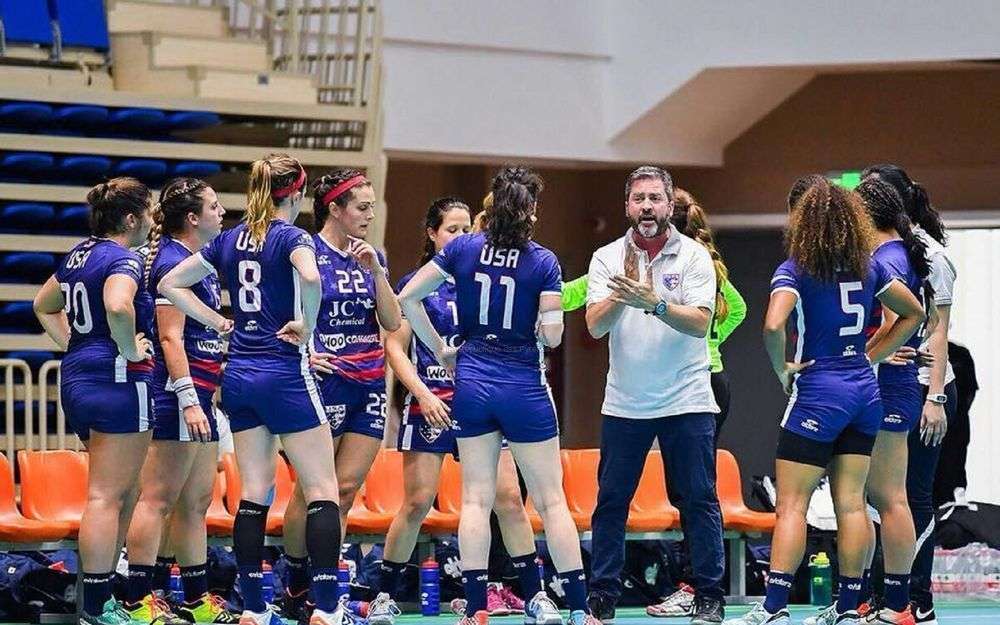
USA Girls in action at the Partille Cup

The USA sent two youth teams recently to participate in International Handball Federation (IHF) Olympic Solidarity Program and the Partille Cup in Sweden.  The Olympic Solidarity Program is an IHF funded program held to support developing handball nations and the Partille Cup is a massive youth tournament with club teams from all over Europe and the world participating.  While I think it’s great that a handful of young American players are getting this exposure to Handball, some of the ugly score lines from the tournament got me contemplating whether the USA is maximizing this opportunity.

Boys Team Results from Partille Cup

Olympic Solidarity Camp Friendly Games
USA National Team 26-22 China
USA National Team 44-29 Singapore

Pool Play (16 and Under)
USA National Team 7-32 OV Helsingborg
USA National Team 9-22 Kärra HF
USA National Team 16-14 BK Ydun
USA National Team 17-22 TV Birsfelden
USA National Team 9-19 HC Eynatten-Raeren

Knock Out Tournament
USA National Team 8-21 Elverum IL

Girls Team Results from Partille Cup

Olympic Solidarity Camp Friendly Games
USA National Team 10-18 Scotland
USA National Team 12-23 Scotland

Pool Play (15 and Under)
USA National Team 3-22 Vorup FB
USA National Team 4-28 Kungsängens SK
USA National Team 4-27 Skövde HF
USA National Team 1-27 Klaebu IL
USA National Team 4-30 Skedsmo HK 1

Knock Out Tournament
USA National Team 5-14 Röyken og Hurum Graabein

Results Overview

A quick assessment of the score lines show that the boy’s team had some measure of respectability.  They won their two friendly games against China and Singapore at the Olympic Solidarity Camp and compiled a 1-5 record in their Partille Cup games, with an average score line of 10-19.  The girl’s team results were more lopsided.  They lost both of their solidarity camp games to Scotland and were totally overwhelmed in every Partille Cup match losing their 6 games with an average score line of 4-25.  (Note:  These matches were 2X15 minutes, so to get a true picture you might want to multiply the scores by 2)

Top Prospect or Any Prospect?

While these score lines were ugly we shouldn’t make the mistake of thinking this was a wasted trip.  I’ve written before about lopsided scores and the benefits the learning experience provides to the losing team.  And in that commentary I was talking about much older teams.  The two teams sent to Sweden were far younger and coupled with the training at the Olympic Solidarity Program this event was surely worthwhile for every athlete that attended.  All that being said, however, I think USATH needs to be  more low key as to the composition of this “national team”.  This was clearly a developmental team and I would classify the participants as more any prospect then top prospect.

The play on words refers to the current youth focused effort established by the USA Federation: the Top Prospects program.  There are a lot of positive things about this program as it’s providing funding, curriculum and structure to different regions of the country.  There’s a clear application process and it may be presumptuous on my part, but I think if someone is motivated and takes the time to fill out an application they probably stand a good chance of getting some support to develop a local program.  In short, the Federation is providing much needed support and incentive to start new pockets of development throughout the U.S.

But, while what I’ve just described is all well and good it appears that the program is probably falling well short of its stated mission of identifying “talented” future Olympic Players.  I say this based partly on the ugly looking score lines from the recent Partille Cup.  While those poor results can be partially chalked up to the vastly more experienced European clubs I think a team of future Olympic athletes could use that superior athletic ability to keep the game a little more respectable.   This is especially true when you factor in that most of the clubs participating at the Partille cup are only drawing athletes from one small dot on the map, not an entire county or 300 million people.

But, then again the current reality is that the U.S. is probably working with a youth talent pool smaller than what many of those clubs are working with.  In fact, based on Federation articles written promoting the trip and tryouts a cynic might even assess that just about anyone willing to pay for airfare probably could have put on a USA jersey.

The challenges of identifying top young talent

But, even if USA Team Handball had thousands and thousands in the talent pool vying for Partille Cup spots, identifying the future Olympian at ages 15 and 16 is probably a futile mission.  Out of curiosity I checked out the USA Basketball website to see what kind of Under 19 and Under 18 rosters they’ve sent to assorted FIBA tournaments in the past 15 years.  I didn’t do an in-depth review, but the typical roster only had 1 or 2 players whose names I recognized and with a few notable exceptions (Carmelo Anthony and Chris Bosh) I didn’t see a whole lot of Olympians.  And this is for a U19 roster for a major sport where colleges spend hundreds of thousands of dollars recruiting and assessing potential high school prospects.  So, with all those resources being applied they are either missing some talented players or more likely those talented players are still developing as athletes.  And this is at ages 18 and 19!  If you look at ages 15 and 16 players like Michael Jordan (he got cut from his HS Varsity team as a sophomore) would never ever get selected.

Recommendations:  Focus on maximizing exposure

So, if you take into account that a sport like basketball can’t do a great job of identifying Olympic talent at young ages, it’s very unlikely that we’re going to do the same for Team Handball.  And if you couple that fact with the other challenges our sport faces competing against other more established sports, we need to make sure were maximizing the potential benefits of Partille Cup participation. And in my opinion, maximum benefit equals maximum participation.  With that in mind I have the following recommendations.

1) Maximize nationwide participation: The rosters for the Partille Cup had fairly heavy representation from only a few Top Prospect programs.  Notably, the girl’s team was mostly from New Jersey while the boy’s team was spread out a little better with 3 players each from Salt Lake City and Chicago.  I would argue that it would be better to further spread out that representation, so that only 1 or 2 players be allowed to participate from a local youth program.  Such a quota would give more players from clubs and Top Prospect programs exposure to the Partille Cup experience.

2) Limit participation to “one and done”:  Attending an event like the Partille Cup can be life changing for a young athlete.  It is a totally unique opportunity and has the distinct possible outcome of creating new Handball fans for life.  Attending the same event in subsequent years, however, will not have a significant multiplying effect.  Therefore, it would be far better to maximize the numbers of kids who get that opportunity.  Hence, my one and done proposal to ensure that as many kids as possible get that experience.  Undoubtedly, this will mean the official USA teams that are sent won’t be as strong, but results are really secondary at these ages. (A short side note here:  There’s nothing to prevent anyone participating or creating their own team to play in this event.  I’m simply talking about the teams that are getting resources from USA Team Handball.)

3) Come up with a new name for the team:  Since the criteria above will keep us from sending our best team forward the USA team should be given a name like “USA Select” or “USA Development Team”.  This is semantic, but in terms of promotion to the rest of the world it will help to at least partially explain ugly score lines.

4) Continue to promote the event:  My compliments to Kyle Hanson and the USATH staff for their regular reporting on this event.  This isn’t the first time a team from the USA has attended, but it’s the first time it’s gotten the exposure it deserves.  Future prospects will read those reports and target this as an event they want to play in.  Promotion is key to getting the word out and expanding the talent pool.


USATH:  Top Prospects Program Overview:  http://assets.teamusa.org/assets/documents/attached_file/filename/37770/Top_Prospects.pdf

USATH (18 Feb 11): 20 Athletes Converge on Colorado Springs for Youth National Team Selection Camp: http://usateamhandball.org/news/article/41031

USATH  (10 Jun 11): USA Team Handball youth taking on the 2011 Olympic Solidarity Program and Partille Cup in Gothenburg, Sweden: http://usateamhandball.org/news/article/42763

USATH (15 Jun 11): U16 Boys and Girls Rosters Named for Partille Cup: http://usateamhandball.org/news/article/42855

USATH (28 Jun 11): U16 Girls Training Camp in August at the Lake Placid Olympic Training Center: http://usateamhandball.org/news/article/43135

USATH (13 Jul 11):  Youngsters shine at Partille Cup:  http://usateamhandball.org/news/2011/07/13/youngsters-shine-at-partille-cup/43521

Partille Cup VIDEO: Olympic Solidarity Overview: http://partillecup.com/eng/index.php/home/webb-tv/?film=4407

USA Basketball (Under 19 History): http://www.usabasketball.com/mens/u19/history.html


Time for a True European Super League (Part 3): Why playoffs are overwhelming superior to season long championship

For the past few weeks, America's #1 Handball fan has been watching this German athlete more than the German Bundesliga. Why?


In Part 1, I highlighted how Europeans might want to consider making their sports leagues more like their Governments.  In Part 2, I provided an overall framework for a European Super League  In Part 3 of this series I take on the totally absurd notion that NBA/NHL style playoffs won’t work for European Professional Handball.

First, let’s establish that I’m a big fan of the sport of Handball.  Heck, I’ll go out on a limb and state that I am the #1 fan of the sport in the U.S.  Certainly, I doubt that any of my 308,000,000 compatriots watch more Handball on TV or the internet on a yearly basis.  (If you think you’re a bigger fan, please drop me a line at john.ryan@teamhandballnews.com and will compare notes.) So, it should be clear, I’m not here to bash the sport.  In fact, you’ll be hard pressed to find a bigger promoter of it.

Secondly, I’m not some clueless American who doesn’t understand European sports traditions.  On the contrary, I lived five years in France and became totally immersed in the club sport culture.  I played one season of lower division Handball and four years of over age 35 basketball in Levallois, a suburb of Paris.  Ask me what I enjoyed the most about living in France and I will say without hesitation it was playing club sports.  Oh, how I wish the U.S. had clubs where individuals of every level can play from the age of 5 years to 70.  (Yes, incredibly there was a 70 year old player on our basketball team.  I’ll never forget figuring out just how old he was after he told me about the Americans throwing him candy from the tanks back in 1945.)

Third, I think I’ve got a pretty good understanding of European professional club handball.  Living in France, I became a pretty big of the French League and this year, I’ve enjoyed watching around 70 German Bundesliga matches.  It’s truly been great to immerse myself in what is clearly the top professional Handball league in the world.

So, sorry for the diatribe, but I think I’ve got some pretty strong credentials to take on this topic.  And while there are many aspects of the American sports model, I’d like to see Europeans adopt, the most needed reform is clearly the addition of playoffs.   I’ve always thought this, but the TV viewing choices I have made the last few weeks have brought even greater clarity to the validity of this position.  To further explain, let’s just say that there are only so many hours in a day available to watch sports.  And earlier this year, for the first time in my life, I could choose to watch traditional American sports or Handball.  And while I didn’t go cold turkey on the sports I grew up with, Handball took priority.  Even more remarkably, basketball, my first sport passsion, became an afterthought.

But as Hamburg’s run to an HBL title became all but apparent my interest started to wane and since the NBA playoffs started in mid April my DVR queue has started to pile up with HBL matches.  Why would
America’s self-proclaimed #1 Handball fan suddenly prefer to watch basketball over handball?  Do I really have to explain this? OK, the answer is:

In terms of entertainment value, meaningless games with no bearing whatsoever on a championship cannot even begin to compete with the compelling “do or die” nature of a playoff format.

I’d like to maintain that even defenders of the championship format won’t argue this point.  They might argue about the logistics and the fairness of playoffs, but nobody in their right mind should argue about the entertainment value.   Seriously, do you want to watch Balingen-Kiel with nothing on the line or game 5 of Kiel vs. Hamburg for the title?

However, entertainment value is not everything.  Although, arguably for a professional sports league it should be the most important thing.  But, since this is Europe there are other reasons to defend the Championship model.  Herewith are some of those reasons and a rebuttal as to why they aren’t valid.

1) It’s not the fairest way to determine a champion. Players could be injured at the end of the season and a team that was playing poorly earlier in the year could get “hot” and win the title.  Only a championship format will fairly reward a team for consistent performance.
Rebuttal: If every club knows the rules for determining the league winner before the season starts, then whatever method is used can be considered fair.  Furthermore, what can be fairer than to have two teams play each other in a best of 5 or best of 7?  Seriously, the likelihood that an inferior team is going to put together 4 upsets is pretty unlikely.  No, if you can beat the other team 4 times, then clearly you are the better team.

2) Europeans only care about their local teams and are not interested in watching other teams play.
Rebuttal: If you have two high quality teams going head to head in a playoff series people will watch and when they watch, if they have a pulse, they can’t help but get drawn in.  In the recent NBA playoffs, I found myself becoming a fan of the Memphis Grizzlies, an 8 seed that knocked off the 1 seed, San Antonio and then battled Oklahoma City to a game 7 final in the next round.  I knew absolutely nothing about that team prior to the playoffs, yet ended up making sure I saw everyone of their games.  Could the same thing happen in Handball?  You bet and I would probably put middle of the road HBL side like Grosswalstadt in that category.  Sure, their victory over Kiel in Kiel was interesting, but other than dropping Kiel down a notch what did it mean?  Now, imagine Grosswalstadt as an 8 seed that #1 seed Hamburg has to be wary of in a 5 or 7 game series.  Hey, that sounds interesting.  I’m going make sure I see that.

3) It’s too many games. The season is long as it is.  Adding playoff games will make it even longer.
Rebuttal: If you structure the league properly it won’t be too many games.  In particular, in order to properly stage playoffs, it will be necessary to shorten the regular season a couple of months.

4) Clubs that don’t make the playoffs will have fewer games and will lose revenue. With a shortened regular season clubs that don’t make the playoffs will have nothing going on for the last couple of months.  What will the players do and won’t that be devastating financially to those clubs?
Rebuttal: Well, I can’t argue about the fewer games.  That’s life in the big city.  The financial loss will not be devastating, however, if the league has revenue sharing for their TV contract.  Not all of the revenue would be shared 100% equally, so clubs and players would still have lots of incentives for winning and advancing in the playoffs.  As an aside, you might find it interesting to note that NBA players (especially those with high salaries) are ridiculously underpaid during the playoffs, making only a fraction more than their base salaries.  In theory, if money was their only object, many of them would be better off losing and relaxing on the
beach.

5) These playoffs would interfere with Champions League. If two clubs were going head to head and one of them was still in the Champions League it would give an unfair advantage to the team that wasn’t.
Rebuttal: No argument from me on this one.  This is why, if you re-read part 2, you’ll see where I highlight that Super League teams would not participate in the Champions League or National Cups.  You can’t do both and as I explained if there was a true Super League, you wouldn’t want to.  Don’t get me wrong as things are currently structured the Champions League is the best thing going.  Next weekend, I’m really looking forward to the semifinals and final.    Those games mean something as they are “do or die” and a championship is on the line.  Still, if I had my druthers, those 4 sides wouldn’t be playing 2 knockout games.  No, they’d be playing two best of 5 semifinal series.  And instead of watching the Bulls vs. the Heat or the Mavericks vs. the Thunder on TV every other night I’d be taking turns watching R-N L vs. Barca and Hamburg vs. Ciudad Real.  I can dream, can’t I?

Commentary: USA Team Handball National Teams: Are there too many guys with short haircuts and accents? (Part 2: Dual Citizenship Athletes)

Swedish-American Martin Clemens Axelsson and Norwegian-American Karoline Borg are key members of the U.S. National Teams

Anyone who follows USA Team Handball’s excellent American’s Abroad updates has surely noticed that two groups of Americans (military members and dual citizens) are very well represented. In Part 1, I assessed that having a lot of military athletes on our National Teams isn’t a problem, but rather a symptom of a problem (thin talent pool). In part two, I’ll consider whether the same is true for dual citizenship athletes.


Dual Citizenship Athletes
USA Team Handball, since its inception has had dual citizenship athletes playing for its National Teams and certainly it isn’t the only sport to have sprinkled its roster with these dual citizen athletes. Notably, USA soccer, particularly in its development years in the 80s and 90s, has had its fair share of foreign imports. Additionally, a number of Handball nations (e.g. Spain) where there is no shortage of homegrown players have bolstered their roster with mercenaries (naturalized citizens) simply to improve their national team.
Until recently, however, dual citizen athletes have been a distinct minority on U.S. teams that have been overwhelmingly comprised of born and raised, domestic based players. Arguably, at no other time in the history of the sport in the U.S. have so many dual citizen athletes (e.g. El Zogby.Axelsson, Borg) played such pivotal roles on U.S. National Teams.
So, should we be concerned that we have too many guys with foreign accents? Yes, for three reasons.
1) Again, this is a very clear indication that we have a thin talent pool. First off, let’s acknowledge that most dual citizens if presented a choice between playing for the Handball nation where they’ve learned to play and spent most of their life or playing for Team USA are going to choose the Handball nation. Only, if they have no realistic prospects are they going to consider the U.S. option. There might be exceptions to this (perhaps, Adam El Zogby), but it’s a good rule of thumb. So, if a second tier (or third, or fourth or even lower caliber) player from Europe can make the U.S. team it’s probably a good indication that our homegrown talent pool is third tier (or lower). This isn’t all bad. Such players can still be huge contributors that can help us knock off the likes of Canada, Greenland and maybe even Brazil or Argentina someday. But, they are not likely to put us into the next echelon in the World Championships or Olympic Games.
2) Integrating dual citizenship athletes can be disruptive. It should also be noted that the integration of dual citizens on a national team can be a tricky business. I got a sense of this during my short stint on the U.S. National Team when we had tryouts for a couple of dual citizens from Norway and Sweden right before the World Championship in 1993. Both athletes that tried out were nice enough guys and experienced players, but there was also a little resentment with these “outsiders” potentially taking a roster spot from the born and raised Americans. As two outsiders amongst 15 players that had been practicing together for several months there were few integration problems. The only minor problem I recall was when they started conversing in Nordic to each other in front of their teammates. Never a polite move in any context and this was put to a halt with some friendly counseling.
As the current National Team structure has most players playing with clubs overseas, the context is clearly different from my stateside experience. And everything might be all hunky-dory now as relatively few athletes are competing for roster spots. As competition for National Team spots heats up, though, politics will undoubtedly enter the picture. Heck, I remember divisions and accusations of political favoritism based on geographical regions within the U.S. Those New York accents can take a while to get used, but add an even thicker one with an accompanying separate cultural identity and there could be real cohesion problems. An American citizen is an American, but let’s be clear that there’s no getting around the fact that there’s a big cultural identity difference between growing up in the U.S. and growing up in a foreign country. It doesn’t matter how well someone speaks English and how frequently they connect with relatives in the States, they’re going to be more culturally attuned to where they’ve lived. Fortunately, the U.S., more than any other country, is a melting pot of different cultures, so team integration of such a diverse group is still likely to occur. All things being equal, though, it’s simpler not to have such a diverse team.
3) Dual citizens are less likely to support development in the U.S. An ancillary benefit (at least a hoped for one, anyway) of athletes participating in National Team competitions is that those athletes will use that experience to support development of the sport in the U.S. Anyone who has been around the sport in the U.S. knows full well that is not always the case. In fact, it happens a lot less than we’d like it to. Still, it goes without saying that it’s even more unlikely that a dual citizen with stronger ties to another country will decide to move to the U.S permanently and become involved in development efforts. Also, not to be forgotten is the role model aspect of a local club member getting promoted to the National Team. This can inspire younger players to new heights with the thought, “well if he can do it, I can do it.”
Should anything be done to remedy this imbalance?
In many respects this problem can be resolved the same way the military athlete imbalance can be fixed. If we widen our domestic talent pool with better players then the standard for dual citizens getting consideration will be higher and accordingly there will be fewer of them.
While this should occur naturally I also think that USA Team Handball should have some policies that will indirectly boost opportunities for domestic players. Right now, with no U.S. based residence program it’s pretty much impossible for a domestic player to improve significantly as a player without moving to Europe. As such, by default, this has given the dual citizen athlete already conveniently living and acclimated to Europe a distinct advantage. While, I’m not advocating a return to the full-up residence programs of the 80’s and 90’s, I do think that some resources need to be spent on preparing domestic based athletes for overseas competition. (This is outlined in Part 3: A Framework for Creating U.S. National Team Success) In addition, more time and resources should be devoted to getting those domestic athletes on good clubs with strong training programs. A watchful eye should be kept on dual citizen athletes, but logically they will be more able to fend for themselves.
In the end, I’d like to see U.S. National Teams with a smattering of dual citizens playing key roles. Not because I don’t like dual citizens, but because I’d like to have the quality of our domestic players be such that only a few talented athletes can make the cut. And who knows, maybe I’m dreaming, but perhaps one day I’ll even get to read a German (or Danish, pick your country) commentary deploring the fact that they’ve lost a prized dual-citizen prospect to the Americans.

Commentary: USA Team Handball National Teams: Are there too many guys with short haircuts and accents? (Part 1: Military Athletes)

West Point (pictured) and the Air Force Academy have several graduates in the USA National Team player pool. Is it too high of a percentage?

Anyone who follows USA Team Handball’s excellent American’s Abroad updates has surely noticed that two groups of Americans (military members and dual citizens) are very well represented.  It’s worth reflecting upon whether this presents a problem or concern with the sports development in the U.S. Here’s my analysis on military athletes.

There has been a long tradition of athletes with military backgrounds playing on U.S. National Teams.  The 1972 Olympic team, in particular, included several army athletes that were introduced to the sport via Army sponsored training camps.  Anecdotally, I’ve even been told that making the team back then had the added incentive of avoiding a tour in Vietnam.  In terms of collegiate club programs West Point and to a lesser extent, the Air Force Academy have been the bulwark programs that have been around for years as other programs (with the exception of North Carolina) have come and gone.  So it should come as no surprise that more graduates from these schools have gone on to join the National Teams than from any other college in the nation.

I am obviously biased, but I think most non-partial observers would also agree, that the typical service academy graduate who continues to play handball is both highly dedicated and disciplined in their approach to the sport. In simple terms they are usually highly coachable and true team players.  Aside from the right attitude, their Handball skills have generally been a notch above most other collegiate programs.  In other words a service academy graduate transitioning to the National Team isn’t starting at ground zero.

I suspect that the current preponderance of military athletes in the national team player pool is due to two primary reasons.  First, as I already alluded to, it’s simply a reflection of a very thin talent base.  This is clearly evidenced by only 4 men’s universities (West Point, Air Force, N Carolina and Texas A&M) and 2 women’s universities (West Point and N. Carolina) being represented at the recent collegiate championships.  With half the schools being Service Academies and the West Point men being so dominant that they played an intrasquad scrimmage for the championship it’s no surprise that our national teams have a lot of guys with short haircuts.

The second factor, undoubtedly trending towards more military athletes is the financial support being provided by the U.S. military’s World Class Athlete Program (WCAP).  This program allows military athletes in a number of different sports the opportunity to train full time in preparation for the Olympic Games.  I’m sure USA Team Handball would prefer to have its own funding line to provide generous stipends to any promising athletes, but that’s not currently in the cards.

So, should we be concerned that we have too many guys in short haircuts? Yes, for two reasons.

1) First, it’s a stark indication that we need more colleges playing the sport in the U.S.  If all of the athletes being identified for the next level (National team competition or pro leagues) in any sport are coming from only two schools that’s an anomaly.  And such an anomaly can only be the result of either powerhouse programs gobbling up all the talent or that there just aren’t very many people playing.  West Point obviously has a top notch program, but it’s more the latter than the former.  So, it’s a problem, but it would be a problem if it was any two colleges in the U.S.  They just happen to be Service Academies in this instance.

2) The second concern, however, is legitimately tied to the unique circumstances of military athletes.  And that is what the military can giveth with WCAP it can also taketh with military service.  This is evidenced by several Army players being pulled from the program after the loss to Canada last December. Relying too heavily on military athletes can severely impact a
program and given the choice (free of WCAP incentives) I’m sure that USA Team Handball would prefer developing players with no strings attached.

Should anything be done to remedy this imbalance?

Yes, but there’s no need for a plan with the specific goal of reducing our dependency of military athletes.  Rather, it should simply be a natural reduction based on more top players being identified and developed through youth based programs and more colleges playing the sport.  As the talent pool widens it’ll become more likely that only the top couple of players from any one school in the country will be identified as National Team prospects.   And with strong traditions at schools like West Point and the AF Academy it’s probably a good bet that they will continue to provide top prospects, they just will have a smaller percentage.

So, I’ve assessed our current preponderance of military athletes on our National Teams as not a problem, but a symptom of a problem (thin talent pool).  In part two, I’ll consider whether the same is true for dual citizenship athletes.

British Handball Update: Formal approval from the BOA, EHF funding and a victory over Italy

Great Britain captain Ciaran Williams on attack vs. Italy

The 2012 Olympics are about 17 months away and the British Handball Federation has had several small victories, both on and off the court, in the past few months.  First off, back in January the British Olympic Association (BOA) (GBR’s Olympic Committee) granted full approval for the British teams to participate in the 2012 Olympics.  Never a done deal, the BOA’s approval was contingent on British Handball making the case that the games would leave a “lasting legacy” for the sport and that the men’s and women’s teams could put forth a “credible performance.”  Some had even argued that no funding should be spent on a team with no hope of medalling.

Terms like “lasting legacy” and “credible performance” are wide open to interpretation, but few would argue that progress isn’t being made on both fronts.  Notably the European Handball Federation (EHF) has stepped forward with some funding support to British Handball.  Details were lacking in terms of how much funding, but it appears most of it will go toward the salary of a full-time handball development officer in London.  Such a position makes sense and is a win-win for British Handball and the EHF as both organizations would benefit greatly were Great Britain to become a Handball nation.

On the court itself, Great Britain is still a long ways from being on par with the other 11 nations that will round out the field in London.  The Men’s recent matches against Italy (a 33-24 victory) and Turkey (26-28 loss), however provide some hope.  Neither of those teams strikes fear into Europe’s top handball nations, but those are a couple of teams that likely would have beaten a British side by 10 or more goals only a couple of years ago.  Does that mean the Brits are on track for a credible performance in 17 months?  That, of course, depends on your standards.  Both the men and the women are likely to get beaten badly by the other European sides and will be fortunate to win any games.  But, it wouldn’t surprise me if they have stretches where they play credibly. 

The more important standard though, is clearly the “lasting legacy” one.  Non handball nations like Australia and the U.S. have failed to fully take advantage of the opportunity an Olympics can bring.  Let’s hope that Great Britain can break that trend and use 2012 as a stepping stone towards becoming a Handball nation. 

Eurosport.com (21 March 2011): GB handballers raring to go: http://au.eurosport.com/olympicgames/olympic-games/2012/gb-hanballers-ready-to-go_sto2714238/story.shtml

EHF (15 Mar 2011): EHF supports Olympic legacy in London: http://www.eurohandball.com/article/13762

The Economist (17 Mar 2011): Britain’s new Olympic sports: New balls, please: The host nation extends its sporting repertoire: http://www.economist.com/node/18396255?story_id=18396255&fsrc=rss

BBC (19 Jan 2011): Great Britain handball teams given 2012 Olympic nod: http://news.bbc.co.uk/sport2/hi/handball/9362374.stm

THN Commentary (25 Jan 2008):  Times of London Handball Article Misses the Goal: http://teamhandballnews.com/2008/01/times-of-london-handball-article-misses-the-goal/

Promoting Team Handball in the U.S. (Part 1): Las Vegas Rugby 7s Tournament: Undoubtedly, a model to follow

Team USA takes the field in front of 25,000 fans

As frequent readers are well aware, I’ve written a number of pieces on the sport of Rugby and how its challenges to develop in the U.S. are similar to that of Team Handball.  Both are sports with similarities with sports Americans already excel at and follow passionately (basketball for Team Handball; American Football for Rugby).  And both sports are very popular in parts of the world (Scandinavia, the Balkans and Germany for Team Handball; the British Commonwealth for Rugby) but are minor sports in the U.S.  And finally, both sports have passionate followers in the U.S., who dream that one day their sport will crack into the big time and become part of the American sports landscape.

I live in Las Vegas, a town full of dreamers, and a couple weekends ago I saw and heard firsthand how Rugby is maybe, just maybe, turning that dream into a reality.  It was the second year that the USA 7s tournament was held in Las Vegas as part of the International Rugby Board’s (IRB) World Series for Rugby 7s.  A crowd of around 25,000 attended each day of the 2 day event held at Sam Boyd stadium on the outskirts of Vegas.  This may not seem like much of a crowd, but I can attest that it’s more than the UNLV football team often draws and without doubt you’ll be hard pressed to see spectators anywhere having more fun.  The event has a party time atmosphere with expats from many nations dressed up in costumes or their nation’s colors.   Outside the stadium is a festival area with rugby drills for the kids, assorted booths with national food dishes.   And as it’s an all day event, let’s just say that if fans start drinking beer before noon most of them are going to be in a good mood come nightfall.

But aside from the festive mood onsite an even more important indication of Rugby’s growth was the presence of NBC sports at the event.  In all, 5 hours of coverage (much of it live) was broadcast over the airwaves to every corner of the United States and 17 hours of coverage was available to much of the nation via the NBC Universal Sports online platform.  I’m not an expert on TV broadcasting, but based on the equipment, numbers of trailers and personnel running around NBC didn’t cut any corners on their production.  TV coverage like this alone, isn’t going to turn the U.S. into a Rugby power overnight, but there’s no denying that nationwide exposure like this is a godsend to a niche sport.

Here are a couple of audio excerpts from NBC’s broadcast.  It doesn’t take much to imagine a Team Handball broadcast and the same type of Olympic advertisement for our sport.

From time to time I’ve gotten into verbal and written forum spats with members of the U.S. Team Handball community that pooh-pooh the importance of TV exposure.  The standard argument is that it’s a diversion of scarce resources (time and money) that would be better spent on grass roots development.  My counter argument is that it’s a numbers game and we sorely need new fans and players to support our grass roots programs and TV is the best way to grow those numbers.  Heck, you might even find a real gem of a player who takes a liking to a game he’s never seen before.  Last summer during the USA National Team – LA match in Chicago I whimsically made such a point on the Comcast broadcast.  Essentially issuing a challenge to anyone watching that if they think they can play this game better contact the U.S. Federation for a tryout.  For those of you who like to pooh-pooh the possibility of finding such a player, I suggest you check out this audio interview of Miles Craigwell, a former NFL player who saw a broadcast last year of Rugby 7′s, got in touch with the USA Rugby Federation and 8 months later started several matches for the U.S in Vegas. 

I’ll be the first to tell you that Rugby 7s is a much simpler game to learn than Team Handball, but we could still use a few more Miles Craigwells showing some interest in our sport.  And as I’ve argued many times before, we still need to have the grassroots programs in place.  Because, if you do your promotion well, you need to be ready to handle all those newcomers. 

But, are we doing our promotion of Team Handball as well as we could?  As I soaked in the enormity of this event for Rugby, I couldn’t help but contemplate “how is Rugby doing this?” and “why can’t something similar be done for Team Handball?”  In part 2 of this series I’ll tackle that very question.

Universal Sports (3 Feb 2011): Craigwell a football player turned rugby star: http://www.universalsports.com/blogs/blog=thescrum/postid=514632.html

The Economist (3 Feb 2011) Rugby in America: Worth a try: More and more Americans are being converted to the sport: http://www.economist.com/node/18070557?story_id=18070557&fsrc=rss

THN (11 Feb 2011): http://teamhandballnews.com/2011/02/nbc-to-broadcast-5-hours-of-7-on-7-olympic-team-sport/

USA Team Handball Announces New National Team Pool Criteria

USA Team Handball recently posted updated National Team Pool Criteria for prospective National Team players.  Some of the criteria appears to be simply a more structured rehash of criteria that has been previously used to assess and identify players.  There are the usual battery of physical tests and handball skills identified, but there are also some new requirements that caught my eye.

For instance, some basic minimums were identified in terms of matches and practices each year.  A relatively modest number of matches is required (15), but a fairly substantial number of practices are now required (48 court and 72 non court).  This may seem rather simple to our European readers, but I suspect that there are very few club teams in the U.S. meeting the 48/year requirement.

More noteworthy, is a requirement for senior players to relocate to designated Regional or National Centers of Excellence by June 1, 2012(#5, page 13).  Section 5 goes further to highlight that the process for selecting these locations is planned for the first half of 2011 and that preliminary plan is to re-establish a residency program (either walk-in or live-in).  As far as I know, this is the first written indication that USA Team Handball was going to take this significant step.  More details will hopefully be coming soon in regards to the specifics of such a program and how it will fit into the current practice of encouraging European Club participation.

Also added is a requirement off the court in terms of being an Ambassador for the sport with options to support development through recruiting, refereeing and fundraising.  An appropriate requirement, in my opinion, for a sport that needs as many people promoting it as possible.

But what really caught my eye, were the closing comments in the “Athlete Development Pipeline Model” document:

Finally, as uncomfortable, inconvenient and uncanny it may feel, there is absolutely no science based nor practice based evidence of a “fast track” for high achievers to become masters in their fields. To the contrary, as Malcolm Gladwell in his bestseller “Outliers” put it (sic): “researchers and practitioners in variety of fields have settled on what they believe is the magic number of for true expertise: ten thousand hours.”

“The 10,000 – HOUR RULE” sends very clear and strong message to us all involved in handball.  Handball must evolve into year around activity.

A table is then provided which tabulates what this mean in terms of 25 day month (assume you 4 or 5 days off) over a 12 year span (2.77 hours/day) or 16 year span (1.56 hours/day).    I’ll have a follow on commentary about the 10,000 hour rule.  But suffice it to say, this is a very telling stat that speaks volumes as to the historic lack of U.S. success and the challenge of developing handball experts who pick up the sport in their late teens.

USATH: Live the Olympic Dream: Tryout for Team Handball!: http://usateamhandball.org/news/2011/02/23/live-the-olympic-dream-tryout-for-team-handball/40313?ngb_id=42

USATH: National Team Pool Criteria:  http://usateamhandball.org/national-teams/national-team-pool-criteria

USATH: USA Team Handball Athlete Development Pipeline Model:  http://usateamhandball.org/assets/documents/attached_file/filename/38081/USATH_Athlete_Development_Pipeline_Model_Application_Guidelines.pdf

NBC to broadcast 5 hours of “7 on 7″ Olympic Team Sport

This weekend, one of the major USA TV Networks, NBC, will have an unprecedented 5 hours of live coverage of a 16 nation tournament for a relatively unknown Olympic team sport with 7 players to a side.  The sport is fast paced, features crisp passing, physical contact and high scoring.  Unfortunately, for us Handball fans, the 7 on 7 sport is Rugby 7s, not Team Handball.

My adopted home of Las Vegas will be hosting the 4th leg of the Rugby World 7s tour.  Rugby 7s is a modified version of Rugby that features fewer players per team (7 vs 15) and much shorter games.  The Rugby World 7s tour plays in 8 cities world-wide and tournaments are played out in rapid fashion over two days in a festival style setting.  Rugby successfully lobbied to get the 7 on 7 version of the game on the Olympic program and it will make its debut at the 2016 Olympics.

I’ll be attending the event and hopefully speaking with NBC and USA Rugby 7s executives and maybe see if we can convince them to do the same for Team Handball.  If you have time check out the event on TV this weekend and let me know your ideas are concerning a similar event for our sport.

Hollywood Reporter:  NBC, Universal Sports Bet on Rugby: http://www.hollywoodreporter.com/blogs/live-feed/nbc-universal-sports-bet-rugby-98136

NBC Rugby 7s Page: http://nbcsports.msnbc.com/id/35910886/ns/sports-rugby_7s

Live TV Coverage is Saturday, February 12, 3:30 – 6:00PM ET and Sunday, February 13, 4:30 – 6:00 PM ET

Additional Internet coverage is also available at http://www.universalsports.com/

USA Team Handball’s Egypt Connection

A strange twist of events resulted in USA Men’s National Team Captain, Mark Ortega, witnessing history in Egypt. Looking for a better training opportunity in preparation for the upcoming PANAM Games 2nd Chance tournament Mark moved to Egypt in January to train with fellow teammate Adam El Zogby’s club team, Al-Ahly, in Egypt. In two video reports, Mark chronicles Adam’s recovery from ACL surgery, life in Egypt and his search for a club to join. What starts as a handball travelogue seems starts to take a dramatic turn as protests in Egypt engulf the country. Video 2 ends with the protests starting and a discussion with a Cairo cab driver regarding their significance.

http://www.youtube.com/watch?v=nY6Rcpx9Xto&feature=player_embedded

http://www.youtube.com/watch?v=NCcmSYU6GNs&feature=player_embeddedUSA

http://www.youtube.com/watch?v=dmpPpey64_k&feature=player_embedded

Team Handball’s weekly report on athletes playing overseas reports that Adam El Zogby is continuing his recovery and is safe and sound in his apartment situated a little over a mile from El Tahir Square.

USA Team Handball: Mark Ortega Profile.
USA Team Handball: Americans Abroad Report.

Time Shifting: Why would I watch any other way?

I’ve written about this before, but it’s worth mentioning again.

I know it is Monday afternoon in Sweden and teams are gearing up for the second round of play for Main Round Group I.  Everyone’s also probably still talking about the Croatia – Sweden match on Sunday night.  But in my little private Handball World, it’s still Saturday evening and I’ve yet to scan through Spain – Norway to see if any of it is worth watching.

Yes, with 9 hours separating me from Sweden, it’s not practical for me to watch very many games live, but through the convenience of on-demand viewing at livehandball.tv I can watch whenever I want.  I know you old schoolers like the aesthetic of watching it live, but tell me old schooler what are your plans for this coming Wednesday and Thursday night?  Yes, while you and the teams are getting some much needed rest, I will be watch whatever pivotal matches remain in the Main Round at my leisure.  I’ll catch up with you in time for the Semifinals, although I may watch one Friday night and the second one on Saturday night.  Seriously, I must ask; Why would you watch anyway else?

And now for a short plug for livehandball.tv.  If you haven’t signed up yet, I would strongly suggest that you do.  They’ve lowered the price to $25 for the rest of the tournament and with the on-demand feature you truly can get your money’s worth.  I’ve been plugging my laptop into my TV via HDMI cable and I’ve been pretty pleased with the quality.  Mind you it’s not Hi-Def by any stretch, but it’s TV worth watching.

THN (23 Jul 08):  Extreme Time Shifting in the Desert or How I Hope to Watch Olympic Handball: http://teamhandballnews.com/2008/07/extreme-time-shifting-in-the-desert-or-how-i-hope-to-watch-olympic-handball/

Argentina with huge victory over Sweden

Argentina defeated host Sweden 27-22 in what is probably the biggest victory ever for a Pan American team in World Championship history.  For more on this victory check out this Argentina Handball Blog.

Our correspondent in Sweden, Christer Ahl, concurs:

Argentina defeated Sweden, after having dominated the whole match; great goalkeeping, an aggressive and tenacious defense, good fastbreaks and confident shooting were the key factors;  Erwin Feuchtmann was the top scorer. Argentina celebrated as if they had already won the Championship, but in fact they still need one point against Chile to be sure of a place in the main round;  but if they get there, they will bring the 2 points from yesterday with them. The Swedish team and fans are shocked and disappointed;  they figure they lost their chances for a medal, but they admit the Argentina win was fully justified; they now desperately need to win aginst Poland on Thursday.

In an earlier game, Chile sensationally was ahead against Slovakia the whole game, often by 3-4 goals, but with ONE second to go, the Slovaks managed to equalize. However, while the immediate reaction of the Chileans was one of desperation, they soon begun to realize that the point they had gained was a historic one.

In a game in another group, Brazil came close to gaining their first point. They lost by only one goal against a strong Norwegian team, after they failed to use their chance to tie the game in the final minute.

All in all a fantastic day for PanAmerican handball. Now the fans (including my Swedish friends) will no longer doubt that handball exists on our continent as well!!!

WC 2011: After Day 4 (News and Notes)

Every team has now played 3 matches and the Main Round Tables are starting to take shape.  I have a few observations as does my colleague Christer Ahl in Sweden.

Group A

It looks like the European powers France, Spain and Germany will qualify for the Main Round.

Christer writes:

“The group headed by France, Spain and Germany was/is supposed to be the “Group of Death”;  after I watched GER-ESP and TUN-EGY last night, I would say that the label is deserved but in a very different sense!!  at least in the last 10 years, I have never seen any one of these 4 teams being so weak Spain were listless and allowed Germany to stay even or move ahead on the basis of playing with much more passion and energy and using in part a good defense and a strong GK, Bitter;    but when the game seemed decided, with 10 minutes to go the German energy was gone, or they had a black-out, so Spain could score 7 goals without answer and win easily.

I have seen many games between the rivals TUN-EGY but this was the worst one;  TUN missed several top players from recent years, and their `star’ Tej was a shadow of himself;  they were still able to take a 10-7 lead against a sleepwalking EGY team; but then EGY found their rhythm a bit wile TUN got more and more desperate, so EGY scored 9 straight goals and that was i.t”

Group B

Iceland, Norway and Hungary look to be on course to advance.  Austria and Japan could still make some noise, those.  Japan looked sharp in their earlier win against Austria, but were pummeled by Iceland, who had no problem exploiting Japan’s aggressive, but risky defense.

Group C

Denmark and Croatia seem to be locks for the Main Round, while Serbia has the upper hand for the 3rd spot.  Algeria and Romania still have chances though should they all end up level on points.

Christer Ahl writes:  “The big surprise was that Romania found no way of dealing with Algeria’s defense, with half-court pressure;  perhaps they were also tired after trying to keep up with the Danish running game the previous evening…   Algeria won with the amazing score of 15-14 and now have a better chance of moving on to the main round than their North African rivals Egypt and Tunisia,:

Group D

Sweden and Poland are on course to advance.  3rd place, however is up for grabs.

Christer Ahl writes: “ ARG continued to impress, but in part their win was caused by self-destruction on the part of Slovakia who had an early lead.  It seems the Slovaks demonstrated against their coach during the half-time break, staying in clusters on the court instead of joining the coach for instructions in the locker room.  It may now come down to a goal difference affair between Argentina and Korea for the final slot in the main round.”

World Championship Preview: Only 1 Big Question: Will France make it four in a row?

France has been on a roll.  Since winning the 2008 Olympics in Beijing they’ve added a World Championship in 2009 and a European Championship in 2010.  When a team dominates a sport as  France has for the past couple of years, the only real question is whether there’s any reason to think that the current trend won’t continue.  Time for another argument with myself.

Why France won’t win again

1) No Daniel Narcisse:  Arguably, Daniel Narcisse is the best  “1 on 1” offensive player in the World.  At key moments in the past few tournaments, he’s used those skills to rattle off some goals and quickly turn a close game into a 3 or 4 goal lead in the space of a few possessions.  With Narcisse out due to injuries France will have to rely on other players to step up and fill his shoes.  And while there are some other very able backcourts none of them have the explosiveness of Narcisse.

2) No Guillame Gille:  Gille is not the star player that Narcisse is, but he’s a very competent Center Back.  If I was coach Claude Onesta, the first thing I’d do in the absence of Narcisse is move Karabatic to left back and let Gille run the show.  Not an option here, so it will be interesting to see the lineup chosen.

3) Circle Runners on the “outs” with their club team:  I’ve been watching a lot of Hamburg matches on “My Sports Germany” and it’s interesting to note that former Handball player of the year, Bertrand Gille has been relegated to backup Circle Runner behind Igor Vori.  Of course, Vori, is the best in the World now, but still he hasn’t been playing much on the offensive side of the court.  Additionally, I’ve read that the same thing is happening with Cedric Sorhaindo down in Barcelona

4) Short preparation time:  France did not have a very extensive preparatory session prior to the World Championship.  Are they perhaps getting a little over confident?  They only beat Argentina by 3 goals in Paris?

Why France will win again

1) Who’s going to beat them?  While I’ve pointed to some clear chinks in France’s armor, as my colleague Christer Ahl pointed out previously other teams have injuries to deal with.  And more importantly, none of the other top nations have near the depth that France has in terms of replacing them.

2) Nikola Karabatic is due for a break out tournament.  This may seem like an absurd statement to make about the consensus best player in the world, but I think it’s a valid one.  Notably, I’ve had to explain to several handball neophytes who’ve seen France play why while that Narcisse guy is very good, it’s that workmanlike Karabatic who’s pulling the strings on that team and making everything happen.  With Narcisse out I expect Karabatic to step up his scoring a bit and make it clear to anyone who was doubting it, that he is indeed the world’s best.

3) Theirry Omeyer.  There’s nothing quite so comforting as to have the best goalie in the world between the bars making 3 or 4 (or even more) saves that no other goalie in the world will probably make.

In the end, I suspect that France again will ascend to the podium.  The oddsmakers also definitely concur as France is slightly more than an even money bet to win the tournament.  It’s possible that they will fail in their quest, but I wouldn’t bet against them.

Page 2 of 20«123456»1020...Last »

Advertisement

Categories

Follow Team Handball News on Twitter

Follow TeamHandball on Twitter

Team Handball News on Facebook

Who's Online

18 visitors online now
8 guests, 10 bots, 0 members
Powered by Visitor Maps