post

Leaving Las Vegas and Reflecting on Club Development in the U.S.

Vegas

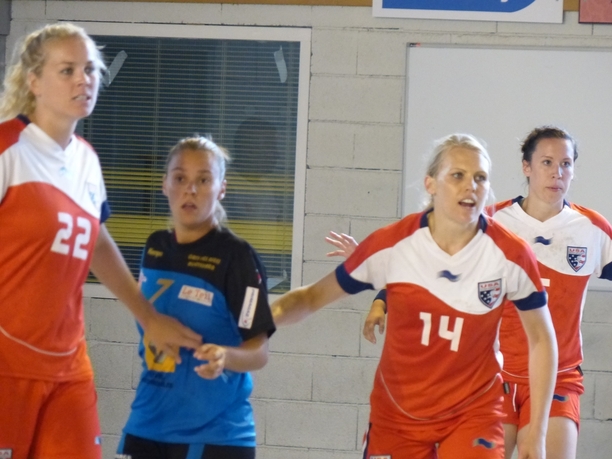
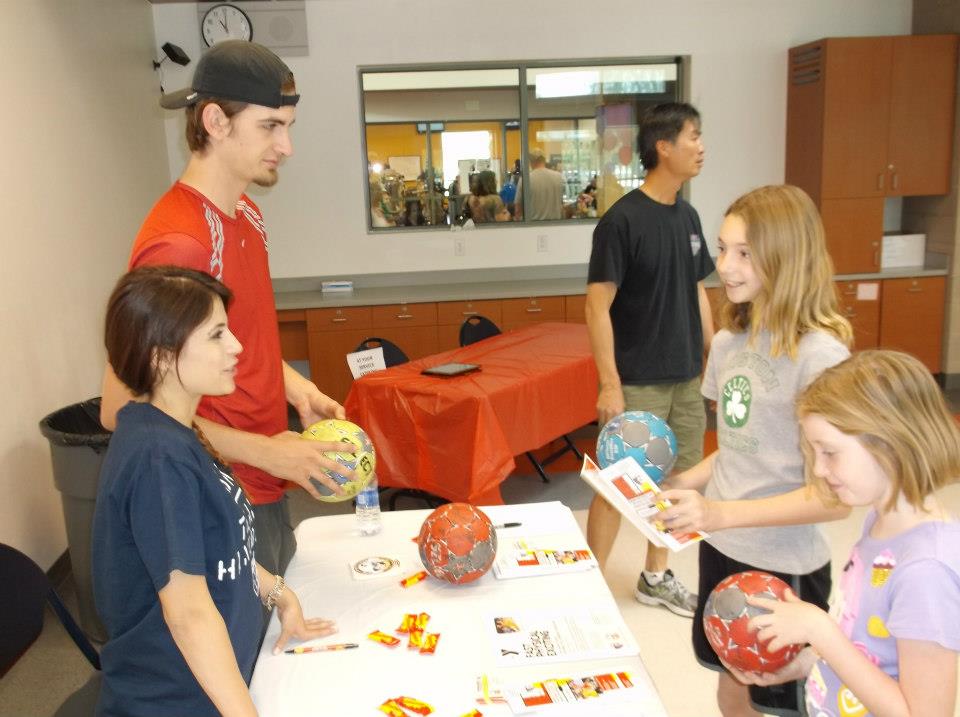
My daughters discussing Team Handball with the Scorpions at the Las Vegas YMCA Youth Day. Are they now future Colorado Dynamo stars?

All my bags are packed; I’m ready to go…. Rocky Mountain High, Colorado….  I guess I’ve got old John Denver songs on the brain and for good reason, as the Ryan Family is all packed up and ready for our move to Colorado.  Six years ago when we left Paris for Las Vegas, I reflected on what a tremendous opportunity I had had to live in a foreign country, to play handball and learn more about the sport.  I also waxed a bit about my pending move to a handball desert where to the best of my knowledge the sport had never even been played.  With a bit of pride I can claim some credit for changing that and helping to start a new club, the Las Vegas Scorpions.  As I head out of town I’m reflecting a bit on club development in the U.S.  Why, it’s so important and why it’s so challenging.

Why club programs are so important to developing the sport

I’m guessing some people are reading the above heading and are thinking, “Seriously, do you really have to explain that?”  And, I’m also guessing that a good portion of those people are European expats who grew up with a vibrant and well established club system.  The clubs are the backbone for sports in their native countries and they’re often puzzled when they come to this country.  The club structure in Europe does a lot of things for sport development and from a National Team perspective they are the feeder system.  Thousands of players are introduced to the sport a young age, they are trained in the finer points of the game and they compete against other clubs.  Out of those thousands of players, hundreds show promise and a handful develop into world class national team players.

In the U.S. the same numbers game applies, but historically for most sports it’s been through school based teams.  And, if the schools didn’t play a particular sport?  Well, that sport was essentially out of luck.  To an increasing degree some cracks have started to appear in this school based model as sports like soccer have developed club based competitions which are more European like.  These developments means that it’s becoming increasingly realistic to envision a more vibrant club structure in the U.S. for Team Handball.  A structure with enough clubs with good training programs and good opportunities for competition that it becomes the primary feeder system for U.S. National Teams.  And setting aside the National Teams, a structure which develops and helps grow a larger fan base in this country.

A vibrant club structure is not the only way to find players and the U.S. has used other methods.   Top notch athletes who’ve never played the sport have been taught how to be good handball players with intensive training programs.  We’ve also scoured Europe for dual citizens, who’ve taken advantage of the club system there.  But, these methods are at best stop gap measures.  They may be the best answer in the short term, but they can’t change the overall status quo.  In order to do that more clubs are needed, pure and simple.

Why it’s so challenging to develop club programs

While the U.S. sporting landscape isn’t always conducive to supporting clubs, there are still thousands and thousands of clubs in the U.S. for just about every sport imaginable.  For Team handball, however, depending on how you want to define a club there are probably only around 15-30 clubs in the entire country.  And for the 27 years or so I’ve been involved with the sport it’s pretty much ebbed and flowed right around that 20 club mark.  There are a number of reasons why there are so few clubs, but I’ll focus on some top level ones.

1) Establishing, organizing and sustaining a club is time consuming, often frustrating, unglamorous and hard work.

Anybody who’s been involved in starting a new club knows all too well what I’m talking about.  Countless pitches to prospective athletes; phone calls and email for practices/tournaments; passing out the hat for money and often reaching into your own pocket to pay for equipment, gym and tournament fees.  Sure, there are rewarding moments:  The first time your club takes the floor; the first time your club wins a match; the first time a bunch of folks who didn’t know each other a month earlier start to bond as a team.  But, there are also moments that inevitably bring you down:  The scheduled practice where hardly anyone shows up; the tournaments where you can’t quite field a team and you have to borrow players from the other club; the departure of a key player/organizer that can’t be immediately replaced.

2) Not enough people are stepping forward to volunteer for this frustrating, unglamorous hard work

OK, time to step on the soap box for a bit:  Have you ever mentally listed out the number of former U.S. National Team players who have disappeared from the sport?  Or have you watched veteran players stay slightly engaged, perhaps showing up at the National Championships to play with some old buddies and relive their glory days?  Have you then mentally calculated just how many clubs the U.S. might have today if more of those players chose to give back to the sport that has done so much for them by starting a new club?  I know have.  Why, I can’t even beat my chest and proudly state my credentials for starting not just 1, but 2 clubs in this country.

OK, time to step down:  Sure, I can pat myself on the back, but I had help along the way.  I might have been instrumental in getting the Scorpions started, but Bernhard Schneider has done the bulk of the heavy lifting.  As far as DC goes, I’m pretty much a forgotten footnote who maybe just deserves a smidgen of credit for coming up with the Diplomats nickname.  Additionally, as work and family commitments shrank my discretionary time, I’ve become more sympathetic to the reality that many former National Team players surely have the same time crunch issues.  Finally, there are other ways to give back like officiating and serving on committees.

Back on the soap box:  Sorry, former National Team players; I’m not letting you off the hook that easy.  This country really needs more clubs; Arguably, more so than anything else.  If at all possible try to find the time to do some grunt work out in the grass root trenches.  It is time consuming, but it is also very rewarding and you, by virtue of your training and experience are equipped to lead such an endeavor.

3) Not enough is being done by USA Team Handball to expand the number of clubs in the U.S.

This is not to say nothing is being done.  In particular, a big thanks to USA Team Handball for bringing the National Championships to Vegas and also for the balls and a set of competition goals.  Having started two clubs I can unequivocally state that if you are proactive and engage the federation, you will get some help.  That being said, clearly more could be done.  Not all clubs have super dedicated organizers who will take Herculean steps to overcome every obstacle.  They might just be dedicated and willing to overcome some obstacles.  A little more care and feeding at the critical incubation stage might result in more clubs surviving and growing.  Strategic promotion is also warranted in some cities and definitely some colleges.  For instance, it was great that a recent tryout at Auburn attracted 29 participants, but it only made me wonder why there isn’t already a club there and not just at Auburn, but at colleges throughout the nation.  And don’t even get me started about the Naval Academy.

4) More needs to be done to encourage the development of youth clubs

More clubs of all kinds are needed, but as my colleague Christer pointed out the U.S. club scene has really been taken over by Expats and aging veterans.  There’s nothing wrong with having those teams around.  As a younger player I can’t begin to tell you how much I learned from those amazing out of shape Euros (smoking outside at halftime, no less) who schooled me on the finer points of the game.  What’s wrong is not having very many teams with more home grown players.  And if we’re talking about National Team development, home grown players closer to age 20 than age 30.  One pleasant surprise from my trip to the Club championships were the Colorado Dynamo and Ocean, NJ clubs.  No kidding youth teams with many players in their teens.  As far as I know the Ocean, NJ team was fully composed of high schoolers while the Dynamo team was supplement with some talented expats in their 20s.  The Dynamo club took that combination all the way to the final, losing a close game to finish in 2nd place.

Closing thoughts

As I’m headed toward my old stomping grounds in Colorado Springs, I’m fortunately moving to a locale with two existing teams, my alma mater, Air Force and the Colorado Dynamo.  That didn’t factor into the decision to move there, but it’s certainly a nice ancillary benefit.  Subject to those work/family commitments I intend to get involved with both programs.  And, if I can convince my daughters to pick up the sport, here’s hoping that for once family and handball commitments will become one and the same.
post

USA Team Handball Visit to Auburn: Coach Garcia Cuesta reacts favorably to Residency Program potential

Auburn students at USA Team Handball tryout

Auburn students at USA Team Handball tryout.  The tryout was held in conjunction with an exploratory visit  regarding the establishment of a national team residency program there.

The Auburn University student newspaper has reported on USA Team Handball’s recent visit to discuss the establishment of a residency program there. Several quotes from the article indicate that Auburn made a favorable impression.

U.S. Men’s National Team coach Javier Garcia Cuesta expressed this view: “I am pleasantly surprised with the offer we have received from Auburn. After seeing the facilities and the connections we could have with the School of Kinesiology, I am very positive about the possibility of us being here.”

Former USA National Team Player and Auburn representative, Reita Clanton also had a positive assessment: “We are very, very optimistic about the residency programs coming here. There are still a few details left to hammer out, but we all think this would be a win-win setup for the national team and Auburn.”

In terms of the way ahead the article indicated that the Auburn proposal will be reviewed by the USA Board of Directors in the coming weeks. Coarch Garcia Cuesta indicated that there was no timetable set for a decision on residency programs, but that the staff had a “soon as possible” mindset. One road block to a decision is the currently under staffed Board of Directors. In previous discussions with Team Handball News, USA Team Handball CEO, Matt Van Houten has indicated that he intends to have any decision regarding residency programs be made by a full complement of Board Members

THN (7 July 2013): USA Team Handball to visit Auburn University to discuss Residency Programs: Link

THN (8 June 2013): AUDIO: Interview with USA Team Handball CEO, Matt Van Houten: Link

post

USA Team Handball to visit Auburn University to discuss Residency Programs

Auburn, Alabama:  The  next stop for the USA Residency Program?

Auburn, Alabama: The next stop for the USA Residency Program?

The Auburn University student newspaper has reported that USA Team Handball will be traveling to their campus next week to discuss  the possibility of Auburn becoming the site for a USA National Team Residency Program.  As noted in the article the genesis for the visit was a telephone conversation between former USA National Team player Reita Clanton and USA Men’s coach Javier Garcia Cuesta.

In email correspondence, USA Team Handball CEO, Matt Van Houten indicated that coach Garcia Cuesta and Director of High Performance, Dave Gascon will be making the trip.   Van Houten also noted that USA Team Handball is only discussing locations and logistics for Residency Programs and that no visits to other locations have yet been made.

post

AUDIO: Interview with USA Junior and Youth National Team Coach Julio Sainz

Julio Sainz, coaching the LA Team Handball Club Women's team at the National Championships.  How many teams does this guy coach anyway?  (Photo courtesy of Clarke Ortega)

Julio Sainz, coaching the LA Team Handball Club Women’s team at the National Championships. How many teams does this guy coach anyway? (Photo courtesy of Clarke Ortega)

The U.S. is sending both a men’s and women’s team to the Partille Cup which takes place next week in Gothenburg, Sweden.  Coaching both teams will be Julio Sainz.  At the Club National Championships I sat down with Julio and we discussed a number of topics to include:

– Dual citizen players and their impact on our youth and junior teams
– How Javier Galindo, who will play next year for Liga Asobal club, Granollers, was discovered on a tennis court in Los Angeles
– The development of the LA Women’s Team club.

Interview length is approximately 18 minutes

Links to related THN stories

THN (3 April 2013):  USA Men U21 Roster for IHF Continental Cup:  Link
THN ( 8 Dec  2012): VIDEO: USA vs. Canada, IHF Challenge Cup:  Link
THN(23 Nov 2012: IHF Challenge Cup: Some numbers behind the results;  Link

post

AUDIO: A conversation with Laszlo Jurak: A True Handball Legend

Laszlo Jurak, long time coach of NYAC, on the sidelines at the U.S. National Championships.

Laszlo Jurak, long time coach of NYAC, on the sidelines at the U.S. National Championships. (Photo courtesy of Clarke Ortega)

Sometimes the word legend is casually thrown around to describe someone who’s been around the sport for several years.  With Laszlo Jurak there’s no need to exaggerate, as he has been involved with the sport in the U.S. for over 50 years.  In Reno, this past May I sat down with the legend shortly after NYAC won yet another national title.

Topics include his leaving Hungary for the U.S. after the 1956 uprising, his playing for the U.S. National Team at the 1963 outdoor world championships and at the 1970 indoor world championships (also as coach), his assessment as to when club handball was strongest in the U.S. (and why), his disappointment that the U.S. hasn’t progressed further, and where he falls on the dividing line between grass roots and national team funding.  (Interview is approximately 23 minutes)

THN (8 Aug 2012):  Audio: 1972 Olympians reflect on the Munich games and more:  Link

post

Women’s Pan American Championships: Team USA Results (A look at the numbers)

Hesser

Stephanie Hesser: The leading scorer for Team USA and one of the few bright spots for the team.

Overall Results

The 2011 Women’s Pan American Championships concluded this past weekend with fairly predictable results.  Brazil dominated the completion winning all 6 of their games by an eye popping average of 30 goals.  The Dominican Republic came the closest, losing by only 15 in group play.  The runners up, Argentina, lost by 23 in the Gold Medal, but can take some consolation in their 10 goal victory over the Dominican Republic in the semifinals.  That clear victory establishes that side as the 2nd best team in Pan America.  With Brazil already qualified as the 2016 Olympics host, Argentina should be favored to take 2nd place at the 2015 PANAM Games in Canada, where the Pan American slot for the 2016 Olympics will be awarded.

In terms of 2013 World Championships qualification, Paraguay was the surprise team joining Brazil, Argentina and the Dominican Republic as the 4 representatives from Pan America.  This is the 2nd time Paraguay has pulled off a surprise as they also qualified in 2007.

Pan American Championships Results Page:  Link

U.S. Results

Panamstats

The U.S. came away with a 1-5 record and took 8th place out of 10 teams.  Against their top opponents in pool play lost to Brazil, 44-10 and the Dominican Republic, 27-11.  Against the 3 teams that placed 5th (Uruguay), 6th (Mexico) and 7th (Venezuela) the U.S. lost by 13, 7 and 7 goals respectively, with the bright spot being that each of those matches were closely contested until those opponents pulled away in the 2nd half.  On the positive side, the U.S. did have a convincing 17 goal victory over Costa Rica, but this is tempered by the fact that the Central American debutantes lost all 5 of their matches by an average of 26 goals.

Individually, Stephanie Hesser, was the stand out player for the U.S. leading the team in scoring with 27 goals.  At 19 years of age, she was also the team’s youngest court player, so one can hope that she will continue to improve as a player for many years to come.  After Hesser, the U.S. had 5 other players with at least 10 goals in the 6 matches.  Those players are Megan Ballard (16), Julia Taylor (15), Kathy Darling (14), Tomuke Ebuwei (12) and Sarah Gascon (10).   Federation reports on the matches also indicate decent performances in the goal by Sophie Fasold and Freja Dobreff.

Video of several of the matches is available on the Pan American Team Handball Federation YouTube channel.  Although, the video is not of the best quality a sampling of several matches highlights some glaring weaknesses with the U.S.  In particular, the U.S. offensive attack lacks quickness and the team does not have any backcourt players with significant 1 on 1 scoring capability.  This lack of a scoring punch is most evident in the total goals scored against Brazil (10) and the Dominican Republic (11).  Defensively, the team does fairly well when it gets a chance to get set up, but offensive turnovers resulted in far too many fast breaks.  Finally, the 2nd half collapses against weaker foes, Uruguay, Mexico, Venezuela points to a lack of conditioning playing a role at the end of matches.

A Sideways Trend

Unfortunately, these poor results are nothing new for the USA Women.  Here’s a review of how the team has placed in Pan American competitions since 2007:

2007 Pan American Championships: 7th out of 8 teams
2007 Pan American Games:  Did not qualify
2009 Pan American Championships: Did not qualify
2011 Pan American Championships: Did not qualify
2011 Pan American games: 8th out of 8 teams
2013 Pan American Championships 8th out of 10 teams

(Note:  The Pan American Championship is held every 2 years and the top 3-4 teams qualify for the World Championships.  The Pan American Games are held every 4 years and the top team qualifies for the Olympics)

And here’s a comparison of 2010/11 and 2013 match results against the same nations:

vs Brazil (2011): Loss 50-10 (pool play)
vs Brazil (2013): Loss 44-10 (pool play)

vs Dominican Republic (2011): Loss 33-26 (pool play)
vs Dominican Republic (2013): Loss 27-11 (pool play)

vs Mexico (2011): Loss 29-27 (consolation semi)
vs Mexico (2013): Loss 30-23 (pool play)

vs Uruguay (2011): Loss 36-24 (pool play)
vs Uruguay (2011): Loss 30-23 (7th place match)
vs Uruguay (2013): Loss 30-17 (consolation semi)

vs Venezuela (2010): Loss 32-21 (PANAM Games Qualifier)
vs Venezuela (2013): Loss 36-29 (7th place match)

Chances for 2016 Qualification

Looking at that these numbers it’s hard to rationalize a dramatic upward trajectory that leads to qualifying for the 2016 Olympics.  Perhaps, if Team USA had been able to muster a semifinal berth or even a 5th place showing a decent case could be made that the team was on the verge of a breakthrough.  Instead, against the best sides it’s pretty evident that the U.S. is totally outclassed.  And, even against other developing nations, there’s a significant gap as the U.S. has been consistently on the losing side, albeit by smaller margins.  Yes, the U.S. was missing its leading scorer from the 2011 PANAM Games, Karoline Borg, but while she is a skilled player who would have helped steady the team I would assess her presence would simply resulted in some slightly more respectable score lines.

So, can the U.S. close the gap?  And more importantly, can it do so by July 2015 when the PANAM Games take place in Toronto, Canada?  Well, anything is possible.  But, as I pointed out previously a number of things would have to fall into place.  First and foremost, the player pool of talented athletes needs to expand dramatically and quickly.  And, if those athletes can be found quickly they would need a highly structured training environment supplemented with regular competition.  Can the players be found that quickly?  Does USA Team Handball have the funds or USOC support to set up a full-fledged (not an austere) Residency Program?  I don’t think the answers to either of those questions are “yes” and quite frankly, even if they were, two years is not a lot of time to work with.

Time to throw in the towel?

I most adamantly would never advocate telling an athlete to give up the fight in the heat of a competition.  And, I also would be reluctant to even diplomatically give such advice to an athlete that’s pondering their future.  I’ve been there and such a decision is a personal one dependent on a number of variables.  It’s not always a rationale or logical choice and it’s up to each individual to make that decision.

For organizations, however, decisions on the future should be made carefully, rationally, logically and firmly based on that organization’s goals.  And while it’s rarely a popular decision, throwing in the towel is sometimes the right decision.  Especially, if it’s not really giving up, but merely redirecting resources towards future success.

With those thoughts in mind, it should be clear that USA Team Handball should be developing a plan which is more focused on 2020 or even 2024 Olympic Qualification.  This means spending funds and man-hours on efforts that will that maximize the likelihood that younger and more talented athletes are found and developed.  In other words, athletes that just might be around 7 or even 11 years from now.  If one looks at the U.S. roster from the last event there are only 4 athletes that definitely fit that criterion:  Stephanie Hesser, Julia Taylor, Sophie Fasold and Freja Dobreff.

Youth isn’t everything, but it’s well known that every sports franchise takes an athlete’s current age into consideration before it signs a long term contract.  Older players can and do win (How about my San Antonio Spurs), but unless they are at the top of their game younger players will come along to gently ease them into retirement.  Not simply because they are younger, but because they are better.

I’ll close with one last telling statistic that should give any doubters further pause.  Argentina, which is clearly the team that the U.S. and any other wannabe Pan-American team has to beat for Rio, fielded a squad with an average age of 22.9 years.  Only 3 players on the U.S. roster were younger than average.

post

AUDIO: Interview with USA Team Handball CEO, Matt Van Houten

New York Athletic Club (NYAC) goalie and USA Team Handball CEO, Matt Van Houten, chases down an errant shot.

New York Athletic Club (NYAC) goalie and USA Team Handball CEO, Matt Van Houten, chases down an errant shot.

At the Club National Championships, Matt Van Houten, took some time out of his busy schedule to discuss several of the issues he’s been addressing as the new USA Team Handball CEO.  Topics included the new Federation By-Laws, the Board of Directors shakeup, Federation finances, National Team plans and Handball TV broadcasts in the U.S.  Interview length is about 38 minutes.

Here’s some links to topics that were discussed or alluded to during the interview:

Audio:  USA Team Handball Town Hall Meeting:  Link
Audio:  Interview with USOC’s Rick Adams:  Link
Audio:  Interview with Board of Director, Tomuke Ebuwei:  Link
USA Team Handball Corporate Documents (includes IRS Form 990s; most recent Form 990 covers from July, 1, 2010 to June 30, 2011):  Link
North America and Caribbean Qualification Tournament: Link (Plans are still TBD; Apparently Greenland is back as the tentative host)
The committees that were established after the April 2012 Strategic Planning Conference:  Link
My analysis highlighting concerns with USA Team Handball’s decision to hire full time National Team coaches and restart Residency Programs:  Link
beIN Sport: Link

post

AUDIO: Interview with USA Team Handball Board of Director, Tomuke Ebuwei

USADR

Tomuke “T” Ebuwei on defense against the Dominican Republic

During the U.S. Club National Championships I had the opportunity to sit down with veteran National Team player and USA Team Handball Board of Director, Tomuke “T” Ebuwie.  Topics of discussion included her role as an active athlete Board of Director and the recent shake up with the Board going from 9 to 4 members.  I also ask a pointed question regarding the Board’s failure to transparently post meeting minutes on the USA Team Handball website.  Audio runs approximately 21 minutes.

Board Meeting Minutes Page:  Link (The last minutes posted are from May of 2012)

Dec 2012 Board Meeting Minutes:  Link (These minutes were posted as a news item in Feb 2013 and are the only minutes posted in the past year)

post

AUDIO: Interview with USA Women’s players Sarah Gascon and Stacy Self


Sarah Gascon talks about the upcoming Pan American Championships

Sarah Gascon talks about the upcoming Pan American Championships

At the U.S. Club Championships in Reno, I sat down with veteran Back Court/Circle Runner Sarah Gascon and newcomer Goalie Stacy Self to discuss the upcoming Pan American Women’s Championships.   The team is currently training in the Dominican Republic and they start the tournament on Saturday with a match up against defending champion Brazil.  (Audio is approximately 8 minutes)

post

AUDIO: Interview with USOC Executive, Rick Adams

Rick Adams, The USOC’s Managing Director, NGB Organizational Development

At the USA Team Handball National Championships in Reno, I had the opportunity to interview Rick Adams, the USOC’s Managing Director for NGB Organizational Development.  Topics discussed include the USOC’s level of support for Team Handball and what USA Team Handball needs to do in order to potentially secure more financial support from the USOC.  (Audio runs approximately 12 minutes)

USOC Profile Page for Rick Adams:  Link

USOC 2012 IRS Form 990: Link (pages 40-62 includes information on how much funding the USOC grants to sports federations and other oogranizations)

post

AUDIO: Interview with USA Team Handball’s Jordan Fithian

Team USA and NYAC Circle Runner Jordan Fithian (Photo courtesy of Clarke Ortega)

Team USA and NYAC Circle Runner Jordan Fithian

Last Saturday I sat down with USA National Team Player, Jordan Fithian, a 27 year old Circle Runner originally from Kansas.  Fithian, who played 3 years in Germany, played a key role in NYAC’s title run leading the team in scoring with 21 goals while also anchoring the defense.  The interview touches on a number of topics to include his and his wife Jennifer’s experience playing in Germany and his future with the national team.   (Audio is approximately 24 minutes)

post

AUDIO: USA Team Handball Federation Town Hall Meeting

TownHall

On Saturday night (18 May 2013) the USA Team Handball Federation had its annual Town Hall Meeting.  CEO Matt Van Houten discussed several topics to include Federation finances and plans to reconstitute the Board of Directors.  The floor was then opened for questions and a few soapbox advocacy pitches.  The audio runs just a little over an hour.

In addition to the Town Hall meeting I had the opportunity to sit down with several people this past weekend.  In the coming days you’ll have the chance to listen to interviews with Matt Van Houten, the USOC’s Rick  Adams, Board Member Tomuke Ebuwei, Nomination and Governance Committee Chair, Tom Fitzgerald, National Team players Jordan Fithian, Sarah Gascon and Stacy Self, German referees Lars Geipel and Marcus Helbig, Junior Men’s coach Julio Sainz, the Ocean NJ women’s team and legendary NYAC coach Lazlo Jurak.

post

New York Athletic Club (NYAC) wins battle of New York

NYAC poses for a team photo after winning the Elite National Championships

NYAC poses for a team photo after winning the Elite National Championships

The battle for New York (waged in Reno) as a nail biter.  NYAC got off to a fast start and managed to maintain a 2-3 goal lead until midway in the 2nd half when NYC finally was able to tie the score.  From then on the score bounced back and from tied to NYAC leading by 1 or 2 goals.  The closing minuted ended with NYC having a chance to tie the score, but their hopes were dashed due to a turnover with about 5 seconds left.   Final score 25-24.

West Point Black won the 3rd place match with 29-24 win over LA THC.  The MVP was NYC’s Djordje Radovanovic and the MVG was NYAC’s Danny Caparelli.