post

Puerto Rican referees held up under unusual pressure

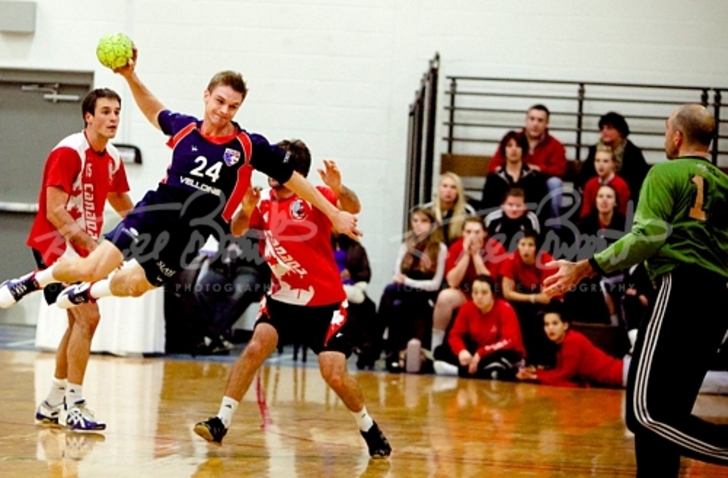
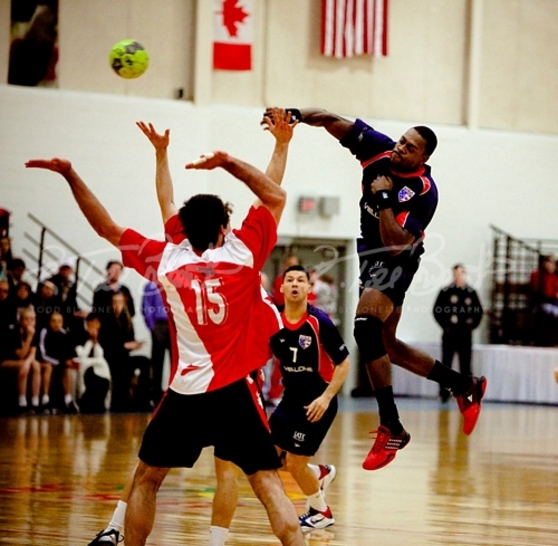
Before we finalize the coverage of last week’s qualification matches between USA and Canada, there is one more aspect that must be captured and remembered: for these important games, the intention had been to bring up two referee couples, one from Brazil and one from Puerto Rico. They would then naturally handle one game each on each day. However, at a late stage, when no other options were available, the Brazilians had to back out, due to a serious health concern in the family of one of them. (We do hope that this situation is being handled with a satisfactory outcome!)

This meant that the Puerto Rican referees had to be put in the unusual situation of doing back-to-back games on both days. This is something that may seem easy and normal at the youth level, but it certainly is not the situation that one wants to put referees on a a high level and in crucial games. We did know that fitness would not be an issue for our Puerto Rican friends Enrique Perez and Jose Guzman, but their experience at the international level is quite limited, and games of this type can be very stressful. Nevertheless, Enrique and Jose graciously acceped this challenge.

Of course, this was without being able to anticipate the dramatic finishes on BOTH the men’s and the women’s side. Perhaps it would have been normal if ONE of the games would have ‘come down to the wire’ with a very close aggregate score in the final minutes. But who could have imagined that the first game, the women, would be decided on ‘away goals’ after a aggregate result of 44-44, and that then the men’s battle would finish with identical score for the home team in both games, so that overtime would be required.

I have rarely felt so sorry for a pair of referees as when the final seconds were ticking away and I could see the inevitability of at least 2×5 minutes overtime…. However, the referees took this extra challenge in strides and kept both themselves and the players under full control. In fact, this final one of their four games was quite probably their best performance. The atmosphere on the court remained very sportsmanlike until the very end. To a large extent, this was the effect of the ability of the referees to maintain concentration and a consistent line throughout the match.

We thank Enrique and Jose for their contributions to a great and exciting event, and we wish them much success in their endeavor to climb the career ladder as international referees!

post

USA-Canada – some further reflections

Once upon a time, more precisely on August 16, 1987, there was a fabulous women’s handball match played between USA and Canada. The match was the final in the PanAmerican Games in Indianapolis, and the result was 22-20 in favor of the home team. Until this day, it was probably the best women’s handball ever played between two PanAmerican teams. It is another story that, in terms of drama, it may have been overshadowed by the men’s final played a couple of hours later between USA and Cuba. Here the USA victory came in overtime, 34-32 after a fantastic battle. It was a special evening.

Yes, it is easy to become nostalgic when thinking back to such memorable events. And, somewhat unfairly, it is unavoidable to see last week’s USA-Canada encounters in the light of what happened 23 years ago. One begins to think about the trajectory for U.S. (and Canadian) handball that seemed realistic at that point, and one starts wondering about why we are where we are today. But I do not want to ruin the excitement from last week by looking back too much. Given the circumstances in which handball tries to make headway in the two countries today, there are several reasons to ‘view the glass as half full rather than half empty’.

I say this not just in the sense that each country got a team qualified for the 2011 PanAmerican Games, but because one could find some nuggets of hope for the future. The U.S women’s team may have had some luck in the sense that the Canadian opponents fielded many players who were brand new on the team and lacking in experience. Moreover, the Canadians did not even enjoy their traditional advantage in terms of physical strength and stature. But the U.S. team had to draw on several teenagers to combine with a number of older but not particularly experienced players. What made the difference in the end was some inspired goalkeeping in the second match (especially Natascha King) and some sudden ‘bomb throwing’ by Karoline Borg.

What do these two players have in common? Well, they are affiliated with well-known clubs in Denmark and Norway. So the idea of gaining experience abroad shows signs of promise, but the choice of setting has to be carefully thought out. And it is not enough to have just a small nucleus of well-trained players with serious match experience. Moreover, match experience is fine, but what really tends to do a team in is the lack of playing together as a team. Nothing else makes up for knowing each other on the court, having clear and well-established roles, and having familiar routines to fall back on in tight situations. This now has to be the key issue in preparing the team for the PanAmerican Games in October 2011. For instance, an abundance of tough practice matches next summer is a must.

Quite possibly the U.S. federation might have preferred to see the men’s team qualify, simply because the men’s team in some ways might be closer to be ready to do battle with the opponents in the PanAmerican Games. While the competition might be tighter on the men’s side, that are several other teams that depend even more on raw talent and physical strength. So the U.S. men’s team just might have the collective qualities and the individual stand-outs that could take a team to the semi-finals. There are not many other teams with a skilled trio such as Gary Hines, Adam El Zogby and Martin Clemons Axelsson. The crux would be to find reliable goalkeeping and good choices for complementary roles; and then again the team cohesiveness through opportunities to play together. One can only hope that the resources are available to allow this team to try to qualify through the ‘second chance’ tournament.

My colleague John has written several articles lately about the precarious state of the U.S. federation in financial terms and the resulting need for tough and controversial choices. The support from the USOC has been cut back etc., so the players have had to pitch in substantially. Believe it or not, the Canadians may still be somewhat envious, as they have no such support at all the next two years and will receive a meager $25.000 per year in government support the following three years. There is no equivalent of the U.S. Handball Foundation, and the national teams are totally self-funded, i.e., the players pay to play.

So perhaps it is against this background of shared sacrifices and a mutual respect that it was so refreshing to see the excellent spirit of sportsmanship last week. When the women have the slot decided on ‘more away goals’ after a tie in the aggregate score, and the final men’s game goes to overtime after identical wins for the home teams, then there are obviously serious battles on the court. But the fouls were typically caused by a flailing arm or a desperate lunge, not by a cynical tackle or nasty hit. And there were no tendencies to theatrics, protests or provocations. Congratulations!

post

Kazakh women knock off South Korea for Asian Championship

Host nation, Kazakhstan beat defending champion South Korea, 33-32 to win the Asian Women’s Championship. China beat Japan, 26-25 for 3rd place. All four nations have qualified for the 2013 World Championships as Asia had 4 spots to award.
The championship game featured two South Korean coaches and former teammates facing off against each other. Kazakhstan’s coach is Yoon Tae-il a former goalkeeper for the National Team and South Korea’s coach, Kang Jae-won, is a former right back. Both Yoon and Kang played on South Korea’s 1988 Olympic silver medal men’s team. Yoon has been with Kazakhstan since 2005 while was appointed a month ago after came South Korea, long the dominant force in Asian Handball, failed to win the competition at the Asian Games in China.

The outcome of this tournament in Kazakhstan is a far cry from the notorious Olympic Qualification tournament in 2007. Following this tournament and later the Men’s qualification tournament the outcry in the Korean press led to world-wide condemnation of the unfair officiating at both events and the eventual replay of the Olympic Qualification tournaments. Based on the reports below it appears that the Kazakhs won the tournament fair and square. And more interestingly, it also appears that the South Korean domination of Asian women’s handball is either over on hiatus.

Yonhap News (24 Dec 10): Two S. Korean head coaches meet in final of Asian Women’s Handball Championship: http://english.yonhapnews.co.kr/culturesports/2010/12/24/8/0702000000AEN20101224001600315F.HTML
Yonhap News (26 Dec 10): Korea finishes 2nd at handball tourney http://www.koreaherald.com/sports/Detail.jsp?newsMLId=20101226000239
2011 Women’s World Championship Qualification: https://teamhandballnews.com/page34.html

Group A Standings
1) Kazakhstan (3-0-0) 6pts +29
2) China (2-0-1) 4pts +32
3) North Korea (1-0-2 2pts +15
4) Iran (0-0-3) 0pts -76

Group B Standings
1) South Korea (2-1-0) 5pts +71
2) Japan (2-1-0) 5pts +56
3) Uzbekistan (1-0-2) 2pts -73
4) Thailand (0-0-3) 0pts -54

Semifinals
Kazakhstan – Japan 29-24 (16-13)
South Korea – China 31-26 (13-14

Finals
Kazakhstan – South Korea 33-32 (15-14)
Japan – China (25-26) (16-15)

Final Ranking
1) Kazakstan
2) South Korea
3) China
4) Japan
5) 5th-8th placing currently unavailable
6)
7)
8

post

Podcast: USA vs. Canada: Split Decision, but not the one expected

The USA Women shrugged off a 23-18 loss on Tuesday in Lake Placid and turned the tables on Canada with a 26-21 victory in Montreal. The aggregate for the 2 game series was a 44-44 tie, but the U.S. Women qualify due to a higher “away goals” total, 26-23.

The Canadian Men also reversed a loss on Tuesday, by beating the USA 25-21. By coincidence, this was the exact same score as the Lake Placid match, resulting in aggregate 46-46 tie. And as the away goals (21-21) were also equal the USA and Canadian Men played a 10 minute overtime with Canada winning 5-2.

The USA Women and the Canadian Men have qualified for the PANAM Games next October in Guadalajara, Mexico. The USA Men and Canadian Women have the option of qualifying for the 8th and final PANAM Games via a “second chance” tournament later in 2011.

Christer Ahl was at all four matches and he provides an overview of what happened.

USATH: Triumph and Heartbreak
USATH: The pain of defeat
USATH: Running written commentary and chat

Podcast: USA-Canada Post PANAM Games qualifier analysis

post

The 2 game series: Anything and I mean anything can happen

Yesterday, while watching the USA – Canada Men’s match I was elated to see the U.S. jump all over Canada at the beginning of the 2nd half, extending an 11-9 halftime lead to 19-11 deficit. Keep this up, I thought and the return trip to Montreal might be academic. My elation turned to deflation, though, as Canada chipped into the lead, including a goal in the closing seconds for a final score of 25-21. In a two game series where the winner is based on goal differential in both games, every single goal counts and the U.S. could have won by more. I expressed this as much in the chat room, and a few folks didn’t like my negative Nellie attitude. Sorry, for saying so, but I’ve got a few data points to suggest it was warranted.

It’s been awhile, 18 years in fact, but my brief National Team career includes playing a couple of friendly matches in Montreal back in 1992. The U.S. was preparing for the World Championships in Lake Placid and the matches were scheduled as a warm up before the team headed to Europe. At that time the U.S. still had a resident program and the National Team was practicing on a daily basis. Meanwhile, I think the Canadian team was pretty much thrown together at the last minute. And I don’t mean to insult any Canadian that played in that friendly, but I would assess that not a single player on the Canadian roster would have cracked the U.S. starting lineup. Despite those advantages both matches were close and we needed a 9 meter play goal by current U.S. Men’s team coach Darrick Heath to eke out a draw in one of them. The environment of those matches was also significantly different from the cavernous practice facility in Lake Placid where last night’s match was played. I can’t remember where we played, but it was a relatively small gym with a vociferous crowd. (For all, I know it could even be the same gym) I’m guessing it gave the Canadians back then a 5 goal advantage.

But, even if the U.S. had ended up with an 8 goal victory as I think they could have I’d still be preaching about the dangers of the return leg because anything and I mean anything can happen. Long time readers know that I’ve mentioned Flensburg v. Montpellier several times as the penultimate example of this. In 2005, Montpellier gave Flensburg a 14 goal, 36-22, shellacking in the first leg of a Champions League Quarter Final. An almost unheard of margin of defeat that I daresay would only occur 1 out of every 100 matches between two top teams or relatively equal talent. Yet, in the 2nd leg Flensburg returned the favor and was up by 14 goals with no time remaining when Gregory Anquetil somehow cut it to 13 for Montpellier. Trust me if 14 goals isn’t safe for Montpellier in Flensburg, a 4 goal lead isn’t safe for the U.S. in Montreal. Heck, such a sequence of events should even give the USA women hope of turning things around.

It remains to be seen what will happen tomorrow night in Montreal. The U.S. with a game under its belt could very well make the necessary adjustments and use their athleticism to take control of the game early on. Or the more experienced Canadian side could grind out a 3-5 goal lead that has everyone holding their breath until the final buzzer. I’m hoping for the former, but fear for the latter.

Video: Gregory Anquetil last second 9 meter throw vs. Flensburg:

post

USA vs. Canada: Results and Video Replay

Women’s match: The first half saw both teams struggle to score and Canada led 9-8 at the break. In the 2nd half Team Canada pulled away from the U.S. to finish with a 23-18 victory.

Men’s match: The U.S. and Canada traded goals early on and the U.S. pulled away for an 11-9 lead. In the 2nd half outstanding team defense and goalie play by veteran Danny Caparelli led to several fast breaks and an 8 goal, 19-11 lead. Team Canada, however, switched to a marking defense on Gary Hines and the U.S. struggled to score in a set offense. In the end Canada was able to methodically whittle down the lead to an eventual 25-21 victory.

The same teams will play each other again in Montreal on Thursday. In order to advance the USA women will have the difficult task of beating the Canadian women by 6 goals (or 5 goals if they can score 24 or more). The USA men have the more manageable prospect of winning, drawing or losing to the Canadian by less than 4 goals (or 4 goals if they score 22 or more).

Women’s match videoMen’s match video

post

USA vs Canada Team Handball: Live webstream

Today’s matches in Lake Placid between Canada and the USA are being broadcast at http://ustream.com

Women’s Match: 4:00 PM (U.S. East Coast Time)
Men’s Match: 6:30 PM (U.S. East Coast Time)

Video Feed

Remember that these matches are the first leg of a two leg series to determine the North American qualifier for the 2011 PANAM Games. The winner of the series will be the team with the best goal differential counting both games. In other words, every goal counts as you never know what might happen in the 2nd leg matches that will be played in Montreal on Thursday.

USA Team Handball: Preview with USA Rosters

Interview with USA Men's Coach Darrick Heath

Team Handball News talks with USA Men's coach, Darrick Heath in Lake Placid, NY about the team's preparation for the upcoming 2 game series with Canada.

Interview: https://teamhandballnews.com/request74.html (9 Minutes)

Left click to play; Right click to save and download to your MP3 Player

USA vs. Canada Men: New look USA to challenge more experienced Canadian side

When the USA Men play Canada this Tuesday, it will be their first official match in nearly 4 years. Since losing to Canada 2 games to 1 in January 2007 and playing later that April in Chile for the 2nd Chance tournament, Team USA has not played an official International Game.

Meanwhile, Team Canada has been playing pretty regularly the past couple of years with mixed success. In Div 1 PATHF tournaments in 2007 and 2009 they posted winning records and advanced to the Elite Championships. In those Elite Championships, however, they’ve struggled a little bit, eking out 7th place finishes in both those events. Still, since these two sides met 4 years ago, the Canadians will have played 24 matches in PATHF competition while the USA has only played 2. While several players from both teams have played or are currently playing club ball in Europe, the Canadians will clearly have more experience playing together as a team.

[b]USA Men (Results since 2006)[/b]
Jun 06: PATHF Elite Championships: 4th out of 8 teams; 2-0-3 Record
Jan 07: PANAM Games North American Qualification: Lost to Canada in best of 3 series; 1-0-2 Record; Lost to Canada (19-20); Beat Canada (25-21); Lost to Canada (16-20)
Apr 07: PANAM Games 2nd Chance Qualification: 2nd of 3 teams; (1-0-1 Record; Lost to Chile (26-36); Beat Venezuela (23-20)
Jul 07 PANAM Games: Did not qualify for event
Jun 08 PATHF Elite Championships: Chose not to participate
Nov 09 PATHF Div 1 Championships: Chose not to participate
Jun 10 PATHF Elite Championships: Did not qualify for event

[b]Canada Men (Results since 2005)[/b]
Jan 05 World Championships: 23rd out of 24 Teams; 0-0-5 Record
Jun 06: PATHF Elite Championships: Did not participate due to the brand new PATHF qualification system which somehow precluded Canada (3rd place in 2004) from entry.
Jan 07: PANAM Games Qualification: Beat USA in 3 game series (2-1); Beat UAS (19-20); Lost to USA (25-21); Beat USA (16-20)
Jul 07: PANAM Games: 7th out of 8 teams; 1-0-4 Record
Nov 07: PATHF Div 1 Championship: 2nd out of 5 teams; 2-1-1 Record
Jun 08: PATHF Elite Championships: 7th out of 7 teams; 0-1-3 Record; Drew Greenland (20-20); Lost to Argentina (15-26); Lost to Chile (23-28); Lost to Uruguay (21-23)
Nov 09: PATHF Div 1 Championships: 2nd out of 7 teams; 3-1-1 Record; Beat Venezuela (25-18); Drew Colombia (21-21);Beat Mexico (30-26);Beat Puerto Rico (29-27); Lost to Dominican Republic (35-23)
Jun 10: PATHF Elite Championships: 7th out of 8 teams; 1-0-4 Record; Lost to Chile (25-36); Lost to Argentina (12-39); Lost to Uruguay (29-32); Lost to Greenland (36-38); Beat Dominican Republic (33-25)

THN (8 Jan 07) PANAM Games Qualifier Results (Canadian Men Qualify): https://teamhandballnews.com/news.php?item.229
THN (26 Dec 09): Interview with then Federation President Ward Hrabi: Canada – strong handball traditions and optimism about the future: https://teamhandballnews.com/news.php?item.911

USA vs. Canada Women: Both programs seek first Pan American win in 3.5 years

A further review of Pan American qualification matches reveals that the both the USA and Canada Women are in the midst of significant dry spells. Team Canada has not participated in a senior women’s event since the summer of 2007 when they finished 6th in both the PANAM Games and Pan American Elite Championships. In 2009 the Canadian Federation decided not to participate in the 2009 Pan American Championship as they felt they could not field a competitive team for the event. This relegated Canada to Div 1 status, but they chose not to field a team at the recent Div 1 Championship in Cuba.

Team USA has participated in Div 1 Championship events, but did not fare well in either the 2010 or 2008 Championships, losing all 7 matches that they played. There was, however, minimal preparation for either of these tournaments as the new Federation did not encourage participation in either event.

Prior to the 2007 hiatus, Canada had gotten the better of the USA, beating them 2 games to zero in 2007 PANAM Games qualification and in a pool play match at the 2007 PATHF Elite Championships. These results from 2007 probably don’t mean a whole lot as both teams are rebuilding and have several new players on their rosters. A series win and a trip to the PANAM Games, however, will be a welcome start to either program.

[b]Canada Women Results since Jan 2007[/b]
Jan 07: PANAM Games Qualification: Beat USA in best of 3 series; 2-0-0 Record; Beat USA (28-22); Beat USA (25-16)
Jun 07 PATHF Elite Championships: 6th out of 8 teams; 2-0-3 Record; Beat USA (31-29) in pool play
Jul 07 PANAM Games: 6th out of 8 teams; 1-0-4 Record
Jun 09 PATHF Elite Championships: Chose not to compete
Nov 10 Div 1 Championships: Chose not to compete

THN (21 Jun 09): Canada to not compete at Women’s PATHF Championship: https://teamhandballnews.com/news.php?item.780

[b]USA Women Results since Jan 2007[/b]
Jan 07: PANAM Games Qualification: Lost to Canada in best of 3 series; 0-0-2 Record; Lost to Canada (28-22); Lost to Canada (25-16)
Mar 07: PANAM Games 2nd Chance Qualification: 3rd out of 3 teams; 0-0-2 record; Lost to Mexico (29-20); Lost to Chile (31-30)
Jun 07: PATHF Elite Championships: 7th out of 8 teams; 1-1-3 Record
Jul 07: PANAM Games: Did not qualify for event
Nov 08: PATHF Div 1 Championships: 4th out of 4 teams; 0-0-5 Record; Lost to Chile (17-27) Lost to Puerto Rico (24-32); Lost to Mexico (31-23); Lost to Mexico (33-14); Lost to Puerto Rico (26-21)
Jun 09: PATHF Elite Championships: Did not qualify for event
Nov 10: Div 1 Championships: 3rd out of 3 teams; 0-2 Record; Lost to Cuba (40-20); Lost to Venezuela (32-21)

Women’s 2010 EHF Championship: Free web streaming with English commentary

The Semifinals are set for the Women’s 2010 EHF Championship. Sweden-Romania and Denmark-Norway. The EHF has been providing free web streaming throughout and that will continue through this weekend for both the semifinal matches on Saturday and the Finals on Sunday. As an added benefit, veteran Handball broadcaster Paul Bray will be calling the games from Denmark.

Also, if you’ve haven’t already noticed the EHF has added video reports to their website. The short videos, hosted by Adolf Ingi Erlngsson, include highlights, post match interviews and behind the scenes features. These videos can be accessed here: http://www.ehf-euro.com/EHF-EURO-WebTV.2915.0.html#

Women’s Semifinals
Sweden vs. Romania Saturday, 18 Dec, 1430 CET (0830, U.S. East Coast)
Denmark vs. Norway Saturday, 18 Dec, 1700 CET (1100, U.S. East Coast)

Finals
3rd Place Sunday, 19 Dec, 1430 CET (0830, U.S. East Coast)
1st Place Sunday, 19 Dec, 1700 CET (1100, U.S. East Coast)

Direct Link to Video Player: http://player.cdn.tv1.eu/player/_v_/_s_handball/_x_s-411205637/handball/dates.html
EHF: Live English commentary from EHF EURO 2010: http://www.eurohandball.com/article/13600
THN (Jan 07): Audio Interview with Paul Bray: https://teamhandballnews.com/news.php?item.250

Sweden prevents the ‘dream final’

For many years now, neutral observers of women’s handball might tend to describe Denmark-Norway as some kind of ‘dream final’ in a EURO event. (Of course, in a World Championship Korea tends to enter into the picture). And if a Championship is jointly hosted by Denmark and Norway, then it is not surprising if a lot of the media speculation has been about a possible final between these two teams. And for the most part, the results have been pointing in this direction.

But then came this strange ‘blip’ a few days ago, when the Norwegians lost on home court against Sweden. If at least it had been one of the ‘usual suspects’, i.e., Russia or Hungary, but Sweden…. So when Denmark and Norway now play each other, it will be on Saturday in the semi-final and not in the final on Sunday. Sweden gets to play another traditional handball power ‘in yellow and blue’, namely Romania, in the other semi-final.

In a neutral setting it would have been harder to mention a favorite but, playing at home in front of a fanatic crowd, the Danish team will be tough to beat. Indeed, it has caused strong reactions from many directions, when opponents and TV viewers have observed not just a strong positive support for the home team but also determined efforts to disturb the opponents. This kind of behavior may have become more and more ‘normal’ these days in many parts of the world, but I think the reactions are the result of a tradition and expectation that Danish crowds always seemed to be too sportsmanlike to behave like this…

Of course, it did not get better when the Danish coach did not seem to ‘remember’ that is clear considered illegal behavior, when he himself gets involved in agitating the crowd, and it also seemed it took a bit long for the EHF supervisors to remind him about it and stop the nonsense. If the ‘only’ effect is on the opponents, perhaps the whole issue is less drastic. (And in fact, the Norwegian players have shrewdly been heard saying that they look forward to the crowd behavior! True or not, that is of course the right attitude). But a major part of the problem is that some less ‘hardened’ referees may also become affected by the crowd. Clearly the game Denmark-Romania was a bad example of this effect.

Naturally, it is up to the EHF (and next month the IHF) to ensure that these events are handled by referees who have the experience and personality to ignore the crowd pressure as much as possible. But this is easier said than done. First, the world handball is currently undergoing a generation change in the top level of refereeing and, moreover, even the sturdiest of our elite referees can be made to hesitate for a moment. After all, as we sometimes conveniently forget, they are human beings! And a couple of moments of doubt or hesitation is all it takes in a close game.

So let us keep our fingers crossed for a weekend of pure handball propaganda!