post

US says no to 2020 Olympics Bid: No free ticket for U.S Team Handball until 2028?

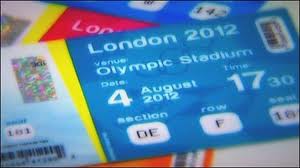
2012 London Olympic Tickets: 2028 might be the soonest we'll see Summer Olympic tickets with a U.S. City .


The U.S. Olympic Committee (USOC) recently announced that the U.S. will not put in a bid to host the 2020 Olympics.  Still stinging from two back to back losses (New York’s 2012 and Chicago’s 2016 bid) the determination was made that the USOC needed to first renegotiate the revenue sharing agreement between the USOC and IOC.  The USOC currently receives 20% of the IOC’s Global sponsorship deals and 12.75% of the U.S. TV rights.  Several members of the IOC Executive Committee aren’t too happy with this arrangement as their nations don’t get any of this money. And as these are the same guys that vote for host city the calculated decision was made to not compete until that issue is resolved.

This decision to forgo 2020 could very well mean that the U.S. might not host a Summer Olympics until 2028 at the earliest.  This is because there is already some strong talk of Denver, Reno and other cities putting together a bid for the 2022 Winter Olympics.  There’s no guarantee that a U.S. bid would win, but assuming that the funding differences are worked out, I’m guessing the U.S. would be the odds on favorite.  A successful 2022 bid then would make a 2024 bid in the same country a very unlikely prospect.  Which means that 2028 could be the next realistic opportunity for a U.S. based Summer Olympics and the automatic qualification it provides for team sports.

So, if you’re a U.S Team Handball athlete with Olympic dreams it should be pretty clear now that the only way you’re likely to fulfill that dream is to earn it via qualification.   17 years is a long time to wait unless, you’re around 12 years old now, an extremely durable athlete or a goalie.

For the U.S. Federation this reality means that  in addition to no qualification, there will be no host city looking to give the sport a boost like Atlanta did in the 1990’s.  At least not until around 2021 when the U.S. might be gearing up for a 2028 bid.  It also means no easy sponsorship deals (relatively easier, anyway) as an ancillary benefit to hosting either.  And it goes without saying, that there will be plus up from the USOC. (In past Olympics, the USOC has provided more funding as while they know medaling is unlikely, they still want to put forward a respectable performance on home soil.  Not to mention the fact, that they’ve got more sponsorship funding to throw around anyway.)

But while this is a blow, it at least makes long range planning simpler.  For instance, there’s certainly no need to factor in Olympic host city prospects into your resident program location decision.  And it makes it very clear that the only way to move way forward is with a better team and overall program.  This may seem like an obvious reality no matter where the Olympics is located, but I saw firsthand how guaranteed qualification for Atlanta 1996 resulted in at least some level of complacency in the 1990’s.   It’s human nature to ease up a bit and even great teams get a little concerned that not having to worry about qualification might make them a little soft in terms of preparation.  On the other hand, if you know that you’ve got to win to qualify, that all but guarantees greater effort.  And for the foreseeable future Olympic qualification will either mean PANAM Games Gold or knocking off two European teams in a qualification tournament.  Anything less will mean staying home.

Associated Press (22 Aug 2011): US pulls out of bid for 2020 Summer Olympics: http://sports.yahoo.com/olympics/news?slug=ap-usoc-no2020bid


post

Global Warming and its impact on North American Team Handball

Will melting icebergs result in Greenland participating in the PANAM Games?

Last week I heard several stories on National Public Radio (NPR) concerning the Arctic region.  A couple of stories on Greenland highlighted how the warmer temperatures there are making it easier to explore and potentially extract natural gas and oil.  The stories go on to highlight that dividing up the income from mineral wealth amongst a population of only 56,000 people could make Greenland a very wealthy country.  Wealthy enough so that it would no longer feel any need for Danish subsidies and could become a fully independent nation.  Hence, the title of this story.

Back at the 2007 World Championships in Germany I was first introduced to Greenland Handball and its passionate fans.  For a nation that small (population wise) to play some pretty respectable matches against much larger nations was quite a story.  Long time readers will also remember how later that year the Pan American Team Handball Federation’s (PATHF) tried to drop Greenland as a full member, so they could no longer qualify for the World Championships.  This site and others helped publicize that injustice gradually leading to Greenland’s reinstatement as a full member.

But, while this cleared Greenland for continued participation in IHF events, Greenland’s partial independence still isn’t considered sufficient for IOC and Pan American Sports Organization (PASO) related events.  This is why Greenland has never participated in the PANAM Games or qualification events for the PANAM Games, but does participate in PATHF Championships that lead to IHF World Championship qualification.

Full independence, however, would likely pave the way for recognition from the IOC and accordingly, the opportunity for Greenland to participate in the PANAM Games.  Qualification schemes could change, but the current system would logically put Greenland into the North American Qualification bin and the 3 nations would probably end up playing a single or double round robin with the 1st place nation qualifying directly and the 2nd place nation qualifying for the 2nd chance tournament.

As things currently stand Greenland’s men’s team is probably on par with the USA and Canada.  I would even probably give them a slight nod, but a resurgent USA team with a few more games under their belt would probably beat them.  The Greenland women’s team has been less competitive, but, so quite frankly have been the American Women and the Canadians are currently in rebuilding mode.   So based on results over the past decade an independent Greenland would certainly stand a good chance of qualifying for the PANAM Games from the North American region.

Greenland independence, however, won’t happen overnight and it’s also hard to project future team success.  There are a lot of variables to consider, as well, such as Canadian and American funding levels.  And not to be overlooked is the potential for a more wealthy Greenland to invest a significant portion of its sporting budget on the one sport where they are already competitive.  More funding can only take your National Team so far, but it’s worth noting that at least some of Brazil’s Handball success for the past decade can be attributed to the generous sponsorship of the Petrobras oil company.  56,000 people aren’t a lot to work with, but if Iceland can be one of the top teams in Europe with 300,000 people, it’s conceivable that Greenland could be one of the top teams in Pan America.  And it’s not out of the realm of possibility to even envision a Greenland team that could qualify for the Olympics with a PANAM Games Gold.  It would probably take the combination of a “golden generation” of Greenlander Handball players and the rest of the PATHF nations slipping a bit, but it could happen.

THN (26 Jan 2007):  Greenland Handball:  A National Passion: https://teamhandballnews.com/2007/01/greenland-handball-a-national-passion/

THN (18 Apr 2007): Why the Recent Downgrading of Greenland’s PATHF Memership Status is Wrong: https://teamhandballnews.com/2007/04/why-the-recent-downgrading-of-greenland%E2%80%99s-pathf-membership-status-is-wrong/

National Public Radio Stories on Greenland:
http://www.npr.org/templates/story/story.php?storyId=139825669
http://www.npr.org/2011/08/18/139734019/mineral-companies-eye-greenlands-untapped-wealth
http://www.npr.org/2011/08/17/139696551/greenlanders-divided-on-arctic-oil-gas-exploration
http://www.npr.org/2011/08/16/139673096/in-the-land-of-white-nights-and-erik-the-red


AUDIO: USATH Press Conference

Christer Ahl provided a good summary of yesterday’s press conference, but for even more insight check out the full audio of the press conference now available on the USA Team Handball website.  In particular, I found the discussion towards the end concerning finances and training in the U.S. vs. overseas interesting.  The audio clocks in at a little over an hour.

USATH (18 Aug 11):  Audio from the Men’s national roster announcement:  http://usateamhandball.org/news/2011/08/18/audio-from-the-men-s-national-team-roster-announcement/44212

(Note:  The audio is a wma file (vice mp3) which will may not be compatible with some computer and mp3 players.  You also may need to download/save the file first before opening to play.)


post

How should USATH decide where to locate our National Teams?

Edmond, Oklahoma: The future home of USA Team Handball. Really?

At the USA Team Handball (USATH) press conference held a couple of weeks ago I was a little surprised to hear that Edmond, Oklahoma is being considered as a potential location for our resident National Teams.  Having grown up on a farm in Iowa, I certainly don’t consider myself to be one of those snobbish types that views everything in between California and the East Coast to be “fly over country.”  There are some distinct positives about Midwestern locales like Iowa and Oklahoma.  Still, there’s probably more than a few reasons why I live in Las Vegas now as my gut reaction was, “Oklahoma? Really? This is the best we can do?”

Upon further reflection, though, I decided that a gut reaction wasn’t the best way to make an important decision like this.  No, an important decision like this should be carefully made, after a full evaluation of how well several locales meet key criteria.  And as I see it, here’s some of those criteria that should be considered:

Quality and Availability of Facilities: This may seem like a given, but experience has shown that nothing can be taken for granted here, especially when it comes to gym access.   Bait and switch, whereby the best gym facility is no longer available in the winter due to other athletic teams having priority has been known to happen.  With many gyms being sized for basketball, access to a full court is never a given either.

Local support: For the most part this criterion refers to how much support the host university will provide.  For instance, will the host school aggressively market itself as the home of the U.S. National Teams?  Will it help secure sponsorship?  Will it seek to host National Team matches on semi-regular basis and work diligently to bring in new fans?  Will it engage the local media?  Beyond, the school itself, what are the chances that a region would embrace being the U.S. Home of Team Handball?   The answer to this last question might actually work to a smaller city’s advantage as being that home could be a big thing in a small pond, vice just one more activity lost in the shuffle of a big city with lots of activities.

Ease of Travel: Where ever National Resident Teams are located players, staff and hopefully visiting clubs and national teams will need to travel to and from that location.  If you take into account all those potential trips we’re talking about some serious cash adding up over time.  For the foreseeable future it’s hard not to envision quite a few trips back and forth to Europe and geographically this clearly makes the East Coast advantageous in terms of money and time.  Certainly, the departure of the National Teams from Colorado Springs in the 1990’s to Philadelphia and later Atlanta was due in part to this factor.

Additionally, about half the population of U.S. lives in the Eastern Time Zone.  As it’s more densely populated in the East there are a number of locations where driving would be more of an option for athletes and teams traveling to the training center.  That doesn’t mean any location on the Eastern seaboard will do.  (If you’ve ever flown into Burlington, VT to get to Lake Placid, you know what I’m talking about.)  No, the location should be relatively near a major airport with a major hub for European flights being the ideal option.

Academic Opportunity and Quality: When it comes to our top sports, NCAA collegiate athletes will pick their college based on the coach, the team and the level of financial support (scholarship) they will receive from that college.  In quite a few cases an athlete will end up at a particular school simply because it’s the only one that offered a full scholarship.  For many of those athletes the academic opportunity and quality they get takes a back seat to the athletic opportunity.  When one goes lower down the pecking order in terms of NCAA sports, however, the value of the education at a particular school starts to become more important to the student athlete.  For Team Handball there will be a few potential athletes who’ll pack their bags and go to any college for the opportunity to develop their skills.  I’ll venture to guess, though, that the program will lose out on some prospects that aren’t willing to relocate to what is perceived to be a subpar institution.

Athlete Financial Incentive: Of course, the possibility of a scholarship will certainly be an enticement. As a minimum, the selected university should have some form of financial incentive.  In the case of public institutions, athletes should at least be able to get in-state tuition rates.  And for private school, there should be a minimum grant.  (Although, I would think that the costs of private schools may put them out of the discussion from the get go.)  Free room and board would certainly be highly desired as well, but barring that it would be nice to get some reduced rates and/or a guaranteed location for the team to set up house in one of the dorms.

Work opportunities: While I think the focus should be on a good college/university to sponsor the program, not all our athletes will necessarily want a four year degree.  Accordingly, there should be opportunities for professional training and 2 year degrees.  Additionally, I don’t think, that we should be overly concerned with ensuring that the location has multiple opportunities for young college graduates entering the work force.  As I’ve written before, I envision this National Team Residency program to be focused on athletes that are 23 and younger.

– USOC Support: The benefits of co-locating with an Olympic Training Center such as the ones located in Colorado Springs and Lake Placid shouldn’t be discounted.  Edmund is a designated Training site as are the facilities in Birmingham, Alabama that have been used previously.  It’s not clear what the what the difference is between a “center” and a “site” or what the overall financial incentive is for going with the USOC approved locations, but they’re probably significant.  Additionally, there’s the added benefit of having a big brother (USOC) around to help you out should there be problems with a location reneging on aspects of their arrangement

– Intangibles: There are some other factors that could play into this decision.  For instance, maybe there is another Dieter Esch out there somewhere who will donate several million dollars if the National Teams are located in Town X.   (After all, Salt Lake City didn’t just magically become the HQ for USATH, if you know what I mean.)

You can also factor in “gut reaction” into this fuzzy category.  For better or worse, there will always be locations that will garner instant positive or negative reactions.  Negative gut reactions can be overcome with the right sales job, but it’s certainly easier to not have to fight that battle.  And trust me, if Edmond, Oklahoma were to be the new home of our national teams, such a sales job would be a requirement for every athlete not living within 200 miles of there.  That doesn’t mean you can’t convince top athletes to move to Oklahoma. After all, if I’m not mistaken there’s a little town called Norman with a University that’s been doing it for years in sports like football and basketball.

So, that’s my list of criteria.  I’m sure there are others that need to be factored in.  Regardless, it can’t be understated just how big of a decision this could be.  The right deal in the right location could create a lasting hotbed for the sport with a local community turning out in significant numbers to support their U.S. National Team.  Conversely, a bad decision or a hasty one could wind up being a dead end that alienates a generation of potential athletes.

Youtube: Sarcastic home video “Welcome to Edmond”: http://www.youtube.com/watch?v=JnuaHXYef9c


post

USATH Press Conference: Insight into future plans

Veteran Sarah Gascon wants to win now.

USA Team Handball (USATH) held a phone in press conference on July 28th to announce the Women’s National Team roster for the PANAM Games in October.  Here are some highlights along with some commentary.

Playing to win (2016): Head Coach Chris Cappelmann indicated that he thinks the team has a realistic chance of beating Uruguay and the Dominican Republic in pool play, but that they would be hard pressed to beat Brazil.  It was also noted that the roster contains several younger players who will benefit from this experience and hopefully apply what they learn at the 2015 PANAM Games in Toronto, Canada.  I think Coach Cappelmann has targeted a realistic goal, even if I do give Uruguay and the Dominican Republic more of an edge due to the more experience those sides have playing together as a unit.  Without question, if the USA does make it to the semifinals it will be a major accomplishment for a program that’s been whacked pretty good in recent PATHF competition.

Playing to win (now): National Team player, Sarah Gascon, made it clear that from her perspective London 2012 was the goal.  This is certainly the right attitude for the players to have, even if the challenge is very daunting.  It’s also worth noting that a 2016 Olympics is less likely for several of the players in the “old guard” as many of them will hit the age of 30 between now and then.  If history is a guide, it’s likely that “life decisions” will put Team Handball on the backburner for some of them.

5 Weeks of Preparation:  USA Team Handball will hold a 5 week long training camp at Lake Placid prior to departing to Houston, TX (the USA staging city for all sports), enroute to the PANAM Games in Guadalajara, Mexico.  This will be the USA’s most extensive training camp prior to a competition in several years.

Lack of Games:  While 5 weeks of dedicated practice time will allow the team to gel, there will unfortunately, be a lack of competition.  USATH looked at several options for competition and training in Europe and appeared on track for a trip to Spain, but this option fell through due to lack of USA funding and the economic struggles in Spain causing the sponsoring club to withdraw much of its hosting support.  A lot can be learned in practice, but the USA may not see how well those lessons are being learned until their first game in Mexico.  This lack of competition may well be the difference between winning and losing a close game.

7 Week Commitment: With a 5 week training camp and 2 weeks at the PANAM games, athletes with be dedicated almost 2 months to the USA National Team and a shot at the 2012 Olympic Games.  This is a massive time commitment for amateur athletes, most of who are either working or going to school.  It’s simply not sustainable and the U.S. will either need to have a stable of athletes who are playing professionally in Europe or who are receiving some level of compensation from USATH.

Resident Programs coming back?: The reality of the 7 week commitment problem isn’t lost on the Federation and the possibility of restarting a nation team residency program was highlighted.  The women’s team staff was impressed with the facilities and the support of the University of Central Oklahoma’s (UCO) staff during their training camp.  UCO has been designated a Para Olympic Training Center and they were some preliminary discussions about the possibility of setting up a permanent resident program similar to what was done previously at Cortland University in New York.   Other locations in the U.S. are also being considered and  it was noted that it’s likely a men’s and women’s program would be co-located as this would have advantages in terms of staffing.

The exact nature of the resident program is still to be defined, but it does seem to be similar conceptually  to what I proposed in an article a couple of years ago in that this would be more of a development program and that top players would still be encouraged to play with overseas clubs.  The details as to who, what, where, when and how seem pretty sketch at this point.  Hopefully, we’ll hear and read more of this important development in the coming months.

Finances:  U.S. participation in PANAM Games qualification events was not fully funded by the Federation and relied heavily on financial support from the independent USA Team Handball Foundation.  In light of this fact, I asked GM Steve Pastorino to give a grade as to the financial health of USATH.  Steve’s answer was that things were still “fluid” and this understated response certainly warrants further analysis.  More financial data has been released in the past few months on the Federation website, but it’s still hard to get a complete picture as to what exactly will be funded (and to what level) in the coming years.  I’ll be trying to track that that down in the coming weeks.

USATH (GM Steve Pastorino Blog) (28 Jul 11): 15 Women Named to Team USA for Pan Am Games: http://usateamhandball.org/blogs/steve-pastorino-on-handball/posts/3077-15-women-named-to-team-usa-for-pan-am-games

USATH (28 Jul 11): Women’s National Team Roster for Pan American Games Named:  http://usateamhandball.org/news/2011/07/28/women-s-national-team-roster-for-pan-american-games-named/43816?ngb_id=42

Edmund Sun (16 Jul 11): Team USA sets up camp at UCO: http://www.edmondsun.com/sports/x1241065109/Team-USA-sets-up-camp-at-UCO

THN (15 Aug 09): A Framework for Creating U.S. National Team Success (Part 3: National Development Teams): https://teamhandballnews.com/2009/08/a-framework-for-creating-u-s-national-team-success-part-3-national-development-teams/


post

Former USA coach Isidoro Martinez on Junior Worlds and Liga Asobal

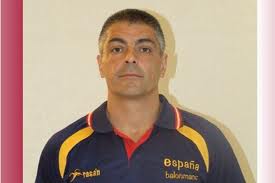
New Ademar Leon Coach Isidoro Martinez

French Handball website, Handzone, has a short, wide ranging interview with former U.S. Men’s National Team coach, Isidoro Martinez.  In the interview Martinez reflects on Spain’s performance at the Junior Worlds (he was their coach), his new job coaching Spanish club Ademar Leon and the state of the Liga Asobal.

Martinez was the U.S. Men’s National Team Coach at the 2006 Pan American Elite Championships.  The U.S. lost to Greenland 30-29 in the bronze medal match, narrowly missing qualification for the 2007 World Championships.  Martinez did a credible job of putting together a competitive U.S. side in a short amount of time and also helped Gary Hines secure his first professional contract in Spain.

Handzone: Isidoro Martinez: looking towards the Liga and Montpellier http://www.handzone.net/asp.net/main.news/news.aspx?id=55734

THN (15 Apr 2006): USA Hires New Men’s National Team Coach: https://teamhandballnews.com/2006/04/usa-hires-new-men%E2%80%99s-national-team-coach/


post

VIDEO: Men’s Jr. World Championship Semifinals and Finals available “On Demand”

Egypt and Germany played a semifinal match that's worth a second look.

The Men’s Jr. World Championships concluded on Saturday and the IHF and Greek organizers have made the full matches available for “On Demand” viewing.  The video quality is pretty good and one can only hope that better quality video is a trend that will continue for other online viewing options such as the EHF Champions League.

VIDEO Link: http://www.laola1.tv/en/int/ihf-juniors-wch-thessaloniki/video/273-1647-.html

IHF Junior World Championships Website: http://www.ihf.info/IHFCompetitions/WorldChampionships/MensJuniorWorldChampionship/XVIIIMensJuniorWorldChampionship2011/tabid/5683/Default.aspx


post

Canada at the Jr. World Championships

Canada's Daniel Audette in action vs. Hungary at the Jr World Championships

The Canadian Men’s Jr. Team participated at the International Handball Federation (IHF) Junior World Championships in Greece.  They placed 22nd out of 24 teams with an overall record of 1-0-6.  In Group Play they were not competitive, losing by an average score of 20-47.  In consolation play they fared better beating African representative Benin and losing to Chile in an overtime penalty shootout.  Casper Bilton, who plays club handball in Denmark, led the team in scoring for the tournament with 36 goals.  Alexandre Touzel was the 2nd leading scorer with 21 goals.

The IHF website and French handball website, Handzone, have a couple of feature articles on the team and it’s noted that each player had to pay around $10,000 (Canadian dollars) to participate in qualification competition in Venezuela and the final tournament in Greece.

Handzone Article:”Tough learning for Canada” http://www.handzone.net/asp.net/main.news/news.aspx?id=55715

IHF:  “Canada: Our boys are fantastic”: http://www.ihf.info//MediaCenter/News/NewsDetails/tabid/130/Default.aspx?ID=722

There’s also some pretty good footage from the match against Chile available on Youtube.

Video Highlights (Canada vs. Chile): http://www.youtube.com/user/GreeceHandball2011#p/u/18/cWWxNNj8FV8

Commentary:  While the results for the Canadian team weren’t the best, from an American perspective it’s worth noting that are neighbors to the North were still able to put together a team of 19 and 20 year olds to participate in it.  Judging by the footage of the Chile match this was a credible team that knows how to play handball.  Not to mention the fact that a few of these players are already contributing members of their senior national team.

At this point in time I think the U.S. would be hard pressed to put together a similar team.  Other than our collegiate programs at West Point, Air Force and North Carolina we only have a few other players scattered around the country and a few based in Europe.  I doubt also, whether we have very many players willing to shell out around $10,000 to play.  In short, our talent pool is thinner and without some European transplants we may have well lost to Benin and Chile by 10 goals.  But, I could be wrong about this.  Perhaps we should start a yearly competitive series for Junior and Youth teams against Canada at Lake Placid/Montreal in the Summer months to find out.

Canada Results (Group Play)
Portugal 17:49 (5:25)
Sweden 20:40 (10:20)
Hungary 21:42 (9:19)
Iran 24:45 (16:25)
Spain 17:54 (11:27)

Consolation Play
Benin 23:22 (12:12) (Crossover 21-24th place)
Chile 26:27 (10:11) (Match for 22nd place)

Canadian Roster: http://www.ihf.info/files/CompetitionData/119/pdf/CAN.pdf
Canadian Cumulative Stats: http://www.ihf.info/files/CompetitionData/119/pdf/CANTOTAL.pdf


post

Handball and Basketball at the Beach

Venice Beach Handball (foreground) and pickup basketball (background)

The Ryan family was vacationing in Santa Monica for a few days and one day we decided to take a stroll south towards Venice Beach.  Venice Beach is an iconic location featured in numerous movies and TV shows for its skateboarders, weightlifters and Southern California ambiance.  Also part of that scene are the Handball and Basketball courts near the pier.  While watching those two sports being played simultaneously a couple of whimsical thoughts crossed my mind….

1) What’s funnier, a) the fact that many Europeans are puzzled and somewhat insulted that most Americans have no clue as to what their “handball” is or b) the fact that most Americans have no clue about the Handball the rest of the world plays?

It never fails to amuse me the confusion that almost always ensues when an American and European meet and the topic of conversation turns to Handball.  As one who has witnessed and participated in this comedic dance I’ve seen it play out in a number of different ways.  I’ve seen Europeans absolutely bewildered; even angered that their beloved sport can’t even be comprehended by an American who can’t figure out how 7 people get in such a tiny space.  I guess if they traveled to Venice Beach and seen the hundred or so people watching and playing this version of Handball they’d get the picture.  Not to mention the several thousand casual observers who stroll by and witness this sort of spectacle here and in other regional locales around the U.S.  Team Handball has an increasing awareness quotient in the U.S., but it should be readily apparent to all, that there’s a reason why to most Americans our “Handball” is at best “the other handball” and more likely, the “unknown handball.”  It shouldn’t be this way, but make no mistake that’s the way it is.  There are a lot of folks to pin the blame on in regards to this reality, but it stands to reason that no one would benefit more from a campaign to change this reality than the Europeans trying to make a living playing, managing and promoting the sport.  So yes, the answer to my question is that it’s funnier that Europeans are puzzled.

2) It’s not practical to play pick-up Handball and the fact that you can play pick-up basketball has inevitably led to its ever increasing popularity.

As a middle aged athlete with diminished skills I watched the basketball games being played and immediately assessed that I could step right in and play.  One of the games I’d probably have dominated and in the other I’d been a role player.  I wasn’t about ready to step in and play, but if I wanted to I could.  Which, of course, is the beauty of pick-up basketball?.  Just about anywhere in the U.S and increasingly the rest of the world, it’s possible to find a game at your level in which you can just walk right up and start playing.  Whereas, as far as I know, there’s nowhere in the world that you can do that for Handball.  There are a number of reasons why that’s true.  Here’s a few:

– Handball’s a rough game.  Accordingly, you generally don’t want to play with just anybody.
– Handball’s a young man’s game.  Once you get north of 40 years old Handball gets to be pretty hard in terms of recovery.  This is true in basketball, as well, but based on personal experience it’s manageable.
– You got to have 14 people to play the game the way it’s meant to be played.  You can sort of make do with 12 and you can scrimmage on a half side of the court, but it’s a poor, unsatisfactory compromise. And 2 of those 14 better be legitimate goalies.  Whereas in basketball, even 2 on 2 can be fun.
– “Call your own” officiating in basketball is problematic; in Handball it’s even worse.

This whimsical thought is not meant to validate the concept that basketball is a superior sport.  No, just to merely point out the obvious:  The great sport of Handball has got some limitations when it comes to casual, spur of the moment participation.


post

2011 PANAM Games Draw: Results and Analysis

The Groups have been drawn for the Men’s and Women’s Team Handball Competition at the PANAM Games.  Both the Men’s and Women’s tournament formats start with round robin play in two groups of 4 teams.  The top two teams from each group advances to the semifinals while the bottom two teams play for 5th to 8th place.

The Gold Medal winners for the Men’s and Women’s tournament earn an automatic ticket to the 2012 Olympics in London.  The 2nd place and 3rd place men’s team earn berths in Olympic qualification tournaments Spring 2012.  The 2nd place and possibly the 3rd place women’s (TBD based on 2011 WC results) will win tournament berths as well.

Men’s Draw

Group A: Brazil, Chile, Canada, Venezuela
Group B: Argentina, Dominican Republic, Mexico, USA

Analysis:  Brazil and Argentina are clear favorites to win their groups and to eventually play each other in the Gold Medal Game.  The rest of the participants with the possible exception of Venezuela have realistic aspirations of making the semifinals.  Chile, which took 3rd place at the 2010 PATHF Championship last year and played respectably at the 2011 WC (their draw against Slovakia was a major surprise) is probably the next strongest team.  They will be challenged in Group A by Canada for the second slot.  At last summer’s PATHF Elite Championship, Chile easily defeated Canada 36-25 during Group play

In Group B, the Dominican Republic, Mexico and the USA will battle it out for second place.  Based solely on recent PATHF competition results the Dominican Republic appears to be a slight favorite having finished 1st at the PATHF Div I Championship in 2009, 8th at the PATHF Elite Championship in 2010, and 1st at the Central American and Caribbean Championships in 2010.  Meanwhile, Mexico placed 4th at the Div 1 Championship in 2009 and 3rd at the Central American and Caribbean Championships.  The USA only returned to International competition last December, where they lost to Canada on aggregate goals scored in a home and home 2 game series.  This past spring at the 2nd Chance PANAM Games Qualification tournament the USA drew Uruguay and easily defeated Venezuela.

In terms of head to head competition, the Dominican Republic beat Mexico 35-32 as the 2009 Div championship and the USA has played neither team in several years.  One can extrapolate, on paper anyway, that the USA’s results against Canada and Uruguay (two teams that have played the Dominican Republic close in recent years) means that the USA and the Dominican Republic are roughly on the same level.

Women’s Draw

Group A: Brazil, Dominican Republic, USA, Uruguay
Group B: Argentina, Mexico, Puerto Rico, Chile

Analysis:  As with the men, Brazil and Argentina are clear favorites.  In Group A, the match between the Dominican Republic and Uruguay will likely decide who advances with Brazil into the semifinals.  And these two evenly matched teams know each other well having played to a draw during group play at both the 2009 and 2011 PATHF Championships (just this past June). The USA has only returned to international competition recently and struggled to beat an inexperienced Canadian side to secure the North American slot.  The USA Women are improving, but they are significant underdog to makes the semifinals.

In Group B, Chile (3rd place at the 2009 PATHF Championship) should be favored over Mexico and Puerto Rico.  This past June, at the 2011 PATHF Championship Chile defeated Mexico, 26-22 in Group Play while  Puerto Rico and Mexico may be evenly matched.  At last summer’s Central American and Caribbean Games, Mexico beat Puerto Rico in round robin play, but then Puerto Rico beat Mexico in the Semifinals 24-21.


post

VIDEO: Free Webstreaming of Men’s Junior World Championships

Argentina easily took care of PATHF rival Venezuela 31-17 on opening day of the World Juniors

The International Handball Federation is providing free webstreaming of the Men’s Junior World Championships in Greece.  Up to 8 matches per day will be shown live at laola1.tv from 17 to 30 July.

VIDEO Link:  LAOLA1.TV: http://www.laola1.tv/en/int/more-sports/handball/junior-world-championship/video/273–.html

Note:  Scroll to the bottom and select the match that you want to watch.  Central European Time (CET) is 6 hours ahead of the U.S. East Coast.  Also matches can only be watched live.  There is no “on demand” option.


IHF: Web Broadcast Schedule: http://www.ihf.info/IHFCompetitions/WorldChampionships/MensJuniorWorldChampionship/XVIIIMensJuniorWorldChampionship2011/News/NewsDetails/tabid/5688/Default.aspx?ID=702

IHF Junior World Championships Website: http://www.ihf.info/IHFCompetitions/WorldChampionships/MensJuniorWorldChampionship/XVIIIMensJuniorWorldChampionship2011/tabid/5683/Default.aspx

Official Junior World Championship Website: http://www.greecehandball2011.org/


post

Partille Cup: How can USA Team Handball best maximize this opportunity?

USA Girls in action at the Partille Cup

The USA sent two youth teams recently to participate in International Handball Federation (IHF) Olympic Solidarity Program and the Partille Cup in Sweden.  The Olympic Solidarity Program is an IHF funded program held to support developing handball nations and the Partille Cup is a massive youth tournament with club teams from all over Europe and the world participating.  While I think it’s great that a handful of young American players are getting this exposure to Handball, some of the ugly score lines from the tournament got me contemplating whether the USA is maximizing this opportunity.

Boys Team Results from Partille Cup

Olympic Solidarity Camp Friendly Games
USA National Team 26-22 China
USA National Team 44-29 Singapore

Pool Play (16 and Under)
USA National Team 7-32 OV Helsingborg
USA National Team 9-22 Kärra HF
USA National Team 16-14 BK Ydun
USA National Team 17-22 TV Birsfelden
USA National Team 9-19 HC Eynatten-Raeren

Knock Out Tournament
USA National Team 8-21 Elverum IL

Girls Team Results from Partille Cup

Olympic Solidarity Camp Friendly Games
USA National Team 10-18 Scotland
USA National Team 12-23 Scotland

Pool Play (15 and Under)
USA National Team 3-22 Vorup FB
USA National Team 4-28 Kungsängens SK
USA National Team 4-27 Skövde HF
USA National Team 1-27 Klaebu IL
USA National Team 4-30 Skedsmo HK 1

Knock Out Tournament
USA National Team 5-14 Röyken og Hurum Graabein

Results Overview

A quick assessment of the score lines show that the boy’s team had some measure of respectability.  They won their two friendly games against China and Singapore at the Olympic Solidarity Camp and compiled a 1-5 record in their Partille Cup games, with an average score line of 10-19.  The girl’s team results were more lopsided.  They lost both of their solidarity camp games to Scotland and were totally overwhelmed in every Partille Cup match losing their 6 games with an average score line of 4-25.  (Note:  These matches were 2X15 minutes, so to get a true picture you might want to multiply the scores by 2)

Top Prospect or Any Prospect?

While these score lines were ugly we shouldn’t make the mistake of thinking this was a wasted trip.  I’ve written before about lopsided scores and the benefits the learning experience provides to the losing team.  And in that commentary I was talking about much older teams.  The two teams sent to Sweden were far younger and coupled with the training at the Olympic Solidarity Program this event was surely worthwhile for every athlete that attended.  All that being said, however, I think USATH needs to be  more low key as to the composition of this “national team”.  This was clearly a developmental team and I would classify the participants as more any prospect then top prospect.

The play on words refers to the current youth focused effort established by the USA Federation: the Top Prospects program.  There are a lot of positive things about this program as it’s providing funding, curriculum and structure to different regions of the country.  There’s a clear application process and it may be presumptuous on my part, but I think if someone is motivated and takes the time to fill out an application they probably stand a good chance of getting some support to develop a local program.  In short, the Federation is providing much needed support and incentive to start new pockets of development throughout the U.S.

But, while what I’ve just described is all well and good it appears that the program is probably falling well short of its stated mission of identifying “talented” future Olympic Players.  I say this based partly on the ugly looking score lines from the recent Partille Cup.  While those poor results can be partially chalked up to the vastly more experienced European clubs I think a team of future Olympic athletes could use that superior athletic ability to keep the game a little more respectable.   This is especially true when you factor in that most of the clubs participating at the Partille cup are only drawing athletes from one small dot on the map, not an entire county or 300 million people.

But, then again the current reality is that the U.S. is probably working with a youth talent pool smaller than what many of those clubs are working with.  In fact, based on Federation articles written promoting the trip and tryouts a cynic might even assess that just about anyone willing to pay for airfare probably could have put on a USA jersey.

The challenges of identifying top young talent

But, even if USA Team Handball had thousands and thousands in the talent pool vying for Partille Cup spots, identifying the future Olympian at ages 15 and 16 is probably a futile mission.  Out of curiosity I checked out the USA Basketball website to see what kind of Under 19 and Under 18 rosters they’ve sent to assorted FIBA tournaments in the past 15 years.  I didn’t do an in-depth review, but the typical roster only had 1 or 2 players whose names I recognized and with a few notable exceptions (Carmelo Anthony and Chris Bosh) I didn’t see a whole lot of Olympians.  And this is for a U19 roster for a major sport where colleges spend hundreds of thousands of dollars recruiting and assessing potential high school prospects.  So, with all those resources being applied they are either missing some talented players or more likely those talented players are still developing as athletes.  And this is at ages 18 and 19!  If you look at ages 15 and 16 players like Michael Jordan (he got cut from his HS Varsity team as a sophomore) would never ever get selected.

Recommendations:  Focus on maximizing exposure

So, if you take into account that a sport like basketball can’t do a great job of identifying Olympic talent at young ages, it’s very unlikely that we’re going to do the same for Team Handball.  And if you couple that fact with the other challenges our sport faces competing against other more established sports, we need to make sure were maximizing the potential benefits of Partille Cup participation. And in my opinion, maximum benefit equals maximum participation.  With that in mind I have the following recommendations.

1) Maximize nationwide participation: The rosters for the Partille Cup had fairly heavy representation from only a few Top Prospect programs.  Notably, the girl’s team was mostly from New Jersey while the boy’s team was spread out a little better with 3 players each from Salt Lake City and Chicago.  I would argue that it would be better to further spread out that representation, so that only 1 or 2 players be allowed to participate from a local youth program.  Such a quota would give more players from clubs and Top Prospect programs exposure to the Partille Cup experience.

2) Limit participation to “one and done”:  Attending an event like the Partille Cup can be life changing for a young athlete.  It is a totally unique opportunity and has the distinct possible outcome of creating new Handball fans for life.  Attending the same event in subsequent years, however, will not have a significant multiplying effect.  Therefore, it would be far better to maximize the numbers of kids who get that opportunity.  Hence, my one and done proposal to ensure that as many kids as possible get that experience.  Undoubtedly, this will mean the official USA teams that are sent won’t be as strong, but results are really secondary at these ages. (A short side note here:  There’s nothing to prevent anyone participating or creating their own team to play in this event.  I’m simply talking about the teams that are getting resources from USA Team Handball.)

3) Come up with a new name for the team:  Since the criteria above will keep us from sending our best team forward the USA team should be given a name like “USA Select” or “USA Development Team”.  This is semantic, but in terms of promotion to the rest of the world it will help to at least partially explain ugly score lines.

4) Continue to promote the event:  My compliments to Kyle Hanson and the USATH staff for their regular reporting on this event.  This isn’t the first time a team from the USA has attended, but it’s the first time it’s gotten the exposure it deserves.  Future prospects will read those reports and target this as an event they want to play in.  Promotion is key to getting the word out and expanding the talent pool.


USATH:  Top Prospects Program Overview:  http://assets.teamusa.org/assets/documents/attached_file/filename/37770/Top_Prospects.pdf

USATH (18 Feb 11): 20 Athletes Converge on Colorado Springs for Youth National Team Selection Camp: http://usateamhandball.org/news/article/41031

USATH  (10 Jun 11): USA Team Handball youth taking on the 2011 Olympic Solidarity Program and Partille Cup in Gothenburg, Sweden: http://usateamhandball.org/news/article/42763

USATH (15 Jun 11): U16 Boys and Girls Rosters Named for Partille Cup: http://usateamhandball.org/news/article/42855

USATH (28 Jun 11): U16 Girls Training Camp in August at the Lake Placid Olympic Training Center: http://usateamhandball.org/news/article/43135

USATH (13 Jul 11):  Youngsters shine at Partille Cup:  http://usateamhandball.org/news/2011/07/13/youngsters-shine-at-partille-cup/43521

Partille Cup VIDEO: Olympic Solidarity Overview: http://partillecup.com/eng/index.php/home/webb-tv/?film=4407

USA Basketball (Under 19 History): http://www.usabasketball.com/mens/u19/history.html


post

Brazil Women win gold with dominating performance

Brazilian women celebrate after easy win vs Argentina

Brazil easily defeated rival Argentina 35-16 on Saturday to win the Gold Medal at the Women’s Pan American Championships.  The contest was never in doubt as Brazil held Argentina scoreless for the first 13 minutes on the way to a 22-5 halftime lead.  Throughout the tournament, Brazil was clearly the best team with an average margin of victory of 19.2 goals.  The closest any team came was 15 goals by Cuba and Mexico in Group Play.

Looking ahead, the Brazilian women will be overwhelming favorites to win the Gold medal and Pan American Olympic spot at the PANAM Games in Guadalajara this October.  On top of that they also appear to be in good position for a breakthrough performance when they host the World Championships in December.  In 2009 they beat runner-up France in pool play, but then placed a disappointing 15th place after failing to qualify for the Main Round.  They’ve shown they can play with Europe’s best and with most of their roster now with several years of experience playing on top European clubs they know they have the talent.  Add the benefit of hosting the event a run to the semifinals is a distinct possibility.

With Brazil separating themselves from the rest of the pack it appears that the PATHF women’s team can currently be grouped as follows:

Tier 1:  Brazil
Tier 2: Argentina, Cuba
Tier 3: Uruguay, Chile, Dominican Republic
Tier 4: Mexico, Venezuela, Puerto Rico, USA, Canada

While it may be all but a foregone conclusion that Brazil will win Gold at the PANAM Games, the tournament does present an opportunity for teams to compete and show improvement against upper tier teams.  With Cuba not participating in the PANAM Games due to their decision not to play in the Central American and Caribbean there should be an interesting battle between the tier 3 (Uruguay, Chile and Dominican Republic) and tier 4 teams (Mexico, Puerto Rico and USA) for semifinal spots.  Beating Brazil and Argentina is not likely for those teams, but a bronze medal opportunity is certainly a possibility.