post

Grass Roots vs National Team Focus: Part 4: Both Can be Done, but there are no Shortcuts

14 years ago Germany implemented a long range plan to fix its soccer development programs. It appears to have worked well.  Should USA Team Handball do the same?

14 years ago Germany implemented a long range plan to fix its soccer development programs. It appears to have worked well. Should USA Team Handball do the same?

In part 3 I addressed the competing “National Team First” and “Development First” philosophies USA Team Handball has had over the years.  In this latest installment I highlight how both can be done with a long range plan built around a once in a generation opportunity.  Part 1 Part 2

Lessons from German Soccer:  Focus on Development and be Patient

In handball circles the news lately has been about how the Men’s German Handball side has been gifted a qualification slot for the upcoming World Championship.  The German National Team has fallen on hard times lately and what couldn’t be accomplished on the court through qualification matches to the detriment of Australia has been accomplished with the stroke of a pen. What a strange contrast that presents with the recent German soccer World Cup triumph.  14 years ago German soccer was humbled by a very poor performance at the European Championships and came up with a plan to address systematic problems with youth development.  A World Cup title and a very deep talent pool of up and coming players strongly suggests the plan was a good one and this short article in Business Week and this longer article in the Guardian highlight what the German Federation has done.    In a nutshell, Germany revamped its youth programs to find and train talent as early as possible.  One would think the German Handball Federation would be taking a close look at the German Soccer model to see if it could be applied to German Handball.   And, come to think of it, maybe USA Team Handball should take a look as well.

Unfortunately, though, what the Germans implemented didn’t come cheap and I don’t think USA Team Handball is going to find 85 Million Euros (on a yearly basis) lying around to duplicate the German Soccer development program.  Heck, $850,000 would be awesome.  That being said there are a number of initiatives that could be enacted at lower funding levels.  And, each of those initiatives or programs should ask and answer a basic question:

How does this initiative or program help USA Team Handball find and develop more quality athletes with great potential (e.g. younger ages) for our National Teams?  

If we start to implement initiatives that successfully answer this question the U.S. will gradually grow a talent pool from which a competitive National Team can be fielded.  The key word is gradually.   This won’t happen overnight and we could debate how long it will actually take.  For German soccer it took 14 years and it wasn’t like they were starting from scratch.  But, then again I don’t think we’re talking about world domination here.  We’re talking fielding competitive U.S. National Teams.  Teams that can win a Pan American title and can compete with the Europeans.  Heck, even start to beat them.  Rosters with plenty of talent and several players playing in Europe on some of the world’s best club teams.  It’s going to take awhile, though and it’s going to take more resources then what USA Team Handball has right now.   Still if you’re planning for the future it’s best to not have an open ended time frame on a difficult challenge, but a target to shoot for.   USA Team Handball has often planned in 4 year blocks focused on the upcoming Olympics.

The U.S. Olympic Goal

For the world handball community the handball tournament at the Olympic Games is a big deal.  For countries where handball is a significant sport it’s an opportunity to compete for a medal.  For the top players in the game it’s a capstone career opportunity to showcase their skills on a big stage.  For countries like the United States where the sport is less popular or virtually unknown, though it’s even a bigger deal.  Having a men’s or women’s (or ideally both) participating in the Olympic Games provides exposure and access to funding opportunities that is hard to match.  It can truly be a game changer and could ultimately be the vehicle to propel the sport from virtually unknown to a significant niche sport with a significant fan and player base.  This is why the U.S. Federation has almost always made qualifying for the Olympic Games the top priority and accordingly directed the bulk of its resources to making it happen.

Olympic Prospects

Unfortunately, though, there’s very little to suggest that the U.S. can make it happen anytime soon.  I’ve highlighted U.S. prospects for 2016 previously and there’s been little progress in the past year.  Honestly, it’s probably about a 50-50 chance as to either the U.S. Men or Women can beat Uruguay and will even qualify for the PANAM Games.  (If the 2nd chance tourneys are hosted by the U.S. those odds improve; if either the men or women have to travel to Uruguay they drop.) And then placing either 1st or 2nd (if Olympic hosts Brazil wins either the men’s or women’s title) at the PANAM Games is even a longer shot.  Probably, around 40-1 for the men and 20-1 for the women.  Some might think based on recent results that I’m being overly generous, but with the resources being invested there’s actually a chance the U.S. could become competitive enough for a long shot bid in a year’s time.  So, despite a long trail of dismal results there’s still a chance, albeit slim, of Olympic qualification.  Also, the women’s pool (minus Brazil) is somewhat weak and injuries to say Argentina could make the tourney wide open.

I haven’t addressed 2020 prospects specifically before, but the prospects are also pretty bleak, particularly for the women.  Brazil’s hosting of the Olympics in 2016 presented a one time opportunity for the other PATHF nations to avoid the likely necessity of defeating that world class side.  Heck, strike “world class”, they’re the World Champions!  Come the 2019 PANAM Games in Peru I doubt that the Brazilian Women will be as strong as they are now, but it’s foolhardy to expect that they will have an epic drop in quality.  Undoubtedly, there will be several player retirements, but there will still be some holdovers.  Additionally, they must have some upcoming talent based on their Junior Team’s 29-19 defeat of Team USA recently.  This Junior Team (athletes no more than 20 years of age) actually blitzed the USA to a 19-4 half time lead, suggesting the outcome could have been worse.  For the USA Men, Brazil will also again factor into the qualification mix, but the real class side is Argentina with its standout centerback Diego Simonet.  Arguably, at age 24 now he is already the best male player to ever come from a PATHF nation and he will likely be in peak form four years from now.  Injuries can always play a role, though, and Argentina, Brazil and Chile do not have overwhelming pools of talent.  The USA Men are significantly below those 3 sides now, but it’s feasible that a full fledged residency program could field a team within shouting distance in 4 years time.   With some of the USA Men’s top players pushing 30 or greater, however, several new players would have to come on strong.  Even with this happening, though, 2020 is still a long shot.

Which leads us to 2024 and a sudden huge increase in USA qualification prospects.  Of course, this qualification prospect has nothing to do with the quality of Team USA 10 years from now and everything to do with USA prospects for hosting the 2024 Olympics.  We won’t actually know whether the USA will host the 2024 Olympics until 2017, but the stars appear to be aligning for this to happen.  The USOC decided to forego a 202o bid and has been strategically positioning for 2024 now for several years. Stung by defeats to win several Olympic bids they’ve mended fences and built repoire with IOC members.  I wouldn’t bet the farm on Los Angeles, San Francisco, Boston or Washington,D.C. hosting in 2024, but I would feel far more comfortable on that bet then a USA Olympic slot in 2016 or 2020.  Overall, reading the tea leaves, there’s maybe an 80% chance that USA Team Handball will be taking the floor at the 2024 Olympics in Los Angeles, San Francisco, Boston or Washington D.C.

A Logical Long Range Goal

So, if you couple the long odds for Olympic qualification with the time requirements related to player development there’s a logical long range goal staring USA Team Handball in the face.  And that goal is to field competitive USA National Teams at the 2024 Olympics.  More broadly, it’s how best to maximize the opportunity the 2024 Olympics will present in terms of exposure and continued sustained growth for the sport.  Anyone who was around for the 1984 or 1996 Olympics saw the bump the sport got when the U.S. hosted those Olympics.  Recruiting was easier, sponsorship was easier and interest in the sport increased.  Actually, this happens with every Olympics, but when that Olympics is also in the U.S. the effect is tremendously magnified.

As sure as the sun comes up in the east a big bump is coming.  The thinking now should be what can be done to turn this big bump into a massive bump?  A bump that starts a couple of years earlier than it did in either Los Angeles or Atlanta, a bump that rises higher and is sustained long after the Olympics.  A bump that results in a “tipping point” that makes team handball a nationally recognizable sport with a real following and opportunities for continued growth.  It should not be lost on anyone that the Los Angeles and Atlanta bumps were not as big as they could have been as interest was not sustained and growth did not materialize.

Some might argue that this is all well and good, but this opportunity is 10 years away.  USA Team Handball has got lot to be done in the mean time.  True as well, but I would argue that current efforts can and should be accomplished with both eyes squarely focused on the future.  Programs to support National Teams today can be structured to smartly build for the future.  And grassroots programs can be developed so that they maximize opportunities to identify and train future National Team prospects.

In short, USA Team Handball should look at everything it spends time and money on and ask a simple question:

How does this initiative or program help USA Team Handball field competitive teams at the 2024 Olympic Games?

And, if the answer is that the initiative or program doesn’t do much, if anything.  Well, then the next questions should be why are we doing it and can we modify it so it does support this long term goal.

This concludes my series tackling the grass roots vs national team debate.  Next, I’ll start addressing initiatives and programs that USA Team Handball should consider implementing.  First up, I’ll address the Residency Program at Auburn and how they could be modified to better focus on the future.


post

Grass Roots vs National Team Focus: Part 3: What’s the Right Level of National Team Support?

Pendulum

In part 1 I addressed the recent Women’s National Team results and in Part 2 I highlighted the weak club system in the U.S.  In this part I take a step back and philosophize a bit about how to go about determining the appropriate level of support for U.S. National Teams.

Both the U.S. Men’s and Women’s Team recently traveled to South America for competition.  The Women played several friendly matches in Brazil while the Men played a couple of preparatory matches in Brazil prior to traveling on to Uruguay for the Men’s Pan American Championships where they placed 6th out of 8 teams.  Both trips weren’t free and as a proponent of more spending on developmental efforts you might think that I would argue against them being made; but, you would only be half right.  For reasons, I’ll elaborate on I think the Men’s trip was warranted while the Women’s trip was not.

History Lesson: A Swinging Pendulum of Support

First off, a brief history lesson in regards to the level of support that has been provided to U.S. National Teams in the past is warranted if you want to better understand contextually what could or should be done.  The graphical picture at the top of the page is a simple depiction of the level of support that has been provided in the past.  It’s simplistic in that the actual level of support varied from year to year.  At some points the residency programs were more austere than full fledged.  The competition trips overseas varied and at times funding and resources were shifted towards different development programs.   In general, however, overall I think the years depicted on the pendulum accurately reflect an overall philosophy in regards to funding and support towards National Teams.

And, if you look at the depiction, you’ll note that the philosophy and focus most of the time has been towards National Team support.  In fact, you could argue that except for the Dieter Esch era (2007-2011) it’s always been National Teams first.  It’s just that since the USOC dramatically reduced funding support after the 1996 Olympics there hasn’t been sufficient funding to support them properly.

For the purposes of discussion I’ll first highlight the arguments for the 2 viewpoints on the opposite end of the spectrum:

Philosophy 1: National Teams First 

Here’s 3 arguments as to why USA Team Handball should have a “National Teams First” philosophy:

1) It’s the raison d’etre.  Fundamentally it can be argued that this is primary reason for sports federations to exist at all.  National Teams simply have to have a Federation providing the logistical and administrative structure backing their existence.  The USA has the best basketball players in the world, but somebody has to hire the coaches, organize the training camps and logistically set up the trips for competition.  What’s true for USA Basketball is true for USA Team Handball.

2) It’s the best platform for recruitment and development.  The performance of our National Teams has been downright dismal of late and in reality never very good, but undeniably a legitimate National Team program is a beacon for recruitment and development.  I speak of this first hand from my own experience as an athlete.  The possibility of training and playing for the U.S. National Team was a tremendous motivator for me.  Absent this carrot I doubt that I would have invested the time and energy to become a decent player.  What was true for me 25 years ago is still true today.  Also, a National Team regularly training and competing (even a weak team) will help promote the sport and spur development.

3) The USOC forces this upon the Federation.  The primary source of USA Team Handball’s funding historically has been the USOC and the USOC has been fairly clear that the bulk of it’s funding support needs to be spent on High Performance Programs (HPP).  The Federation might prefer to direct funds towards development efforts, but the USOC won’t allow it.

Philosophy 2: Development First 

Here’s 3 arguments as to why USA Team Handball should have a “Development First” philosophy:

1) It’s also the raison d’etre.  While it is undeniably true that only a Federation can provide the structure for National Teams it’s also undeniably true that development is part and parcel to the purpose of a sports federation.  One just has to read the Federation mission statement:

The mission of USA Team Handball shall be to develop, promote, educate and grow the sport of Team Handball at all levels in the United States and to enable United States athletes to achieve sustained competitive excellence to win medals in international and Olympic competition.

Why, one could even read this mission statement and it’s initial emphasis on development and conclude that it has primacy over the afterthought, second part of the sentence.

2) Grass roots programs are in a deplorable state.  Many other sports federations in the U.S. put very little emphasis on development.  Thing is, however, to varying degrees those sports already have robust grass roots development in this country.  For instance, USA Basketball doesn’t even have to lift a finger in regards to development as nationwide programs already exist.  For USA Basketball, all they have to do is pick which athletes they want from a pool of thousands.  By contrast, USA Team Handball has only a few legitimate prospects from a handful of programs.   Focusing on National Teams without establishing a credible foundation is foolhardy and a recipe for continued failure.

3) USA National Teams aren’t currently competitive and won’t be anytime soon.  Both the Women’s and Men’s National Teams haven’t been competitive for several years.  I’ve highlighted this lack of competitiveness several times and depressingly we are not only regressing we’re getting older.  There’s a handful of new prospects with long term potential, but far too few to justify the resources currently being dedicated to our National Teams.  Anyone who things either the U.S. Men or Women have a legitimate shot at qualifying for the 2016 Olympics is in a state of denial.  Why, even with dramatically improved recruiting 2020 is a huge long shot.

Is There a Middle Ground?

In many cases the proponents on the opposite ends of the spectrum will state that they they value both grass roots and national teams, but with limited resources money talks and philosophies become entrenched.  At times it seems as if many in the National Teams First crowd take comfort in the clarity of purpose a National Teams focus provides.  It might be a difficult objective to field a competitive National Team, but the basic tasks are straightforward and concrete.  Hire some coaches, find a place for teams to train and send them to competition. Ignore the low prospects for success and adopt a Don Rumsfeld like philosophy that can be characterized by his infamous response to a soldier that complained about inadequately armored vehicles: “You go to war with the army you have, not the army you might want or wish to have at a later time.”

Rumsfeld was critiqued pretty strongly for this cavalier response, but in some respects there was some legitimacy to his point.  After all in WW2, the U.S. didn’t wait around to build up its forces after Pearl Harbor.  But, as critics pointed out that legitimacy gets pretty weak when the war you’re talking about is not a necessity, but a war of choice.  Meanwhile on the other end of the spectrum, the grass roots crowd often gets caught in a perpetual building for the future mindset.  They dramatically don’t realize the extent of the problem they want to fix and the fact that it might never be fully solvable in a country as vast is the U.S.

A Middle Ground, but Where to Draw the Line?

Obviously, there’s a middle ground between the two extremes and even if your feet are squarely in one camp or the other, I’d like to think that most folks at least recognize the legitimacy of the basic arguments presented.  And, everyone with an opinion should also be able to take a step back and acknowledge any biases that might be unduly weighing where they stand.  For instance, I’ll draw upon my own experiences and unequivocally state that I was squarely in the National Teams First camp from ages 20-30.  (Not, coincidentally, I was also of National Team athlete age.)  Ever since then, however, I’ve steadily moved more to the other camp.  Lots of things have undoubtedly influenced this besides getting older such as struggling to start new clubs and seeing first hand what the U.S. is up against in terms of European structure.  I suppose if either of my daughters get the handball bug, maybe I’ll non-coincidentally switch camps as they enter their 20’s.

But, despite being for more development, I still see the need for a National Team program.  Back in 2011 I was outraged by the Federation’s decision to essentially abandon the National Teams and not even attempt to qualify for the Olympics.  Not that I thought the U.S. had a snowball’s chance in hell.  It’s just that I felt a line should be drawn somewhere and that a Federation should as a minimum roll out a team every two years for Pan American Championship or PANAM Games qualification.  In my mind’s eye those events were the equivalent of “going to war” and regardless of how weak our teams were we needed to show the flag and benchmark where our nation stood in comparison to other teams.  Of course, that’s just my opinion.  It wasn’t the Federation’s opinion at the time and now I see myself on the other side of the argument.  Sending an aging Women’s team with little chance at 2016 Olympic qualification on overseas trips for friendly competition while our development cupboard is bare is pretty hard to justify in my opinion.  And, I’ll state the same thing if I see the Men’s team being sent abroad for friendlies now too.  Of even more importance is taking a very critical look at the Residency Program at Auburn and assessing how it matches the long term goals and objectives of USA Team Handball.

Finally, to beat the dead horse into even more senseless submission I’ll reiterate that this will require some strategic planning and actually stating what USA Team Handball’s long term goals and objectives are.  And then, doing the same thing for the near term and mapping programs and initiatives to those goals and objectives along with benchmarks to assess whether those programs are being successful.  Such a process was started two years ago and abruptly stopped.  It’s time to quit pretending that this never happened and USA Team Handball has a well thought out plan in place.

Yikes.  Easier said than done. This is complicated.  Where should USA Team Handball start?  If only there was a way to get our arms around all that’s needed to be done with some resources and within a reasonable time frame.   But, maybe there is a once in a generation event on the horizon that just might make it feasible.  In the next part I’ll discuss that event and the 10 year plan that should be developed.

post

Grass Roots vs National Team Focus: Part 2: Aging Veterans and Expats vs. Up and Coming, Homegrown Talent

Club contrast

USA with two national club titles. NYC takes Canadian title while NYAC repeats as American champions. But, the real winner in terms of development is Alberta: the Canadian runners-up:

In part 1, I highlighted that recent national team performances should at least call into question the U.S. Federation’s focus on National Teams.  In this part, I address the state of club handball and the development of home grown talent in the U.S. and whether the Federation should prioritize improving it.

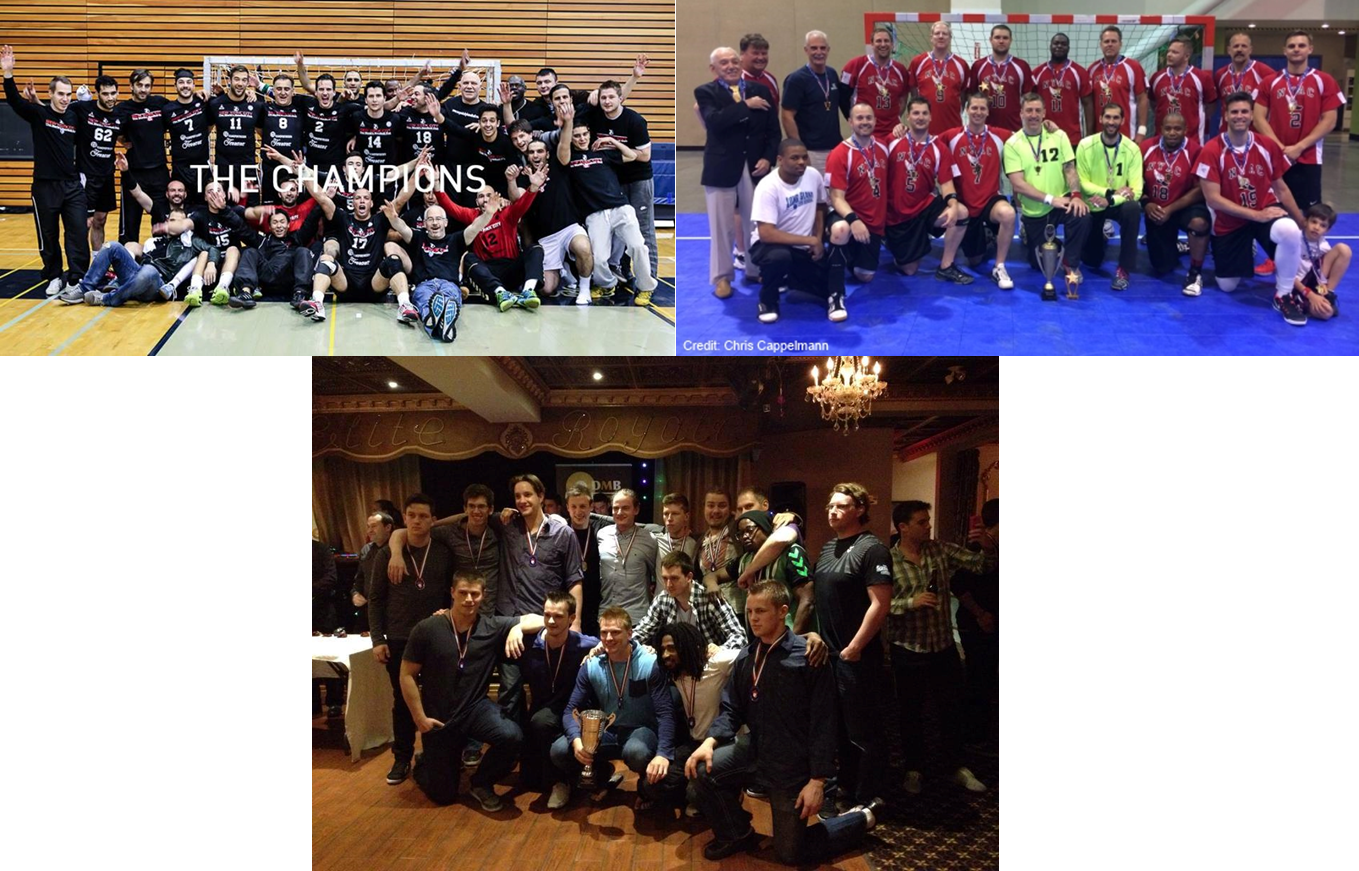
Last month U.S. club teams pulled off a double championship. NYC Team Handball skipped the U.S. National Championships and instead went to Toronto and took the Canadian title.  Meanwhile, NYAC held down the fort in Reno, and repeated as U.S. Champions.  On the surface one might look at those results and come to the conclusion, “Not too shabby.  Our clubs won two titles and  New York City must be the epicenter for grass roots development in the U.S.”

Of course, anyone with even a casual interest in Team Handball in the U.S. knows that statement would have little basis in reality.  The NYC Team Handball Club is almost entirely comprised of expats and naturalized U.S. citizens who learned the game in another country.  I would also guestimate that the average age of the club’s members is around 33 years of age.  Meanwhile, NYAC does consist mostly of home grown talent, but the average age of the club is an eye-popping 39.7 years old!  As an old timer I take a little satisfaction in that guys that I played with and against in the 80’s and 90’s can still do it.  Why, it almost makes me want to round up the old Condors and take the title away from them next year.  Don’t laugh, with Gary Hines playing for us I wouldn’t count us out. I also haven’t seen Darrick Heath in years, but something tells me that at age 49 he could probably still  make the U.S. National Team roster if he wanted to.  And why stop there, if we want to truly go old, old school I bet the the Sushi Masters with several players pushing 60 could do pretty well.  (Perhaps an update to this 18 year old video is in the offing?) In all seriousness, though, the fact that I am only half jokingly entertaining these thoughts, speaks volumes about the state of club handball in the U.S.   There’s something seriously wrong with our club system if the best team in our country has an average age of 40.

Meanwhile, up north in Canada, most of the teams participating featured rosters dramatically different in composition.  Runners up, Alberta, for example was entirely composed of home grown athletes and had an average age of 22 years old.  With the exception of collegiate participants like West Point, Air Force and North Carolina, the U.S. has no club teams that are comparable.  Heck, most club teams don’t even comes close to those demographics.

Before I continue on, I’d like to make something perfectly clear:  I’ve got nothing against expat and old timer teams.  As I’ve written numerous times before, having these teams around is great for development in our country as they can show newcomers how to play the game.  Nothing perhaps motivated me more as a newcomer to the game then getting beaten by somewhat older, often a little out of shape, Euro players who knew the game.  The problem is not those teams.  The problem is that there are very few newcomers around that are benefiting from playing those teams.

Clearly an Issue, but is Fixing this Problem a Priority?

I’m fairly certain that virtually everyone who cares about the sport in this country would assess that our lack of up and coming, homegrown talent is an issue of concern.  More teams with younger players enthusiastically playing and improving their handball skills is something in principle everybody can get behind.  Even if you are wholeheartedly convinced that National Teams should always get the lion’s share of the budget, you still need players for that roster and it sure would be nice to get even a few trained up internally via a vibrant club system.

When push comes to shove, however, and decisions have to be made on where to spend limited funds and where to direct staff man hours something’s gotta give.  And, you don’t have to do much forensic analysis to quickly come to the conclusion that the U.S. Federation has decided over the past couple of years to mostly direct funds and man hours towards near term performance of our National Teams.  Hiring full time coaches, setting up the residency program at Auburn, and trips to Puerto Rico and Brazil are obvious indications of this.  Lacking recent budget information or recent documentation of Board of Director decisions it’s not possible to know exactly how much is being spent, but I would guess that around 80% of the current Federation budget is being directed towards our National Teams.  And, at the same time I would estimate that the Federation staff is probably spending around 80% of their time addressing issues related to the National Teams.  Residency programs don’t run on autopilot and trips abroad undoubtedly require a lot of coordination and legwork.

A Quiet Cancellation

This is not to say that nothing is being considered or done in terms of development, but it clearly is getting the short end of the straw.  Probably nothing demonstrates this more than the very quiet cancellation of the Summer Handball Festival that was originally planned to take place early in July at Auburn.  Announced in January this event was to be focused on identifying athletes aged 17-22 and appeared to be similar in concept to the Olympic Sports Festivals that were staged by the USOC from 1978 to 1995.  At those 2 week long events four regional men’s and women’s team usually composed of current National Team and up and coming players practiced and played several matches.  Having participated in 3 festivals I can tell you first hand what a great event they were and how important they were to USA Team Handball in terms of recruitment and player development.

I was pleasantly surprised by the January announcement, but immediately noticed the glaring omission as to costs for prospective participants.  In correspondence with the Federation I found out that prospective athletes were going to be expected to pay around $400 plus their travel costs to Auburn.  Doesn’t take a rocket scientist to immediately assess that finding new blue chip recruits willing to pay those costs was going to be challenging.  (In contrast, everything (room, board, travel)  was paid for at Olympic Festivals.)  In order for this good idea to be feasibly implemented it surely was going to need either an influx of cash or some motivated prospective athletes to come out of the woodwork.  I’m guessing that neither materialized, necessitating it’s cancellation, but perhaps it’s still on the drawing board for future implementation since it’s still being advertised on the Federation webpage.

How is USA Team Handball Prioritizing?

When an organization like USA Team Handball has constrained resources it’s impossible to do all the things that need to be done.  Heck, it’s tough to do even a few of the things that need to be done.  Faced with this reality USA Team Handball needs to carefully think through what it wants to do and what it hopes to accomplish.  What will get the best bang for the buck?  What are the critical needs?  Are funds being directed towards efforts that stand a good chance of succeeding? I’ve got real doubts as to whether these questions are being fully considered and whether enough alternative options are being weighed on their merits.

Case in point are the USA Women’s trips to Puerto Rico and Brazil.  I don’t know how much those trips cost, but for sure those funds and resources could have been spent elsewhere.  And, if a summer handball festival was already being planned, funds could have gone towards making the Summer Festival less austere.  If viable recruits were in short supply than manpower could have been redirected towards aggressive recruiting of younger athletes as opposed to training athletes that are nearing the end of their national team careers.  And, this is but one possibility as there are many more possibilities worthy of consideration.

Alternatives for National Team Success

What are some of these alternatives?  Well two years ago in Salt Lake City, USA Team Handball hosted a Strategic Planning Conference where a whole host of possibilities were discussed.  In a commentary I wrote last year I highlighted some of those initiatives and added a few of my own.  Here’s the list:

– Establish regional Centers of Excellence
– Establish a European based training center in collaboration with the IHF and other developing nations
– Provide stipends for overseas training with clubs to the nation’s top 30 players
– Provide funding to 10 U.S. based clubs to support player identification and training
– Designate one metropolitan area in the U.S. for Elite competition and apply funding to make it happen
– Identify national team coaches for an extended period of time, but pay them only part time wages
– Hire a full time recruiting coordinator and have them focus on expanding the player pool at ages 18-22
– Hire a full time youth development coordinator and have them focus on developing a model program in one U.S. metropolitan area
– Work with a designated school district to implement a sanctioned High School Team Handball League to serve as a model for other school districts.
– Work with the NCAA to identify one Division 1 conference to support a Team Handball League
– Conduct a 10 day U.S. Olympic Festival style training camp for 120 elite NCAA athletes.
– Sharply curtail current expenditure on U.S. Senior teams and focus entirely on Under 21 development in hopes of improving odds for 2020 qualification
– Sharply curtail Men’s National Team funding and focus on the brighter prospects (weaker competition/Title IX) for Women’s team development .
– Sharply curtail funding and resources related to adult club teams and focus efforts on college and youth teams. (i.e., Don’t waste time organizing competition and national championships for predominantly Expat players or athletes over the ages of 25)

Perhaps it’s wishful thinking on my part, but I think it’s only a matter of time before the Federation takes a critical look at its current programs and reassesses its options going forward.  Not that I would envision a dramatic shift away from the current National Team focus, but surely there’s some potential for tweaking and modification of the Residency Program to more closely align with long term development.  Even better, maybe some additional funding through new sponsors will come available meaning that instead of choosing between competing alternatives the Federation will have the means to implement multiple initiatives.

In the hopes of influencing those upcoming decisions I plan to assess these alternatives in terms of their pros/cons, feasibility, risks and costs involved with implementation.  And, I’ll also be adding a few new possibilities that come to mind:  Like figuring out what the heck is going on in Alberta in terms of development and whether that success can be duplicated in the U.S.

But, before I start delving into the alternatives I’ll take a closer look at the rationale behind the Auburn Residency Program.  The one alternative that was summarily chosen.  It’s not the “no brainer” way ahead for USA Team Handball that some people think it it, but there’s actually some decent rationale that even a die hard grass roots proponent can get behind.


post

Part 1: Grass Roots vs National Team Focus: Recent National Team Losses Should Raise Doubts on National Team Focus

Intrepide Youth

How does a club team in Guadeloupe beat a national team from the U.S.? Answer: It’s start with superior youth development programs.

This past April the USA Women’s National Team traveled to Puerto Rico where they played several matches.  They lost twice to the Puerto Rican national team, beat the Puerto Rican junior national team and lost twice to French Guadeloupe’s top club team, Intrepide.  Depending on your perspective these results could be considered as either totally disheartening or a sign of mild progression.  If your perspective is that of an old timer you’re disappointed as Puerto Rico is a team that the U.S. would typically beat by 10 goals or more.  If your perspective is more recent it’s a sign of mild progression as the Puerto Rican team is roughly equal to the U.S. and we were able to play competitively against them in their home country.

More interesting to me, however, are the the two losses against, Club Intrepide, and the contrast it presents.  Most Americans probably don’t know much about France’s Overseas Departments: Guadeloupe, Martinique and Reunion Island.  I, for one, was fairly ignorant about them until I lived in France and started following French sports more closely.  France’s national handball and basketball teams have several players from these Islands far removed from France.  And athletes from from these islands also play on a number of club teams in France.  I saw this first hand in the over 35 basketball league I played in while living in Paris. Trust me, those guys from the Caribe can play ball and this tall American player knew he was in for a workout, but also thankfully for some Ti’ Punch after the match.

Still, Guadaloupe has only around 400,000 inhabitants and the town of Sainte-Anne where Club Intrepide is based has 23,000 residents.  How does a small town with very modest living conditions put together a club that can beat the U.S. National Team?  Well, there are probably a number of reasons, but I would argue that the underlying reason is that the tiny town of Sainte-Anne has a better organized and structured youth program than what the entire U.S.has put together coast to coast.  Most likely the players on Club Intrepide have been playing since their early teens, if not earlier.  Whereas most of the players on the U.S. weren’t introduced to the sport until their 20’s.

U.S. Women’s Team:  Modest Progress or Regression?

In theory, with 318 million people the U.S. can overcome its lack of developed youth programs by finding and training top notch athletes regardless of age.  And, superior athleticism can indeed trump skill and experience if the athleticism gap is big enough.  But, that’s a big “if” and these recent results are a pretty strong indication that the U.S. isn’t overwhelming it’s competition athletically.  Instead it is simply a continuation of less than satisfactory results seen in 2011 and 2013.  And, while Rome wasn’t built in a day there should be an expectation of better results.

Even more concerning is a not widely advertised loss that the U.S. Women suffered against West Point at the Collegiate nationals.  (I did not see this match, but heard one of the commentators mention it during one of the other matches.)  I suspect that the U.S side had some very recent additions to the U.S. Residency program, but there’s still no excuse for ever losing to a collegiate team. Residency athletes are supposed to be the cream of the crop, training on a daily basis and should be able to overwhelm a collegiate side.  Still, I will say it’s not the first time a Service Academy side has played a National Team close:  When I was a cadet at the Air Force Academy we narrowly lost a close match vs the U.S. National Team.  Thing is, though:  I was on the Men’s club team and we lost to the Women’s National Team.  (Maybe, this gives you some perspective as to where I’m coming from when I make an assessment that not one single player on the current USA Women’s team would have made any of our Olympic rosters from 84 to 96!)

Don’t Blame the Athletes

I’d like to make some perfectly clear.  I do not, nor should anyone else, blame the athletes for their lack of success.  They are a hard working bunch making a lot of sacrifices to improve their game.  They’ve been given the opportunity to train full time at a Residency Program and they’re doing their best to make the most of it.  Heck, in many respects as a former national team player with modest skills I really identify with them and their dreams.

Taking Stock: Are Residency Programs the best place to spend limited resources?

No, if blame is to be assigned that blame goes straight to the decision makers.  And, basically the fundamental question is whether it is better to direct resources towards athletes chasing the 2016 dream or towards efforts that will improve chances for U.S. success in 2020 or 2024.  As someone who’s a already expended quite a bit of time and energy addressing this question it’s fairly clear where I stand.  Although, written a year ago little has changed to alter my position.  In fact, it’s hardened as 2016 Olympic Qualification seems more unlikely now, the Auburn program seems to be a bit on the austere side and the prospect of a U.S. hosted 2024 Olympics seems even more likely.

Some might argue that resources directed towards 2016 also helps the out years, but the reality is that there’s minimal overlap at this point in time.  This is especially true if you look at the ages of both the men’s and women’s team.  The women’s program at Auburn is especially long in the tooth with many players in their late 20s.  Even worse in what I’ll generously call highly questionable recruiting the U.S. has brought in several rookies that probably range in age from 24-29.  (I say probably, because the U.S. Federation doesn’t list the ages of it’s athletes on its website and ages were deduced by internet searches for their last year of college.)  If out year success is desired it goes without saying that this sort of recruit should be the very rare exception instead of the norm.

The U.S. Federation hasn’t provided much in terms of rationale for this spending decision other than that previous residency programs have resulted in most successful national teams for the U.S.  A true statement, but one that neglects a number of “Yes, buts” to include:

  • That previous success wasn’t all that successful:  No Olympic medals and zero victories over top European sides in Olympic or WC competition.
  • European leagues are far more professionalized now:  Virtually every top athlete in the world is now training and competing regularly in a professional environment superior to the club and national team regimens of the past, further widening the gap between what the U.S. can do with a residency program.
  • Our competition in Pan America is now much stiffer: Grass Roots development in Latin America has resulted in stronger national teams, both technically and athletically.  And, their top players are now playing for top European clubs.
  • More post college opportunities for collegiate athletes:  Playing opportunities with decent salaries abound for 2nd and 3rd tier athletes in many sports making recruiting crossover athletes even more challenging.

Quite frankly, I am totally perplexed that smart people don’t look at these stark realities and come to the same conclusion that I have:  That a Residency Program focused on crossover athletes in their mid to late 20’s has very little chance of success.  That it is a huge drain on very limited resources.  And, that other paths and possibilities need to be considered, carefully assessed and pursued.

What are some of those possibilities?  In part 2 I will identify some options for consideration but, only after I first take a closer look at the current club situation and the state of grass roots development in the U.S.

post

Pivotal USA – Puerto Rico Match likely to determine nonqualifier

PATHF-logo-grande

The North American and Caribbean Men’s Handball Championships will qualify 4 teams for this summer’s Pan American Handball Championships in Uruguay.  With 5 nations participating this means only 1 nation won’t punch their ticket for Uruguay.  There’s still quite a few games to be played, but with Puerto Rico having lost their first two matches by large margins they appear to be the weakest team.  Mathematically, there best hope is a win today against the U.S. which is the only other team without a victory.  The U.S. lost 21-15 against Cuba in its only match so far.  Following a 13-5 deficit in the first half the U.S. played much better in the 2nd half, actually outscoring the Cubans 10-8.  Based on that performance the U.S. should be able to get a win and all but punch their ticket for Uruguay.

Match time is 5:00 PM (U.S. Eastern Time) and will be streamed live at the link below.

Tournament Standings: Link

Webstreaming website:  Link

post

Commentary: Three Great Additions to the USA Team Handball Board of Directors

Dr Harvey Schiller, Mike McNees and Bob Djokovich:  3 great additions to the USA Team Handball Board of Directors.

Dr Harvey Schiller, Mike McNees and Bob Djokovich: 3 great additions to the USA Team Handball Board of Directors.

It’s taken several months for the Nominating & Governance Committee to complete its work to select three new Board Members, but they are clearly to be commended for their ultimate selections, Dr. Harvey Schiller, Mike McNees and Bob Djokovich.  This post on the USA Team Handball website provides some top level background on each of the new Board Members.  Below is some supplemental information and some additional thoughts in regards to how they might help USA Team Handball.

Dr. Harvey Schiller

If you read a bit on Dr. Schiller’s background your first reaction should be along the lines of “Holy crap, this guy is going to sit on USA Team Handball’s board?”  The resume is long, varied and impressive.  He’s been the Executive Director of the USOC, the Commissioner of the most prestigious NCAA Conference (SEC), the President of Turner Sports and the President of Yankees/Nets.  And that’s just the highlights.  Watch these sports business reporters gush about his career and read the accompanying article to get a full appreciation.

Here’s a very accomplished sports executive that could have chosen do a number of different things as his next big thing and he’s chosen USA Team Handball.  The doors that he can open for the sport in this country are many.  Who could be better to talk to the USOC about more funding support than a former head of the USOC?  Who could be better to talk to the NCAA about making Team Handball a varsity sport then the former head of the SEC?  Who could be better to talk to sports networks about broadcasting Team Handball on TV then the former head of two major networks.  It’s hard to understate what a potential game changer his selection to the Board could be  for the sport in this country.

Mike McNees

Mike McNees appears to be another quality selection to the Board, but for different reasons.  Outside of a short stint as USA Track & Field’s Chief Operating Officer he’s mostly worked as a city manager for several mid-sized cities.  He surely learned a lot about the effective operation of a sports federation during that time and he was even the acting CEO during a critical transition period.  This short mention by noted Olympic columnist, Alan Abrahamson describe McNees as someone “who has kept things moving steadily, quietly forward, seeking little screen credit.”  Based on his background and this short commentary he could be an ideal independent director.  Someone with no dog in the fight, who has been in the trenches with another Federation and who could quietly apply some real world management oversight to USA Team Handball.

Bob Djokovich

With the selection of Bob Djokovich the Board adds a distinguished handball veteran who also has been a successful manufacturing executive.  The captain of the 1984 U.S. Olympic Team, he is generally considered to be one of the best players in U.S. history.  (In my book, certainly the best Center Back this country has ever had.)  Djokovich is also a former USATH Board President and will surely be able to bring that experience to bear as the new Board weighs decisions going forward.

Nominating & Governance Committee Process

While I personally think Djokovich is a great addition to the Board, I would be remiss if I didn’t address how his selection by the Nominating & Governance Committee might be called into question for a couple of reasons.  The first reason is procedural and relates to Djokovich being appointed to the Nominating & Governance Committee earlier this year in April.  The Nominating & Governance Committee was tasked with selecting the 3 Independent Directors and the Federation By-Laws clear state in section 8.10.5 that

“No individual who serves on the Nominating and Governance Committee may serve or be eligible to serve on the Board of Directors.”

The recent announcement on the Federation website commends the Committee for its work, but notably, the original 5 member committee has been reduced to 4 members (minus Djokovich).  I suppose if Djokovich resigned from the Committee it skirts that provision for technical reasons, but it’s hard to see how it doesn’t violate the spirit of the provision.

Setting aside that procedural issue, however, it should also not be forgotten that in 2004 Djokovich lost his re-election bid for USA Team Handball President.  In hindsight this outcome was disastrous as follow on events eventually led to the USOC’s decertification of USA Team Handball.  Still, it was essentially a referendum on his four years as President and it would have been more appropriate in my opinion for him to run as a Membership Candidate.  In doing so he could very well have had a resounding and redemptive victory.  Instead his selection (rather than election) has a somewhat hollow feel to it.

If you read the by-laws, however, the Nominating & Governance Committee is empowered to select almost anyone on the planet to serve as an Independent Director.  Adding two true Handball outsiders (Schiller and McNees) and one Handball veteran (Djokovich) may be just the right mix in terms of  what is needed.  I for one, certainly can’t complain about the outcome.

(Editor’s note:  I’ve reached out to USA Team Handball CEO, Matt Van Houten regarding the procedural issues related to Djokovich’s selection and I will update this post when I have further information.)

post

American Football and Team Handball (Part 2): The historical pipeline and positions to target


American Football to Team Handball:  Which positions are most likely to provide the best candidates to transistion to team handball?

American Football to Team Handball: Which positions are most likely to provide the best candidates to transition to team handball?

ehfTV recently had a profile on Danish Center Back, Rasmus Lauge Schmidt and his passion for American Football.  In part 1 I took a look at the development of American Football in Europe as an example of how an alien sport can develop in an unlikely place.  So much so, that there are even a few German players playing in the NFL. In this second part I take a look at the American Football to Team Handball pipeline and assess which football positions are the most likely to yield good team handball athletes.

An Historically Narrow Pipeline 

My investigation of Europeans making NFL rosters caused me to reflect a bit regarding U.S. National Team players that had crossed over from American Football to Team Handball.  While basketball has always been the most prominent cross over sport, there’s also been a few football athletes of note.  From the 70s and 80s, Joe Story, one of USA Team Handball’s best ever wings played wide receiver at then NAIA Willamette University. From my era in 80s and 90s, Olympian John Keller was a tight end at Div 1 North Carolina and Joe Fitzgerald played QB at Div 3, Ithaca College.  More recently, Mark Ortega played wide receiver at then NAIA Malone College and Lewis Howes played wide receiver at Div 3 Principia and Capital colleges.  Howes even played a season of professional football, albeit for the Alabama Vipers in the AF2, the former development league for the Arena Football League. (So, a minor league of a minor league, but hey, if you’re getting paid to play, you’re a professional and that’s saying something.)

Perhaps, I’m missing some notable football players that also crossed over to Team Handball, but it’s fairly clear that this pipeline hasn’t been much of a pipeline. More accurately it’s been a narrow pipe with just a trickle of water coming out. As someone who played 10 years of organized football, I’ll put forward two closely related reasons for this narrow pipeline. First off, the type of skills learned in football for the most part only tangentially apply to Team Handball. The blocking and tackling which are an integral part of the game have no application to Team Handball. And the passing and catching at the skill positions only tangentially applies. This doesn’t mean a football player can’t become a good handball player. Just means that very little that is learned in football training can be readily applied in a handball context.

Closely related to the first reason regarding minimal crossover skills between the two sports is the natural gravitation of athletes to sports where they are more likely to excel. Again, there are quite a few athletes that can excel at multiple sports, but whether it be their body type, arm strength, jumping ability, speed or hand-eye coordination there are aspects of every athlete that often steer them towards a particular sport. Accordingly, many of the athletes that naturally gravitated to football aren’t the type of athletes that would make great handball players.

Certainly, I don’t think too many people would argue that very few interior lineman on both sides of the ball have the makings of handball stardom.  Perhaps, there might be a few circle runners along the lines of  Hungary’s Gyula Gal, but that would be the exception rather than the rule.  To a lesser degree, linebackers, defensive ends and up the middle running backs are probably in the same boat, but if they totally reshaped their bodies they could maybe become decent handball players.  This leaves defensive backs and skill positions and indeed that’s where the U.S crossover players have come from.  And, if USA Team handball is interested in targeting football athletes I would argue that there are 2 football player positions worthy of specific targeting.

Pipeline Target #1: The Tight End

A while back, the Hang Up and Listen Podcast created all-star handball squads from pro sports and they selected several quarterbacks and tight ends for their teams.  Not exactly rocket science and as a former tight end I can attest that this is where the tall lanky guy who can somewhat reliably catch a football is placed.  What’s striking of late has been the successful and relative speedy transition of decent, but undersized college basketball centers into outstanding NFL tight ends.  Jimmy Graham of the New Orleans Saints is the best example and this video and article provide more detail on his conversion.  I have no idea as to whether Jimmy Graham could have been converted into a decent backcourt player, but I think with a couple months training plenty of teams could find room on their roster for him as a defensive specialist.  Train him for a year or two and he would likely be a pretty decent circle runner.

Unfortunately, I wouldn’t bank on USA Team Handball convincing Jimmy Graham to drop his multi-million dollar contract to play handball. What might be interesting, however, is investigating the 2nd and 3rd string tight ends currently playing collegiate football. Those players by virtue of their current spots on the depth chart have probably already assessed (accurately) that they aren’t going to the NFL or even the CFL or AFL. With 249 Div 1 (FCS and FBS schools) that’s roughly 500 athletes to investigate and recruit. It’s a numbers game, but chances are that some sliver of that targeted group would have both the interest and the raw skill to be great handball players. A Jimmy Graham (sort of in reverse) if you will. The decent college football player (not good enough for the NFL) who could be a great handball player. Or, even better, if we are interested in getting athletes at younger ages, the decent high school football player (not good enough for NCAA D1).

Pipeline Target #2: The Mobile QB

The other interesting position to target is the QB. For a number of reasons this has always been a position to target. In particular, as throwing is an inherent part of the position, generally a QB has a decent throwing arm and often a phenomenal one. The position also, perhaps more than any position in all other sports, requires a great deal of intelligence and quick decision making under pressure. What makes the position even more of a target today, however, is the evolution of the game to put more of a premium on QB mobility. The days of the pocket passer standing still looking for targets down field are waning. Instead, the QB that can also find holes and dodge tacklers is more desired. And without a doubt those skills translate well to team handball. Tom Brady and Peyton Manning might have made decent handball players, but there’s little doubt in my mind that Colin Kaepernick and Cam Newton would have been great handball players. (And as a short aside, one of USA Team Handball’s greatest players, Darrick Heath was a pretty good HS QB in that mold. Makes me wonder if he had been coming of age in 2013 whether he would have played football in college instead of hoops.)

But, again the idea of Kaepernick and Newton picking up handball is totally Fantasyland. Even the possibility of a failed NFL quarterback like Tim Tebow is an unlikely prospect as long as the carrot of the NFL is out there. No, realistically USA Team Handball needs to drop down a few levels in terms of expectation. Every college team keeps several QBs on their roster and amongst the 500 or so back up QBs there are surely some prospects worth considering.

But, how can USA Team Handball go about finding those would be converted tight ends and quarterbacks?  What sort of recruiting strategy should be implemented?  In the next installment I take a closer look at what I like to call “Moneyball” Handball.

Editor’s note: This article was updated to include Joe Story to the list of former college football players.

post

VIDEO: USA Team Handball prospect E.J. Udo-Udoma featured on Oregon TV


Team USA prospect E.J. Udo-Udoma

Team USA prospect E.J. Udo-Udoma

USA Team Handball National Team prospect E.J. Udo-Udoma was featured this past Sunday on Portland, Oregon’s Fox 12 News.  The video takes place at a Portland Sasquatch Team Handball club practice and includes interviews with Udo-Udoma and former national team player, Brad Dow.  Udo-Udoma is headed to Auburn where he will be joining the USA National Team Residency Program.

VIDEO:  Link

Portland Sasquatch Facebook Page:  Link

Commentary:  It’s great to see a couple of things:
1) It looks like USA Team Handball is picking up what appears to be a great prospect who’s only 20 years old and still has plenty of time to develop into a world class handball player.
2) It’s great to see a former national team player (Brad Dow) getting involved with a new club.  Who’s got next?  Or do I need to get on my soapbox again?:  Link

post

USA Residency Programs hold first practice at Auburn

Team USA practicing at Beard–Eaves–Memorial Coliseum, on the campus at Auburn University

Team USA practicing at Beard–Eaves–Memorial Coliseum, on the campus at Auburn University

According to Facebook posts from National Team athletes Mark Ortega and Ashley Van Ryn, Team USA held their first practice yesterday at Auburn University.  Apparently, the program is just getting started with a few veteran athletes for the time being and will likely ramp up in the coming months.  This weekend there is a Women’s tryout and a joint Men’s/Women’s tryout is scheduled for December 9th:  Link.  Separately, a club program has also been started at Auburn.  This past weekend they had their first practice with both Men’s National Team Coach, Javier Garcia Cuesta and Women’s National Team Coach, Christian Latulippe helping out.  In theory, with their location and access to national team support the Auburn men’s and women’s clubs could very quickly become competitive on the national stage.

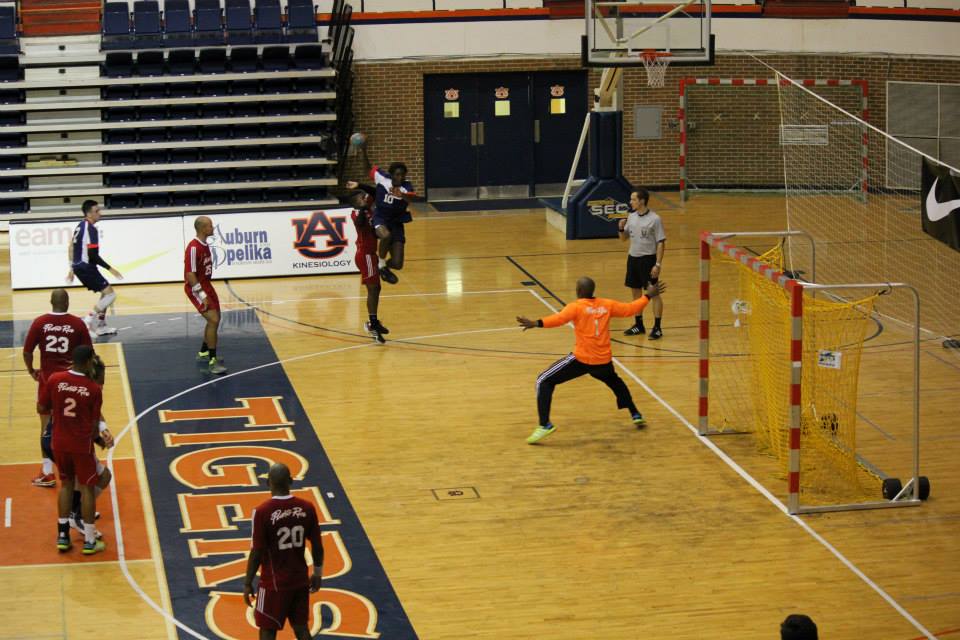
In terms of facilities, it’s hard not to be impressed with the gym USA Team Handball will be practicing in and hopefully staging future competitions.  The above photo posted by Mark Ortega shows the team practicing at the Beard–Eaves–Memorial Coliseum, a 10,500 seat arena that previously was the home for the Auburn University basketball teams.  In 2011 the Auburn basketball teams moved to the newly constructed Auburn Arena, making the old arena available for other campus activities.  While an older facility by U.S. standards it’s clearly an arena most nations and clubs in Europe would be thrilled to have for their handball teams.

(Editor’s Note (10 Nov 13):  Further investigation has revealed that Auburn University plans to demolish the Beard-Eaves Memorial Coliseum:  Link.  USA Team Handball CEO, Matt Van Houten has indicated, however, that Auburn has committed to providing alternative practice locations when that demolition occurs.)

post

American Gary Hines leads German club to big victory in battle for 1st place

Gary Hines scoring one of his 7 goals for HSC Bad Neustadt this past weekend.

Gary Hines scoring one of his 7 goals for HSC Bad Neustadt this past weekend.

This past weekend Gary Hines led his German club, HSC Bad Neustadt to a pivotal, 22-20 early season victory over HSC 2000 Coburg.   Hines led all scorers with 7 goals in front of almost 1,000 fans in a highly charged atmosphere in Coburg.   Going into the match undefeated, 7-0-0 HSC Bad Neustadt had a 2 point lead in the 3rd Division Southern League standings over 7-1-0 Coburg.  With the victory on the road in front of nearly 1,ooo fans Coburg, Bad Neustadt is now solidly in first place, 4 points clear of the still, 2nd place Coburg.

Hines, 29, is now in his 4th season with Bad Neustadt.  Since first seeing Gary play 9 years ago at the U.S. National Championships I’ve been promoting him as a player who can and should be playing at a higher level.  Quite frankly, comparisons to France’s Luc Abalo are not much of a stretch in terms of raw athletic capability.  I’m not sure why some 2nd Division or even some 1st Division clubs haven’t gone after him, but with Bad Neustadt at the top of the table he may just travel with his current club there.

Interestingly, the club also has added another Pan American player, Emil Feuchtmann, 30, who has been a key player on the Chilean National Team for several years.  Could a showdown between the two Bad Neustadt players be in the offing for the 2014 Pan American players this summer in Uruguay?

Video:  HSC Coburg Report:  Link  (Pretty nice for the losing team to provide everyone a Gary Hines highlight video)

Video:  HangTime Hines Top 10:  Link

Match Report:  Link

German 3rd Division (Southern League) Standings:  Link

THN (May 2010):  Get this guy a contract!:  Link

post

USA Soccer’s turnaround; Hope for USA Team Handball

A low point for USA Soccer: Losing to Costa Rica at home and failing to qualify for the World Cup

A low point for USA Soccer: Losing to Costa Rica at home and failing to qualify for the World Cup

Yesterday, during his closing commentary on the Slate “Hang Up and Listen” Podcast, Josh Levin highlighted USA Soccer’s recent World Cup Qualification success and contrasted it with the U.S failure to qualify for the 1986 World Cup.  It’s an entertaining listen and a stark reminder of how far USA Soccer has come in the past 28 years.

Slate Podcast:  Link  (referenced commentary starts at 58:20)

In it’s final qualification match the U.S. lost 1-0 to Costa Rica in front of around 12,000 fans in Torrance, CA.  And most of those fans were Costa Rican Expats.  Shortly, thereafter the North American Soccer League (NASL) folded and the future didn’t look very bright at all for USA soccer.  But, as we all know things soon started to turn around.  The U.S. successfully hosted the World Cup in 1994 and restarted a professional league (MLS) which is now pretty stable and drawing decent crowds.  The Women’s team has won two world cups and youth soccer is played by millions across the country.  On TV just about every soccer match in Europe is available for viewing now on some network.  The U.S. is by no means anywhere near as soccer crazy as the rest of the world is, but the sport matters in this country and that is a remarkable success story.

It’s been common practice for many years to hold up soccer’s growth as the model for team handball to follow.   As I pointed out in this post several years ago, there are a number of flaws with this soccer analogy.   You simply just can’t photo copy soccer’s success or the successful growth in other sports like lacrosse, rugby and ultimate Frisbee.  What you can do, however, is take some pieces of their success and adapt them to a handball context.

And perhaps most importantly, you can take comfort in the fact that another sport was able to turn things around so dramatically.  I’m guessing if you were to ask the players and the handful of fans in Torrance cheering on Team USA, 28 years ago where they thought USA soccer was heading it would have been a lot of doom and gloom.  Yes, take some comfort in that it’s always darkest before the dawn.

America Soccer Now:  American Soccer in 1985:  The Failure in Torrance:  Link

post

BoD Election Results: Choi and Agoston Edge Rot in Low Turnout

BoD results

The official results are in for the recent election to determine the 2 new “General Membership” seats on the 9 member USA Team Handball Board of Directors.  Former National Team player Jennie Choi and Denver Team Handball Coach/Player, Attila Agoston edged Minnesota Team Handball organizer Craig Rot.

85 valid ballots from USA Team Handball members were received by the USOC Audit Team and each voter had to rank all 3 candidates in order of preference.  For each ballot the candidate that was ranked first received 3 points, the candidate ranked second received 2 points and the third place candidate received 1 point.

The overall point total for the 3 candidates was

Jennie Choi:  176 points (34.51% of overall points awarded)
Attila Agoston: 175 points (34.31% of overall points awarded)
Craig Rot:  159 points (31.18% of overall points awarded)

With the ranking system used for voting it’s possible that as few as 9 additional voters supporting Craig Rot could have tipped the scales in his direction.

Commentary:  Low turnout is a reminder of sport’s low profile

Only 85 out of a roughly 1,000 members of USA Team Handball bothered to cast a ballot in this election. A less than onerous process (print, scan and email a ballot) that took me roughly 5 minutes to complete.  Perhaps the low turnout can be chalked up to the quality of the candidates and an assessment by members that each of the candidates were qualified and would be capable board directors.  Certainly, that was my assessment when I found out who the candidates were and it was also my assessment after I had the opportunity to chat with each of them.  That being said I was still able to pick a preference even if I wasn’t overly concerned with the outcome.

Regardless of the reason for apathy there is no getting around the fact that 85 voters is a paltry number and a stark reminder of the low profile this sport has in this country.  At different points in time I’ve reflected on just how low a profile.  In this piece written last year I assessed that there were maybe only around 300 hard core fans in the U.S.  Certainly, there are a number of ways to demographically look at the sport in this country and depending on how you want to define fandom you can edge that number up.  For sure, thousands of Americans saw the sport on TV during the Olympics and liked what they saw.  Federation membership is also on the upswing with over a 1,000 dues paying members, many of them youth players.  A low number, but better than 300 or so it was just a few years ago.

In remains to be seen as to whether this low turnout is just a blip on the road to the sport’s greater awareness in this country.  With one of the two board members just serving a two year term, there should be another election in a couple of years.  With gains in overall membership the voter turnout should increase.  Additionally, two years from now one can anticipate that it will be more clear as to what Federation plans and programs are in place and executing.  Instead of dealing with hypotheticals there will be reality and a greater likelihood for candidates with differing viewpoints.  Yes, some mild controversy to get voters energized never hurts voter turnout.


post

Olympic host city selection: Looking backwards and forwards 4 years for USA Team Handball

Olympic Host City Selection

While the selection of host city for the Olympics is always of great interest to sports minded people around the world this time around the selection was only of passing interest to the U.S.  This is because unlike the last two selections for the 2012 and 2016 Olympics the U.S. had no city competing to host.  This is not to say there was no interest and the selection of Tokyo has implications for a 2024 bid.  In particular, the selection of Tokyo means that a European city (potentially Paris hoping for a sentimental 100th anniversary selection) will be the likely competition.  Whereas an Istanbul or Madrid selection for 2020 would have probably ruled out a repeat trip to Europe 4 years later and a 2024 selection campaign vs. Tokyo.  This assumes quite a bit, and other 2024 possibilities include a bid from Qatar, South Africa and Toronto.   Qatar or South Africa would mean the Olympics being hosted in a new region of the earth and Canada hasn’t hosted a summer Olympics since 1976.

Looking Back (2016 Host City Selection):  The devastation of the Chicago loss

For USA Team Handball the possibility of home based Olympics has always been a big deal because it means automatic Olympic qualification and the exposure, increased funding and sponsorship opportunities that come along with it.  Four years ago in 2009, the Federation was devastated by the non-selection of Chicago for the 2016 Games.  Although it was never explicitly stated preliminary plans were already in place for a residency program and marketing campaign focused on the Chicago area.

After his departure in 2011 former USA Team Handball General Manager told me it was pretty much a given that he would have moved to Chicago to directly oversee operations there.  With his Chicago based connections it’s probably safe to say that USA Team Handball’s financial situation would be in a lot better place today.  Most likely we would also have residency programs fully established in Chicago and competitive National teams.  I doubt that we would have qualified for the 2012 Olympics, but with some decent recruiting I suspect that qualification might have been possible for the 2013 World Championships.  Perhaps we would even have TV exposure for those national team contests much like USA Rugby now has.  But, as we all know Chicago wasn’t selected and coupled with the Great Recession and some questionable management decisions it was the start of the downward spiral that led to the end of the Esch-Pastorino era for USA Team Handball.

Today (2020 Host City Selection):  Tokyo, not that it matters

This time around in 2013, the host city selection was essentially meaningless to U.S. Team Handball.  Assuming no major changes is in the qualification process, the U.S. will simply need to win the Gold Medal at the 2019 PANAM Games.  As an aside, next month the selection for those games will be made and the candidate cities Ciudad Bolivar, Venezuela; Lima, Peru; La Punta, Argentina and Santiago, Chile.  It’s tough to project out 6 years, but heading down to South America to win Gold will surely be a challenging prospect for Team USA.

Looking Forward (2024 Host City Selection):  Automatic qualification for Team USA?

While this time around the host city selection didn’t mean anything it’s pretty easy to foresee the host selection in 2017 (for the 2024 Olympics) as a future pivotal event for USA Team Handball.  In all likelihood the U.S. will have a city up for bid and on paper that city should be a very strong candidate for selection.  By 2023 I’d like to think that our National Teams will have improved to the point that we can travel to a PANAM Games and compete for a Gold Medal, but there’s nothing like an automatic guaranteed spot.  “Maybe, is replaced by “reality” and that will make it easier to secure funding via sponsorships years in advance of the games.  Not to mention the increased media exposure that should facilitate recruiting.

With the apparent decision to start a residency program at Auburn University in the near future it would appear that USA Team Handball will not be repeating the all the eggs in the basket Chicago strategy.  On the one hand this would seem to be a prudent course of action.  U.S. selection is by no means guaranteed and to keep the old sayings flowing, “a bird in the hand is worth two in the bush.”  But, on the other hand the potential of setting up shop in one of the potential candidate cities (Dallas, San Francisco, L.A., Boston, Philadelphia and others) has some appeal that Auburn, Alabama might struggle to match.

The competition to be the USA candidate city is sure to be fierce and the USOC has indicated that it will winnow the field to 2-3 cities this winter then make its decision later in 2014 in order to give that city plenty of time to market itself to the IOC.  It remains to be seen whether that marketing will pay off with a U.S. selection, but rest assured around 4 years from now the entire USA Team Handball community will be on pins and needles waiting to hear newly elected IOC President Thomas Bach announce where the 2024 Olympics will be.