post

PANAM Games Open: Online video quality looks promising

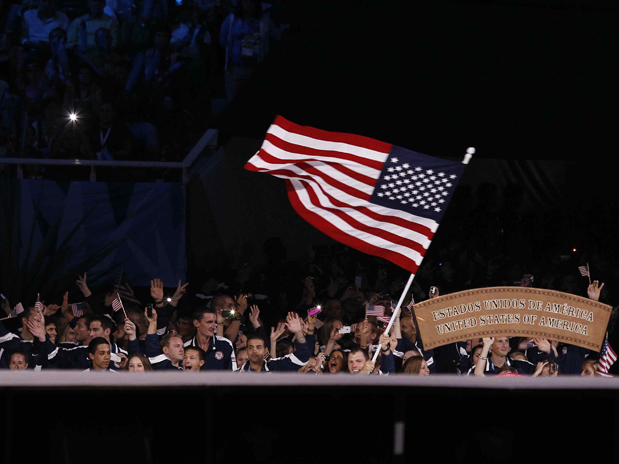
Team USA at the PANAM Games Opening Ceremonies

The PANAM Games have officially started with the traditional opening ceremonies in Guadalajara, Mexico.  The festivities were shown live at www.terra.com and at www.espn3.com .  Several Handball athletes can be seen in the ESPN3 replay:  http://espn.go.com/watchespn/player/_/source/espn3/id/264854/size/condensed/ (Team USA enters the stadium at the 43:15 mark)

The terra.com website claims that they will have 12 channels in operation during the games and I was able to get a pretty decent video stream when sampling the videos they had available on demand. Hopefully, the same quality will be available for the matches

Terra.com on demand videos:  http://deportesmx.terra.com.mx/rumbo-a-2012/videos.html

Canadian Delegation clip: http://deportesmx.terra.com.mx/rumbo-a-2012/videos/0,,338518.html
USA Delegation clip: http://deportesmx.terra.com.mx/rumbo-a-2012/videos/0,,338568.html

The USA women are scheduled to play against tournament favorites Brazil on Saturday, 15 October at 1:00 PM, (Guadalajara Local Time) which is the same as U.S. Central Time.  (This is 7 hours behind for most Europeans.)  If I find a Direct Link, I’ll post it and the USA website has indicated that they plan on having an open webchat running at the same time.

post

USA Teams arrive in Guadalajara

Can Team USA keep a low profile and advance under the radar into the semifinals?

The USA Men and Women have arrived in Guadalajara for the Pan American Games.  I spoke briefly last night with USA Women’s head coach, Chris Cappelmann and he indicated that they’ve been please so far with the welcome and accommodations.  Part of that welcome was an offer to have a friendly scrimmage with the Mexican Women’s team yesterday.  The result was a 21-21 tie, which is a far cry from the results the last time the two teams played back in 2008 at the Pan American Team Handball Federations (PATHF) Div I Championship.   At that event the USA women lost twice to Mexico by scores of 31-23 and 33-14.  There are few holdovers from the USA roster from those defeats, however, and I have no clue as to what changes may have taken place in the Mexican roster as well.

The Women’s Tournament gets underway this Saturday with the USA Women taking on tournament favorite, Brazil in Group play.  Coach Cappelmann indicated that there were some plusses and minuses to playing the tournament favorite.  On the minus side it will be tough to meet the Brazilians in their first fully competitive match.  On the plus side, though, this scheduling will allow them to observe their other group rivals, the Dominican Republic and Uruguay prior to playing them.  The Men won’t have that luxury, though, as straight out of the gate on Sunday, they will have a key match vs the Dominican Republic.  With both sides knowing little about each other, how fast the teams can respond tactically could prove pivotal in that first match

Over the next two weeks, we plan to have several interviews with the Men’s and Women’s team coaches and players.  In particular, we’ll shoot to have audio podcasts of the interviews posted as soon after the match as possible.  For those that can’t wait to get their handball fix, be sure to check out the USA Federation and the Mundo Handball website, which has several articles on all the teams participating in the tournament.

Mundo Handball: http://www.mundohandball.com/

PANAM Games Schedule: http://usateamhandball.org/news/2011/09/12/pan-american-games-schedule/44549?ngb_id=42

post

Gazette Telegraph reports on USA Team Handball financial struggles

The Gazette Telegraph highlights a funding fight between USA Team Handball and the USOC. Is USA Team Handball the guy in the water?

This past Tuesday, the Colorado Springs Gazette Telegraph posted an article highlighting USA Team Handball budget woes and the decline in funding grants the Federation has received from the USOC.  For those that follow the sport closely, the controversy regarding what funding the USA Federation receives or doesn’t receive from the USOC is a long standing issue.  What was striking to me (and others), however were some of the quotes in the article which called out the USOC.

Here’s a sampling of the article:

The USOC is primarily “going to fund sports that are going to win medals in London,” Pastorino said, maintaining that “there ought to be some credit given for building a long-term development program, a grassroots program, to get us to our ultimate goal. … The message we got this past winter completely counteracted that.” He claims the USOC told NGBs, “Forget about what we said in 2008. Medals talk. Make do with less.”

My reaction was, “Wow, looks like General Manager, Steve Pastorino was even more forthcoming then he was at the Press Conference a couple of weeks ago.  He must have had a follow up interview with Brian Gomez, the Gazette Telegraph reporter.”  Email follow-up with Steve Pastorino, however, indicated that this had not been the case, and the article quotes were based on the press conference from a couple of weeks ago.  And sure enough, a review of the press conference audio shows that those quotes are transcribed pretty accurately.  (You can hear for yourself (see below).  At around 44:20.  Christer Ahl asks the financial related questions.)  In the context of an hour long press conference covering a lot of topics the comments were significant; in the context of a short newspaper article that focused on financial issue, though, they were even more so.

As I highlighted before, these financial troubles weren’t new “news” for most American Team Handball followers.  Christer Ahl’s follow up article on the press conference had already touched on many of the key points from the press conference and Christer and I were both a little surprised with the candidness of some of Steve Pastorino’s comments regarding USOC support.

But, while Team Handball News might be a significant player in the Team Handball world we are, but a bit player in the sporting world (although, it should be noted there are a significant number of Colorado Springs visitors to our site).  What we report reaches a smaller audience.   The Colorado Springs Gazette Telegraph isn’t the New York Times either, but Colorado Springs is still a decent sized city, and most importantly it’s the home of USOC HQ.  You can bet that every single USOC executive read the article with interest and a little frown as it doesn’t paint the USOC in the best light.  Additionally, the story has also been picked up by other outlets like MSNBC and Sports Business Journal Daily.

It remains to be seen if there’s any fallout from the article.  If there is, it can’t be because there’s anything incorrect in terms of content.  I’ve had my disagreements with how USA Team Handball has spent the money it’s received from the USOC and other sources, but you’ll find no disagreement from me regarding the inadequacy of the paltry sum Team Handball receives in comparison to other sports.   For some time I’ve been working on a series of articles which breaks down just how inconsistent, non-transparent and arbitrary the USOC process is.  Looks like it’s time to dust off the draft, clean it up and post it.

Colorado Springs Gazette Telegraph (30 Aug 2011): USA Team Handball in financial fight with USOC: http://www.gazette.com/sports/fight-124178-financial-handball.html

THN (18 Aug 2011): USA Men’s Team getting ready for PANAM Games: https://teamhandballnews.com/2011/08/usa-mens-team-getting-ready-for-panam-games/

THN (19 Aug 2011): AUDIO: USATH Press Conference: https://teamhandballnews.com/2011/08/audio-usath-press-conference/

THN (3 Jan 2011):  The Budget Shell Game: https://teamhandballnews.com/2011/01/the-budget-shell-game/


post

US says no to 2020 Olympics Bid: No free ticket for U.S Team Handball until 2028?

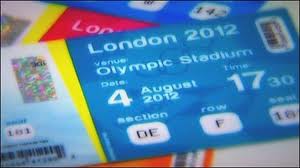
2012 London Olympic Tickets: 2028 might be the soonest we'll see Summer Olympic tickets with a U.S. City .


The U.S. Olympic Committee (USOC) recently announced that the U.S. will not put in a bid to host the 2020 Olympics.  Still stinging from two back to back losses (New York’s 2012 and Chicago’s 2016 bid) the determination was made that the USOC needed to first renegotiate the revenue sharing agreement between the USOC and IOC.  The USOC currently receives 20% of the IOC’s Global sponsorship deals and 12.75% of the U.S. TV rights.  Several members of the IOC Executive Committee aren’t too happy with this arrangement as their nations don’t get any of this money. And as these are the same guys that vote for host city the calculated decision was made to not compete until that issue is resolved.

This decision to forgo 2020 could very well mean that the U.S. might not host a Summer Olympics until 2028 at the earliest.  This is because there is already some strong talk of Denver, Reno and other cities putting together a bid for the 2022 Winter Olympics.  There’s no guarantee that a U.S. bid would win, but assuming that the funding differences are worked out, I’m guessing the U.S. would be the odds on favorite.  A successful 2022 bid then would make a 2024 bid in the same country a very unlikely prospect.  Which means that 2028 could be the next realistic opportunity for a U.S. based Summer Olympics and the automatic qualification it provides for team sports.

So, if you’re a U.S Team Handball athlete with Olympic dreams it should be pretty clear now that the only way you’re likely to fulfill that dream is to earn it via qualification.   17 years is a long time to wait unless, you’re around 12 years old now, an extremely durable athlete or a goalie.

For the U.S. Federation this reality means that  in addition to no qualification, there will be no host city looking to give the sport a boost like Atlanta did in the 1990’s.  At least not until around 2021 when the U.S. might be gearing up for a 2028 bid.  It also means no easy sponsorship deals (relatively easier, anyway) as an ancillary benefit to hosting either.  And it goes without saying, that there will be plus up from the USOC. (In past Olympics, the USOC has provided more funding as while they know medaling is unlikely, they still want to put forward a respectable performance on home soil.  Not to mention the fact, that they’ve got more sponsorship funding to throw around anyway.)

But while this is a blow, it at least makes long range planning simpler.  For instance, there’s certainly no need to factor in Olympic host city prospects into your resident program location decision.  And it makes it very clear that the only way to move way forward is with a better team and overall program.  This may seem like an obvious reality no matter where the Olympics is located, but I saw firsthand how guaranteed qualification for Atlanta 1996 resulted in at least some level of complacency in the 1990’s.   It’s human nature to ease up a bit and even great teams get a little concerned that not having to worry about qualification might make them a little soft in terms of preparation.  On the other hand, if you know that you’ve got to win to qualify, that all but guarantees greater effort.  And for the foreseeable future Olympic qualification will either mean PANAM Games Gold or knocking off two European teams in a qualification tournament.  Anything less will mean staying home.

Associated Press (22 Aug 2011): US pulls out of bid for 2020 Summer Olympics: http://sports.yahoo.com/olympics/news?slug=ap-usoc-no2020bid


AUDIO: USATH Press Conference

Christer Ahl provided a good summary of yesterday’s press conference, but for even more insight check out the full audio of the press conference now available on the USA Team Handball website.  In particular, I found the discussion towards the end concerning finances and training in the U.S. vs. overseas interesting.  The audio clocks in at a little over an hour.

USATH (18 Aug 11):  Audio from the Men’s national roster announcement:  http://usateamhandball.org/news/2011/08/18/audio-from-the-men-s-national-team-roster-announcement/44212

(Note:  The audio is a wma file (vice mp3) which will may not be compatible with some computer and mp3 players.  You also may need to download/save the file first before opening to play.)


post

USA Men’s Team getting ready for PanAm Games

Adam El-Zoghby fit for fight again

The squad for Guadalajara was announced today, in connection with a presentation and interview opportunity via a conference call.  There were no surprises.  Head coach Darrick Heath noted that all the players he had wanted for the squad were available, except that back-up goalkeeper Ivan Ignjatovic cannot make himself available at the training stage and is now an alternate.  In any case, the limit of 15 players (as compared with 16 for other IHF events) meant that Heath had opted to go with two goalkeepers instead of three.

It is certainly good news that Adam El-Zoghby has been declared fit for fight after his unfortunate injury in the qualifiers against Canada last December.  He will even be able to fit in some games with his Egyptian club team Al Ahly, before it is time to join the squad in the training camp that will precede the travel to Mexico.   This camp will, as in the case of the women, take place in Lake Placid.  It might have been more ideal to have it in Colorado Springs, as preparation for the high altitude in Guadalajara, but apparently handball did not rank high enough to get this wish accommodated by the USOC.

The training camp and the time after arrival in Mexico will not include the opportunity for any practice games.  The focus will be on intra-squad scrimmages.  Coach Heath indicated that he has a pretty clear idea of who will be his starting seven in the PanAm Games.  But he also felt that he now has a lot of players at his disposal with both talent and valuable, continuous match experience from clubs in Europe, so he feels that they will be able to hit the ground running.  He also commented on special efforts to achieve the all-important cohesiveness on the court.  Moreover, film studies of the key opponents from Mexico and the Dominican Republic will constitute a high priority in the preparations.

While it will be tough to match up favorably with perennial powerhouses Argentina and Brazil, both Darrick Heath and USATH General Manager Steve Pastorino viewed it as a realistic goal to fight for the third place.   There is really a whole bunch of teams who see themselves being in contention for that spot, not just because it might be as high as they realistically can hope to climb, but because that third place brings with it the eligibility for the IHF’s qualification tournaments next spring for the final slots in the 2012 Olympics.

Apropos the hypothesis of reaching the third place, Steve Pastorini indicated that while there is no special funding for these qualification tournaments, the money to ensure such participation simply had to be found.  The team members were already substantially out of pocket in connection with the qualification games against Canada and the ‘last chance’ tournament in Guatemala.   While they now have to set aside more than a month for training and for the event in Guadalajara, at least they will have their travel costs and related expenses paid.  (Ed.: The players on the Canadian men’s team are being asked by the Canadian Olympic Committee to pay several thousand dollars each as a contribution to the expenses for their participation in Guadalajara).

When asked to describe the overall financial situation of the USATH at this point, Steve Pastorino used the telling word ‘precarious’.  He noted, without getting into details that, following the recent severe cut-backs in staffing, ‘some of the remaining staff’ were now operating on a volunteer basis.   Contrary to the hope which was expressed previously, that part of the amounts cut in the funding from USOC during 2011 might be restored, Steve suggested that it might instead be more realistic to expect a further cut of 20% in 2012.  The budget submission from the USATH for 2012 is currently being prepared.

Steve Pastorino implied that USOC seemed to want to ‘have it both ways’, by stating that they would insist that funding be used for development and grassroots activities, while at the same time using the lack of results on the part of the national teams as the main rationale for the reductions in funding.  He appeared to suggest that the emphasis on medals as the only thing that matters is just getting stronger.  This dilemma is, of course, not a new one to handball in the U.S.  It remains to be seen how the USATH leadership intends to deal with this situation, presumably in collaboration with its membership.

The link to the USATH press release, including the roster: http://usateamhandball.org/news/2011/08/17/men-s-national-team-roster-for-pan-american-games/44121?ngb_id=42

post

Partille Cup: How can USA Team Handball best maximize this opportunity?

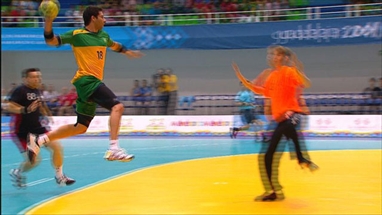
USA Girls in action at the Partille Cup

The USA sent two youth teams recently to participate in International Handball Federation (IHF) Olympic Solidarity Program and the Partille Cup in Sweden.  The Olympic Solidarity Program is an IHF funded program held to support developing handball nations and the Partille Cup is a massive youth tournament with club teams from all over Europe and the world participating.  While I think it’s great that a handful of young American players are getting this exposure to Handball, some of the ugly score lines from the tournament got me contemplating whether the USA is maximizing this opportunity.

Boys Team Results from Partille Cup

Olympic Solidarity Camp Friendly Games
USA National Team 26-22 China
USA National Team 44-29 Singapore

Pool Play (16 and Under)
USA National Team 7-32 OV Helsingborg
USA National Team 9-22 Kärra HF
USA National Team 16-14 BK Ydun
USA National Team 17-22 TV Birsfelden
USA National Team 9-19 HC Eynatten-Raeren

Knock Out Tournament
USA National Team 8-21 Elverum IL

Girls Team Results from Partille Cup

Olympic Solidarity Camp Friendly Games
USA National Team 10-18 Scotland
USA National Team 12-23 Scotland

Pool Play (15 and Under)
USA National Team 3-22 Vorup FB
USA National Team 4-28 Kungsängens SK
USA National Team 4-27 Skövde HF
USA National Team 1-27 Klaebu IL
USA National Team 4-30 Skedsmo HK 1

Knock Out Tournament
USA National Team 5-14 Röyken og Hurum Graabein

Results Overview

A quick assessment of the score lines show that the boy’s team had some measure of respectability.  They won their two friendly games against China and Singapore at the Olympic Solidarity Camp and compiled a 1-5 record in their Partille Cup games, with an average score line of 10-19.  The girl’s team results were more lopsided.  They lost both of their solidarity camp games to Scotland and were totally overwhelmed in every Partille Cup match losing their 6 games with an average score line of 4-25.  (Note:  These matches were 2X15 minutes, so to get a true picture you might want to multiply the scores by 2)

Top Prospect or Any Prospect?

While these score lines were ugly we shouldn’t make the mistake of thinking this was a wasted trip.  I’ve written before about lopsided scores and the benefits the learning experience provides to the losing team.  And in that commentary I was talking about much older teams.  The two teams sent to Sweden were far younger and coupled with the training at the Olympic Solidarity Program this event was surely worthwhile for every athlete that attended.  All that being said, however, I think USATH needs to be  more low key as to the composition of this “national team”.  This was clearly a developmental team and I would classify the participants as more any prospect then top prospect.

The play on words refers to the current youth focused effort established by the USA Federation: the Top Prospects program.  There are a lot of positive things about this program as it’s providing funding, curriculum and structure to different regions of the country.  There’s a clear application process and it may be presumptuous on my part, but I think if someone is motivated and takes the time to fill out an application they probably stand a good chance of getting some support to develop a local program.  In short, the Federation is providing much needed support and incentive to start new pockets of development throughout the U.S.

But, while what I’ve just described is all well and good it appears that the program is probably falling well short of its stated mission of identifying “talented” future Olympic Players.  I say this based partly on the ugly looking score lines from the recent Partille Cup.  While those poor results can be partially chalked up to the vastly more experienced European clubs I think a team of future Olympic athletes could use that superior athletic ability to keep the game a little more respectable.   This is especially true when you factor in that most of the clubs participating at the Partille cup are only drawing athletes from one small dot on the map, not an entire county or 300 million people.

But, then again the current reality is that the U.S. is probably working with a youth talent pool smaller than what many of those clubs are working with.  In fact, based on Federation articles written promoting the trip and tryouts a cynic might even assess that just about anyone willing to pay for airfare probably could have put on a USA jersey.

The challenges of identifying top young talent

But, even if USA Team Handball had thousands and thousands in the talent pool vying for Partille Cup spots, identifying the future Olympian at ages 15 and 16 is probably a futile mission.  Out of curiosity I checked out the USA Basketball website to see what kind of Under 19 and Under 18 rosters they’ve sent to assorted FIBA tournaments in the past 15 years.  I didn’t do an in-depth review, but the typical roster only had 1 or 2 players whose names I recognized and with a few notable exceptions (Carmelo Anthony and Chris Bosh) I didn’t see a whole lot of Olympians.  And this is for a U19 roster for a major sport where colleges spend hundreds of thousands of dollars recruiting and assessing potential high school prospects.  So, with all those resources being applied they are either missing some talented players or more likely those talented players are still developing as athletes.  And this is at ages 18 and 19!  If you look at ages 15 and 16 players like Michael Jordan (he got cut from his HS Varsity team as a sophomore) would never ever get selected.

Recommendations:  Focus on maximizing exposure

So, if you take into account that a sport like basketball can’t do a great job of identifying Olympic talent at young ages, it’s very unlikely that we’re going to do the same for Team Handball.  And if you couple that fact with the other challenges our sport faces competing against other more established sports, we need to make sure were maximizing the potential benefits of Partille Cup participation. And in my opinion, maximum benefit equals maximum participation.  With that in mind I have the following recommendations.

1) Maximize nationwide participation: The rosters for the Partille Cup had fairly heavy representation from only a few Top Prospect programs.  Notably, the girl’s team was mostly from New Jersey while the boy’s team was spread out a little better with 3 players each from Salt Lake City and Chicago.  I would argue that it would be better to further spread out that representation, so that only 1 or 2 players be allowed to participate from a local youth program.  Such a quota would give more players from clubs and Top Prospect programs exposure to the Partille Cup experience.

2) Limit participation to “one and done”:  Attending an event like the Partille Cup can be life changing for a young athlete.  It is a totally unique opportunity and has the distinct possible outcome of creating new Handball fans for life.  Attending the same event in subsequent years, however, will not have a significant multiplying effect.  Therefore, it would be far better to maximize the numbers of kids who get that opportunity.  Hence, my one and done proposal to ensure that as many kids as possible get that experience.  Undoubtedly, this will mean the official USA teams that are sent won’t be as strong, but results are really secondary at these ages. (A short side note here:  There’s nothing to prevent anyone participating or creating their own team to play in this event.  I’m simply talking about the teams that are getting resources from USA Team Handball.)

3) Come up with a new name for the team:  Since the criteria above will keep us from sending our best team forward the USA team should be given a name like “USA Select” or “USA Development Team”.  This is semantic, but in terms of promotion to the rest of the world it will help to at least partially explain ugly score lines.

4) Continue to promote the event:  My compliments to Kyle Hanson and the USATH staff for their regular reporting on this event.  This isn’t the first time a team from the USA has attended, but it’s the first time it’s gotten the exposure it deserves.  Future prospects will read those reports and target this as an event they want to play in.  Promotion is key to getting the word out and expanding the talent pool.


USATH:  Top Prospects Program Overview:  http://assets.teamusa.org/assets/documents/attached_file/filename/37770/Top_Prospects.pdf

USATH (18 Feb 11): 20 Athletes Converge on Colorado Springs for Youth National Team Selection Camp: http://usateamhandball.org/news/article/41031

USATH  (10 Jun 11): USA Team Handball youth taking on the 2011 Olympic Solidarity Program and Partille Cup in Gothenburg, Sweden: http://usateamhandball.org/news/article/42763

USATH (15 Jun 11): U16 Boys and Girls Rosters Named for Partille Cup: http://usateamhandball.org/news/article/42855

USATH (28 Jun 11): U16 Girls Training Camp in August at the Lake Placid Olympic Training Center: http://usateamhandball.org/news/article/43135

USATH (13 Jul 11):  Youngsters shine at Partille Cup:  http://usateamhandball.org/news/2011/07/13/youngsters-shine-at-partille-cup/43521

Partille Cup VIDEO: Olympic Solidarity Overview: http://partillecup.com/eng/index.php/home/webb-tv/?film=4407

USA Basketball (Under 19 History): http://www.usabasketball.com/mens/u19/history.html
 

post

PATHF Second Chance Tourney: USA – Uruguay draw 23-23

23-23: A draw vs Uruguay means goal differential will be key for the U.S. tonight against Guatemala

Game 2 of the Pan American Team Handball Federation (PATHF) 2nd chance tournament ended in a dramatic 23-23 draw.  According to a recap provided by USA Team Leader, Jim Thome, the match was a see-saw affair throughout with the largest lead being a 3 goal lead for the U.S.  The match was a physical affair with 15 two minute penalties being assessed (8 for Uruguay and 7 for the U.S.)

A further account of the match including the last minute is at the USA Federation site:  http://usateamhandball.org/news/2011/06/04/usa-ties-uruguay-in-second-chance-tournament/42643

Qualification for the PANAM games will now come down to goal differential in the final match between USA and Guatemala later today.  On Friday, Uruguay beat Guatemala, 20-12, so a 9 goal or more USA victory would put the USA at the top of the table.  A 7 goal or fewer win would see Uruguay qualify.  An 8 goal victory would revert to the next tie breaker, total goals scored, so the U.S. will be looking to score 21 or more goals in the match.

Guatemala cannot win the title, but as host, can play the spoiler.  For a young team playing in front of a home crowd against the big country to the North this will surely be a challenge they will relish.

Note:  I now plan to interview Mark Ortega after Sunday’s match.  Throw off is at 6:00 PM local (8:00 PM East Coast Time).  I will try to post the interview by 11:00 PM East Coast time.

post

Commentary: USA Team Handball National Teams: Are there too many guys with short haircuts and accents? (Part 2: Dual Citizenship Athletes)

Swedish-American Martin Clemens Axelsson and Norwegian-American  Karoline Borg are key members of the U.S. National Teams

Anyone who follows USA Team Handball’s excellent American’s Abroad updates has surely noticed that two groups of Americans (military members and dual citizens) are very well represented. In Part 1, I assessed that having a lot of military athletes on our National Teams isn’t a problem, but rather a symptom of a problem (thin talent pool). In part two, I’ll consider whether the same is true for dual citizenship athletes.
Dual Citizenship Athletes
USA Team Handball, since its inception has had dual citizenship athletes playing for its National Teams and certainly it isn’t the only sport to have sprinkled its roster with these dual citizen athletes. Notably, USA soccer, particularly in its development years in the 80s and 90s, has had its fair share of foreign imports. Additionally, a number of Handball nations (e.g. Spain) where there is no shortage of homegrown players have bolstered their roster with mercenaries (naturalized citizens) simply to improve their national team.
Until recently, however, dual citizen athletes have been a distinct minority on U.S. teams that have been overwhelmingly comprised of born and raised, domestic based players. Arguably, at no other time in the history of the sport in the U.S. have so many dual citizen athletes (e.g. El Zogby.Axelsson, Borg) played such pivotal roles on U.S. National Teams.
So, should we be concerned that we have too many guys with foreign accents?
Yes, for three reasons.
1) Again, this is a very clear indication that we have a thin talent pool. First off, let’s acknowledge that most dual citizens if presented a choice between 1) playing for the Handball nation where they’ve learned to play and spent most of their life or 2) playing for Team USA they are going to choose the Handball nation. Only, if they have no realistic prospects are they going to consider the U.S. option. There might be exceptions to this (perhaps, Adam El Zogby), but it’s a good rule of thumb. So, if a second tier (or third, or fourth or even lower caliber) player from Europe can make the U.S. team it’s probably a good indication that our homegrown talent pool is third tier (or lower). This isn’t all bad. Such players can still be huge contributors that can help us knock off the likes of Canada, Greenland and maybe even Brazil or Argentina someday. But, they are not likely to put us into the next echelon in the World Championships or Olympic Games.
2) Integrating dual citizenship athletes can be disruptive. It should also be noted that the integration of dual citizens on a national team can be a tricky business. I got a sense of this during my short stint on the U.S. National Team when we had tryouts for a couple of dual citizens from Norway and Sweden right before the World Championship in 1993. Both athletes that tried out were nice enough guys and experienced players, but there was also a little resentment with these “outsiders” potentially taking a roster spot from the born and raised Americans. As two outsiders amongst 15 players that had been practicing together for several months there were few integration problems. The only minor problem I recall was when they started conversing in Nordic to each other in front of their teammates. Never a polite move in any context and this was put to a halt with some friendly counseling.
As the current National Team structure has most players playing with clubs overseas, the context is clearly different from my stateside experience. And everything might be all hunky-dory now as relatively few athletes are competing for roster spots. As competition for National Team spots heats up, though, politics will undoubtedly enter the picture. Heck, I remember divisions and accusations of political favoritism based on geographical regions within the U.S. Those New York accents can take a while to get used, but add an even thicker one with an accompanying separate cultural identity and there could be real cohesion problems. An American citizen is an American, but let’s be clear that there’s no getting around the fact that there’s a big cultural identity difference between growing up in the U.S. and growing up in a foreign country. It doesn’t matter how well someone speaks English and how frequently they connect with relatives in the States, they’re going to be more culturally attuned to where they’ve lived. Fortunately, the U.S., more than any other country, is a melting pot of different cultures, so team integration of such a diverse group is still likely to occur. All things being equal, though, it’s simpler not to have such a diverse team.
3) Dual citizens are less likely to support development in the U.S. An ancillary benefit (at least a hoped for one, anyway) of athletes participating in National Team competitions is that those athletes will use that experience to support development of the sport in the U.S. Anyone who has been around the sport in the U.S. knows full well that is not always the case. In fact, it happens a lot less than we’d like it to. Still, it goes without saying that it’s even more unlikely that a dual citizen with stronger ties to another country will decide to move to the U.S permanently and become involved in development efforts. Also, not to be forgotten is the role model aspect of a local club member getting promoted to the National Team. This can inspire younger players to new heights with the thought, “well if he can do it, I can do it.”
Should anything be done to remedy this imbalance?
In many respects this problem can be resolved the same way the military athlete imbalance can be fixed. If we widen our domestic talent pool with better players then the standard for dual citizens getting consideration will be higher and accordingly there will be fewer of them.
While this should occur naturally I also think that USA Team Handball should have some policies that will indirectly boost opportunities for domestic players. Right now, with no U.S. based residence program it’s pretty much impossible for a domestic player to improve significantly as a player without moving to Europe. As such, by default, this has given the dual citizen athlete already conveniently living and acclimated to Europe a distinct advantage. While, I’m not advocating a return to the full-up residence programs of the 80’s and 90’s, I do think that some resources need to be spent on preparing domestic based athletes for overseas competition. (This is outlined in Part 3: A Framework for Creating U.S. National Team Success) In addition, more time and resources should be devoted to getting those domestic athletes on good clubs with strong training programs. A watchful eye should be kept on dual citizen athletes, but logically they will be more able to fend for themselves.
In the end, I’d like to see U.S. National Teams with a smattering of dual citizens playing key roles. Not because I don’t like dual citizens, but because I’d like to have the quality of our domestic players be such that only a few talented athletes can make the cut. And who knows, maybe I’m dreaming, but perhaps one day I’ll even get to read a German (or Danish, pick your country) commentary deploring the fact that they’ve lost a prized dual-citizen prospect to the Americans.
post

Commentary: USA Team Handball National Teams: Are there too many guys with short haircuts and accents? (Part 1: Military Athletes)

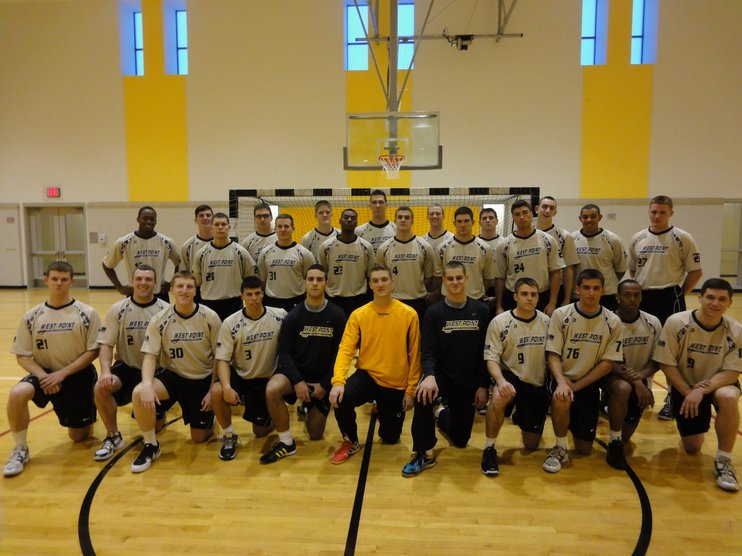
West Point (pictured) and the Air Force Academy have several graduates in the USA National Team player pool. Is it too high of a percentage?

Anyone who follows USA Team Handball’s excellent American’s Abroad updates has surely noticed that two groups of Americans (military members and dual citizens) are very well represented.  It’s worth reflecting upon whether this presents a problem or concern with the sports development in the U.S. Here’s my analysis on military athletes.

There has been a long tradition of athletes with military backgrounds playing on U.S. National Teams.  The 1972 Olympic team, in particular, included several army athletes that were introduced to the sport via Army sponsored training camps.  Anecdotally, I’ve even been told that making the team back then had the added incentive of avoiding a tour in Vietnam.  In terms of collegiate club programs West Point and to a lesser extent, the Air Force Academy have been the bulwark programs that have been around for years as other programs (with the exception of North Carolina) have come and gone.  So it should come as no surprise that more graduates from these schools have gone on to join the National Teams than from any other college in the nation.

I am obviously biased, but I think most non-partial observers would also agree, that the typical service academy graduate who continues to play handball is both highly dedicated and disciplined in their approach to the sport. In simple terms they are usually highly coachable and true team players.  Aside from the right attitude, their Handball skills have generally been a notch above most other collegiate programs.  In other words a service academy graduate transitioning to the National Team isn’t starting at ground zero.

I suspect that the current preponderance of military athletes in the national team player pool is due to two primary reasons.  First, as I already alluded to, it’s simply a reflection of a very thin talent base.  This is clearly evidenced by only 4 men’s universities (West Point, Air Force, N Carolina and Texas A&M) and 2 women’s universities (West Point and N. Carolina) being represented at the recent collegiate championships.  With half the schools being Service Academies and the West Point men being so dominant that they played an intrasquad scrimmage for the championship it’s no surprise that our national teams have a lot of guys with short haircuts.

The second factor, undoubtedly trending towards more military athletes is the financial support being provided by the U.S. military’s World Class Athlete Program (WCAP).  This program allows military athletes in a number of different sports the opportunity to train full time in preparation for the Olympic Games.  I’m sure USA Team Handball would prefer to have its own funding line to provide generous stipends to any promising athletes, but that’s not currently in the cards.

So, should we be concerned that we have too many guys in short haircuts? Yes, for two reasons.

1) First, it’s a stark indication that we need more colleges playing the sport in the U.S.  If all of the athletes being identified for the next level (National team competition or pro leagues) in any sport are coming from only two schools that’s an anomaly.  And such an anomaly can only be the result of either powerhouse programs gobbling up all the talent or that there just aren’t very many people playing.  West Point obviously has a top notch program, but it’s more the latter than the former.  So, it’s a problem, but it would be a problem if it was any two colleges in the U.S.  They just happen to be Service Academies in this instance.

2) The second concern, however, is legitimately tied to the unique circumstances of military athletes.  And that is what the military can giveth with WCAP it can also taketh with military service.  This is evidenced by several Army players being pulled from the program after the loss to Canada last December. Relying too heavily on military athletes can severely impact a
program and given the choice (free of WCAP incentives) I’m sure that USA Team Handball would prefer developing players with no strings attached.

Should anything be done to remedy this imbalance?

Yes, but there’s no need for a plan with the specific goal of reducing our dependency of military athletes.  Rather, it should simply be a natural reduction based on more top players being identified and developed through youth based programs and more colleges playing the sport.  As the talent pool widens it’ll become more likely that only the top couple of players from any one school in the country will be identified as National Team prospects.   And with strong traditions at schools like West Point and the AF Academy it’s probably a good bet that they will continue to provide top prospects, they just will have a smaller percentage.

So, I’ve assessed our current preponderance of military athletes on our National Teams as not a problem, but a symptom of a problem (thin talent pool).  In part two, I’ll consider whether the same is true for dual citizenship athletes.

post

Is USATH serious about refereeing?

Having spent more than 20 years in charge of refereeing in handball in our country, the last thing I would want is to get caught up in the details of how things are being run today.  But it bothers me when I see that virtually nothing is being done, despite the availability of experienced and willing people.  Handball obviously does not exist for the sake of its referees, but it also cannot develop as a sport and support its young and inexperienced athletes in the absence of access to competent refereeing.

Many major handball countries strangely suffer from a lack of former referees with a willingness or ability to take on the task of recruiting, training and supervising new generations of referees.  They would be very envious of the situation that exists in the U.S., where we have a small group of people constituting a ‘national referee committee’ and an additional group of very experienced former international referees who are not just willing but eager to be able to help out.  In these circumstances it is absurd to observe that very little is happening, either due to a lack of constructive communications or due to negative attitudes on the part of the Federation.

The reason why I would venture to imagine that the problem might go beyond communications is that the Federation in recent time managed to alienate its small group of referees through a failure to take care of the reimbursement for the services for which the referees had been contracted.  Payments were made far too late despite many reminders or, supposedly, not at all.  Even in an organization that has to cope with financial difficulties, there should be no room for such lack of respect for a key group of volunteers.  But I still want to believe that the current situation is more related to a shortcoming in managerial or administrative capacity rather than due to an inappropriate attitude.

It seems that it should be relatively simple to mesh the technical knowledge of some people about how referees should be recruited, educated and monitored with the Federation’s knowledge of its resources from a budgetary standpoint to carry out such an effort; especially as the technical experts have long-term experience with this environment.  Plans and suggestions have been submitted, initially without reaction but eventually with a response that I could only interpret through my reading as ‘having the door slammed in the face’.  Without trying to second-guess the proposals or the responses, I can only say:  surely there must be a way of achieving a meeting of minds!

While there might be some differences of opinion about what constitutes the best approaches and about how to ensure that the resources are available, undoubtedly this can be worked out if there is a genuine desire to do so.  The Federation surely does not want to dismiss people who are willing to help? Perhaps the problem is simply that e-mail exchanges and the resulting (mis?)understandings of tones and messages need to be replaced by a brainstorming face-to-face!?  After all, the issue goes beyond the individuals involved in the dialog:  the impact involves the entire USATH field of activities.

Finally, it must be kept in mind that recruitment of handball referees in our country is not like the recruitment of basketball referees here or handball referees in Germany.  There can be no expectation of a natural flow of candidates.  Realistically they can only come from those few/small groups who are already actively involved, i.e., clubs, players and others in their surroundings.  So the clubs must feel an obligation to help out with candidates, essentially for their own sake.  This should not be seen as a burden or an unreasonable imposition, least of all from the vantage point of the Federation.  Much more awkward is the short-term ‘cover-up’ of bringing in guest referees from abroad, simply because the internal efforts are being ignored or delayed.

So I hope the parties concerned will get together and work out a solution without further delay.  But it would also be very helpful to the broader handball community in our country if the USATH leadership/management would be prepared to outline publicly its philosophy and intentions specifically with regard to refereeing.

post

USA Team Handball Announces New National Team Pool Criteria

USA Team Handball recently posted updated National Team Pool Criteria for prospective National Team players.  Some of the criteria appears to be simply a more structured rehash of criteria that has been previously used to assess and identify players.  There are the usual battery of physical tests and handball skills identified, but there are also some new requirements that caught my eye.

For instance, some basic minimums were identified in terms of matches and practices each year.  A relatively modest number of matches is required (15), but a fairly substantial number of practices are now required (48 court and 72 non court).  This may seem rather simple to our European readers, but I suspect that there are very few club teams in the U.S. meeting the 48/year requirement.

More noteworthy, is a requirement for senior players to relocate to designated Regional or National Centers of Excellence by June 1, 2012(#5, page 13).  Section 5 goes further to highlight that the process for selecting these locations is planned for the first half of 2011 and that preliminary plan is to re-establish a residency program (either walk-in or live-in).  As far as I know, this is the first written indication that USA Team Handball was going to take this significant step.  More details will hopefully be coming soon in regards to the specifics of such a program and how it will fit into the current practice of encouraging European Club participation.

Also added is a requirement off the court in terms of being an Ambassador for the sport with options to support development through recruiting, refereeing and fundraising.  An appropriate requirement, in my opinion, for a sport that needs as many people promoting it as possible.

But what really caught my eye, were the closing comments in the “Athlete Development Pipeline Model” document:

Finally, as uncomfortable, inconvenient and uncanny it may feel, there is absolutely no science based nor practice based evidence of a “fast track” for high achievers to become masters in their fields. To the contrary, as Malcolm Gladwell in his bestseller “Outliers” put it (sic): “researchers and practitioners in variety of fields have settled on what they believe is the magic number of for true expertise: ten thousand hours.”

“The 10,000 – HOUR RULE” sends very clear and strong message to us all involved in handball.  Handball must evolve into year around activity.

A table is then provided which tabulates what this mean in terms of 25 day month (assume you 4 or 5 days off) over a 12 year span (2.77 hours/day) or 16 year span (1.56 hours/day).    I’ll have a follow on commentary about the 10,000 hour rule.  But suffice it to say, this is a very telling stat that speaks volumes as to the historic lack of U.S. success and the challenge of developing handball experts who pick up the sport in their late teens.

USATH: Live the Olympic Dream: Tryout for Team Handball!: http://usateamhandball.org/news/2011/02/23/live-the-olympic-dream-tryout-for-team-handball/40313?ngb_id=42

USATH: National Team Pool Criteria:  http://usateamhandball.org/national-teams/national-team-pool-criteria

USATH: USA Team Handball Athlete Development Pipeline Model:  http://usateamhandball.org/assets/documents/attached_file/filename/38081/USATH_Athlete_Development_Pipeline_Model_Application_Guidelines.pdf

post

USA Team Handball’s Egypt Connection

A strange twist of events resulted in USA Men’s National Team Captain, Mark Ortega, witnessing history in Egypt. Looking for a better training opportunity in preparation for the upcoming PANAM Games 2nd Chance tournament Mark moved to Egypt in January to train with fellow teammate Adam El Zogby’s club team, Al-Ahly, in Egypt. In two video reports, Mark chronicles Adam’s recovery from ACL surgery, life in Egypt and his search for a club to join. What starts as a handball travelogue seems starts to take a dramatic turn as protests in Egypt engulf the country. Video 2 ends with the protests starting and a discussion with a Cairo cab driver regarding their significance.

http://www.youtube.com/watch?v=nY6Rcpx9Xto&feature=player_embedded

http://www.youtube.com/watch?v=NCcmSYU6GNs&feature=player_embeddedUSA

http://www.youtube.com/watch?v=dmpPpey64_k&feature=player_embedded

Team Handball’s weekly report on athletes playing overseas reports that Adam El Zogby is continuing his recovery and is safe and sound in his apartment situated a little over a mile from El Tahir Square.

USA Team Handball: Mark Ortega Profile.
USA Team Handball: Americans Abroad Report.