post

Charting a Way Forward for USA Team Handball: Option 14: The JUCO Transfer Strategy: Proactively Identify and Recruit Junior College Athletes

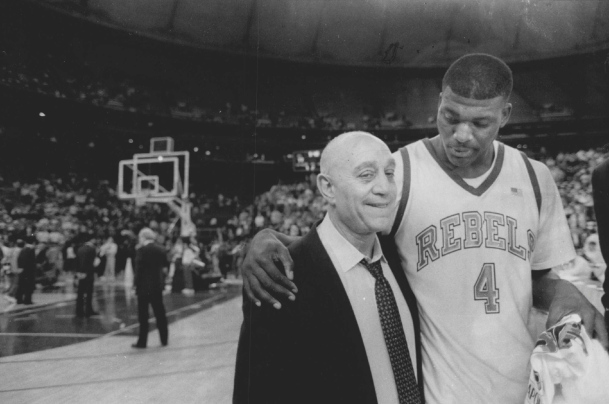
UNLV basketball coach Jerry Tarkanian and arguably the best JUCO transfer of all time, Larry Johnson.  Could USA Team Handball take a page out of Tark’s playbook and start a JUCO pipeline to its residency programs?

UNLV basketball coach Jerry Tarkanian and arguably the greatest JUCO transfer of all time, Larry Johnson. Could USA Team Handball take a page out of Tark’s playbook and start a JUCO pipeline to its residency programs?

USA Team Handball recently established a partnership with the Alabama Community College Conference. As I’m sometimes brushed off as one of the many naysayers in the USA Team Handball community let me unequivocably state that this is a great idea and one that I didn’t come up with. That being said here are some thoughts as to how this initiative might be applied on a grander scale.

Background

Throughout its history USA Team Handball has recruited athletes from a variety of sources. Primary sources have been naturalized immigrants, expat citizens who learned the game in Europe, military athletes, former NCAA athletes and athletes who’ve played club handball in college. When USA Team Handball announced recently a partnership with the Alabama Community College Conference I had a couple of thoughts:

  • Has the U.S. ever recruited a national team athlete directly from a junior college?
  • What a great idea. How come I didn’t think of that?

As far as the first question goes, I couldn’t think of anyone. I’m sure the U.S. has had a few, but as far as I know it’s never been a prime focus. As to the second thought, I suspect the reason I didn’t think of that possibility is because I am (as many people are) a product of my own experiences. When I was growing up Junior Colleges (JUCOs) were primarily viewed as colleges where less serious students not interested in four year schools could learn a practical trade.

Flash forward 30 years and junior colleges/community colleges have matured quite a bit. Academically, they are stronger and more than just a few High School graduates are studying two years at a dramatically lower cost JUCO and then transferring to a four year institution to finish their Bachelor’s degree.

The UNLV Model: Building a Powerhouse with JUCO Transfers

Playing Air Force service basketball 25 years ago I had the opportunity to play against several JUCO teams in California. It was a real interesting mix of talent and quality. Some schools had marginal talent as if they just thrown their teams together with whatever athletes they could get. And, other schools were absolutely loaded. Antelope Valley Community College in Lancaster, California was one such school. Coached by Jerry Tarkanian’s son it was clearly a UNLV feeder school with quite a bit of talent, including future NBA player J.R. Rider.

Perhaps, Jerry Tarkanian wasn’t the first college basketball coach to primarily fill his roster with JUCO transfers, but he surely was the coach that perfected the model. While other schools looked primarily for High School stars to contribute 4 years, Tark the Shark knew that it was going to be tougher to get those kids to come to UNLV as college freshman. Year in and year out he found the best athletes he could get, melded them into a team quickly and often ran other teams out of the gym. As his reputation as the JUCO Transfer king grew the athletes he got became better and better and he built a powerhouse program that was cons finally culminating in a national championship in 1990.

The JUCO Handball Transfer

While one can still expect the top JUCO players will continue to transfer to NCAA schools offering a scholarship for their final two years of college, what about all those athletes not getting scholarship offers? Every year thousands of those athletes will do some real hard contemplation in regards to their athletic and academic future. Some will transfer to a lower division NCAA school which will offer tuition assistance (but, not a full scholarship), some will just continue college without playing a sport, and some will simply enter the work force.

And, all of those athletes would be potential candidates for consideration at a Residency Program. What really make this strategy interesting is that these athletes should indeed be ready and willing to listen to a team handball pitch. Their dreams of professional or even NCAA Div 1 athletics are over and they’ve completed their JUCO career.  They’ve got to move on. Playing for Team USA at Auburn while finishing their degree might sound a lot better than playing Div 2 or Div 3 at some far flung place or just entering the work force for the rest of their life.

As I’ve highlighted before, getting the best athletes possible at the youngest ages possible is key. But, convincing these athletes to switch to handball while the dreams of their primary sport are still alive at age 18 is a near impossibility. At age 20, though, some will be ready. USA Team Handball can also recruit some better quality NCAA Div 1 athletes at age 22, but those 2 years can make a huge difference. First off, many college graduates are inclined to hang up their athletic shoes and pursue other interests. Secondly, the development from age 20-22 could lead to becoming World Class at a young enough age to lead to pro contract.

Options for USA Team Handball Consideration

USA Team Handball’s partnership with Auburn Community Colleges is a start, but here’s some more possibilities to consider for the JUCO Handball Transfer Strategy

  • Target Junior Colleges on a national level: There are several hundred junior colleges in the U.S. with athletic programs. Engaging those colleges and conferences effectively would take a considerable amount of networking. Recruiting would also need to be very strategic in that USA Team Handball would be seeking quality athletes that aren’t being sought after by NCAA Div 1 schools. Ideally, these would be athletes that are a notch below in their chosen sport, but are ideally suited for Team Handball. To assist in identifying talent USA Team Handball could engage a number of recruiting services which conduct camps and rank talent.
  • Conduct an Olympic Festival Style Camp for JUCO Athletes: During the summer a number of camps with top JUCO talent are held to showcase talent for 4 year colleges. As an example, here’s a list of athletes attending a camp in Georgia: Link USA Team Handball could conduct a 10 day camp to introduce JUCO athletes to the sport and competition could be staged between regional teams. It goes without saying the athletes invited would all be potential candidates for National Team Residency Programs.
  • Create a JUCO All Star team for Collegiate and Open National Championships: Identify a select group of athletes in the late winter/early spring and conduct regular training for them as a group. This could be done on a regional basis and that team would then compete in the collegiate and/or national championships.o

Pros

Broadening of the National Team player pool: JUCO athletes are an untapped resource and an organized, structure program to identify JUCO talent could significantly broaden the overall player pool.

Earlier identification and commitment of crossover athletes: As previously highlighted a JUCO transfer will usually be around 20 years old. Getting a new player at age 20, vice 22 significantly improves the chances that that athlete will be able to become a World Class athlete prior to leaving the program due to life issues. Additionally, it also improves the possibility that the athlete can sign a professional contract in his mid 20s.

Cons

Diverts resources from other efforts:  If USA Team Handball wants to really focus on identifying and developing JUCO talent it will take man-hours and funding to do so properly. This means finding more revenue or diverting revenue from other cost centers. And, it could mean diverting funds from efforts to support traditional 4 year college programs.

Junior College structure isn’t conducive to club development. While JUCOs might be a great source for athletes for residency programs, as two year colleges with many of its students commuting to and from school they aren’t very strong candidates for creating club programs. As club programs can perform a lot of the development work needed for new athletes focusing on JUCO programs will detract from club growth in the U.S.

Risks

Failure to draw JUCO transfer interest.   In theory, JUCO transfers are an untapped talent pool, but in reality it may be challenging to recruit such talent to a new sport they are unfamiliar with. As with high school graduates who have been playing their chosen sport for years, JUCO athletes may simply be unwilling to abandon their first sport yet.

Failure to attract quality JUCO transfers.   While JUCOs are an untapped source the talent pool is somewhat limited. Many of the athletes at JUCOs are playing there simply because they weren’t good enough to get recruited by a Div 1 NCAA school. USA Team Handball will need to carefully look for “diamonds in the rough” that are a perfect fit for Team Handball.

Costs

College Coordinator. Effectively recruiting JUCO talent would take a considerable amount of time, but it could be simply one part of an overall college coordinator’s job jar. Depending on the experience level desire this salary would be in the neighborhood of $30-60K.

Olympic Festival Style Camp. Funding an Olympic Festival Style camp will be a considerable expense especially if athlete costs for travel and lodging are provided. A lower cost program could be done whereby athletes pay to participate, but finding attendees to participate could be challenging

JUCO College All Star Team. A JUCO All Star Team if done on a regional basis could be fairly inexpensive. Athletes from multiple colleges could practice at a centralized location and have a focused training camp prior to the tournament. Team entry fees could be waived and volunteer coaches could be assigned. As, with many other initiatives, however, paid help to organize and coach the team would significantly improve the chances of this initiative succeeding.

Timing for Implementation

Initial outreach such as what has been done with Alabama Junior Colleges can begin immediately. Greater outreach in the form of nationwide recruitment will require additional funding and would necessitate the redirection of limited funding from other priorities. One could argue, however, that an Olympic Festival style camp, clinic or tryouts in conjunction with the 2016 Olympics next summer might be a good strategic point to rollout a concentrated effort.

post

Charting a Way Forward for USA Team Handball: Option 6: The Title IX Field Hockey Strategy (Part 1): How Women’s and Men’s Handball Differ

Best finishes at World Championship by select non-European nations.  Should the U.S. try to climb both of these mountains or select the one the provides the greater chance of success?

Best finishes at World Championship by select non-European nations. Should the U.S. try to climb both of these mountains or select the one the provides the greater chance of success?

Developing Team Handball in the U.S. and fully funding Men’s and Women’s National Teams is expensive. But, what if the USA Team Handball decided to focus its limited resources primarily on just developing Women’s Handball and supporting its Women’s National Teams? In part 1, I highlight the difference between Men’s and Women’s handball development and structure world-wide and the argument for the U.S. to focus its resources on Women’s programs.

Men’s and Women’s Sports: Vastly Different Mountains to Climb

With the U.S. one of the favorites in the currently ongoing Women’s World Cup it routinely begs the question. Why is the U.S. Women’s soccer team amongst the elite while the U.S. Men have just basically earned a good measure of respect?

  • Women’s International soccer is a relatively new sport. While the Men’s World Cup has been played regularly since 1930, the Women didn’t even bother to hold a World Cup until 1991. Instead of playing catch up to nations that have been playing regular high level national competition the U.S. Women got in on the ground floor.
  • Most nations don’t take Women’s sports as seriously as they do Men’s sports. Not only is Women’s soccer a relatively new sport most of the World’s nations simply don’t take women’s sports very seriously. At the extreme end of this spectrum some Muslim nations either don’t allow or strongly discourage women’s sports. While few nations take it to that extreme in many places in the world the cultural norm is that sports are for boys. This is changing at a semi-rapid pace, but it wasn’t too long ago that even Western European nations were almost devoid of girl’s sports. In particular, here’s a striking anecdote: In France, one Paris based club only added a girl’s team at the insistence of Americans living in Paris. In fact, a good argument could be made that no nation takes Women’s soccer as seriously as the U.S. does.
  • A U.S. law, commonly referred to as Title IX has strongly encouraged U.S. Colleges to provide scholarships for women in many sports, including soccer. It’s pretty hard to understate the tremendous impact this law has had on the development of the Women’s game. With several thousand young women playing competitive college soccer the U.S. has the largest developmental league in the world. And, all of this is funded by universities and hasn’t cost U.S. Soccer a dime.

And, many of these same advantages also apply to other sports. Here’s a comparison of the best performances by U.S. Men’s and Women’s teams in the 9 Olympic team sports:

Best Team USA Performances since 1950
Men Women
Olympic World Champion- ships Olympic World Champion- ships Official NCAA Sport?
Basketball 1st 1st 1st 1st Yes
Ice Hockey 1st 1st 1st 1st Yes
Volleyball 1st 1st 1st 1st Yes
Water Polo 2nd 1st 1st 1st Yes
Soccer 9th 8th 1st 1st Yes
Field Hockey 11th 3rd 3rd Yes (Women)
Curling 3rd 1st 4th 1st No
Rugby 7s 13th 3rd No
Team Handball 9th 15th 5th 11th No


It can be debated as to whether the USA Men’s or Women’s basketball team has been more dominant over the years, but there’s little debate in the 8 other sports: Across the board, the USA Women have performed better overall with more championships and more consistent top 3 finishes. And, if one looks at the places where neither the USA Men nor Women have done very well you’ll also see a “no” in the collegiate column. This lack of competitive collegiate leagues and the “free” development/scholarship funding to go with it has put those sports at a significant disadvantage.

Historical Climbs up the Team Handball Mountain (Other Nations)

While the U.S. hasn’t had much success against the European Handball hegemony other nations have had more luck climbing up the Team Handball Mountain. Notably, two Women’s team’s South Korea and Brazil have planted flags at the summit winning Olympic and World Championship Gold. To date, however, no Men’s teams have had that level of success. The South Korean Men did earn a silver medal at the 1988 Seoul Olympics and Tunisia took 4th when they hosted the World Championships in 2005. And while those sides have maintained a measure of respectability those results were clearly boosted by the home court advantage.  Not to mention the fact, that both Tunisia and Egypt have pretty strong development and leagues on the men’s side that are pretty comparable to European nations.

The reasons for those 1st place successes on the Women’s side are more directly attributable to the Women’s game being far less developed than the Men’s game. There are Women’s professional leagues and clubs in Europe, but the overall number is significantly less then the Men. The reason is simple: There is less interest from players/fans and, accordingly less money to go around.  Don’t get me wrong, the Women’s players are hard working and dedicated.  They just don’t have the resources that the top Men’s clubs have.  And, this also applies at the lower levels where there are fewer semi-professional and amateur clubs. All this adds up to a significantly smaller and relatively less skilled player pool feeding into Women’s national teams. If there are a 25 Level 10 players (10 on a scale of 1 to 10) playing Men’s Handball today there may be just 5 Level 10 Women’s players. If there are 75 Level 9 Men’s players, perhaps there are just 20 Women’s players.   And, on down line the same disparity applies. These numbers and levels are totally arbitrary, but make no mistake there is a big different in terms of both quantity and relative quality.

So, what does this mean to anyone calculating the feasibility of scaling the mountain? Well, it means that the Men’s mountain is Mt Everist and the Women’s mountain is Mt McKinley. For sure both mountains are scalable, but which is going to cost you more money, take you longer to train for and which is going to have a better chance of success?

The Women’s Handball Mountain: A Faster and Easier Climb

In purely logical, analytical terms it’s a true no-brainer. Assembling a competitive women’s team that could medal in an Olympics or World Championships is a significantly easier task. Not an easy task, for sure, but one as demonstrated by Brazil and South Korean that can be accomplished. One might even envision the possibility of accomplishing it primarily through a traditional Residency Program. It would take a substantially increased budget and phenomenal recruiting, but it might be feasible.

Whereas on the Men’s side with the level and depth of professionalism that exists in Europe the equivalent task is truly daunting. Honestly, expecting amateur athletes new to the sport in their mid 20s to take down sides populated with players playing professionally for the top European clubs is fantasyland. It’s roughly the equivalent of the German Basketball Federation recruiting 2nd and 3rd division Handball players, moving them to a college town in Bavaria for 2-3 years to learn the game of basketball and then expecting them to take down National Teams populated with NBA players. No, climbing the Men’s Handball Mountain can only be done the hard way with years spent developing grass roots and targeted programs that can get some Americans playing professionally.

Can the U.S. Just Choose to Climb One Mountain?: The Field Hockey Example

Coupled with the logic that the U.S. could become more competitive on the Women’s side faster and with less overall effort, are the current fiscal challenges the U.S. Federation faces. Right now there really isn’t enough funding to properly fund even one residency program, let alone two. If USA Team Handball, however, chose to cut the Men’s program that money could be immediately put to good use on the women’s side. Right now that might be just the salary of a Men’s head coach, but even that salary and the accompanying man-hours could be put to good use towards recruiting or an annual junior women’s camp and European tour. And, if fundraising efforts improve that additional funding could be fully dedicated towards operating a full fledged Women’s Residency program, instead of two austere programs that just can’t quite cut it.

All well in good, you might say, but USA Team Handball isn’t a private corporation where a handful of owners can just arbitrarily decide what’s best for the business. For sure, there might be more than a few Men’s Handball players that would find such a decision to be pretty bogus.

There is, however, some precedence from another Federation: USA Field Hockey. In terms of funding, the Men’s and Women’s programs there is a dramatic disparity with the U.S. Men’s program consistently get the short end of the stick in terms of coaching, training and competition opportunities.

Now clearly, there are some circumstances with USA Field Hockey that don’t apply to USA Team Handball. In particular, Women’s participation in Field Hockey dramatically dwarfs Men’s participation. Whereas, with USA Team Handball the opposite is true. In fact, there’s probably less than 100 active women’s player in the U.S. with U.S. passports. Also, Field Hockey support decisions are surely driven by performance and the Men’s team has never been competitive, having only participated in U.S. hosted Olympics and having never qualified for the World Championships. Whereas in Team Handball, the Men’s and Women’s National Team’s performances have roughly been equal over the years. Overall, I’d give a slight edge to the Women, but the difference is not dramatic.

But, it’s not clear to me whether these current circumstances preclude a possible Board of Directors strategic decision to provide more funding to the Women’s program. And, if one factors the possible Title IX aspects of such a decision it could become a validated reality in a short period of time. For instance, if USA Team Handball strategically worked a funding initiative with the NCAA, the South East Conference (SEC) and other entities to establish Team Handball as a Women’s NCAA sport it could create a greater number of Women’s players. (It’s not a coincidence that Field Hockey is a sanctioned NCAA Women’s sport and it also has a greater number of women’s players.) In theory, USA Team Handball would then be bound to support its women programs with greater support at the National level.

Information on USA Field Hockey Demographics, Funding and Strategic Planning:  Link

All good in theory. In part 2, I will take a closer look at the pros and cons, costs, risks and timing for implementing a Women’s focused strategy.

post

2015 Women’s Pan American Championships: An Opportunity Squandered and Time to Reassess the Women’s Program

The Numbers

By the numbers:  A snapshot of the U.S. Team performance at the 2015 Pan American Championships.

By the numbers: A snapshot of the U.S. Team performance at the 2015 Pan American Championships.

For reference, here’s a similar table from the 2013 Pan American Championships: Link

An Opportunity Squandered

Going into the tournament, based on recent results I pegged the U.S. as most likely finishing in 4th, 7th or 8th place. This was based on a favorable draw placing the U.S. in the same group as 2 teams it recently had beaten (Greenland and Puerto Rico) and 2 unknown quantities (Paraguay and Venezuela). But, Puerto Rico and Greenland had other plans and they apparently made some adjustments to turn the tables on the U.S. Coupled with losses to Brazil and Paraguay and a victory over Venezuela, the U.S. was relegated to consolation play where they then easily defeated Guatemala before losing to Chile in the 9th place game.

If you are a cynic you can look at the team’s overall ranking (10th out of 12 teams) and conclude that it was the worst performance in U.S. history.  And, in terms of final team ranking you would be 100% correct.

Recent Result in Pan American Competitions

2007 Pan American Championships: 7th out of 8 teams
2007 PANAM Games: Did not qualify
2009 Pan American Championships: Did not qualify
2011 Pan American Championships: Did not qualify
2011 PANAM Games: 8th out of 8 teams
2013 Pan American Championships: 8th out of 10 teams
2015 Pan American Championships: 10th out 12 teams
2015 PANAM Games: Did not Qualify

If you are more of an optimist, however, you could look at the score lines and conclude that the performance was better than other recent Pan American Championships in that the U.S. was competitive in every single game except their first game against eventual champion Brazil. And, even in that game it was close for a half.

Overall, I lean a bit more, however, to the cynic side of things. This was a golden opportunity to send a team to the World Championship. Unfortunately the team that seized that opportunity, though, was Puerto Rico.

Some Key Data Points that Should Raise Some Questions

U.S. Roster Average Age: 28.5: I’ve highlighted on numerous occasions that the average age of the U.S. National Team is much higher than it should be for a team that is essentially a developmental team. Across the board, the players on the U.S. roster are about 4 to 5 years older than they should be for the skill level they currently have. Yes, they can continue to improve, but their raw athletic ability will continue to decline and life issues will inevitably start to interfere with their ability to fully committ to the sport. I’ve been told that a youth movement is coming, but I see no signs of it. Instead I see a handful of “new” players that aren’t exactly “young” or exceptionally gifted. Dedicated, hard working for sure, but that will only get you so far.  Finally, I haven’t seen the rosters with the birth dates of the other nations participating in the tournament, but I wouldn’t be surprised if the U.S. had the oldest team participating.

Top 3 Scorers (Goals) (Training Location):
Karoline Borg (30) (Norway)
Kathy Darling (26) (France)
Julia Taylor (22) (France)

Borg plays for Njard in Norway’s 1st Division (actually the 2nd level in Norway) while Taylor and Darling have been playing at the N1F level (the 3rd level) in France. Taylor, however, has been only practicing this year, but has signed a contract for next year.

Probably, not coincidentally, they also were the 3 leading scorers for Team USA scoring nearly half of the U.S. goals (78 of 161). Borg even left the tournament early for college exams, but still ended up leading the team in scoring. Regular competition hones skills and keeps players at the top of their game. A Residency Program in Alabama simply can’t provide the competition experience that a decent club in Europe can provide.

Maybe if the U.S. had more players playing in Europe we’d be having a different conversation altogether. As, I’ve pointed out in the past, a Residency Program might have some real value if its goal was primarily to develop younger players to the point where they can play competitively in Europe at a higher level club.

References related to Puerto Rico’s Quickness in the USA Team Handball Match Summary: 5. Sometimes without witnessing a match it’s hard to get a sense as to what happened, but this recap sure gives the reader some good insight as to how Puerto Rico turned the tables on the U.S. And, it should come as no surprise to anyone who has seen the U.S. play in recent years. Team USA lacks quickness that often can be exploited with the right tactics. As a former leaden foot defender myself, I sympathize mightily. Focus and determination will only carry you so far. The U.S. really needs to emphasize quickness in it’s recruiting if it wants better results.

Currently Non-Training Veteran Players (Called Up): 2
Residency Players (Staying Home): 7 (Estimate)

Two athletes (Jennifer Fithian and Tomuke Holmes) on the 16 player roster are currently not active with a club or training at the Residency Program in Alabama. Hats off to these two veterans for making the roster. It can be extremely challenging to keep yourself fit and your handball skills sharp, but they’ve done it. It’s certainly not their fault that they were deemed more valuable than players training full time at Auburn. In particular, it’s downright amazing that Tomuke Ebuwei at nearly 39 years of age can beat out athletes nearly half her age that are training full time.

The decision to call in veterans instead of Residency Program athletes, though, is a glaring indicator that USA Team Handball is not getting the types of recruits it would like to. I would surmise that if the decision on what athletes would make the team was close the edge would have gone to younger athletes with more future potential. The fact that it apparently wasn’t a close call is an indictment on recruiting.

Stephanie Hesser Stats
2013 Pan American Championship goals scored: 27 (led team)
2015 Pan American Championship goals scored: 0 (failed to make team roster)

Probably, what has me shaking my head the most is that Team USA’s leading scorer from the 2013 Pan American Championship, Stephanie Hesser, couldn’t earn a spot amongst the 16 players selected for 2015. Based on the U.S. team’s results her performance in training has either fallen dramatically or there’s something else going on behind the scenes. All the more troubling because at 21 she’s one of the few players young enough and skilled enough to possibly be a game changer for the program in her mid to late twenties.

Chances for 2020 Olympic Qualification

With 2016 Olympic Qualification now 100% over thoughts turn towards 2020 prospects. Barring a change to the Olympic Qualification process this will likely mean defeating the current World Champions Brazil in 2019 at the PANAM Games in Peru. The U.S. played Brazil close for a half, before losing 28-14 in Group Play. A far better score line than other recent encounters, but this Brazil team was not the same team that won the World Championships 18 months earlier. With several players unavailable due to European club commitments this experimental side had only 5 hold overs from the WC squad and was essentially a Brazilian B Side that had never played together before as a team. And, they still dominated the tournament.

Come 2019 it’s likely that Brazil won’t be quite as strong a team as they are now, but it’s hard to think that they will have dropped too far in quality. It’s a real stretch, though, to think we can put together a side to knock them off. But, I’d like to think that come 4 years the U.S. will be able to field a better side. A team that is capable of qualifying for the PANAM Games and securing a World Championship slot. There’s a couple of ways the U.S. could go about such an effort, though.

  • It could keep the basic roster intact and add a handful of players gradually. This would present the best chances for near term success and qualification for the 2017 World Championships.
  • It could overhaul the roster and purposefully recruit younger athletes, ideally athletes in the 18-22 age bracket. This would probably limit chances for near term success, but could set the stage for a realistic run at 2024 Olympic qualification

Time for Some Accountability?

To sum up it’s really hard to put a silver lining on this recent performance. And, logically it’s time for USA Team Handball to consider making some personnel decisions.

It’s no secret I thought the original hiring of Coach Latulippe was highly questionable due to his poor record in his first go round with the U.S. and a very mixed record as a club coach in France. These results are pretty strong evidence that the second go round isn’t going much better. I don’t think USA Team Handball should be spending its limited funds on a full time coach, but if they do decide such a position should be funded it’s time to start a search for a new coach.

And, USA Team Handball should also take a long look at keeping the man who hired Coach Latulippe, High Performance Director, Dave Gascon. I’ve disagreed with just about everything he’s been involved with for the past several years, from the failure to hire a new CEO in time for the promotional opportunities of the 2012 Olympics, to the short circuiting of the Strategic Planning organized by the USOC, to the hiring of full time coaches even before a Residency Program was established to the rush to approve the Auburn Residency program prior to the seating of a full board of directors. One decision after another that has had negative consequences or has yet to bear any significant fruit. All that being said, he’s to be commended for his time, all of which has been done at no cost to USA Team Handball.

Still, in my opinion it’s time to take stock.  To take a look at metrics such as team results and player recruiting and assess whether reasonable targets are being met now and what the trendlines look like if the status quo continues.  I think if that is done objectively the conclusion will be that it’s time to find some new blood and give those individuals an opportunity to see if they can have better success going forward.

post

Is an Austere Residency Program Better than No Residency Program? Part 3: The Moral Obligation to not Short Change Athletes and the Problems Inherent with Self Funding

images

In many ways the athletes at the Residency Program at Auburn are like unpaid interns. Hungry, goal oriented, hard working and willing to make big sacrifices to get ahead. Like some interns they maybe willing to work for free, even willing to pay to work, but that still doesn’t make it OK to not compensate them..

Part 2 of this series focused on the mixed messages being sent to USA Residency Program athletes. This part focuses on the moral obligations to athletes inherent with Residency Programs and the dilemma it creates in terms of other spending possibilities.

The Moral Obligation

So, let’s first review a couple positions I feel pretty strongly about:

1) At this point in time Residency Programs for U.S. National Teams make little sense. This is because:

– The U.S. is unlikely to qualify for an Olympics anytime soon
– We don’t have the necessary funding to properly fund its operation
– We should first carefully select a location based on multiple criteria
– And, underlying all of this is the reality that given the sport’s current status in the U.S. there are several other spending options that make more sense at this point in time

2) USA Team Handball should always fully fund athlete participation in qualification events for Olympic and World Championship qualification.

And, let me further qualify position 2) by stating that my position in regard to this funding is even stronger when those athletes are participating in a Residency Program. USA Team Handball should fund trips like that before just about any spending line. And, it doesn’t stop there. Athletes at Residency Programs should get room, board and a stipend. Find the money somewhere. Heck, cancel the Club National Championships if you have to. Just do it.

Huh? Wait and second, you might ask. How can you, John Ryan, bad mouth Residency Programs, leftwards, backwards and forwards and then turn around and argue that they should be the #1 funding priority, everything else be damned?

Well, the answer to this seeming contradiction comes from my own personal experience as a “sort of” national team residency member whose only compensation were cafeteria meal tickets that he had to fight to get. I say “sort of” because I never was invited to be on the national team and I didn’t live in the dorms. I just showed up and started practicing. Don’t get me wrong I was happy to be there and as a Captain in the Air Force I was better off financially than the rest of my teammates were with their meager compensation.

But, this personal experience and the experience of friends and teammates shapes my opinion. I thought our setup at the Olympic Training Center in 1990s was austere, but I see the deal that the athletes are getting at Auburn and think to myself,

“Holy Crap, at least I got 1 meal/day in the USOC cafeteria. These guys are getting Jack S&*#!”

In my opinion, it pretty much comes down to this: If an athlete is part of a Federation sponsored residency program the amount of time and sacrifice involved for all practical purposes makes that athlete an employee of USA Team Handball. And once you cross that threshold it creates a compelling moral obligation to compensate those athletes appropriately. Now a debate can be had as to what is appropriate compensation, but I would argue that it should at least be minimum wage. That would equate roughly to room, board and a small monthly stipend.

As I’ve already elaborated none of that’s being provided and worse, we’re asking athletes to pay for trips. It’s a huge disconnect. If USA Team Handball were a business the Residency Program athletes are either the equivalents of unpaid interns or slave labor. Perhaps, an exaggeration of the situation, but it paints a picture. And, this picture creates a moral dilemma. USA Team Handball might prefer to spend money on grass roots or youth programs, but when they do so they’ve also got to factor in that athlete making incredible sacrifices at Auburn. Should that dollar go to development or towards that athlete eating Mac & Cheese and soliciting friends for funds to go to Cuba?

Work Arounds and Rationalizations to the Moral Dilemma

Nobody faced with a moral dilemma likes to make choices because such choices are hard. Inevitably, such dilemmas lead to some rationalizations and work arounds to make the tough decisions a little easier to make. Here are some examples that appear to be at play:

Directed Donations through Social Media: USA Team Handball is raising funds for the upcoming Pan American Championships through a campaign at gofundme.com. On the surface this might seem like a great way for everyone that wants to help the USA Women’s team to do so directly. The reality, however, is that money is extremely fungible and it’s pretty easy to move funding from one budget line to another. For all practical purposes contributing to the Cuba trip simply raises USA Team Handball overall budget.   Money that USA Team Handball would have been spent for this trip (or should have been set aside for this trip) gets freed up to be spent elsewhere. It might make folks feel better, but the reality is that their contributions are also funding budget items that they don’t care about or worse, would never ever consider contributing to.

The Athletes Keep Telling us they’re Willing to Make Huge Sacrifices: USA Team Handball management can alleviate some of the moral dilemma by being brutally honest to all its athletes in residence about the budget situation. In fact, I would be surprised is this hasn’t already been the case.   No promises made and athletes can decide whether they want to live and train under those circumstances. A real tough recruiting pitch, but the morally correct thing to do. Still, it involves some level of rationalization as nobody likes to give recruits a “take it or leave it” choice. And, many of those that take the choice are so devoted that they will bear huge sacrifices to do so.   Yes, it’s free will, but it’s also taking advantage of people to a certain extent.

Short Changing the Athletes: In a fiscally constrained environment every line item suffers, but what happens if a little more funding comes available? Does USA Team Handball fund some development project or does it provide a stipend or meals for its residency athletes? Well, the temptation may very well be to keep the funding level the same for the athletes. After all, they’ve been happy with what they have, so there’s no compelling need to make them happier. Besides they signed up knowing what the financial circumstances are and it would help our sport to do that development effort. I, for one, can speak from personal experience that unless athletes speak out they may very well get shortchanged.

Self Funding: If funding is short, it’s also possible to ask the athletes to fund a portion, if not all of the trip. After all, they are the ones that will derive the most benefit from attending a prestigious tournament. Again, we have another example of how money is fungible. Yes, that funding coming out of the athlete’s pocket frees up funding that the Federation can spend elsewhere.

The Perils of Self Funding

The problems of self funding, however, go much deeper than merely squeezing the athletes out of what little money they have. It also can cause real problems with recruiting and create some awkward situations.

Really Limits Recruiting: Not every athlete will want or will be able to afford paying for room, board and trips to competition. As highlighted previously it will pretty much limit participation to the very dedicated. While dedication is always desired in an athlete it doesn’t necessarily correlate to the type of athletic skills needed to compete on the world stage.

Have’s and Have Not’s: Virtually every team (pro or amateur) has a bit of financial diversity amongst its teammates. Lebron James makes more than the 12th man on the bench. AAU teams have kids from poor neighborhoods and kids with a 3 car garage. Where it’s got to be pretty awkward though is the situation when making the team for the big tournament is a function of being willing and able to pay your way. At least it would have been pretty strange 22 years ago if I was willing to pay my way to the World Championships, but Darrick Heath was short of funds. This is a really bad situation that should be considered only as an absolute last resort.

How can this Problem be Solved?

So, how do you solve the Austere Residency Program problem. Well, there’s really only 2 ways:

  • Turn the austere Residency Program into a full-fledged Residency Program. Of course, this can only be done with more funding; a lot more funding. Room, board and stipends would be just a start. Funding would also be needed for regular trips for competition, scholarships, and recruiting. And, if you add up all the costs to do a Residency Program properly for 30 athletes it’s a pretty sizable chunk of change.
  • Close the Residency Program down until such time that sufficient funding becomes available.

Alternatives

I guess there are some alternatives.

Here’s a bad one: Ignore the problem and continue to run a Residency Program on the cheap. But, don’t be fooled into thinking that it’s better than nothing. It’s not. Not only is it extremely unlikely that it will achieve the desired effect of Olympic Qualification it will continue to siphon funding and man hours that would be better spent on development. Development that would lead to a larger player base that might make a future Residency Program viable in terms of available recruits.

And, here’s a better one worthy of further consideration. Dramatically restructure the Residency Program to focus only on developing players, 23 and younger.   But, honestly I’m not sure we even have the funding to do this right. Perhaps, may be the Federation should even consider abandoning one gender as a cost savings. I’ve yet to write a commentary on this option, but due to Title 9 and generally weaker competition worldwide this means keeping the Women’s program at the expense of the Men.

Final Thoughts

As I written this latest commentary I can’t help but reflect on my own Residency Program experience and wonder if I’m being like the strict parent telling his kids in college to study and never party hearty. You know, the strict parent that was total wild child when they were younger. After all, despite its limitations my Residency Program was a good one. Who am I to want to deny up and coming athletes the same experience?

But, as I’ve written ad nauseam, on numerous occasions so much has changed in the past 22 years. PATHF competition is stronger, European leagues are way more professionalized and post college athletes have much better opportunities today.  Honestly, I’ve got my doubts as to whether a full-fledged, well funded Residency Program unlike any we’ve ever seen could get the job done today.

To think that an austere program could somehow do the job? It just has me scratching my head in bewilderment that smart people can reflect on what’s occurred in the past, assess the current state of affairs and come up with such a different conclusion.

post

Is an Austere Residency Program Better than No Residency Program? Part 2: Sending Mixed Messages to Athletes and some Rumblings of Discontent

Mixed Messages

Sending U.S. athletes a mixed message: We want you to join our National Team Residency Program and help us in our quest to go to the Olympics. We won’t pay you, lodge you, feed you or even pay your way to tournaments, though. Also, could you bring your checkbook and your social media skills to solicit donations from family and friends? 

In Part 1 of this commentary I questioned why a crowd sourcing effort for $25K was necessary to send the USA Women to the Pan American Championships. In this part I’ll look at the message it sends to athletes and whether an austere residency program makes sense in the big scheme of things.

Continuing on here’s the next question that needs to be asked regarding the lack of funding for the USA Women’s upcoming trip to the Pan American Championships.

What kind of message does it send to current residency program athletes?

The diplomatic answer is that it sends a “mixed message” to those athletes currently residing at Auburn. Obviously, the bad part is essentially telling those athletes “we don’t believe you’re worthy” in the big scheme of things. Words are nice, but money talks. The good part of the message, is telling athletes we’re doing all we can and we’re not abandoning you.   To further elaborate the message is along the lines of, “We’re doing everything we possibly can to give you the best chance to be competitive. This residency program might not be as much as we’d like it to be, but it’s all we got. Hang with us. It will get better.”

The non-diplomatic answer is, of course, is that the message is just simply bad and cannot be sugar coated in any shape or form. With the sacrifices these players are making financially, professionally and physically the least that should be expected is that their trips to official competition are fully paid for. To ask them to open their own wallets and/or solicit friends and family to send them to represent their country will never feel right.

What kind of message does it send to prospective recruits to the residency program?

While it’s possible to rationale a mixed message with the previous question it’s not possible to do so with the message being sent to prospective recruits. The reaction from most, if not all, prospective recruits will be somewhere along the lines of:

“Let me get this straight. You want me to move to Alabama, away from my friends, my family, my job prospects to chase an Olympic dream? And, you want me to pay and raise money for the right to do so? Umm, I’ll think pass on that. I’ve got better things to do.”

For sure, that’s going to be the answer USA Team Handball will get from the blue chip athletes who recently had their entire college education paid for. Not even Division 3 athletes pay for their travel to competition. Honestly, it’s a testament to this great sport and the power of the Olympic dream that any athletes are willing to make such sacrifices.

Rumblings of Discontent: A Board and Staff Split?

Along with these bad or mixed messages being sent there appears to be some signs of discontent emerging on the Board of Directors. This wouldn’t be the first time. Back in 2010 I interviewed Board Member Dave Thompson on the topic of National Team support. He vociferously voiced his dissatisfaction with the Board’s decision to not fund national team trips back then. I suspect his opinion on the matter hasn’t changed much. The same is also likely true with Board Member Tomuke Ebuwei. Heck, she was even named to the roster for the upcoming championships. At 38 years of age she’s showing she can still play beating out several younger athletes practicing full time at Auburn for a roster spot. Of course, as Athlete Advisory Council members it’s pretty much a given that they are going to come down on the side of the athletes in most cases. Another Board Member also voiced some mild frustration on social media regarding the situation and not having control.”

Discontent is not just limited to the Board either as veiled rumblings of the need to continue to support the Women’s National Team were contained in match reports from the North American & Caribbean Tournament written by High Performance Director, Dave Gascon.   Here’s a sample:

“I am really happy for these players,” Coach Latulippe commented (after) he orchestrated the victory which (gave the team) a chance to compete for third. “They have committed themselves to our Auburn University-based Residency Program and they have earned the right to represent the United States in the Pan Am Championships. We have a great blend of veterans and new players who are learning the game at an accelerated pace due to the Residency Program. This team is getting better week to week, and over the past year the transformation into a competitive team is remarkable.”

Not an explicit plea, but a firm reminder of what these athletes have sacrificed and “earned.”

Behind the scenes they’ve apparently had to deliver bad news that no coach or manager ever should ever have to give.  This Tumblr blog post by former Residency Program athlete Caroline Voelker highlights a team meeting where Gascon informed the team he was able to convince the “Federation” to let the team go to Puerto Rico if they could come up with the funds to self finance by chipping in $500/each.

Based on this information, I suspect Coach Latulippe and High Performance Director, Dave Gascon, were making a case to the USA Board of Directors to “find the money” to send the team to Cuba later this month. This should come as no surprise as they have put a lot of time and energy to making the program work. (I suspect that Dave Gascon has probably generously opened up his checkbook on multiple occasions.) Finally, no coach or High Performance Director would ever advocate not sending a team to an event which could lead to participating in the World Championships.

Austere vs. Nothing

In fact, if I were the Coach or High Performance Director I would have had some pointed words several months ago with USA Team Handball Management along the lines of:

“How can you expect us to be competitive with such a shoe string operation? Dam it! We are tired of asking athletes to make financial sacrifices. This isn’t tenable. Seriously, why did you bother to hire us if you weren’t ever going to give us the resources necessary to have a fighting chance to be successful?”

Of course, I’m being disingenuous here. Sure on the surface what I wrote makes perfect sense, but if you know the back story you also know that Coach Latulippe and High Performance Director Gascon have mostly themselves to blame for their financial predicament. They came up with the plan and made the decision that an austere residency program was better than nothing. Or, if you’ve got my perspective they decided an austere Residency Program was better than resources spent on grass roots development, Aarhus Academy, College Development, etc., etc., etc.

Personally, I doubt that they fully weighed the potential repercussions of an austere program. And, they’re probably not alone. When you really want to help someone like motivated, hard working dedicated athletes the natural reaction is to do whatever you can, future repercussions be damned. After all, the alternative is pretty unpleasant. No one wants to look such athletes in the eye and tell them that it’s just not practical at this point in time to invest limited resources to give them a better chance. That the odds of success are too long and that there are just too many other needs going wanting.

But, some might argue that while there are problems with an austere residency program it still has value and could be the building block upon which a full fledged residency program can be built. This indeed could be true, but in Part 3 I’ll further elaborate on the moral complications inherent with a residency program that should give USA Team Handball additional pause before continuing such an operation in its current shape and form.

post

PODCAST: Throwback Thursday: The More Things Change…

TBT

While working on the next part of my commentary regarding whether an austere Residency Program is better than none at all I listened again to an interview I conducted with Board Member, David Thompson back in May 2010. The interview took place after the Town Hall meeting at the 2010 National Championships in Las Vegas and focused on the Board’s recent decision to not fully fund qualification events for Olympic Qualification.  (Take a listen yourself:  The podcast is 22 minutes long and the link is at the bottom of the page)

The circumstances are similar, yet different in some key ways. Funding, then as now, was the issue, but the Board back in 2010 was only committing to minimal funding. Whereas for the past 2 years we’ve funded a Residency Program and organized quite a bit of competition for our National Teams.

What’s striking now is to compare the end results in terms of Olympic Qualification.

2011: USA Team Handball did as little as possible for our National Teams. No Residency Program, part time coaches, basically no preparatory matches and short training camps. The result: Qualification for the 2011 PANAM Games.

2015: USA Team Handball did as much as it possibly could with its scarce resources: A full time Residency Program, experienced full time coaches, several preparatory matches: The result: Non Qualification for the 2015 PANAM Games.

And, if you want to go back to 2007, the Women’s team failed to qualify for 2007 PANAM Games despite having had a Residency Program for several years at Cortland, NY. And, if you go even further back, the U.S. qualified in 2003 for the PANAM Games and the Men even medaled.

Yes, if you focus just on the all important benchmark of competition events related to Olympic Qualification the best results over the last 12 years occurred when the least resources were expended.

For sure, I’m a skeptic on residency programs, but this has me scratching my head a bit.  I’ll chalk up these surprising results mostly to the other variables at play, such as the quality of the competition in those years. The argument against Residency Programs will never be that they don’t help prepare U.S. National Teams.  No, the argument is whether they are worth the cost when there are so many other efforts that need funding support.


post

Is an Austere Residency Program Better than No Residency Program? Part 1: Why Can’t USA Team Handball find $25K to Attend A World Championship Qualifer?


Funds are being raised for the U.S. Women to attend the Pan American Championships in Cuba.  Why the bake sale at this late date?

Funds are being raised for the U.S. Women to attend the Pan American Championships in Cuba. Why the bake sale at this late date?

USA Team Handball’s marketing arm in Auburn, Alabama, Blue Turtle, recently started a crowd sourcing campaign to help pay for the USA Women’s National Team’s upcoming trip to the Pan American Championships in Cuba. The campaign seeks $25,000 for the tournament which takes place from 21-28 May.   Not surprisingly this has sparked some controversy in regards to USA Team Handball’s funding priorities. For sure, it raises a number of valid questions like:

  1. Why isn’t funding available to pay for this trip?
  2. What budget items are being assessed as a higher priority?
  3. What kind of message does it send to current residency program athletes?
  4. What kind of message does it send to prospective recruits to the residency program?

I’ll try to tackle these questions one at a time

Why isn’t funding available to pay for this trip?

Well, one can only infer so much from Board of Director’s Meeting Minutes and IRS Form 990’s, but the short answer is probably that there simply is not enough revenue. I’ll speculate that the long answer is related to the challenges of budgeting in a pre-Olympic year.   In fact, this isn’t the first time that USA Team Handball has come up short in terms of funding for major National Team events like this qualifier for the World Championships. Back in 2011 USA Team Handball came up short for funding for Men’s 2nd Chance Tournament to qualify for the PANAM Games. Outraged, I wrote this commentary that was critical of the hand wringing going on.

So what makes a pre-Olympic year challenging budget wise? The simplistic answer is that the number of important qualification events for our national teams roughly triples. In 3 years out of a 4 year cycle there are usually just 2 events related to either Men or Women’s World Championship Qualification. But in Pre-Olympic there are 4 events for U.S. Men and Women’s Olympic qualification on top of 2 events for Women’s World Championship Qualification. So instead of 2 events, there are 6 events. (Qualification requirements vary and the USOC does help with some events, but without a doubt costs for national team participation rise significantly.)

And, that’s only counting the trips for official PATHF competition. In the past year the USA Women have also has taken trips to Brazil, Puerto Rico and Guadaloupe for friendly competition. If all or a portion of the funding for those trips were paid for by USA Team Handball one really has to ask the question why those funds weren’t saved for future more important competitions.

For sure, if USA Team Handball is counting every penny it can be really tough for a budget plan that’s scraping by in a lower cost year to suddenly handle the increased expenditure requirements of a pre-Olympic year. Such a problem can be addressed in a number of ways to include:

  1. Save funds for the pre-Olympic year extra expenses
  2. Cut back on non National Team related items in the Pre-Olympic Year
  3. Go into debt
  4. Hope that the extra money comes from somewhere
  5. Reluctantly don’t participate in some of the National Team Qualification events

In 2011, the Federation opted for #5, but then got bailed out by the U.S. Team Handball Foundation. In 2015, it appears that the Federation is going for option #4, but then will go with option #5 if funds can’t be found. Except, just as was the case in 2011, $25,000 most likely could be taken from some other funding line. For whatever reason, USA Team Handball is reluctant to do so which leads to the next question.

What budget items are being assessed as a higher priority?

Again, Board Minute minutes and IRS Form 990s can only provide a top level insight as to the decisions that are being made.   Here’s a breakout of the expenses for the most current Fiscal Year. (July 1, 2013 to June 30, 2014)

$340,798 Salaries and other Compensation
$82,807 National Team Expenses
$77,172 Travel
$26,850 Accounting
$23,279 Insurance
$6,561 All Other Expenses
$5,275 Office Expenses
$3,310 Bank Charges
$2,942 Membership Fees
$2,809 Miscellaneous
$571,803 TOTAL

Well, for starters, let’s be clear: $572K is not a lot to work with. Still, one would like to think that $25K could be found somewhere.   Here’s where to look:

Salaries and other Compensation ($341K): With salaries taking up almost 60% of the pie it’s logically the first place to look, but I suspect this has already been chopped a bit since June 2014. Notably, with the quiet departure of Mariusz Wartalowicz sometime in 2014, Federation Administrative functions are pretty much a one man operation headed by CEO, Mike Cavanaugh. Perhaps, Maurice Godwin, the Communication Specialist also receives a small salary, but logically it couldn’t be very substantial. Then, there are the 2 National Team coaches, Javier Garcia Cuesta and Christian Latulippe and I’ve been told they are being paid $60K/year. Depending on your frame of reference this is either a great deal or a bit over priced. But, if you’re a believer in the Residency Program model, it’s pretty hard to run such a program without salaried coaches. All told I suspect that the $341K in salaries is now closer to $250K with the reduction in this spending line having been redirected towards National Team expenses.

National Team Expenses and Travel ($160K): As I alluded to earlier I would guess that the National Team budget has increased some. How much, though, is hard to say. Also, there’s no detailed breakout of just what is included in these two lines. I’m guessing that some of the travel is national team related, but other travel surely is to attend conferences, national championship tournaments, etc. The costs of different trips that the National Teams have taken are unknown. One can guesstimate airfare and lodging costs, but I suspect that some trips were really done on the cheap with players even self funding portions of the cost (more on that self funding aspect later). Regardless, this internal National Team funding line is probably the best candidate for “finding the money.” And, that search would undoubtedly lead to some earlier trip not being taking to ensure that funds were readily available for the Pan American Championship later. Again, I would suspect (I’m getting tired of using that word), however, that the money has already been spent. Hence, the bake sale for the National Team.

Everything Else ($71K): I won’t go into much detail here. This isn’t much money and running even a small organization is going to have administrative costs.

So answering the basic question, “What budget items are being assessed as a higher priority?” results in a dilemma.  Money could be taken from some other funding lines, but those funding lines are needed if you’re going to have a viable residency training program. There’s just not enough funding to go around. We could pay for the trip easily if we didn’t have a residency program. But, then we wouldn’t have the trappings of a Residency Program to build a team with a better chance to compete for an Olympic or World Championships slot.

Truth be told, though, our current austere residency program can only upgrade our National Teams so much.   It might be sufficient to secure a WC slot, but such a program would be hard pressed to ever qualify for an Olympics. And, I’ve got my doubts as to whether even a full fledged residency could do the trick and running such a program properly might actually cost somewhere in the neighborhood of $2M to $3M a year. A funding level USA Team Handball is far short of having currently. Sure, Residency Programs can be done more austerely, but there are some fundamental problems in doing so on the cheap.

What are some of those fundamental problems with an austere residency program? In Part 2, I’ll look at the message it sends to hard working dedicated athletes already in place and more importantly, the athletes USA Team Handball would like to recruit.

post

USA Women with Great Draw for Pan American Championships

Obama:  And can you do anything for us vis a vis the upcoming Pan American Championship? Castro:  I'll see what I can do.

Obama: And can you do anything for us vis a vis the upcoming Pan American Team Handball Championship?
Castro: I’ll see what I can do.

Yesterday the Pan American Team Handball Federation (PATHF) conducted the draw for the Women’s Pan American Championship that will be held next month in Havana. A combination of luck and generosity resulted in probably the best conceivable draw possible for the USA Women.

Initial Draw- Paired with Cuba

PATHF competition regulations call for draw performance rows to be based on the results of the previous championship. 7 nations participated in the 2013 Championships resulting in the following performance rows

– Brazil-Argentina
– Paraguay-Uruguay
– Mexico-Venezuela
– USA-TBD
– TBD-TBD
– TBD-TBD

The remaining 5 teams (Cuba, Chile, Venezuela, Greenland and Puerto Rico) were then drawn randomly to fill out the remaining performance rows. And, as luck would have it the U.S. received the very best possible result, getting paired with Cuba and thus not having to face a team that recently beat them 35-15 at the NORCA Championships.

Cuba Chooses a Tougher Path

But, while it was fortunate to be paired with Cuba and avoid them in Group Play in all likelihood the U.S. could anticipate ending up in a tough group. This is because Cuba as the host nation gets to select which group it prefers after the other 5 performance rows have been drawn. The results of the draw were

Group A
Brazil- 1st at 2014 South American Games and current World Champion
Paraguay- 5th at 2014 South American Games
Venezuela- 7th at 2013 Pan American Championship
Puerto Rico- 5th at 2015 North American & Caribbean
Greenland- 4th at 2015 North American & Caribbean

Group B
Argentina- 2nd at 2014 South American Games
Uruguay- 4th at 2014 South American Games
Mexico- 2nd at 2015 North American & Caribbean
Guatemala- 1st at 2014 Central American Championship
Chile- 3rd at 2014 South American Games

It doesn’t take a rocket scientist to immediately conclude that Group A would be a far easier path towards a semifinal berth and World Championship qualification. Beating Brazil would be a tough ask, but Cuba surely would make short work of the remaining competition in that Group. But, apparently Cuba was not looking for an easy ticket as they selected Group B. As Ruben Gomez speculates at Mundo Handball, Cuba apparently would prefer to size up their squad relative to their competition at the PANAM Games later this summer. And as fate would have it Group B provided Cuba with that opportunity as it had all 3 teams (Argentina, Uruguay and Chile) Cuba will meet in Toronto during Group Play.

Team USA with a Great Opportunity

The end result of avoiding Cuba and then having Cuba choose a tougher path presents a tremendous opportunity for the U.S. to qualify for the World Championship.   In fact, it’s probably the best possible draw imaginable.   Arguably, based on recent results, 5 of the top 6 teams in PATHF are crammed into Group B. The U.S. avoids 3 teams (Cuba, Mexico, Uruguay) they recently lost to, plus Argentina and Chile, 2 teams that qualified directly for the PANAM Games by defeating Uruguay.

Instead, the U.S. gets to take on 2 teams they’ve recently beaten (Puerto Rico and Greenland) and Paraguay and Venezuela, 2 teams probably similar, maybe even slightly below Uruguay in terms of quality. The U.S. has not played Paraguay recently, but Paraguay finished a rung below Uruguay at the 2014 South American Games. The U.S. did lose to Venezuela at the 2013 Pan American Championships, 36-29, but the U.S. has improved since then while Venezuela hasn’t played as much internationally.

It’s a foregone conclusion that Brazil will win Group A, but the U.S. is clearly in the mix for a semifinal berth and a potential World Championship ticket.  Many thanks to Cuba for extending that warming of relations with the U.S. to the Handball World.

post

Being More than a Club: A Talk with Barcelona Handballers

barca

A chat with the players of FC Barcelona

Team Handball News contributor Altay Atli had the opportunity in Istanbul to meet with the coach and players of FC Barcelona before their Champions League game against Beşiktaş Mogaz.

FC Barcelona, or Barça as it is affectionately called by its fans, is all about grandeur. Founded in 1899, the Catalan club has won every trophy in every sports it competes, yet the idea of Barça goes far beyond results on the sports field. For millions of fans in Spain and around the world, Barça is a part of culture, a sense of identity and belonging, a life style, a pure yet very passionate form of love. As the Barça’s motto goes, “Més que un club”: it is more than a club…

These words are displayed in gigantic letters at the stands of Camp Nou, home of the soccer team of FC Barcelona. True, in a soccer-crazy country, this motto is often heard with reference to the soccer team which employs superstars like Lionel Messi and Neymar. However, in order to understand the true meaning behind “Més que un club”, one should leave the Camp Nou, forget about soccer for a while, and look at other branches. In this sense, Barcelona’s handball team, which has won the EHF Champions’ League eight times and the IHF Super Globe twice among several other trophies, offers a perfect illustration of what it takes to be more than a club.

When Barça visited Istanbul to face the Turkish champions Beşiktaş Mogaz, a group of Turkish handball writers had the opportunity to meet with the coach of the team, Xavi Pascual, and three star players, Danijel Šarić, Kiril Lazarov and Siarhei Rutenka. Together with yours truly; Fırat Beyde, editor of handball portal Hentbolhaber.net; and Zeynur Pehlivan, handball expert and former captain of Turkish women’s national team had a lively discussion with the Barceloníns, about many things, but most importantly about the idea of Barça.

Barcelona is home to the crème de la crème of world handball.But is having big names in the team enough for success? “Handball is a collective sports,” says Xavi Pascual, the head coach, “and there must be rules concurrent with this nature of the game. It is very difficult to bring together these star players; they are geniuses of handball. These are very special people. But the most important thing is that each of them has the desire to become a team. What we are doing is to provide them with the necessary environment for this.”

Kiril Lazarov, the Macedonian right-back, agrees with Pascual, and points out to the importance for young players to join a good club. It’s not only about having star players, but also about integrating them with talented youngsters, when it comes to forming a real team where experience combines with the energy of youth. “It is very important for a young player to be a part of a good club,” says Lazarov who had played hist first European cup game at the age of 17, “in such clubs yo can learn much more. Your friends are good handballers. You get something from them and your careers rise together.”

Stars, geniuses, as well as talented youngsters… Xavi Pascual has them all in his team. But there is one more key ingredient for success: humility. “Yes, we are a good team. But we also know that there are many more good teams in Europe. It is wonderful that people are talking about us, talking about Barça. But if you watch the games in European competitions, you can see that there are teams that can play even better than us. It is not possible to win every match. No matter how great you are, you should always keep in mind that you can lose the match.” Goalkeeper Danijel Šarić agrees: “Especially in the Champions’ League, there are no favourites, there can be no favourites. Anything can happen.” Left-back Siarhei Rutenka reminds us of the last season when Barça lost against SG Flensburg-Handewitt in the semi final of the Champions’ League: “It’s often a single match that determines your fate. You have to perform your best. Last year Flensburg was excellent. Their strategy and tactics were superior and they have beaten us. This year we hope to do better.”

FC Barcelona is a sports club, which is active in several branches. This is a rarity in European handball scene, as the majority of the clubs competing at the highest level are handball-only clubs. In this sense, FC Barcelona, together with clubs like PSG, HSV Hamburg, FC Porto and Beşiktaş face the organisational and financial challenge of integrating handball within a wider range of branches and making sure that handball dis not overshadowed by soccer. However, this is an investment that pays well. In the case of FC Barcelona, the soccer department is actually one of the main providers of funding of the handball team. In other words, the more successful Messi & Co. are and the more revenues the soccer team generates, the better are the conditions provided for the handball team. However, for Barcelona’s handballers, benefits of being part of a multi-branch club go beyond the financial aspect. “Barça can become champions in every sports it takes part,” says Xavi Pascual, “For our fans, it is a source of pride to know that they are part of a club that competes at the highest possible level in every sports. Barcelona is and has always been more than a club. This is what matters for those who love us.”

Barcelona has nothing missing in its handball trophy cabinet. They have a team followed by thousands in Palau Blaugrana, and millions world-wide through television and internet. So, what is the next step for such a team, which has won everything that is out there? Xavi Pascual declares Barça’s ultimate goal: winning the next game! “I believe in the importance of gradual progress. What matters for is us reaching that end point, step by step. For us the final game is always the next game ahead.This is how we and our club see it.”

Més que un club… After thanking Pascual and his players for their time, and bidding farewell as they left the hotel for Istanbul’s Sinan Erdem Dome, we took the time to reflect on this motto and what we have learned in our discussion. One question directly popped up: Could FC Barcelona Handbol have been this successful and this popular if the club did not have a soccer team? Who knows, perhaps… But the important thing is—and here we are talking from a European perspective where soccer is the game—if a soccer team contributes to the handball branch of the same club, not only by providing finances, but also by recruiting fans, and offering an established institutional structure, this should be welcomed.

post

Charting a Way Forward for USA Team Handball: Option 4: Upgrade and Expand Collegiate Handball (Part 2: Strategies to Implement)

UNC Team Handball:  USA Team Handball's #1 Collegiate Club Success Story as it relates to sustainment.  How can more Carolina Handball clubs be created?

UNC Team Handball: USA Team Handball’s #1 Collegiate Club Success Story as it relates to sustainment. How can more Carolina Handball clubs be created and sustained?

Part 1 for this option provided some background on the state of collegiate handball in the U.S. Part 2 takes a closer look at U.S. Collegiate Rugby, the UNC Handball program and how some of their successes might be more broadly applied to U.S. Collegiate Team Handball.

In the Facebook replies regarding the first part of this discussion on collegiate handball it was pointed out that collegiate programs were very susceptible to faltering because by their very nature college teams are transient with players always departing upon graduation. While this is true, it fails to recognize that this is a problem that is overcome by hundreds of rugby clubs and yes, a handful of team handball clubs, like AF, West Point and the University of North Carolina.

Why Rugby is thriving

No analogy is perfect, but one has to only look at collegiate rugby for a glimpse of what could be. From coast to coast there are 900 collegiate rugby clubs. Not every U.S. college has a rugby team, but almost every NCAA Division 1 school does and sizable portion of the Division 2 and Division 3 schools. Somehow, instead of moving to a collegiate rugby graveyard the vast majority of rugby clubs are surviving and indeed, thriving. How is this being accomplished for collegiate rugby and how might it be duplicated for team handball.

To better understand why rugby is thriving I interviewed Bruce McLane who coaches the Iona Rugby Club and discussed some of the aspects that have over several decades facilitated rugby’s sustainable success.

Here are some of those reasons:

  • The number of collegiate rugby clubs has reached critical mass in just about every region of the country. And by critical mass, I mean that just about every collegiate club has relatively close by opponents that they can compete against. This fosters league play, rivalries and competition.
  • Rugby clubs have taken the camaraderie aspect of their sport to the highest levels.  The days of the beer soaked after party are long gone, but collegiate rugby clubs are still tight knit with alumni often playing a big role in helping to ensure club sustainment.
  • Most rugby clubs have been around for decades and in the case of some clubs over a century! Not surprisingly such heritage results in entrenchment that’s pretty hard to dislodge.

Collegiate Handball’s #1 Sustainment Success Story: Carolina Handball

As I wrote in part 1, there are only a handful of clubs that are entrenched in the manner of a club rugby program. Air Force and West Point have been around for decades and have some distinct advantages related to their service academy status, so it would probably take an earthquake of circumstances to envision either program shutting down. Since I started playing handball some 28 years ago there’s only been 3 college programs that I’ve assessed as becoming “firmly established”: Texas A&M’s men program and the Men’s and Women’s programs at the University of North Carolina. And while Texas A&M meets my artificial 5 year requirement few would argue against UNC being the real success story.   With so many other programs having fallen by the wayside, it really begs the question, “What has UNC done differently?” And, more importantly, “How could it be duplicated with other colleges?”

To a great extent UNC’s success can largely be attributed to the long term dedication of John Silva. He started the program and provided a guiding hand for well over a decade. This continuity allowed the program to get firmly established and perhaps weather any lean years that inevitably happen after the initial energy of getting started wears off. Most likely his official capacity as a member of the UNC Faculty also facilitated his efforts in recruitment and in the securing of school facilities for practice.

But, probably Silva’s greatest achievement and the reason why UNC is still a thriving club was his foresight and success in mentoring and guiding several individuals like Miles Bacon and Wade Sutton to step into club leadership roles.  As such there is now a solid cadre of individuals that makes it pretty unlikely that UNC will be joining the graveyard of clubs any time soon.  A legitimate women’s club has even been started and looks to be sticking around!  Such mentoring and handing off is always easier said then done. Too many times in the past clubs have disappeared when the “key individual” departs the scene for whatever reason.

A Big Shortcoming (The Failure to Expand the Base of Established Clubs)

While, it’s fair to toot the horns of North Carolina, West Point and Air Force for setting the example it’s also fair to provide some criticism to those clubs and USA Team Handball for failing to expand the base. Let’s face it: it’s pretty boring to see the same 3 clubs year in and year out finishing in the top 3 while other clubs come and go without even coming close to threatening that hegemony.

While these clubs surely take pride in their dominance, they also inherently know that their success is largely due to the lack of strong competition. It’s one thing to say you’re the best out of 10 schools and another thing entirely to say you’re the best out of a 100 or 200.

To a great extent those 3 schools can rightly say, “Hey, it’s not our job to expand the base, that’s USA Team Handball’s responsibility.” A very true statement, but the Big 3 could clearly do more. In particular, I’ll chastise both Air Force and Army for failing to start a sustainable program at Annapolis. There cannot possibly be a more ideal institution/situation to start a program: Link  (What an epic failure of those schools and their alumni. (Yeah: I did just call in an airstrike on myself.)  Meanwhile, North Carolina appears content for the most part to schedule their annual tournaments and have teams fly in or drive long distances while several relatively nearby colleges remain devoid of the sport.

Options for USA Team Handball Consideration

But, again to be fair the institution most responsible and quite frankly the one that would most benefit from a broader base of U.S. collegiate clubs is USA Team Handball. What could USA Team Handball do bolster USA Collegiate Handball? Here are some options for consideration:

  1. Hire a full time college coordinator: The college coordinator would have many responsibilities, but at this particular point in time, job #1 would be efforts to facilitate the establishment of new collegiate clubs. Job #2 would be to work with fledgling clubs to help sustain them from years to come. At the end of the day success or failure at this job would hinge on club establishment and sustainment. If the College National Championships has no new teams and 5 former teams missing this would no longer be met with a shrug and resignation. There would be accountability.
  2. Direct more resources toward college development: If there’s going to be accountability, there should also be some dedicated resources to give the college coordinator a fighting chance. Quite a bit of coordination can be done with email and phone calls, but that individual will also need a travel budget to meet with prospective colleges and host clinics. Funding will also be needed for equipment assistance for new programs.
  3. Hire part time coach/recruiter/organizers at specific colleges: Beyond equipment assistance and a guiding hand from a college coordinator certain colleges may merit additional assistance in the form of paying for a part time coach/recruiter/organizer. While this may be anathema to anyone who’s taken on such a time consuming role for free because they love the game, the cold reality is that with the exception of John Silva the volunteers have all eventually been sustainment failures at the collegiate level. While a paid coach could also fail, this support and recognition of their value could be the little extra nurturing that sustains a fledgling program until it’s fully established.
  4. Incentivize existing club programs to establish new clubs: In combination with options 2 and 3 above USA Team Handball should provide financial incentives for existing clubs to shepherd new clubs along. Perhaps “sister club” arrangements could be made and bonuses could be paid out once a new club attend nationals 3 years in a row. This could be the extra push needed to help the established clubs do go that extra mile to help other colleges recruit, conduct clinics and practices at those skills and facilitate competition for them. And, it wouldn’t have to be just collegiate clubs. Some of our top Sr Men’s and Women’s programs could link with colleges, thus giving them more local competition and ideally a farm club for their team. After all, what’s a player to do when he graduates, but join the local club.
  5. Establish and fund a model college conference: Currently, one of the major problems with collegiate handball is that the handful of teams are scattered all over the U.S. This results in infrequent competition and the form of competition usually consisting of weekend tournaments, whereby matches are shortened and crammed into a jam packed 2 days. Additionally, many of the matches end up being between collegiate and regular clubs. While, not entirely a bad thing as players benefit from playing against more experienced players it’s not a collegiate experience. Finally, many teams are often scraping by to find players and some collegiate teams end up adding a few extra players not even affiliated with the college. All of these shortcomings add up and detracts from the collegiate aspect that is desired.

    A collection of schools could receive direct support from the Federation to form a conference that would serve as a model for other schools to follow. Additionally, this conference could provide a marketing vehicle for the greater promotion of the sport.

  6. Upgrade the Collegiate National Championship and Promote it as USA Team Handball’s Premier Event: For many years the Collegiate Championship has been a secondary tournament less in prestige than the U.S. National Championship for clubs. While the level of play at Club Nationals is superior, arguably it is of lesser marketing value. This is because the clubs are unknown quantities and aesthetically less appealing. What I’m trying to diplomatically say is that a U.S. Championships which consists primarily of Non-Americans and athletes in their 30s and 40s is going to be a tough sell for TV. Whereas an event with college name teams and athletes is in their early 20s is a far easier sell. And, based on the Collegiate Rugby Championship’s success (link) it’s not as far fetched as one might think that such a handball related couldn’t find its way on TV. It goes without saying that successfully putting such an event on TV would be an incredible coup and a huge boost to college development and recruiting.
  7. Establish an “All American Collegiate Team” and fund an annual European Summer tour: Youth and Junior National Team tournaments either for World Championship qualification or IHF Challenge events are a traditional vehicle for many countries in the world. Unfortunately, these events aren’t ideal for the USA for a couple of reasons. First, these events often take place during the school year requiring athletes to miss a week or even two weeks of school. Secondly, these age based competitions are essentially limited to high schoolers, College Freshman and depending on whether the event is Under 19 or Under 20 or not, some College sophomores. As many Americans first start playing handball regularly at age 18 or a little bit later this means only a handful of collegiate athletes can realistically try out and those that do usually are still a little bit green technically. As a result, U.S. teams often either get blown out or rely heavily on European based Americans who don’t really need these competitions to further develop as handball athletes.

Pros

Broadening of the National Team player pool:  As has been previously highlighted collegiate players are a prime source of recruitment for our National Teams. More collegiate teams would mean a greater number of prospects.

Broadening of the national fan base and general player pool: As USA Rugby has demonstrated hundreds of colleges playing a sport will eventually result in a huge alumni base of fans, coaches and referees. The bulk of these athletes will never play for a U.S. national team but they will be the engine for greater growth

Cons

Diverts resources from other efforts:  If USA Team Handball wants to really focus on college club development it will take man-hours and funding to do so properly. This means finding more revenue or diverting revenue from other cost centers.

Risks

These initiatives may fail just as volunteer efforts have failed in the past.   There’s simply no guarantee that these efforts would succeed. In fact, a solid case can be made that you can’t create demand where it doesn’t already exist. Better to just let college develop happen intrinsically than to artificially force it through initiatives.

Costs

College Coordinator. Depending on the experience level desire this salary would be in the neighborhood of $30-60K.

College support costs. Giving a college coordinator the tools to do their job could be quite expensive. Trips for clinics, coordination, hiring part time help at select schools and established club incentives could start to add up to 100-300K fairly quickly.

All American team costs. Funding this trip would be roughly the equivalent of a National Team Trip.   And depending on athlete interest it could be partially self- funded by athletes.

Timing for Implementation

Currently, USA Team Handball is directing a significant portion of its resources towards the operation of its residency program at Auburn University. With 2016 Olympic qualification over for the U.S., USA Team Handball could immediately re-evaluate its priorities and redirect resources to college programs. And, speaking of 2016 maybe it would make sense to have a roll out of such programs to coincide with the 2016 Olympic TV broadcasts. A prime recruiting opportunity.

Final Thoughts and Some What If’s? to Ponder

As with many of the other options identified implementing this option would mean a significant shift in priorities from our national teams. It’s a never ending debate as to where priorities should lie and one that I’ve found myself on either side at different points in time. Still, I can’t help but ponder what if? As in, what if at some point in the 90s or 2000s resources had been dramatically shifted to college club development? U.S. teams would have lost the same games with worse score lines and perhaps some overseas trips would never have occurred. Would that have been a great loss? And, what if instead sustainable clubs had been established at Annapolis, North Carolina St and St John’s University? Maybe, today each of those teams would be competing at college nationals with each sporting a no kidding prospect for our National Teams at age 21 or 22. Heck, maybe younger. Maybe, there would be even more teams. Maybe we would even have a burgeoning talent pool of prospective players. One that could really justify the existence of full time residency program. For sure, a lot of “what if’s”, “perhaps” and “maybe’s”, but still worth contemplating.

post

Commentary:   USA Team Handball Fails to Qualify for the Olympic Qualifier: An Opportune Time for a Status Check and to Set Plans for the Future

Gut Check Time:  Does USA Team Handball have a plan to hike its way out of the forest or is it just walking in circles?

Gut Check Time: Does USA Team Handball have a plan to hike its way out of the forest or is it just walking in circles?

This past Saturday, the USA Women and Men lost to Uruguay in the 2nd Leg matches for the Last Chance Qualifier for the PANAM Games.  The Women lost 24-22 and the Men lost 28-20. The USA Women ended up with a 7 goal aggregate loss and the USA Men ended up with a 4 goal aggregate loss. Match Recap: Link

These results simply cannot be sugar coated. Failing to qualify for the Olympics is one thing. Anyone familiar with our National Team’s results the past few years knew it was going to be tough to beat Argentina. But, losing to Uruguay and not even qualifying for the Olympic Qualifying Event (i.e.; the PANAM Games)? Without a doubt this is an unavoidably stark reminder as to where our National Programs stand.

Let’s be honest: The U.S. is not even close to the level it needs to be to qualify for an Olympics. We don’t just need a couple more players, or a few more months of training or a few more games. Maybe if we had qualified for the PANAM Games and gone toe to toe with Argentina and/or Brazil in the semifinals this summer before falling short we could rationalize that we’re almost there, but that didn’t happen. Not even close.

With Failure Comes Opportunity

Failure, however, can also be an opportunity. Olympic qualification for the Men is no longer possible and the Women now only have a very, very remote chance. (The U.S. Women’s would need to qualify for the World Championships and then finish in an unprecedented 7th place.) While there are other goals for our National Teams for a variety of reasons Olympic Qualification is without question the main target. With 2016 gone as a possibility the U.S. will now not play another match related to Olympic Qualification until December, 2018, at the earliest. With no immediate pressing need it’s therefore an opportune time to step back, take stock and plan for the way ahead.

2020 Olympic Prospects

Part of that taking stock is an assessment of what the U.S. prospects are for 2020 qualification. And, taking a look at our current teams and our Pan American competition reveals a very tough road ahead. For the Women, it’s particularly bleak. The average age of the 2nd chance roster is 28 and the bulk of the scoring is coming from athletes 30 and older. The U.S. needs a roster overhaul and it’s debatable as to whether there are enough quality prospects joining the program with the right age/athletic ability combination to take the U.S. to the next level. Seriously, there would have to be several already on the team making key contributions before we could even realistically contemplate the monumental task of taking down the current World Champions, Brazil. Brazil will likely not be as strong in 2019, but it’s unlikely they will drop down near as much a we need to go up. With the men’s team it’s much the same story. The Argentine and Brazilian Men aren’t as good as the Brazilian Women, but there’s still a huge gap. And, the U.S. Men aren’t very young either with the roster for the 2nd chance tourney having a guestimated average age of 27. A couple of players are on the younger side, but several players are pushing 30 or have passed it.

I’m not suggesting that the U.S. shouldn’t even try to qualify for the 2020 Olympics, but a real hard look should be taken at how resources are to be expended towards 2020 qualification. For example, if expenditures for a residency program and/or full time coaching are only going to improve our chances of qualification from 2% to 5% are they still worthwhile expenditures? Might it be better to expend resources towards a development initiative that would improve qualification chances in 2024 from 10% to 40%?   Those are questions that should be asked.

Planning for Today vs. Planning for Tomorrow

With many efforts there is an inherent conflict between either planning for today or tomorrow. Or, perhaps more accurately, the “near term” or “long term.” Or, even more accurately planning for a “defined” near term” or a “defined” long term. I say defined, because sometimes people would just as soon not define what their time frame is because in doing so they will be forced to make decisions they’d prefer to avoid having to make.

And, sometimes folks will like to argue (or worse, just assume) that near term efforts are by default also supporting long term plans. This, however, is often a bad assumption and one that has all too often been true for USA Team Handball. Case in point: Have the efforts of the past 3 years (hiring full time coaches, rushing to build a residency program and in the case of the women populating that program almost entirely with athletes over the age of 25 really paved the way for long term success? Or, has it been overly focused on questionable, short term goals? For sure, I’ve got my opinion, but what’s done is done.

Instead, it’s best to start fresh and ask some tough questions regarding what makes sense going forward. Here are just a few questions that should be asked:

Full time head coaches: Despite limited resources, 3 years ago the decision was made to hire full time coaches. Have these hires produced satisfactory results? How is their performance being measured? Can the U.S. continue to afford this expenditure or should the funds and man-hours be spent on other critical needs? Will having full time head coaches significantly improve U.S. performance or would the U.S. have similar results with just part time coaches?

Recruiting: Is USA Team Handball successfully recruiting the types of athletes it needs to build long term success? Or, is it recruiting too many athletes that are in their mid 20s with limited raw athletic skills? Is it even realistic for USA Team Handball to recruit the types of athletes that were more readily available in the 70s, 80s and 90s? Even if these athletes can be recruited can they be trained quickly enough to beat quality teams like Argentina and Brazil that have developed through their youth programs?

Residency Programs: In the fall of 2013 the U.S. established a residency program at Auburn University. Is this program producing satisfactory results? What are the established metrics being used to assess performance? Is the program too austere to attract the types of athletes desired? Can the program be effectively focused on both near term National Team performance and individual player development? Is Auburn the best location for this program or should other locations like Boston be pursued? Or, would USA Team Handball be better off sending its handful of top notch prospects to an overseas location like the Aarhus Handball Academy where they could get weekly match competition?

Some More Prognostication

It’s my own personal opinion that asking and answering these questions and others will logically lead USA Team Handball into a different direction than the path it’s been on the past couple of years. At the very least it would lead to some major tinkering with the structure and goals of the Residency Program at Auburn. And, it could depending on more detailed analysis lead to radical changes such as closing or mothballing the program at Auburn, pumping resources into targeted youth programs, an arrangement with an overseas entity like the Aarhus Academy or even going all-in on the likelihood of a Boston Olympics.

My fear, however, is that little such introspection will take place and the U.S. will muddle about for the next few years with a program at Auburn that looks much like it does now. Our national teams will continue to struggle, but hopefully show some signs of marginal improvement. Perhaps improving to the point where we can beat other 2nd tier nations in PATHF and qualify for the World Championships, but not progressing to the point where we can beat Argentina and Brazil. And, then when we fail to qualify in 2019 there will be a changing of the guard. Dozens of players will have already come and gone and several more will retire. And then a new batch of crossover athletes will be brought in. If there’s an Olympics in Boston we may even finally decide to move the Residency Program there. Recruiting and funding will naturally tick up and the U.S. will field some respectable sides that won’t embarrass. We’ll also have an uptick in grass roots interest like that which was seen in LA and Atlanta, but we’ll again slide back into to the same 3rd tier status the sport has always had in America.

Stay the Course? Are We Really, Really Sure that Makes Sense?

Maybe those are satisfactory results for some. With several years of “nothing” going on for our national teams under the Esch regime, the common refrain has been “at least we’re doing “something” now.” And, to many old timers I think the idea of setting up a Residency Program similar, if but a little more austere, brings back nostalgia for the good old days. That the program will soon be back to the level of the 80s and 90s.  And, maybe just maybe, we’ll somehow even exceed expectations this time around.

Believe it or not, I fully understand why some folks have this outlook. Heck, occasionally I even find myself guilty of such nostalgia. I guess I’m just a bit too analytical, though, to keep the rose colored glasses on very long. The bitter reality is that those good old days weren’t nearly as good as we like to remember them. The historical results are an epic pile of losses. The Men’s Olympic record is 4-24-1; The Women’s Olympic record is 4-19-0. In World Championship competition the men are 0-16-0 and the women 4-24-0.

And, keep in mind those are the “great” results are from a different era. We haven’t even been good enough to qualify for those events for several years otherwise we’d be adding quite a few more “L’s to those dismal records. Further compounding the problem is that handball is way more professionalized today and our competition is much stiffer in Pan America. Time was that we could take some great athletes in the 22-25 age range, spend 2 or 3 years training them up and qualify for an Olympics. The new reality is that even if, and it’s a big if, we can recruit the same quality of athletes post college we recruited in the past it’s doubtful that we could now even qualify a team for the Olympics, let alone come close to beating a European team.

Maybe what’s been started at Auburn is going to be truly different. That this past weekend’s stumble in Uruguay was just a momentary hiccup on the road to slow and steady improvement. That it’s only a matter of time till our Residency Program at Auburn starts building teams that will make short work of sides like Uruguay, Chile and Greenland. And, just a bit more time till we’re beating Argentina and Brazil, qualifying for the Olympics and even knocking off some European sides.

I guess anything is truly possible. The thing is, though, I’ve seen this movie before and I’ve yet to read or hear anything that articulates just how this movie’s going to have a different ending. We may be doing “something” but so is a lost hiker in the woods walking around in circles.

Time to Start Focusing on 2024

As I see it, the alternative is to develop a long term strategic plan with 2024 as a target and focus point for both National Team and Grass Roots development. Why 2024? Two reasons:

  • There’s no quick fix to our National Teams that will dramatically improve our chances for 2020 Olympic Qualification. Focusing on 2024 will buy more time to identify, recruit and develop talent. Still a challenge, but a more realistic one.
  • There’s a significant chance that Boston will host the 2024 Olympics meaning that the U.S. will not have to qualify. And, a hosted Olympics could be the vehicle to build some sustainable grass roots that can keep the U.S. competitive for years to come.

How exactly would this be done? Just how would it be different than what is being set up at Auburn? Very good questions. I know that perhaps, I come off as a “Mr. Know It All” sometimes, but, I’ll be up front and state, I don’t know the answers to those questions. Sure, I’ve got some ideas and I’ve started to flesh out some possibilities, but it’s not a simple problem with an obvious solution.

What I do know, though, is this. A comprehensive plan is needed. The sooner, the better.  But, that’s just what I think. The real question is what USA Team Handball leadership thinks. If there ever was a time to take stock and potentially change course, that time is now.

post

Preview: USA vs. Uruguay Last Chance Qualification (2nd Leg)


Newcomer, Greg Inahara, helped spark Team USA to a 25-21 in the first leg.  Up next:  The return leg in Uruguay.

Newcomer, Greg Inahara, helped spark Team USA to a 25-21 in the first leg. Up next: The return leg in Uruguay.

The 2nd legs of the Last Chance Qualification series between the USA and Uruguay will take place this Saturday in Canelones, Uruguay. The Women’s match starts at 6:30 PM (Local) and the Men’s match starts at 8:30 PM (Local). Uruguay is currently GMT-3 or 1 hour ahead of U.S. East Coast Time.

Livestream site: Link

Results of the First Leg and What Each Team Needs in Order to Qualify for the PANAM Games

These matches are the second matches of a two match playoff. If a team wins both matches they, of course, win the playoff, 2 wins to 0. If, however, there is a split with both teams winning one match, the winner will be determined by overall aggregate goal differential for both matches. Then, in the event that the goal differential is equal, the total number of away goals is the next tiebreaker. Finally, in the unlikely event that the score of the 2nd match is identical to the 1st match a coin flip will determine the overall winner.

Women’s Numbers: Uruguay won the first leg at Auburn by a score of 30-25.  Here’s the practical breakdown of what the U.S. Women need to do in order to qualify for the PANAM Games:

  • Win by 6 goals or more
  • Win by 5 goals and score at least 31 goals in the match on Saturday

Here’s the breakdown of what Uruguay needs to do in order to qualify for the PANAM Games:

  • Lose by 4 goals or less
  • Lose by 5 goals and don’t let the U.S. score more than 29 goals on Saturday

If the U.S. wins by the score (30-25) there will be a coin flip to determine the overall winner.

Men’s Numbers: The U.S. Men won the first leg in Auburn by a score of 25-21.  Here’s the practical breakdown of what the U.S. Men need to do in order to qualify for the PANAM Games:

  • Lose by 3 goals or less
  • Lose by 4 goals and score at least 22 goals in the match on Saturday

Here’s the breakdown of what Uruguay needs to do in order to qualify for the PANAM Games:

  • Win by 5 goals or more
  • Win by 4 goals and don’t let the U.S. score more than 20 goals on Saturday

If Uruguay wins by the score (25-21) there will be a coin flip to determine the overall winner.

Women’s Game: Can the USA nibble away at Uruguay’s 5 goal lead?

Last Saturday’s match was pretty much an even affair until midway through the second half at which point Uruguay took control of the game enroute to a 5 goal victory.  One could summarily conclude that it’s pretty unlikely that the U.S. can return the favor with a 5 or 6 goal in Uruguay. However, the U.S. can take some comfort in that several of their players pulled off a similar turnaround just 4 years ago against Canada. In that 2 match series to qualify for the 2011 PANAM Games the U.S. lost it’s first match in Lake Placid by 5 only to beat Canada on the road in Montreal by 5 goals a few days later. And, the U.S. scored more away goals to win the tiebreaker.

Also, working in the U.S.’s favor is that they can undoubtedly play better than they did last Saturday. The U.S. failed to finish many prime scoring opportunities, had far too many turnovers and allowed way more goals (30) than they normally do against teams of Uruguay’s level.

Working against the U.S. however will be the long road trip and a vocal crowd in Uruguay. On top of that, the U.S. style of play is more methodical and they are less likely to rattle off a string of quick goals to change the game in just a few minutes. Instead, if they are to pull off the turnaround it’s more likely that it will be done by nibbling away at Uruguay’s lead over the course of 60 minutes. So, a doable task, but the U.S. will have to shoot a higher percentage and really avoid the turnovers.

Men’s Match: Can the USA hold on to its 4 goal lead and can Uruguay handle the defensive pressure?

For about 3/4 of the match last Saturday, Uruguay had a slight edge, but then Team USA applied some aggressive pressure defense that rattled Uruguay leading to turnovers and fast breaks. In the end, the U.S. won 25-21 to give them a 4 goal lead heading into the return leg. (See video of open defense compiled by Mundo Handball: Link)

All due credit to Coach Javier Cuesta and the U.S. side for applying this aggressive strategy successfully, but one has to truly wonder how Uruguay was seemingly unprepared for this tactic. This is because the USA had already used a similar tactic against Uruguay last June after falling behind 15-5 in a pivotal Group match.   Uruguay struggled and the U.S. came within striking distance of a miraculous comeback only to fall short. To be surprised once is somewhat understandable, but to be unprepared twice is unconscionable.

Further defining the extent of this failure is the reality that such a defense can generally be easily defeated with simple preparation. There’s a reason why you only see this type of defense used by high level professional clubs and national teams towards the end of a match. It’s a high risk defense that more often then not leads to further disaster with a goal scoring barrage.

It will be interesting to see, if and when the U.S. applies this defensive tactic again. I suspect that the U.S. will try and hold on to its 4 goal lead with standard play. After all, the two sides were relatively even for much of the game in Auburn. Should this aggregate lead start to slip, however, it surely will be applied and then we will find out whether Uruguay will get rattled again or whether they have prepared and are ready to learn from their mistakes.

But, to be honest, it’s the U.S. that could be in more danger of getting rattled. 3 relative newcomers (Greg Inahara, Chris Morgan and Carson Chun) made significant contributions in the friendly confines of Auburn, but this will be the first big road match wearing a U.S. uniform. They’ll need to play well again and the U.S. will also likely need big games in the backcourt from veterans Gary Hines and Martin Clemons Axelsson, who was a non-factor in the first match.

post

USA vs. Uruguay Last Chance Qualification to be Live Streamed: What to Look for

The USA Women had a much needed offensive outburst against Puerto Rico last weekend.  Can they repeat that performance tonight against a better Uruguay side?

The USA Women had a much needed offensive outburst against Puerto Rico last weekend. Can they repeat that performance tonight against a better Uruguay side?

The USA Women and Men will be taking on Uruguay in the first match of a two game series tonight in Auburn, Alabama. The Women’s match starts at 5:30 PM (Local) and the Men’s match starts at 8:00 PM (Local). (Auburn is located in the U.S. Central Time Zone which is GMT-6.)

Livestream site: Link

USA Team Handball also indicates that the full match will be posted to Youtube a couple hours after the matches,

Taped Delay: Link

Understanding the 2 Game Playoff Format

These matches are only the first matches of a two match playoff. If a team wins both matches they, of course win the playoff, 2 wins to 0. If, however, there is a split with both teams winning one match, the winner will be determined by overall aggregate goal differential for both matches. For example if the USA Women wins the first match by 6 goals, but loses the second match by 5 goals, the USA Women will still advance due to having a “plus 1” aggregate goal differential.

Another way to look at it, is that the USA and Uruguay are playing a very long game with the first half being played tonight and the second half being played next Saturday in Uruguay. Because of this format it’s very important to note that simply winning the match by a narrow margin at home could be a unsatisfactory result. The goal is instead to win the first match by as many goals as possible. Or to put it another way, there is no “garbage time” at the end of the game as every goal counts in the end.

Finally adding to the home court advantage for both teams is the travel time required to and from Auburn, AL and Montevideo, Uruguay. Depending on the flights taken it could be anywhere from 17-25 hours of total travel time. And, on top of that there’s a four hour time difference, meaning that the Uruguay Men’s body clocks will be on Midnight when their match starts at 8:00 PM in Auburn.

A Closer Look at the Women’s Game

On paper the Uruguay Women appear to have an edge in this contest. This is primarily based on the last match between the USA and Uruguay played in July, 2013 at the Pan American Championships in the Dominican Republic.  The match was close for a half (14-12), but Uruguay totally dominated the U.S. in the second half en route to a 30-17 victory.

The rosters, however, have changed significantly for both teams. Notably, Uruguay is missing 7 players that scored 16 of Uruguay’s 30 goals in the 2013 match. The USA is also missing 7 players, but only 1 of them, Stephanie Hesser was a significant contributor in the 2013 match. And, Hesser who is perhaps injured and unavailable appears to have slipped on the depth chart anyway.

Also, the recent 3 game series against Puerto Rico might have been a breakthrough performance for the USA Women. For months the USA Women have struggled to put points on the board usually scoring in the low 20s.   This past weekend, however, they scored 29, 30 and 31 goals and if they can match that goal total against Uruguay it may be enough to put them over the top.

On paper, though, Uruguay is a stronger team than Puerto Rico and plays an aggressive 3-3 defense that has given the USA Women problems in the past. It will be interesting to see how the U.S. handles that pressure.

A Closer Look at the Men’s Game

Uruguay and the USA Men have an even more recent match that provides a window of what to expect. This past summer they met in a pivotal Group Play match at the 2014 Pan American Championships to decide which of the two teams would make the semifinals. In that match the USA played very poorly at the start and ended up being down 15-5 at halftime.   An aggressive defense surprised Uruguay in the second half allowing the U.S. to catch up and make the final score a more respectable 27-23, but the outcome was never really in doubt.

The rosters for both teams have changed some and both teams are missing a key player due to injuries. The U.S. is missing Adam El Zogby who plays professionally in Egypt and Uruguay is missing Massimo Cancio who plays in Spain’s Professional league.

The U.S. will surely be relying on its 2 veterans playing professionally in Europe, Gary Hines and Martin Clemmons Axelsson to provide the scoring punch, but it will be interesting to see how well coach Garcia Cuesta can integrate those players with his inexperienced residency program athletes. And, the U.S. has also called up several players who play on club teams in the U.S. to include Jordan Fithian, Justin Key and a trio of naturalized players from the former Yugoslavia, Serbians Vladimir Andjelic and Djorde Radovanovic and Croatian Vladimir Bicvic.

Uruguay’s side counts just 1 professional on its roster, Alejandro Velazco, who plays in Spain while 2 other players Gaston Ruddich and Sebastian Abdala play in the Argentine club league which while mostly amateur is fairly well established. The rest of Uruguay’s side plays club handball in Uruguay.

On paper based on last June’s match Uruguay is the the favorite.  That one match, however, was played in Uruguay and it seems unlikely that the U.S. will play as poorly as it did last June again.  The U.S., however, will have to make up for the loss of El Zogby at Left Back and the Uruguay side may also benefit from the greater familiarity their players have with playing with each other.