post

Taking Stock of the Pan American Competition: Can the USA Women Beat the Pan American Also-Rans?

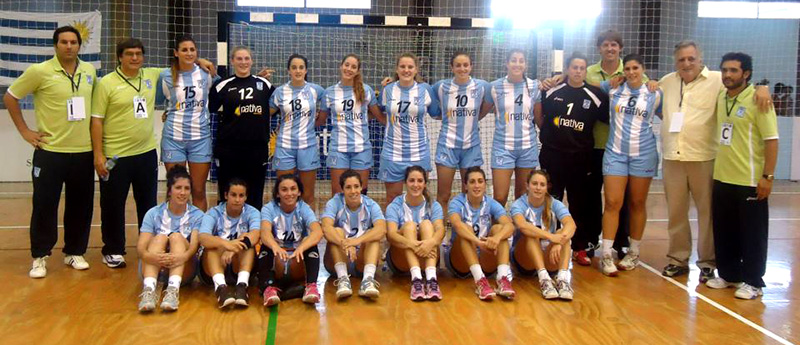
Argentina:  Still the best of the Pan American also-rans.  Can the USA put together a team capable of beating them in 18 months?

Argentina: Still the best of the Pan American also-rans. Can the USA put together a team capable of beating them in 18 months?


Much has been written or said about Brazil’s historic run to the title at the recently completed Women’s World Championship.  And, with good reason; It was truly historic for a Pan American team to win a title in convincing fashion.  If it wasn’t obvious before, there is now undeniable proof that the Brazilian women are as good and for the moment even better than the top European teams.  This is something no Pan American team (Men or Women) has ever accomplished and in doing so there is now a chasm in terms of quality between Brazil and the other Pan American teams.

With only one Pan American direct qualification slot for Olympic qualification normally this would mean that the rest of Pan America should immediately forgo any thoughts of going to the Olympics until 2020 at the earliest.   It’s just really hard to contemplate a scenario where any side beats Brazil anytime in the near future.  Throw out your “Miracle on Ice” analogies.  Unlike hockey handball is a high scoring game and there’s just no plausible scenario for a dramatically superior team to lose a 60 minute match to a significantly inferior foe.

Fortunately, for the rest of Pan America Brazil is hosting the 2016 and their automatic bid throws them out of the equation.  Instead of unseating Brazil all a Pan American side has to do is emerge as the 2nd best team at the 2015 PANAM Games in Toronto.  Currently there is a pecking order among the also-rans.  This past summer 3 teams (Argentina, Dominican Republic and Paraguay) took 2nd, 3rd and 4th at the Pan American Championships and qualified for the World Championships.  I had the opportunity to see each of these teams play in several matches and here’s a summary of how they fared at the World Championships and my assessment of their future prospects.

Dominican Republic
Group Play
– Record: 0-5
– Avg Scoreline:  18.4-35.6 (-17.2 Goals)
– Highlights:  Stayed relatively competitive vs Montenegro, losing by just 7 each half; Lost close match to 4th place Congo 23-22
– Lowlights:  Totally outclassed in matches vs France, Netherlands and South Korea.  Managed only 10 goals vs France
President’s Cup:  29-24 loss to Algeria and 27-26 victory over Australia
Overall Ranking: 23rd
Avg Age of Roster: 21.8
Assessment:  Overall, a disappointing tournament for the Dominicans as they only managed to eke out 1 win and that was against the Australians who’ve consistently finished last at the World Championships for several years. They have a fairly young roster with only 1 significant contributor (31 year old winger Nancy Pena) over the age of 25.  The official roster indicates that all of their players are based in the Dominican Republic, but other sources indicate that several players are also playing for clubs in Spain.

Paraguay
Group Play
– Record: 0-5
– Avg Scoreline:  11-33 (-22 Goals)
– Highlights:  Played Argentina close in 2nd half, losing that half by score of 12-10
– Lowlights:  One of worst all-time performances in Group Play competition history.  Lowlights include a 40-6 annihilation by Poland and a 29-9 loss to Spain that included a goalless first half.
President’s Cup:  23-21 victory over Australia (won in penalty shootout) and 29-19 victory over Algeria
Overall Ranking: 21st
Avg Age of Roster: 21.5
Assessment:  Their performance in group play was a disaster, but you have to give the Paraguayans credit for bouncing back in the President’s Cup.  Particularly surprising was their convincing victory in their last game against Algeria.  This improvement illustrates what an important development opportunity merely attending a World Championships can be.  I suspect that Paraguay would have lost to Algeria had they met in Group play, but with the experience of just a few games they developed greater confidence.  They have a very young team overall, but two major contributors, Marizza Faria and Maria Gomez are 29 and 30 respectively.  On the other side of the age spectrum, their 2nd and 3rd leading scorer were Left Back Ana Acuna (age 19) and circle runner Sabrina Fiore (age 17).  Both show quite a bit of promise, but would probably need to play overseas or in Brazil to further develop as players.

Argentina
Group Play
– Record: 1-4
– Avg Scoreline:  20.4-28.2 (-7.8 Goals)
– Highlights:  Played very competitively against the defending World Champions, Norway for 45 minutes.  Even led Norway 6-4 after 15 minutes and were down just 8-10 with 2 minutes left in the first half.  Norway, however, had a couple of runs which put the game out of contention.  Particularly, disastrous was a 12 goal run which resulted in the ugly final result of 37-18.  Argentina was also competitive against Spain, losing only 25-19 and had a convincing 25-15 victory over PATHF rival Paraguay.
– Lowlights:  They were less competitive in a loss to Poland (31-17) and lost by 10 goals to Angola (33-23).  Angola has Africa’s strongest women’s program, but they weren’t as strong at this WC as they’ve been in other years.  Based on how Argentina played against European foes this should have been a much closer contest and a victory over Angola would have advanced Argentina to the knockout stages instead of the President’s Cup.
President’s Cup: 27-21 loss to Tunisia and 31-19 victory over Congo
Overall Ranking: 19th
Avg Age of Roster: 23.9
Assessment:  I watched parts of several Argentinian matches and they clearly are a hot and cold team.  They are technically sound and when they play under control they can stay competitive against the top teams.  But, they also had several stretches with lots of turnovers which were disastrous.  Looking at the match reports many of these opposition runs were towards the end of the halves and this suggests some conditioning issues.  Additionally, while many players are technically sound they don’t have many players with exceptional quickness which can make a big difference in capitalizing on 1 v 1 situations against strong defenses.  Overall, they have a pretty young team which could continue to improve.  One major contributor, Madgalena Decilio is 30 years old, but the rest of their roster is 28 or younger.  Their best player Luciana Mendoza is 23 years old and plays for Blumenau in Brazil.  I suspect that her performance at the WC will draw some interest from a few European clubs.

For an additional assessment on Argentina read Ruben Gomez’s article at Mundo Handball.  Included in the article is some strong praise for Argentina, from Norway Head Coach, Thorir Hergeirsson, who indicates that they are the team of the future and will replace Brazil as the Pan American team to beat.

Can the USA Beat these Sides?

As an American, I couldn’t help but watch these 3 teams from a parochial viewpoint.  Essentially, I found myself asking, “Can the USA beat these sides at the 2015 PANAM Games and earn a ticket to Rio?”  Athletically, Argentina, Dominican Republic and Paraguay are nothing to write home about.  And, of the three teams only Argentina has sound technical handball skills.  Comparing these teams to past American sides, I’m pretty confident that any USA Olympic team from 1984 to 1996 would fare well.  They would easily beat the Dominican Republic and Paraguay and they would wear Argentina down physically.  And, now that the USA is setting up a Residency Program at Auburn University that appears to be comparable to the Residency Programs that were set up in the 80’s and 90’s.  But, can the U.S. make the necessary progress in the time alloted? Crystal ball prediction is fraught with peril, but here’s the case for yes and no depending on whether your you see the proverbial glass as full, half-full, half-empty or empty.

Glass Full Perspective:  Time is short, but in 18 months the U.S. puts together a team that gets the job done.  Some top notch recruiting finds several high quality athletes that quickly develop into great handball players.   Combined with the core veterans they jell quickly into a competitive team.  And, this team keeps getting better thanks to additional funding that supports a couple of extended trips to Europe to face challenging competition.  Come July 2015 they’re tested and ready to beat every team but Brazil.

Glass Half-Full Perspective:  The challenge of putting together a team in 18 months that can qualify for the Olympics might be asking quite  bit, but it proves to be well worth the shot.  The U.S. doesn’t make up the ground necessary to beat Argentina, but the USA makes sufficient progress so that it topples Paraguay and the Dominican Republic.   They even give Argentina a run for its money in the semis, but fall short.  More importantly, the stage is set for a stronger run towards the 2020 Olympics.   Several young talents have emerged and they are motivated and ready to put 4 more hard years of work in.   Also, while the Olympics were unattainable the U.S. easily qualifies for the 2015 World Championships and has that that opportunity to further improve as a team.

Glass Half-Empty Perspective:  The U.S. makes slow, but steady progress.  A couple of top notch recruits are identified and quickly become important contributors to the national team. The U.S. is much improved, but unfortunately so have most of the other Pan American teams.   Like the U.S. they’ve taken stock of the competition and decided to invest in a shot at 2016.  Several key opponents have taken overseas training trips and some players have been placed in competitive European clubs.  And, the Cubans have emerged as a rival to Argentina.  At the PANAM Games and Pan American Championships the U.S. faces tough competition to even make the semifinals.  Depending on the draw they face the difficult task of beating Cuba or the more feasible task of beating Paraguay or the Dominican Republic to advance.  A top 3 placement is a long shot and the U.S. faces a 50-50 proposition to even secure one of the 5 Pan American slots for the 2015 WC.   And, in regards to progress towards the long term the results are mixed at best.  There’s a bit of foundation established towards a run at 2020, but to a large degree the U.S. ends up having to start over.

Glass Empty Perspective:  The U.S. program manages only marginal progress in 18 months.  A handful of recruits are identified, but they aren’t “knock your socks off” athletes.  They’re developing as handball players, but not to the point where they’re really ready for international play.  The U.S. team ends up being mainly composed of hard-working veterans who’ve had less than satisfactory results in the past.  A more cohesive team thanks to the Residency Program, but not a whole lot better than previous teams sent to the 2011 PANAM Games and the 2013 Pan American Championships.  Meanwhile, the rest of Pan America also realizing the unique opportunity Brazil’s participation represents takes major strides forward investing in overseas training and coaching.   The U.S. faces a tough match in the second chance tournament against either Paraguay or Uruguay to simply qualify for the PANAM Games.  And, at the PANAM Games and Pan American Championships the U.S. team doesn’t come close to qualifying for the semis and ends up around 8th place.  Finally, perhaps the worst result of all, the National team sees a rash of retirements both from veteran players and newcomers distraught and unmotivated at the unlikely prospect of beating Brazil in 2019.  And, then the U.S. does as it has several times before, starts all over again with a new crop of athletes in 2017.

My Perspective:  As a skeptic of Residency Programs in general and someone that advocated against starting a program so quickly it should be no surprise that I lean more toward the glass half empty side of things.   Call me a pessimist if you like, but it truly will be an uphill battle.   There surely will be improvement, in my opinion, just not enough improvement to merit the expense in terms of funding and man-hours when the U.S. faces so many other challenges across the board in terms of grass roots development, marketing, etc.

All that being said you can also be assured that I would be more than happy to see 18 months hence, the glass half full or even better full with a ticket to Rio punched.

post

IHF’s new TV rights contract and the critical question: how will the money be used?

What the IHF needs are goals, strategies, plans and transparency, NOT a 'Santa Claus approach'

What the IHF needs are goals, strategies, plans and transparency, NOT a ‘Santa Claus approach’

First there were rumors, and as John Ryan recently indicated, now there is confirmation: the IHF has managed to sell the TV rights for 2014-17 to a friendly business partner, Qatar’s Al Jazeera. The exact amount has not been officially confirmed, but there are indications of a record amount (about 100 million Swiss Francs, roughly equaling US$ 110 million), which would exceed the previous contract by more than 60 percent. This should be good news for the IHF, and it should be good news for the IHF president, as it might deflect attention away from the suspicions and police investigations related to his handling of the contract with UFA Sports for 2010-13.

When I say that it ‘should’ mean good news for the IHF, I deliberately use this cautious expression, because it creates a huge issue regarding how this money should and will be spent. If the IHF were being run properly, this would be a relatively easy task, because such decisions would be taken in a democratic and transparent manner, in accordance with well-established goals, strategies and plans. But sadly this is not the reality of today’s IHF, which is being run in a very different manner. There are essentially no agreed goals, strategies and plans. Moreover, while there is an IHF Council and an IHF Executive Committee, virtually all members of those bodies simply allow the autocratic president to make all the major decisions regarding financial matters. Therefore, we have absolutely no reassurance that the new resources, which are huge by IHF standards, will be used in a systematic, sensible and fair manner. Instead we have reason to worry that, as tends to happen when there is an absence of insight and control, an increase in resources may lead to an increase in waste and corruption.

As I noted when I recently commented on the proposed budget at the IHF Congress, the proportion of the money available that is being used for development efforts around the world is embarrassingly small. Despite the introduction of the IHF Challenge Trophy, and despite recent efforts to by somewhat more systematic and listen to the need of the national federations and the continental confederations, the overwhelming proportion of the IHF resources go towards expenses related to the World Championships, the IHF administration and the remuneration and activities of the IHF top officials. The main reason for the IHF to exist should be the support and development of handball at the grassroots level, especially in the many small and new member countries. Handball now has about 199 member federations, although actual handball activities may be hard to find in many of those countries. So the need for support and resources is enormous, but that is certainly not reflected in the current IHF budget.

Theoretically, therefore it should be easy to find appropriate ways of putting the new resources to good use. I already mentioned the needs of the new and small member federations. But in the context of my comments on recent World Championships, I have also pointed out that we cannot see any trend for the relatively more advanced member federations in Africa, America and Asia to catch up with their European rivals. We must not let the impressive and welcome success of Brazil overshadow the reality that, among the women, the perennial Asian and African powers from Korea and Angola had sunk to 12th and 14th place respectively, with Japan, Tunisia, China and Argentina showing only modest signs of future competitiveness. Apart from Brazil’s many victories, Koreas win against Netherlands in the preliminary round was the only time that a non-European team was able to win against a European opponent. So this group of 10-20 nations, which hypothetically could close the gap with the Europeans in the next 10-20 years, desperately need help in order to have a chance. Another point of focus, as it has recently been suggested by the IHF president, should be the importance of rapid improvement in some of the largest countries such as China, India and the United States. But I very much doubt that the IHF even appreciates the magnitude of the support that would be needed for such an effort to succeed.

Clearly, the IHF would never be able to build up its own personnel resources to such a level that the IHF could directly implement all the global development efforts that the new resources would permit. It would continue to be necessary to draw on experienced and interested technical experts from the advanced handball countries. But the planning and coordination efforts will need to be expanded, and the dialog with the recipients of the support will also require an improved structure and added resources. The member federations, directly and through its representatives within the IHF, simply must step forward now and help ensure that the new resources are put to the best possible use. This is a critical moment and handball cannot afford to miss this opportunity, so the IHF president must be given help in reaching the best decisions and ensuring an efficient implementation.

post

Handball News Summary (26 December 2013)

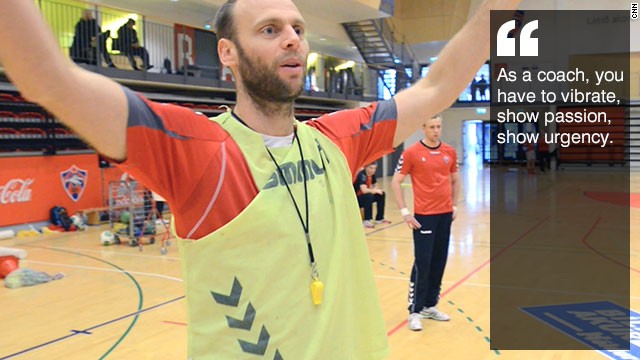
Coach Stefansson at training session with Reykjavic's Valur Club

Coach Stefansson at training session with Reykjavic’s Valur Club

Commentary:  Outside of handball’s stronghold in Europe only the occasional story ever gets published in mainstream news outlets.  Case in point, you would find nothing about the Brazilian women’s World Championship title run in American news outlets.  Recent stories by CNN International and the Dallas Morning News are the exception and bizarrely they both highlight playing handball with makeshift balls made out of socks.

1) VIDEO:  Iceland’s Olafur Stefansson featured on CNN’s Human to Hero series.  The 3 minute feature on Iceland’s retired star discusses his playing career and his current role as coach of Iceland’s Valur club.
CNN: Iceland’s Handball Hero: Link
CNN VIDEO: Link

2) Dallas Stars Hockey club plays street handball.  Lacking a rink, the NHL’s Dallas Stars played team handball outside their hotel in Los Angeles as a team building exercise.
Dallas Morning News: With rink unavailable, Stars instead practice with handball game in LA streets: Link

3) Al Jazeera buys IHF TV Rights for 2014-2017.  Al Jazeera reportedly will pay $110M for the rights to IHF Championships through 2017.  This is a 64% increase over the $67M paid by UFA for the 2010-2013 TV Rights.
Inside the Games: Link

4) USA Team Handball announces Dr. Harvey Schiller as its new Board President.  On 20 December the 9 member board elected the former USOC Executive Director as its new President.  Dr. Schiller is easily the most high profile President USA Team Handball has ever had and his election could help raise the profile of the sport in the U.S.
USATH Press Release: Link
Inside the Games: Link
Sports Business Daily: Link
THN Commentary on new Board Members: Link

post

World Championship Final Preview: Can Brazil Tame the Home Crowd?

Serbia

Serbia’s boisterous home crowd has helped propel them into the Finals. Will the crowd put them over the top one more time against Brazil on Sunday.

Tomorrow’s World Championship final is a refreshing change of pace from the more predictable outcomes in recent years.  While it might not have been surprising for either the home side or the quality Brazilian club to find their way to the final it is truly a surprise for both teams to make it.

Both Serbia and Brazil had an easy time of it in the Semifinals on Friday.  Serbia dispatched Poland 24-18 and Brazil easily handled Denmark 27-21.  In fact, both teams true tests were in the quarterfinals where Serbia staged a furious comeback to defeat the defending Champions Norway, 28-25 and Brazil needed two overtimes to defeat Hungary 33-31.

For the second consecutive time Brazil will need to vanquish a foe they already defeated in Group Play.  Brazil won their earlier meeting and who knew that Group B was so loaded it had 3 of the final 4.  Player for player I think Brazil has the advantage in terms of quality, but the Serbs have an extra player in the boisterous 18,000 fans in the Krombank Arena.  Key, in my opinion will be for the Brazilians to execute and finish their fast break opportunities.  With their quickness advantage there’s a distinct possibility for them to go on one of their patented runs to build up a 3-4 goal lead.  And at that point they may have a chance to take the crowd out of the match.  If they don’t, and let the Serbs stick around, however anything can happen. 

Another factor may be how well a couple of key players shake off their injuries.  Both Brazil’s Ana Rodrigues and Serbia’s Andrea Lekic were injured in the semifinals, but both are expected to play.  The oddsmakers have Brazil pegged as a half goal favorite.

One final side point, Brazil’s victory will mean that 5 Pan American sides will qualify for the 2015 World Championship, giving every handball fan from Tierra del Fuego to Baffin Island reason to cheer for Brazil. 

The match throws off at 1715 CET / 1115 U.S. East Coast and can be viewed for $5.99 at Live Sport TV:  link.

 The Bronze medal match between Denmark and Poland is also available for viewing and starts at 1430 CET / 0830 U.S. Eastern Time.

post

Danish Flavor for Today’s Semifinals


Danes rule the sidelines today at the Women's World Championshpihs:  Left to Right; Head Coaches Morten Soubak (Brazil), Jan Pytlick (Denmark) and Kim Rasmussen (Poland)

Danes rule the sidelines today at the Women’s World Championshpihs: Left to Right; Head Coaches Morten Soubak (Brazil), Jan Pytlick (Denmark) and Kim Rasmussen (Poland)

A few short notes on today’s semifinal matches at the Women’s World Championships.

Poland vs Serbia, 1800 CET / 1200 U.S. Eastern Time

With the elimination of pre-tournament favorites, Norway, Montenegro and France, the host Serbs are now the top favorite to win the tournament.  They are a 2.5 goals favorite over the surprising Poles that were not in any way seen as title contenders.  In fact, going into the tournament they were 250-1 longshots to win the title, the longest odds of the 12 European participants.  I suspect that Poland’s surprising run will come to an end against the host Serbs.

Brazil vs Denmark 2045 CET/ 1445 U.S. Eastern Time

These two sides met in Group play with Brazil winning comfortably, 23-18.  The oddsmakers foresee a tight contest with Brazil only a .5 goal favorite.  For Denmark, the one time dominant Women’s team on the world stage, this is is a return to the medal round after a drought of 9 year drought of mediocrity.  For Brazil this is the first time ever in the medal round.  For years Brazil had shown they can compete with the top sides in Europe for years, but had struggled to get over the hump in the knockout stages of major tournaments.  The emotion they displayed after their double overtime victory over Hungary showed just how big of a deal it was for them to make it to the semis.   Now that they’ve made it, I think their talent will shine through with a repeat victory over the Danes.

Here are a few articles on today’s semis worth checking out:

Timeout Mag on Danish resurgence:  Link

Timeout Mag on 3 Danish head coaches in the semis:  Link

IHF Preview of Poland-Serbia:  Link

IHF Preview of Brazil-Denmark:  Link

As a reminder today’s semifinal matches and Sunday’s gold and silver medal matches can be watch online at the LiveSport.TV website:  Link  (The subscription price for the remaining matches is $12.99)

post

Commentary: Three Great Additions to the USA Team Handball Board of Directors

Dr Harvey Schiller, Mike McNees and Bob Djokovich:  3 great additions to the USA Team Handball Board of Directors.

Dr Harvey Schiller, Mike McNees and Bob Djokovich: 3 great additions to the USA Team Handball Board of Directors.

It’s taken several months for the Nominating & Governance Committee to complete its work to select three new Board Members, but they are clearly to be commended for their ultimate selections, Dr. Harvey Schiller, Mike McNees and Bob Djokovich.  This post on the USA Team Handball website provides some top level background on each of the new Board Members.  Below is some supplemental information and some additional thoughts in regards to how they might help USA Team Handball.

Dr. Harvey Schiller

If you read a bit on Dr. Schiller’s background your first reaction should be along the lines of “Holy crap, this guy is going to sit on USA Team Handball’s board?”  The resume is long, varied and impressive.  He’s been the Executive Director of the USOC, the Commissioner of the most prestigious NCAA Conference (SEC), the President of Turner Sports and the President of Yankees/Nets.  And that’s just the highlights.  Watch these sports business reporters gush about his career and read the accompanying article to get a full appreciation.

Here’s a very accomplished sports executive that could have chosen do a number of different things as his next big thing and he’s chosen USA Team Handball.  The doors that he can open for the sport in this country are many.  Who could be better to talk to the USOC about more funding support than a former head of the USOC?  Who could be better to talk to the NCAA about making Team Handball a varsity sport then the former head of the SEC?  Who could be better to talk to sports networks about broadcasting Team Handball on TV then the former head of two major networks.  It’s hard to understate what a potential game changer his selection to the Board could be  for the sport in this country.

Mike McNees

Mike McNees appears to be another quality selection to the Board, but for different reasons.  Outside of a short stint as USA Track & Field’s Chief Operating Officer he’s mostly worked as a city manager for several mid-sized cities.  He surely learned a lot about the effective operation of a sports federation during that time and he was even the acting CEO during a critical transition period.  This short mention by noted Olympic columnist, Alan Abrahamson describe McNees as someone “who has kept things moving steadily, quietly forward, seeking little screen credit.”  Based on his background and this short commentary he could be an ideal independent director.  Someone with no dog in the fight, who has been in the trenches with another Federation and who could quietly apply some real world management oversight to USA Team Handball.

Bob Djokovich

With the selection of Bob Djokovich the Board adds a distinguished handball veteran who also has been a successful manufacturing executive.  The captain of the 1984 U.S. Olympic Team, he is generally considered to be one of the best players in U.S. history.  (In my book, certainly the best Center Back this country has ever had.)  Djokovich is also a former USATH Board President and will surely be able to bring that experience to bear as the new Board weighs decisions going forward.

Nominating & Governance Committee Process

While I personally think Djokovich is a great addition to the Board, I would be remiss if I didn’t address how his selection by the Nominating & Governance Committee might be called into question for a couple of reasons.  The first reason is procedural and relates to Djokovich being appointed to the Nominating & Governance Committee earlier this year in April.  The Nominating & Governance Committee was tasked with selecting the 3 Independent Directors and the Federation By-Laws clear state in section 8.10.5 that

“No individual who serves on the Nominating and Governance Committee may serve or be eligible to serve on the Board of Directors.”

The recent announcement on the Federation website commends the Committee for its work, but notably, the original 5 member committee has been reduced to 4 members (minus Djokovich).  I suppose if Djokovich resigned from the Committee it skirts that provision for technical reasons, but it’s hard to see how it doesn’t violate the spirit of the provision.

Setting aside that procedural issue, however, it should also not be forgotten that in 2004 Djokovich lost his re-election bid for USA Team Handball President.  In hindsight this outcome was disastrous as follow on events eventually led to the USOC’s decertification of USA Team Handball.  Still, it was essentially a referendum on his four years as President and it would have been more appropriate in my opinion for him to run as a Membership Candidate.  In doing so he could very well have had a resounding and redemptive victory.  Instead his selection (rather than election) has a somewhat hollow feel to it.

If you read the by-laws, however, the Nominating & Governance Committee is empowered to select almost anyone on the planet to serve as an Independent Director.  Adding two true Handball outsiders (Schiller and McNees) and one Handball veteran (Djokovich) may be just the right mix in terms of  what is needed.  I for one, certainly can’t complain about the outcome.

(Editor’s note:  I’ve reached out to USA Team Handball CEO, Matt Van Houten regarding the procedural issues related to Djokovich’s selection and I will update this post when I have further information.)

post

Moneyball Handball Part 3: USA Team Handball Recruiting (Past, Present and Future): Time for a Change in Mindset

Despite a questionable decision in the closing minutes of the Auburn – Alabama football game, Alabama Coach Nick Saban is considered to be a pretty good sideline coach.  Where he truly excels, though, is in behind the scenes recruiting to convince 5 star athletes to come play at Alabama.  Arguably, a good recruiting program is the single most important factor in determining a collegiate program's success.  It's also the key to USA Team Handball success and more emphasis is clearly needed in that department.

Despite a questionable decision in the closing minutes of the Auburn – Alabama football game, Alabama Coach Nick Saban is considered to be a pretty good sideline coach. Where he truly excels, though, is in behind the scenes recruiting to convince 5 star athletes to come play at Alabama. Arguably, a good recruiting program is the single most important factor in determining a collegiate program’s success. It’s also the key to USA Team Handball success and more emphasis is clearly needed in that department.

As I reviewed parts 1 and 2, it became clear to me that while I was zeroing in on the envelope for USA Team Handball recruiting, that I had neglected to define what recruiting means in the first place.  So stepping back a bit here’s the Merriam-Webster Definition:  Link 

  1. to find suitable people and get them to join a company, an organization, the armed forces, etc.
  2. to form or build (a group, team, army, etc.) by getting people to join
  3. to persuade (someone) to join you in some activity or to help you

Keep this definition in mind as I take a closer look at USA Team Handball recruitment, past, present and future.

Athlete Recruitment for USA Team Handball (Historical)

First, here’s a brief review of how USA Team Handball has recruited in the past.  For the most part athletes came from the following sources:

Military Athletes: The U.S. military at different times has identified national team players through tryouts.  Most notably, several members of the 1972 Men’s Olympic Team were identified through a U.S. Army program.  Over the years other athletes have been identified by U.S. military programs for National Team tryouts and have become members of the U.S. National Team.   (Note:  This category doesn’t include collegiate athletes from West Point and Air Force Academy.)

College Club Athletes: Several athletes that played Team Handball for collegiate clubs have gone on to play for the national team.  Historically, three clubs, West Point, Air Force and North Carolina have provided the bulk of those athletes.

Club Based Athletes: Non collegiate clubs have also identified and developed athletes that have moved on to the National Team.  The New York Athletic Club (formerly known as Garden City) has been the most successful in this regard developing several athletes in the 70s, 80s and 90s.  The Condors (both the California and Atlanta incarnations) were perhaps a distant second.

Dual Citizen Athletes: In most cases these athletes are American citizens who have lived and developed their handball skills in Europe.  Recruiting has primarily consisted of advertising that the U.S. was looking for handball players with a U.S. Passport.  Prior to the advent of the internet this was done through letter writing campaigns to European Federations.  Additionally, many Americans over the years have self-identified their availability to the Federation and the internet has made it much easier to find these athletes.  Finally, a handful of athletes have played for U.S. National Teams after moving to the U.S. and obtaining citizenship.

Post College Career Athletes: This category consists of collegiate athletes with virtually no prior Team Handball training.  Many of these athletes were identified through letter writing campaigns to college coaches in other sports like basketball, football and volleyball.  The letter would identify the qualities desired and provide dates for a tryout.  Athletes that answered the call were provided room and board at the Olympic Training Center and in a few instances, even provided with transportation costs.  Another prime recruiting opportunity were national team tryouts for other sports conducted at the Olympic Training Center in Colorado Springs.  The Women’s program, in particular, identified several top players who were introduced to the sport while unsuccessfully trying out for basketball teams.

Olympic Festivals:  Another important tool for recruitment was the Olympic Festivals that were held from 1978 to 1995 in non-Olympic years.  In total, 120 athletes (60 men/60 women from all of the above categories participated in these two week events that provided structured training and competition.  Selection to the regional teams was competitive and the Festivals were undoubtedly the single most effective tool for recruitment and player evaluation at levels below the national team.

Athlete Recruitment for USA Team Handball (Recent and Current)

In more recent times recruitment has focused heavily on dual citizen and club athletes.  I would assess that USA Team Handball has by now most likely identified every passport carrying citizen with decent handball ability and done a pretty good job at convincing them to wear a U.S. uniform.  Collegiate club athletes have primarily come from 3 programs (West Point, Air Force and North Carolina) with the service academy graduates having the additional benefit of financial support from the military’s World Class Athlete Program (WCAP).  A handful of athletes have also come from at large clubs with many of those athletes picking up the sport and joining local clubs after having seen Team Handball on TV during the 2008 or 2012 Olympic Games.

With few exceptions, however, the bulk of these athletes haven’t involved much recruitment effort.  At least, not by the dictionary definition.  In most cases these athletes were already committed to the sport and were essentially just raising their hands and asking to be considered for USA National Teams. In some respects this shouldn’t be too surprising:  Recruiting the already committed is a piece of cake, while recruiting brand new athletes (such as post collegiate athletes) is always going to be more of a challenge.  And, asking newcomers to pay all their costs to attend tryouts when there’s no clear path forward was probably a near impossible sales pitch. 

Athlete Recruitment for USA Team Handball (Going Forward)

With a Residency Program now in place, however, USA Team Handball can now sell prospective recruits on a pathway for further development.  Assuming the Residency Programs follow the basic tenets of previous incarnations athletes can be assured that they will be provided with a good training environment and the opportunity to represent their country in international competitions.  Auburn University is also a brand name school with both a great sporting and academic reputation.  There are now enough positives to make a credible pitch. Credible, but still challenging and additional benefits like scholarships, room/board and stipends would certainly help especially when competing for talent against other college and post college options for athletes.  Quite frankly, in my opinion, it’s very uncertain whether USA Team Handball can successfully recruit the athletes needed (younger with more raw athletic ability) without those types of benefits, but it’s too late to backtrack.  For better or for worse the decision to move forward quickly with Residency Programs has been made.

To make the expense of a Residency Programs truly worthwhile it needs to populated with great athletes with great potential.  It may be tough to make that happen, but one thing is for sure.  It has no chance of happening without a dramatic change in mindset as to what recruiting means for USA Team Handball.  USA Team Handball cannot  be satisfied with simply announcing open tryouts on its website and then hoping some good prospects show up.  Maybe, that would be feasible if the U.S. had a substantial existing talent pool or a guaranteed Olympic slot, but neither of those are true.  More time and resources have to be dedicated to recruiting brand new prospects to make the trek to Auburn.  In short a change in mindset is needed.  One that clearly puts recruiting at the very top of the agenda.

This means effective talent identification methods that can scour the U.S. and find athletes that are

  1. As young as possible
  2. As athletically gifted as possible and
  3. Willing to consider playing Team Handball

This means effective talent evaluation methods to fully assess whether talent that has been identified is a good fit for USA Team Handball programs.  And, as we are talking about athletes prior to showing up for tryouts, this may even mean methods of evaluating athletes before seeing them play handball.

This means effective recruiting practices to proactively engage prospective talent and persuade them to commit to the USA Team Handball program.

Fortunately, USA Team Handball doesn’t have to write a new book on how to do effective recruiting.  The model is there in the tactics and techniques that U.S. College sports programs have developed into both an art and science over the years.  College recruiting is a big business and arguably recruiting is the most important aspect of a college coach’s job.  Why is this behind the scenes aspect of coaching so important?  Because while X’s and O’s are important and running finely tuned practices are important more often than not wins and losses are simply determined by which team has the better athletes.  That’s why college programs have assistant coaches fully dedicated to recruiting.  That’s why coaches like Nick Saban at Alabama are hitting the recruiting trail to make face to face pitches to potential recruits so that they join their program and to committed recruits so they don’t change their mind.  Coaches like Saban know they can’t win without the horses, so they pull out all the stops to get those horses.  And, USA Team Handball needs to adopt a similar mindset when it comes to recruiting.

USA Team Handball, of course, doesn’t have the resources of Alabama or Auburn football.  Why, it’s doubtful that it has the resources of Auburn softball or even some random NCAA Div 3 basketball program.  That being said USA Team Handball does have some advantages.  For instance, it doesn’t have to follow the voluminous NCAA recruiting handbook:  Link.  The U.S. is also a large country and USA Team Handball should be able to more effectively recruit nationwide than all but a handful of colleges.  As outlined in previous installments while we may be looking at only a small percentage of available athletes our large size means there’s still quite a few rocks to turn over in a search for athletic gems.  But, those rocks won’t turn over by themselves.  USA Team Handball needs to start working the recruiting game harder.

So, a change in mindset to put more emphasis on recruiting is in order and the practices used in college recruiting are the model to follow.  Easier said than done; In the next installment I’ll take a closer look at the college recruiting model and how it might be adapted to best fit the unique circumstances of USA Team Handball.

post

Handball News Summary (17 December 2013)

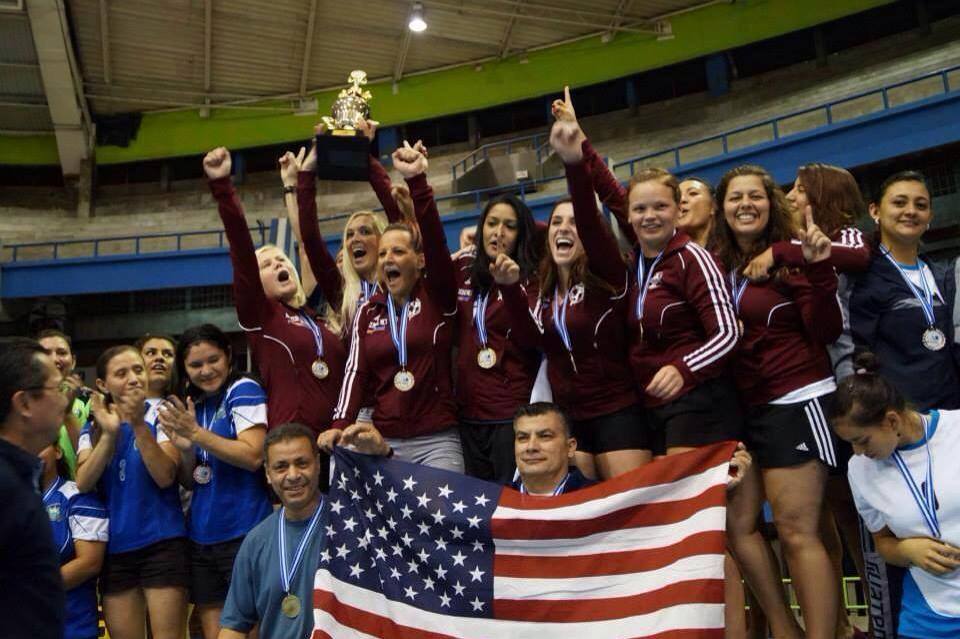
An exuberant LA Team celebrates their title in El Salvador.

An exuberant LA Team celebrates their title in El Salvador.

1) Laser pointers target Korean penalty shot takers. During yesterday’s match between Serbia and South Korea, laser pointers were used to distract Korean shooters.  No word yet as to repercussions and actions planned to prevent it from happening in Wednesday’s quarterfinal match.
VG Sporten: Link
2) Brazil secures extra slot for Pan American Federation for 2015.   Brazil’s 29-23 victory over the Netherlands means that 4 nations from Pan America will qualify for the 2015 Women’s World Championships in Denmark.
IHF: Link
3) Guatemala qualifies for Men’s Pan American Championships in Uruguay.  Guatemala dominated the Central American qualification tournament winning all 4 of its matches by an average of almost 20 goals.
El Salvador Federation Page: Link
4) LA Women’s Club wins Women’s Competition in El Salvador.  The Los Angeles Women’s Team Handball Club won
El Salvador Federation Page:  Link
5) USA Federation adds newsletter.  USA Team Handball posted the first edition of its new month newsletter.  This month’s version provides a year in review of 2013
USA Team Handball December 2013 Newsletter:  Link
6) Handball-World interviews USA Women’s Coach.  Christian Latulippe discusses U.S. plans for residency programs, development of the sport in Alabama and 2015.
Handball-World: Link
post

Women’s World Championship: yes, we knew which teams would be in the ’round of 16′

Brazilian goalkeeper Barbara Arenhart was almost unbeatable today, but perhaps Denmark will get the chance for revenge in a semifinal!?

Brazilian goalkeeper Barbara Arenhart was almost unbeatable today, but perhaps Denmark will get the chance for revenge in a semifinal!?

Before the start of the event, I admitted to John Ryan that I was not inspired by the task of offering a prediction of the outcome of the preliminary round. I felt sure that I knew which teams would advance to the ’round of 16′, which teams would be playing for positions 17-20 and which teams would have to be content with fighting for places 21-24. And I now deserve no applause for being proven right.

It is discouraging to see that, year after year, we cannot find any newcomers from outside Europe among the top teams. Brazil, Angola and Korea are there, and Japan also qualified for the ’round of 16; simply because there were no more than 12 European participants. We now hear rumors that the budget of the International Handball Federation (IHF) could expect a major increase, due to very favorable TV rights contract with Al-Jazeera. Let us hope that finally this will ‘force’ the IHF to spend a more appropriate amount of resources on helping the federations which perennially seem to be next in line to move up and compete with the Europeans. Yes, the newest and weakest federations must also get more help, but for the sake of the image and credibility of handball as a global sport, the priority must be to expand rapidly the ‘middle class’.

We now had a situation where 13 games were won by a margin of at least 20 goals and another 14 games were won by 10 to 19 goals. This should not happen in an elite event. The average goal difference in a game was just about 11 goals! We saw results such as 51-20, 44-21 (twice) and 40-6. And we had a half-time result of 14-0, when the Paraguay team was held scoreless for 32 minutes by their Spanish opponents. By contrast, there were no ties, and only four games (out of 60) were decided by a one-goal margin.

But it could be argued that among the top four teams in each group, there was some excitement in the fight regarding the internal ranking, which determines the likely strength of the opponents in the ’round of 16′ and the path towards the medals. In Group A, France came out ahead, after probably having worried about each of their three pursuers. Montenegro has not shown the same positive spirit as when they won EURO2012, but they managed to come in second. Korea seems far from their old level of medal contenders. In Group B, the top three positions were settled in the very last group game, where Brazil shocked Denmark by grabbing a large early lead which they managed to maintain until the end. This meant that the Serbian hosts got the second place, while Denmark amazingly had to accept third place.

Group C went to the favorites from Norway, followed by Spain, Poland and Angola, even though the Norwegians never looked really convincing so far. In Group D, it was probably a surprise to some that an injury-plagued Germany would manage to beat all the three European opponents. But those teams generally seemed weaker than expected, and especially Hungary was a disappointing shadow of what they have shown during many years now. One gets the impression that it is difficult for many of the European teams to be in top form for a championship every year. Integrating new players and coping with injuries makes it tough.

This leaves us with the following match-ups for the ’round of 16′: in the top half we have Brazil-Netherlands, with the winner playing the winner of Spain-Hungary in the quarterfinal; similarly we have the pairings Denmark-Montenegro and Germany-Angola. In the bottom half, we have first Serbia-Korea and next to them Norway-Czech Republic; in the final quarter of the draw that leaves us with Romania-Poland and France-Japan. About half of these match-ups really would seem to suggest intensive battles. The old Olympic finalists from Denmark and Korea will have to watch out for the local favorites from Montenegro and Serbia. But I will now be brave and predict that in the semifinals we will have a revenge opportunity between Brazil and Denmark and then a repetition of the 2011 final between Norway and France. What Is your prediction?

post

AUDIO: All About the Big Apple Tournament with NYC Handball’s Bini Mustafa

The 5th Annual Big Apple Tournament in New York City is scheduled for 28-29 December.

An event that just keeps getting bigger and better.  The 5th Annual Big Apple Tournament in New York City is scheduled for 28-29 December.

The New York City Team Handball Club is hosting its fifth annual Big Apple Tournament in New York City from 28-29 December at the Riverbank State Park.  New York City Team Handball Club Bini Mustafa and I discuss the upcoming tournament, its evolution from modest beginnings and its potential future.

We also talk about the All-Star Game which will have American players including Gary “Hang Time” Hines, Jordan Fithian, Divine Jackson and Vladimir Andjelic  taking on some of the world’s greatest veteran players including Pascal Hens, Goran Sprem, Michael Kraus, Marcin Lijewski and Magnus Wislander.  The USA All Star Team will also be coached by USA Men’s National Team Coach Javier Garcia Cuesta.

Surely an event worth seeing if you’re anywhere near the New York metropolitan area.

(The podcast interview length is 28 minutes)

New York City Team Handball Facebook Page:  Link

post

Handball News Summary (10 December 2013)

Sally Potocki, who plays for Dortmund in the German 2nd division has been a bright spot for the Australians at the World Championships.

Sally Potocki, who plays for Dortmund in the German 2nd division has been a bright spot for the Australians at the World Championships.

1) Australia Women struggle against top foes, but look forward to win opportunities later in the President’s Cup.   Handball-World and the IHF site both have articles on the Australian Women’s team.
Handball-World: Link
IHF:  Link
2) Asian Men’s Championship Draw Results.   The 10 nations have been drawn into two groups of 5 for the championships that will take place in Bahrain from 25 January to 6 February.
Tehran Times: Link
3) Lars Christiansen reveals that he has struggled with depression and anxiety.  In a recently published book, the retired Danish national team player highlights how depression and anxiety made playing a challenge in the latter stages of his career.
Handball-World:  Link
4) Copa El Salvador to determine Central American participant for Men’s Pan American Championship.  Starting today, 5 Central American nations will play a round robin tournament in San Salvador to determine which side will advance to the Pan American Championships this summer in Uruguay.  There will also be a Women’s competition with the Los Angeles Women’s club participating.
El Salvador Website:  Link
post

EHF refereeing getting out of control

This is the kind of disgraceful situation that is inappropriately turned into a joke.

This is the kind of disgraceful situation that is inappropriately turned into a joke.

Readers of my articles in recent years know that I am often praising the European Handball Federation (EHF) for organizing and running its business and its events in a professional manner, sometimes in contrast with what can be seen from the International Handball Federation (IHF).  But you will then also have noticed that, on several occasions, I have seen clear reasons to criticize the EHF severely, typically regarding issues involving inappropriate distortions of the global playing rules or poor handling of situations where punishment of actions by players and coaches has been required.

One example is the EHF practice to go against the rules and give out automatic suspensions in situations where referees have given a disqualification (‘red card’) under the provision of the rules where they alone have the right decide that the infraction falls into a category for which NO further punishment is warranted.   Another example is the feeble handing of grotesque cases of misbehavior of coaches, where the image of the EHF and of our sport is at stake, but where the EHF has found some excuse for letting the culprit escape with essentially a ‘slap on wrist’.  Examples are the action of the Hypo manager Prokop who entered the court to stop a counterattack for the opponents, and the Serbian coach who held on to the shirt of a player on the opposing team on the court in a game in the 2012 European Championship.  The latter situation was quite inappropriately turned into some kind of joke.

However, during the early stages of the 2013-14 season, the focus has been much more on the effect of questionable refereeing in the men’s and women’s Champions League and most recently in EHF Cup matches.  There has been an abundance of games, especially in the men’s Champions League, where the referees have been unable to control to action sufficiently and where cynical players have ‘taken matters into their own hands’.  As a result, many games have more resembled wrestling, rugby or American football, with players in piles on the floor and with a generally unpleasant atmosphere.  Of course, this reality does not remain a secret, as the EHF-TV webcasts make the scenes available to handball fans around the globe.    In some cases, the issue has been more an apparently deviation from the expectation of equal treatment of both teams, as instead one team, typically the home team, has been getting unwarranted favors.

And the problems have not been limited to the men’s Champions League.  Very recently, a key game, Baia Mare-Thuringer, in the preliminary groups on the women’s side led to strong reaction both from the losing team and from web viewers.  The refereeing was grossly one-sided, as a serious video analysis will easily confirm.  Regrettably, the coach from the losing team was unable to refrain from accusations about bribery.  This is a serious statement which cannot be permitted unless there is clear evidence.  So now the EHF has to investigate both the refereeing and the rash words by the coach.   And as a culmination, we just had the Zomimak-Aarhus game in the men’s EHF Cup, where incompetent referees allowed a level of outright violence that does not belong on a handball court.  A Youtube video clip from this game has caused very negative propaganda worldwide.

It is clear that the EHF competition system is so large that the supply of competent referees may not quite match the demands.  In comparison with the IHF and its handful of World Championships each year, the EHF must rely on a much larger pool, which includes older referees who were not able to qualify for the IHF level, referees discarded by the IHF, and young new EHF referees without much experience.  But I have enough experience from referee nominations and enough up-to-date knowledge of the top referees used by the EHF (in part by following most of the Champions League games on the internet), so I can firmly state that the EHF should be able to do a MUCH better job of matching the available referees with the demands of the games in the different competitions.  I can only speculate about the motivations for what is taking place, but I would label many of the nominations for the Champions League careless, cynical or experimental.

Even worse, a careful analysis makes you wonder about the presence of ‘geopolitical’ considerations, which sometimes seem to outweigh concerns about quality.  Certain referees and referees from certain regions get puzzling assignments where they are ‘in over their heads’ or cannot resist the pressures from spectators, and certain teams seem to get ‘strange’ nominations.   It makes you wonder both about the role of the entire Referee Committee in this regard, and the existence of ‘checks and balances’.  And it gives the impression that, just as in the case of legal procedures (where a ‘hands off’ approach may be more understandable and appropriate), the EHF top management in the case of the management of the refereeing carelessly turns a blind eye to what is happening.   Clearly, the impact is much too important both for the image of the EHF and for our sport overall.

In these circumstances, it is not surprising that it is being rumored that the IHF has found it appropriate to introduce a special effort to monitor and support the IHF referees throughout the year in their performances in their own respective continents.  This has been a shortcoming over many years, especially as new recruits at the IHF level tend be younger and less experienced than in the past, so it is a topic that I myself tried to pursue during my IHF period.  And it is now becoming more realistic, as the IHF Referee Committee is monitoring many continental events outside Europe and as it is possible to follow the top European events through web streaming and video.  The IHF referees benefit from educational efforts and close supervision during the course of World Championships, but they need, and deserve, more continuous and systematic support.  The IHF deserves credit for recognizing that.

post

‘Play the Game’: The World Cup and the Olympics – has Brazil taken on too much

The stadium in Sao Paulo was badly damaged irecently in a deadly accident during the final stages of construction

The stadium in Sao Paulo was badly damaged irecently in a deadly accident during the final stages of construction

The two most sought after sports events in the world are the Olympic Games and the World Cup in football.   Brazil will host the World Cup next year (so the draw for the groups took place yesterday) and then the summer Olympics in 2016.   Clearly there are many reasons why countries go after these events: the prestige of being able to handle the event, the world-wide publicity and the hope for longer-term tourism revenues, and the domestic PR value and possible boost for the national economy.  But when countries bid for these events, it is not uncommon to downplay the risks and the negative aspects, and many bidders do not care about the public opinion.

The reality is also that both events have taken on such proportions, due to the ‘ratcheting effect’ that flows from the desire to outdo previous organizers, the selfish demands of FIFA and IOC, and the sense that only a really spectacular event will create the PR effect that was sought.  This means that not many countries have the resources and infrastructure to handle the burden, and some of those who do find it better to decline the opportunity.  At the same time, it has become a matter of prestige for both IOC and FIFA to award the events to continents and regions which, for obvious reasons, have not had the opportunity before.   This means that the need for major construction efforts in a difficult setting is becoming more common.

If then, like in the case of the World Cup, Brazil makes it a matter of prestige to spread the event to many more locations than is strictly necessary, and to include places that seem rather farfetched choices, such as Manaus in the Amazonas and Cuiaba near the Bolivian border, then that seems to be asking for trouble.  Several completely new stadiums had to be constructed, whereas others amount to complete renovations of old structures.   All the stadiums were supposed to be finished this month to provide some margin, but clearly this is not going to happen.  Several have work left for the next few months, and the stadium in Sao Paulo, the Itaquerao, which is supposed to host the opening match, is of course now giving special reasons for concern after the deadly accident just a couple of weeks ago,

There is a race against the clock also as regards the arenas for the 2016 Olympics. The IOC is undertaking frequent inspections, and it has been a roller-coaster of gloomy predictions and more upbeat reports of good progress.  There are concerns about many aspects of the infrastructure, such as the roads and the public transit, the scarcity of hotel accommodations, and environmental aspects.  Worries about revenues from key sponsorships and the possibly of interference through public protests also remain.  The IOC President is expected to show up and apply pressure in the next few weeks.

During the ‘Play the Game’ conference, senior Brazilian officials attempted to provide a sense of reassurance.  What had especially raised questions among media and sports officials around the world was the increasing sense that large segments of the public in a football-crazy and sports-minded country such as Brazil had taken to the streets in often violent manifestations against the public expenditure, initially on the World Cup.  In a country where there are widespread and deeply rooted concerns about poverty, public health, the failures of the educational system and the many shortcomings in the investments for basic infrastructure, there are many who doubt the wisdom of the massive one-time investments in sports facilities and directly related projects.  “The country just cannot afford it, the priorities are all wrong, and there will never be a real return on these investments” is the basic complaint.

The Communications Director for the World Cup, Saint-Clair Milesi, tried to paint a different picture.  He emphasized that the infrastructure improvements will be helpful also for the general public, even though massive road and telecommunications projects in the jungle and in the wetlands might seem to be something very different from a more systematic effort focusing on where the most acute needs exist.  Milesi also noted that the public expenditure is surpassed by private investments that otherwise might not be forthcoming.  And the representative from the Comptroller General in Brazil pointed to the savings that his office had been able to achieve in the contracting, and he noted that many projects had actually come in under budget.   But such stories appear to do very little to appease the opposition, and it remains to be seen whether the final construction stages, and then the actual events, will avoid becoming a catalyst for social unrest and massive protests.