post

AUDIO: Interview with USA Women’s players Sarah Gascon and Stacy Self


Sarah Gascon talks about the upcoming Pan American Championships

Sarah Gascon talks about the upcoming Pan American Championships

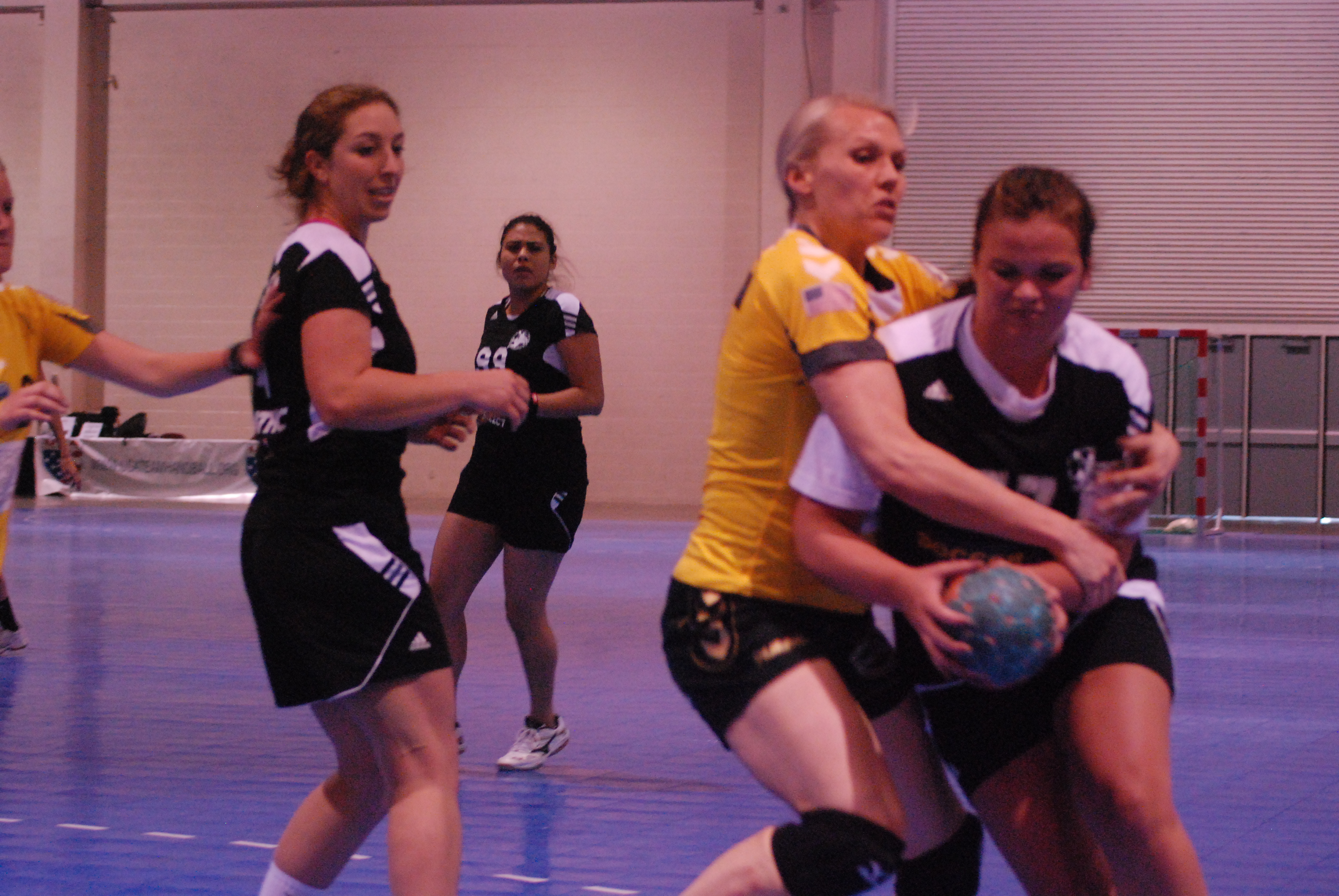
At the U.S. Club Championships in Reno, I sat down with veteran Back Court/Circle Runner Sarah Gascon and newcomer Goalie Stacy Self to discuss the upcoming Pan American Women’s Championships.   The team is currently training in the Dominican Republic and they start the tournament on Saturday with a match up against defending champion Brazil.  (Audio is approximately 8 minutes)

post

AUDIO: Interview with USOC Executive, Rick Adams

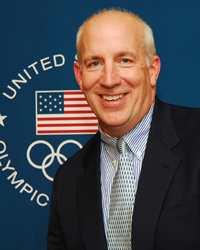
Rick Adams, The USOC’s Managing Director, NGB Organizational Development

At the USA Team Handball National Championships in Reno, I had the opportunity to interview Rick Adams, the USOC’s Managing Director for NGB Organizational Development.  Topics discussed include the USOC’s level of support for Team Handball and what USA Team Handball needs to do in order to potentially secure more financial support from the USOC.  (Audio runs approximately 12 minutes)

USOC Profile Page for Rick Adams:  Link

USOC 2012 IRS Form 990: Link (pages 40-62 includes information on how much funding the USOC grants to sports federations and other oogranizations)

post

AUDIO: Interview with USA Team Handball’s Jordan Fithian

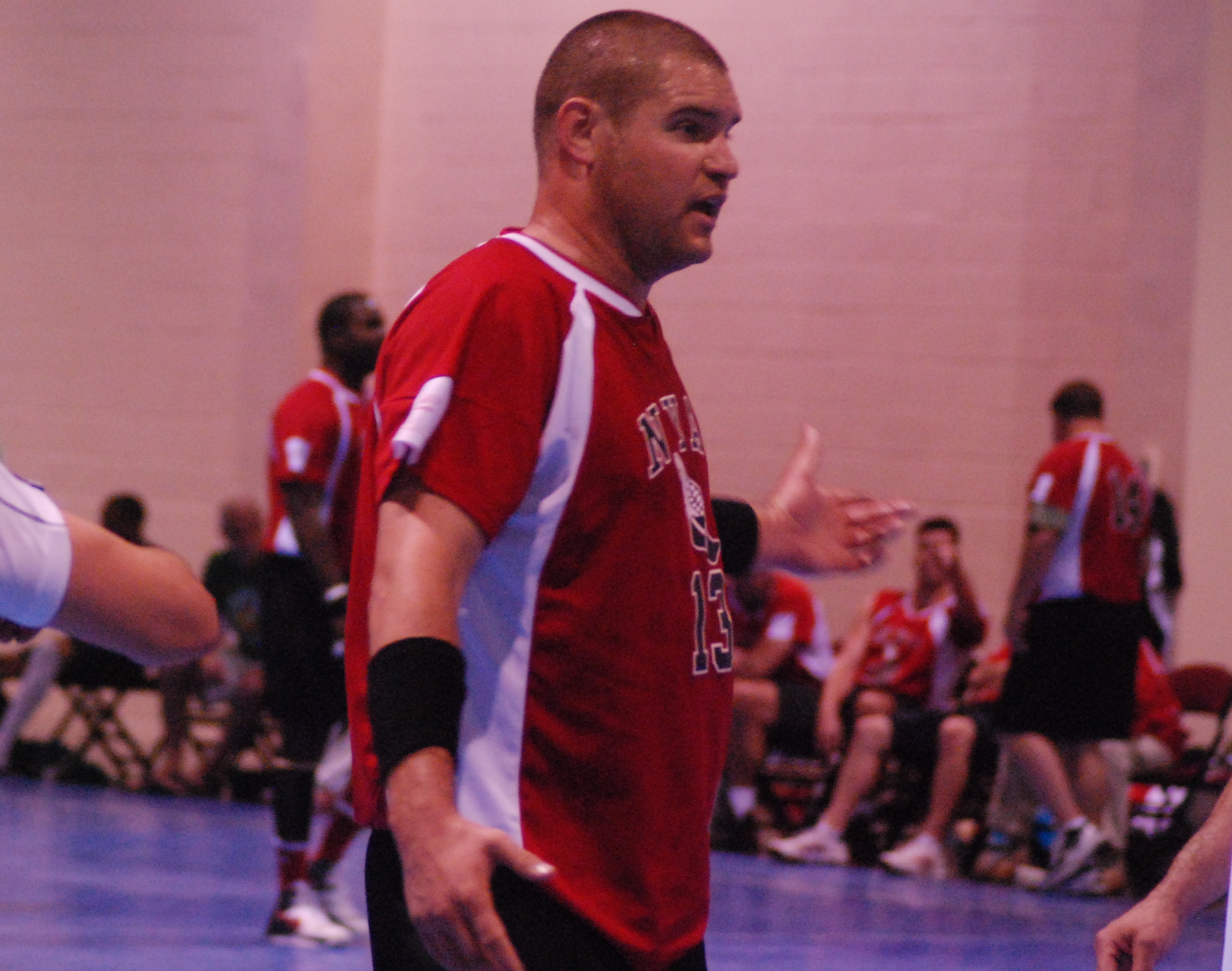
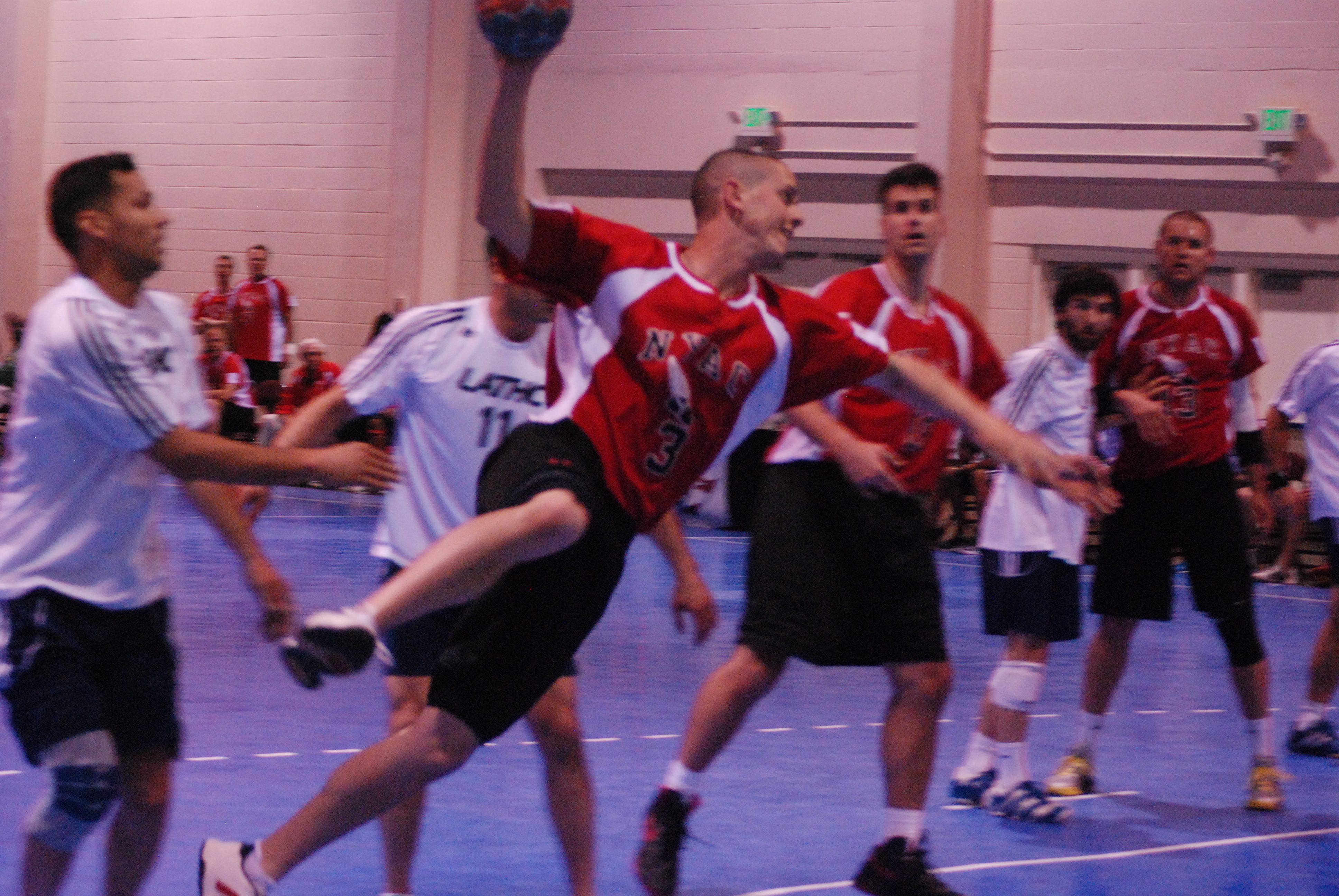
Team USA and NYAC Circle Runner Jordan Fithian (Photo courtesy of Clarke Ortega)

Team USA and NYAC Circle Runner Jordan Fithian

Last Saturday I sat down with USA National Team Player, Jordan Fithian, a 27 year old Circle Runner originally from Kansas.  Fithian, who played 3 years in Germany, played a key role in NYAC’s title run leading the team in scoring with 21 goals while also anchoring the defense.  The interview touches on a number of topics to include his and his wife Jennifer’s experience playing in Germany and his future with the national team.   (Audio is approximately 24 minutes)

post

AUDIO: USA Team Handball Federation Town Hall Meeting

TownHall

On Saturday night (18 May 2013) the USA Team Handball Federation had its annual Town Hall Meeting.  CEO Matt Van Houten discussed several topics to include Federation finances and plans to reconstitute the Board of Directors.  The floor was then opened for questions and a few soapbox advocacy pitches.  The audio runs just a little over an hour.

In addition to the Town Hall meeting I had the opportunity to sit down with several people this past weekend.  In the coming days you’ll have the chance to listen to interviews with Matt Van Houten, the USOC’s Rick  Adams, Board Member Tomuke Ebuwei, Nomination and Governance Committee Chair, Tom Fitzgerald, National Team players Jordan Fithian, Sarah Gascon and Stacy Self, German referees Lars Geipel and Marcus Helbig, Junior Men’s coach Julio Sainz, the Ocean NJ women’s team and legendary NYAC coach Lazlo Jurak.

post

New York Athletic Club (NYAC) wins battle of New York

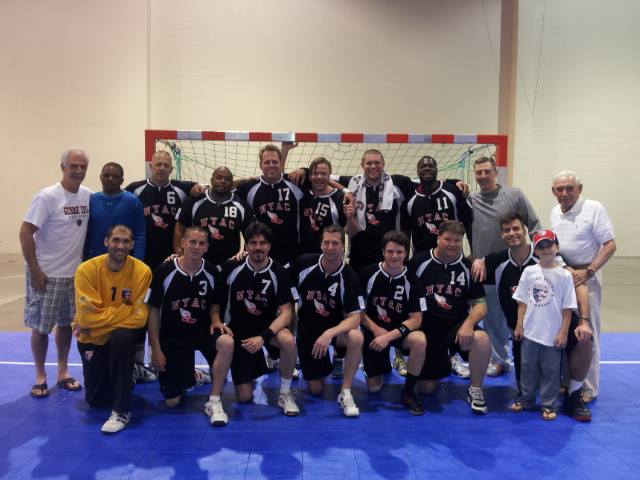
NYAC poses for a team photo after winning the Elite National Championships

NYAC poses for a team photo after winning the Elite National Championships

The battle for New York (waged in Reno) as a nail biter.  NYAC got off to a fast start and managed to maintain a 2-3 goal lead until midway in the 2nd half when NYC finally was able to tie the score.  From then on the score bounced back and from tied to NYAC leading by 1 or 2 goals.  The closing minuted ended with NYC having a chance to tie the score, but their hopes were dashed due to a turnover with about 5 seconds left.   Final score 25-24.

West Point Black won the 3rd place match with 29-24 win over LA THC.  The MVP was NYC’s Djordje Radovanovic and the MVG was NYAC’s Danny Caparelli.

post

Chicago Inter Women edge Dynamo HC to take gold

Dynamo's Sophie Fasold get ready to stop a shot on goal.

Dynamo’s Sophie Fasold get ready to stop a shot on goal.

In a tightly contested match Chicago Inter defeated Dynamo 21-20 to take the women’s goal medal.  Chicago scored with approximately 20 seconds to take the lead and a last second shot by Dynamo was blocked preserving the victory.  Leading scorer for Chicago was Ekaterina Martsul with 7 goals.  Leading Dynamo with scoring was Agnes Arnadottir with 8 goals.

In the bronze medal match Carolina Blue beat LA THC 24-19. Nicole Andersen had 10 goals to lead Carolina and Maren McCrary added 6.  Sonia Gmar had 5 goals to lead a balanced LA attack.

Chicago Inter’s, Jolanta Kunickaite, was named MVP and Sophie Fasold was named MVG.

post

Live Video: USA Men’s Final

DSC_0884

The USA Men’s Final between NYAC and NYC will be broadcast live from Reno on Sunday, 19 May at 4:00 PM (East Coast Time)

Jim Thome and former national team player Mark Wright will provide the commentary.

SORRY- DUE TO TECHNICAL DIFFICULTIES THERE WILL BE NO LIVE STREAM OF THE MEN’S FINAL

post

USA National Championships (1600 Saturday update)

NYAC's Danny Caparelli in the goal get's ready to block LA's Armen Amirkhanian Penalty shot (Photo: Clarke Ortega)

NYAC’s Danny Caparelli in the goal get’s ready to block LA’s Armen Amirkhanian Penalty shot (Photo: Clarke Ortega)

Elite Semifinals Results

NYAC vs LA THC 1 28:20 (13:7)
NYAC led start to finish behind a strong performance in the goal from Danny Caparelli.  Jordan Fithian led NYAC scoring with 8 goals and Jackson Divine added 6.  Armen Amirkhanian led LA with 7.
NYC THC vs West Point Black 37:31

West Point took an early lead, but NYC stormed back to take command of the game and coast to a relatively easy victory.  NYC had a balanced scoring attack with Ole Winter and Djordje Radovanovic scoring 6 a piece.  West Point was led by Bryan Teaton with 8 and Sean Boyle with 7.

Women’s Semifinals are 7:15 PM
LA THC vs Dynamo
Carolina Blue vs Chicago Inter

Men’s Open Semifinals 6:00 PM
West Point Gold vs Denver
NYC THC 2 vs Georgia HC


Rank Mens Elite Division Pool Play Xover Win Loss Tie PTS GF GA GD FRI SAT SUN
NYAC E E_A3 ExA2 1 1 0 2 58 58 0
NYC THC 1 E E_A1 ExA1 2 0 0 4 59 50 9
SF CalHeat 1 E E_A2 ExA3 0 2 0 0 54 63 -9
LA THC 1 E E_B1 ExB1 2 1 0 4 100 95 5
WP Black E E_B2 ExB2 2 1 0 4 106 95 11
Chicago Inter E E_B3 ExB3 1 2 0 2 76 85 -9
Boston HC E E_B4 ExB4 1 2 0 2 74 81 -7
Rank Mens Open Division Pool Play Xover Win Loss Tie PTS GF GA GD FRI SAT SUN
WP Gold O O_A1 OxA1 3 0 0 6 85 44 41
LA THC 2 O O_A2 OxA2 1 2 0 2 53 79 -26
SF CalHeat 2 O O_A3 OxA3 0 2 0 0 24 62 -38
NYC THC 2 O O_B1 OxB1 3 0 0 6 74 36 38
Seattle HC O O_B2 OxB2 0 3 0 0 42 57 -15
Denver O O_C1 OxC1 2 0 0 4 45 39 6
AFA O O_C2 OxC2 1 1 0 2 49 46 3
NYC THC 3 O O_C3 OxC3 0 2 0 0 34 43 -9
Georgia HC O O_D1 OxD1 2 0 0 4 49 38 11
Dynamo HC O O_D2 OxD2 1 1 0 2 46 36 10
LV Scorpions O O_D3 OxD3 0 2 0 0 31 52 -21
Game Times
Rank Womens Division Pool Play Xover Win Loss Tie PTS GF GA GD FRI SAT SUN
Chicago Inter W W_A1 WxA2 3 1 0 6 71 46 25
LA THC W W_A5 WxA1 4 0 0 8 73 56 17
SF Smurfs W W_A3 WxA3 2 2 0 4 65 62 3
NYC THC W W_A2 WxA4 1 3 0 2 57 59 -2
Ocean NJ W W_A4 WxA5 0 4 0 0 33 76 -43
Carolina Blue W W_B1 WxB1 3 0 0 6 50 29 21
Dynamo W W_B2 WxB2 2 1 1 5 59 48 11
WP Black W W_B5 WxB3 2 1 0 4 45 40 5
Phoenix W W_B4 WxB4 0 2 2 2 44 52 -8
Boston W W_B3 WxB5 0 3 1 1 32 61 -29


post

PanAmerican qualifying for Men’s Youth World Championship

not very many of these flags will actually be flying in Venezuela...

not very many of these flags will actually be flying in Venezuela…

Today the PATHF Youth Championship gets underway in San Cristobal, Venezuela. At stake are four slots at the World Championship tournament in Hungary, August 10-23. Regrettably, there is no team representing USA in this event.

In fact, the PATHF Championship points to a discouraging ‘polarization’ within our continent. First, while theoretically such a Championship could have as many as ten teams, only seven eligible teams have entered, so the hosts Venezuela are ’rounding out’ one of the groups with its ‘B’ team. Among these teams, we have Argentina, Brazil, Chile and Uruguay, i.e., the four currently most competitive handball nations from the south; in addition, of course, the hosts Venezuela, but also relative newcomer Colombia. There is no representative from Central America, and the only team from the North/Caribbean region is Canada. In other words, Mexico, Puerto Rico, Dominican Republic, Greenland and Cuba are all missing, just like the U.S. team.

Four teams will qualify, and the format involves two groups of four teams. The way the groups have been drawn, we have a situation where Brazil and Chile surely will advance to the World Championship from group A, ahead of Colombia and the ‘B’ team from Venezuela which obviously is participating outside the competition. The excitement will be in group B, where Argentina should win the group, but where we may have a tough fight among Canada, Uruguay and Venezuela for the remaining slot. Let us hope the Canada will be strong enough to grab that slot, so that we will not have a situation where only teams from the very South are able to advance.

The Youth World Championship will for the first time have 24 teams. Thirteen of them will come from Europe, after Oceania gave up their slot. Most of the currently strong countries on the men’ side will be there (Spain, France, Denmark, Sweden, Croatia, Serbia, Germany, Slovenia, Romania, Austria, Norway, Belarus and host Hungary). Africa will be represented by Egypt, Tunisia, Angola and Gabon, whereas Asia will have Qatar, Japan and Korea. So the teams qualifying from PanAmerica will have their hands full in August. The event will take place in Budaoers and Erd, towns rather close to Budapest, along the highway leading southwest to Lake Balaton and Veszprem.

post

EHF Women’s Champions League – a final that is worth watching

will this be symbolic: Gyor scoring while Larvik can only watch?

will this be symbolic: Gyor scoring while Larvik can only watch?

It is understandable that the Men’s Final Four gets much more attention, but it would really be regrettable if handball fans do not take the opportunity to watch the second leg of the Women’s Champions League final Gyor-Larvik on Saturday (EHF-TV, starting local time 15h15, meaning 09h15 on the U.S. East coast).

While some might think that Gyor will have an easy time after having won 24-21 in Larvik last week, the history of the battles between these two rivals suggests that it is far from decided yet. And in any case, it is promising to be a really exciting game between two teams who are full of world-class players. How about Hammerseng, Sulland, Edin, Blanco and Leganger on the Larvik team, with Gyor having Gorbicz, Loke, Lunde-Haraldsen, Radicevic, Amorim and Tervel, just to mention a few of the better known names.

And there is a reason why I speak about ‘rivals’. These two teams have been in more finals in the EHF women’s competitions than anyone else in the last ten years, and there is also a special situation. Two of the dominant players for Gyor are Norwegians, goalie Lunde-Haraldsen who will be measured against her veteran compatriot Leganger, and then of course hard-to-stop pivot Loke, one of the most spectacular players these days. And while the two teams have never met in a European final before, they both have something to prove: Larvik want to get back on the winning track after a total of 3 different titles in the past, while Gyor should be even more desperate after having been in 7 different finals without ever coming out as winners.

The first game, in Larvik, took a number of interesting turns. The home team started out best, but then there was a Hungarian comeback, before Larvik could pull away early in the second half. Many may have thought that this meant the game was about to be decided, but then the Norwegians lost their rhythm and Lunde-Haraldsen was, if possible, even more spectacular than Leganger at the other end The Norwegian attacks became more and more hesitant, and only the counterattacks seemed to work. By contrast, Gyor found some easy openings for their shots and turned the game around.

It will now remain to be seen if the three-goal deficit is too much of a handicap for Larvik, but the interesting things is that in the semi-finals the guest won every time, and especially Larvik managed an impressed turnaround in the away game against Krim. So let us hope for a real thriller in a game that will be played in the Veszprem arena, which is always full of loud and boisterous supporters.

post

U.S. National Team Plans: Part 6: Federation planning: Right idea, flawed execution; time to right the ship


USA Team Handball's Strategic Plan is listing to the side; It's time to right the ship.
USA Team Handball’s Strategic Planning is listing to the side; It’s time to right the ship.

The previous parts of this series (1, 2, 3, 4, 5) raised some questions in regards to USA Team Handball’s plans to establish residency programs and full time coaches.  This installment sets aside the plan itself and takes a look at the planning and decision making processes that were used to develop it.  And finally some suggested actions going forward.

It’s easy to critique a plan

As I’ve spent the last several parts of this series highlighting some shortcomings with USA Team Handball’s plans for its National Teams I think it’s appropriate that I also acknowledge the basic truism that it’s relatively easy to sit on the sidelines and critique a plan.  This is especially true when the plan is tackling a difficult problem or objective.  And trust me, as someone who’s thought quite a bit about what could be done to improve the quality of our National Teams we’re talking about an incredible challenge.  Just about any plan could be picked apart by naysayers.

It’s not so easy to critique a plan developed through a structured process.

But, maybe the plan that’s been developed, while flawed is still the best plan that could be conceived.  A plan that was first compared with other options and possibilities and stood out as the best option to pursue; A plan fraught with risks, but one that still makes sense to pursue; A plan that’s designed to meet the clearly articulated goals and objectives of the organization.  When confronted with a plan that maps everything out, the critic can’t help but see the rationale for the course of action chosen.

What I’m alluding to here is Strategic Planning.  This Wikipedia article provides an overview, but in simple terms, Strategic Planning can be described as the process of figuring out what you want to do before you go off and do it.  It involves determining your goals and objectives and then assessing the feasibility of different options (tactical plans, if you will) to achieve those goals and objectives.

While this seems like an inherently obvious first step all too often it’s given short shrift by many organizations.  This happens for a number of reasons.  Sometimes organizations think they already know exactly what they are trying to accomplish.  And, all too often it’s human nature to want to work on the solutions because it’s more concrete and tangible.

USA Team Handball’s Goals and Objectives: Do they exist?

Let’s first consider the possibility that it’s readily clear what USA Team Handball is trying to accomplish.  At first blush, it’s pretty clear.  Take a look at the Federation mission statement:

The mission of USA Team Handball shall be to develop, promote, educate and grow the sport of Team Handball at all levels in the United States and to enable United States athletes to achieve sustained competitive excellence to win medals in international and Olympic competition.

Just about anyone involved with the sport in the U.S. will agree with these very broad goals.  But, if you start to break that one sentence down piece by piece consensus will quickly disappear.  For instance, which is more important developing and promoting the sport at all levels or enabling athletes to win medals?  Which part gets more resources/funding? What’s the timing involved?  What are the lower level goals objectives?  etc., etc.  To the best of my knowledge USA Team Handball has never clearly identified lower level goals and objectives and their priority.  Perhaps it’s been done at some point in the past, but I’ve never seen that sort of documentation.  Instead, best that I can tell USA Team Handball has always made a beeline to implementing initiatives, activities, action plans (whatever you want to call the different things that have been tried), without spending enough time assessing whether those efforts make sense in the grand scheme of things.

This is not to intimate that those efforts were a total waste of time and resources.  On the contrary, very few efforts had no value and if even if there were negligible results there usually was some rationale for trying.  The question, however, is not whether an effort has value.  The questions instead are how well does that effort map to goals and objectives and how does that effort fair in terms of “bang for buck” against other competing efforts.  Because rest assured when the Federation makes an announcement that there is “no funding in the budget” for a National Team trip what it’s really stating is that other budget items were assessed as a higher priority.

Or, at least one hopes that such a comparative assessment was done.  The troubling reality is, however, it can’t really be done without something to “grade” the effort or plans to.  Without clear goals and objectives you’re flying by the seat of your pants.  Deciding what efforts to pursue becomes largely intuition or even worse a yes/no on the first plans presented without an in depth exploration of other possibilities.

The way ahead for U.S. National Teams:  Numerous possibilities

As a case in point, I’ll just list out some possibilities that could be considered for U.S. National Teams and player development.  I won’t go into great detail.  That’s not the point.  The point is to just show the varying options:

– Establish regional Centers of Excellence
– Establish a European based training center in collaboration with the IHF and other developing nations
– Provide stipends for overseas training with clubs to the nation’s top 30 players
– Provide funding to 10 U.S. based clubs to support player identification and training
– Designate one metropolitan area in the U.S. for Elite competition and apply funding to make it happen
– Identify national team coaches for an extended period of time, but pay them only part time wages
– Hire a full time recruiting coordinator and have them focus on expanding the player pool at ages 18-22
– Hire a full time youth development coordinator and have them focus on developing a model program in one U.S. metropolitan area
– Work with a designated school district to implement a sanctioned High School Team Handball League to serve as a model for other school districts.
– Work with the NCAA to identify one Division 1 conference to support a Team Handball League
– Conduct a 10 day U.S. Olympic Festival style training camp for 120 elite NCAA athletes.
– Sharply curtail current expenditure on U.S. Senior teams and focus entirely on Under 21 development in hopes of improving odds for 2020 qualification
– Sharply curtail Men’s National Team funding and focus on the brighter prospects (weaker competition/Title IX) for Women’s team development .
– Sharply curtail funding and resources related to adult club teams and focus efforts on college and youth teams.  (i.e., Don’t waste time organizing competition and national championships for predominantly Expat players or athletes over the ages of 25)

Could I, or anyone for that matter, poke holes in regards to the merits of any one of these possibilities?  Of course.  But, I could also make a case for any one of these to be the best course of action. Yep. The reality is that depending on how you interpret the Federation’s Mission Statement, you can make the case for or against any one of these possibilities.

Right Idea

To the credit of former Board Chairman, Jeff Utz, and Interim General Manager, Dave Gascon, they recognized this problem and set in motion some plans to fix it.  In April of 2012 they organized a Strategic Planning Conference that was attended by around 25 individuals (Board members, USOC Reps, and assorted members of the Team Handball community at large).  As someone who’s done Strategic Planning for a living and has recognized this problem for years I’ll say that the conference was a good start to solving this problem.  The second day devolved way too quickly into the implementation of potential solutions, but again it’s human nature to want to work on something tangible.  The good news, from my perspective at the time was that the work would continue via committees that would focus on specific topical areas.  Here’s an interview with then Chairman Jeff Utz discussing the conference and here’s a list of the committees that were set up.  (Editor’s note:  8 of the 10 committees that were established after the 2012 conference were removed without explanation from the Federation committees webpage sometime in 2013. This Federation news item from June 2012 lists the 10 committees and solicits additional volunteers.)

Flawed Execution

Following the conference, however, for reasons that are still unclear to me the work of the committees towards a Strategic Plan was stopped.  The committees were asked to send their ideas for implementation and then lacking further guidance and direction they essentially ceased to function.  At least this was the case for the 3 committees I was on:  High Performance, Pipeline Development and Event Management.  While I might have thought that the High Performance and Pipeline Development committees would be involved in reviewing the merits of different efforts for Board of Director consideration that simply was not the case.

Instead, several months later I read the following in this posting on the Federation webpage:

“Garcia-Cuesta and Latulippe, as volunteers, as well as Gascon, and Technical Director Mariusz Wartalowicz, have collectively developed a long-term strategy for the development of the USATH High Performance Program which focuses on the recruitment, training, development, and elevating the stature of our National Teams.”

Is it lost on anyone that two former National Team coaches that coached U.S. Residency teams were part in parcel to the development of a strategy that calls for hiring National Team coaches and establishes residency teams?  Strikingly, this reminds me quite a bit of the Vice-Presidential Selection Committee that Dick Cheney conducted for George Bush.

Setting all sarcasm aside, however, it’s really not that surprising that they went with what they know and one would hope, anyway, an improved version of what they know adapted to current realities.  And for all I know those four gentlemen might actually have spent countless hours reviewing dozens of possibilities, carefully analyzing their pros and cons and presented a full up report consisting of multiple options for the Board’s consideration.  (i.e., the kind of work a High Performance or Pipeline Development committee might do).  If such work was done though, it would be nice to read it.

And, as an aside, I should point that National Team plans is just one piece of the puzzle.  An important piece, but just one piece.  Plans for grass roots development, marketing and fundraising, for example, to the best of my knowledge haven’t been developed at all.

Time to Right the Ship

I think in this series I’ve made some fairly compelling arguments that call into question USA Team Handball’s National Team Plans.  In the end, though, it’s really not about who’s right and who’s wrong.  Nobody’s keeping score and we really all are on the same team.

But, in order to get everyone on the same page and rowing together I would suggest a couple of actions to right the ship:

  1. Develop a true strategic plan that clearly identifies some top level goals and objectives for USA Team Handball.   Prioritize those goals and objectives, develop potential options for implementation, then evaluate and select those options for implementation.  Develop those plans and options collectively using the USA Team Handball Staff, Board, Committees and anyone else in the USA Team Handball Community that wants to participate.
  2. Do 1) above transparently with the posting of strategic plans, board decisions on evaluation/selections and budget actions on the Federation website.

And it should be pointed that such fixes shouldn’t be too hard to implement.  It’s acknowledged by many that we need a Strategic Plan, the committees are in place and that transparency is important.  All USA Team Handball needs to do is finished what it started.
post

Champions League: all set for Final Four, but did we already have the real final?

Get ready for exciting,  first-class handball in Cologne in early June

Get ready for exciting, first-class handball in Cologne in early June

Of course it is nice to have excitement in virtually all of the eight quarter-final games, and the four participants in the Final Four (Kiel, Barcelona, Kielce and Hamburg) got there in a fair and positive manner. But after you play a very long and often tedious period of group matches, what does it say about the format if you still cannot be sure that the best teams make it to the Final Four!?

It was great to follow the suspense in Kiel-Veszprem and in the Spanish rivalry between Barcelona and Atletico, but please do not try to convince me that Veszprem does not belong in the Final Four. And Atletico also is good enough to have deserved a better chance. It all goes back to the group draw with the enormous contrast between Veszprem/Kiel/Atletico in one group and Kielce/Metalurg/Velenje in another. Plus the regulations that then allow Veszprem-Kiel and Kielce-Metalurg match-ups in the quarterfinals. Having said that, I am joining all handball fans (including frustrated Veszprem and Atletico supporters, I hope) in wishing that we will have a really great Final Four on June 1-2.

Veszprem shocked Kiel in the first game by holding a sizeable lead before Kiel managed to turn it around in the end. And playing at home, Veszprem got the edge in the early going, in part by winning the goalkeeper battle. But sure enough, in the second half Kiel had another great comeback, largely due to scoring from Jicha and Vujin, but also because Palicka provided good relief for Omeyer, while Alilovic got injured. So the final result was, just like in the first game, a one-goal victory for Kiel, much to the frustration of the loud and partisan crowd.

Atletico had not had much luck against Barcelona this season, until inspired veterans Balic and Hombrados gave them the lift they needed in front of their home crowd, with a five-goal margin being the final result. But in Palau, Barcelona came out with a totally different determination, where Saric and his defense quickly drove Atletico to desperation. The result was 11-3 after 20 minutes, before the Madrilenos settled down a bit. But while the margin was down to five at one point, which meant that it was tied on aggregate, Atletico never quite recovered from the early deficit. Saric continued to be fantastic and the Barcelona shooting power was just too overwhelming. So while it was close enough to be exciting almost until the very end, Barcelona came out on top with a total advantage of three goals.

Kielce struggled early in Skopje, but the eventual two-goal margin must have been enough to feel comfortable; because in the today’s home game they were excruciatingly systematic, with an emphasis on strong defense. The second half became a mere formality and the final margin today was 26-15. Hamburg seemed to surprise Flensburg in the first game, with a massive, late surge on the way to a six-goal victory. I must admit that I am saving the viewing of today’s game until the BeIN Sport TV broadcast on Wednesday, but from what I have heard, today Flensburg seemed ready to ‘turn the table’ on their rivals. Ten minutes before the end, they were ahead in the aggregate score, but somehow HSV managed to wake up in time and come out on top by keeping today’s loss to 23-25.

And now we all have our favorite scenarios regarding the draw for the match-ups in the Final Four. Some will want to see Kiel-Hamburg in the semi-final to avoid having an all-German game in the final. Others seem more anxious to avoid having Kiel drawn against Barcelona, as that instead sounds like their ‘dream final’. So does this mean that Kielce will ‘sneak up’ on all the others, or will we find, as some suggest, that the Polish team is overrated after having had an easy group stage? The draw will take place on May 2.