post

AUDIO: Interview with Ocean NJ Team Handball Club

Coach Robert Michalik and the Ocean NJ Team Handball Club at the 2013 USA Club National Championships

Coach Robert Michalik and the Ocean NJ Team Handball Club at the 2013 USA Club National Championships

Continuing the theme regarding club development in the U.S., here’s an interview with players and coaches from the Ocean NJ Team Handball Club.  The team, composed mostly of high school aged athletes was a stark contrast to the typical clubs (composed of veterans and expats) that usually show up at the U.S.  Club National Championships.  In this short interview, Coach Robert Michalik and some players from the team discuss how the club was formed and how they’ve overcome adversity like their very first match, a 32-0 drubbing.

post

U21 WCh: Nine straight wins lead to gold for Sweden

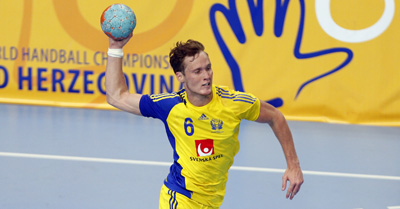
Swedish MVP Philip Stenmalm

Swedish MVP Philip Stenmalm

It turned out to be dangerous to speculate about the final outcome on the basis of the results in the preliminary round. The groups must have been rather unbalanced, as group winners who looked strong faded very abruptly during the knock-out stage. Three of them, Slovenia, Germany and Denmark finished no better than 9th, 11th and 13th respectively. Other teams that looked strong in the early going, such as Serbia and hosts Bosnia also faded completely.

Instead it became obvious that Group D, with Sweden, Spain, Egypt and Brazil moving on to the ’round of 16′ must have been the real ‘powerhouse’. Egypt and Brazil won their initial ‘knock-out’ matches, and Brazil made it all the way to 6th place, with Egypt finishing in 8th place. For Brazil, this is really a strong signal for a country that will host the next Olympic handball tournament and seems to be making great strides at the right moment also on the men’s side.

Sweden beat Spain by ten goals when they met on the final day of the group stage. But this does not always mean much when teams meet for a second time, like they did today in the final. However, Sweden, who impressively ended up winning nine straight games, took the early initiative also today. The lead narrowed around half-time, but in the end the Swedes were able to pull away again and gain a 28-23 victory. They had a very solid team, with goalkeeper Peter Johannesson (Saevehof) and Andreas Berg (Oennered) making it to the All-Star Team, while Philip Stenmalm (Drott) got named Championship MVP. It seems that the both the Swedish senior national team and top clubs around Europe have some real talents to rely on in the future.

The Spanish team had a real star player in the form of Alex Dushebaev, son of world-class player and coach Talant. Alex has just recently signed up for Vardar Skopje, who will get a major reinforcement for their participation in the EHF Champions League, after father and son had to leave the now defunct Atletico Madrid. The bronze medals were won by France, beating Croatia 32-27 in a ‘junior version’ of this strong rivalry of recent years. It is interesting to note that the Netherlands took 5th place and Switzerland 7th place, ahead of many highly favored teams. It is great to see that there is some hope that two more teams might be able to (re)join the perennial favorites on the men’s side. Now we just hope that some more non-European teams will join Brazil, Egypt, Tunisia and Argentina at the highest level.

post

Men’s Junior WCh: discouraging trend

When will we finally see some more non-European nations joining the elite?

When will we finally see some more non-European nations joining the elite?

The preliminary rounds finished yesterday, so we are now ready for the ‘knock-out’ stage, starting with the ’round of 16′ tomorrow. There was some excitement on the final day, with a ‘triangle drama’ in one group, where Qatar was eliminated on goal difference in relation to the Netherlands and Switzerland. And in another group, Tunisia got the win they needed against France to make it through. Korea lost narrowly against Hungary, which confirmed their elimination and caused celebration for Argentina.

But while it may be a bit premature to draw a lot of detailed conclusions, there is one disturbing overall observation that is quite clear: the European domination is as strong as ever before! This is the age group where the trends for the next 5-10 years should be possible to recognize, as we are talking about players who turn 21 this year and therefore should soon become important reinforcements for their senior national teams.

Europe has 13 teams in the tournament and the other continents have 11. The polarization can easily be seen. Twelve of the Europeans are in the ’round of 16′ with only Russia failing to qualify. By contrast, only four of the eleven non-Europeans made it through, and those were the ‘usual suspects’: Argentina, Brazil, Egypt and Tunisia. And it should then be noted that Tunisia was the only one of those teams that went through by leaving a European team (Russia) behind them in their group. The other three teams made it through by defeating other non-European teams in their respective groups.

As noted above, Qatar was the only other team to come close. Their elimination must be disappointing, right at the time when they are starting a surge to get ready for the senior World Championship which they are hosting 18 months from now. Just weeks ago, Qatar announced that, with the possible exception of a goalkeeper or two, they would abandon their efforts to strengthen their national team by quickly naturalizing some star players ‘imported’ from abroad. Instead they intend to rely on their own young talents. So they would undoubtedly have wanted to see their ‘U 21′ team do a bit better.

I do not want to go too far in speculating about the outcome of this World Championship yet. The four group winners, Denmark, Germany, Slovenia and Sweden all look quite strong. Moreover, they each seem to have a relatively comfortable match-up in the ’round of 16. But Spain and Croatia, who were the finalists in Europe last year for this age group, are probably also to be reckoned with. However, it would be nice to see a surprise caused by either the Egyptians or the Tunisians. I fear that Argentina and Brazil do not seem to have much hope of advancing further.

post

Leaving Las Vegas and Reflecting on Club Development in the U.S.

Vegas

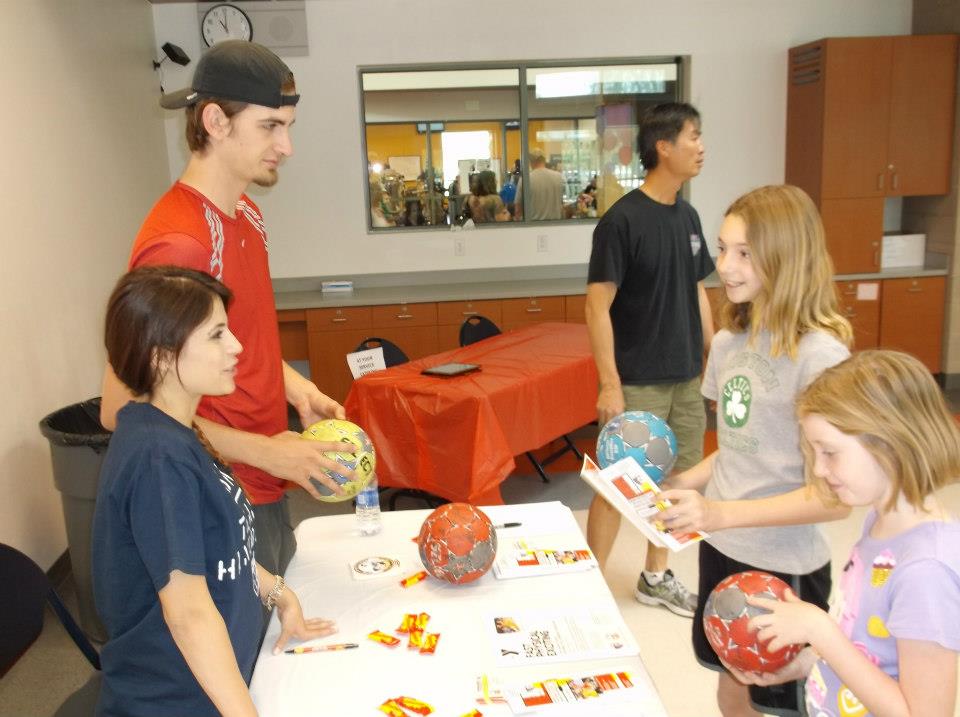
My daughters discussing Team Handball with the Scorpions at the Las Vegas YMCA Youth Day. Are they now future Colorado Dynamo stars?

All my bags are packed; I’m ready to go…. Rocky Mountain High, Colorado….  I guess I’ve got old John Denver songs on the brain and for good reason, as the Ryan Family is all packed up and ready for our move to Colorado.  Six years ago when we left Paris for Las Vegas, I reflected on what a tremendous opportunity I had had to live in a foreign country, to play handball and learn more about the sport.  I also waxed a bit about my pending move to a handball desert where to the best of my knowledge the sport had never even been played.  With a bit of pride I can claim some credit for changing that and helping to start a new club, the Las Vegas Scorpions.  As I head out of town I’m reflecting a bit on club development in the U.S.  Why, it’s so important and why it’s so challenging.

Why club programs are so important to developing the sport

I’m guessing some people are reading the above heading and are thinking, “Seriously, do you really have to explain that?”  And, I’m also guessing that a good portion of those people are European expats who grew up with a vibrant and well established club system.  The clubs are the backbone for sports in their native countries and they’re often puzzled when they come to this country.  The club structure in Europe does a lot of things for sport development and from a National Team perspective they are the feeder system.  Thousands of players are introduced to the sport a young age, they are trained in the finer points of the game and they compete against other clubs.  Out of those thousands of players, hundreds show promise and a handful develop into world class national team players.

In the U.S. the same numbers game applies, but historically for most sports it’s been through school based teams.  And, if the schools didn’t play a particular sport?  Well, that sport was essentially out of luck.  To an increasing degree some cracks have started to appear in this school based model as sports like soccer have developed club based competitions which are more European like.  These developments means that it’s becoming increasingly realistic to envision a more vibrant club structure in the U.S. for Team Handball.  A structure with enough clubs with good training programs and good opportunities for competition that it becomes the primary feeder system for U.S. National Teams.  And setting aside the National Teams, a structure which develops and helps grow a larger fan base in this country.

A vibrant club structure is not the only way to find players and the U.S. has used other methods.   Top notch athletes who’ve never played the sport have been taught how to be good handball players with intensive training programs.  We’ve also scoured Europe for dual citizens, who’ve taken advantage of the club system there.  But, these methods are at best stop gap measures.  They may be the best answer in the short term, but they can’t change the overall status quo.  In order to do that more clubs are needed, pure and simple.

Why it’s so challenging to develop club programs

While the U.S. sporting landscape isn’t always conducive to supporting clubs, there are still thousands and thousands of clubs in the U.S. for just about every sport imaginable.  For Team handball, however, depending on how you want to define a club there are probably only around 15-30 clubs in the entire country.  And for the 27 years or so I’ve been involved with the sport it’s pretty much ebbed and flowed right around that 20 club mark.  There are a number of reasons why there are so few clubs, but I’ll focus on some top level ones.

1) Establishing, organizing and sustaining a club is time consuming, often frustrating, unglamorous and hard work.

Anybody who’s been involved in starting a new club knows all too well what I’m talking about.  Countless pitches to prospective athletes; phone calls and email for practices/tournaments; passing out the hat for money and often reaching into your own pocket to pay for equipment, gym and tournament fees.  Sure, there are rewarding moments:  The first time your club takes the floor; the first time your club wins a match; the first time a bunch of folks who didn’t know each other a month earlier start to bond as a team.  But, there are also moments that inevitably bring you down:  The scheduled practice where hardly anyone shows up; the tournaments where you can’t quite field a team and you have to borrow players from the other club; the departure of a key player/organizer that can’t be immediately replaced.

2) Not enough people are stepping forward to volunteer for this frustrating, unglamorous hard work

OK, time to step on the soap box for a bit:  Have you ever mentally listed out the number of former U.S. National Team players who have disappeared from the sport?  Or have you watched veteran players stay slightly engaged, perhaps showing up at the National Championships to play with some old buddies and relive their glory days?  Have you then mentally calculated just how many clubs the U.S. might have today if more of those players chose to give back to the sport that has done so much for them by starting a new club?  I know have.  Why, I can’t even beat my chest and proudly state my credentials for starting not just 1, but 2 clubs in this country.

OK, time to step down:  Sure, I can pat myself on the back, but I had help along the way.  I might have been instrumental in getting the Scorpions started, but Bernhard Schneider has done the bulk of the heavy lifting.  As far as DC goes, I’m pretty much a forgotten footnote who maybe just deserves a smidgen of credit for coming up with the Diplomats nickname.  Additionally, as work and family commitments shrank my discretionary time, I’ve become more sympathetic to the reality that many former National Team players surely have the same time crunch issues.  Finally, there are other ways to give back like officiating and serving on committees.

Back on the soap box:  Sorry, former National Team players; I’m not letting you off the hook that easy.  This country really needs more clubs; Arguably, more so than anything else.  If at all possible try to find the time to do some grunt work out in the grass root trenches.  It is time consuming, but it is also very rewarding and you, by virtue of your training and experience are equipped to lead such an endeavor.

3) Not enough is being done by USA Team Handball to expand the number of clubs in the U.S.

This is not to say nothing is being done.  In particular, a big thanks to USA Team Handball for bringing the National Championships to Vegas and also for the balls and a set of competition goals.  Having started two clubs I can unequivocally state that if you are proactive and engage the federation, you will get some help.  That being said, clearly more could be done.  Not all clubs have super dedicated organizers who will take Herculean steps to overcome every obstacle.  They might just be dedicated and willing to overcome some obstacles.  A little more care and feeding at the critical incubation stage might result in more clubs surviving and growing.  Strategic promotion is also warranted in some cities and definitely some colleges.  For instance, it was great that a recent tryout at Auburn attracted 29 participants, but it only made me wonder why there isn’t already a club there and not just at Auburn, but at colleges throughout the nation.  And don’t even get me started about the Naval Academy.

4) More needs to be done to encourage the development of youth clubs

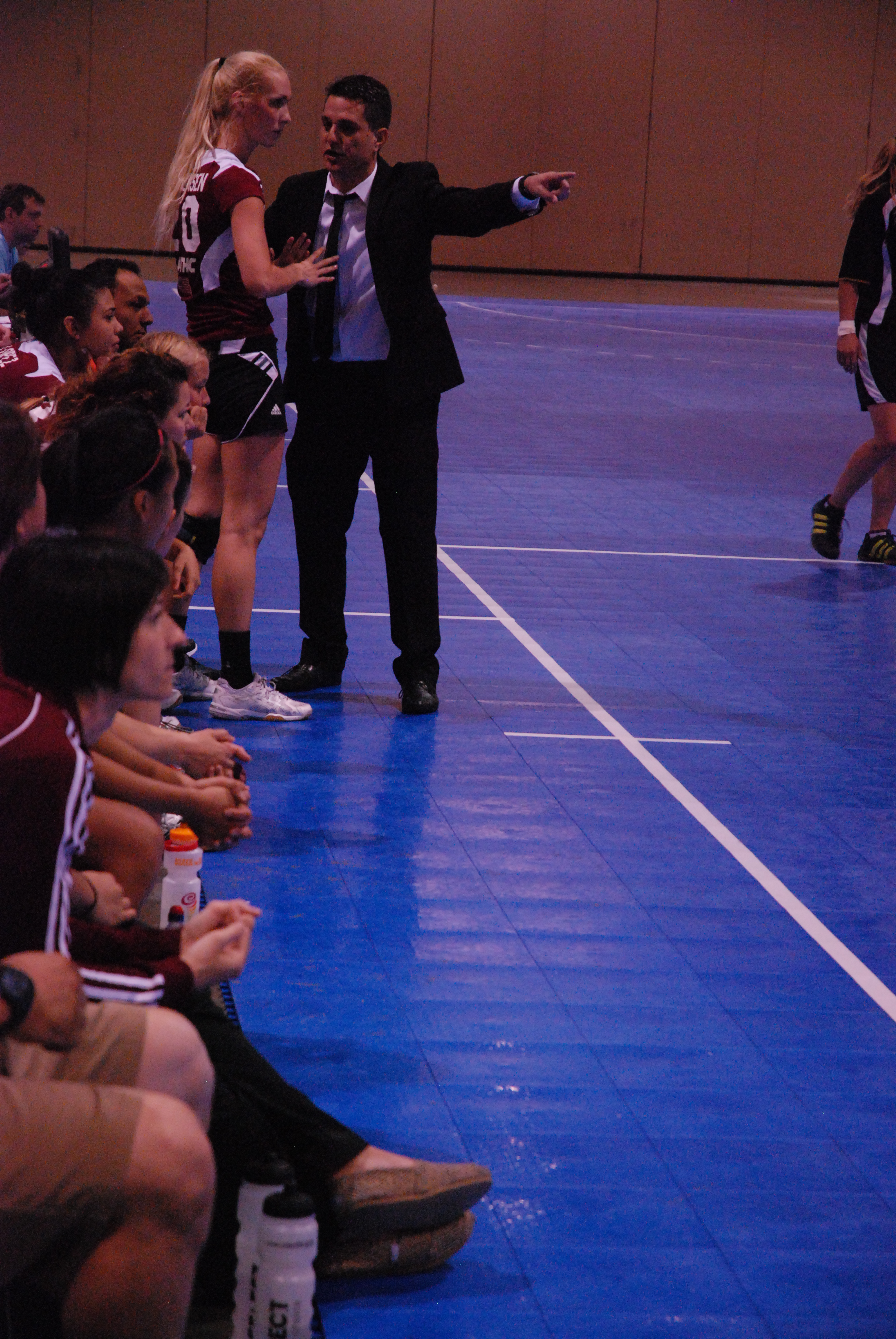
More clubs of all kinds are needed, but as my colleague Christer pointed out the U.S. club scene has really been taken over by Expats and aging veterans.  There’s nothing wrong with having those teams around.  As a younger player I can’t begin to tell you how much I learned from those amazing out of shape Euros (smoking outside at halftime, no less) who schooled me on the finer points of the game.  What’s wrong is not having very many teams with more home grown players.  And if we’re talking about National Team development, home grown players closer to age 20 than age 30.  One pleasant surprise from my trip to the Club championships were the Colorado Dynamo and Ocean, NJ clubs.  No kidding youth teams with many players in their teens.  As far as I know the Ocean, NJ team was fully composed of high schoolers while the Dynamo team was supplement with some talented expats in their 20s.  The Dynamo club took that combination all the way to the final, losing a close game to finish in 2nd place.

Closing thoughts

As I’m headed toward my old stomping grounds in Colorado Springs, I’m fortunately moving to a locale with two existing teams, my alma mater, Air Force and the Colorado Dynamo.  That didn’t factor into the decision to move there, but it’s certainly a nice ancillary benefit.  Subject to those work/family commitments I intend to get involved with both programs.  And, if I can convince my daughters to pick up the sport, here’s hoping that for once family and handball commitments will become one and the same.

post

USA Team Handball Visit to Auburn: Coach Garcia Cuesta reacts favorably to Residency Program potential

Auburn students at USA Team Handball tryout

Auburn students at USA Team Handball tryout.  The tryout was held in conjunction with an exploratory visit  regarding the establishment of a national team residency program there.

The Auburn University student newspaper has reported on USA Team Handball’s recent visit to discuss the establishment of a residency program there. Several quotes from the article indicate that Auburn made a favorable impression.

U.S. Men’s National Team coach Javier Garcia Cuesta expressed this view: “I am pleasantly surprised with the offer we have received from Auburn. After seeing the facilities and the connections we could have with the School of Kinesiology, I am very positive about the possibility of us being here.”

Former USA National Team Player and Auburn representative, Reita Clanton also had a positive assessment: “We are very, very optimistic about the residency programs coming here. There are still a few details left to hammer out, but we all think this would be a win-win setup for the national team and Auburn.”

In terms of the way ahead the article indicated that the Auburn proposal will be reviewed by the USA Board of Directors in the coming weeks. Coarch Garcia Cuesta indicated that there was no timetable set for a decision on residency programs, but that the staff had a “soon as possible” mindset. One road block to a decision is the currently under staffed Board of Directors. In previous discussions with Team Handball News, USA Team Handball CEO, Matt Van Houten has indicated that he intends to have any decision regarding residency programs be made by a full complement of Board Members

THN (7 July 2013): USA Team Handball to visit Auburn University to discuss Residency Programs: Link

THN (8 June 2013): AUDIO: Interview with USA Team Handball CEO, Matt Van Houten: Link

post

Partille Cup, USA and Qatar

Partille Cup attracts handball teams from around the world and also plays a role in spreading the word globally

Partille Cup attracts handball teams from around the world and also plays a role in spreading the word globally

Partille Cup is ‘my’ old tournament. As I have undoubtedly mentioned in the past, this is where I had my initial international involvement in handball, serving as competition manager 1970-74. So it is for me a bit special when I have chance to be back there, and even when I read about the experience of USA teams in my old home town.

The USATH web page has already provided some reports and indications of the final results for our teams in the recent finished 2013 edition of Partille Cup. We had teams in the ‘under 21’ category for both men and women. Especially our women’s team did quite well, advancing to the semifinals. Of course, I know that the U 21 bracket is not exactly the most competitive one in Partille Cup or anywhere else. It is a bit of a ‘hybrid’ category and does not attract more than a small number of teams, especially in comparison with the vast number of strong clubs in the younger age groups. So perhaps one needs to be careful about not getting carried away with the conclusions from the results achieved.

But it was certainly nice to see, for the USA teams, for the Partille Cup organizers, and even for me personally, that we had teams that were more competitive and helped provide a nice image. Younger USA teams in the past have typically had a much more difficult time. And it also seems to be that right now we have a bunch of players who fit in well to create a solid U-21 team on the women’s side, whereas they are too young to constitute a strong ‘senior team’, and also in contrast with the novice players we normally have to field in younger age groups. So the question now is, of course, whether this is a group that one could build on for the future or not.

In any case, my conversation with my old friend, Partille Cup ‘general’ Stefan Albrechtson, gives a separate strong reason for satisfaction and pride. He commented that there was a widespread perception during the tournament that, among all the participants from around the world, our USA teams really displayed an energy and positive spirit that was almost unmatched. This involved all the delegation members, i.e., players, coaches and managers, and it was noticeable not just on the court and during the games but also in the overall enthusiasm that they showed throughout the event. This is indeed high praise, coming from Albrechtson who has seen it all over many decades!

Another interesting piece of information obtained from Albrechtson was that Partille Cup is entering into collaboration with the Qatari organizers of the Men’s World Championship in 2015. Delegations from Qatar have been frequent participants in Partille during many years, so the connection was already established. The Qataris know that they will be able to put on an attractive event, not just for the teams but for any spectators who would want to come. But there is the concern that precisely the ability to attract visiting spectators from around the world might be a weak point. This is of course an important question of image, not just for Qatar but for the IHF and the reputation of our sport. The fiasco when the Women’s World Championship was organized in Brazil virtually without spectators stills lingers in people’s minds.

As Partille Cup has a vast communications network around the world, and as Albrechtson, who also is a member of a (somewhat defunct) Commission of the IHF, has an interest in supporting a World Championship wherever it is organized, the scope for support in spreading the word certainly exists. The Partille Cup outreach is particularly strong in the many countries in northern and central Europe, from where it is common for people to travel long distances, whether for vacations or for sports events. So it seems that a special effort will be made to facilitate travel that is less expensive and to organize attractive packages for the stay in Qatar. Many clubs and federations which have close contacts with Partille Cup would find an easy way to get the necessary information through a source they are used to relying on. And for Partille Cup, this would seem a natural and integral part of their mission to promote handball globally.

post

The Dassler connection

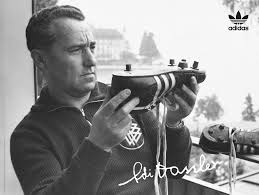
Adi Dassler progressing from modest cobbler to founder or Adidas

Adi Dassler progressing from modest cobbler to founder or Adidas

A few of you came back with some feedback and questions on my most recent article on the battle for the IOC Presidency. It seems that it was relatively clear why a candidate’s backing by Sheikh Ahmad might raise questions or even be double-edged. But I got questions as to why Thomas Bach’s reputation in Germany and his being a protégé of Horst Dassler of Adidas might be an issue. So this has led me to a slight expansion on that point, but in fact I will start out with what is really a personal anecdote.

In 1971, a few years before I moved from Goteborg, Sweden, to Washington D.C., I had an interesting assignment in the context of being a referee not just in handball but also in football. The (West) German national team was coming to Goteborg for a game against Sweden, spending a whole week at a small sports hotel in the area. I was then asked to serve as the host/liaison on behalf of the Swedish Federation, accompanying the team around the clock. The team at that time had established or emerging stars such as Beckenbauer, Breitner, Vogts, Mueller, Maier and Hoeness. But as guests accompanying the team were ‘three generations’ Dassler: Adi with wife, and son Horst with wife and daughter.

As the team had its strict schedule with focus on practicing, many of my duties were instead with the Dassler family. I remember Adi as a shrewd but modest man, in line with his background as a cobbler turned business mogul, not interested in making a fuss but enjoying the perks. His main obsession was to sit in the front of the bus or the car and observe and assess the job of the motorcycle police escort! The one story I got out of him was his pride about his breakthrough when he supplied shoes to Jesse Owens at the Berlin Olympics in 1936. (A rather odd situation for someone who soon thereafter became a known Nazi sympathizer, producing boots for the German army during the World War).

Adi’s wife was entirely charming. Towards the end, Adi wanted to offer me a tiny pair of souvenir shoes as a ‘thank you’. But his wife reproached him: “the young man has told us he is a referee, so please make sure he gets a real pair of shoes that he can use”, was her comment… By contrast, the relations between the old couple and their son seemed to be a bit strange or strained. It struck me that Horst seemed unable to hide some contempt for the old habits and style of his parents. He frequently needed to attend to business matters in the city center, and unlike his father he showed little interest in what was going on with the team. And more generally, there was an arrogance about him that was not very attractive.

Moving on from my own encounter with the family, it could be noted that at the time I met them, Horst had already taken over the main responsibility for the company from his then 70-year old father, and he soon also started up Adidas France and the Adidas swimwear subsidiary Arena. But it seemed he was never content with being just involved with sports equipment. As a major sponsor, he had seen the money involved in the hosting of big events and the holding of the rights to TV broadcasts and marketing. So in 1982, just a few years before his early death due to cancer, he started the company International Sport and Leisure (ISL). He became a close associate with IOC and IAAF but especially FIFA.

In these early years of the ISL, and while still in charge of Adidas, Horst Dassler acquired a new employee and protégé, none other than the former Olympic fencer, Thomas Bach. It seems that Dassler with his contacts was also a key person in getting Bach into the IOC circles, initially as a member of the Athletes’ Commission, which ten years later led to the nomination as an IOC member. This could all have sounded rather innocuous, had it not been for what gradually became the revelation of Dassler’s business methods and the ISL’s reputation. If one wants to find out all the gory details about the workings of the ISL until its collapse in 2001, then there is a vast spectrum of web sites where one can find the story from multiple perspectives. So I will only add a few sentences to give a sense for it.

The ISL essentially bought up TV and marketing rights from IOC, FIFA, IAAF (track & field), FINA (swimming), ATP (tennis) and many other organizations, and then sold the rights to sponsors, broadcasters and license holders. But as was openly admitted both at the time and now afterwards, in that business the rights cannot just be obtained in fair competition and for an agreed amount of money. What makes the deal possible is the bribery involving those key figures in the respective sports organizations who decide where the rights are going. And this has over the years implicated IOC members, FIFA executives and others, who have had to resign. But as of this day, the names of most of the recipients of the bribes remain a secret, the revelation of which would really shake up the world of sports. And there is also a question of vast amounts of money still hidden somewhere. So, as the Forbes magazine recently put it, ‘the web woven by Dassler still ensnares the world of soccer’.

While there is little doubt that Horst Dassler started and nurtured a venture that has become the symbol of corruption in the world of sports, I want to emphasize that Thomas Bach has never been implicated in these dealings. But many, especially in Germany, find enough concerns regarding the role Dassler played in positioning and influencing Bach at a critical juncture. Through the usual notion of ‘guilty by association’ it is seen as casting a shadow over the candidacy of Bach and the opportunity he has had to make a career in the Olympic movement. Inevitably, you are judged not just by your own actions but also through the company that you have kept. It remains to be seen how relevant this may become, when added to other factors for and against Bach’s candidacy. My own conversations and dealings with Bach are far too limited to allow me to have any kind of personal judgment.

post

The battle for the IOC Presidency

Candidate Thomas Bach together with his strong supporter Sheikh Ahmad

Candidate Thomas Bach together with his strong supporter Sheikh Ahmad

In mid-September, the eyes of the sports world will be on the IOC Congress in Buenos Aires, where the organizer for the 2020 summer Olympic Games will be decided. The remaining candidates are Istanbul, Madrid and Tokyo, after Baku and Doha were eliminated in a preliminary round. Madrid is trying for the third time, but one wonders if the current economic situation of Spain will make the IOC decision-makers hesitating about taking the risk of giving the event to Spain. Istanbul would be an enticing choice, given Turkey’s ‘bridging’ position in a geographic, political and cultural sense. But have the very recent disturbances there undermined their chances? So could it be that Tokyo, which hosted the 1964 summer Olympics, might become the safe choice ‘by default’!?

However, as I see it, the more important decision, with a longer-term impact, will be the selection of a new IOC President to succeed Jacques Rogge. The Belgian, an Olympic yachtsman, is no longer eligible for re-election, after serving for a 12-year period. In some sense, I am perhaps contradicting myself, when I attach such importance to this position. After all, I have often suggested that the IOC is mainly the organization running the Olympic Games, rather than living up to its potential role of really being the overarching and monitoring entity in relation to all the International Federations for individual sports and the National Olympic Committees. The IOC could, and in my view should, do much more to ensure good governance and ethical behavior in international sports, especially as the IOC frantically insists on autonomy, i.e., freedom from scrutiny, for sports organizations in relation to the world around them.

But I still believe that the IOC and its President have the scope for setting appropriate trends and ensuring a positive development for the sports movement globally. So I always want to hold out hope that a new President will be able and willing to act forcefully and exert an influence which will be beneficial to both athletes and sports fans, as modern life brings new challenges and demands. There is a tough competition for resources and media exposure, while at the same time we are subjected to negative influences in such forms a doping, match-fixing, and general corruption. Political pressures will also remain strong, not the least when it comes to decisions about hosting Olympic Games and other major events. The trend where only those with unlimited resources or unconstrained political power will have a chance, Russia and Qatar being recent examples, is a worrisome one. So it will take a strong person with real character to gain control as IOC President.

Six candidates have emerged, and they very recently presented ‘election manifestos’, or program statements, in connection with an IOC gathering in Lausanne. The candidates are, in alphabetical order: Thomas Bach (Germany), Sergei Bubka (Ukraine), Richard Carrion (Puerto Rico),Ser Miang Ng (Singapore), Denis Oswald (Switzerland), and Ching-Kuo Wu (Taiwan). Bach, Carrion, Oswald and Wu are veteran IOC members with more than 20 years of service, while by contrast Bubka is a relative newcomer after his distinguished career as a pole vaulter. Bach and Oswald are also Olympic athletes. I will not here try to comment on their individual background and merits. There may be time for that as we get closer, and you will easily find sources in the media. But from a handball standpoint, it may be of special interest to focus on the candidacy of Bach, who also seems to be the clear favorite at this time.

I have commented in earlier articles, that the IHF President regrettably does not seem to be held in very high regard in IOC circles, contrary to what he often tries to claim. He has managed to put people off, in part because of his persistent and not so elegant efforts to find a way to become an IOC member himself, but in part because of scandals that have not gone unnoticed among IOC members. Rogge commented to media in a conspicuously negative way about the discoveries of some of the IHF President’s business dealings and ‘concerns’ regarding the handling of bidding for TV contracts.

But especially the disastrous matter of the Korea-Kuwait qualification game for the 2008 Olympics caused public reactions from highest level in the IOC. At that very same time, the IHF President tried to reassure his Council, in efforts to prevent appropriate action, that ‘his special contacts’ in the IOC really did not think the whole matter was such a big deal. And the one IOC member he often mentioned was none other than Bach, something which he found important as Bach represents such an important handball country. Of course, it was never really known to IHF Council members what Bach in fact might have thought and said… It is then also of interest that, together with the IHF President himself, the main culprits in the Korea-Kuwait matter was the Kuwaiti president of the Olympic Council of Asia, Sheikh Ahmad, now also a holder of the powerful position as President of the Association of National Olympic Committees (ANOC).

It is not surprising that most of the experts who follow IOC matters, and now especially the election campaign, describe the Sheikh as the ‘power player’ or ‘puppet master’ behind the scenes (or often quite openly). But what might seem strange to some is that the Sheikh is not promoting one of the two Asian candidates for the presidency. Instead, he is very forcefully pushing Bach as his favorite. Some speculate that the Sheikh wants to remain the top Olympic figure in Asia, so he might not then want to be overshadowed by an IOC President from his own continent. Also, he is shrewd enough to realize that his own position of strength is likely to require a strong alliance with the Europeans.

To provide some symmetry, Bach is known to have important business interests precisely in Kuwait. Now, this alliance between Bach and Sheikh Ahmad might not in itself be awkward, even leaving aside what is known about the Sheikh’s reputation. But when one starts seeing that Bach is far from an uncontroversial person even in his own country, then one might begin to wonder. For instance, it has been noted that Bach can be seen as a protégé of two persons whose reputations are not exactly snow-white. One is the former IOC President Samaranch, and other is Horst Dassler, son of the Adidas initiator Adi Dassler and founder of the ‘corruption giant’ ISL, the company in the middle of all the scandals involving FIFA. And Bach himself has often been described as ‘extremely ambitious’ and obsessed with the IOC Presidency.

So while Bach may have his own detractors, and while his backing from the Sheikh may be a negative factor for some people, it is generally seen that having the support of the Sheikh is on balance a clear advantage, whether one seeks the IOC Presidency, some other top position in sports, or the rights to host a really major sports event. Then the question arises: given that the connection between Bach and the Sheikh might be seen as extended into a triangle also comprising the IHF President, and given Bach’s German origin, would his election as IOC President be advantageous for handball, or would one instead be concerned about what the ‘triangle’ says about his suitability?

Finally, if you are interested in matters related to the IOC, FIFA, governance and corruption in sports, and especially if you read German, then I would strongly recommend the web site and writing of the German investigative reporter Jens Weinreich at www.jensweinreich.de I know Jens from occasional collaboration, and he is one of the foremost experts and serious investigators in his field. His research and writing will give you access to much more of a detailed story than I could ever bring you.

post

Confusion and resistance in Germany

Strombach on his way out but wants to assert his authority

Strombach on his way out but wants to assert his authority

A couple of days ago, I wrote about the reality of handball in Spain, a country which is the current World Champion in handball but barely seems able to hold together a top league in handball. My specific topic was the demise of Atletico Madrid. So it might seem that this leaves Germany as the undisputed top handball country, although with the inverse situation from Spain: the clearly best league but a national team that failed to qualify for the EURO 2014. But, as the following stories suggest, this does not mean that German handball does not have issues.

When the International Handball Federation (IHF) announced a few days ago, which countries had submitted a Letter of Intent for the hosting of the 2019 Men’s World Championships, it surprised many that Germany was on that list. The reason for the surprise was that Germany has already been named as the host of the Women’s World Championships just 14 months earlier than the men’s event. There were even some sarcastic remarks to the effect that the German federation must have become really desperate after the recent failure to qualify for the European Championship. Hosting a World Championship is of course the way to be certain of being allowed to participate…

But then the confusion arose, because suddenly there was an announcement from the soon departing German federation president, Ulrich Strombach, stating that the Letter of Intent was not legitimate and should be withdrawn. Apparently, it had been submitted to the IHF by ‘someone who did not have the authority to do so’. There are elections in the German federation in September. Strombach will be leaving after 16 years as president, and Bernhard Bauer is his designated successor. It was implied that Bauer and/or Bob Hanning, the expected new vicepresident, had acted without the agreement of the current Board, with Strombach still in charge.

The problem is then that when the new president takes up his office, it would be too late for Germany to signify an intention to host in 2019, so a formal withdrawal of the Letter of Intent now would mean that the opportunity would be lost. So apparently there is now some effort underway to try to rescue the situation; and the IHF president Moustafa has endeavored to be ‘helpful’ by noting that the Letter of Intent is valid as far as the IHF is concerned, even though it was submitted without proper authority. So it would still be possible for the new Board in Germany to follow through with a formal bid later on.

This ‘helpful’ intervention by the IHF president is likely to raise concerns among the other potential bidders. Most recently, Germany hosted a Men’s World Championship in 2007, and it was then all too apparent that there was a really ‘excessive collaboration’ behind the scenes between the IHF president and Strombach on behalf of the German federation. Some of the other top contenders, France, Spain and Croatia, noted with horror how the IHF and the Germans worked ‘hand in hand’ well beyond what would be considered appropriate. I was there, as IHF Referee Chief, and I could observe what went on. So one can only wish that we will not now have a repetition of 2007, and the other bidders must hope initially that they will have a fair chance to get their bids considered on the basis of their merits.

A completely different issue also caught my attention in German media in recent days. Apparently, the Bundesliga had been floating a suggestion that the league championship should be decided in a big final between the top two teams in the league season, perhaps outdoors in front of a huge crowd. This may have seen plausible, given the enormous interest in the EHF Champions League ‘Final Four’, where the season culminates with semi-finals and a final. And from an American perspective it would certainly seem like a sensible idea, except that perhaps the final should then be played in ‘best of three (or perhaps five)’ matches.

But the reaction to the idea was totally negative. The fan clubs of the Bundesliga teams dismissed the whole idea as outrageous. They felt it would totally diminish the value of the long league season, currently 34 rounds. So yet again we see an example of how deep-rooted traditions are, and how difficult it is to get acceptance for innovative idea in the most traditional of our European handball countries. Many other countries already have both a league format and then a play-off with four or eight teams that decides the national championship; but not in Germany…

post

Atletico Madrid disappears

Loyal coach Dushebaev must now seek new employment

Loyal coach Dushebaev must now seek new employment

Summer is not exactly quiet time in the handball world. We have World Youth and Junior Championships coming up, plus their European equivalents. Partille Cup just finished, and then of course we have a number of beach handball events. But summer is also the period for transfers, team renewals and preparations for the top clubs and national teams.

For some clubs, which are supported by their governments, and also for those who have sufficient resources of their own, this means finding reinforcements in the hope of doing even better next season. For instance, Veszprem is seen as a PR tool in handball-crazy Hungary, so it seems they will come back even stronger than during a successful 2012-13 season. Teams which hope to make it to the EHF Champions League for the first time, through the qualification groups, also seem to be stocking up.

But in Spain, the overall economic situation of the country continues to take its toll. It seem almost miraculous that one can find enough clubs to fill the slot in the top league, ASOBAL, and some are in fact trying to solidify their situation and survive by going through bankruptcy. It had been thought, on the basis of their recent success, that only two clubs, Barcelona and Atletico Madrid, would be safe. But now the increasing rumors of troubles for BalonMano Atletico Madrid have been confirmed. On the same day as the football section of Atletico Madrid has signed David Villa as a major reinforcement, Spanish media are reporting that the handball section is throwing in the towel.

It should be remembered that it was only two years ago that the then top club Ciudad Real managed to continue only by moving to Madrid and get in under the colors of Atletico. And this seemed to work out fine, at least on the court, because Atletico was the only team giving Barcelona a tough time in Spanish competition, and they also came close to causing an upset in the EHF Champions League quarter-final, precisely against Barcelona. And their list of star players is long, from veteran goalkeeper Hombrados, to Aguinagalde, Lazarov, Canellas, Balic, Davis, Kallman, Garcia, Jurkiewicz, Gojun etc. Most of them counted on a continued stay in Madrid but will now have to scramble to find teams which have not yet finalized their plans or reached the limits of their budget.

But personally I feel particularly sorry for Talant Dushebaev, their coach during many years following a long and distinguished career as a world-class player. He certainly has had opportunities to leave ‘the sinking ship’, because there has clearly been a widespread interest in his capacity. But, as the very nice and decent person he has always been, he had decided he wanted to be loyal and stay. Now we will see who will be the beneficiary of Atletico’s miseries.

It also makes you wonder about the prospects for survival of a healthy and strong ASOBAL. What interest will there be in a league that now obviously will be totally dominated by Barcelona. Naturhouse La Rioja got a place in the Champions League, and perhaps Ademar Leon will now also get a chance there. But in the Spanish league there will now be such an imbalance that it is likely that the ‘death spiral’ for the spectator, media, and sponsor interest will simply accelerate. And we already have a situation in so many other countries where only one or two clubs completely dominate. Leaving aside Germany and Bundesliga, it seems that France is the only country that is going against the trend. And perhaps French clubs will now be among the main ones bidding for the services of the Atletico players!?

post

USA Team Handball to visit Auburn University to discuss Residency Programs

Auburn, Alabama:  The  next stop for the USA Residency Program?

Auburn, Alabama: The next stop for the USA Residency Program?

The Auburn University student newspaper has reported that USA Team Handball will be traveling to their campus next week to discuss  the possibility of Auburn becoming the site for a USA National Team Residency Program.  As noted in the article the genesis for the visit was a telephone conversation between former USA National Team player Reita Clanton and USA Men’s coach Javier Garcia Cuesta.

In email correspondence, USA Team Handball CEO, Matt Van Houten indicated that coach Garcia Cuesta and Director of High Performance, Dave Gascon will be making the trip.   Van Houten also noted that USA Team Handball is only discussing locations and logistics for Residency Programs and that no visits to other locations have yet been made.

post

AUDIO: Interview with USA Junior and Youth National Team Coach Julio Sainz

Julio Sainz, coaching the LA Team Handball Club Women's team at the National Championships.  How many teams does this guy coach anyway?  (Photo courtesy of Clarke Ortega)

Julio Sainz, coaching the LA Team Handball Club Women’s team at the National Championships. How many teams does this guy coach anyway? (Photo courtesy of Clarke Ortega)

The U.S. is sending both a men’s and women’s team to the Partille Cup which takes place next week in Gothenburg, Sweden.  Coaching both teams will be Julio Sainz.  At the Club National Championships I sat down with Julio and we discussed a number of topics to include:

– Dual citizen players and their impact on our youth and junior teams
– How Javier Galindo, who will play next year for Liga Asobal club, Granollers, was discovered on a tennis court in Los Angeles
– The development of the LA Women’s Team club.

Interview length is approximately 18 minutes

Links to related THN stories

THN (3 April 2013):  USA Men U21 Roster for IHF Continental Cup:  Link
THN ( 8 Dec  2012): VIDEO: USA vs. Canada, IHF Challenge Cup:  Link
THN(23 Nov 2012: IHF Challenge Cup: Some numbers behind the results;  Link

post

AUDIO: A conversation with Laszlo Jurak: A True Handball Legend

Laszlo Jurak, long time coach of NYAC, on the sidelines at the U.S. National Championships.

Laszlo Jurak, long time coach of NYAC, on the sidelines at the U.S. National Championships. (Photo courtesy of Clarke Ortega)

Sometimes the word legend is casually thrown around to describe someone who’s been around the sport for several years.  With Laszlo Jurak there’s no need to exaggerate, as he has been involved with the sport in the U.S. for over 50 years.  In Reno, this past May I sat down with the legend shortly after NYAC won yet another national title.

Topics include his leaving Hungary for the U.S. after the 1956 uprising, his playing for the U.S. National Team at the 1963 outdoor world championships and at the 1970 indoor world championships (also as coach), his assessment as to when club handball was strongest in the U.S. (and why), his disappointment that the U.S. hasn’t progressed further, and where he falls on the dividing line between grass roots and national team funding.  (Interview is approximately 23 minutes)

THN (8 Aug 2012):  Audio: 1972 Olympians reflect on the Munich games and more:  Link