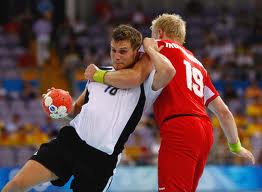
post

U.S. National Team Plans: Part 3: Residency Programs: Right time to start? (Financial Considerations)

Will the US National Teams reside at an Olympic Training Center or will they have a more austere arrangements?

Will the US National Teams reside at an Olympic Training Center or will they have more austere arrangements?

In part 1, I tackled the top level question of whether Residency Programs were a good strategy for U.S. National Team development.  In Part 2, I started to address whether it was a good time to start Residency Programs by assessing U.S. chances for 2016 Olympic Qualification.  In this part, I continue that assessment, this time by addressing the financial costs of Residency Programs and whether the U.S. Federation can afford such programs at this point in time.

How much does a Residency Program cost?

The obvious first step in assessing the funding considerations for Residency Programs is to figure out how much those programs would cost.  I won’t try to break down exact dollar figures as doing so would require quite a bit of research and guesswork as there are several variables in terms of “in kind” support that might be provided by organizations like the USOC.  What I will try to do, however, is identify the key budget line items and provide a few notes as to what each might entail in terms of costs at the high and low end.

Practice Facilities
– High end: Rental fees for gym and weight room
– Low end: Free; provided by USOC or other source

Coaching
– High end:  $100K/year/coach or $200K/year
– Low end:  Volunteers with minor stipend; $10K/year/coach or $20K/year

Athlete Lodging
– High end:  Rental costs for apartments or dorm rooms
– Low end:  Nothing (athlete’s responsibility) or free; provided by USOC or other source

Athlete Meals
– High end:  Contract costs for cafeteria
– Low end:  Nothing (athlete’s responsibility) or free; provided by USOC or other source

Athlete Insurance/Medical
– High end:  High end plan paid by Federation
– Low end:  Low end plan paid by Federation or free; provided by USOC or other source

Athlete Stipends
– High end:  $25K/year/athlete or for 32 athletes ($800K)
– Low end:  Nothing provided

Athlete College Tuition Assistance
– High end:  Full ride scholarship provided as part of host college program arrangement
– Low end:  Nothing provided

Athlete Travel
– High end:  2 round trips home/year; extra funding also available to bring European based athletes to U.S. for periodic training
– Low end:  Nothing provided

Recruitment
– High end:  Full time recruiting coordinator; substantial travel budget for athlete tryouts and recruiting visits
– Low end:  Recruiting performed by coaches; very limited travel budget.

Full Fledged vs. Austere

If one does a little back of the envelope calculation into the high end costs it’s fairly easy to come up with Residency Program costs of $2/3M/year.  Of course, given the current state of Federation finances it would be impossible to fund programs at anywhere near that level.  Even when the Federation had more funding the Residency Programs were more towards the low end even if in kind support from the USOC at the Olympic Training Center in Colorado Springs, helped stretch limited funding.

Obviously, more can be done when the funding is tilted toward the high end of the scale and such a full fledged program would have a better chance of success.  Better facilities, better coaching and more competition opportunities are bound to result in better results.  And better living arrangements and financial incentives would vastly improve the odds of attracting talented athletes to the program.  In particular, if these programs are ever going to have any chance of attracting decent athletes in the 18-22 age bracket they are going to have to provide benefits that approach those that are offered by NCAA sports.

If the funding is not available for a full-fledged program, however, it’s still possible to offer a more austere one.   And, even without all the bells and whistles there will still be athletes interested in participating such programs.  From 2004 to 2007, the women’s team trained in Cortland, NY and this program was clearly at the low end of the scale.  This account of an ESPN writer’s tryout with the team gives you some insight as to how austere that program was.  A men’s program that was in place for a year in Philadelphia had similar conditions and even the Residency Programs that were established in Atlanta prior to the Olympics were nothing to write home about.

Hidden Costs

Aside from the actual dollars that would have to be spent on Residency Programs it’s important to note there are also some pretty significant costs that won’t necessarily show up in any accounting ledger.  In particular, the man hours involved in the initial organization and continued management of the programs would be substantial.  These programs would also become the most visible aspect of the Federation and how they are managed and how the teams perform will be closely scrutinized, especially if the USOC is providing assistance.

And, as anyone who works for a living knows, where you are scrutinized is where you usually spend more of your time and energy.  Not always, mind you, but it’s usually the case.  For better or for worse, more and more time will be spent by Federation staff to support National Team activities.  We could argue about just how pronounced that shift will be, but there will be one.  And the hidden cost is whatever grass roots development, marketing initiative or club programs activity that might have been done will now not be undertaken.

Austere Program or No Program?

So, if one factors in the actual dollar costs and hidden costs of even an austere program does it still make sense to start Residency Programs?  Maybe, but rest assured it not’s a simple decision or one that should be taken lightly.  A lot of it depends on what the available funding is and how austere it is.  If the program is too austere, it runs the risk of being pointless.  If it’s too robust, it runs the risk of diverting too many resources from everything else the Federation would like to accomplish.

It remains to be seen just what the “flexible residency programs” that are being mentioned will consist of, but they will surely be pretty austere programs if the U.S. Federation is counting every penny.  Either that or the USOC is going to come through in a big way with Olympic Training Center access to include facilities, dorms and cafeteria.

When will these programs actually start?

In addition to the lack of information regarding what these programs will consist of there’s been some strong indications that there are no firm plans in regards to their start.  The initial announcement indicated that the programs were “tentatively scheduled to begin in early fall of 2013.”  A follow up email from CEO Matt Van Houten, indicated that athletes identified at tryouts would “be sent to the club system to learn the game but the goal is to establish a residency program for full time training.” A federation webpage on national teams also referred to the Residency Programs starting in 2013/2014.

The words which I’ve put in bold face (tentatively, goal and 2014) all point to a fair bit of uncertainty in terms to their actual start.  This could be for a number of reasons, but I’ll speculate that the actual start hinges on a number of factors to include sponsor funding, USOC support and Women’s team performances in upcoming tournaments.  And on top of the shifting date there surely are some floating plans as to where the programs will be on the sliding scale between full-fledged and austere.   One could even conclude that there might not even be funding currently in place for even an austere program.   All of this leads to some very obvious questions:

Did it make sense for the Federation to announce plans for Residency Programs if it doesn’t really know when they would start or what they would consist of? 

Or, would it have been better to wait until plans were more firmly in place?

So, I’ve now addressed Olympic qualification and financial issues in regards to the timing for starting Residency Programs.  In the next part I’ll tackle planning issues.   And, in particular, planning considerations that should be carefully weighed in order to get the best possible arrangements for Residency Programs. Part 4

post

The implications of a Red Card and other rules principles

A red card with a major impact in Man U - Real M

A red card with a major impact in Man U – Real M

My guess is that many of our readers took an interest in yesterday’s Champions League game in football, with the very special match-up between Manchester United and Real Madrid, including the coaching rivalry between Sir Alex Ferguson and Jose Mourinho. The game lived up to all expectations for the first 55 minutes, but then it can be argued that a referee decision changed the dynamics of the game completely and very much influenced the final result. The Turkish referee Cakir showed the red card to a Manchester player in a situation, which instantaneously, and now afterwards, led to a major debate about whether the card should have been red or yellow.

Whether one believes that the referee decision was justified or too harsh, there is in my mind another aspect that matters more and brings up an interesting comparison with handball. For many decades, in handball we had a punishment in the rule book, exclusion, which rarely was used because it was felt that its consequences were too harsh. It was generally agreed that leaving a team with one player less for the entire duration of the games was bound to affect the spectacle in a very negative game, leaving the shorthanded team without much hope. The situation is not quite the same in football, where a team can survive for an extended period in this way, but it normally has a major impact, not just for the teams but also for the spectators and a worldwide TV audience. This is of course especially the case, if the send-off happens very early in the game.

In handball, we decided not so long ago to remove this drastic punishment. Instead we have ‘red card with report’ and ‘red card without report’, depending on the severity of the infringement. But in both cases the team is back to full strength after two minutes. On some occasions, I had the opportunity to discuss with FIFA and UEFA officials about the feasibility of introducing a similar principle in football, i.e., that one could allow a red-carded player to be replaced after X minutes. But the unwillingness to see the merits of such an idea was always astonishingly strong, even if the football officials agreed that such an approach could make the decision to show a red card much less dramatic and controversial.
So, it seems that on this point we have a clear advantage in handball, but the issue is still not free from problems.

Instead we have had some improper unwillingness in some places to accept the global principles contained in the IHF playing rules. Under those rules, the referees (and nobody else) make a final decision whether the infringement that leads to a red card is severe enough to warrant a report to authorities. The purpose of the report is to enable the responsible federation to take a decision about further punishment, such as a suspension from X games. The rules make it clear that such added punishment is not to be considered in those cases where the referees have decided that the violation belonged in the category that did NOT warrant a report.

Nevertheless, some national federations have incorrectly taken upon themselves to set aside this basic principle in the rules, by pronouncing added punishment also in cases which the referees found to be less severe. I was happy to read this week that perhaps the most prominent one of these federations, namely the Danish one, has now decided to abandon its flawed practices and follow the IHF rules and principles. So all that we are now waiting for is for the European Handball Federation (EHF) to come to the realization that they should follow the same course and give up a self-proclaimed prerogative which they do not really have!

I think I have made it clear on several occasions, that I generally find the EHF to be a competent and well-managed organization, but that their handling or rules issues, protests, and disciplinary matters leaves a lot to be desired. Perhaps it is the size of the EHF operations and the broad scope of their competitions that cause difficulties, as they require a large bureaucracy with a formidable set of rules and regulations, sometimes seemingly a bit removed from the practical reality on the handball court. Perhaps it also reflects a disconnect between handball experts and legal/administrative functionaries.

In any event, the recent handling of the protest from Croatia Zagreb regarding their crucial Champions League game against Minsk puts the reputation of the EHF in a poor light. The protest essentially involved the inability of the match delegate to detect that a player serving a 2-minute suspension entered the court and contributed to the scoring of the goal late in a game with a very close final result in favor of Minsk. The initial response to the protest was correct, in the sense that the denial of the protest was based on the principle that a protest against ‘an observation of facts’ is not valid.

But when Croatia appealed the initial verdict, the statement of denial at the second level in the process was horrifying. Because it stated that the EHF hypothetically could go against the basic principle, but only if the error in an observation had ‘an essential and crucial influence on the final result’. In other words, the EHF entity admitted that the EHF is willing to go against basic principles, but at the same time they showed a terrible judgment in claiming that the effect on the final result was not obvious. So it is easy to understand why Zagreb was not willing to accept the denial of their protest with this kind of reasoning, and they have now taken the matter to EHF Court of Arbitration. As I see it, it would really be an injustice if the protest were to be denied again at this final level, given the terrible arguments that have been used. And, if the final verdict were to go in the favor of Zagreb, there should be a replay and also a possible impact on which team should play in the upcoming Round of 16.

post

U.S. National Team Plans: Part 2: Residency Programs: Right time to start? (Prospects for 2016)


What are the prospects for the U.S. Men's and Women's to make it to Rio in 2016?
What are the prospects for the U.S. Men’s and Women’s to make it to Rio in 2016?

In Part 1 I addressed the basic question as to whether Residency Programs were a good strategy for our National Teams.  I concluded that if the programs were focused on developing younger athletes it could be a good thing, but if the program had too many athletes in the tail end of their careers it was a highly questionable strategy.  This installment, however, sets aside that conclusion and assumes that Residency Programs are definitely the way to go.  Instead, the question under consideration is simply, does it make sense to start these programs now?

Why don’t we already have Residency Programs in place?

To assess whether now is the right time to start Residency Programs it makes sense to first explore why we haven’t had programs for several years.  In fact, the last time the U.S. had a full-fledged residency program was 1996.  Following that Olympics, USA Team Handball’s budget dropped precipitously.  There simply was no way that Residency Programs could be maintained at the same level they had been maintained in Colorado Springs or Atlanta, so it was discontinued.  Later in 2004 a residency program was established for the women’s team in Cortland, NY, but it was an austere setup that was only a shadow of earlier programs and it closed down in 2007.

In 2008, a new federation was certified by the USOC and with substantial seed money being contributed by its primary backer, Dieter Esch one of the first questions I asked him and the newly installed General Manager, Steve Pastorino was whether they had any plans to restart Residency Programs and hire full time coaches.   The answer then and in subsequent years was always along the lines of “No plans at this point in time; Maybe on down the road.”  And, as we all know, “on down the road,” never materialized during the Esch-Pastorino era.  My informed speculation is that it was never started due to three primary reasons:

  1. Olympic Qualification considerations:  It was assessed that qualifying for the 2012 Olympics was highly unlikely.
  2. Financial considerations:  There simply wasn’t enough funding to establish a credible program and it was decided that resources would be better focused on grass roots efforts.
  3. Planning considerations:  There were tentative plans for Residency Programs contingent on Chicago being selected as the host city for the 2016 Olympics.  When that didn’t materialize there was no backup plan readily in place.

In hindsight, those reasons actually appear to have been pretty valid for the most part.  The U.S. didn’t come close to qualifying so there’s little to suggest that a Residency Program for either the Men or Women would have put them over the top.  Funding could certainly have been diverted from some grass roots effort, but it still would have been a pretty austere setup that would have probably looked a lot like the Cortland program.  Finally, while Chicago didn’t get the Olympics the positive opportunities of setting up shop in a host city surely merited the decision to wait and see what would happen.

But, that was the decision 4 years ago.  Let’s take a look at each of these three considerations now in the context of the Federations decision to pull the trigger on residency programs.

Olympic Qualification Considerations

While Residency Programs aren’t necessarily established solely with the intent of Olympic Qualification it nevertheless is something that factors into the equation.  How much so is open for debate, but the Federation’s own words stating that the program is aimed at 2016 Olympic Qualifications suggest that it’s the major reason for the program.  If this emphasis is true, that carries lot of implications in terms of the program’s structure and how quickly it will need to move from a developmental program to one more focused on winning now or at least very soon.  Time is of the essence as the next PANAM Games, the most likely path for Olympic qualification are now less than 2.5 years away (July, 10-25, 2015).  Depending on the qualification format that means Team USA could be playing in qualification matches as early as December, 2014.  Here’s a quick look at the prospects for both the Men and the Women.

U.S. Men Prospects:  Can they beat Argentina?

Based on recent national team performances there is a lot to be done if the U.S. is going to be a serious contender for Olympic qualification.  The Men finished 7th out of 8 teams at the 2011 PANAM Games and lost 36-19 to Argentina, the Pan American qualifier.  This past June they faced Argentina again and lost 33-13 on their way to finishing 7th out of 9th at 2012 Pan American Championships.  With better training and more opportunities to play together the U.S. would have done better, but it’s hard to see them making up 20 goals without some quality additions to the roster.

In theory, those quality additions could be new crossover athletes from other sports that would get their training through a Residency Program.  The best case scenario I can envision is the Men’s Residency Program starting up this fall and having a half dozen players developing rapidly in to raw, but decent handball players.  Those players would then mix with the more experienced players playing in Europe to field a team at the summer 2014 Pan American Championships that still isn’t strong enough to beat Brazil and Argentina, but can upset Chile for 3rd place and qualification for the World Championships.  That same team would then parlay that World Championship experience in Jan 2015 to field a team on top of its game by July 2015.  I still think it’s highly unlikely that the U.S. would be good enough to beat both Brazil and Argentina, but with Brazil already qualified as Olympic host, it’s possible the U.S. could play Argentina in a semi-final match that decides the Pan American qualifier.   And in a one match scenario it is at least possible to envision a big upset.

But, let’s keep in mind this all assumes quite a bit.  For starters, with Argentina having several of their top players playing in top leagues in Europe they are likely to improve as a team.  Chile, likewise and don’t forget that Canada will have the home court advantage.   Not to mention the wildcard of a Cuban entry.   No, the reality is that even making the semifinals at this point in time is less than a 50-50 proposition.  And then actually beating Argentina?  Anything is possible 2.5 years out, but it’s hard not to look at it as anything but a long shot (perhaps 20-1) at this point in time.

U.S. Women:  Can they emerge as the best of the also rans?

The performance of the U.S. Women in recent years at first suggests there is no hope whatsoever for qualification.  They didn’t even qualify for the 2009 or 2011 Pan American Championships and while they squeaked into the 2011 PANAM Games they finished 8th out 8 teams, including a total defeat by the eventual champion Brazil, 50-10.

Sometimes, however, it’s not how good you are, but who you’re playing against.  Beating Brazil in 2.5 years is a near impossibility, but Brazil’s hosting of the Olympics throws them out of the equation.  At the same time Argentina which has been the consistent #2 has conveniently regressed back to the pack of the also rans.  While they’ve been able to hold on to second place in the past two competitions they’ve been trounced by Brazil and have had to fight off teams like the Dominican Republic and Cuba in the semifinals.  So if one uses the following logic from the PANAM Games results:  Argentina beat the Dominican Republic 19-18 and the Dominican Republic beat the U.S. 33-26 then the U.S. only has to get around 8 goals better.

While such logic if often faulty it does suggest that an improved women’s team would have a decent chance of qualifying.  But, before we get our hopes up too much let’s keep in mind that all of the also-ran teams have been beating the U.S. in recent competition and it would be foolhardy to assume that they won’t also improve with an Olympic bid on the line.

As I see it the best case scenario for the women is significantly different from the men.  In particular, I would assess that they don’t need just a few new players, but instead could use a significant roster overhaul.   This assessment is based on the results of the past few years and what appears to be several players in the player pool who are older and unlikely to improve significantly in another 2.5 years.  Of course, that’s just one man’s opinion and it will better to just take a look at the results at next month’s North American qualifier in Mexico and at the 2013 Pan American Championships this summer in the Dominican Republic.  In particular, these two events should paint a pretty good picture of where the U.S. stands among the also rans.

And if a roster overhaul is seen as necessary this is where a full-fledged Residency Program with some top notch cross over athletes could make a difference.  Comparing different eras can be a shaky proposition, but I think if the U.S. brought in some raw talent similar to what they brought into the program in the 80s and 90s, they could assemble a team in two years time that is capable of taking 2nd place in Toronto.  Certainly, there’s little doubt in my mind that the U.S. Women’s team from 88, 92, or 96 would take 2nd if they could magically time travel to participate in the event.

It wouldn’t be easy, though, with just two years to work with.  The U.S. would need to do some phenomenal recruiting and it would require sufficient funding so that it was a full-fledged program.  A program that could entice the right athletes to commit and provide them a training environment in which they could improve quickly.

So, if one looks at Residency Programs primarily with a focus on 2016 Olympic Qualification prospects it appears that it will do little to enhance the Men’s teams prospects, but could, in theory, give the Women’s team a chance to qualify.  But, is the U.S. currently capable of establishing and supporting full-fledged Residency Programs?  Or, can all we expect at this point in time is an austere setup that can’t quite do the job?  In the next part of this series, I’ll look at the funding considerations inherent in managing Residency Programs and try to answer those questions. Part 3

post

Veszprem and Kielce seek to break German-Spanish dominance

Veszprem taking on a yellow and blue opponent, although here it is NOT Kielce...

Veszprem taking on a yellow and blue opponent, although here it is NOT Kielce…

So finally is the very long, and sometimes boring, group stage of the EHF Men’s Champions League completed. There were so many strong teams involved, and occasionally there were some really high-quality games, but this was often overshadowed by one-sided games between teams of different calibers or meaningless games between strong teams that had already secured advancement. Clearly this points to flaws in the format, but I will get back to that.

It also turns out that the demise of AG Copenhagen left a big hole in the draw that Bjerringbro was not able to fill. I do not want to detract from the remarkable string of ten straight wins for Kielce, but this really seemed to happen in a mediocre group, especially compared with the situation in some of the other groups. The sad events and decline involving Montpellier led to their elimination on the very last day of group play, but they may have been unlucky to find themselves in the toughest group. From among the other teams that did not qualify, I want to mention Croatia, a young and often exciting team that simply may not have had the experience and cohesiveness yet.

The four German teams all finished first or second in their respective groups, but it is surely a bit odd to see Kiel failing to win their group, and they now must pay the price in the form of a tough opponent in the next round. Barcelona prevailed against Berlin in their group, but it is harder to assess the strength of Atletico Madrid. They finished behind Veszprem and Kiel, losing all four games against those teams, but that may not tell the full story about their strength.

The draw for the 1/8-finals was undertaken today, following the pattern of group winners taking on fourth-placed teams and second-place teams encountering those who finished third. The higher-placed teams have the advantage of playing the second game at home, and the games will take place during March 13-17 and March 20-24. Celje-Hamburg, Ademar-Veszprem, Szeged-Kielce and Bjerringbro-Barcelona are the four games involving the group winners. The other games are: Gorenje-Flensburg, Medvedi-Kiel, Minsk-Skopje and Atletico Madrid-Berlin.

One would instinctively feel that the group winners are in a good position to advance to the quarter-finals, and personally I would find it difficult to believe in an upset in any of those four match-ups. In the other four games, one could instead say that here it seems much more unpredictable. Who would be sure of the outcome in Atletico Madrid-Fuechse Berlin, which seems like the most exciting pairing? Kiel did get a solid opponent that could probably win at home. But Kiel has such a depth of top players, so that it is hard to see them fail to prevail in the aggregate of home-and-away matches. Flensburg may seem like an obvious favorite, but watch out!

Discussions of format changes for the 2014-15 season are already taking place. It is apparent that the views of the top clubs are somewhat polarized. The German clubs have enough tough competition at home, so they do not want a long schedule of less exciting games in the Champions League. Other clubs, such as the French or Slovenians, may also have a strong interest in their national leagues, but they still thrive on the Champions League competition. For virtually everyone else, the Champions League is THE main event of the season, as these clubs are too dominant in their national leagues. So these clubs will want more games in the Champions League.

The number of games wanted may not necessary point to a specific solution in terms of how many teams should be allowed to participate. The key is instead the size of the groups into which the teams are divided, and this could be anything from four to eight or even twelve. Perhaps it would be feasible to have some geographical divisions, moreover with groups of different sizes. But clearly it is a ‘political’ issue to determine the access to Champions League. It may make for more exciting competition to reduce from 24 to 16, but nations that were not included this season may instead push for 32. It will be interesting to see what comes out of the discussions, and whether there is any hint of an emerging ‘Euroleague’ in years to come.

post

VIDEO/AUDIO Hamburg vs. Montpellier

Montpellier's now Accambray's team.  Can he lead them into the round of 16?

Montpellier is now Accambray’s team. Can he lead them into the  Champions League Round of 16?

It’s been a tumultuous season for traditional French power, Montpellier.  A betting scandal rocked the side and led to the departure of former icon, Nikola Karabatic.  In disarray, the team has limped through the group stages and now needs to beat Hamburg in Hamburg in the 10th and final round in order to sneak into the Round of 16 as a fourth seed.

Video:  Hamburg vs Montpellier:  Link

I’ve done at audio commentary (see below) for the second half.  You can synch up this MP3 file with the video.

1) Forward the video to exactly 44:10 and then pause the video player.
2) Open the pop up player for the audio and wait for the synchronization count.
3) Unpause the video as the count starts

post

USA Team Handball’s National Team Plans: Part 1: Residency Programs: The Right Strategy?

back_to_the_future_poster_01

USA Team Handball is looking to start  up National Team residency programs again. Is that a good idea? Maybe, but not it it means going back to the future.


Several weeks ago the USA Team Handball made a couple of very significant announcements.  First on 27 December in a notice regarding open national team tryouts it was briefly mentioned that the U.S. intends to start a long-term flexible residency program aimed at 2016 Olympic qualifications.  Shortly thereafter it was announced that high performance coaches had been named to develop national teams.  After some additional dialogue with USA Team Handball I was then able to confirm that these coaches are full time hires, although Coach Latulippe is not arriving until later this year.

Tucked away amidst typical news items like the location for the club national championships some readers might not have fully realized the significance of these two announcements.  Make no mistake.  These are major developments and a clear signal that the Federation has decided to dedicate more resources to its national team programs.

On the one hand, I see these developments as a welcome sign that USA Team Handball is finally going to start taking its national teams more seriously.  The revolving door of coaches and the cobbling together of players a week or two before major events clearly was not working.  The U.S. was not competitive and the results were dismal.  Even worse the previous Federation sometimes decided to not even send our senior national teams to World Championship qualification tournaments and initially even resisted supporting PANAM Games qualification, the path to the Olympics.

On the other hand, though, I’ve got some serious concern as to whether the residency model is the right long term strategy for developing our national teams.  And, even if it is the right strategy, I’m skeptical as to whether now is the right time to start it.  Going further I’ve got even more doubts as to whether now is the time to hire full time coaches and whether we’ve hired coaches which match our current needs.  What follows is a devil’s advocate review of Federation plans with the intent of influencing what appears to be a still evolving program for our national teams.

Residency Program (Right Strategy?)

First a short explanation of what a residency program is or at least was in the past.  As the name implies U.S. National Team athletes essentially lived and trained together full time.  Athletes were housed in a dormitory setting and coaches conducted daily practices (often 2/day).  In many cases the athletes coming into the program were exceptional crossover athletes from other sports who were unfamiliar with Team Handball.  As such, the program was often focused on teaching those athletes fundamental handball techniques.  Typically, however as the U.S. approached an Olympics the rosters would settle and the dynamic would switch from individual development to putting together the best team possible.

There are several good points to be made about the residency model.  First off, this model clearly resulted in the best teams the U.S. has ever produced.  The U.S. was able to qualify for several Olympics, routinely beat other developing nations and while we still rarely beat European sides, we could put some scare into them on the way to some respectable score lines.  Additionally, the residency program provided a tangible aspirational goal for every young player in the U.S.

All that being said, let’s be totally clear and honest about how successful Team USA was with that model.  We never won a medal and sometimes didn’t even qualify for the Olympics.  Let’s face it; in many respects talking about the heydays of USA Team Handball is roughly the equivalent to talking about the heydays of the Los Angeles Clippers and the Montreal Expos.  Americans aspire to win, not for respectable score lines.

Next and probably most importantly, residency programs are not cheap and over the years a lot of money was spent on a few chosen athletes, many of whom have barely touched a handball since punching their Olympic ticket.  While at the same time far less funding was channeled to grass roots programs that may have resulted in the establishment of a broader player and fan base in this country to develop the athletes needed.

Yes, I’m talking about the never ending debate between grass roots and national teams.  National Team proponents will argue that our grass roots haven’t producing the talent needed to compete.  Grass roots proponents will argue that funding residency programs is simply throwing money away on a handful of athletes that aren’t going to win anyway.

Of course, both proponents are absolutely correct in many respects.  Back in 2009 I wrote a three part series titled, A Framework for National Team Success (Part 1, Part 2, Part 3) that addresses these issues in greater detail.  In part 3, I identified six shortcomings of the residency model, many of which I had experienced firsthand.  Those shortcomings were

  1. The athletes were often too old to warrant the spending of development resources:  Often the athletes were in their mid to late 20s
  2. Lack of whole person development: Athletes didn’t have many opportunities beyond handball
  3. Uneven Funding: Sometimes the funding wasn’t there to fully support it.
  4. Lack of competition:  Practicing against each other can get real old
  5. Unclear commitments (both from the Federation and athletes): Players didn’t know where they stood; sometimes athletes bailed out
  6. Uneven player skills: Athletes would plateau when there weren’t better players to push them

(This is just a short synopsis; for a further explanation read the whole article)

What’s the Alternative?

Of course, if a residency program is not the right strategy it begs the question:  What’s the alternative?  Cobbling a team together a couple of weeks prior to an event, as I already pointed out, hasn’t worked for the U.S. very well.  Thing is though, that’s pretty much what the rest of the world does nowadays.  Long gone are the days when the former Eastern Bloc countries kept their national team players on a short leash.  On the men’s side, all of the players on world’s top national team are professional athletes with club commitments.   Training and playing with the national team is an important, but secondary part of their handball careers.  The same is mostly true with the women’s teams, albeit for less pay, with the possible exception of South Korea.

The nations with middling success (Argentina, Brazil, Tunisia, Egypt for the men; Brazil and Angola for the women) have teams with mixed rosters (some professional, some semi-professional and amateur).  The teams with very little success (USA, Canada, Great Britain and Australia to name a few) are almost entirely amateur.  And, adding to their level of difficulty is the reality that their domestic amateur competitions are also at a very low level.

These facts all point to a logical, inescapable conclusion:  If you want to have sustained national team success you’re going to have athletes capable of playing at a top professional level.  So, the right strategy has little to do with how a national team trains and prepares for competition.  Sure, it certainly is beneficial to train together, but the quality of the players is far more important.  Accordingly, the right strategy is all about identifying, recruiting and developing quality athletes.

For nations with a quality club system and a professional league everything is already done for them.  For other nations they can either try the quick fix (the residency program) or go for the long hard slog to develop the grass roots, which is by no means guaranteed to succeed either.

A Third Way?

But, perhaps there’s another way.  A Residency Program that eschews the quick fix and seeks to develop quality athletes for the long haul.  In part 3 of my earlier series I outlined a residency model with limited objectives that was focused on taking college age athletes and boosting their handball skills so that they could play competitively in Europe.  The rough pathway I envisioned was an 18-21 year old player training at a residency program then at at 22 making his/her way to Europe playing in the 2nd or 3rd division to start, continuing to improve his/her game and then making the ranks of top sides around age 27 or so.

I won’t say that the model I’ve identified is the definitive one. What I will state, definitively, though, is that going back to the future to a residency program that mirrors the ones put in place in the past is a highly questionable strategy.

As of right now, it’s unclear as to what the Federation plan or overall objective is.  In particular, will the residency program be the key element of an intense effort to qualify for the 2016 Olympics?  The Federation announcement indicates that it’s aimed at 2016 qualification, but its certainly possible to seek qualification with an eye wide open towards the more feasible prospects of qualifying in 2020 or even 2024.  A key indicator will be the ages of the athletes participating.  Other signs of intent will be the overall cost of the program and how much funding it siphons off from grassroots efforts.  To date, the U.S. Federation hasn’t released a whole lot of details other than to indicate that it will be “flexible” and that they would like to start the program in the fall of 2013.    Information will surely trickle out as the program moves closer to actually starting.

Which leads to the next question I’ll tackle in this series:  Does it make sense to start a residency program now? Part 2


post

High School Varsity Flag Football: Why not Team Handball?

Flag Football

Girl’s Flag Football: The new High School varsity sport in Las Vegas. It doesn’t take much imagination to see them playing another sport with far brighter future possibilities.

This past Wednesday here in Las Vegas, Palo Verde HS edged out Silverado HS, 7-6, in the first ever Clark County School District Girls Flag Football Championship.  Yes, believe it or not, Flag Football has become an officially sanctioned and fully funded High School Varsity sport here in Las Vegas.  For our European readers, Flag Football is a non-tackling variation of American Football, with players wearing Velcro strips (flags) on their hips and the pulling of a flag substituting for the tackling of a player.

It doesn’t take a lot of imagination to flip through the photos and contemplate the same high school athletes playing Team Handball.  Heck, the photo above looks practically identical to a backcourt player breaking through the defense at the 6 meter line.

The Power of Title IX

And, if you’re like me, you’re probably asking yourself, “Why on earth would Las Vegas schools be adding Flag Football for girls in the first place?”  The immediate answer to the question is Title IX, the American law which requires schools to provide equal opportunities for boys and girls.  And more specifically a complaint, with the implication of a lawsuit that was levied at the Clark County School District for its athletic programs that were heavily lopsided in favor of boy’s programs.

Faced with that possibility, the school district decided to take action to add another sport specifically for girls.  A survey was conducted and several possibilities were considered.  The final three candidates were competitive cheerleading, lacrosse and flag football.  In the end flag football edged lacrosse primarily due to the fact that flag football has very few equipment costs.  Even so, the school district spent $225,000 to run the program this year with half of the costs for coaching salaries.  Overall, the program appears to have been pretty successful.  Some schools had as many as 100 girls tryout for their teams attesting to the pent up demand for more sporting opportunities.

Why not Team Handball?

While, I applaud more sporting opportunities for girls the limits of flag football are pretty obvious.  Most glaringly, it’s a sport with virtually no future for the girls that play it.  It’s not an Olympic or intercollegiate sport.  In fact, the best opportunity for advancement is the Lingerie Football League.  It’s seems unlikely that the NCAA could add it as a sanctioned sport, but reportedly the NFL is at least investigating the possibility.  The current lack of collegiate opportunity was the argument most vociferously raised by the growing lacrosse community in Las Vegas.  The problem with lacrosse, however, was its costs for equipment.  While the wealthier suburbs were strong backers the more urban schools had virtually no interest.  Team Handball would also have some cost problems, albeit not quite as much as lacrosse, with Handball goals clearly be the biggest upfront cost.

But, Team Handball does have something neither of those sports can offer: the cachet of being an Olympic sport.  And selling potential national team possibilities wouldn’t be false advertising at this point in time.  As there might be as few as 100 girls/women in this country playing the sport on a regular basis it’s not a stretch to think that a city wide high school program overnight could identify a dozen national team candidates.  Even more importantly, they would be athletes aged 15-18.

What it would take

With Title IX complaints surely to continue it’s probably likely that there might be other locales looking to add girls sports.  Here’s a look at what it might take for Team Handball to beat out other sports.

Lobbying Support:  With low name recognition and a small constituency it would definitely take some good persuasion to even get Team Handball considered as a possibility.  But the right backers could turn the tide for a little known sport.  In particular, the USOC could come calling to a School Board meeting to make a case.  That alone could tip the scales in Team Handball’s favor.

Funding support:  Clark County budgeted $225,000 of its own funds to add the sport.  What if the next school district to consider a sport got a sizable grant from the USOC, IHF and commercial sponsors?

Manpower support:  While Flag Football was a new girls sport, the school district surely was able to find the needed coaching and officiating from the ranks of regular football.  Adding a totally new sport with few individuals having even played it before would be a significant challenge.  Accordingly, they would likely need Federation manpower support with training classes for coaches and officials to get such a program off the ground.

The Olympic Host City Solution?

Getting the requisite lobbying, funding and manpower needed necessary to win the day might be pretty challenging to a cash strapped Federation.  It’s conceivable, but it will likely take some serious sponsor support.  Perhaps the best bet on the horizon is the game changing possibility of the U.S. hosting the 2024 Olympics.  As the folks in Chicago will tell you nothing is a given, but come 2017 there’s a strong prospect that the U.S. will be chosen to host its first Olympics since 1996.

So what if part of being host city was the requirement (or at least strong encouragement) to establish a high school Team Handball program?  A twofer for the city:  address Title IX and provide a pathway for city students to make the Olympics.  And what if at the same time a residency program was co-located in that host city for those athletes to continue their training?  Given what was done in Atlanta to develop youth handball on a smaller scale it’s not too much of a stretch to envision the possibilities.

And heck, now that Girls Flag Football is an official sport in Vegas, well a whole lot of far fetched ideas seem a lot more possible.

post

Wrestling WITHOUT ball no longer in the Olympics?

When there is a ball involved, the wrestling certainly becomes much more interesting!

When there is a ball involved, the wrestling certainly becomes much more interesting!

It appears to have come as a shock to wrestling fans that there is suddenly a risk that wrestling might not be an Olympic sport starting in 2020. I find reactions of outrage among athletes and federation officials in several countries in Europe and not the least here in the United States. But it seems that there are not many general sports fans who would be so upset about this change.

The situation is that the International Olympic Committee (IOC) needed to cut down its number of ‘core sports’ in the summer program to 25, and the recommendation from the IOC Executive Board is now that wrestling is the sport to be dropped. The sport that had seemed more vulnerable was Modern Pentathlon, notwithstanding its name one of the really old and traditional sports just like wrestling.

It is interesting to observe the arguments from the wrestling community, from the sports that narrowly escaped and also from the ones who are now, together with wrestling, left to compete for the chance to be an ‘additional’ sport in 2020. Some seem to think that a sport should be protected precisely because it has long traditions. Others emphasize instead that the ‘old’ sports need to renew themselves in order to remain relevant and interesting. This may in fact be what rescued modern pentathlon, which has gone from a five-day event to an intensive competition where even two of the components (running and shooting have been combined).

I would personally support the argument that all sports need to think about changing in ways that make them more appealing to new generations. Increasingly, there is a strong interest in sports that are dynamic or even adventurous. Speed and continuous action are key factors, something that we have seen in handball, where we have also tried to support this trend through appropriate rules changes. Similarly, the IOC has begun to use the Youth Olympic Games as a place to experiment and make room for new, modern sports that attract young participants and a young audience. I think this is a healthy trend, and I feel there should be an increased willingness to let new sports be added on a temporary basis and evaluated against some of the stagnating traditional events.

The reaction to the proposed exclusion of wrestling has also followed ‘geopolitical’ lines. In one way I think this makes sense. A sport that has a strong following on a truly global basis would seem to have more merit than one that continues to be limited primarily to one continent or to a small group of countries. These arguments were heard when baseball and softball lost their status, and people now seem to argue against table tennis, because nobody from outside a small number of East Asian countries seems to have a chance to compete at the very top level. And somehow it seems that every time that a sport which is popular in the United States comes under scrutiny, it is taken as a deliberate insult.

I would be inclined to argue that a bad record regarding doping, match fixing, corruption and bad governance should be factors of considerable relevance in determining whether a sport really deserves to be in the Olympics. Perhaps that approach would be of some help for those who try to fight for their respective sports to clean up their act, whether from the inside or the outside. On that score, some might argue that also handball would have its problems, but one might hope that this is a temporary situation. On other accounts, it does not seem that handball is in any serious danger of being a candidate for elimination. Some hope has instead been attached to the idea that beach handball might become recognized as an Olympic sport, along the lines of beach volleyball, but that may be a rather remote possibility.

post

Lack of progress by non-European national teams hurts the image of handball and the IHF

it is too tough to do it alone; the top non-European teams need help from the IHF

it is too tough to do it alone; the top non-European teams need help from the IHF

In one of my articles about the Men’s World Championship, I noted as a particular disappointment that the non-European teams yet again failed to show signs of catching up with the top teams from Europe. All the teams in the quarter-finals were European, and only Brazil came really close to winning their game in the round of 16. Tunisia and Egypt advanced from the group stage but did not match some of their best performances from the past.

Considering that in most years Europe only has 10-12 really strong teams, there should be room for a few non-Europeans to make their mark. It is not good enough to be about equal with teams such as Montenegro, Belarus or Macedonia. Another observation is that there are no new teams from outside Europe who seem ready to get to the very top. Korea are not as solid on the men’s side as they have been among the women, and Argentina were unable to follow up on their surprising performance two years ago. Even the IHF President publicly expressed his disappointment specifically with Argentina.

Of course, someone might suggest that, as long as we have a sufficient number of good teams to make the quarter-finals exciting and of high caliber, it should not really matter where these teams come from. But this would be a flawed reasoning in the case of a World Championship. One important point is that we also have European Championships every two years, currently with 16 teams, and the impression is that these are events that are more homogenous in quality, leading to suggestions that they are a stronger event than the World Championship. Particularly at a time when there are loud voices to the effect that the competition calendar must be reduced, it is not a good sign if the World Championship can be seen as a secondary event.

But this is not even the main point, as I see it. We all want handball to be a truly global sport and one of the most important and popular Olympic sports. But this is not an image that is easy to maintain in the absence of really strong participants from several continents. What would a football World Championship be in the absence of the perennial contenders from Argentina and Brazil and the other South Americans? And here we have gradually found competitive teams from Africa, Asia, and even North/Central America. The situation in basketball is not very different. Even icehockey thrives on account of the transatlantic rivalries.

Unlike the IHF President, I do not want to be too harsh in a case such as Argentina, even if I have some understanding for his reaction. I know how difficult it is to create the necessary foundation to bring a national team to the very top level, not because the nation is located outside Europe but because there is no tradition or culture for our sport. It is meaningless to discuss why football has managed to become truly global; we have to deal with the realities we have. I have seen it first-hand after moving from Sweden to USA almost 40 years ago. Instead we need to look ahead, and focus on the scope for changes that would be both quick and solid.

Considering how difficult a task this is, also for countries with sports traditions and some government support, it is not realistic to say that the responsibility should rest exclusively with the individual federations. It also has to be a responsibility for the IHF because, as noted above, it certainly is in the interest of the IHF. But one needs to recognize that ‘politically’ this is a sensitive issue. A lot of countries in each non-European continent need help at the grassroots level to get handball established. This is an obvious and non-controversial role for the IHF, and the only concern is that more resources should overall be spent on this. But it is a different matter if one suggests that the IHF also needs to help in a tangible and forceful way in the case of those nations who are already among the best in their continent and manage to qualify for most World Championships.

It would seem that such countries have shown that they are somewhat capable of helping themselves and should not be priority recipients of support from the IHF, when there are so many other needs. However, I would still argue that, at any given point in time, it is critical to give further support to precisely those nations who have already shown that they have the talent and the determination to get to the top. Everyone would benefit from a policy and project under which they got that final push that gets them to the very top and keeps them there.

We are talking about countries and federations who have already made a major effort and sacrifice to get where they are; they are not ‘free-loaders’ and they deserve support. Neither the Europeans, who see them as potential rivals, nor the lower-ranking non-Europeans, should be envious and consider such an approach to be unfair. The assistance should only be provided for a certain period of time, and it should not be provided in the form of a blank check. Much of the help could be in the form of providing these national teams with the opportunities for frequent high-level competition that would make them more experienced and stable. So I am urging the IHF, with the collaboration of the continental federations, to consider this new approach to get our World Championships and our sport to be truly global at the elite level!

post

Top clubs put pressure on IHF through lawsuit against German Federation

The German Federation put on the spot in legal action by the clubs

The German Federation put on the spot in legal action by the clubs

As I have reported in earlier articles, the top European handball clubs have become increasingly frustrated with the total unwillingness on the part of the IHF to treat clubs as stakeholders and negotiate with them. In focus is the IHF’s insistence that the national federations can require clubs to make their players available for the national team, combined with the IHF’s decision to give the clubs some unilaterally determined, modest compensation for releasing the players.

The IHF does not recognize clubs under its By-Laws and feels that it can therefore do what it wants on this issue. So when the clubs work together in their association Forum Club Handball (FCH), they find that they cannot force the IHF to deal with them, neither individually, nor through the FCH. This is a completely different situation from the way in which the European Handball Federation (EHF) fully recognizes both clubs and players and gives them formal representation, just as is the case in football with FIFA and UEFA.

This has now made the clubs and FCH conclude that their only option is to go after IHF indirectly through the national federations. The federations are formally recognized as stakeholders by the IHF, so they are in a position to put pressure on the IHF to change the current situation. But at least some national federations may be unwilling to do so, because at least indirectly it could make them lose some of their power. And of course, it could be seen as entirely fair and appropriate that the clubs go after the federations who are the beneficiaries of having players available for their national teams free of charge.

The FCH could not realistically initiate a lawsuit, as they could not portray themselves as an ‘injured party’ in a legal sense, as it is the individual clubs who pay salaries and lose the services of their players and, even worse, face the consequences in the case a player comes back to the club with a physical injury that occurred while with the national team. So the legally correct approach is for clubs to sue their respective national federations, with the ultimate purpose of having the federations feel forced to put pressure on the IHF.

Accordingly, as a ‘test case’, and in the form of a ‘class action’, a large number of German Bundesliga clubs have now agreed to get together and sue the German Handball Federation (DHB). This is, of course, in itself an extraordinary measure and particularly so as it is in a sense a ‘proxy’ for a legal fight between the clubs and the IHF. Moreover, being the party that is orchestrating the action, the FCH has undertaken to absorb the expenses for the process, rather than having the Bundesliga clubs bearing the risk and burden for action on behalf of all top clubs in a whole spectrum of European countries. And you could even say that the issue goes beyond Europe, as increasingly the players in the Bundesliga clubs and other major European clubs come from non-European nations.

It will indeed be interesting to see how this process evolves, how the federations beyond Germany will react, and how the IHF might react, given that similar measures have been successful in football and other sports.

post

Men’s World Championship: Lower quality than usual

French coach Onesta, seemingly clueless about the reasons for the French decline, or simply unable to make the team perform?

French coach Onesta, seemingly clueless about the reasons for the French decline, or simply unable to make the team perform?

It is a bit ironic, especially for handball fans here in the U.S. who could enjoy TV coverage thanks to beIN Sport, that most observers seem to agree that the caliber of play was weaker than usual this time. Many point to the fact that several teams found themselves at the beginning (or middle) of a generation change, without sufficient time to integrate new talents fully. Others comment on an unusual rash of injuries, keeping several key players out of the event. And some then tie these observations together and point to the fact that this event was held less than half a year after the Olympic Games in London.

This timing is clearly the worst aspect of the existing competition calendar with five ‘big events’ in four years. So this may have contributed to the unusual extent of injuries, and it also explains why some top players found this the right moment to retire. But it simply also reflects fatigue, both physical and mental, and the difficulty in being in peak form for two events so close together. And it is ‘interesting’ that this problem is highlighted right at the moment when the Europeans are under the ‘cloud’ of the proposal of introducing ‘European Games’ as one more big event in every four-year period…

But there are also questions about the impact of the tournament format. Most of the debate tends to be about the pros and cons of having a ‘main round’ as opposed to the format now used with ‘knock-out games’ starting from the round of 16. Some also have views on the advantages of four groups with six teams vs. six groups with four teams. But personally I sense that the real issue is having an event with so many games between strong and weak teams. This makes it more difficult to keep concentration and maintain a strong and consistent level.

Clearly it is not realistic and appropriate to propose a reduction or to raise the issue of having an ‘A’ and a ‘B’ World Championship as on some occasions in the past. It is a global event and there has to be room for at least a few participants from each continent. But the current format puts a burden in terms of the pure number of games for the top teams, and it has too many uneven games. Yes, the non-European teams want to measure themselves against the Europeans, but how beneficial is it to play several of those 13-38 or 16-43 games before it is time for the President’s Cup? I think one needs to consider a radically different format!

How would it be to allow the eight top seeded teams to stay out of a first phase!? Bring the teams ranked 9-24 into a preliminary round with four groups of four teams. This allows the non-European teams a chance to play opponents from all other continents, including Europe. And then the two bottom teams from each group move on to the President’s Cup, while the top two get to play the seeded teams, with a main round of 16 teams having four groups of four teams. From there on, you move on to quarterfinals for the top teams and placement games for the others.

Not everyone may immediately agree, but to my way of thinking, this amounts to retaining the advantages of the current format while reducing the negative aspects. And I am sure that both our readers and the responsible persons in the IHF and national federations could come up with even better ideas, if there was just a readiness to think ‘outside the box’.

post

Spain exploded in the final! Where was Denmark today?

Spanish celebration captured in photo by MARCA.com

Spanish celebration captured in photo by MARCA.com

This was expected to become a very close and unpredictable final between the two most dynamic and exciting teams in the championship, each with several potentially dominating players. But it became an amazingly one-sided affair, where Spain was fully in charge from the beginning to the end. A Spanish fan could probably speak or write endlessly about this game, whereas the Danish supporters will quickly want to forget all about it. I will try to find a compromise and just offer some brief comments in addition to the result: 18-10 at half-time, 29-12 after 45 minutes and 35-19 as final score.

If one judged from the quarterfinals and semifinals, this could have been yet another game where Denmark could have gained the necessary advantage in the first half, with the help of Landin in goal, a tight defense, efficient counterattacks and nice goals by Eggert or others. But here none of that worked: Landin did not have a good day, the defense was static and leaked terribly, and the strong Danish shooters got nowhere. Instead, Spain played an inspired handball, supported by the enthusiastic crowd, and everything seemed to work. Sterbik in goal drove the Danes to desperation, while the Spanish attack had no problems finding easy scoring opportunities, from a distance or through elegant passing to the 6-meter line.

So this is what happened and the question is obviously: HOW could it happen? Of course, the Danes are not suddenly a mediocre team. But here, after eight straight wins, it finally became too apparent that world-class player Mikkel Hansen could not be relied upon much in this tournament, and that Landin cannot be realistically in top form every game. And when they Danes encountered an opponent that =, in a sense, was able to use their own methods against them, then they seemed to be lost. Apart from Sterbik in goal, it is difficult to single out a specific Spanish player; they simply had too many weapons in Canellas, Rivera, Maqueda and also Aguinagualde, who showed that he is much more than just a strong circle-runner.

Some cynics will say that it is a big advantage to play a World Championship in your own country, and that is true. It is not a secret that this is a major reason why many of the top countries fight hard for the right to be the host. But Spain has been a top team for a long while and they won gold in Tunisia 2005. In their current form, they could clearly have won this Championship regardless of where it had been played. And Denmark was a worthy finalist despite today’s result. They won all their games before today, most of them in an impressive manner. Of course they might have felt that this year was their turn, just as I myself was ready to believe, but they should gradually adjust to being happy with the silver medals and their standing in the men’s handball today. By the way, the Croatian team, which has been nicely rejuvenated with Duvnjak as their new leader, deservedly won the bronze medals.

So we congratulate the medal winners and I will be back with some post-event thoughts in a few days.

post

Men’s World Championship: Some excitement on the way to the final

Goalie Niklas Landin may have been just as important to the Danish win, but Anders Eggert scored som truly inspired goals!

Goalie Niklas Landin may have been just as important to the Danish win, but Anders Eggert scored som truly inspired goals!

Last time I wrote that Slovenia had been the positive surprise in the early stages. But I also wrote that Poland and Serbia had been the negative surprises. And in the end it became apparent that, when you take that into account, then perhaps it was not so impressive that Slovenia could defeat those two opponents and win their group. Because then they had a relatively easy path first against Egypt and then Russia who self-destructed by playing a dirty game and drawing a lot of suspensions, but when the test came against Spain in the semi-final, the Slovenian skills and team strength were simply not enough. The final result was 26-22 after the lead had been somewhat larger shortly before the end.

Spain had a tough battle against Germany in the quarterfinal, and this was clearly the best game so far, played at a high level and with the usual intensity when these two rivals meet. One could only wish that the same could be said about the remaining quarterfinals, but Denmark did such an impressive job in the early part of their game against Hungary that the game was essentially over at half-time. On paper, the France-Croatia match-up seemed promising, but it was soon apparent that the French team really was just a pale copy of what they have been during their dominance in recent years. There was no cohesiveness, no leadership and, above all, no determination. Croatia was clearly the stronger team throughout the game, and it was pathetic to hear the French comments afterwards about a narrow loss.

The semifinal Denmark-Croatia started in the same way as the Danish quarter-final, with great goalkeeping, alert and agile defense and smart scoring by Eggert and others. But Croatia, where Duvnjak now clearly is the new leader, never gave up. They got to within three goals seconds before the half-time whistle, and the flailing Alilovic took up the competition with Landin at the other end. The pace in the second half was tremendous, with no time for extended attacks. It sometimes looked more like ‘ping-pong’. Croatia desperately tried to catch up, but Denmark always seemed to have an answer. And in the end it became clear that Denmark just had too many different weapons, so the 30-24 win was fully justified. I want to add that it was a very fair and sportsmanlike game.

This means we know have a Spain-Denmark final, pretty much what I had hoped for and believed in. Let us now hope for a ‘grand finale’!