post

Handball Competition Manager, Alex Gavrilovic, on 2012 Olympics Preparation

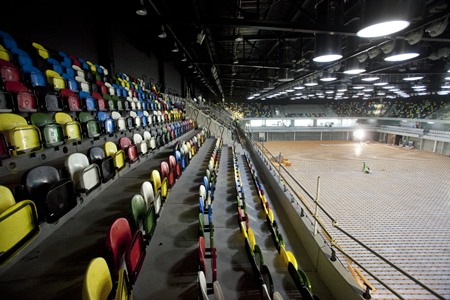
Construction for London 2012's Handball Arena is nearing completion

British Handball has an interview with Handball Competition Manager, Alex Gavrilovic, concerning preparations for the 2012 Olympics in London.

London 2012: Excitement Mounts for Handball Manager: http://fastbreak-handballnews.blogspot.com/2011/04/london-2012-excitement-mounts-for.html

In the interview it’s noted that construction on the Handball venue is nearing completion and that there will be a 6 team international tournament there later this year in November.  Alex, also optimistically notes that he thinks there is a real chance for Great Britain to make significant inroads into become a stronger handball nation.

For more background on the 2012 Handball Competition Manager check out this interview that Christer Ahl had with him a year and a half ago.

THN (Nov/Dec 2009): Alex Gavrilovic: a true fighter for the global progress of handball

Part 1: https://teamhandballnews.com/2009/11/alex-gavrilovic-a-true-fighter-for-the-global-progress-of-handball-part-1/

Part 2: https://teamhandballnews.com/2009/12/alex-gavrilovic-a-true-fighter-for-the-global-progress-of-handball-part-2-of-3/

Part 3: https://teamhandballnews.com/2009/12/alex-gavrilovic-a-true-fighter-for-the-global-progress-of-handball-part-3/

post

Is USATH serious about refereeing?

Having spent more than 20 years in charge of refereeing in handball in our country, the last thing I would want is to get caught up in the details of how things are being run today.  But it bothers me when I see that virtually nothing is being done, despite the availability of experienced and willing people.  Handball obviously does not exist for the sake of its referees, but it also cannot develop as a sport and support its young and inexperienced athletes in the absence of access to competent refereeing.

Many major handball countries strangely suffer from a lack of former referees with a willingness or ability to take on the task of recruiting, training and supervising new generations of referees.  They would be very envious of the situation that exists in the U.S., where we have a small group of people constituting a ‘national referee committee’ and an additional group of very experienced former international referees who are not just willing but eager to be able to help out.  In these circumstances it is absurd to observe that very little is happening, either due to a lack of constructive communications or due to negative attitudes on the part of the Federation.

The reason why I would venture to imagine that the problem might go beyond communications is that the Federation in recent time managed to alienate its small group of referees through a failure to take care of the reimbursement for the services for which the referees had been contracted.  Payments were made far too late despite many reminders or, supposedly, not at all.  Even in an organization that has to cope with financial difficulties, there should be no room for such lack of respect for a key group of volunteers.  But I still want to believe that the current situation is more related to a shortcoming in managerial or administrative capacity rather than due to an inappropriate attitude.

It seems that it should be relatively simple to mesh the technical knowledge of some people about how referees should be recruited, educated and monitored with the Federation’s knowledge of its resources from a budgetary standpoint to carry out such an effort; especially as the technical experts have long-term experience with this environment.  Plans and suggestions have been submitted, initially without reaction but eventually with a response that I could only interpret through my reading as ‘having the door slammed in the face’.  Without trying to second-guess the proposals or the responses, I can only say:  surely there must be a way of achieving a meeting of minds!

While there might be some differences of opinion about what constitutes the best approaches and about how to ensure that the resources are available, undoubtedly this can be worked out if there is a genuine desire to do so.  The Federation surely does not want to dismiss people who are willing to help? Perhaps the problem is simply that e-mail exchanges and the resulting (mis?)understandings of tones and messages need to be replaced by a brainstorming face-to-face!?  After all, the issue goes beyond the individuals involved in the dialog:  the impact involves the entire USATH field of activities.

Finally, it must be kept in mind that recruitment of handball referees in our country is not like the recruitment of basketball referees here or handball referees in Germany.  There can be no expectation of a natural flow of candidates.  Realistically they can only come from those few/small groups who are already actively involved, i.e., clubs, players and others in their surroundings.  So the clubs must feel an obligation to help out with candidates, essentially for their own sake.  This should not be seen as a burden or an unreasonable imposition, least of all from the vantage point of the Federation.  Much more awkward is the short-term ‘cover-up’ of bringing in guest referees from abroad, simply because the internal efforts are being ignored or delayed.

So I hope the parties concerned will get together and work out a solution without further delay.  But it would also be very helpful to the broader handball community in our country if the USATH leadership/management would be prepared to outline publicly its philosophy and intentions specifically with regard to refereeing.

post

Time-Out for the Referees!

In recent time I commented on the pending proposal to introduce a third team time-out per team and game, and I also discussed the perceptions about how the current allocation of team time-outs is typically being used.  When doing so, I did not realize what I have now heard from well-informed sources: a decision has been taken to introduce the possibility also for the referees to request a time-out.  This is indeed a surprising and interesting idea!  Presumably it will be officially reported to the IHF Congress next month.

It seems that the referees in a game will be allowed to request one 1-minute time-out in each half of the game.  They will only be able to do it when the ball is out of play, and they must take care not to interfere with a quick restart of the game, for instance after a goal has been scored.  Similarly, it would obviously not be appropriate to use the time-out in certain other situations, e.g., precisely when a team is ready to execute a 7-meter throw.

IHF Referee Chief Manfred Prause notes that “it is only fair that the referees also are given this opportunity.  There are many situations in a game where the referees, just like the teams, may need some little time to discuss tactics or regain their composure.”  Prause also clarifies that while improved opportunities for communication between the referees now may exist through the use of ear phones, this is typically available only at the elite level.  The time-out may be particularly welcome at the lower levels where less experienced referees are used.

Commission member Roland Buergi is a little bit concerned that the usage of a time-out may provide a signal that the referees have become worried or are somehow ‘admitting’ that they believe they have just made a mistake.  “The referees need to be smart and avoid using the time-out in connection with a controversial decision or right after they have been criticized”, he suggests.  One might think that the best timing is instead when there are some important changes in the flow of the game or the atmosphere on the court.

Commission member Ramon Gallego admits to some initial skepticism about the idea.  “We have worked very hard to emphasize and improve the fitness of the top referees”, he says, “so it would be awkward to give the impression that the referees need these time-outs simply because they are getting tired”.  I understand Gallego’s concerns but I suspect that in fact it might be the players who will appreciate the added opportunity to catch their breath.

All the details have not been determined yet, and it is likely that the IHF and the continents will do some experimenting in events prior to the 2011-12 season when the ‘black card’ will be formally introduced.  Indeed, the utilization of a ‘black card’ with a white ‘T’ is one of the few specific aspects that have been decided.  Red, yellow and green are colors that are already being used, so there were some voices in favor of a blue card, but the traditional referee color of black apparently won out.

It is going to be interesting to follow the implementation of this new idea.  I bet there are many retired referees who will think that it is something they could have used in their own careers…

post

Finally: The Champions League has started!


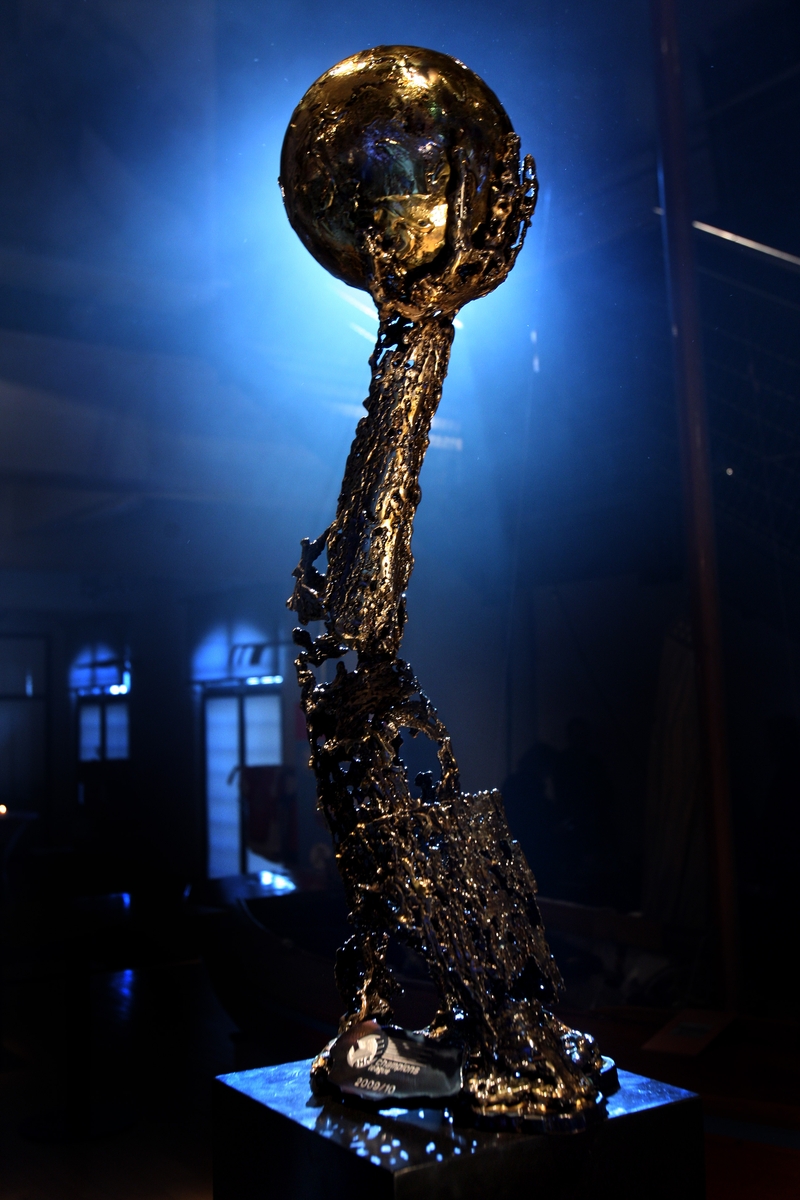
16 of Europe's top clubs are now battling for the Champions League Trophy

You may be surprised by this heading, but you will understand if you have followed my earlier writing on this topic.  For me, it is now, with the Round of 16 (or 1/8-finals) that the real competition has started.  In recent months we have gone through a rather long period with many boring matches and predictable results.  Now, with 16 of the best teams fighting it out for the places in the quarter-finals and beyond, we have finally arrived at the stage where the absolute top teams meet each other and every goal counts in every match.

I understand the politics of the issue, so I know why 24 seems such a convenient number.  It allows several more countries to take part in the main round in Champions League, even if it is with a team that does not really belong there.  And some people argue that it is not so good if we see too many matches with just German or Spanish teams.  But as far as I am concerned, a main round with 4 groups of 4 teams is what fits the reality.

John Ryan commented a few days ago that the bookmakers made the four group winners heavy favorites in road games this past weekend.  But only Chekhovski had an easy team, and that was really due to the lucky draw against Bosna.  Kiel did not wake up until the second half, and Ciudad Real’s relatively comfortable win depended mostly on Sterbik having a great day in goal.  Montpellier lost in Schaffhausen, which probably confirms that this year Chambery is the only really strong team in France.

The closest one among the other games was the 27-26 win for Flensburg in Szeged and RN Loewen won another tough battle in Zagreb.  But one could not be entirely sure that this means that they will win so easily at home this week.  Hamburg and Barcelona won with more comfortable margins at home.  The clear win for Barsa was perhaps a bit surprising and it only came after Sjostrand in goal stopped everything in the late stages.  It will be tough for Veszprem to catch up after losing by seven.

For next season (or a year later), there are already some interesting changes being discussed.  The top clubs have serious concerns about playing the Champions League games during the weekends, as this forces them to play many of their league games during the week.  They would prefer the practice of UEFA in the football competitions, where the European games take place during the week, leaving the weekends for complete rounds of national league games.

Another change sought by some of the top leagues in Europe is to reduce the number of EHF competitions, by combining the EHF Cup and the Cupwinners’ Cup into one event.  That might be easier to argue for countries that currently get five to eight participants in the different cups, but it might not be so popular among countries that would lose one or more of a much smaller number.  Of course, it could be argued that the multitude of parallel events detracts from the attention given to the Champions League.  But for me the more important change would be to find a format whereby the main round of the Champions League has no more than 16 teams!

In the meantime, watch out for some exciting EHF-TV games, starting already on Thursday with Rhein Neckar Loewen receiving Croatia.  Will Croatia be able to reduce the German-Spanish dominance?

post

British Handball Update: Formal approval from the BOA, EHF funding and a victory over Italy

Great Britain captain Ciaran Williams on attack vs. Italy

The 2012 Olympics are about 17 months away and the British Handball Federation has had several small victories, both on and off the court, in the past few months.  First off, back in January the British Olympic Association (BOA) (GBR’s Olympic Committee) granted full approval for the British teams to participate in the 2012 Olympics.  Never a done deal, the BOA’s approval was contingent on British Handball making the case that the games would leave a “lasting legacy” for the sport and that the men’s and women’s teams could put forth a “credible performance.”  Some had even argued that no funding should be spent on a team with no hope of medalling.

Terms like “lasting legacy” and “credible performance” are wide open to interpretation, but few would argue that progress isn’t being made on both fronts.  Notably the European Handball Federation (EHF) has stepped forward with some funding support to British Handball.  Details were lacking in terms of how much funding, but it appears most of it will go toward the salary of a full-time handball development officer in London.  Such a position makes sense and is a win-win for British Handball and the EHF as both organizations would benefit greatly were Great Britain to become a Handball nation.

On the court itself, Great Britain is still a long ways from being on par with the other 11 nations that will round out the field in London.  The Men’s recent matches against Italy (a 33-24 victory) and Turkey (26-28 loss), however provide some hope.  Neither of those teams strikes fear into Europe’s top handball nations, but those are a couple of teams that likely would have beaten a British side by 10 or more goals only a couple of years ago.  Does that mean the Brits are on track for a credible performance in 17 months?  That, of course, depends on your standards.  Both the men and the women are likely to get beaten badly by the other European sides and will be fortunate to win any games.  But, it wouldn’t surprise me if they have stretches where they play credibly. 

The more important standard though, is clearly the “lasting legacy” one.  Non handball nations like Australia and the U.S. have failed to fully take advantage of the opportunity an Olympics can bring.  Let’s hope that Great Britain can break that trend and use 2012 as a stepping stone towards becoming a Handball nation. 

Eurosport.com (21 March 2011): GB handballers raring to go: http://au.eurosport.com/olympicgames/olympic-games/2012/gb-hanballers-ready-to-go_sto2714238/story.shtml

EHF (15 Mar 2011): EHF supports Olympic legacy in London: http://www.eurohandball.com/article/13762

The Economist (17 Mar 2011): Britain’s new Olympic sports: New balls, please: The host nation extends its sporting repertoire: http://www.economist.com/node/18396255?story_id=18396255&fsrc=rss

BBC (19 Jan 2011): Great Britain handball teams given 2012 Olympic nod: http://news.bbc.co.uk/sport2/hi/handball/9362374.stm

THN Commentary (25 Jan 2008):  Times of London Handball Article Misses the Goal: https://teamhandballnews.com/2008/01/times-of-london-handball-article-misses-the-goal/

post

Swedish League has plans to become more competitive


Swedish Handball Federation President, Hans Vestberg, in his younger days.

As shown in the photo, the business of handball is a ‘bloody serious’ matter for Hans Vestberg (here in his younger days as an enthusiastic player).  As many who followed the World Championship in Sweden know, he combines his professional life as Managing Director for the world-renowned Ericsson group with a continued handball involvement as the President of the Swedish Handball Federation.  This combination is in many ways symbolic for the following story. 

In connection with the World Championship in Sweden, the Swedish Men’s Elite League (HEH) announced ambitious plans to try to become more competitive.  A particular frustration is that the Swedish top clubs frequently lose strong players to financially stronger clubs abroad.  While HEH certainly does not see it as realistic to resist the pressures from Bundesliga clubs or the richer Spanish clubs, it is a particular objective to become competitive enough to avoid that the Swedish clubs are drained by clubs in neighboring countries, especially Denmark.  Perhaps there is also some special pride and prestige involved in not losing out to the immediate neighbors.

Put differently, the HEH wants the Swedish League to acquire a status just below the counterparts in Germany and Spain.  I had a chat with Stefan (Abbe) Albrechtson, strong man in HEH and in Saevehof (incl. Partille Cup).  He emphasized that the league is not in any way seeking some kind of separation from the Swedish federation, along the lines of the situation in Germany and Spain.  On the contrary, he and his colleagues in the Swedish top clubs look to the federation for coordination and support.  Educational efforts and exchanges of best practices need to be synchronized.  Clearly, the persona and spirit of someone like Hans Vestberg is not likely to hurt that effort.

The Swedish tax legislation makes it difficult for Swedish clubs to compete with counterparts in other countries, and the chances that new major sponsors will spontaneously come forward are also limited.  The focus must be on working more efficiently, in the sense of being more business-like, stronger in the emphasis on publicity, TV coverage and service to the spectators.  HEH has its own web TV production with about 60 games per year, and the national TV channels now cover around 50 games per year after previously having wanted no involvement at all.  The top clubs now typically have modern arenas.  Abbe does not believe in hand-picking teams from larger cities or having a ‘closed’ league.  The traditions in favor of the current system, with the Elite League as a top of a pyramid are far too strong.  But using business contacts and knowledge in the competition for local or regional sponsors is critical.

Clearly, any hopes of moving up to a higher level more generally depend on a stronger business sense among the handball leaders. Traditional methods do not work any longer.  The clubs need a stronger outreach in the community and also regionally.  Coaches and people with technical handball knowledge need to be supplemented by strong managers, financial experts and organizers.   Abbe surprised me a bit by saying that there is not much of an effort to draw on the experience of other sports such as football or icehockey.  He feels that the methods needed for handball depend more on the special features of handball.  Attracting people and money involves ‘selling’ handball as a specific product.

It is really interesting to hear this optimism and to see such initiatives at a time when many major clubs in other countries are struggling.  Most of the clubs in the Spanish top league ASOBAL are on shaky ground.  And in Denmark there are recent studies indicating that the majority of the top men’s and women’s club are encountering increasing problems.   For instance, the creation of the new top club AGK Copenhagen is seen with skepticism and fear by many in Danish handball, as it may be causing too much of a polarization between strong and weak, and setting the bar far too high for virtually anyone else.  But going back to the Swedish scenario:  at this moment in time, the economy is in a much more favorable situation than in most other European countries.  There remains a focus on quality of life, with sports as an important area for participation and enjoyment.  So perhaps this is the right moment for optimistic initiatives.

post

Team Time-Outs: how are they actually being used?

I still remember the debate that preceded the introduction of the team time-out, first in the Olympic Games in 1996 and then in the general rules from 1997.  Many experts viewed the whole idea with some skepticism or even outright suspicion.  Would it really be appropriate for a coach to use a time-out to interrupt the flow of the game for the opponents; should that not really be regarded as unsportsmanlike?  And why these stoppages to convey instructions to the team, when in any case you can bring players to the bench and give the necessary explanations!  Plus of course the additional objections from the purists, who did not like the idea because it was picked up from basketball…

Clearly the concept is now generally accepted.  Although I should perhaps be careful with the word generally, as there are many countries who do not permit team time-outs at the lower levels or in youth games, simply because they take up too much valuable time when several games are squeezed into a limited timeframe in a hall.  But at the top levels it has become accepted as an integral part of the game, used either to find ways of changing one’s own team’s tactics or, yes, to try to counter something that the opponents are doing.  Many times it is saved until the last minute of the half, to be available to agree on some special effort during the last attack of the half, especially on offense but even on defense.

In an IHF Forum last fall, with experts debating possible changes in the game development and in the rules development, one of the few ideas connected to the rules that came up was a proposal to increase the team time-outs from two per game (one per half) to three per game for each team.  To some extent it must have been proposed as a benefit for the coaches in the fast-paced games at the elite level, but I suspect it was also an issue of interest for television and to some extent for spectators and other media.  So I was a bit amazed when I heard that it might be proposed for the general rule book to be used at all levels, but this does not make any sense at all.  Surely it must be a mistake, and the correct approach would be to consider if for the completion regulations of the IHF, continental federations and national federations, so that it could be applied in the top games.

In any case, knowing that this proposal is being discussed, I found it interesting during the recent World Championship in the approximately 30 matches I watched live to make note of how the team time-out was being used.  I must admit I did not literally make notes, and of course I saw just one third of the total number of matches in the Championship.  So my impressions may not be so accurate, and this is precisely why I hope that the IHF could find the resources to carry out a small study.  When and why is the team time-out being used?  This would not just be ‘interesting’; it could be of help in determining the exact rules for how a possible third time-out per team could be used.

My impression, in comparison with previous Championships, was that more than ever before the time-outs were saved to the last couple of minutes of the game, just in case a special situation would arise>  Personally I am not sure that this fits in with the main reasons why the team-time out originally was introduced.  But perhaps one could turn that argument around and say that if now the coaches are so conservative, this might in fact support the need for one additional time-out (or even two) that could be used at some point(s) during the game when a basic change in tactics or methods seems needed.  This often happens when the opponents have scored several goals in sequence or when one’s own team has failed to have success with the initially agreed tactics.

So it would really be nice if someone, with the help of the match videos and score sheets could go back and check for all matches, when and for what apparent reason was each time-out used.  A simple indication of what happened in the score and in the run of play for a number of minutes prior to the time-out should give sufficient clues to someone familiar with handball tactics.  And the success rate when using the time-out during the last minute(s) would obviously also be interesting!  Please IHF, find some experts or handball students who would be interested in this small project!

post

World Championship format: possible new approaches

In a recent article I commented on the availability of sufficiently strong teams in Europe and the other continents, and also about finding the right balance between the two blocks.  I concluded that, for the Men’s and Women’s World Championships, most likely 24 remained the best number of participants, especially as 20 creates complications regarding the format.

But there are other concerns, for instance regarding the overall length of the event (especially for players from the top club teams with heavy match schedules), about the intensity of the WCh schedule (especially for players who are not used to such a pace, and generally due to increased risks for injuries), and also the abundance of uneven and boring games between very strong and quite inexperienced teams.   On the other hand, these events are the only chance for the No. 2-3-4 teams from the non-European continents to measure their strength against opponents from other continents.  And it is important to find a format where the teams that at that moment are the best really get a chance to fight for the higher spots in the ranking (rather than having been eliminated in qualifying 6-12 months earlier).

Looking at these considerations, it should be possible to come up with a format that takes these different and seemingly contradictory arguments into account.  But one needs to think about it in a slightly unorthodox manner.  Is it really necessary to have all the 24 teams participating from the outset?  Is it not sufficient that the teams 17-24 do get a chance to be there in the end and to show that they have moved up in the rankings!  And would it not be an advantage if some of the top teams with a higher proportion of top players got a somewhat reduced schedule?

My idea is to have the teams 9-24 participate in 4 groups of 4 teams from the beginning.  This is likely to lead to a lot of more closely fought games among teams who want to move on to the next round.  The less experienced non-European teams get to play a variety of teams from other continents but will not have to play against the top 8 teams at this stage.  And the top eight teams get an added and well-deserved advantage from having done well in previous events.  The only debate might be about how one decides which the 8 seeded teams should be.  Perhaps one would have to be a little bit ‘political’ and include one team each from Africa, America and Asia, to ensure that they are represented in the next round.

So the top two teams from each of the initial four groups of four would advance to the main round, while the bottom two would get two more games in some kind of President’s Cup to work out the placements 17-24.  The eight teams that move up would be placed again in four groups of four, with the team seeded 1-8 having been distributed two each in these four main round groups.   The top two teams in each of the main round groups would qualify for quarterfinals. The remainder would play for positions 9-16.

This means that the bottom eight teams get five games each during roughly 8 days.   The teams seeded 1-8 would start later and would have 6 games each in about ten days.  The heavier burden would fall on the teams that move on from the preliminary round to the main round, and they would get eight or nine games, depending on their ranking in the main round.  But these teams would include the solid middle group and possibly also some teams that cause a surprise and move all the way to the quarter-finals and beyond.  Surely these teams do not mind getting some additional matches and surely the spectators would not mind seeing a bit more of them.

I am not trying to argue that this is the best or the only new idea that could be considered.  I just see it as an illustration of how one could address the different issues:  a chance for 24 teams to participate, a way of ensuring that those who are best at the right moment also do rise to the top, a way of ensuring less pressure on many of the top players, and a higher proportion of games that are close and exciting.  Undoubtedly, others could come up with other alternatives.  But the point is that one has to be prepared to move away from a format where all the teams participate from the beginning.

post

Russia determined to come back, with whatever means necessary!

Russia appears to be resorting to offcourt shenanigans to improve its chances of qualification for Euro 2012

When I was in Sweden for the World Championship, I cannot remember hearing anyone regretting that the Russian team was not participating.  From a spectator standpoint, it is hard to remember when a Russian/Soviet team displayed the kind of attractive style of handball that today’s top teams show us.  Russia was in 16th place in 2009.  Their next opportunity now, on the men’s side, is the European Championship next January.

I should insert the comment that, contrary to what handball people around the world might think, despite Soviet/Russian successes at the international level, with national or club team, handball is NOT a major sport in Russia.  I remember being told by their federation officials a few years ago, that handball is in fact not among the top 20 sports in the country.  Possibly, the situation might be a bit better on the women’s side, due to traditions with strong coaching and a thin base of really outstanding talents from the youth level and on up.

Anyway, it seems now that Russia is determined to be back for the EURO 2012.  The methods, however, may not be very fair and pleasant.  There has been an outrage in Denmark this week, which has on the schedule home and away qualification matches between the two countries.  For the match in Russia yesterday, the Danish team had some injury problems and needed to insert some reserve players.  However, with the excuse of offices being closed due to some obscure and extended public holiday, the Russians simply informed that there was no possibility to provide a visa.

Things got worse, when it was discovered that three key players who are on the Flensburg club team would not be allowed to enter Russia either.  The completely weird explanation was that these players, with their club team, had been to Russia very recently and could not now be allowed to enter Russia so soon again.  It is not that crazy bureaucratic and despotic rules interpretations are so surprising in Russia, but it is understandable if the Danes really assumed that this was a machination specifically intended to weaken the Danish team.  Danish protests did not help, and the EHF declared itself impotent.

It is rather awkward that this comes soon after a remarkable incident in the previous home game for Russia in the qualification event.  In a game against Switzerland, where Russia had a narrow lead close to the end, the final chance for Switzerland was removed by an incorrect intervention by the EHF match supervisor, who ‘saw’ something that clearly did not happen and thus took away the ball from the Swiss and instead gave them a 2-minute suspension.  The Swiss formally protested afterwards, and the protest was accepted by the first level in the EHF appeals mechanism.  A replay was ordered. 

Given the serious ramifications of that decision, concerning the fundamental rules principles involved, the EHF itself found it necessary to appeal to the second level.  While emotionally one must sympathize with the Swiss sentiments, I have to state that such rules interpretations must be based on principles and not on sentiments.  Accordingly, I must hope that EHF prevails, even if it means that Russia will have benefited from a mistake in its favor.  Perhaps it will, regardless of the outcome, be a reminder to the EHF about the necessity of being extremely selective in nominating supervisors for games where intensive pressure in different forms can be anticipated…

Finally, it is ironic that the fourth team in the qualification group is Belarus.  It may well turn out that Russia’s chances of qualifying will depend on the result of the final game, at home against Belarus.  I would not want to be Danish or Swiss and have my hopes based on Belarus being given a chance to gain any points in that match-up…

post

All Star Team, an increasingly boring concept in its current form

It is generally positive to try to create some PR around a Championship by creating awards and other forms of recognition for deserving persons.  The most common concept has been the nomination of an All Star Team, together with a Most Valuable Player (MVP).  But the concept has become increasingly boring, with a combination of predictability, strange choices and politics.

There tend to be persons available who have the necessary expertise to select the nominees, but the criteria are always unclear.  For instance, how much attention should be paid to goal scoring?  How important is it to get a perfect fit for each of the 6 court player positions, even if this means that a deserving player is left out?  Should one go more for longevity, i.e., players who are already established stars, or should one try to find some emerging stars?  And how much does one need to think about spreading the nominations over the top four or five teams, with an extra slot for the gold medal winners and/or a special recognition for the host team?

Moreover, the selection process can make the whole situation anticlimactic.  If, as now was the case in Sweden, the team is announced immediately before the two medal games, it is clear that nothing that happens in the finals could change the outcome.  This is really a bit strange but perhaps necessary for practical reasons.  And this may be why the MVP is sometimes, like now in Sweden, left off the All Star Team.  Is seems that this is by definition impossible, but at least it opens up one more place.  And when now Karabatic showed in the final how important he is to the French team, it seemed that he was a most appropriate choice for MVP.  But perhaps that selection could wait until after the finals?

This time there were reactions of surprise and disagreement, when some of the members of the All Star Teams were announced.  Surely Norway had better candidates than someone who was simply their reliable 7-meter shooter!  And did really many think that Doder was the best choice from the Swedish team?  And if now Balic and Vori did not deserve to be included, was it necessary to have a Croatian, if Zrnic somehow was the best choice.  And conversely, how could the Danish wing players be left out, and was there really nobody deserving on the Spanish team?  Perhaps one should have demonstratively refrained from choosing a pivot, considering that this must be the weakest year for pivots in a very long time!?

It came to my mind during the late stages in Sweden that one could perhaps create more excitement by introducing a different type of All Star Team, either in addition to the normal one or instead of the traditional approach.  For me, one of the most exciting aspects of the whole Championship was to observe the many new, younger players who had a dominating or surprising role on their respective teams.  This time there were plenty of them, as many of the top teams are undergoing a bit of a generation change.  I also heard many experts and ordinary spectators talk with excitement about these players.

So perhaps what we should have is some kind of ‘Newcomers’ or ‘Discovery’ All Star Team.  Not one with a lot of rigid rules regarding age or previous experience, but one based on the excitement and surprises caused by these emerging top players.  Perhaps one should call them ‘Future All Stars’.  And one might not need to have exactly 7 players, one for each basic position.  Perhaps one could select more freely up to 10 such players regardless of position.  I really do think this would create more genuine excitement and debate!  And people always seem to find it interesting to speculate about the future, rather than discussing if the All Stars from last time deserve to be nominated yet again…

post

Rivals Croatia and Serbia on opposite trajectories?

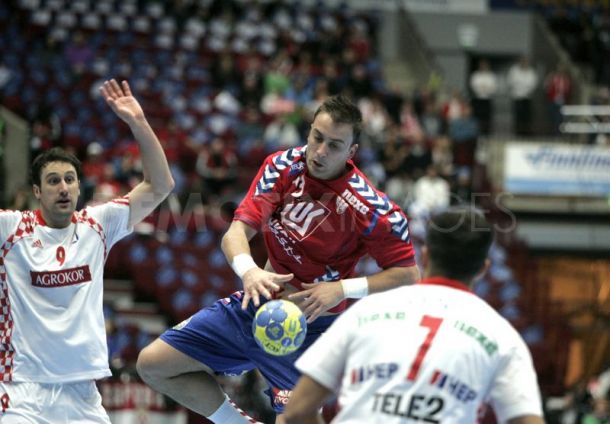
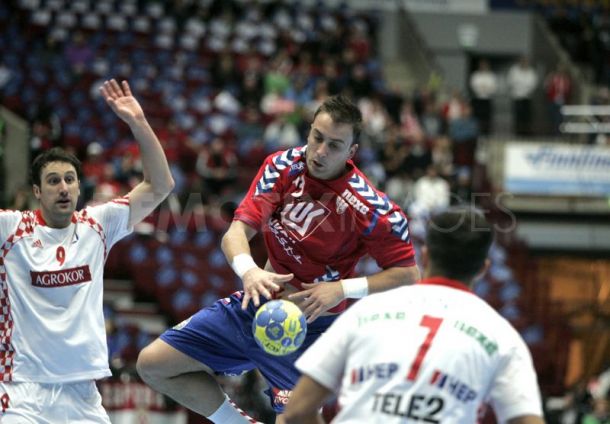
Serbia vs Croatia at the 2011 WC

After the independence, Croatia and (to a lesser extent) Slovenia immediately became important participants in the Men’s World Championships.  Later on, FYR Macedonia has twice participated in a respectable way, and it is beginning to look as if Montenegro might soon be able to join in.  Bosnia can now point to a nice success at the club level, by having a team qualify for the last 16 in the EHF Champions League.  Meanwhile, the Serbs (albeit as Yugoslavia) had great success in 1999 and 2001, and then had good showings again in 2005 and 2009.

But as the world of handball has come to recognize, the super power has been Croatia, with Olympic gold twice and also one gold and three silver medals in the World Championships between 1995 and 2009.  Clearly the success has largely depended on the star power in the form of players such as Balic, Dzomba, Goluza, Lackovic, Metlicic, Sola and Vori, just to mention a few.  It seemed in 2009, even though it was a disappointment to all Croatians that the expected gold turned into silver, that a new generation was also beginning to be ready to step in, more or less guaranteeing top positions also for many years to come.

In this year’s Championship, however, one had reason to begin to doubt what was happening to the idea of a new generation.  Far too much depended on the Balic-Vori axis, and especially the absence of Metlicic seemed to be a severe handicap.  Lackovic and Alilovic did not reach their level of recent years, and many observers questioned the inclusion of Zrnic on the All-Star team.  Was it because Croatia simply had to have someone on the team and because Balic/Vori did not deserve it, or was it because Zrnic had such success with his 7-meter throws?  But the biggest letdown was clearly the performance of  Balic.  He often looked tired and frustrated, seemingly unable to shine in the absence of a good supporting cast.  He even demonstratively left the game and sat sulking on the bench in some critical moments.

Serbia played in the same group as Croatia both in the preliminary round and in the main round.  Their chances seemed to have been downplayed by the international media.  The prevailing expert opinion was that they did not have enough top players on the team, with only Ilic, Vujin and possibly someone else being worthy of special mention.  But the Serbs really went about business with tremendous spirit and team cohesiveness.  In many games it was really refreshing to watch them and their positive attitude.  It was not just the special battle in the game against Croatia that created such a spark. 

While the Serbian team in the end lost a bit of their energy or edge, they managed to convince many of the experts that here we have a team to be reckoned with over the next few years.  They displayed strong technical skills and their coaching staff brought out good tactical elements in the tradition of the best of the Serb teams of the past.  The scoring strength is clearly there, and the goalkeeping did not turn out to be the weak spot that some had anticipated.  All in all, it is obvious that there is an adequate pool of players to draw from, not just to keep the rivalry with Croatia going, but perhaps enough to put Serbia on a more positive trajectory at a point in time when the Croatians need to show that they have the capacity to manage a generation change successfully.

post

IHF By-Law Proposals: Important changes seem to be emerging

Almost a year ago, I wrote several articles severely criticizing the then emerging proposals for changes in the IHF By-Laws.  These changes were planned to be discussed and adopted at the IHF Congress in Rome last April, but this Congress had to be postponed due to the ash cloud spreading over Europe.  Instead, the proposals will now be put forward at an IHF Congress in Marrakech in the first week of May this year.

My main points of criticism (see article dated April 11, 2010) were:  (1) ‘indications of a heavy-handed shift of power in favor of the IHF, at the expense of all other levels and members in the international handball family’, and (2) ‘a major expansion of the personal power of the President’.  As I noted, ‘this would run counter to all sound and modern principles for the management and decision-making in an international sports organization or, for that matter, in any democratic institution’. 

I am pleased to convey to our readers that it now seems that important changes are being put forward on precisely the two main points above.   Much of the debate a year ago was between EHF representatives and the IHF, and it now appears that it may be a quiet resumption of that dialog which has led to a positive break-through.   From several sources I am getting the information that, although there is no revised version of the overall proposals available at this time, there is indeed an IHF Council decision to adopt key modifications.

It appears that an elimination of the excesses in terms of ‘a power grab’ has been undertaken, and that the intended shift of authority from continents to the IHF regarding responsibility for certain key events has been stopped.   More specifically, this involves the long-standing dispute regarding the responsibility for organizing qualification events to World Championships and Olympic Games.  This is not just a matter of principle and prestige, but potentially also a huge financial issue, involving the revenues from such events.

While there are several other aspects of the initial proposals for new By-Laws that preferably should be changed, this presumably means that key continental representatives in the IHF are now more satisfied with the revised version at least regarding the relations between the IHF and its stakeholders and regarding the personal powers of the President.  The latter had become even more of an issue after the President convinced the IHF Council to convert his role from that of an elected volunteer to a full-time employee.

It may be premature to celebrate, but at least this movement away from what appeared to be hardened positions must be seen as a small triumph, not just for the people directly involved but for the entire international handball family.   While I am eagerly looking forward to the opportunity to read the revised version of the proposals, I want to congratulate those who worked hard to create a positive momentum.  I am also pleased that the IHF President was able to find a way of moving towards a compromise.

THN (21 Mar 2010): President Moustafa’s proposals for new IHF Statutes would legitimize his dictatorship and despotism — who will stop this madness?? https://teamhandballnews.com/2010/03/president-moustafa-proposals-for-new-ihf-statutes-would-legitimize-his-dictatorship-and-despotism-who-will-stop-this-madness/

THN (11 Apr 2010): Changes in IHF By-Laws/Statutes: What is the issue?: https://teamhandballnews.com/2010/04/changes-in-ihf-by-lawsstatutes-what-is-the-issue/

post

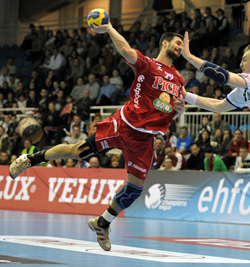
EHF Game of the Week: Valladolid at Pick Szeged (Live and with English Language Commentary)

Szeged's Frantisek Sulc

Another Group C match is served up for this week’s game of the week.  Spanish side Valladolid travels to Hungary to take on Szeged.  Both sides are likely to advance to the round of 16, but still have strong motivation to win.  A win in Hungary would pretty much lock up second place for Valladolid and give them an outside opportunity to win the group.  Meanwhile, a Szeged win will qualify them for the round of 16 and put them in third place with a possibility of even moving up to second.

The match is at 6:00 PM (Central European Time), 12:00 Noon (U.S. East Coast) on Saturday, 26 February.  Valladolid is a 1.5 goal favorite

EHF Website interview with Pick Szeged’s Frantisek Sulc:  http://www.ehfcl.com/men/2010-11/article/13698/%C5%A0ulc%3A+%22Szeged+live+for+handball%22

Live Broadcast link:  http://www.ehftv.com/ec/cl/men/2010-11/live/high/001438

On Demand broadcast at ehfTV:  http://www.ehftv.com/ec/cl/men/2010-11/video/001438

There is also a tape delayed broadcast on the MHz Network in the U.S. at 4:00 PM (U.S. East Coast). For information on how you can watch MHZ see this: http://www.mhznetworks.org/mhzworldview/carriage/