post

Pivotal USA – Puerto Rico Match likely to determine nonqualifier

PATHF-logo-grande

The North American and Caribbean Men’s Handball Championships will qualify 4 teams for this summer’s Pan American Handball Championships in Uruguay.  With 5 nations participating this means only 1 nation won’t punch their ticket for Uruguay.  There’s still quite a few games to be played, but with Puerto Rico having lost their first two matches by large margins they appear to be the weakest team.  Mathematically, there best hope is a win today against the U.S. which is the only other team without a victory.  The U.S. lost 21-15 against Cuba in its only match so far.  Following a 13-5 deficit in the first half the U.S. played much better in the 2nd half, actually outscoring the Cubans 10-8.  Based on that performance the U.S. should be able to get a win and all but punch their ticket for Uruguay.

Match time is 5:00 PM (U.S. Eastern Time) and will be streamed live at the link below.

Tournament Standings: Link

Webstreaming website:  Link

post

Youth action in the Mediterranean


Egypt won the Mediterranean title, beating Tunisia

Egypt won the Mediterranean title, beating Tunisia

Guest columnist, Altay Atli, is a lecturer in international relations and economics based in Istanbul, Turkey.  Altay is a former handball player, a former handball manager, a former handball journalist and forever, a handball fan.  His work involves a considerable amount of travel and the opportunity to see handball played in many parts of the world.  In this article he reports on the recently completed Mediterranean Handball Championship and its emphasis on youth development.

Last week, Chieti, a small town in Central Italy a few miles away from the Adriatic Sea, hosted the Mediterranean Men’s Handball Championship. Eight countries littoral to the Mediterranean, namely Cyprus, Egypt, France, Italy, Libya, Montenegro, Tunisia and Turkey, took part in the event, which was won by Egypt after a penalty shootout thriller against Tunisia (36:34). The championship went largely unnoticed in international sports media, something that can be attributed to the fact that the championship was for under 17s. However thanks to the live streaming provided by the organizers a large audience could enjoy the quality of handball played in Chieti.

This championship makes us rethink the feasibility and the merits of regional events that include participants from more than one continental federation. At professional level international handball, each continental federation has its own busy schedule, which, when global events such as the world championships and the Olympic Games are also taken into consideration, seldom leave any space for regional events in a tightly packed calendar. This is why events like the quadrennial Mediterranean Games fail to attract the crème of the region’s handball to their ranks. Given the hectic schedule of professional sports, developed handball countries either prefer to take their reserve teams to such events or they do not participate at all. The most recent version of the Mediterranean Games, held in June 2013 in Mersin, Turkey, illustrates this trend. In the men’s competition, which was won by Egypt, handball giants like France and Spain did not even take part, while in the women’s competition, which was won by Serbia, developed countries (such as France) either did not participate or competed with junior teams. For instance, from the 16 players Serbia had in Mersin, only five made it to the roster that played the final of the World Championships in December.

In other words, at the senior/professional level, regional events such as those organized in the Mediterranean, do not offer a bright prospect. However, at a lower level, they can be meaningful. The Mediterranean Handball Confederation, which operates since 2003, organizes the Mediterranean Championships on an annual basis for both men and women, and these events are, as the web site of the confederation suggests, “preferably reserved to young athletes.” If the focus had been on senior teams, both the confederation and the championship could have been doomed to irrelevance in the face of the increasingly competitive and commercialized environment of professional handball. By targeting the youth, however, they can serve the sports in other, more purposive ways

First and foremost, the Mediterranean Championship can help the development of handball by providing talented young players with the opportunity to gain international experience. In Chieta, all the players, and particularly those from countries like Libya and Cyprus which do not have strong national competitions, gained high level competitive experience, while some of them including Egypt’s Hassain Anis, Tunisia’s Ghachem Oussama and Turkey’s Halil Ibrahim Ozturk, managed to win international recognition thanks to their successful performance. In the meantime, the championship also offered a platform for young referees to make a debut in international handball. The final match was umpired by the young Italian couple Francesco Simone and Pietro Monitillo, who are on EHF’s candidate referees list, and together with two more couples from Italy, two from France and one each from Turkey and Tunisia, they have taken an early important step in their careers. In brief, the Mediterranean Championship contributed and is likely to continue to do so for the development of handball by giving young players and referees the opportunity to perform at the international level and enter the spotlight.

Youth handball development in the Mediterranean is also important at a different level. The region in question has been going through a difficult period. Southern Europe is still suffering from a financial crisis and youth unemployment is a painful fact of this region. Northern Africa is undergoing a transformation in the post-Arab spring period and the youth is at the center of this process as well. The Asian coast of the Mediterranean, not represented in Chieti, is currently the most problematic part, with the civil war going on in Syria without an end in sight. Empowerment of the youth is a vital requisite for restoring stability in the region, and youth interaction through sports, culture and education, both within and between countries, is the key here. Handball cannot create miracles in this respect, but its contribution can be useful.

post

Handball in Hong Kong

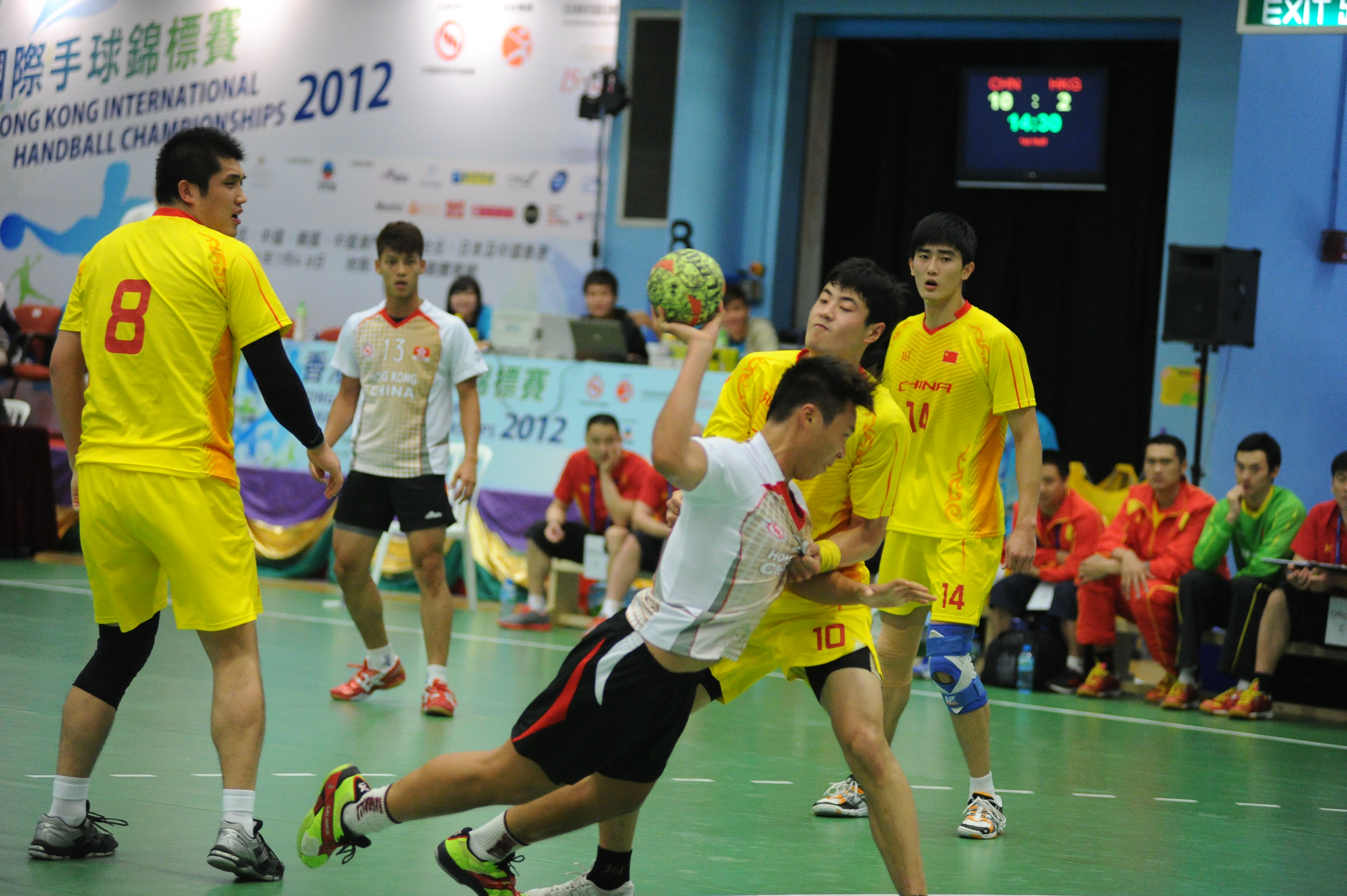
"Hong Kong team taking on China in the Hong Kong International Handball Championships

Hong Kong
team taking on China in the Hong Kong International Handball
Championships

Today’s guest columnist is Altay Atli, a lecturer in international relations and economics based in Istanbul, Turkey.  Altay is a former handball player, a former handball manager, a former handball journalist and forever, a handball fan.  His work involves a considerable amount of travel and the opportunity to see handball played in many parts of the world.  Hence, this article on handball in Hong Kong.

Hong Kong appears to be all about skyscrapers, financial centers and noodle shops, yet there are many other faces to the city-state, including its citizens’ keenness on and its government’s support for Olympic sports. Although handball is not a crowd drawer, at least for now, growing interest in our sports makes it likely for Hong Kong to be more visible on the international handball scene in the near future.

Handball arrived in Hong Kong during the early 1970s with students returning home from Taiwan. The league was launched and the national teams were formed in the 80s. It was in this period that both men’s and women’s national teams have competed in the Asian Handball Championship finals, an achievement that could not be repeated after 1989. After a period of hibernation, handball in Hong Kong is now back on the rise. National teams do not make it to the Asian finals, which are significantly more competitive compared to the 1980s, but they are recently obtaining good results in the international events they are taking part. One such event is the National Games of the People’s Republic China, which is kind of mini Olympic games where the provinces of China compete. Hong Kong, as a special administrative region within the People’s Republic, is taking part in these games, and in last year’s version held in Liaoning, the men’s handball team was ranked seventh, an important achievement considering the improving quality of handball in the mainland. The Hong Kong International Championships, held annually since 2001, provides another platform for the national teams to compete against international opponents, and so far strong handball countries such as Germany, Slovenia, Korea, Japan and China, as well as developing ones like Iran, Mongolia and the French region of La Reunion have taken part in this competition, enabling the teams of Hong Kong to gain international experience.

Handball leagues in Hong Kong are well organized providing the athletes with the opportunity to play as many matches as possible. There are currently four divisions in the men’s competition, and three divisions in the women’s, each division being composed of ten teams. A total of seventy teams for a small city-state of the size of Hong Kong is a significant number. Teams are made up of amateur players from Hong Kong, as well as expatriates and exchange students from European countries. Leagues run from October to April, and they are played in multifunctional indoor sports facilities as well as an outdoor court used solely for handball games. Having adequate facilities is important in Hong Kong, where space is one of the most precious commodities.

The Handball Association of Hong Kong, China (HAHKC) is the organization responsible for the development of the sports in the city-state. The association is funded by the government and its plans for the development of handball are based on two main pillars. One is the development of the player base through a systemized and well structured plan for different age groups, and the other is the attraction of larger audiences through beach handball.

The development plan of HAHKC starts with the elementary training program for kids aged 12 and younger, and the intermediate training program for under 15s. Around one hundred school children are enrolled in these programs each year through a scheme financed by the Hong Kong government. Successful athletes are promoted to district programs from where they are selected into the young athletes training program for the age group between 16 and 19. After a competitive process, better players are taken into regional squads, which undertake overseas training camps every year, such as the one in Korea in 2013 and the one in Taiwan in February 2014. These squads form the player base from which the junior and senior national teams are selected.

This hierarchical structure offers a well-designed system for choosing talents and developing capabilities and skills. On the other side of the coin, beach handball is the instrument used to breed interest for the sports among Hong Kong’s citizens. In 2013, Asian Men’s and Women’s Beach Handball Championships were held in Hong Kong, not on the sandy beaches of the Lantau island, but on a sand filled court right at the center of the buzzling town. It was a wise decision by the HAHKC, which chose to take the game to the people. A total of two thousand spectators watched the event, where the men’s competition was won by Qatar, and the women’s competition by Thailand. Hong Kong ranked fifth in both competitions.

This year the team of Hong Kong was invited to the Asian Men’s Handball Championship in Bahrain, but it could not make it there due to financial problems. Similarly, funding is needed for Hong Kong’s handball teams to compete in the XVII Asian Games to be held in Incheon, South Korea this October, but so far prospects seem bleak. HAHKC officials point out that the government’s priority is to finance “sports for all” instead of competitive events. But perhaps, at the current stage of development, this approach serves handball better. Financing young players’ build-up is definitely more crucial for the future of the sports in Hong Kong and in time sponsors can be expected to enter the scene. Until then, Hong Kong needs to continue to implement its development plan and to gain more supporters through attractive events like beach handball. “We want to play more games with teams from other countries” says Chan Ming Hong, sports executive of HAHKC, “we want to learn more.” So far it has been a successfully pursued learning process for the handball community in Hong Kong. Expect them to do more.

post

Qatar defeats Bahrain in a dramatic final

Rivals Qatar and Bahrain in a tough battle

Rivals Qatar and Bahrain in a tough battle

Qatar were clearly the favorites in the Asian Championship, considering their recent progress and the special efforts they are making to have a strong team when they host the World Championship one year from now. And they lived up to expectations throughout the event, winning all their group matches with large margins and then defeating Iran in the semifinal.

But in the final they had to take on the home team, Bahrain, who probably had been the main surprise of this championship, for instance by winning their group ahead of Iran, Korea and Saudi Arabia. In the semifinal, the Bahraini had easily defeated the United Arab Emirates. Bahrain’s success has been made possible by strong efforts especially by the brothers Jaffar and Mahmood Abdul Qader. The final, where of course the Bahraini had strong crowd support in the fight against their rivals from Qatar, it was a very close encounter up to the very end. But to the frustration of their supporters, the Bahraini fell by a one-goal margin, 26-27, after 14-14 at half-time. It was a real battle, with tough methods and lots of provocations from both sides. A difficult job for the referees, but apparently a solid performance by Johansson/Kliko from Sweden.

As I reported earlier, the semi-finalists were already gaining spots in next year’s World Championship, regardless of the final ranking, where Iran today secured the bronze medals by winning against the U.A.E. The perennial top teams in the Asian continent, from Korea and Kuwait were a disappointment. As I have indicated, Korea failed to reach the semi-finals by the smallest of margins and got the fifth place by defeating Saudi Arabia in their final match. Kuwait placed seventh by beating Oman. But the real fiasco concerns the ranking of Japan in ninth and China in eleventh place, Japan has probably never before had such a weak showing, and China clearly has not made any progress following the Olympic Games. Should one draw the conclusion that the hegemony of the East Asians is now over, and that the Gulf States has once and for all by-passed them.

Looking ahead to the 2015 World Championship, almost half the field is now determined: Qatar; Spain (as defending champions); France, Denmark and Croatia from Europe; Algeria, Tunisia and Egypt from Africa; and now Bahrain, Iran and the United Arab Emirates from Asia. Nine of the remaining thirteen slots will go to the winner of the European play-off pairings in June, three will be determined in the PanAmerican Championship in Uruguay in June, and one place is for the winner in Oceania.

post

Bahrain determining the fate of Iran and Korea

Bahrain's failure to win the game gets Iran a place in the World Championship

Bahrain’s failure to win the game gets Iran a place in the World Championship

When I have followed the Asian Men’s Championship closely in recent days, I have seen it coming: the opportunity for suspicions of ‘orchestration’ on the final day of the preliminary groups. And today the scenario was as intriguing as it possibly could be. In the final game in its group, the Bahraini had it in their hands to ‘decide’ whether Iran or Korea would join them in next year’s World Championship.

The background is that three teams qualify, in addition to Qatar, who are the hosts for the 2015 World Championships. With the format now being used in the Asian Championship, this means that the top two teams in each preliminary group qualify not just for the semifinals but also for the World Championship. This is because Qatar is the superior team and is already through to the semifinal from their group prior to the final game tomorrow.

In the other group, the top teams appeared to be Bahrain, Iran and Korea. Iran and Korea tied, 24-24, on the first day. Then Bahrain beat Korea 26-25 two days ago. So from a Korean perspective, today they first needed to win against Saudi Arabia, which they did (28-24), and then they were in the very awkward position of needing to trust Bahrain to defeat Iran. A tie would mean that Bahrain would still win the group and avoid Qatar in the semi-finals, but above all it would mean that Iran would get the second place in the group on better goal difference than Korea.

One can imagine the frustration felt by the Koreans. On several occasions in the past, they have suffered the consequences when some of the West Asians have ‘ganged up’ on them. One just needs to remember the fraud that was perpetrated against the Koreans in the qualifying event for the 2008 Olympic Games. So surely Korea would have reasons to be suspicious. On the other hand, given that Iran is seen by the Bahrain government as the culprit, when the Shiite population in Bahrain is revolting against repression from the Sunni minority regime, one would wonder why a Bahraini team would feel encouraged to give a helping hand to precisely Iran.

But the final result of the Bahrain-Iran game will clearly raise some eye-brows, because the outcome was 30-30, after a 17-14 half-time lead for Bahrain. Of course, the two teams seem relatively evenly matched, so such an outcome could be just a fluke. And judging from reliable reports, there are no indications of manipulation. The Bahraini really seemed to be determined to win the game until the very end. One must hope that this is also the way it was viewed by the Koreans, and that they instead blame their own inability to defeat Iran in the opening game. A flare-up of overt geopolitical fights and accusations is not what the handball world needs.