post

Throw Back Thursday: Memo to the Main Stream Media: Give us your naive solutions if you must, but also keep promoting the sport after the Olympics

Throw Back Thursday. What's old is new again: Main Stream Media Reports on handball and quickly figures out how to make the U.S. better.

Throw Back Thursday. What’s old is new again: Main Stream Media Reports on handball and quickly figures out how to make the U.S. more competitive in 2008, 2012, 2016….

Adam Kilgore of the Washington Post has written a nice story/commentary on Team Handball

Aug 2012 (Washington Post): U.S. athletes run fast, jump high, throw hard — why are we so bad at handball?: Link

So, far it’s the main stream media story about handball that has gotten the most traction.  For sure, it makes a number of assumptions and provides some back of the napkin analysis that drives the few handball fanatic in this country a little batty, but hey it’s great publicity for our sport.

It definitely has some great quotes including a mind-boggling one from U.S. Men’s coach, Javier Garcia Cuesta, assessing that LeBron James could become the best handball player in the world in just 6 months.  I’m guessing (really hoping) that coach Garcia was just being provocative, because he surely knows better or he has completely forgotten how long it took him to turn some pretty decent athletes  back in the 80s into just competitive player.  And that was when handball was far less professional.

Kilgore’s article is not the first article to propose solutions.  Back in 2008 Sean Gregory of Time Magazine provided some analysis in.
Aug 2008 (Time Magazine): Hey, America, What about Handball: Link

Annoyed, I provided a detailed critique:
Aug 2008 (Team Handball News): Thanks for promoting team handball, but save us your naïve solutions: Link

Prior to the 2012 Olympics I wrote this commentary as a plea to the articles that were sure to follow
July 2012:  Memo to the Main Stream Media: Please do your research prior to posting your Team Handball stories:  Link

It didn’t do a whole lot to stop the flood of articles. Bill Simmons of Grantland and now the host of HBO’s Any Given Wednesday had a great article, but again with naïve solutions.
Aug 2012 (Grantland) London Chronicles Part 2:  Handball, Handball, Handball: Link

To date, the only mainstream writer to get his handball facts straight for the most part has been Stefan Fatsis.
May 2009 (NY Times): Handball has it all, but an American interest: Link

I would assess this simply from his willingness to maintain interest with the sport beyond a 4 year cicada like presence.  You watch, you learn, you appreciate and in the case of Fatsis you find every little excuse you can to promote this woefully under reported sport.

Sorry, if I come off a little petulant.  In the end, I can’t complain too loudly. Any promotion is really good promotion when it comes to Team Handball.  Every time someone sees the sport it picks up a new fan.  At some point there will indeed be a tipping point by which the sport gets the following it should have in this country.  And, once that happens it will only be a matter of time before we’re cheering on Team USA in an Olympics.  So, if you must intrepid main stream reporters give us your wisdom, but at the same time please keep promoting the sport beyond 20 August 2016

post

Podcast (Episode 3): Olympic Handball: Review and Predictions Halfway through Group Play

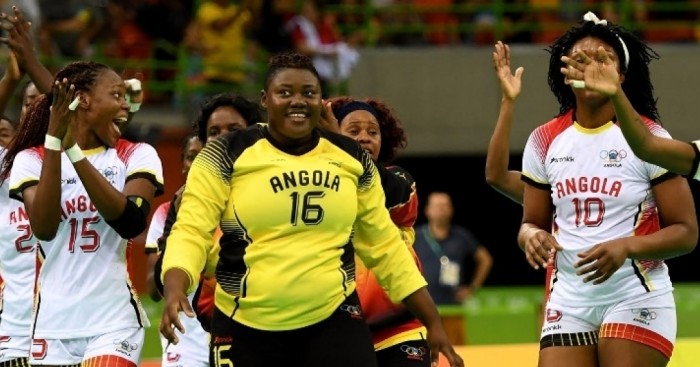
Crowd favorite, goalie Teresa Almeida, and her Angolan teammates surprised with victories over Romania and Montenegro before coming back to earth against defending champs, Norway

Crowd favorite, goalie Teresa Almeida, and her Angolan teammates surprised with victories over Romania and Montenegro before coming back to earth against defending champs, Norway

In this podcast episode John Ryan and Christer Ahl review group play at the halfway point. Surprises, disappointments and predictions for the quarterfinals.

post

Qatar’s Rafael Capote: What a Long Strange Trip it’s Been

In 2007 Cuban Handball Player Rafael Capote defected in Rio at the PANAM Games. Nine years later he’s back in Rio, this time playing for Qatar. Can his journey to become an Olympian actually make you cheer a bit for the mercenary team in maroon and white jerseys?

In 2007 Cuban Handball Player Rafael Capote defected in Rio at the PANAM Games. Nine years later he’s back in Rio, this time playing for Qatar. Can his journey to become an Olympian actually make you cheer a bit for the mercenary team in maroon and white jerseys?

Well, in the midst of reports chronicling the mercenary nature of Qatar’s national team there’s surely been a couple of questions folks have been wondering.  How does a Cuban become a world class handball player? And, how does a Cuban end up playing for Qatar?

Well, the answer to the first question is that he’s a product of Cuba’s development system.  Perhaps the last remaining example of a communist style sports program, even if it’s been running on life support for the last decade or so.  Handball is not a huge sport in Cuba, but nevertheless it’s gotten some level of government support for years.  Players with potential are identified and they train together as a national team.  I’m sure there’s some choice in doing so, but the arm of the government also surely makes recruitment easier and participation strongly encouraged for those selected.

And, because other nations in Pan America put little emphasis on the sport Cuba has traditionally been a power in this hemisphere.  At times, they’ve even been competitive on the world scene.  But, every time this has happened defections have decimated the team.  Two notable players from earlier times are Rolando Urios and Carlos Perez who played for Spain and Hungary, respectively.

Capote’s defection is more recent and ironically enough Capote has now come back full circle to the city of his defection.  At the 2007 PANAM Games in Rio, Capote snuck out of his room with the clothes he had on, $300 and in the pouring rain he took a taxi to Sao Paulo where a former teammate was living.  Just 19 at the time, Capote then began a rather eclectic handball journey.  Playing first in Brazil, surely at a semi-professional or low paid level before moving on to Italy.  Italy is by no means a handball power, but for some reason it’s league that has been a stepping stone for a number of players from Latin America.  Obviously he played well otherwise he wouldn’t have been signed in Spain where he really started to get noticed, even becoming the EHF player of the week.  And, then when Qatar was awarded the World Cup, and hired a Spanish coach, it probably didn’t take Coach Rivera to consider bringing along a Cuban who hasn’t played internationally for several years.  Heck, I’m guessing that the crafty Rivera figured he could turn this pretty good back into a great back with a little time.  Something that’s clearly been accomplished and is just but one piece to the puzzle that has made this collection of decent cast offs a medal contender.

I wonder how Capote feels now having returned to the scene of his defection?  Just 9 years ago, he was 19 years old, scared, making the decision to leave the country of his birth (perhaps forever).  Surely not really knowing if this risk was worth taking.  Think about the “big decisions” you’ve made in your life and whether they pale in comparison. Talk about a leap of faith and crossing the Rubicon!  He could not have even imagined a journey that would take him from Brazil to Italy to Spain to Qatar and back to Rio nine years later as an Olympian. Walking into the opening ceremonies in flowing Arabic robes representing a country he probably had never heard of before.?  Heck, I can hardly imagine it.  And, while I’m no fan of the mercenary nature of the Qatari team I can’t fault Capote for taking this monetary and career opportunity.  Heck, I can’t help but root for him.

Rafael Capote Wikipedia page (Spanish): Link

Brazzil.com article on his defection in 2007: Link

post

Podcast (Episode 2): New Handball Rules (Part 2)

I know what you are thinking regarding whether I’m going to call passive play: Do you have to shoot on goal yet? Have you made 5 passes or 6?  Do you feel lucky? Do ya, punk?

I know what you are thinking regarding whether I’m going to call passive play: Do you have to shoot on goal yet? Have you made 5 passes or 6? Do you feel lucky? Do ya, punk?

My discussion with Christer Ahl, the former IHF head for Playing Rules and Competition, continues.  In part 2 we discuss the new rules regarding passive play, the last 30 seconds of a match and blue cards

Point-Counter Point on Handball’s Last Minute Problem from 2009 (Or why I was so gleeful at Christer’s mea culpa)

Part 1: John: Time to add a technical penalty shot: Link
Part 2: Christer: John has good intentions, but gets his solutions from the wrong sources: Link
Part 3: John: No, Christer, post game sanctions are not working and referees should be empowered and trusted: Link

It’s not very often (heck, this might be the only time) that I’ve gotten Christer to side with me.  There’s a reason for this: He knows handball rules about 10 times better than I do.  But, every dog has his day

If the Dirty Harry reference has no meaning to you, here’s a link to the classic scene: Link

post

Podcast (Episode 1): New Handball Rules (Part 1)

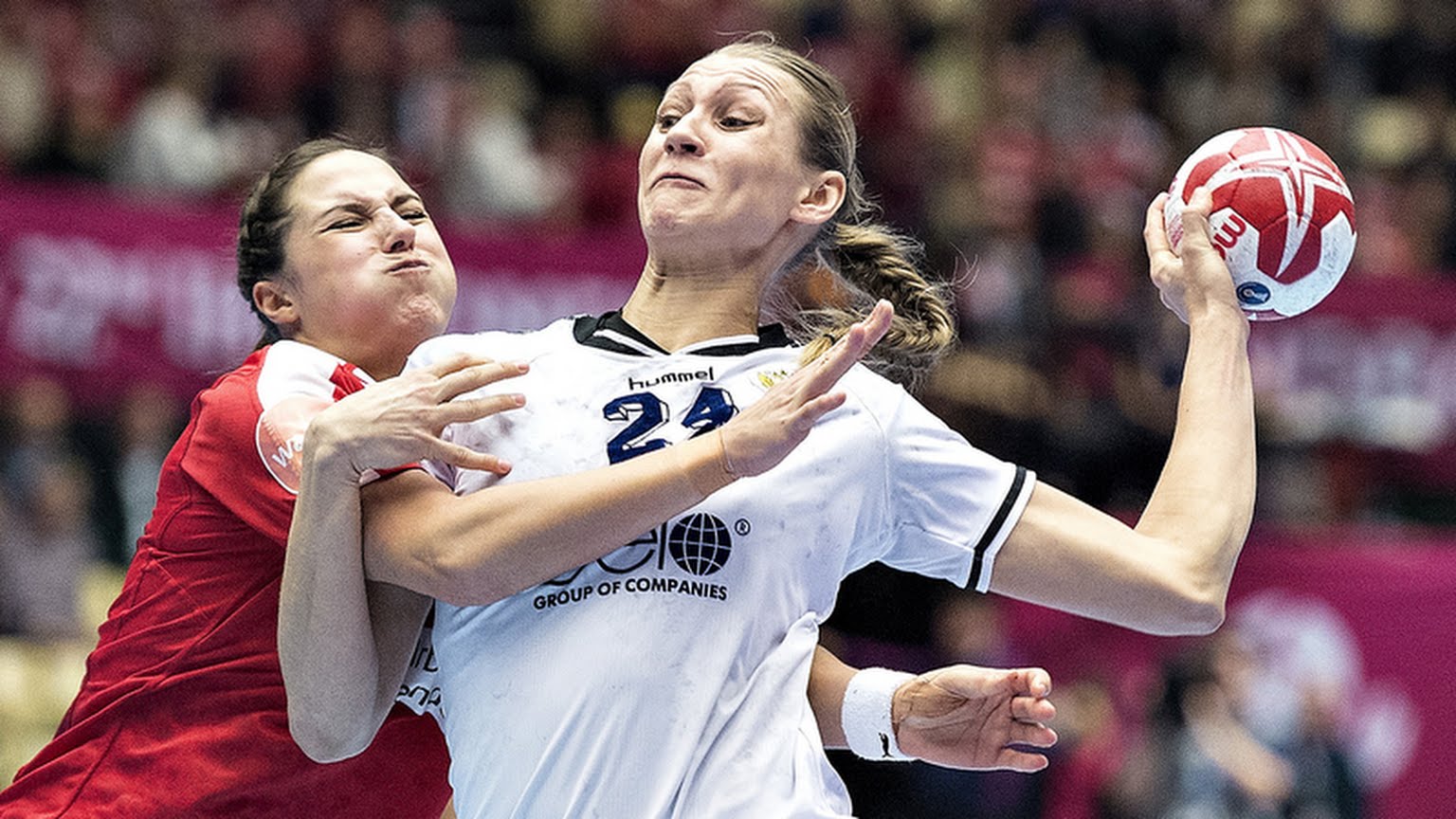
Irina Bliznova penetrates opposing defenses on a regular basis and gets fouled a lot. Against S Korea on day 1 she was fouled fairly hard, but chose to get back on her feet quickly. Why? I'm thinking the new rules had something to do with it.

Irina Bliznova penetrates opposing defenses on a regular basis and gets fouled a lot. Against S Korea on day 1 she was fouled fairly hard and started to relax and recover a bit on the floor, but then chose to get back on her feet quickly. Why? I’m thinking the new rules had something to do with it.

The International Handball Federation (IHF) has recently added 5 new rule changes and the Olympics is the first major event to see them implemented.  And, while at its core the game remains the same these rule changes are having an impact.  The ability to now substitute any court player for the goalie has resulted in goalies being pulled even more.  Why, it’s practically standard practice for some teams when they are a man down.  We’ve even seen a few instances of 7 court players being used on offense.

The rule change requiring injured players to exit for three possessions has also sped up the game.  Irina Bliznova went down after being hit fairly hard during Russia’s comeback vs S. Korea.  But, it wasn’t a 2 minute and when it looked like the refs might call for medical protection she hopped to her feet quickly.  With Russia’s offense really relying on her steady play in the backcourt she didn’t want to nurse her minor injury on the sideline for a couple of minutes.

There’s a lot of nuance to these rule changes, and who better to explain and discuss their potential impact then Christer Ahl, the former IHF head for Playing Rules and Competition.  In part 1 of this podcast Christer highlights the overall intentions behind these rules and we delve into the details of the new rules as they relate to goalkeepers and injured players.

Summary of new rules: Link

post

2016 Olympics:  Men’s Team Handball Preview

The World's best court player and the world's best goalie.  Why would you predict any other side to win?

The World’s best court player and the world’s best goalie play for France which took gold in 2008 and 2012. Why would you predict any other side to win?

Tournament Format:  12 Men’s teams will be competing in the Olympics and preliminary play will consist of a round robin competition in 2 groups of 6.  The top 4 teams in each group will then advance to a knock out tournament consisting of quarter finals, semifinals, and finals (gold and bronze medal games).

Recent Results: The 2016 European Championships held this past January and the 2015 Men’s World Championships held in January 2015 are the most relevant recent reference points.  France won the World Championship with Qatar taking 2nd and Poland 3rd.   The more recent European Championships were won by a surprising German side which played excellent defense with a roster which featured several younger players.  Spain, which surprising failed to qualify for the Olympics placed 2nd and Croatia took 3rd.   France which has usually been in the semifinals of every major tournament finished a disappointing 5th.

2015 WC Results: Link

2016 EC Results: Link

Bookmaker Odds to Win Gold:  Below are the pre-tourney odds for each team to win the gold medal

France                  7-5
Denmark             7-2
Croatia                  7-1
German               10-1
Poland                  18-1
Qatar                     22-1
Slovenia               25-1
Sweden                28-1
Brazil                     50-1
Tunisia                  300-1
Egypt                     500-1
Argentina            2,000-1

These odds seem pretty accurate to me.  I would probably give Brazil, Tunisia and Egypt odds that are a bit closer to the lower tier European sides.  It’s hard to see them winning gold, but they can play with the Europeans.  Argentina could to, but minus injured star Diego Simonet they will likely not win a match.

Assessing Group Play:  First a few thoughts on the format.  Because 4 out of 6 teams will move on to the all important knockout tournament the first goal is simply to make it out of Group play.  Yes, a higher placement in the group should improve the odds that you will have a weaker quarterfinal opponent, but all too often this has not been the case.  And with Group A being a lot stronger (on paper) it could really be the case in this tournament.

Bookmaker Odds to Win Group A

France                  5-4
Denmark             11-4
Croatia                  5-1
Qatar                     10-1
Tunisia                  55-1
Argentina            225-1

I’ll start from the bottom and point out that Argentina will likely lose all 5 matches.  The next question, then is whether Tunisia can crack its way into the top 4.  I think they will put up a good fight in a couple of matches, but I don’t see them qualifying for the quarterfinals.  And, as previously discussed this is a ridiculously strong group.  France, Denmark, Croatia and Qatar could each win their quarterfinal match against their opponents coming from Group B.  Yes, Group A could simply be some friendly match previews of the semifinals when the outcomes will really count.

Bookmaker Odds to Win Group B

Germany             9-4
Poland                  7-2
Slovenia               7-2
Sweden                6-1
Brazil                     11-1
Egypt                     110-1

In my opinion this group is totally wide open with every side having a legitimate shot at reaching the quarterfinals.  The German wall in defense was very effective at the European Championships and they along with Poland should make it through.  Slovenia and Sweden, however, should watch out for Brazil and Egypt.  In fact, I think hosting will help propel Brazil to the knockout stage.

Overall Predictions:  As has been the case for the past decade or so there’s one big question.  Will France show up or not?  Basically, they win or the they somehow beat themselves.  Why is this the case?  Well, they’ve got the best player in the world, Nikola Karabatic, and the best goalkeeper in the world, Thierry Omeyer.  The supporting cast, however, isn’t quite what it used to be and that’s one of the reasons they disappointed at the recent European Championships.  I’m thinking they will show up and win their 3rd straight Olympic title.

As far as the other sides go, as I’ve implied I think Group A will sweep Group B in the quarters.  Only Germany and Poland have a decent chance.  Germany has shown they can play great defense, but I think they lack quality and consistency on the offensive end.  Poland is experienced and capable, but I also think they will come up short.

So, I’ll predict a final four of France, Denmark, Croatia and Qatar.  Qatar, as they’ve just shown with their 1st round convincing win over Croatia, is more than just a flash in the pan.  Still I think they are a bit thin depth wise and they will be a bit spent by the time the semifinals roll around.  Denmark has been a disappointment the past couple of tournaments, but they are due for a return to form.  I’ll go with France beating Denmark for Gold and Croatia beating Qatar for Bronze.

post

2016 Olympics:  Women’s Team Handball Preview

Brazil celebrating their world championship in 2013.  Can the hosts also win an Olympic title?

Brazil celebrating their world championship in 2013. Can the hosts also win an Olympic title?

Tournament Format:  12 Women’s teams will be competing in the Olympics and preliminary play will consist of a round robin competition in 2 groups of 6.  The top 4 teams in each group will then advance to a knock out tournament consisting of quarter finals, semifinals, and finals (gold and bronze medal games).

2015 World Championship Results: The 2015 Women’s World Championships held last December is a good, if somewhat flawed reference point for projecting the tournament favorites.  Norway won the championship with the Netherlands and Romania taking 2nd and 3rd.  Norway has also won the last 2 Olympic tournaments and is the clear favorite on paper.  The Netherlands success has been more recent, but they also have a solid team.  Russia placed 5th at the worlds, but had an 8-1 record at the tournament including a 26-25 win over Norway.  Tournament hosts Brazil finished a disappointing 12th, but this was a result of losing to a strong opponent, Romanian in the round of 16.  Having won the 2013 World Championships and being the host they surely are a team to reckon with.

2015 WC Results: Link

Bookmaker Odds to Win Gold:  Below are the pre-tourney odds for each team to win the gold medal

Norway               15-8
Russia                   5-1
Brazil                     7-1
Netherlands       9-1
Romania              14-1
France                  16-1
Montenegro      16-1
Spain                     16-1
Sweden               22-1
S Korea                 35-1
Angola                  2,000-1
Argentina            4,000-1

These odds seem pretty reliable to me.  I would probably give Brazil a bit better odds, though then 7-1.  (Editor’s note:  I’m writing this after Brazil’s opening win against Norway, but I’d still say this even if Brazil had lost the match.)  I would also give South Korea a little more respect as they usually perform above expectations in Olympic tournaments.

Assessing Group Play:  First a few thoughts on the format.  Because 4 out of 6 teams will move on to the all important knockout tournament the importance of each individual game is minimized.  The first goal is simply to make it out of Group play.  Yes, a higher placement in the group should improve the odds that you will have a weaker quarterfinal opponent, but all too often this has not been the case.  And the way these groups have been drawn it’s a virtual certainty that there will be no cakewalk opponents in the quarterfinal.

Bookmaker Odds to Win Group A

Norway              13-10
Brazil                     7-2
Montenegro      8-1
Spain                     8-1
Romania              12-1
Angola                  275-1

These odds suggest that Norway and Brazil will go 1-2, while Montenegro, Spain and Romania will battle for the other 2 quarterfinal slots.  Angola is a real longshot.  They could conceivably surprise one team, but it’s a stretch to think they could pull off two wins.

Bookmaker Odds to Win Group B

Russia                   13-8
Netherlands       7-2
France                  5-1
Sweden                8-1
S. Korea               10-1
Argentina            600-1

Much like the Group A odds, this group is projected to be Russia-Netherlands 1-2 with France, Sweden and South Korea battling for the other 2 slots and Argentina being an even longer shot than Angola.  I’ll buy into that logic.

Overall Predictions:  I would assess Norway as a virtual lock for the semifinals.  And, based on Brazil’s first game win, one has to think that Brazil will be there as well.   I’m thinking Russia will be there as well and having missed out at the last world championships I’m thinking they’ll be pretty focused in their quarterfinal match.  The other semifinal slot could belong to any of the other teams except Angola and Argentina.  And, when it comes right down to it, everything will depend on those all important quarterfinal matchups.  A lot of handball is yet to be played, but if I’ve got to predict now I’ll go with Brazil knocking off Norway in a rematch for the gold with Russia taking 3rd.

post

NBC to Provide USA Fans with “Handball” TV Channel

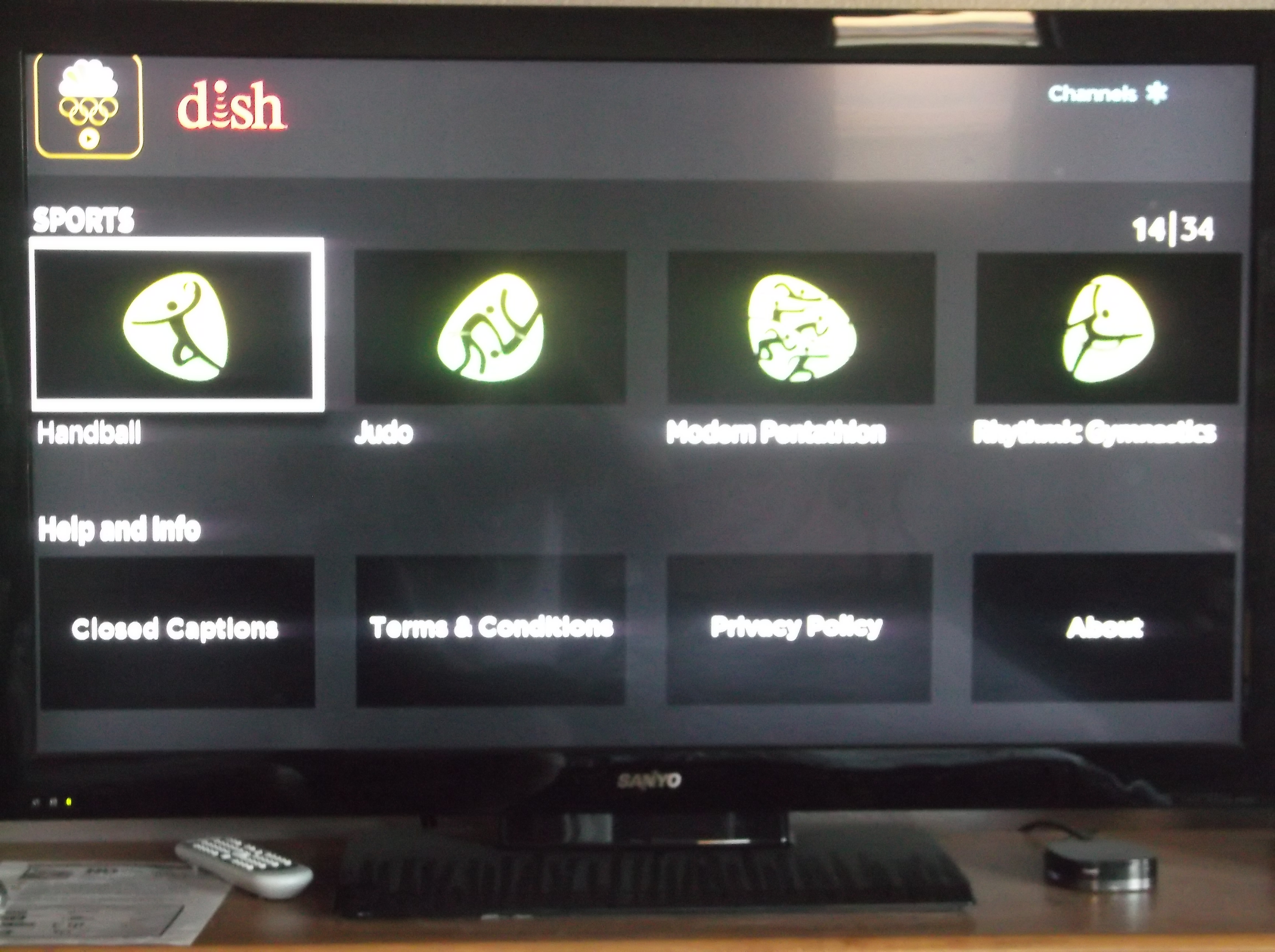
My new favorite TV Channel:  The NBC Team Handball channel on my Roku

My new favorite TV Channel: The NBC Team Handball channel on my Roku

Remember the days when the Olympics were only on 1 TV channel?  Viewers had no choice, but to watch whatever the network decided to show.  Were you going to see any handball?  Not very likely.  Heck, I didn’t even see any handball until the 84 games and even then it was just a few highlights.

Over the years we’ve seen that viewing experience evolve, almost always for the better.  Here’s how you can watch Team Handball in the U.S. this Olympiad.  And, new this year a “handball channel”.  Hey, I might be back to 1 channel again.  What goes around, comes around.

Traditional TV:  NBC will be broadcasting the Olympics on several NBC owned channels.  Some Team Handball will be shown on a daily basis on either the USA Network, NBCSN, MSNBC or CNBC.

NBC Handball TV Schedule: Link

Live Stream: For the past couple of Olympics we’ve also been able to watch live streams of every match.  Sometimes this viewing experience has been frustrating, but we’ve seen the quality and reliability improve with each passing Olympiad.  To watch download the NBC Sports App and make sure it’s loaded on your computer, tablet or smartphone.

NBC APP: Link
NBC Handball Live Stream: Link

Live Stream to your Connected TV:  This Olympiad you will also be able to watch Handball on your TV if you have a Roku, Apple TV or other similar Over The Top (OTT) TV connection.  In order to get this option, though, you’ll first need to add the NBC Sports channel to your channel lineup.  I did this for my Roku and the process was similar to adding HBO Go, NBC News or any other channel.  And, to fully activate the channel you will then need to go online to authenticate that you have a cable or satellite TV subscription.  At which point you will get a code to enter in on your Roku to finish the activation process.

Of course, you can always just link your TV to your computer via an HDMI cable, but generally your picture via Roku and other platforms is better.  And, hopefully, the Handball channel will also have on demand matches available.  This, however, remains to be seen.

NBC’s How to Watch Rio 2016 Olympics page: Link

Olympic Team Handball Information Page

Welcome:  Like clockwork every four years the great sport of Team Handball finds thousands of new fans with the discovery of the sport during Olympic TV broadcasts.  Many articles are written about the sport and talk radio fills the airwaves with discussion and rhetorical questions.  As a longtime fan of the sport this quadrennial burst of interest is always welcome even if it tends to fade out all too soon.  This page is intended to help new found fans, journalists and radio talk show hosts learn more about the sport.

Media Assistance:  Are you working on a story regarding this great sport?  I am readily available to help  answer questions regarding the sport’s rules, its organization world-wide, and to offer my opinions as to why the U.S. hasn’t been very successful and what might be done to change that.  Contact: john.ryan@teamhandballnews.com

Sports Radio:  Are you fielding calls from listeners and discussing a sport you’ve only just discovered?  Contact me if you would like for me to come on air and talk about the ongoing Olympic competition or the sport in general.  Contact: john.ryan@teamhandballnews.com

FAQ:  This pages contains answers to a number of Frequently Asked Questions regarding the sport:  Link

Commentaries on Team Handball in the U.S.:  Have you started to wonder why the U.S. struggles in this sport that is so inherently American?  Perhaps you have come up with some ideas to solve this seemingly simple problem.  All well in good, but in many cases those ideas have either already been tried unsuccessfully or have some underlying issues which make their implementation challenging or simply unfeasible.  I don’t claim to have all the answers, but chances are I’ve addressed the topic and framed the issues.  These commentaries might be a good starting point for further reflection: Link

Previous U.S. Mainstream Media Articles on the Sport: Here’s a list of previous articles written about the sport: Link

John Ryan’s Bio: I learned the sport at the Air Force Academy, had a 2 year stint with the U.S. National Team and lived in France for 5 years where I had an opportunity to immerse myself in the sport. I’ve been writing and commentating about the sport since 2004.  More detailed bio: Link

PATHF Tournament Assignments:  North America with 3 Major Championships

PATHF-header-2-300x97

The Pan American Team Handball Federation (PATHF) met this past week in Argentina and the North American Zone was able to secure 3 major championships for 2017 and 2018.  Link

Canada will host the Women’s Sr. Pan American Championships from June 15-26, 2017 in Edmonton, Alberta.  Canada’s hosting of this tournament will be a major opportunity to showcase the sport’s growth in Alberta.  The top 3 teams from this tournament will also punch tickets to the 2017 Women’s World Championships in Germany. (Commentary on Handball’s growth in Alberta: Link)

Greenland will get the opportunity to host its first major tournament when it hosts the Men’s Pan American Championships in 2018 in the nation’s capital, Nuuk.  Air travel has always been an issue in the past with commercial flights to Greenland being expensive and only available via Denmark.  The tournament will likely be played in June and the top 3 teams (or more pending 2017 WC results) will qualify for the 2019 Men’s World Championships that will be cohosted by Denmark and Germany.

Finally, the USA will host the 2018 Pan American Beach Handball Championships.  The tournament will be staged in either Miami or Southern Californian in the March timeframe.  Both Men’s and Women’s tournaments will be played with a TBD number of places to be awarded spots at the 2018 Championships in Sochi, Russia.  The USA Men are the defending PATHF Champions.

Commentary:  I’ve commented on more than one occasion about South American dominance in PATHF affairs.  Canada was once denied participation in a PATHF Championship, despite having qualified for the previous WC (Link) and Greenland was even unceremoniously voted out of PATHF not to long ago: Link.  A decade or so ago it was pretty bleak.  Now 3 major tourneys all awarded to North America. Brazilians and Argentinians getting the opportunity to get a lot of frequent flier miles.  No complaints from me.  It’s time to sing Kumbaya around the PATHF Congress table!

Now we’ll see if the North American sides can take advantage of these opportunities to get some World Championships berth.  In particular, it should be interesting to see how Greenland will fare with what surely will be a loud and boisterous crowd backing them.

post

Gary Hines: Handball Ninja Warrior

USA National Team player Gary Hines celebrates after hitting the buzzer.

USA National Team player Gary Hines celebrates after hitting the buzzer.

Well Team USA won’t be at the Rio Olympics, but long time Men’s National Team Player, Gary Hines is having some success off the handball court as a Ninja Warrior.  Hines, who plays handball professionally for HSC Bad Neustadt in Germany’s 3rd Division is competing in Ninja Warrior Germany.  Shown on German TV Friday night, he successfully completed his preliminary run and is one of 28 qualifiers for the finals.

Video of Hines completing the course: Link

Hines is not the first handball athlete to have success at Ninja Warrior.  Notably, Japanese handball player Daisuke Miyazke was a top competitor on the original Japanese show: : Daisuke Miyazaki: The Ichiro Suzuki of Handball (or maybe the Kyle Rote Jr.) (Jun 2010):  Link

And, here’s the closing paragraph from that commentary:

“I’ve noticed that a U.S. version of the Japanese obstacle course called Wipeout is starting up again. For some strange reason, ABC somehow thinks it’s more interesting to have out of shape nobodies try to complete the course. I’m predicting, though, it’s only a matter of time before they wise up and get some real athletes taking part. And when they do why not get a Team Handball athlete to take part? I think somebody like Gary Hines would do well.

Nothing more satisfying then seeing a prediction come true, even if it does take 6 years!


Why a Residency Program at Auburn is the Best Way Forward for USA Team Handball… and Why Those Reasons Fall Way Short in Justification”

Screen Shot 2016-03-24 at 10.50.52 AM

Back in September after Auburn was designated as an USOC Olympic Training Site I posted a plea asking for someone to explain how this was such a great deal for USA Team Handball. Six months later I haven’t gotten any takers. Somewhat disappointing, but not a real surprise. For sure, lots of folks have better things to do with their time. But, also don’t kid yourself: Lots of folks surely don’t want to get in a debate when they’ve already made up their minds and don’t have much backing up their position.

I first saw this play out four years at a 2 day meeting in Salt Lake City that USA Team Handball called to develop a strategic plan for the sport in this country. As I highlighted in this earlier commentary this meeting was a good kickoff discussion that could and should have set the table for the development of a strategic plan. As outlined by the professional facilitator who led the first day’s discussion proper Strategic Planning requires following a deliberate and structured process:

  1. Identify and prioritize the goals and objectives for USA Team Handball
  2. Develop potential action plans to accomplish those goals and objectives
  3. Carefully review and select action plans for implementation based on their merits, feasibility and alignment with established goals and objectives

As I pointed out in my commentary, however, steps 1-3 were never accomplished. Heck, it’s debatable as to whether they were even started. Instead USA Team Handball jumped straight to step 4 to implement a residency program model.

One possible action plan of many was given free ride without even an inkling of due diligence. Worse, there never really was an action plan, just a vague notion that a residency program similar to what had been done in the past was desired. USA Team Handball even went way out on a limb and hired head coaches for teams that didn’t exist without any idea where they might put a residency program.

Without a real plan in place, funding or a suitable location it looked like this concept would never get off the ground, but then Auburn stepped forward with a limited offer of support. Never mind, there really wasn’t the money to do a residency program properly, it’s what had been decided. It’s the no-brainer solution for what ails handball in America. Don’t worry about whether it matches the long term goals and objectives of the Federation. Those goals haven’t been identified let alone validated, so you don’t have to. Don’t even bother to set benchmarks and expectations for success. Just do it.

Alright… Deep breath. OK. I’ll take another… Deep breath.

Am I missing something here?

For sure, I’m confident that I know quite a bit when it comes to the topic of Team Handball in the U.S. I played at the college, club and national team levels. I experienced first hand both the good and bad aspects of a residency program. I started two clubs in the U.S. where none existed previously. I lived in France for 5 years, played recreationally there and saw how the sport was organized in Europe. I’ve followed professional and national team handball developments very closely for a dozen years. Perhaps, there’s a half dozen folks in the U.S. with a comparable resume when it comes to both national team concerns and grassroots development.

I’m also a pretty reasonable guy.  Hardly, a “My way or the highway”, type.  More often then not, when presented with data and rationale, I’m inclined to see the light. I might not agree with decisions that have been made, but I respect them when they are made with due process and after a careful consideration of all options. But, this was never done 4 years ago which is one of the reasons why this “reasonable guy” is a little upset.

Now, after 3 years of diplomatically pointing out that due process was skipped and that the resulting decision is very flawed, even I’ve had a bit of self doubt creep into my consciousness. Yes, I have rhetorically asked myself, “Could I be totally wrong here? How could smart people reach such a dramatically different conclusion from mine? How can they be so comfortable with skipping well established planning steps and jumping straight to a solution? Maybe, it is a no brainer? What am I missing? Why am I being ignored?

I’ve posed these questions to myself and in one form or another to several key players in the USA Team Handball Community. Some of those folks have been decision makers and some simply, like me, have been around a long time.  Broken into 2 broad categories here are some reasons I, and others have come up with as to:

“Why a Residency Program at Auburn is the Best Way Forward for USA Team Handball… “

And, further when you step back and take a closer look: 

“Why Those Reasons Fall Way Short in Justification”

Category 1: Actual Reasons Provided by Federation Leadership. These have been provided with perfunctory short answers (verbally and email) or can be inferred from Board of Director Meeting Minutes.

  1. Auburn is providing a great financial deal that the Federation would be crazy to turn down or leave.
    • Really? How Much “Value” is there really in Value In Kind (VIK) Funding?:  Link
  2. The U.S. had its greatest success with the Residency Programs of the 80s and 90s and therefore a Residency Program is obviously what’s needed today.
    • Part 1: True Statement, but How Glorious were our Glory Days?: Link
    • Part 2: True Statement, but Perhaps Some Key Decision Makers Don’t Fully Appreciate the Professional Aspects of Today’s Handball: Link
    • Part 3: True Statement, but that success occurred when handball was only “somewhat professionalized”: Link
  3. A Residency Program is needed because it provides a great platform to build around for sponsorship and grass roots development.

Unfortunately, there’s no documentation that I’m aware of that further defines, explains or supports why these reasons are valid.  Unless, somebody wants to step forward with that further explanation, you’ll be stuck with my analysis.

Category 2: Reading Between the Lines.   Here are a couple of reasons that I’ve come up with based on budgetary decisions and how some key decision makers might view historical relationships and grass roots alternatives. These reasons have not been officially stated, but one can infer them by reading between the lines:

  1. USA Team Handball needs a Residency Program because of USOC expectations.
  2. Grass Roots development is at best a secondary goal for a sports federation and accordingly should receive less funding and attention.

As the title of this series of commentaries indicates I have assessed each of these reasons as faulty to one degree or another. And, this wasn’t summarily done. I’ve considered each of these reasons carefully looking at possible rationales only to repeatedly come up empty. Some reasons are just totally out to lunch while others at least on the surface, have a kernel of legitimacy. In the coming months I’ll be posting new commentaries addressing these reasons. I’ll first do my best to present the logic behind the given reason and then some counter-reasons as to why that logic is faulty.

As always, if you think that I’m not playing the role of Devil’s Advocate sufficiently feel free to chime in with some more coherent arguments. This can be done on the Facebook page or as I’ve said before, I’m more than willing to post to the website anyone willing to write a thoughtful commentary.

post

Commentary and Analysis: USA Men vs. Alberta Jr. Team Series

It's a long way to Tipperary and to Auburn for that matter: Does it make more sense for the U.S. to Train in Europe? That thought along with analysis of the 4 match series played between the USA Men and Alberta Jrs

It’s a long way to Tipperary and to Auburn for that matter: Does it make more sense for the U.S. to train selected athletes in Europe? That thought along with analysis of the 4 match series played between the USA Men and Alberta Jrs.

The USA Men recently hosted the Alberta Men’s Jr. Men’s Team in a series of 4 matches played over 4 days (15-18 February, 2016). The U.S. won all 4 matches by the following scores

Match 1: USA 35, Alberta 25
Match 2: USA 30, Alberta 23
Match 3: USA 32, Alberta 25
Match 4: USA 29, Alberta 27

Links to Video of the matches courtesy of the Alberta Team Handball Federation: Link

The Good

4 games; 4 wins: A team should always get credit for winning matches. The U.S. faced some adversity and still came away with 4 victories.

Sticking with Residency Players: The U.S. has previously called in veterans and expats to shore up weaknesses against modest competition like Puerto Rico. Not so this time around. The U.S. fielded a roster entirely composed of players participating in the Residency Program. That’s the way it should be if you’re a believer in the Residency Program model.

Teamwork: It’s hard to get a full sense from Youtube videos of how well a team is working together, but I’ve got the impression that these players are bonding together as a unit.  Undoubtedly, they are facing a lot of adversity and a little bit of “us against the world” mentality has helped make that happen.

Better Handball Skills: It’s clear that these players, many of whom are relatively new to the game have leaned the fundamentals of the game. They look like a handball team. That’s real progress.

Notes on a few players:
– Joshua Norman: Norman plays a pretty good point on defense. His quickness and court awareness disrupted Alberta’s offense and made the U.S. defense better across the board.
– Alden Mezick: Mezick has developed into a pretty decent goalie. For his limited experience this is a significant accomplishment and it makes me wonder how much more progress he would make with regular competition against better players.
– Ty Reed: Reed has developed into a capable wing in a short period of time.

The Not So Good

Handball Skills Still Need a lot of Work: While the players have the fundamentals down one doesn’t have to look to hard to see that there’s still a lot of work left to be done. Backcourt play, in particular, is still pretty ineffective. There’s little question in my mind that veterans like El Zoghby, Hines and Axelsson are still far better options for those 3 critical positions. And, sight unseen I suspect some of the younger dual citizens playing in Europe are also better options as well. Yes, talent wise all that Auburn has accomplished so far is a promising goalie and a couple of credible options on the wing.

No Future Elite Professionals: Predicting future success on the handball court is a challenging proposition. It’s not easy even for professional scouts. Still, I don’t think I’m going too far out on a limb by stating that I don’t think any of the athletes currently training at Auburn will ever don a jersey for a top professional club some day. Hard workers for sure, but I would be very surprised to see any of them playing in the HBL, LNH or for a Champions League side. 2nd Tier or 3rd Tier sides might be possible, however, for a few, but even that is a few years away.

The Lack of Promotion: Where was the best place to get information on these matches? Unfortunately, it was the Alberta Team Handball Federation. They posted scores on their Facebook page in a timely fashion and match videos on their Youtube page. They also posted travelogues with behind the scenes video of their trip. By contrast the U.S. only managed a couple of Facebook posts and the Federation website doesn’t even mention the games. The crowd in attendance was also pretty sparse. It’s almost as if the Federation didn’t want anyone attending or knowing about these matches.

The Unintended Contrasts

Competition Availability (North America vs. Europe): Perhaps nothing could drive home the “lack of regular competition” problem inherent with a U.S. base Residency Program more than the scheduling of a 4 game series between teams located in Alberta and Alabama. 2,400 miles, a 35 hr drive or a 10 hr plane trip with 2 stops. The European equivalent would be Barcelona playing Minsk. Many thanks to our Canadian friends who are willing to foot the bill for such a journey.

It makes me wonder if the cash strapped U.S. will be returning the favor at some point. Or more appropriately, it makes me wonder if anyone with the U.S. Federation will look a little more closely at moving selected athletes to a European training site like the Aarhus Academy. Instead of competition against a team like the Alberta Jrs. every 2 months or so they could be playing against more experienced European club teams on a weekly basis. And, some of those players could even get discovered for a coveted pro contract.

More information on the European Based Training Program the U.S. could consider: Link  

Grassroots vs. Residency Programs (Alberta vs. Alabama): I also can’t help but watch these matches for a couple of minutes without asking myself the following questions:

  • – How does a Canadian Province put together a Jr. Team that can compete with the U.S. Sr. National Team? The Alberta roster included five 18 year olds and no player older than 21. And, they’ve done it with no national federation funding.
  • – Could the U.S. develop a program in one U.S. state similar to what has been developed in Alberta? Seriously, just one state would be a good start. That’s all I’m asking.
  • – Why aren’t members of the Board of Directors and the Staff at USA Team Handball asking themselves the same questions?

More information on the “Alberta Option” for USA Team Handball to consider: Link

At least I’d like to think some decision makers are asking such questions. In the meantime, I’ll just keep shaking my head in puzzlement and keep telling myself it’s only a matter of time before smart people see the light.