post

PODCAST: Interview with Handball Commentator, Paul Bray

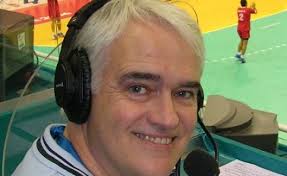
Paul Bray, the dean of English language handball commentators

Paul Bray, the dean of English language handball commentators

If you’ve been watching the European Handball Championships online you’ve surely heard commentator Paul Bray’s distinct voice and delivery.  You may not be aware, though, that Paul has been a handball commentator now for 25 years.  Back in 2007 at the Handball World Championship in Germany I sat down to discuss his handball background and how he got started as a handball commentator.  We also talked a bit about the then nascent development of handball online web streaming.  Six years later with every match of the European Championships coming through with pretty high quality video and English commentary Paul’s predictions have come true. (Interview is 13 minutes)

Side note:  On many occasions in the past I’ve chastised the EHF for making it very difficult for fans to access on demand matches without first learning the outcome of the matches.  Dead giveaways in the past have included pictures with smiling players being interviews and trophy hoisting celebrations.  So far, with the nondescript Youtube channel it’s been fairly easy for a fan like me who can’t watch matches live to remain oblivious to the outcome prior to watching.  (Yes, in my little world I’ve got some key final main round matches to watch yet.)  Intended or not, thanks for doing this and here’s hoping there isn’t a change in the current posting strategy.

Euro 2014 Full length matches and highlights (on demand):  Link

post

Taking Stock of the Pan American Competition: Can the USA Women Beat the Pan American Also-Rans?

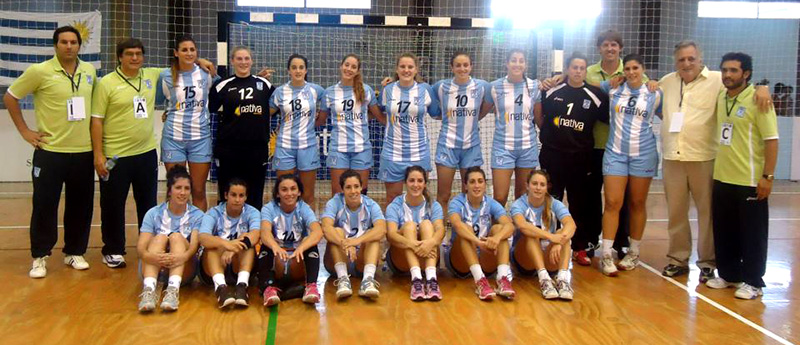
Argentina:  Still the best of the Pan American also-rans.  Can the USA put together a team capable of beating them in 18 months?

Argentina: Still the best of the Pan American also-rans. Can the USA put together a team capable of beating them in 18 months?


Much has been written or said about Brazil’s historic run to the title at the recently completed Women’s World Championship.  And, with good reason; It was truly historic for a Pan American team to win a title in convincing fashion.  If it wasn’t obvious before, there is now undeniable proof that the Brazilian women are as good and for the moment even better than the top European teams.  This is something no Pan American team (Men or Women) has ever accomplished and in doing so there is now a chasm in terms of quality between Brazil and the other Pan American teams.

With only one Pan American direct qualification slot for Olympic qualification normally this would mean that the rest of Pan America should immediately forgo any thoughts of going to the Olympics until 2020 at the earliest.   It’s just really hard to contemplate a scenario where any side beats Brazil anytime in the near future.  Throw out your “Miracle on Ice” analogies.  Unlike hockey handball is a high scoring game and there’s just no plausible scenario for a dramatically superior team to lose a 60 minute match to a significantly inferior foe.

Fortunately, for the rest of Pan America Brazil is hosting the 2016 and their automatic bid throws them out of the equation.  Instead of unseating Brazil all a Pan American side has to do is emerge as the 2nd best team at the 2015 PANAM Games in Toronto.  Currently there is a pecking order among the also-rans.  This past summer 3 teams (Argentina, Dominican Republic and Paraguay) took 2nd, 3rd and 4th at the Pan American Championships and qualified for the World Championships.  I had the opportunity to see each of these teams play in several matches and here’s a summary of how they fared at the World Championships and my assessment of their future prospects.

Dominican Republic
Group Play
– Record: 0-5
– Avg Scoreline:  18.4-35.6 (-17.2 Goals)
– Highlights:  Stayed relatively competitive vs Montenegro, losing by just 7 each half; Lost close match to 4th place Congo 23-22
– Lowlights:  Totally outclassed in matches vs France, Netherlands and South Korea.  Managed only 10 goals vs France
President’s Cup:  29-24 loss to Algeria and 27-26 victory over Australia
Overall Ranking: 23rd
Avg Age of Roster: 21.8
Assessment:  Overall, a disappointing tournament for the Dominicans as they only managed to eke out 1 win and that was against the Australians who’ve consistently finished last at the World Championships for several years. They have a fairly young roster with only 1 significant contributor (31 year old winger Nancy Pena) over the age of 25.  The official roster indicates that all of their players are based in the Dominican Republic, but other sources indicate that several players are also playing for clubs in Spain.

Paraguay
Group Play
– Record: 0-5
– Avg Scoreline:  11-33 (-22 Goals)
– Highlights:  Played Argentina close in 2nd half, losing that half by score of 12-10
– Lowlights:  One of worst all-time performances in Group Play competition history.  Lowlights include a 40-6 annihilation by Poland and a 29-9 loss to Spain that included a goalless first half.
President’s Cup:  23-21 victory over Australia (won in penalty shootout) and 29-19 victory over Algeria
Overall Ranking: 21st
Avg Age of Roster: 21.5
Assessment:  Their performance in group play was a disaster, but you have to give the Paraguayans credit for bouncing back in the President’s Cup.  Particularly surprising was their convincing victory in their last game against Algeria.  This improvement illustrates what an important development opportunity merely attending a World Championships can be.  I suspect that Paraguay would have lost to Algeria had they met in Group play, but with the experience of just a few games they developed greater confidence.  They have a very young team overall, but two major contributors, Marizza Faria and Maria Gomez are 29 and 30 respectively.  On the other side of the age spectrum, their 2nd and 3rd leading scorer were Left Back Ana Acuna (age 19) and circle runner Sabrina Fiore (age 17).  Both show quite a bit of promise, but would probably need to play overseas or in Brazil to further develop as players.

Argentina
Group Play
– Record: 1-4
– Avg Scoreline:  20.4-28.2 (-7.8 Goals)
– Highlights:  Played very competitively against the defending World Champions, Norway for 45 minutes.  Even led Norway 6-4 after 15 minutes and were down just 8-10 with 2 minutes left in the first half.  Norway, however, had a couple of runs which put the game out of contention.  Particularly, disastrous was a 12 goal run which resulted in the ugly final result of 37-18.  Argentina was also competitive against Spain, losing only 25-19 and had a convincing 25-15 victory over PATHF rival Paraguay.
– Lowlights:  They were less competitive in a loss to Poland (31-17) and lost by 10 goals to Angola (33-23).  Angola has Africa’s strongest women’s program, but they weren’t as strong at this WC as they’ve been in other years.  Based on how Argentina played against European foes this should have been a much closer contest and a victory over Angola would have advanced Argentina to the knockout stages instead of the President’s Cup.
President’s Cup: 27-21 loss to Tunisia and 31-19 victory over Congo
Overall Ranking: 19th
Avg Age of Roster: 23.9
Assessment:  I watched parts of several Argentinian matches and they clearly are a hot and cold team.  They are technically sound and when they play under control they can stay competitive against the top teams.  But, they also had several stretches with lots of turnovers which were disastrous.  Looking at the match reports many of these opposition runs were towards the end of the halves and this suggests some conditioning issues.  Additionally, while many players are technically sound they don’t have many players with exceptional quickness which can make a big difference in capitalizing on 1 v 1 situations against strong defenses.  Overall, they have a pretty young team which could continue to improve.  One major contributor, Madgalena Decilio is 30 years old, but the rest of their roster is 28 or younger.  Their best player Luciana Mendoza is 23 years old and plays for Blumenau in Brazil.  I suspect that her performance at the WC will draw some interest from a few European clubs.

For an additional assessment on Argentina read Ruben Gomez’s article at Mundo Handball.  Included in the article is some strong praise for Argentina, from Norway Head Coach, Thorir Hergeirsson, who indicates that they are the team of the future and will replace Brazil as the Pan American team to beat.

Can the USA Beat these Sides?

As an American, I couldn’t help but watch these 3 teams from a parochial viewpoint.  Essentially, I found myself asking, “Can the USA beat these sides at the 2015 PANAM Games and earn a ticket to Rio?”  Athletically, Argentina, Dominican Republic and Paraguay are nothing to write home about.  And, of the three teams only Argentina has sound technical handball skills.  Comparing these teams to past American sides, I’m pretty confident that any USA Olympic team from 1984 to 1996 would fare well.  They would easily beat the Dominican Republic and Paraguay and they would wear Argentina down physically.  And, now that the USA is setting up a Residency Program at Auburn University that appears to be comparable to the Residency Programs that were set up in the 80’s and 90’s.  But, can the U.S. make the necessary progress in the time alloted? Crystal ball prediction is fraught with peril, but here’s the case for yes and no depending on whether your you see the proverbial glass as full, half-full, half-empty or empty.

Glass Full Perspective:  Time is short, but in 18 months the U.S. puts together a team that gets the job done.  Some top notch recruiting finds several high quality athletes that quickly develop into great handball players.   Combined with the core veterans they jell quickly into a competitive team.  And, this team keeps getting better thanks to additional funding that supports a couple of extended trips to Europe to face challenging competition.  Come July 2015 they’re tested and ready to beat every team but Brazil.

Glass Half-Full Perspective:  The challenge of putting together a team in 18 months that can qualify for the Olympics might be asking quite  bit, but it proves to be well worth the shot.  The U.S. doesn’t make up the ground necessary to beat Argentina, but the USA makes sufficient progress so that it topples Paraguay and the Dominican Republic.   They even give Argentina a run for its money in the semis, but fall short.  More importantly, the stage is set for a stronger run towards the 2020 Olympics.   Several young talents have emerged and they are motivated and ready to put 4 more hard years of work in.   Also, while the Olympics were unattainable the U.S. easily qualifies for the 2015 World Championships and has that that opportunity to further improve as a team.

Glass Half-Empty Perspective:  The U.S. makes slow, but steady progress.  A couple of top notch recruits are identified and quickly become important contributors to the national team. The U.S. is much improved, but unfortunately so have most of the other Pan American teams.   Like the U.S. they’ve taken stock of the competition and decided to invest in a shot at 2016.  Several key opponents have taken overseas training trips and some players have been placed in competitive European clubs.  And, the Cubans have emerged as a rival to Argentina.  At the PANAM Games and Pan American Championships the U.S. faces tough competition to even make the semifinals.  Depending on the draw they face the difficult task of beating Cuba or the more feasible task of beating Paraguay or the Dominican Republic to advance.  A top 3 placement is a long shot and the U.S. faces a 50-50 proposition to even secure one of the 5 Pan American slots for the 2015 WC.   And, in regards to progress towards the long term the results are mixed at best.  There’s a bit of foundation established towards a run at 2020, but to a large degree the U.S. ends up having to start over.

Glass Empty Perspective:  The U.S. program manages only marginal progress in 18 months.  A handful of recruits are identified, but they aren’t “knock your socks off” athletes.  They’re developing as handball players, but not to the point where they’re really ready for international play.  The U.S. team ends up being mainly composed of hard-working veterans who’ve had less than satisfactory results in the past.  A more cohesive team thanks to the Residency Program, but not a whole lot better than previous teams sent to the 2011 PANAM Games and the 2013 Pan American Championships.  Meanwhile, the rest of Pan America also realizing the unique opportunity Brazil’s participation represents takes major strides forward investing in overseas training and coaching.   The U.S. faces a tough match in the second chance tournament against either Paraguay or Uruguay to simply qualify for the PANAM Games.  And, at the PANAM Games and Pan American Championships the U.S. team doesn’t come close to qualifying for the semis and ends up around 8th place.  Finally, perhaps the worst result of all, the National team sees a rash of retirements both from veteran players and newcomers distraught and unmotivated at the unlikely prospect of beating Brazil in 2019.  And, then the U.S. does as it has several times before, starts all over again with a new crop of athletes in 2017.

My Perspective:  As a skeptic of Residency Programs in general and someone that advocated against starting a program so quickly it should be no surprise that I lean more toward the glass half empty side of things.   Call me a pessimist if you like, but it truly will be an uphill battle.   There surely will be improvement, in my opinion, just not enough improvement to merit the expense in terms of funding and man-hours when the U.S. faces so many other challenges across the board in terms of grass roots development, marketing, etc.

All that being said you can also be assured that I would be more than happy to see 18 months hence, the glass half full or even better full with a ticket to Rio punched.

post

Handball News Summary (26 December 2013)

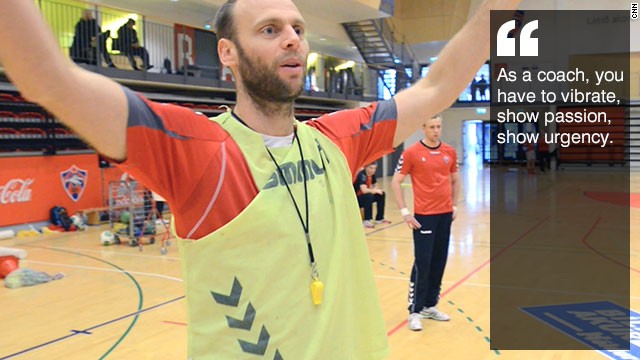
Coach Stefansson at training session with Reykjavic's Valur Club

Coach Stefansson at training session with Reykjavic’s Valur Club

Commentary:  Outside of handball’s stronghold in Europe only the occasional story ever gets published in mainstream news outlets.  Case in point, you would find nothing about the Brazilian women’s World Championship title run in American news outlets.  Recent stories by CNN International and the Dallas Morning News are the exception and bizarrely they both highlight playing handball with makeshift balls made out of socks.

1) VIDEO:  Iceland’s Olafur Stefansson featured on CNN’s Human to Hero series.  The 3 minute feature on Iceland’s retired star discusses his playing career and his current role as coach of Iceland’s Valur club.
CNN: Iceland’s Handball Hero: Link
CNN VIDEO: Link

2) Dallas Stars Hockey club plays street handball.  Lacking a rink, the NHL’s Dallas Stars played team handball outside their hotel in Los Angeles as a team building exercise.
Dallas Morning News: With rink unavailable, Stars instead practice with handball game in LA streets: Link

3) Al Jazeera buys IHF TV Rights for 2014-2017.  Al Jazeera reportedly will pay $110M for the rights to IHF Championships through 2017.  This is a 64% increase over the $67M paid by UFA for the 2010-2013 TV Rights.
Inside the Games: Link

4) USA Team Handball announces Dr. Harvey Schiller as its new Board President.  On 20 December the 9 member board elected the former USOC Executive Director as its new President.  Dr. Schiller is easily the most high profile President USA Team Handball has ever had and his election could help raise the profile of the sport in the U.S.
USATH Press Release: Link
Inside the Games: Link
Sports Business Daily: Link
THN Commentary on new Board Members: Link

post

World Championship Final Preview: Can Brazil Tame the Home Crowd?

Serbia

Serbia’s boisterous home crowd has helped propel them into the Finals. Will the crowd put them over the top one more time against Brazil on Sunday.

Tomorrow’s World Championship final is a refreshing change of pace from the more predictable outcomes in recent years.  While it might not have been surprising for either the home side or the quality Brazilian club to find their way to the final it is truly a surprise for both teams to make it.

Both Serbia and Brazil had an easy time of it in the Semifinals on Friday.  Serbia dispatched Poland 24-18 and Brazil easily handled Denmark 27-21.  In fact, both teams true tests were in the quarterfinals where Serbia staged a furious comeback to defeat the defending Champions Norway, 28-25 and Brazil needed two overtimes to defeat Hungary 33-31.

For the second consecutive time Brazil will need to vanquish a foe they already defeated in Group Play.  Brazil won their earlier meeting and who knew that Group B was so loaded it had 3 of the final 4.  Player for player I think Brazil has the advantage in terms of quality, but the Serbs have an extra player in the boisterous 18,000 fans in the Krombank Arena.  Key, in my opinion will be for the Brazilians to execute and finish their fast break opportunities.  With their quickness advantage there’s a distinct possibility for them to go on one of their patented runs to build up a 3-4 goal lead.  And at that point they may have a chance to take the crowd out of the match.  If they don’t, and let the Serbs stick around, however anything can happen. 

Another factor may be how well a couple of key players shake off their injuries.  Both Brazil’s Ana Rodrigues and Serbia’s Andrea Lekic were injured in the semifinals, but both are expected to play.  The oddsmakers have Brazil pegged as a half goal favorite.

One final side point, Brazil’s victory will mean that 5 Pan American sides will qualify for the 2015 World Championship, giving every handball fan from Tierra del Fuego to Baffin Island reason to cheer for Brazil. 

The match throws off at 1715 CET / 1115 U.S. East Coast and can be viewed for $5.99 at Live Sport TV:  link.

 The Bronze medal match between Denmark and Poland is also available for viewing and starts at 1430 CET / 0830 U.S. Eastern Time.

post

Danish Flavor for Today’s Semifinals


Danes rule the sidelines today at the Women's World Championshpihs:  Left to Right; Head Coaches Morten Soubak (Brazil), Jan Pytlick (Denmark) and Kim Rasmussen (Poland)

Danes rule the sidelines today at the Women’s World Championshpihs: Left to Right; Head Coaches Morten Soubak (Brazil), Jan Pytlick (Denmark) and Kim Rasmussen (Poland)

A few short notes on today’s semifinal matches at the Women’s World Championships.

Poland vs Serbia, 1800 CET / 1200 U.S. Eastern Time

With the elimination of pre-tournament favorites, Norway, Montenegro and France, the host Serbs are now the top favorite to win the tournament.  They are a 2.5 goals favorite over the surprising Poles that were not in any way seen as title contenders.  In fact, going into the tournament they were 250-1 longshots to win the title, the longest odds of the 12 European participants.  I suspect that Poland’s surprising run will come to an end against the host Serbs.

Brazil vs Denmark 2045 CET/ 1445 U.S. Eastern Time

These two sides met in Group play with Brazil winning comfortably, 23-18.  The oddsmakers foresee a tight contest with Brazil only a .5 goal favorite.  For Denmark, the one time dominant Women’s team on the world stage, this is is a return to the medal round after a drought of 9 year drought of mediocrity.  For Brazil this is the first time ever in the medal round.  For years Brazil had shown they can compete with the top sides in Europe for years, but had struggled to get over the hump in the knockout stages of major tournaments.  The emotion they displayed after their double overtime victory over Hungary showed just how big of a deal it was for them to make it to the semis.   Now that they’ve made it, I think their talent will shine through with a repeat victory over the Danes.

Here are a few articles on today’s semis worth checking out:

Timeout Mag on Danish resurgence:  Link

Timeout Mag on 3 Danish head coaches in the semis:  Link

IHF Preview of Poland-Serbia:  Link

IHF Preview of Brazil-Denmark:  Link

As a reminder today’s semifinal matches and Sunday’s gold and silver medal matches can be watch online at the LiveSport.TV website:  Link  (The subscription price for the remaining matches is $12.99)

post

Commentary: Three Great Additions to the USA Team Handball Board of Directors

Dr Harvey Schiller, Mike McNees and Bob Djokovich:  3 great additions to the USA Team Handball Board of Directors.

Dr Harvey Schiller, Mike McNees and Bob Djokovich: 3 great additions to the USA Team Handball Board of Directors.

It’s taken several months for the Nominating & Governance Committee to complete its work to select three new Board Members, but they are clearly to be commended for their ultimate selections, Dr. Harvey Schiller, Mike McNees and Bob Djokovich.  This post on the USA Team Handball website provides some top level background on each of the new Board Members.  Below is some supplemental information and some additional thoughts in regards to how they might help USA Team Handball.

Dr. Harvey Schiller

If you read a bit on Dr. Schiller’s background your first reaction should be along the lines of “Holy crap, this guy is going to sit on USA Team Handball’s board?”  The resume is long, varied and impressive.  He’s been the Executive Director of the USOC, the Commissioner of the most prestigious NCAA Conference (SEC), the President of Turner Sports and the President of Yankees/Nets.  And that’s just the highlights.  Watch these sports business reporters gush about his career and read the accompanying article to get a full appreciation.

Here’s a very accomplished sports executive that could have chosen do a number of different things as his next big thing and he’s chosen USA Team Handball.  The doors that he can open for the sport in this country are many.  Who could be better to talk to the USOC about more funding support than a former head of the USOC?  Who could be better to talk to the NCAA about making Team Handball a varsity sport then the former head of the SEC?  Who could be better to talk to sports networks about broadcasting Team Handball on TV then the former head of two major networks.  It’s hard to understate what a potential game changer his selection to the Board could be  for the sport in this country.

Mike McNees

Mike McNees appears to be another quality selection to the Board, but for different reasons.  Outside of a short stint as USA Track & Field’s Chief Operating Officer he’s mostly worked as a city manager for several mid-sized cities.  He surely learned a lot about the effective operation of a sports federation during that time and he was even the acting CEO during a critical transition period.  This short mention by noted Olympic columnist, Alan Abrahamson describe McNees as someone “who has kept things moving steadily, quietly forward, seeking little screen credit.”  Based on his background and this short commentary he could be an ideal independent director.  Someone with no dog in the fight, who has been in the trenches with another Federation and who could quietly apply some real world management oversight to USA Team Handball.

Bob Djokovich

With the selection of Bob Djokovich the Board adds a distinguished handball veteran who also has been a successful manufacturing executive.  The captain of the 1984 U.S. Olympic Team, he is generally considered to be one of the best players in U.S. history.  (In my book, certainly the best Center Back this country has ever had.)  Djokovich is also a former USATH Board President and will surely be able to bring that experience to bear as the new Board weighs decisions going forward.

Nominating & Governance Committee Process

While I personally think Djokovich is a great addition to the Board, I would be remiss if I didn’t address how his selection by the Nominating & Governance Committee might be called into question for a couple of reasons.  The first reason is procedural and relates to Djokovich being appointed to the Nominating & Governance Committee earlier this year in April.  The Nominating & Governance Committee was tasked with selecting the 3 Independent Directors and the Federation By-Laws clear state in section 8.10.5 that

“No individual who serves on the Nominating and Governance Committee may serve or be eligible to serve on the Board of Directors.”

The recent announcement on the Federation website commends the Committee for its work, but notably, the original 5 member committee has been reduced to 4 members (minus Djokovich).  I suppose if Djokovich resigned from the Committee it skirts that provision for technical reasons, but it’s hard to see how it doesn’t violate the spirit of the provision.

Setting aside that procedural issue, however, it should also not be forgotten that in 2004 Djokovich lost his re-election bid for USA Team Handball President.  In hindsight this outcome was disastrous as follow on events eventually led to the USOC’s decertification of USA Team Handball.  Still, it was essentially a referendum on his four years as President and it would have been more appropriate in my opinion for him to run as a Membership Candidate.  In doing so he could very well have had a resounding and redemptive victory.  Instead his selection (rather than election) has a somewhat hollow feel to it.

If you read the by-laws, however, the Nominating & Governance Committee is empowered to select almost anyone on the planet to serve as an Independent Director.  Adding two true Handball outsiders (Schiller and McNees) and one Handball veteran (Djokovich) may be just the right mix in terms of  what is needed.  I for one, certainly can’t complain about the outcome.

(Editor’s note:  I’ve reached out to USA Team Handball CEO, Matt Van Houten regarding the procedural issues related to Djokovich’s selection and I will update this post when I have further information.)

post

Moneyball Handball Part 3: USA Team Handball Recruiting (Past, Present and Future): Time for a Change in Mindset

Despite a questionable decision in the closing minutes of the Auburn – Alabama football game, Alabama Coach Nick Saban is considered to be a pretty good sideline coach.  Where he truly excels, though, is in behind the scenes recruiting to convince 5 star athletes to come play at Alabama.  Arguably, a good recruiting program is the single most important factor in determining a collegiate program's success.  It's also the key to USA Team Handball success and more emphasis is clearly needed in that department.

Despite a questionable decision in the closing minutes of the Auburn – Alabama football game, Alabama Coach Nick Saban is considered to be a pretty good sideline coach. Where he truly excels, though, is in behind the scenes recruiting to convince 5 star athletes to come play at Alabama. Arguably, a good recruiting program is the single most important factor in determining a collegiate program’s success. It’s also the key to USA Team Handball success and more emphasis is clearly needed in that department.

As I reviewed parts 1 and 2, it became clear to me that while I was zeroing in on the envelope for USA Team Handball recruiting, that I had neglected to define what recruiting means in the first place.  So stepping back a bit here’s the Merriam-Webster Definition:  Link 

  1. to find suitable people and get them to join a company, an organization, the armed forces, etc.
  2. to form or build (a group, team, army, etc.) by getting people to join
  3. to persuade (someone) to join you in some activity or to help you

Keep this definition in mind as I take a closer look at USA Team Handball recruitment, past, present and future.

Athlete Recruitment for USA Team Handball (Historical)

First, here’s a brief review of how USA Team Handball has recruited in the past.  For the most part athletes came from the following sources:

Military Athletes: The U.S. military at different times has identified national team players through tryouts.  Most notably, several members of the 1972 Men’s Olympic Team were identified through a U.S. Army program.  Over the years other athletes have been identified by U.S. military programs for National Team tryouts and have become members of the U.S. National Team.   (Note:  This category doesn’t include collegiate athletes from West Point and Air Force Academy.)

College Club Athletes: Several athletes that played Team Handball for collegiate clubs have gone on to play for the national team.  Historically, three clubs, West Point, Air Force and North Carolina have provided the bulk of those athletes.

Club Based Athletes: Non collegiate clubs have also identified and developed athletes that have moved on to the National Team.  The New York Athletic Club (formerly known as Garden City) has been the most successful in this regard developing several athletes in the 70s, 80s and 90s.  The Condors (both the California and Atlanta incarnations) were perhaps a distant second.

Dual Citizen Athletes: In most cases these athletes are American citizens who have lived and developed their handball skills in Europe.  Recruiting has primarily consisted of advertising that the U.S. was looking for handball players with a U.S. Passport.  Prior to the advent of the internet this was done through letter writing campaigns to European Federations.  Additionally, many Americans over the years have self-identified their availability to the Federation and the internet has made it much easier to find these athletes.  Finally, a handful of athletes have played for U.S. National Teams after moving to the U.S. and obtaining citizenship.

Post College Career Athletes: This category consists of collegiate athletes with virtually no prior Team Handball training.  Many of these athletes were identified through letter writing campaigns to college coaches in other sports like basketball, football and volleyball.  The letter would identify the qualities desired and provide dates for a tryout.  Athletes that answered the call were provided room and board at the Olympic Training Center and in a few instances, even provided with transportation costs.  Another prime recruiting opportunity were national team tryouts for other sports conducted at the Olympic Training Center in Colorado Springs.  The Women’s program, in particular, identified several top players who were introduced to the sport while unsuccessfully trying out for basketball teams.

Olympic Festivals:  Another important tool for recruitment was the Olympic Festivals that were held from 1978 to 1995 in non-Olympic years.  In total, 120 athletes (60 men/60 women from all of the above categories participated in these two week events that provided structured training and competition.  Selection to the regional teams was competitive and the Festivals were undoubtedly the single most effective tool for recruitment and player evaluation at levels below the national team.

Athlete Recruitment for USA Team Handball (Recent and Current)

In more recent times recruitment has focused heavily on dual citizen and club athletes.  I would assess that USA Team Handball has by now most likely identified every passport carrying citizen with decent handball ability and done a pretty good job at convincing them to wear a U.S. uniform.  Collegiate club athletes have primarily come from 3 programs (West Point, Air Force and North Carolina) with the service academy graduates having the additional benefit of financial support from the military’s World Class Athlete Program (WCAP).  A handful of athletes have also come from at large clubs with many of those athletes picking up the sport and joining local clubs after having seen Team Handball on TV during the 2008 or 2012 Olympic Games.

With few exceptions, however, the bulk of these athletes haven’t involved much recruitment effort.  At least, not by the dictionary definition.  In most cases these athletes were already committed to the sport and were essentially just raising their hands and asking to be considered for USA National Teams. In some respects this shouldn’t be too surprising:  Recruiting the already committed is a piece of cake, while recruiting brand new athletes (such as post collegiate athletes) is always going to be more of a challenge.  And, asking newcomers to pay all their costs to attend tryouts when there’s no clear path forward was probably a near impossible sales pitch. 

Athlete Recruitment for USA Team Handball (Going Forward)

With a Residency Program now in place, however, USA Team Handball can now sell prospective recruits on a pathway for further development.  Assuming the Residency Programs follow the basic tenets of previous incarnations athletes can be assured that they will be provided with a good training environment and the opportunity to represent their country in international competitions.  Auburn University is also a brand name school with both a great sporting and academic reputation.  There are now enough positives to make a credible pitch. Credible, but still challenging and additional benefits like scholarships, room/board and stipends would certainly help especially when competing for talent against other college and post college options for athletes.  Quite frankly, in my opinion, it’s very uncertain whether USA Team Handball can successfully recruit the athletes needed (younger with more raw athletic ability) without those types of benefits, but it’s too late to backtrack.  For better or for worse the decision to move forward quickly with Residency Programs has been made.

To make the expense of a Residency Programs truly worthwhile it needs to populated with great athletes with great potential.  It may be tough to make that happen, but one thing is for sure.  It has no chance of happening without a dramatic change in mindset as to what recruiting means for USA Team Handball.  USA Team Handball cannot  be satisfied with simply announcing open tryouts on its website and then hoping some good prospects show up.  Maybe, that would be feasible if the U.S. had a substantial existing talent pool or a guaranteed Olympic slot, but neither of those are true.  More time and resources have to be dedicated to recruiting brand new prospects to make the trek to Auburn.  In short a change in mindset is needed.  One that clearly puts recruiting at the very top of the agenda.

This means effective talent identification methods that can scour the U.S. and find athletes that are

  1. As young as possible
  2. As athletically gifted as possible and
  3. Willing to consider playing Team Handball

This means effective talent evaluation methods to fully assess whether talent that has been identified is a good fit for USA Team Handball programs.  And, as we are talking about athletes prior to showing up for tryouts, this may even mean methods of evaluating athletes before seeing them play handball.

This means effective recruiting practices to proactively engage prospective talent and persuade them to commit to the USA Team Handball program.

Fortunately, USA Team Handball doesn’t have to write a new book on how to do effective recruiting.  The model is there in the tactics and techniques that U.S. College sports programs have developed into both an art and science over the years.  College recruiting is a big business and arguably recruiting is the most important aspect of a college coach’s job.  Why is this behind the scenes aspect of coaching so important?  Because while X’s and O’s are important and running finely tuned practices are important more often than not wins and losses are simply determined by which team has the better athletes.  That’s why college programs have assistant coaches fully dedicated to recruiting.  That’s why coaches like Nick Saban at Alabama are hitting the recruiting trail to make face to face pitches to potential recruits so that they join their program and to committed recruits so they don’t change their mind.  Coaches like Saban know they can’t win without the horses, so they pull out all the stops to get those horses.  And, USA Team Handball needs to adopt a similar mindset when it comes to recruiting.

USA Team Handball, of course, doesn’t have the resources of Alabama or Auburn football.  Why, it’s doubtful that it has the resources of Auburn softball or even some random NCAA Div 3 basketball program.  That being said USA Team Handball does have some advantages.  For instance, it doesn’t have to follow the voluminous NCAA recruiting handbook:  Link.  The U.S. is also a large country and USA Team Handball should be able to more effectively recruit nationwide than all but a handful of colleges.  As outlined in previous installments while we may be looking at only a small percentage of available athletes our large size means there’s still quite a few rocks to turn over in a search for athletic gems.  But, those rocks won’t turn over by themselves.  USA Team Handball needs to start working the recruiting game harder.

So, a change in mindset to put more emphasis on recruiting is in order and the practices used in college recruiting are the model to follow.  Easier said than done; In the next installment I’ll take a closer look at the college recruiting model and how it might be adapted to best fit the unique circumstances of USA Team Handball.
post

Handball News Summary (17 December 2013)

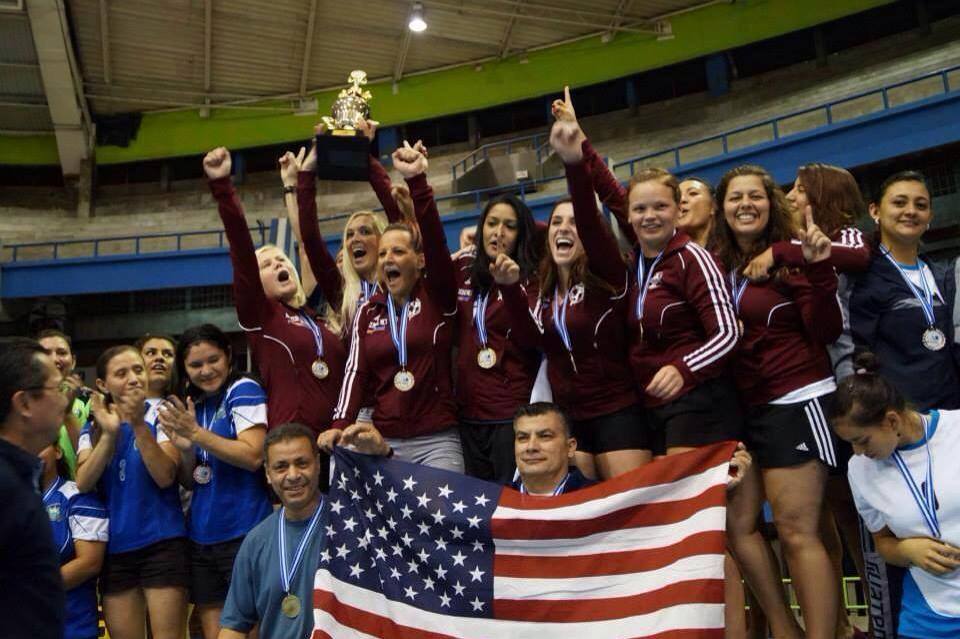
An exuberant LA Team celebrates their title in El Salvador.

An exuberant LA Team celebrates their title in El Salvador.

1) Laser pointers target Korean penalty shot takers. During yesterday’s match between Serbia and South Korea, laser pointers were used to distract Korean shooters.  No word yet as to repercussions and actions planned to prevent it from happening in Wednesday’s quarterfinal match.
VG Sporten: Link
2) Brazil secures extra slot for Pan American Federation for 2015.   Brazil’s 29-23 victory over the Netherlands means that 4 nations from Pan America will qualify for the 2015 Women’s World Championships in Denmark.
IHF: Link
3) Guatemala qualifies for Men’s Pan American Championships in Uruguay.  Guatemala dominated the Central American qualification tournament winning all 4 of its matches by an average of almost 20 goals.
El Salvador Federation Page: Link
4) LA Women’s Club wins Women’s Competition in El Salvador.  The Los Angeles Women’s Team Handball Club won
El Salvador Federation Page:  Link
5) USA Federation adds newsletter.  USA Team Handball posted the first edition of its new month newsletter.  This month’s version provides a year in review of 2013
USA Team Handball December 2013 Newsletter:  Link
6) Handball-World interviews USA Women’s Coach.  Christian Latulippe discusses U.S. plans for residency programs, development of the sport in Alabama and 2015.
Handball-World: Link
post

AUDIO: All About the Big Apple Tournament with NYC Handball’s Bini Mustafa

The 5th Annual Big Apple Tournament in New York City is scheduled for 28-29 December.

An event that just keeps getting bigger and better.  The 5th Annual Big Apple Tournament in New York City is scheduled for 28-29 December.

The New York City Team Handball Club is hosting its fifth annual Big Apple Tournament in New York City from 28-29 December at the Riverbank State Park.  New York City Team Handball Club Bini Mustafa and I discuss the upcoming tournament, its evolution from modest beginnings and its potential future.

We also talk about the All-Star Game which will have American players including Gary “Hang Time” Hines, Jordan Fithian, Divine Jackson and Vladimir Andjelic  taking on some of the world’s greatest veteran players including Pascal Hens, Goran Sprem, Michael Kraus, Marcin Lijewski and Magnus Wislander.  The USA All Star Team will also be coached by USA Men’s National Team Coach Javier Garcia Cuesta.

Surely an event worth seeing if you’re anywhere near the New York metropolitan area.

(The podcast interview length is 28 minutes)

New York City Team Handball Facebook Page:  Link

post

Handball News Summary (10 December 2013)

Sally Potocki, who plays for Dortmund in the German 2nd division has been a bright spot for the Australians at the World Championships.

Sally Potocki, who plays for Dortmund in the German 2nd division has been a bright spot for the Australians at the World Championships.

1) Australia Women struggle against top foes, but look forward to win opportunities later in the President’s Cup.   Handball-World and the IHF site both have articles on the Australian Women’s team.
Handball-World: Link
IHF:  Link
2) Asian Men’s Championship Draw Results.   The 10 nations have been drawn into two groups of 5 for the championships that will take place in Bahrain from 25 January to 6 February.
Tehran Times: Link
3) Lars Christiansen reveals that he has struggled with depression and anxiety.  In a recently published book, the retired Danish national team player highlights how depression and anxiety made playing a challenge in the latter stages of his career.
Handball-World:  Link
4) Copa El Salvador to determine Central American participant for Men’s Pan American Championship.  Starting today, 5 Central American nations will play a round robin tournament in San Salvador to determine which side will advance to the Pan American Championships this summer in Uruguay.  There will also be a Women’s competition with the Los Angeles Women’s club participating.
El Salvador Website:  Link
post

2013 Women’s World Championships Preview


No Surprise:  Norway is the team to beat.

No Surprise: Norway is the team to beat.

The Women’s World Championships starts today with host Serbia taking on Japan in the opening match at 1800 CET/ 1200 U.S. Eastern Time.  The format for this year’s tournament is the same as last time with the 24 nations first being divided into 4 groups of 6 for round robin play through next Friday, 13 December.

The top 4 teams from each group will then move on into a 16 team knock out tournament, staring on Sunday, 15 December, culminating in the semifinals on Friday, 20 December and the Finals on Sunday, 20 December.

As a consolation a President’s Cup Tournament will also take place on 15 and 16 December for the 8 teams that place 5th and 6th in their groups and will rank order the teams from 13th to 24th.

Bookmaker Odds to Win the Championship

Here are the odds for each nation to win the Championship according to the sports betting site, bestbetting.com, which consolidates odds from multiple online betting sites.

Norway (1.75 to 1)
Montenegro (4.5 to 1)
France (5.5 to 1)
Serbia (12 to 1)
Spain (14 to 1)
Denmark (16 to 1)
Hungary (16 to 1)
Brazil (26 to 1)
Germany (33 to 1)
Romania (33 to 1)
South Korea (33 to 1)
Netherlands (80 to 1)
Czech Republic (200 to 1)
Angola (250 to 1)
Poland (250 to 1)
Tunisia (550 to 1)
Congo (1,000 to 1)
Algeria (1,100 to 1)
China (1,100 to 1)
DR Congo (1,100 to 1)
Japan (1,100 to 1)
Argentina (5,000 to 1)
Australia (5,000 to 1)
Dominican Republic (5,000 to 1)
Paraguay (5,000 to 1)

No real surprise that Norway, the defending 2011 World Champions, the 2012 European Championships runner up and the 2012 Olympic Champions is a strong favorite to retain their world title.  Montenegro which won the 2012 European Championships and was the Olympics runner up is next in line at 4.5 to 1.  As the tournament is being held right next door in Serbia they surely will have many fans on hand for their matches.  Next up is France which is listed at 5.5 to 1.  France was the runner up in 2011, but had a disastrous performance at the 2012 Euros placing in 9th place and a disappointing 5th place Olympic finish.  These results led to the firing of longtime coach Olivier Krumbholz and his replacement with Alain Portes.  Hosts Serbia, Spain, Denmark and Hungary are grouped together as mild longshots at odds from 12-1 to 16-1.  Slightly longer, long shots include Brazil, Romania, Germany and South Korea at 26-1 to 33-1.  From then on, the odds progressively lengthen with none of the remaining nations seen as having a realistic chance.

Rerun Tournament and European Outsiders

An interesting aspect of the tournament is that in many respects it is essentially a rerun of the 2012 European Championships that were also held in Serbia.  Originally planned to be held in the Netherlands, Serbia was a last minute replacement for last year’s tournament.  With many of the same venues being used there surely will be a sense of déjà vu for the European teams.

In regards to the non-European teams, again Brazil, South Korea and Angola will be the teams with decent chances to progress in the tournament.  Brazil which hosted the 2011 tournament and placed a disappointing 7th probably has the best chance.  South Korea is next and then Angola which has slipped in the eyes of the bookmakers.  As 4 team advance from each group to the round of 16 a few other sides do have a chance of advancing out of Group Play.  In Group B, China, Japan and Algeria will likely battle for the 4th place spot and in Group D, Tunisia is seen as a possibility to defeat the Czech Republic.

American Perspective

Fans in the U.S. and other parts of Pan America will surely be rooting for Brazil to make the top 8 as this will result in another 2015 World Championship qualification berth for the Pan American region.  The U.S is rebuilding its national team squad and a top 4 finish at the 2015 Pan American Championship would seem feasible.  Additionally, the U.S. will be casting its eyes on the performances of Argentina, the Dominican Republic and Paraguay as these sides along with Cuba are the teams to beat at the 2015 PANAM Games which serve as the qualification for the 2016 Olympics in Rio de Janeiro.  Beating Brazil for the U.S. or any other Pan American for that matter is unlikely, but Brazil’s hosting of the Olympics means that another Pan American side will punch a ticket for Rio at that event.

Online Web Streaming: Link

As with the Men’s Championships this past January every match of the Women’s World Championship can be viewed at LiveSport.TV: Link  (Blackout restrictions, however, do apply and vary from country to country.)

IHF World Championship Webpage:  Link

Host (Serbia) Webpage: Link

post

Moneyball Handball: Part 2: Pushing the Outside of the Recruiting Envelope.


The blue boxes represent the recruiting envelope for USA Team Handball National Teams.  Where should the USA push the outside of the envelope?

The blue boxes represent the recruiting envelope for USA Team Handball National Teams. Where should the USA push the outside of the envelope?  (Answer: In the direction of the green arrow; not the red arrow)

In Part 1 I provided some top level definitions to define the types of potential athletes USA Team Handball should recruit.  In this installment I focus on the recruiting envelope or the athletes USA Team Handball can or should recruit.

As a former flight test engineer at Edwards AFB in California it should come as no surprise that one of my all-time favorite movies is “The Right Stuff.”  The movie which depicts the lives of test pilots and the first astronauts popularized the phrase, “pushing the outside of the envelope.”  The “envelope” refers to the flight envelope for an aircraft which is the combinations of speed and altitude an aircraft can fly during level flight.  Every airplane has limits based on its engines, aerodynamic characteristics and the altitude that it’s flying.  Inside the envelope the plane can fly.  Outside the envelope is where the plane can’t fly.  In theory, this envelope can be determined by engineers.  In reality, however, it needs to be tested and that’s where the test pilot pushes the outside of the envelope by flying higher and/or faster than the paper design.

This graph depicts a flight envelope and you can perhaps see how I’ve adapted it to create a team handball recruiting envelope with “speed” and “altitude” being replaced with “raw athletic ability” and “age.”  The blue boxes are the recruiting envelope.  Inside this envelope are the athletes that USA Team Handball can or should recruit.  But, just like a test pilot, USA Team Handball can push that recruiting envelope.

The “Should Recruit” Line

On the top left hand side of the recruiting envelope is the “should recruit” line.  Above the line are athletes that should not be recruited because are either “too old to start,” have “insufficient athletic ability,” or in the worst case, both of those characteristics. Below the line are athletes that are should be recruited as they have the requisite athletic ability and enough time to develop into world class athletes.  As previously discussed it certainly can be debated as to where these lines should be drawn, but such lines surely exist.  I doubt that anybody thinks USA Team Handball should be recruiting 35 year old athletes or athletes that couldn’t earn a varsity letter in high school.  It gets a little more muddled, however, when we started talking about athletes in their mid 20s with respectable athletic skills.  Certainly, USA Team Handball could push the envelope along this line by recruiting older athletes or athletes with borderline athletic skills.  Maybe there are some outliers that will stick with the program into their late 20s or early 30s to become productive national team members.  Maybe there are some hard workers of modest athletic ability that will develop the requisite handball skills.

Historically, USA Team Handball has indeed pushed the envelope along this line.  Why?  Well, because if your talent pool is thin and you are limited in what you can offer prospective athletes it might be the only way to field a national team.  Further, if you establish a residency program you need at least 14 athletes to conduct decent practices and scrimmage.  It remains to be seen whether the current incarnation of U.S. National Team residency programs pushes this envelope line too much.  Certainly, given the current state of the USA talent pool it won’t be too surprising if this line is crossed quite a bit to start out.  As the program matures, however, crossing this line should become the rare exception.

The “Athlete Available” Line

On the bottom right hand side of the recruiting envelope is the “athlete available” line.  Above the line are athletes that are readily available to be recruited since they are not currently competing in either high school or college athletics.  Below the line are athletes that are unavailable because they are focused on high school or college athletics.  But, are all of these athletes truly unavailable?  Is this a solid line that can’t be crossed or can USA Team Handball push the envelope here to snag some quality athletes at younger ages?

The answer is that it can indeed be done.  In fact, it has to be done if the U.S. wants to become more competitive.  In particular, waiting for the best athletes to become available after their collegiate careers are over at age 22 will time and time again result in eventually losing too many of  those athletes to “life decisions” to pursue other activities.  This isn’t theoretical conjecture and anyone who’s followed the sport in this country can think of dozens of high quality players who bowed out of the sport in their mid to late 20s.  More recently, I discussed this very issue with USA Team Handball Circle Runner, Jordan Fithian. He’s not totally bowed out, but some life issues precluded him from signing a contract with a Div 2 German Bundesliga side.  (The relevant discussion starts around the 12:40 mark: Link)

It may not seem like a big deal to land a player at age 20 rather than age 22 or so, but those two years can make a world of difference on down the line.  It can easily be the difference between keeping an athlete focused on handball for two Olympic cycles, vice 1.  It could even change the calculus of a European club’s decision to offer an athlete a pro contract, and the U.S. actually keeping some world class players into their 30s.  Additionally, for many young adults graduation from college represents a turning point in their lives.  The thought process on future plans for many changes abruptly and the prospect of a handball adventure while appealing suddenly seems less practical.

Collegiate Athletes for Targeted Recruitment

But, how can top quality athletes be convinced to give up their collegiate careers for Team Handball?  Well, in many cases they can’t be.  In particular, it’s simply unrealistic to think that an athlete with a full ride scholarship to a Division I NCAA school could ever be convinced.  Fortunately, though, the percentage of collegiate athletes that fall into that category isn’t as high as one might think.  Many sports offer only partial scholarships and have rosters filled out with walk-ons with no scholarship.  Breaking it down further, here are some categories worthy of extra focus.

  • The high quality walk-on.  Often the term walk-on immediately conjures images of perhaps the most famous walk-on of all time, Rudy.  Let’s be clear, USA Team Handball does not need or want any Rudy’s on its roster.  Perhaps the right attitude, but clearly Rudy lacked in terms in raw athletic ability.  No, instead the focus should be on the high quality walk-on.  The type of athlete that could have played and might have even starred in Div II or Div III, but for whatever reason, chose to seize the brass ring and play Div 1.  In their junior year when it becomes clear that they are never going to be that walk-on who surprises and makes the big time they could be enticed to give handball a try.
  • The marginal scholarship athlete.  Many Div 1 athletic careers don’t turn out the way that athlete hoped it would.  This happens for a number reasons.  Sometimes the athlete isn’t good enough, has injuries or simply doesn’t get along with his coach.  When these athletes are relegated to the bench or sometimes even lose their scholarship altogether they should be ripe for the picking.
  • The motivated senior (not good enough for a pro career). Some athletes have productive, but modest careers all four years of college. They’ve been dedicated to their chosen sport, but just don’t have the skill required to continue playing at a professional level.  This is the type of athlete USA Team Handball has recruited for years, but rather than waiting for graduation the recruiting campaign to secure this player’s interest starts earlier while the athlete is still in school and hungry to continue competing.

Characteristics to Consider

While plenty of athletes fit these categories not every athlete should be targeted.  Instead a little investigation is needed to further assess whether an athlete might be a good candidate.  Some characteristics to consider are:

  • Multi-Sport athlete. A good indication as to whether an athlete might make a good handball player is whether the athlete has played and excelled at multiple sports.  This is because playing multiple sports suggests adaptability and the ability to perhaps pick up a new sport more quickly.
  • Handball build and skills.  This is not easily definable in words, but some athletes just look and move like a handball player.  And they just may be the type of athlete that is pretty good at his current sport, but could be perfectly suited for handball.
  • Whole person traits: This includes many traits such as leadership, hard working, team player, fondness for Olympic ideals and worldliness.  Playing on a USA National Team will not be a pampered experience and will involve personal sacrifice.  Team players are definitely a requirement for this team game.  Athletes with a fondness for Olympic ideals, a desire to see the world and wear a USA on the back of their shirt are also more likely to fit in and stick around.  Again these traits are not necessarily easy to define, but should be factored in.

A Simple Investigation:  Auburn Football

Last Saturday, nearly 88,000 fans poured into Jordan-Hare Stadium to watch Auburn upset Alabama in one of the more remarkable endings in college football history.   In attendance were some of the current members of the USA National Team Residency Program which has been started on the campus there.  But, might there also be some future handball players on the field or standing on the sidelines for the Auburn football team?   Some athletes that fit the rough categories and characteristics that I’ve identified above?

Focusing on the QB and Tight End positions which I previously highlighted there might indeed be some candidates worthy of further investigation.  Using the roster and depth chart of the Auburn football team and a little bit of internet searching I’ve identified a few prospects.  To the best of my knowledge none of these athletes have played a single down for Auburn so far in their collegiate careers.

  • Ben Durand:  A 6’3’’ sophomore walk on QB who starred in four sports in High School.  The most famous pass he’s thrown at Auburn was one over the jumbotron.  I’m guessing he could probably throw a handball fairly well too.
    Auburn Football Profile: Link
    Hometown Newspaper story: Link
  • Wirth Campbell: A 6’3” walk on TE who also played QB in High School.  Somebody that apparently can play both of the targeted football positions that often make good handball players.
    Auburn Football Profile: Link
  • Wade Norberg:  A 6’6’’ TE who played junior college football and basketball in high school.  At 210 lbs he needs to bulk up for football, but probably less so for team handball.
    Auburn Football Profile: Link
    Hometown Newspaper Story: Link

Who knows whether further investigation would lead to an assessment that they are strong candidates for USA Team Handball?  Or, for that matter that their long shot bids for Div 1 participation materialize with a break out performance during Spring Football?  Identification and recruitment inevitably leads to many, many dead ends.  The good news is that this is just an assessment of 3 players on the 113 man Auburn roster.    Surely, there’s a few more for consideration at other positions and at other sports and at other colleges.

But, a top level identification of potential recruits is just the first step.  In the next installment I’ll address the challenges of identifying, recruiting and convincing athletes to give team handball a try. 

post

VIDEO: Champions League Group Play (Week 7)

Mads Mensah Larsen:  Not your typical Danish Centerback.  Can he orchestrate an upset over Flensburg?

Mads Mensah Larsen: Not your typical Danish Centerback. Can he orchestrate an upset over Flensburg?

Handball fans have one more weekend of Champions League handball before a long dry spell starts.  With the Christmas break and the European Championships taking place Week 8 won’t start until February.  With 6 weeks in the books it’s pretty clear for the most part which 16 teams will advance to the knockout stages.

One exception, however, is this week’s Match of the Week between Celje and Zagreb as both sides are tied for 4th place in Group A.   Zagreb won their first meeting, but Celje is a 2.5 goal favorite this Saturday in Slovenia.  While neither of these two sides have a chance of  making it to the final four this should be an evenly matched game between two sides seeking a ticket to the knockout rounds.  The match will also include Tom Ó Brannagáin’s English language commentary.

Celje vs. Zagreb (Saturday,30 Nov 2030 CET/1430 U.S. Eastern Time)
Video: Link

(Note to U.S. residents:  After a two week break beIN Sport will be rebroadcasting the Match of the Week on Wednesday, 4 December, 1700 U.S. Eastern Time)

There are a couple of other matches worth watching.  In Denmark, Aalborg will host Flensburg in a match that could end up deciding who gets 2nd place in Group.  Flensburg were able to turn the tables late in the match against Hamburg last week to strengthen their hold on 2nd place, but an away loss to Aalborg will drop them down to 3rd place.  Flensburg won the first match between the two sides 31-27 but might have a little more trouble winning at Aalborg.  Aalborg is led in scoring by the atypical Mads Mensah Larsen, who’s having a breakout season.  Atypical for two reasons: he’s a Dane of African descent and more bulky and compact then your typical centerback.  ehfTV has a nice Inside the Game feature on him:  Link

Aalborg vs Flensburg (Sunday, 1 Dec 1600 CET/1000 U.S. Eastern Time)
Video: Link

The final, maybe interesting match to watch could be Minsk vs Paris.  I say “maybe” because on paper Paris should have no problem with Minsk.  But, Paris has been known so far this season to play down to the level of their competition.  Paris won the first meeting between these two sides, 34-30, but the match was tightly contested until the very end.  With the match in Belarus, Minsk could very well surprise again.

Minsk vs Paris (Sunday, 1 Dec 1700 CET/1100 U.S. Eastern Time)
Video: Link

I will replace the live video links with on demand video links when they are available at the ehfTV website.  If you go to the ehf website yourself click on the side arrows to get to the “Full Match” page.  A word of caution, however, the EHF sometimes posts match interviews with revealing titles like “Jicha scores the decisive goal,” so you might want to use a sheet of paper to mask the screen if you want to watch the matches oblivious to the outcome.

ehfTV Page: Link
EHF Week 6 Preview:  Link (A written summary by Bjoen Pazen previewing all 12 matches): Link
Tom Ó Brannagáin’s latest blog post: Link