post

Air Force Basketball (Two Lessons for USA Team Handball): Lesson 1) Any Program Can Rise from the Ashes

After 24 straight years of no winning seasons the 2003-04 Air Force Basketball team came out of nowhere to post a 22-7 record, a conference championship and an NCAA tourney bid. Could something similar happen for USA Team Handball?

Anyone who has followed the sport of Team Handball in the United States knows that the national teams have had their ups and downs.  Without a doubt it’s been more “downs” then “ups” and it’s safe to say we’re currently in a down phase.  We struggled to even win one match at the PANAM Games and have fallen behind nations like Mexico and Uruguay.  Maybe the bitter reality is that it’s just too hard for the USA to field respectable teams, let alone winning
teams that can compete for medals at an Olympics.  Maybe, but maybe not…

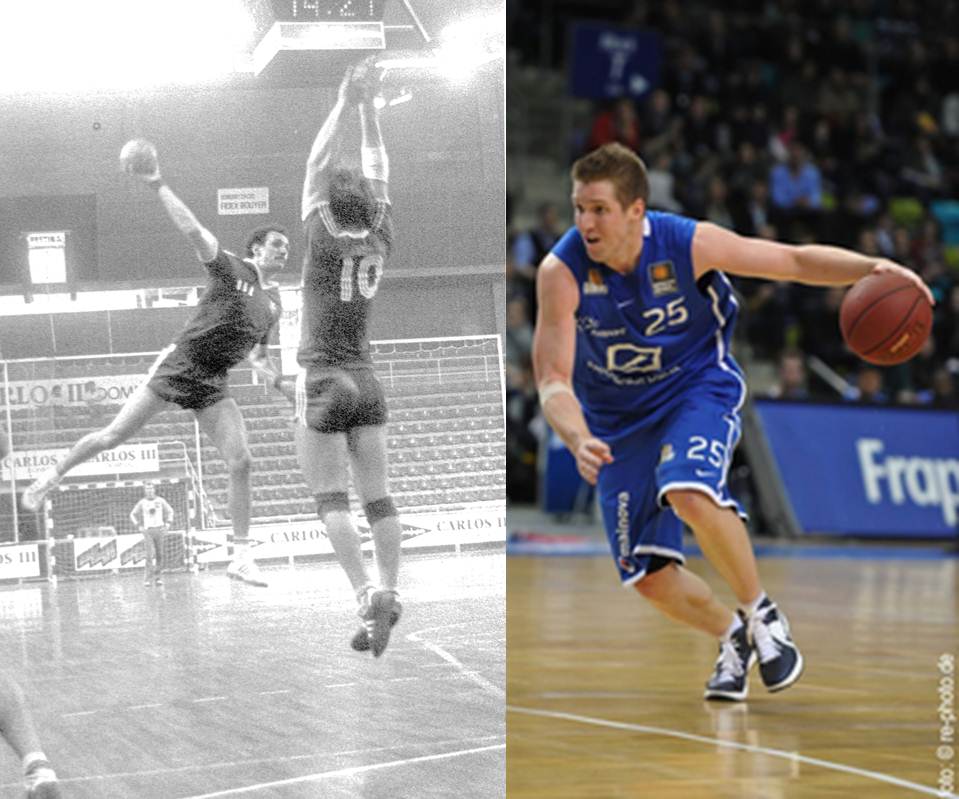
Perhaps just as moribund or disappointing for many years had been the Air Force Academy Men’s Basketball Program.  There are a lot of challenges to fielding a top college basketball team at a military service academy.  These challenges include height restrictions, academic requirements, and a military regimen which severely limits the players that can be recruited.  With the exception of the David Robinson years at Annapolis, no service academy team had ever had great success and Air Force’s high water mark for a long time was the mid 1970’s when several teams posted modest winning records.  Two major reasons for those successful seasons were Tom Schneeberger and Bob Djokovich, who later went on to be Olympians in Team Handball at the 1984 Olympics.

Following Schneeberger and Djokovich’s graduation in 1978, Air Force had 24 straight losing seasons and about the only positive thing that that could be said about the program was that the players tried hard and never gave up, no matter how far they were behind.  Many games played at the Academy resembled church halls in which you could literally count the fans in the stands.  Experts and longtime followers of college basketball all agreed: It was just too hard to win at Air Force.

Then in the year 2000, Air Force hired Joe Scott, a former Princeton player and coach who outrageously thought differently about the whole, you just can’t win at Air Force mentality.  Things at first didn’t seem to be much different.  The team’s record the first 3 years were 8-21, 9-19, and 12-16.  They showed steady progress and I noticed that they weren’t getting blown out quite as often against better teams.   Still, I had my doubts that they could ever get over the hump for a winning season.  Sure they might have been able to win some games against weak non-conference foes, but they still couldn’t beat the top schools (BYU, New Mexico, UNLV) in the Mountain West Conference (MWC).

Then in 2003-2004 a funny thing happened.  Somehow Air Force started winning those games against the teams that had always beaten them.  Somehow, someway, the laughingstock of the MWC won the Conference with a 12-2 record.  My goodness, they even made the NCAA Tournament for the first time in over 40 years!  The tomb that had been Clune Fieldhouse had overnight become one of the toughest and loudest places to play in the country.  There was some nice commentary at the time about what a great turnaround this was, but to those few who actually followed Air Force basketball closely through the years those kind words never even came close to conveying the miracle that had just occurred, seemingly out of nowhere.

How on earth had this happened?  My analysis (from my own observation and others) is that there were four major factors in this incredible reversal of fortune:

1) Better recruiting. Whether it was luck or persistent effort by the coaching staff, Air Force was able to find 5-7 talented players who could play at a high level.  These players were by no means NBA quality players, but they were good players that could compete athletically against their competition.  Through the years, Air Force had always had 1 or 2 players with that talent level.  Heck, I’d argue that a couple of those players were individually even better than the talent that Joe Scott assembled.  But, those players had no supporting cast and opponents keyed on them.  Being able to put 5 good players on the court all at one time made all the difference.

2) A system that stymied opponents.  And that system was the so called Princeton offense which slowed down the game and relied on passing and 3 point shooting.  Air Force executed this offense to perfection and teams weren’t used to playing it.  That season Air Force was able to sneak up on opponents who weren’t sure how to defend it.

3) Opponents that were in “down” years.  The MWC would never be mistaken for the ACC, but on the whole it’s usually a pretty good basketball conference.  It was fortunate timing that the golden era of AF basketball coincided with just about every other side in the conference going through a down phase.

4) Players that simply believed in themselves and the system.  Sometimes teams lose just because of the names on their jerseys.  Losing begets losing and sometimes everybody (coaches, fans, officials, opposing teams) starts expecting a particular team will lose.  Changing such a culture or vibe is often easier said than done.  When such a change occurs, though, it’s usually because a committed group truly starts to believe in themselves and what they can do.

So, what are the lessons here that can be applied to USA Team Handball.  Let’s go with the 4 reasons behind Air Force’s turnaround and see if they can be applied to Team Handball.

1) Better Recruiting:  Nothing against the hard working men and women who are currently playing on our National Teams, but most of our current athletes are a step down in raw athletic talent when compared to their current competition.  This is particularly true for the women and partially true for the men.  And to be fair, it’s probably always been true with our National Teams to a certain extent.  The U.S. has often been a player or two short of being good enough to beat the good teams.  The need for better recruiting is a no brainer, but how do you go about it?  This will be a topic for part 2 of this series.

2) A system that stymies opponents:  Is there a Team Handball equivalent of the Princeton Offense?  For the most part national teams from the developing Handball nations have tried to emulate the successful teams in Europe.  They hire European coaches and the European coaches naturally seek to build a European style team.  There is, of course, some variance among the teams in Europe as some nations play a little more of a fluid game with fast breaks while others are more focused on defense and a half-court game.  So getting back to the question, I can think of only one example where a nation has developed a style of play or system that stymies opponents:  South Korea.  The South Koreans, particularly the women, play a helter skelter style of play which takes maximum advantage of their quickness and limits their size disadvantage.  This pretty much always gives the Koreans a slight edge when they play European teams because while they are accustomed to the European teams have to totally adjust their game.  Is it just a coincidence that the Koreans have also been the most successful non-European nation, even though the sport is
still a minor one in their country?  Maybe the U.S. should look across the Pacific instead of the Atlantic as it tries to develop its own style?

3) Opponents that were in “down” years.  Well, you can’t very well control what your competition is doing.  You can, however, take advantage of it.  Looking at the Pan American region it’s fairly apparent that the men’s teams are surging in quality while the women’s teams, with the exception of Brazil, are clearly in a down phase.  Starting from scratch, it’s entirely possible that the U.S. could put together a brand new Women’s team that could get 2nd place (qualifying for the 2016 Olympic Games) at the 2015 PANAM Games.  The Men could still qualify, as well, but their competition as it stands now is clearly tougher.

4) Players that simply believe in themselves and the system.  I can’t get into the psyche of our National Team players, but I suspect that both the Men’s and Women’s team have not fully formed the type of bond that only comes about through time and shared sacrifice.  They will need more matches and some stability in the program in order for this to happen.  And then they will need some matches where they play some teams close and see for themselves that they aren’t that far behind and where they need to get better.

So, if Air Force basketball can suddenly be successful after years of failure, I would argue that even USA Team Handball can turn it around.  It won’t be easy, though, and most importantly it’s not clear whether USA Team Handball will have the minimum resources needed to execute such a turnaround.  As the current budget stands now there is nowhere near enough funding to recruit, train and provide players a national team structure to allow them the
opportunity to succeed.  With adequate resources, though it could definitely happen.

In part 2 of this series, I’ll assess the feasibility of recruiting athletes with successful collegiate careers in other sports and transitioning them to Team Handball.  As the title implies, there’s an Air Force Basketball connection.

post

Tim Tebow: Future American Team Handball Star?

Tim Tebow: Current Right Back for Team Fatsis and future Right Back for Team USA

Drink a few beers in the evening after a Team Handball event and the subject inevitably comes up.  If you could field a Team Handball squad with athletes from other sports, who would you choose?  For a Handball fan this is the equivalent of “Superman vs. Batman” or “Ginger vs. Mary Ann.”  A debate that’s been held many times for which there’s no way to establish the right answer.  On Slate Magazine’s “Hang Up and Listen” Podcast, Dan Blake from Ithaca, NY posed that very question to co-hosts Stefan Fatsis, Mike Pesca, and Josh Levin.  (Take a listen from 6:38 to 11:15.)

Here are the teams that were compiled, some analysis of the players selected and an assessment as to who would win between Team Fatsis and Team Pesca.

Team Fatsis

– Matt Kemp (Baseball):  I’ll have to take a pass on this assessment, as I haven’t followed baseball much for at least a decade.  On paper, his basketball background would make a good combination.
– Chris Young (Baseball):  The baseball pitcher with a basketball background is a good combination for Team Handball.  The ability to throw a ball hard is not a readily discernible skill.  (i.e., you can’t assume that a great basketball athlete naturally has a great arm).  Young is 32, though, and I can’t tell if the relatively sedentary baseball life of a pitcher has settled in.  Side note, I saw a Russia-USA baseball game several years ago and the commentator was a broken record, “Vladimir Yobonski is another former Team Handball player…”
– Kevin Durant (Basketball):  An OK choice.  Basketball, more than any other sport, is very similar to Handball in the flow of the game and the skill sets needed.  That being said, not every great basketball player makes a great handball player or vice versa.  Basketball players with more finesse tend to struggle a little when they cross over to Team Handball.  Durant is no wimp, but I think he might have some issues with the greater physicality.
– Dwight Howard (Basketball):  A great choice. Physicality would, of course, not be a problem for Dwight Howard.  He’s a natural circle runner and would be a brick wall on defense.
– Tim Tebow (Football):  An inspired choice.  Tebow has the raw skill set to be an exceptional Team Handball player.  His ability as a crafty runner who can break tackles would translate well to Team Handball where the defense can be more physical (compared to basketball).  Oh, and he’s left handed.
– Michael Vick (Football):  Vick is an OK choice.  Clearly, has the Tebow like skills, but would this 31 year old have the motivation.  And Fatsis stumbled upon another left hander.  I guess he could be on the wing next Tebow on the right hand side.
– Tim Howard (Soccer): Soccer goalies don’t necessarily transition well to Team Handball.  They have the basic concept of being a goalie, and, in particular understand the importance of positioning the body at the right angle.  But, there are some dramatic differences. Most notably, soccer goalies rarely stop a shot with their feet, an absolutely critical skill that they have to be taught.  Not to mention the size of the goal is much smaller and they will face more shots in 5 minutes then they’ll see in an entire soccer match.

Subs
Baseball (Carl Crawford, Jacoby Elsberry, Joe Mauer, Austin Jackson, Grady Sizemore)
Basketball (Lebron James, Chris Paul, Jimmer Fredette)
American Football (Cam Newton, Jake Plummer
Analysis:  I won’t go into detail on these subs, but suffice to say Lebron James and Cam Newton would be phenomenal players.  Chris Paul and Jimmer Fredette might be good players at Center Back or on the wing.

Team Pesca

– Julius Peppers (Football):  Peppers’ size and basketball skills demonstrated at North Carolina would, make him a great selection 5 years ago, but at age 31 he would be less likely to excel.
– Jason Pierre-Paul (Football):  Pesca’s best choice.  Pierre-Paul is a phenomenal athlete that only started playing football seriously 5 years ago.  He would pick up the sport very quickly.  Heck, you could probably start him as a defensive specialist at a top club in Europe with a year of dedicated training
– Tony Gonzalez (Football): Another football player with college basketball experience.  But at 35 years of age he would not adapt well to the new sport.
– Rob Gronkowski (Football): Yet another tight end for the Pesca squad.  At age 22 he should be able to handle the up and down nature of the sport fairly well.
– Derrick Rose (Basketball):  An exceptional athlete, Rose would definitely be a top notch Handball player.  He doesn’t appear to have played many other sports, though, and may not adapt quickly to a new sport.
– Kevin Garnett (Basketball): While Garnett is a great basketball player he is the type of athlete that would not excel in Team Handball at the same high level.  There are a few 7 foot handball players, but the nature of the game limits the benefit of such lofty height.  Generally, these players are very effective over the top shooters, but are less effective one on one and struggle on defense.  Garnett’s also 35 years old.

Josh Levin’s Picks (Levin didn’t pick a full squad)

Rajon Rondo (Basketball):  A good choice.  I could see him as an effective Center Back.
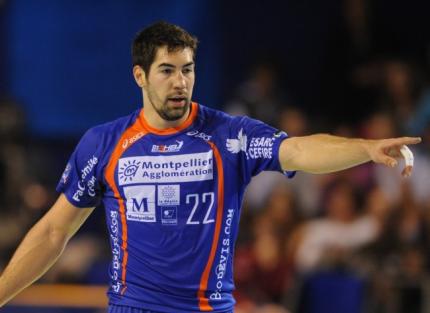
Robert Griffin III (Football):  An outstanding selection.  This 21 year 0ld with smarts, world class speed and great arm strength would be a tremendous 1 on 1 player.  Think Daniel Narcisse (only an even better athlete).
Tayshaun Prince (Basketball): An OK choice.  I’m not sold that he would be a great player and at 31 years old he’s showing a little age.

Team Fatsis vs. Team Pesca

Just looking at the starting lineups, the advantage is clearly Fatsis.  First off, Pesca didn’t even choose a goalie, but setting that aside Team Pesca is too old and is sorely lacking in quickness.  In particular, you can’t have converted tight ends playing the wing.  Matt Kemp and Michael Vick would have a field day on the fast break.   Midway  through the first half, the bulky football players would really be huffing and puffing and Derrick Rose would probably be angrily urging them to show a little hustle.  Meanwhile Team Fatsis, led undoubtedly by a cheerful Tebow would still be motoring along.  It would only get uglier in the 2nd half.   Another aspect that Fatsis probably stumbled upon is having a few left handers on his squad.  This would make a dramatic difference on the right side of the court.  I’m guessing we’re  looking at an ugly score line, perhaps 35-22.

Tim Tebow: Future American Team Handball Star?

The Tebow story has been fascinating to follow this year.   For those who don’t follow American Football, Tim Tebow is a quarterback for the Denver Broncos, who’s open religious displays have made him a polarizing figure.  Additionally, there had been great debate as to whether this great college player could become a great professional player.  This season he started out on the bench, but midway through the season he became the starter and led Denver to several  improbable, crazy comeback victories. In short, there are  Tebow lovers and Tebow haters.  And as someone who has rooted religiously against the Denver Broncos for almost 30 years, you can probably guess which side of the debate I fall under.  Still, even a Tebow hater like me has to begrudgingly accept that he is a tremendous athlete with undoubtedly strong skills as a leader/motivator.  That being said he’s got no long term future as an NFL quarterback.  I think that will become apparent to all (even Tebow himself) after a couple of seasons.  Is it conceivable that this unconventional QB will then seek other opportunities off the mainstream, even ones without a big pay day?  After all, the Broncos, have already had one quarterback, Jake Plummer, retire early to play handball (albeit, the wrong one). Tim Tebow, Olympic Athlete, leading American Team Handball to the promised land.  Even I can get on board with that.

Slate:  Hang up and Listen Year End Podcast: http://www.slate.com/articles/podcasts/hang_up_and_listen/2011/12/hang_up_and_listen_s_special_.year_end_call_in_show_.html

THN (11 Nov 2010): America’s most famous handball player talks about his legacy https://teamhandballnews.com/2010/11/america%e2%80%99s-most-famous-handball-player-talks-about-his-legacy/

post

Olympic Qualification Tournaments (2 Scenarios)

Norway's victory over France was a victory for Sweden, too.

Norway’s victory over France in the World Championship final has given Sweden a direct ticket to the 2012 Olympics. This is due to Sweden’s 2nd place finish to Norway in last year’s European Championship.

The IHF Qualification Tournaments which will take place next 25-27 May are almost set. The only remaining question mark being whether Angola will win the African Championship in January. Angola is the odds on favorite and should they win Montenegro will get shuffled from Tourney 2 to Tourney 1 and the Netherlands will get take their spot.

IHF Olympic Qualification Tournaments (Angola does not win African Championship)

IHF Qualification Tournament #1
France (2nd at 2011 WC) Host
Angola (7th at 2011 WC)
Romania (1st ranked Continent at WC 2011; 2nd place team at that Continent’s Qualifying Event)
Japan (4th ranked Continent at WC 2011; 2nd place team at that Continent’s Qualifying Event)

IHF Qualification Tournament #2
Spain (3rd at 2011 WC) Host
Croatia (6th at 2011 WC)
Argentina (2nd ranked Continent at WC 2011; 2nd place team at that Continent’s Qualifying Event)
Montenegro (1st ranked Continent at WC 2011; 3rd place team at that Continent’s Qualifying Event)

IHF Qualification Tournament #3
Denmark (4th at 2011 WC) Host
Russia (5th at 2011 WC)
Africa #2 (3rd ranked Continent at WC 2011; 2nd place team at that Continent’s Qualifying Event)
Dominican Republic (Oceania Champion or 2nd ranked Continent at WC 2011; 3rd place team at that Continent’s Qualifying Event)

IHF Olympic Qualification Tournaments (Angola wins African Championship)

IHF Qualification Tournament #1
France (2nd at 2011 WC) Host
Montenegro (7th at 2011 WC)
Romania (1st ranked Continent at WC 2011; 2nd place team at that Continent’s Qualifying Event)
Japan (4th ranked Continent at WC 2011; 2nd place team at that Continent’s Qualifying Event)

IHF Qualification Tournament #2
Spain (3rd at 2011 WC) Host
Croatia (6th at 2011 WC)
Argentina (2nd ranked Continent at WC 2011; 2nd place team at that Continent’s Qualifying Event)
Netherlands (1st ranked Continent at WC 2011; 3rd place team at that Continent’s Qualifying Event)

IHF Qualification Tournament #3
Denmark (4th at 2011 WC) Host
Russia (5th at 2011 WC)
Africa #2 (3rd ranked Continent at WC 2011; 2nd place team at that Continent’s Qualifying Event
Dominican Republic (2nd ranked Continent at WC 2011; 3rd place team at that Continent’s Qualifying Event)

(Details on Olympic and World Championship Qualification are always available in the links on the right hand side.)

post

Women’s World Championships: Implications for Olympic Qualification

The dominoes are starting to fall in place for Olympic qualification.

Watch the Women’s World Championships Finals live this Sunday (now only $15): http://www.livehandball.tv/page/Home?WT.mc_id=aff140
Bronze Medal Match:  Denmark vs. Spain, 2:30 PM
Gold Medal Match: France vs. Norway, 5:15 PM
(Sao Paulo is GMT -2 or 3 hours ahead of the U.S. East Coast)

Tomorrow’s Gold Medal Final between France and Norway will determine more than the World Champion as it will also determine who will receive a direct ticket to the Olympic Handball Tournament next summer in London.  By no means have all the dominoes fallen into place, but at least a few items are now clearer.

Direct Qualification: The winner of tomorrow’s match will earn a direct ticket to the Olympics as the reigning World Champion.  Norway, however, has already earned a direct ticket by virtue of having won last year’s European Championship.  Since the World Championship direct ticket, takes precedence, a Norway victory will result in the European direct ticket being transferred to last year’s European runner up Sweden.

IHF Olympic Qualification Tourneys: From 25-27 May, 2012, three Olympic Qualification tournaments will be held to determine 6 at large bids for the Olympics.  Each tournament is a round robin competition amongst 4 teams with the top 2 teams from each tournament punching a ticket to the Olympics.  Teams are awarded spots in these tournaments based on their ranking at the World
Championships and at Continental Championships.  The final placement of nations in these tournaments is decided based on a fairly complicated hierarchy by which direct tickets take precedence over qualification tournaments and World Championship ranking takes precedence over Continental Ranking.  Because these rankings involve many of the same team a whole lot of dominoes still have to fall in place.

World Championship Slots (6 nations): Places 2nd through 7th are awarded slots in the qualification tournaments.  Because Norway and Brazil have already directly qualified their placement does not count.  Additionally, either France or Sweden will also receive a direct ticket.  This means the following nations will definitely be participating in a Qualification Tournament:  Spain, Denmark, Russia and Croatia.  Also participating will be either France or Sweden (whichever nation doesn’t get the direct ticket).  Finally, Angola is currently slated to participate, but they will also be the odds on favorite to win the African Championship in January.  If they win, Montenegro will become the 6th team.
Continental Qualifying Slots (6 nations): Each of the 4 Continental Federations (Europe, Pan America, Africa, Asia) get 1 slot for these tournaments and the top 2 ranked continents at the World Championship get an extra slot.  The ranking is simply the order of the highest placing team from each continent, so Europe and Pan America get the extra slots.  For Asia and Pan America these nations (Japan, Argentina, and Dominican Republic) are known and will not change.  Africa’s participant will be known in January.  For Europe it’s a little more complicated due to the number of nations that will receive the precedent taking World Championship slots.  The final ranking from the European Championships was:

1) Norway
2) Sweden
3) Romania
4) Denmark
5) France
6) Montenegro
7-8 ) Russia, Netherlands

Because Sweden is assured of either a direct ticket or an IHF World Championship Qualification Tournament slot, Romania will receive the European 2nd place slot.  Because Denmark and France will also get higher order slots from the World Championship, Montenegro is currently in line for the European 3rd slot.  But should Angola win the African Championship, Montenegro will receive an IHF slot, thereby moving the Netherlands into the European 3rd place slot.

Beware 2nd and 7th place: As I’ve pointed out before this qualification process has the odd ramification that it’s better to place 4th or 5th at the World Championships then it is place 2nd, 3rd, 5th or 6th.  This is because that tournament is likely to have 2 weak teams while the other tournaments are far more likely to feature a European side which will be more of a threat.  And sure enough the weak tournament will include the Dominican Republic and Africa #2 (probably either Tunisia or the Cote d’Ivoire).  Pencil in (or write in ink, if you like) the two European sides in that tournament.  The other tournaments will be far more challenging.  The 2nd and 7th place teams will take on Romania and probably the best non-European team remaining, Japan, which just battled Denmark into overtime in the round of 16.  The 3rd and 6th place teams will face Argentina and probably the Netherlands.  So conspiracy theorists, be on the lookout for the results in tomorrow’s placement games.  In some cases there’s real incentive for losing.

Following tomorrow’s matches we’ll update our Olympic Qualification Page:  https://teamhandballnews.com/2012-olympic-qual-women/

post

Women’s World Championships: Quarterfinals Schedule

France took care of Sweden, but will have a bigger challenge against favorite, Russia

The top seeded teams all won their round of 16 matches, but a couple of teams had to sweat it out.  Denmark even needed overtime to defeat Japan

Quarter Final Matches (Wednesday, 14 December)
(Point spread/Goal Handicap in Parentheses)
1145 Russia (-2.5) vs France
1430 Denmark (-2) vs Angola
1715 Norway (-5.5) vs Croatia
2000 Brazil (-2) vs Spain

All times are local.  Sao Paulo is currently (GMT -2 hours) or 3 hours ahead of the U.S. East Coast.

Current Odds to win World Championships
(Opening odds are in parentheses)
Russia 1 to 1 (1.75 to 1)
Norway 2.75 to 1 (3 to 1)
France 6 to 1 (6 to 1)
Brazil 8.5 to 1 (50 to 1)
Denmark 14 to 1 (34 to 1)
Spain 14 to 1 (39 to 1)
Croatia 70 to 1 (100 to 1)
Angola 150 to 1 (500 to 1)

Livesport.tv: Video highlights: http://www.livehandball.tv/page/Home?WT.mc_id=aff140
(Sign up to watch the rest of the tournament for $25.)


post

Brackets set for the Women’s World Championships

Surprising Angola sends Germany to the President's Cup

Preliminary Group play has concluded at the Women’s World Championships in Brazil.  Below are the respective matches/brackets for the “Round of 16”.

Quad 1
1B vs 4A Russia vs Iceland   (Sunday, 11 December, 1430)
3D vs 2C Sweden vs France (Monday, 12 December, 1430)
Quad 2
1D vs 4C Denmark vs Japan (Monday, 1715)
3B vs 2A South Korea vs Angola (Sunday, 1430)
Quad 3
1A vs 4B Norway vs Netherlands (Sunday, 1715)
3C vs 2D Romania vs Croatia (Monday, 1430)
Quad 4
1C vs 4D Brazil vs Cote d’Ivoire (Monday, 2000)
3A vs 2B Montenegro vs Spain (Sunday, 1715)|
(All times are local.  Sao Paulo is currently (GMT -2 hours) or 3 hours ahead of the U.S. East Coast.)
The winners of these “Round of 16” matches will play the other winner from their quad in the quarter finals on Wednesday, 14 December.   The semifinals will then be played on Friday, 16 December with the winner of Quad 1 playing the winner of Quad 2 and the winner of Quad 3 playing the winner of Quad 4.
The biggest news from preliminary group play is probably Angola’s 25-22 victory over Germany.  The win gave Angola a 2nd place finish and sent Germany into the President’s Cup (AKA, the little kid’s table) with all the other 5th and 6th place teams.  Also, of note, while Brazil finished in first place for their group, they had to come from behind for 34-33 victory over 5th place Tunisia.
Livesport.tv:  Video highlights: http://www.livehandball.tv/page/Home?WT.mc_id=aff140
(Sign up to watch the rest of the tournament for $25.)
post

Women’s World Championships: Russia, Norway and everybody else

Watch every match live: http://www.livehandball.tv/page/Home?WT.mc_id=aff140 ($40 for a complete subscription)

The Women’s World Championships got underway in Sao Paulo, Brazil last night with the host team easily defeating Cuba, 37-11.  As I don’t follow the Women’s game as closely as the Men’s I won’t pretend to have very many keen insights as to how these games will unfold.  Recent history does suggest, however, that Russia and Norway are the top two teams to beat and that’s exactly the odds set in the online sportsbooks. Following Russia and Norway, France, Montenegro and Romania are modest underdogs, while Denmark, Sweden, Spain, Germany, Brazil, South Korea and Croatia could all be classified as conceivable longshots. The odds on the remaining teams suggest that there is not a realistic path to a title

Here are the best odds available for the 24 participants

Russia 1.75 to 1
Norway 3 to 1
France 6 to 1
Montenegro 10 to 1
Romania 14 to 1
Denmark 34 to 1
Sweden 34 to 1
Spain 39 to 1
Germany 40 to 1
Brazil 50 to 1
South Korea 50 to 1
Croatia 100 to 1
Angola 500 to 1
Netherlands 500 to 1
Tunisia 699 to 1
Iceland 749 to 1
Japan 749 to 1
Argentina 1000 to 1
China 1000 to 1
Ivory Coast 1000 to 1
Kazakhstan 1000 to 1
Cuba 1999 to 1
Australia 2999 to 1

Format Changes and Breaking Down the Groups

The format for this year’s tournament is a significant departure from previous championships in that there are no Main Round Groups after Preliminary Group Play.  Instead the top 4 team from each of the 4 Preliminary Groups will play a 16 team knock out tournament.  This should provide for some interesting jockeying of positions as teams look ahead to try and figure out potential quarter and semifinal opponents.  With that in mind here’s how the oddsmakers see the four groups

Group A
Norway .55 to 1
Montenegro 2.3 to 1
Germany 8 to 1
Iceland 250 to 1
Angola 500 to 1
China 500 to 1

Norway is the clear favorite, but Montenegro is seen as a realistic threat.  Germany is pegged for 3rd, while Iceland, Angola and China are expected to battle for the fourth slot.

Group B
Russia .2 to 1
Spain 6.5 to 1
South Korea 9 to 1
Netherlands 150 to 1
Kazakhstan 1000 to 1
Australia 1499 to 1

Russia is the prohibitive favorite and the Spain-South Korea match should determine 2nd-3rd.  Netherlands is pegged for 4th.

Group C
France 1 to 1
Romania 1.6 to 1
Brazil 3 to 1
Japan 199 to 1
Tunisia 199 to 1
Cuba 999 to 1

This group is projected to be a 3 way battle for first between France, Romania and Brazil.  I think the oddsmakers discounted Brazil a little too much and it wouldn’t surpise me much if the home court advantange propelled Brazil to a first place finish in this group.  (Going further, 50-1 to win the whole tournament seems like a pretty good deal if you ask me.)  For all three contenders in this group securing first place is pretty important for improving your prospects of reaching the semifinals.  Second place in the group means a likely quarterfinal vs Russia and third place will likely mean taking on Norway.

Group D
Sweden 1.5 to 1
Denmark 1.75 to 1
Croatia 2.75 to 1
Argentina 500 to 1
Ivory Coast 500 to 1
Uruguay 1000 to 1

Group D pretty much mirrors Group C with Sweden, Denmark and Croata battling it out for first.  And as with Group C, a first place finish is important if you want to avoid Russia and Norway in the quarters.
Breaking out the placement into Round of 16 Quads

For reference, here’s how the brackets will align based on oddsmaker projections on winning each group.  Of course, anything can happend and should Russia or Norway slip up in Group play it could really make things interesting in the last round of matches.  Some teams might even theoretically benefit from losing.

Quad 1
1B vs 4A Russia vs Iceland
3D vs 2C Croatia vs Romania

Quad 2
1D vs 4C Sweden vs Japan
3B vs 2A South Korea vs Montenegro

Quad 3
1A vs 4B Norway vs Netherlands
3C vs 2D Brazil vs Denmark

Quad 4
1C vs 4D France vs Argentina
3A vs 2B Germany vs Spain

Link to PDF Schedule (Entire tournament): http://www.ihf.info/files/Uploads/Documents/10071_match_schedule.pdf

Link to schedule and results: http://www.ihf.info/IHFCompetitions/WorldChampionships/WomensWorldChampionships/WomensWorldChampionship2011/FixturesandResults/tabid/5821/Default.aspx

post

AUDIO: Handball Talk (Episode 2): British Success and Referee Challenges

John Ryan and Christer Ahl discuss two topics in this latest edition of Handball Talk.  First up is a brief discussion highlighting the great strides the British Women’s program is making in their run up to the 2012 Olympics in London.  Then in the wake of the recent tragic death of the Methe brothers in a car accident we discuss some of the challenges European referees have in terms of balancing their officiating careers with their family and professional lives.

THN (25 Nov 2011): Good British performance in Olympic test event: https://teamhandballnews.com/2011/11/good-british-performance-in-olympic-test-event/

THN (11 Nov 2011): World class referees killed in traffic accident en route to Bundesliga game: https://teamhandballnews.com/2011/11/world-class-referees-killed-in-traffic-accident-en-route-to-bundesliga-game/


post

USA Team Handball’s Esch – Pastorino era comes to a quiet end

Dieter Esch and Steve Pastorino have resigned from their positions with USA Team Handball

In the past couple of weeks both the USA Team Handball Chairman of the Board of Directors (Dieter Esch) and General Manager (Steve Pastorino) have submitted their resignations.  Jeff Utz, will reportedly take Esch’s Board role, while Dave Gascon has taken Pastorino’s GM position on an interim basis.  It was a quiet, unceremonious departure for two key players who led the federation from its rebirth in 2008.  Here’s a brief look back at those 3 years and what may have led to their departure.

Initial Promise and Optimism

Nearly 3 and a half years ago I first had the opportunity to meet Dieter and Steve at the USA Team Handball Summit in St Louis.  This summit was essentially a kick off meeting for the new federation and a chance for a few long time followers of the sport to share thoughts and ideas with the newcomers who were looking to move the organization forward.  Looking back on my notes I’m struck by the mixture of skepticism and optimism from that meeting.  I had my doubts, but based on decades of mediocrity (at best) and failure, it was clear in my mind that a fresh look from new players just might have a chance at taking the sport to another level in this country.

The Great Recession and Grand Plans go Awry

About 3 months after the summit, however, the collapse of Lehmann Brothers and the U.S. Financial Markets signaled that the boom was over and that the USA was in the midst of an economic downturn it hadn’t seen since the 1930’s.  This Great Recession can’t be blamed for all of USA Team Handball’s problems, but it was a huge contributing factor.  Certainly the grand scheme for Board Members to use their contacts and powers of persuasion to get individuals and businesses to donate and become sponsors went out the window overnight. In hindsight it’s fairly clear that the new federation was slow to realize that plans for increased revenue weren’t going to materialize.  A large staff with regional directors was gradually let go and funding for development efforts were scaled back.

USOC Support Doesn’t Meet Expectations

In the interim period between the decertification of the old federation and the establishment of a new federation, the USOC managed Team Handball.  Not desiring to actually run an Olympic sport, the USOC wanted out and sought the establishment of a new federation.  Seemingly out of nowhere, Dieter Esch came into the picture with promises to finance the establishment of the new federation.  This was not an inexpensive endeavor and reportedly it was mostly paid for with his personal funds to the tune of around $750K.  Rightly or wrongly, I’m guessing that Mr. Esch had expectations that his own personal commitment and the federation’s efforts to develop the sport would be recognized by the USOC and that USA Team Handball would receive grant funding similar to other Olympic sports.  Reportedly there are other factors that led to his decision to step down, but I suspect that the lack of USOC support is a pretty significant one.

As the GM, Pastorino had become increasingly vocal in regards to the lack of USOC support.  Most notably in a press conference prior to the PANAM Games he called out the USOC for not giving more credit and support to sports that are building a long term development program.  And not too long after the Colorado Springs Gazette Telegraph (the hometown paper of the USOC) posted an article highlighting those comments, USA Team Handball posted an announcement indicating that they were accepting new applicants for the GM and Technical Director post.  With the timing of that announcement along with the GM position being advertised as an unpaid volunteer, Pastorino’s resignation can hardly be seen as a surprise.

A Note of Thanks

I’m planning a follow up post that will be a more thorough post-mortem on the past three years.  For now, though, I’d like to say thanks and at the same time address some peanut gallery comments that I have received/heard over the past 3 years regarding Steve and Dieter.

Some folks have at times questioned Steve Pastorino’s motives and commitment to the sport.  To them, he was the outsider with no clue about handball only interested in collecting his six figure salary.  While I sometimes disagreed with the decisions the federation has made in the past 3 years, at no time whatsoever did I have any inclination that Steve wasn’t committed to moving the sport forward in this country.  In all my dealings with Steve he was the consummate professional, always willing to listening to critiques and new ideas to further develop the sport.

If one Googles Dieter Esch a whole host of negative information will show up concerning past business dealings.  Accordingly, some have intimated that it’s only a matter of time before he takes our sport for a ride.  Well, I can’t speak to pre Handball dealings, but I will speak to the past 3 years.  At no time have I seen any credible shred of evidence regarding nefarious financial plundering of the Federation.  To the contrary, it’s quite clear that Mr. Esch has personally donated a substantial amount of money with no plausible path to personal financial gain.  Sure, we could argue that those funds could have been spent differently, but no one has ever donated more money to the sport in this country.  No one even comes close.  Additionally, you can throw out the he’s just a millionaire argument as I would speculate that there are also very people who have contributed a comparable percentage of their net worth to the sport.  On top of the funding and maybe of more importance are the numerous doors in Europe he has opened for future opportunities in the U.S.  It remains to be seen if the new Federation can follow through, but thanks to his efforts there’s now a fighting chance.

So, both Steve and Dieter are moving on and I wish both of them well.  Thanks for re-establishing the federation and starting the USA on a path towards greater development and National Team success.  Hopefully, you will both be able to look back one day with pride that you played an important role in starting something special.

THN (19 Jun 2008): USA Team Handball Summit (My Personal Notes): https://teamhandballnews.com/2008/06/usa-team-handball-summit-my-personal-notes/

THN (4 Sep 2011): Gazette Telegraph reports on USA Team Handball financial struggles: https://teamhandballnews.com/2011/09/gazette-telegraph-reports-on-usa-team-handball-financial-struggles/

USATH (11 Nov 2011): Esch resigns as USA Team Handball Chairman: http://usateamhandball.org/news/2011/11/11/esch-resigns-as-usa-team-handball-chairman/45425?ngb_id=42

USATH (8 Nov 2011): Steve Pastorino Blog: Hasta luego…: http://usateamhandball.org/blogs/steve-pastorino-on-handball/posts/3352-hasta-luego

post

IHF Office and President’s home raided by Swiss authorities


Swiss investigators were uninvited guests at IHF HQ

According to the Swiss news site, Online Reports, on Wednesday Swiss authorities raided and searched the Basel offices of the International Handball Federation (IHF) and the private residence of IHF President Hassan Moustafa.   According to the Swiss report, the investigation is related to payments that President Moustafa allegedly received in exchange for the awarding of World Championship TV rights.

Editor’s note:  The allegations of this conflict of interest were previously addressed in January of last year in a commentary by Christer Ahl.

Online Reports (German): http://www.onlinereports.ch/News.99+M5e629327211.0.html

THN (28 Jan 2010): Conflict of Interest – or worse !?: https://teamhandballnews.com/2010/01/conflict-of-interest-%E2%80%93-or-worse/


post

Army takes Team Handball’s Commander in Chief Trophy

Air Force on attack against Army

Army easily defeated Air Force  this past Friday 45-30 cadet gym at the Air Force Academy to secure Team Handball’s version of the Commander and Chiefs trophy.  Army’s second team also won a match against Air Force 34-27.  In the football match the next day Air Force beat Army 24-14.  For the past 20 years or so Air Force Football has dominated Army Football by roughly the same measure Army Team Handball has dominated Air Force  Team Handball.

Photos from matches: http://www.facebook.com/media/set/?set=a.10150345010461759.343605.326245611758&type=1