post

AUDIO/VIDEO: Barcelona vs. Copenhagen

Can Thor (AKA Mikkel Hansen) and Copenhagen hold off Barca?

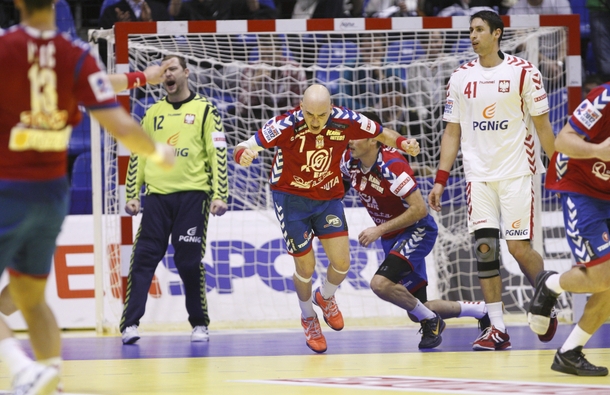
Last weekend, Copenhagen beat Barcelona, 29-23 in the first leg.  That showdown was the EHF’s match of the week with live English language commentary from Tom O’Brannigan.  The clash of these two titans in the second leg should probably be the match of the week again, but the pluralistic EHF decided that the Berlin-Leon match should get honors this weekend.  So, if you want audio commentary for this match you’re stuck with me.

Video Links are below.  Remember to have a sheet of paper handy to lessen the chance of seeing extraneous indicators of the final outcome

Copenhagen vs. Barcelona
(28.03.2012) http://www.ehftv.com/ehfcl/ec/cl/men/2011-12/video/002344

Leon vs. Berlin
(29.03.2012) http://www.ehftv.com/ehfcl/ec/cl/men/2011-12/video/002346

Koper vs. Madrid
(28.03.2012) http://www.ehftv.com/ehfcl/ec/cl/men/2011-12/video/002345

Zagreb vs.  Kiel
(29.03.2012) http://www.ehftv.com/ehfcl/ec/cl/men/2011-12/video/002347


Audio  Mp3 files are below.  You need to synch up the audio with the ehfTV video.  The first half audio starts at 5:20 on the EHF clock.  The second half starts at 48:00.


post

AUDIO: Interview with USA Team Handball Board of Director’s Chairman, Jeff Utz

USA Team Handball's Board of Director's Chairman, Jeff Utz

This past Thursday and Friday, I attended a Strategic Planning Conference in Salt Lake City.  There were 23 attendees including Board Members, athletes, club leaders and representatives from the USOC.  Several issues regarding the future of USA Team Handball were discussed and 4 broad areas were selected for initial focus:

1) Financial Stability
2) “Pipeline” Athlete Development
3) Promotion and Marketing
4) Governance and Management Structure

Following the meeting on Friday, I sat down with Jeff Utz, USA Team Handball’s to discuss the conference, the future of USA Team Handball and his role as Chairman.   The Audio is about 24 minutes and can be downloaded below.

post

VIDEO: Champions League Quarterfinal Matches

21,000 Fans are slated to watch Barca and Copenhagen play in a soccer stadium

The Champions League quarterfinal matches will be played this weekend and next.  The winners of the two game (aggregate goals) contests will advance to the Final Four in Cologne, Germany in May.

The marquee pairing is without a doubt Copenhagen taking on defending champion, Barcelona.  Some might complain that it’s a shame that one of these teams will be bounced out prior to the final four, but don’t count me in that group as we will likely see two great matches instead of one.  On top of that Copenhagen has decided to stage its leg Friday night at the Parken football stadium.  The atmosphere should be electric for this event and the oddsmakers have the first match as a pick-em.

As a side point, for our readers who don’t follow handball closely, it’s interesting to note that the Copenhagen club (at least at this high level) is a fairly recent creation.  Unlike the U.S., where new franchises are awarded to investors, European clubs with ambitions can simply work their way up through the ranks.  And over a 3 year period AG Copenhagen advanced to the Danish first division, adding stars and increasing payroll to the point where they’ve become the undisputed top side in Denmark.

The other pairing worth watching will be the Leon – Berlin matchup.  Whoever wins between these two will be the underdog outsider at the Final Four.  These sides appear to be pretty evenly matched and it wouldn’t surprise me at all if the winner isn’t decided until the final seconds.   After all, both know how to win with a little drama as they both celebrated tight victories on aggregate differential on their opponent’s home court.  Leon is a 2 goal favorite.

Alas, the final two matchups appear to be mismatches as it would be a major surprise for Koper or Zagreb to knock off either Madrid or Kiel.  Both sides are underdogs on their home court in the first match and even should they eke out a win in the first leg they’ll have to follow up that with another surprise the following weekend in less friendly confines.  Still, you never know, but I suggest you watch these matches with anticipation that you might be doing a little bit of fast forwarding.

EHF Quarterfinal previews article: http://www.ehfcl.com/men/2011-12/article/14825/Eight+final+steps+to+Cologne
ehfTV Schedule with Live video linkshttp://www.ehftv.com/schedule

Note:  The EHF has been pretty good lately about posting the on-demand video for the matches a few hours after the game.  The hyperlinks below are best guesses as to what those links will be.  Feel free to go directly to the ehfTV website, but beware the extraneous material that will show you the final outcome before you watch.

Copenhagen vs. Barcelona
(20.03.2012) http://www.ehftv.com/ehfcl/ec/cl/men/2011-12/video/002340
(28.03.2012) http://www.ehftv.com/ehfcl/ec/cl/men/2011-12/video/002344

Leon vs. Berlin
(21.03.2012) http://www.ehftv.com/ehfcl/ec/cl/men/2011-12/video/002341
(29.03.2012) http://www.ehftv.com/ehfcl/ec/cl/men/2011-12/video/002346

Koper vs. Madrid
(21.03.2012) http://www.ehftv.com/ehfcl/ec/cl/men/2011-12/video/002342
(28.03.2012) http://www.ehftv.com/ehfcl/ec/cl/men/2011-12/video/002345

Zagreb vs.  Kiel
(21.03.2012) http://www.ehftv.com/ehfcl/ec/cl/men/2011-12/video/002343
(29.03.2012) http://www.ehftv.com/ehfcl/ec/cl/men/2011-12/video/002347


post

Memo to IHF: Please add a web TV platform- I’ll gladly send you money

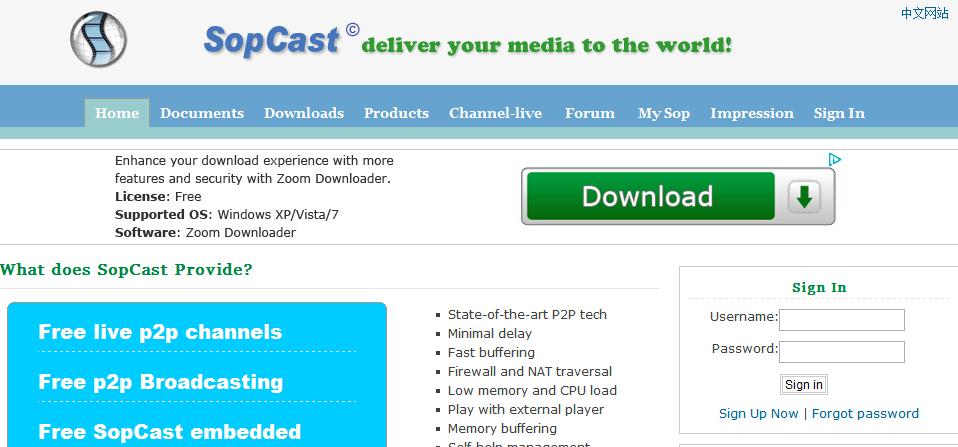
Do I really want to download the Sopcast platform? Yes, if I want to see whether Serbia or Poland qualifies for the Olympics.

Last weekend I had the unexpected treat of watching some great handball matches.  Sure, the Olympic Qualifying Tournaments had some real snoozer games where the outcome was all but pre-ordained, but there were also a few matches with very real drama and thanks to the Macedonian fans in Sweden, tremendous atmosphere as well.

“But, why was watching these matches an unexpected treat?” you ask.  Well, with the IHF’s apparent decision to only sell traditional TV rights to these matches and with no U.S. network buying I figured that it was about a 50-50 shot that I’d find a webstreaming video.  But even then, I also figured that it would be a poor quality picture, barely worth watching.  But, maybe those odd are improving or perhaps I’m getting a little savvier in finding viewable viewable webstreams, as last weekend I was able to watch Macedonia battle Hungary and Sweden and see Poland-Serbia battle to a 25-25 draw.

All well in good, I suppose.  Nothing like watching free handball on TV in the United States.  After all, just a few years ago, all anyone outside of the European continent could expect to do was read a computer generated translated summary of the match afterwards.

But, no, it’s not good enough.  I want more.  I want a better quality picture from a reliable source.   And, this should be music to the IHF’s ears– I’m willing to pay for it.   Heck, the word “free” is one of my favorites, but when you go to access the video from these fly by night websites, rest assured that they aren’t providing this service simply out of their love of handball.  With the video come advertisements and some level of access to your computer, especially if it requires some sort of platform download to watch the video.  Annoyingly, somehow my homepage was changed both for Internet Explorer and Google Chrome.  Sure, easy to fix, but now I’m wondering what else has found its way on to my laptop.

It really doesn’t have to be this way.  The IHF has provided webstream subscriptions for the World Championships and the forward thinking EHF even streams the Champions League for free.  Not to mention, the free European Championships streaming this past January.  The technology is there and there are a number of entities like Youtube willing to help.

If unofficial entities can webstream these matches, then very clearly it’s possible that the IHF could officially do so.  There’s simply no good excuse for this and the IHF should fix this in a timely manner.  Let’s say in time for the Women’s Olympic Qualification Tournaments coming up in May.


post

Olympic Qualifying Day 2: Only 1 Olympic ticket left to be punched


Nikcevic's fast break goal in closing seconds bails out Serbia

Five of the six remaining Olympic bids are now known as victories by Sweden, Hungary, Croatia, Iceland and Spain on Saturday made their qualification a mathematic certainty.

Only Tournament 1 has any major suspense left as Serbia and Poland’s 25-25 draw means that both those teams still have hopes of qualifying.  A tight affair throughout it appeared that Poland was pulling away when they secured a 25-22 lead with just under four minutes remaining.  But Poland did not score another goal for the remainder of the match and Serbia’s Ivan Nikcevic’s fast break goal with 5 seconds left brought the game level at 25-25 all.

In Tournament 2, Hungary fought off a pesky Brazil side for a narrow, 29-27 win.  The win assured that Hungary will advance to London.  In the second match, the home team, Sweden held off Macedonia for a 27-23 win.  The big difference was Right Back, Kim Andersson who delivered 3 straight goals from long range around the 52 minute mark to erase any Macedonian comeback hopes.  Hats off, though to the Macedonians players and fans.  With the exception of Lazarov, they have a pretty significant talent gap compared to the Swedes and Hungarians.  And without question, they’ve got the best fans.  Whether they traveled in force or were made up of resident emigrants living in Sweden they pretty much eliminated the home court advantage.  I’ve never seen that done on the road like that before in European handball.

Tournament 3 was no surprise as Croatia and Iceland had easy victories over Chile and Japan.

Scenarios for Sunday

Tournament 1 current standings

Spain 2-0-0 4 Points
Poland 1-1-0 3 Points; +1 GD
Serbia 0-1-1 1 Point; -3 GD
Algeria 0-0-2 0 Points

Serbia and Algeria will play the first match on Sunday and while Algeria was able to give the Poles a tough match it’s hard to see Serbia not winning by at least 4 goals.  With a victory by that many goals Serbia will have the goal differential needed to take 2nd in the group should Poland lose to Spain in the second match.  And  Poland will then need to draw or beat Spain in order to qualify for the Olympics.

And then the big question, especially for conspiracy theorists, will be just how hard will Spain play since they’ve already qualified?  Fortunately, for Serbia the Spaniards will not totally be without incentive as seeding for the Olympic draw is still at stake.  A first place in the group will put them on the same rank as World Champions, France, while 2nd place will pair them with Great Britain.  So, if Spain wins or draws tomorrow against Poland they will avoid France in group play at the Olympics.  Whereas losing means they will avoid Great Britain.  Of course, 4 teams advance out of Group Play at the Olympics, making the Olympic draw less paramount. So, the Spaniards will have a little incentive, but for the Poles it will be do or die which should make for an interesting contest.  At least the bookies think so, as the line for the match tomorrow is a pick-em.

Tournaments 2 and 3 are essentially over in that the Olympic participants are now known.  In tournament 2, Sweden and Hungary will play to decide who gets first and second, while in Tournament 3, Croatia and Iceland will do the same.  In terms of incentive for the Olympic draw these four teams will be split off into two performance rows (the 2 group winners will be paired as will the 2nd place qualifiers).  Croatia is probably the strongest of the four teams, so the Sweden-Hungary winner can probably expect to be paired with Croatia, assuming they take care of Iceland.

post

Men’s Olympic Qualification Tournaments: The Final Pieces to the Puzzle

Can Kiril Lazarov and Macedonia qualify for its first Olympics?

This weekend the final 6 slots for the Men’s Olympic Handball Tournament will be awarded.  Three tournaments, each with 4 nations will play a round robin tournament with games on Friday, Saturday and Sunday.  Here’s a breakdown of those tournaments:

All times are Central European Time/ Handicap point spreads for Friday’s matches in parentheses

Tournament 1 (at Alicante, Spain)

Friday 6 April
17:30: Poland (-7) vs. Algeria
20:15: Spain (-4) vs. Serbia

Saturday 7 April:
17:30: Serbia vs. Poland
20:15: Algeria vs. Spain

Sunday 8 April:
17:30: Serbia vs. Algeria
20:15: Spain vs. Poland

Host Spain is the clear favorite to advance and is a pretty good bet to win all 3 of their matches.  Algeria is the outsider team and will probably lose all 3 of their matches.  This means Saturday’s Serbia-Poland match could very well decide who will advance. The two teams met in January at the European Championships with Serbia winning 22-18.  But that match was in Belgrade, Alicante should provide a neutral setting.

Tournament 2 (at Gothenburg, Sweden)

Friday 6 April:
14:45: Hungary (-1.5) vs. FYR Macedonia
17:00: Sweden (-10.5) vs. Brazil

Saturday 7 April:
13:45: Brazil vs. Hungary
16:00: FYR Macedonia vs. Sweden

Sunday 8 April:
14:45: Brazil vs. FYR Macedonia
17:00: Sweden vs. Hungary

Host Sweden is the favorite, but they struggled in January at the European Championships enroute to a disappointing 12th place finish.  During Group play Macedonia and Sweden drew 26-26 on the first day of play, a performance that was an early indication of how nearby Macedonia would ride their pseudo home court advantage in Serbia to a 5th place showing and a slot in this qualification tournament.  The other European side Hungary placed 8th in Serbia and will also be looking to advance.  Brazil, the Pan American entrant will likely lose all three of their matches, so it will likely come down to head to head performance amongst the 3 European sides.  With Sweden a slight favorite, the Hungary-Macedonia match on Friday afternoon could be the big decider in terms of 2nd place and who ends up in London.

Tournament 3 (at Varazdin, Croatia)

Friday 6 April:
18:00: Croatia (-9) vs. Japan
20:15: Iceland (-14.5) vs. Chile

Saturday 7 April:
16:00: Chile vs. Croatia
18:15: Japan vs. Iceland

Sunday 8 April:
15:30: Japan vs. Chile
18:00: Croatia vs. Iceland

Barring a huge surprise from either Japan or Chile it’s all but preordained that Croatia and Iceland will advance.

(Editor’s note: If you find an internet video feed for these matches be sure to post the link at our Facebook page)


post

VIDEO: March Madness: Team Handball Style

Can Nikola Karabatic lead Montpellier to an upset over Barca?

I may have declared myself America’s #1 Team Handball fan, but even I can’t resist the lure of America’s NCAA Basketball Tournament.  It’s kind of hard to explain to Europeans, but this tournament is kind of like a knockout National Cup tournament on steroids.  Played over 3 successive weekends it totally captures the imagination of the American sporting public unlike any club event in Europe.  Everybody fills out a bracket for the 64 teams to compete for bragging rights and/or money.  Inevitably a little club or two knocks out a big club rendering predictions futile.  It is simply an awesome event, but as much as I’d like to see European Handball adopting something similar I won’t hold my breath waiting for that to happen.

Instead, I’ll make do with watching the Champions League Round of 16 over the next couple of weeks.  The 16 teams that advanced out of the Group Stage have been paired off and they will now play a 2 game aggregate goal playoff.  The lower seeded teams host the first match and the higher seeded teams host the return leg.  A definite advantage as those teams will know how much they need to win by in front of their home crowd.

At the EHF’s webstream platform, ehfTV.com, some of these matches will be available live and all of them should be available for viewing on-demand a day or so after the match is played.  As I’m still immersed in the NCAA tournament the on-demand feature is my preference and catching up with the Champions League is great on Mon-Wed when the tournament is dormant.

The EHF has already posted a great summary of the 8 pairings and what to expect, so I’ll simply reiterate that there are two great showdowns (Montpellier-Barcelona and Berlin-Hamburg) worth watching.  Normally, this type of matchup wouldn’t appear until the quarterfinals or the final four, but both Montpellier and Hamburg stumbled in Group Play resulting in a 4th place seeding.

In particular, I’m really looking forward to the Berlin – Hamburg showdown.  These two sides have already played each other twice this season with Berlin winning 26-25 in Berlin and Hamburg winning 24-23 in Hamburg.  With neither side having a realistic shot at catching 1st place Kiel this Champions League double-header takes on extra importance as a trip to the final four in Cologne is one thing they can still hope for this season.

Montpellier – Barcelona could also be interesting.  Montpellier is undefeated and 8 points clear of Chambery in the French league, so for all practical purposes continuing on in the Champions League is the only interesting thing left for them to do this season.  In Group Play they lost a lot of close games and slipped all the way to 4th place in the Group of Death.  One sure indication of what they can do when they play well is their 24-23 victory in Kiel.  Barcelona will surely be wary of Karabatic and company.

EHF Preview of the first stage for the round of 16: http://www.ehfcl.com/men/2011-12/article/14682/Prepare+for+the+knockout+stages%21

Tips on watching

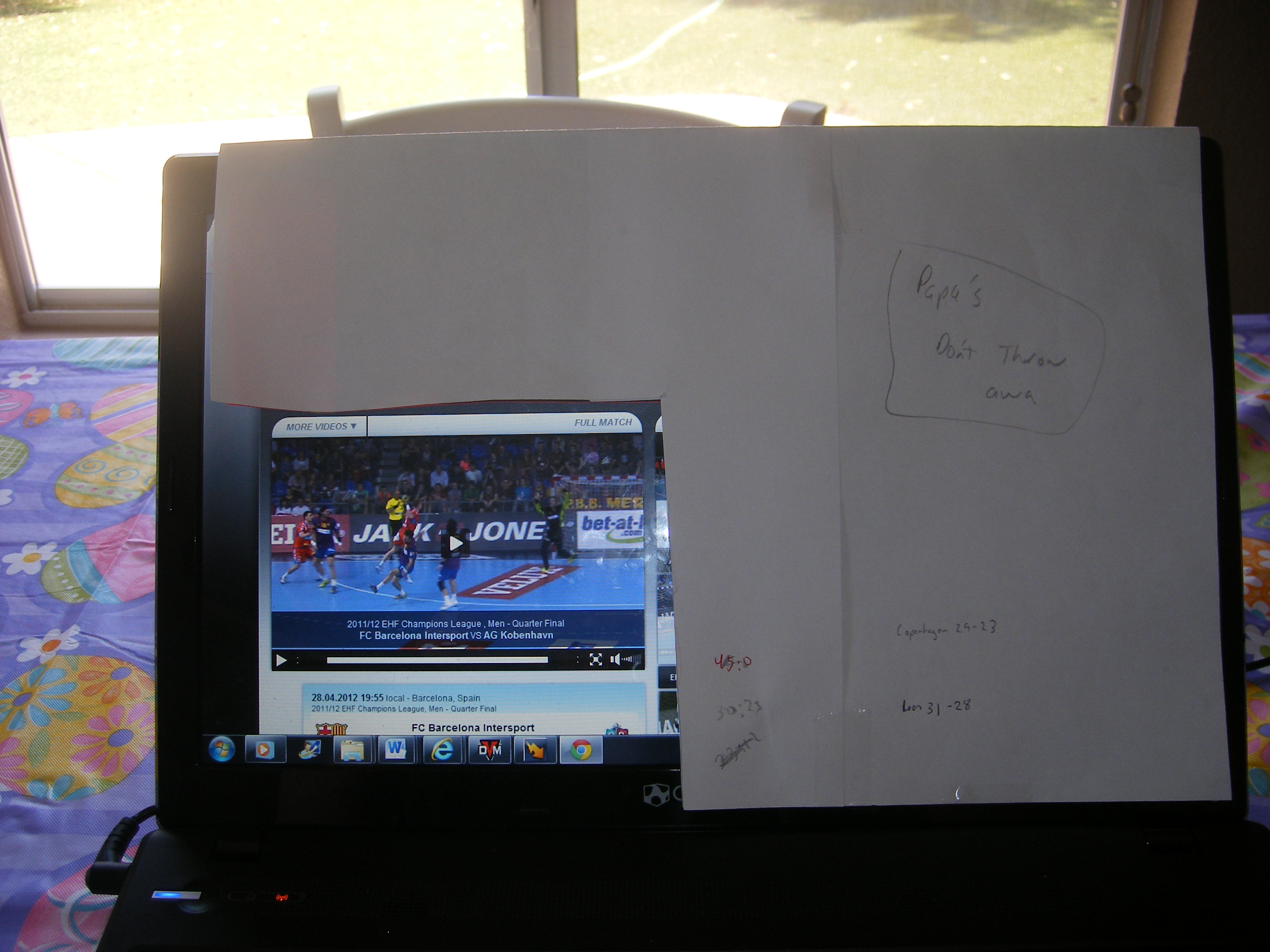
To watch the matches without finding out the scores ahead of time, I’ll try and post direct links to the videos below.  You can also find the videos with the ehfTV (full matches) link provided.  I suggest you use this link instead of going directly to the efhTV home page.  I say this because  you’ll have a better chance of not finding out the final score of the match.  Despite countless pleas for a different webpage design the EHF still likes to post all kinds of videos and smiling player interviews tend to reveal the outcome of matches.  Even with the direct links to the actual matches, though, you would be wise to either have a sheet of paper available to kind of glaze over your eyes as there are annoying links at both to the top and right hand side to these sorts of videos.  Once you start the video and click full screen, though, you are safe from harm.

With 16 matches you probably won’t have time to watch them all.  Accordingly, I suggest you focus on the Berlin-Hamburg and Montpellier-Barca showdowns.

On paper, some of the other pairings should be one-sided affairs.  For instance, I’m guessing that Kiel had little problem with Wisla Plock, but I could be wrong.  So just in case, I’ll check out that match using the sliding bar at the bottom to check the score throughout the match to make sure that Kiel didn’t unexpectedly stumble in the first leg.  I’ll do the same thing for Madrid and Copenhagen as well.

The other 3 matches (Leon-Veszprem, Kielce-Koper, Metalurg-Zagreb) should be more evenly matched, but I don’t think these teams are strong final four contenders.  I’ll probably skim through these matches as well, just in the interest of time.  I will say, though, that it’s usually entertaining to see the enthusiastic crowd at Macedonia’s Metalurg.

One final point:  Make sure you write down the scores of the first leg matches, so you’ll know what that means in terms of aggregate for the final match.  Also, keep in mind that the 2nd tiebreaker is away goals scored, as it wouldn’t surprise me at all if this doesn’t come into play in at least one of these pairings.

ehfTV (Full Matches): http://www.ehftv.com/ehfcl/men/2012/search/video/full-match/ (use this link to avoid final outcomes)

1 vs. 4 Seed Matches

Berlin vs. HSV Hamburg
(18.03.2012) http://www.ehftv.com/ehfcl/ec/cl/men/2011-12/video/002260
(25.03.2012) http://www.ehftv.com/ehfcl/ec/cl/men/2011-12/video/002266

Montpellier vs. FC Barcelona
(18.03.2012) http://www.ehftv.com/ehfcl/ec/cl/men/2011-12/video/002262
(25.03.2012) http://www.ehftv.com/ehfcl/ec/cl/men/2011-12/video/002250

Wisla Plock vs THW Kiel
(14.03.2012) Video: http://www.ehftv.com/ehfcl/ec/cl/men/2011-12/video/002244
(18.03.2012) http://www.ehftv.com/ehfcl/ec/cl/men/2011-12/video/002263

Kadetten Schaffhausen vs.  BM Atletico Madrid
(15.03.2012) Video: http://www.ehftv.com/ehfcl/ec/cl/men/2011-12/video/002259
(25.03.2012) http://www.ehftv.com/ehfcl/ec/cl/men/2011-12/video/002265

2 vs. 3 Seed Matches

Leon vs Veszprém
(17.03.2012) http://www.ehftv.com/ehfcl/ec/cl/men/2011-12/video/002245
(25.03.2012) http://www.ehftv.com/ehfcl/ec/cl/men/2011-12/video/002267

Kielce vs RK Cimos Koper
(18.03.2012) http://www.ehftv.com/ehfcl/ec/cl/men/2011-12/video/002247
(24.03.2012) http://www.ehftv.com/ehfcl/ec/cl/men/2011-12/video/002248

HC Metalurg vs. Zagreb
(18.03.2012) http://www.ehftv.com/ehfcl/ec/cl/men/2011-12/video/002246
(24.03.2012) http://www.ehftv.com/ehfcl/ec/cl/men/2011-12/video/002249

IK Sävehof vs. AG Kobenhavn
(18.03.2012) http://www.ehftv.com/ehfcl/ec/cl/men/2011-12/video/002261
(24.03.2012) http://www.ehftv.com/ehfcl/ec/cl/men/2011-12/video/002264

THN (17 Mar 2010): EHF Champions League Format: More tinkering needed. Why not a field of 64?: https://teamhandballnews.com/2010/03/ehf-champions-league-format-more-tinkering-needed-why-not-a-field-of-64/


post

Handball Talk (Episode 6): Pan American Beach Handball Championships in Uruguay


USA's Diva Desai takes a shot against Uruguay

John Ryan talks with USA Team Handball General Manager, Dave Gascon, Women’s Coach, Dede Piankova and  USA players, Diva Desai and Erin Kizer from Montevideo, Uruguay, the site of the Pan American Beach Handball Championships.  Included is a discussion on why the USA decided to participate in this tournament, how the game differs from the court version and where Beach Team Handball might fit into the big picture as the USA seeks to further develop team handball in the USA.

The women play their final game on Sunday at 1645, US East Coast Time: http://www.handballtv.blogspot.com/

Highlights of the women’s game against Uruguay are also available on the Day 1 video starting around the 17:00 minute mark.


post

VIDEO: Pan American Beach Handball Tournament to be webstreamed live

The venue for the Pan American Beach Handball Championships in Montevideo, Uruguay


The Pan American Beach Handball tournament starts tomorrow, 1 March, in Montevideo, Uruguay.  5 men’s teams and 5 women’s teams are participating.

The event will be live webstreamed at this site: http://www.handballtv.blogspot.com/

The USA women will be participating and this is their schedule for their round robin matches

Thursday, 1 March
USA vs Uruguay, 8:45 PM (Local), 5:45 PM (U.S. East Coast)

Friday, 2 March
USA vs Paraguay, 10:00 AM (Local), 7:00 AM (U.S. East Coast)
USA vs Argentina, 6:15 PM (Local), 3:15 PM (U.S. East Coast)

Saturday, 3 March
USA vs Brazil, 6:15 PM (Local), 3:15 PM (U.S. East Coast)

Complete Schedule: http://www.panamhandball.org/index.php?option=com_joomleague&func=showPlayground&p=35&pgid=16


post

VIDEO: Champions League Game of the Week (Kiel at Copenhagen)

AG Kobenhavn vs THW Kiel: Who will make a statement?

I’ve been remiss in posting links to the EHF Champions League Game of the Week, but having sat down to watch the first few minutes of this match, I thought it was worthy of a reminder.  Quite often the Group Phase of the Champions League can be somewhat boring with most of the teams knowing who’s going through to the knockout stages.  Both Kiel and Copenhagen are in that category, but this match will decide who will place first in their group.  While both sides are likely to win their first knockout pairing, having a first seed in the quarterfinals can be pretty important as it means you will avoid the other #1 seeds.

But, in addition to the Champions League implications this match is interesting in that it’s an opportunity for both sides to make a “statement.”  Kiel has dominated the HBL this year with no losses and barring a monumental collapse they will win the title.  They’ve been less impressive, though, in the Champions League and a win in Copenhagen will make a statement.   And for Danish League leaders, Copenhagen, the same is true as they surely want to make it clear that they are every bit as much a contender as Kiel is.  So, a clash of titans worth watching and a taste of what’s to come in the knockout rounds.

Link to On Demand Video:  http://www.ehftv.com/ec/cl/men/2011-12/video/002111


post

Air Force Basketball (Lessons for USA Team Handball): Lesson #2) Blue Chip Athletes from other Div 1 Sports are harder to come by nowadays

Post Academy sporting careers: Bob Djokovich, 78', with the USA National Team prior to the 84 Olympics and Jacob Burtschi, 07', with his current club, Germany's Fraport Skyliners

In the first part of this series I pointed out that if a downtrodden doormat like Air Force Basketball can execute a remarkable turnaround then it’s possible for USA Team Handball.  In part 2, I highlight how Air Force basketball athletes have contributed to our national teams through the years and what this means for USA Team Handball as it seeks to recruit “blue chip” athletes.

Another Olympics is approaching and I’ll bet you dollars to donuts, that we’re bound to see a few more mainstream journalists discover Team Handball and write a commentary or two about how it wouldn’t take much for the USA to be good at it.  Just get a few of our collegiate athletes to crossover to Team Handball after their career is over in their primary sport and it’s only a matter of time before this great sporting nation will be on the podium.  And it’s not just journalists which often conclude that this is the path to follow.  Here’s a quote from Interim USA Team Handball GM, Dave Gascon in a recent interview touting, A Change in Direction:

“We will no longer be the doormat of the Western Hemisphere.  Simply put, there are thousands of blue-chip American athletes who would love to represent the United States in international competition.  So while we are committed to a grass roots program to develop team handball with the youth our country, we are going to systematically go after those 400,000 NCAA athletes who go professional in something other than their scholarship sport after graduation.

Jeff and I independently came to the same conclusion that we would be foolish to not pursue our country’s best athletes who are in the last year of college or shortly after graduation.  Look, these are some of the most competitive people on the planet and most have nowhere to go to continue to compete at a high level.”

It’s easy to see why a lot of folks come to this conclusion, particularly when they look at the raw physical talent on the rosters of the world’s top teams.  Take for instance, Iceland, the silver medalist at the last Olympics.  They have some decent athletic talent, but they aren’t by any means physically imposing.  Heck, you could probably take any 1 out of 344 NCAA college basketball program in the U.S. and come up with a better crop of raw athletic talent; Doesn’t have to be Duke, Kentucky or Syracuse. Why, you could even take a mediocre (at best) program like Air Force and probably come up with the athletes you need to make a pretty good Team Handball squad….

And indeed, back in 1976 this hypothetical was exercised at a lower level when a group of cadets who played Team Handball intramurals at the Air Force Academy found out there was a club National Championship for the sport in the U.S.  An intramural all-star team was thrown together, composed largely of athletes from the Men’s varsity hoops team and this unknown team showed up at the Club National Championships.  The Air Force team, without the benefit of ever having seen how the game was supposed to be played quickly found out that the version of the game they had been playing in intramurals was only a rough facsimile of the real thing.  Still, they were hands down the most athletic and physically conditioned team at the 3 day tournament.  They adapted quickly and went on to take 2nd place, losing by two goals in the finals to a team that had several athletes on the USA’s 1976 Olympic Team.

So, if you can take a great group of athletes and overnight make them the 2nd best team in the country, I wonder what they might do at a higher level with a little bit more training.  Well, the Air Force team didn’t become the National Team, but after Graduating from the Academy in 1978 two of those players, Bob Djokovich and Tom Schneeberger continued to play handball and were linchpins of the 1984 Olympic Team, arguably the best national team the USA Men’s program has ever had.  If you put together a list of the all-time top American Team Handball players, those two are going to be very near the top of most everyone’s list.  And, I would argue that their handball accomplishments all by themselves means that Air Force Basketball has made the most significant contribution of any one NCAA sport/school to the sport.  (Note:  Another AF Hoops player, 1979 Grad, Randy Gricius, also played on the National Team for a while and would have likely played in the 1980 boycotted Olympics)

But since 1979, while the Air Force Academy has sent several athletes to the National Team there hasn’t been a single player that was part of the Men’s Varsity Basketball team program.  Why has that been the case for the last 33 years?

As an 87′ Grad who coached Team Handball at the Academy from 91-94 and also played service hoops with a couple of talented players I am in a fairly unique position to speak for the 80’s and 90’s decades.  The most glaring obstacle for getting collegiate basketball players to take up handball was a decision sometime in the 1980’s to discourage intercollegiates from playing intramural sports.  This shouldn’t come as a real surprise to anyone who follows NCAA sports nowadays.  Teams aren’t allowed to practice out of season, but players are expected, and most want to, to continue working to improve their skills.

For all practical purposes, though, this eliminated the introduction of the sport and the possibility of those athletes really taking a liking to team handball while still in college.  The only real chance to bring some of those athletes in was in the spring of their senior year after basketball season was over.  At the same time, however, the Academy club was becoming more organized and this meant that the club players even if somewhat less gifted athletically still had a solid year or two of experience on a collegiate player.  A basketball player or any other sport for that matter could join the club, but they would have a steep learning curve.  Not to mention the fact that they would be integrating into a team that had already been practicing together for a couple of years.

But, what about bringing in some of those athletes after graduation?  At that point their basketball options would be limited and even if they haven’t played handball you can’t graduate from the Academy without having seen the game played.  By happenstance, I had the opportunity to play organized service basketball with two former AF players of significant pedigree, Mark Slimko (89) and Chris Loll (95).  Both were about 6’5”, played forward and were team captains while at the Academy.  As a former player on the U.S. National team, I certainly did my best to talk up the sport with them, but neither showed much interest.  Either would have made a great Handball player and Loll, who was left-handed and had been a fairly accomplished high school baseball pitcher and football QB would have a lock.

Such a lack of interest, though, is not too surprising.  While some might jump at the chance to be an Olympian, the reality is that it’s far more likely that accomplished athletes in their early to mid 20s will be starting to think a little bit more about the rest of their life.  This was especially true since back then USA Team Handball couldn’t offer much more then modest dorm lodging, cafeteria food, a chance to travel and a modest stipend.  Being an Olympian has its appeal, but it you’ve already played at a fairly high level in front of large crowds against some top notch competition, toiling away in obscurity for two weeks of Olympic glory just might not be worth it.

Flashing forward to the 21st century and it’s pretty much the same story, except USA Team Handball doesn’t even have the resources for lodging, cafeteria, and a stipend.  Heck, without funding from the USA Team Handball Foundation national team athletes would even have had to pay for their own transportation to recent national team competitions.

To make matters even more challenging collegiate hoopsters now have far better opportunities to play professionally overseas.  This, of course, was always an option, but the conditions and compensation were less enticing.  Bob Djokovich, for instance turned down a modest offer to play for Red Star Belgrade.  Professional basketball in Europe has come a long way with salaries now even getting the occasional NBA caliber player to play in Europe.  From Sweden to Italy and from Spain to Turkey there are leagues looking for players and even players from less prominent colleges can make a comfortable living.  I saw this first hand in France as the over 35 recreational team I played for sometimes had our practices start after the 2nd Div Pro team at our club finished.  Each season there were a couple of Americans from lower tier Div 1 schools that had signed a contract and were living the dream:  An apartment in Paris, perhaps 40K Euros/year and playing basketball for a living.

To continue the Air Force basketball angle I tracked down Jacob Burtschi, one of the key players who helped orchestrate the revival I highlighted in part 1.  He’s now playing basketball for Frankurt’s Fraport Skyliners in the German 1st Division.  It’s not the NBA, but it’s one of Europe’s top leagues and he’s definitely enjoying the opportunity to play professional basketball.  Out of curiosity I asked him a few questions regarding Team Handball and the Academy.  He certainly had seen the sport being played in intramurals, but had not played it.  Now that he lives in Germany, he’s enjoyed watching the German Handball Bundesliga on TV.  And he further assesses that raw talent wise, he might even be a better fit for handball.  Having seen him play hoops, I’d have to concur with this assessment.  He’s a great basketball player, but he’s also got the prototypical handball build.  If he had played at the Academy 30 years ago chances are he would have taken up Team Handball.  Given the current opportunities he has now, though, there’s little hope that we’ll ever see him or other blue chippers like him take up the sport.

While it may be unrealistic to expect that thousands of blue chip athletes will drop everything to pick up team handball it is still indeed foolish not to try.  It will, however, not be easy and it will involve some targeted recruitment strategies and probably looking a rung or two below the true blue chip athlete.  In part 3, I’ll take a closer look at some of these strategies by examining the handball careers of a couple of would be Air Force basketball players whose hoops careers never materialized.

Colorado Springs Gazette Telegraph (26 May 2011): Air Force grad Burtschi gets experience playing hoops overseas: http://www.gazette.com/articles/burtschi-118667-hood-story.html

Colorado Springs Gazette Telegraph (26 Feb 2009): Gazette picks all-time Air Force men’s basketball team:   http://www.gazette.com/sports/career-48873-team-time.html
(Burtschi is in the starting lineup; Djokovich, Schneeberger and Gricius are reserves)

USA Team Handball (18 Jan 2012): A Change of Direction: http://usateamhandball.org/news/2012/01/18/a-change-of-direction/46210


post

Why not a Handball version of Linsanity?

Yoon and Miyazaki: How about a handball version of Linsanity

The sporting world discussion in the USA the last couple of weeks has been all about basketball player, Jeremy Lin, and how he has come out of nowhere to lead his team, the New York Knicks, to 7 straight victories.  Cut twice from two other NBA teams, he was pretty much the last player on the bench when injuries forced him into the starting lineup.  Given the opportunity to play he’s been averaging around 25 points a game, exciting fans and has become an overnight nation-wide sensation.  With a short name, “Lin”, the media has been having fun with clever headlines:  Linsanity, Lincredible, Linderella, etc.

What’s made the sport even more interesting and compelling is the fact that he’s an Asian American excelling in a sport at the highest level when Asians are often a rarity at any level.  Other then Yao Ming and a few other 7 Footers, there haven’t been a whole lot playing in the NBA.

As you might expect, the NBA has immediately seen the value in an unassuming Asian American star and the marketing has commenced in earnest.  One analyst has even projected that if Lin continues to play well the NBA will pocket an extra 80 million dollars this year.   And the marketing has become a world-wide phenomenon, with even the BBC’s World Have Your Say, discussing Linsanity.

It’s a shame that Handball doesn’t have some marketable Asian stars that they couldn’t promote the same way.  Well, actually they do have (or have had) the stars that could be promotable, but failed to fully capitalize on the opportunity.  Amazingly, the German Bundesliga’s all-time career scoring leader, Kyung Shin Yoon is a South Korean.  In 12 seasons from 1995 to 2008, Yoon scored 2,908 total goal averaging almost 8 goals/game.  This is a crazy, dare I say, “Yoonique”, anomaly in a league which is probably around 98% white European.     Yet Yoon, who continues to play in South Korea, is probably less known in his native country then Lin is now after two weeks of good play.

On a smaller scale, one of Japan’s best players, Daisuke Miyazaki, played a season in Spain’s Liga Asobal.  Miyazaki had a respectable season, but played in obscurity.  In Japan, he’s 10 times more famous for winning a Ninja Warrior style game show 3 times.

So, I would argue that a couple of opportunities to expand the reach of the game in Asia have been missed.  Yoon, who proved himself over several years, in particular, should have gotten more promotional push in his native country.  Perhaps it would never have been Linsanity, but at least some sizable segment of South Korea surely would have been compelled by one of their citizen’s starring in the world’s best league.

The lesson here is that in the future there will likely be new opportunities to promote non-European stars in Professional leagues and those leagues should be ready to take advantage of the possibilities.  Heck, one could go even farther and assess that they should be scouring China right now for a player that they can develop and promote.  With 1.3 Billion people surely there is a Yoon like athlete that could create handball’s own version of Linsanity.

THN (23 May 2008): 2,908 Goals: The Kareem Abdul-Jabbar of German Handball Heads Home and a Marketing Opportunity is Squandered:  https://teamhandballnews.com/2008/05/2908-goals-the-kareem-abdul-jabbar-of-german-handball-heads-home-and-a-marketing-opportunity-is-squandered/

THN (15 Jun 2010): Daisuke Miyazaki: The Ichiro Suzuki of Handball (or maybe the Kyle Rote Jr.): https://teamhandballnews.com/2010/06/daisuke-miyazaki-the-ichiro-suzuki-of-handball-or-maybe-the-kyle-rote-jr/


post

There is no “WE” when it comes to the global interests of Handball

Competing interests often keep Handball from growing in popularity

Christer Ahl wrote a commentary recently that addressed whether there are too many events like the European Championships on the quadrennial calendar for Handball.  In his view it all came down to the basic question:  For whom and for what purpose do we organize these Championships? And he does a pretty good job summing up the pros and cons along with the basic problems of an overly crowded schedule and the impacts to the players.  That being said he comes up short in a couple of areas that I’d like to further address.

The first area relates to Christer’s liberal use of the pronoun “we”.    In some follow up dialogue, Christer acknowledged that in the interests of time and space he used the word without defining contextually who the “we” was.  In broad terms Christer’s “we” refers to dedicated Handball enthusiasts who enjoy watching the sport and would like to see the sport become more popular.  This is probably a fairly large constituency even if there is no particular organization that directly speaks for these interests.  But, as you delve further into the article, Christer’s bias as an American and former IHF official with a very global view are pretty apparent.  Not to mention, he has a pretty sympathetic ear to the interests of the players.

When all is said and done, it’s pretty obvious that there is simply no “we” when it comes to Handball.  Instead it’s a complicated game of tug of war between competing organizations and interests with alliances that rotate back and forth based primarily (some would say, solely) on the best interests of those entities.  For the uninitiated here’s a primer on those entities.

IHF (International Handball Federation)
– Income sources:  World Championships, Olympics, TV rights and sponsorships
– Power and influence factors:  Controls two prime money making events and the legitimacy of an international federation

EHF (European Handball Federation)
– Income sources: European Championships, Champions League, TV rights and sponsorships
– Power and influence factors:  Controls two prime money making events and the represents the continent with the overwhelming greatest number of fans

Other Continental Federations (Africa, Asia, Pan America, Oceania)
– Income sources:  IHF grants, National Federations
– Power and influence factors:  These Federations to varying degrees have bundled national federations votes for IHF elections

National Federations (Europe)
– Income sources:  National Team competitions, National Club cup competitions, Government backing and sponsorships
– Power and influence factors:   These Federations control the national teams which are the primary products of the top revenue events

National Federations (Rest of World)
– Income sources:  IHF grants (often filtered down through Continental Federations)
– Power and influence factors:  These nations each have a vote in the elections for IHF positions and collectively they can out poll Europe

National Leagues
– Income sources:  Clubs, TV rights for league matches and sponsorships
– Power and influence factors:  These leagues represent the clubs in their leagues.

Top Handball Clubs
– Income sources:  Club matches and sponsorships
– Power and influence factors:  These top Handball clubs pay the bulk of the salaries for the World’s best players

Other Handball Clubs
– Income sources:  Club matches and sponsorships
– Power and influence factors:  While fewer top players play for these clubs these clubs provide the competition for the top clubs and are necessary for the National Leagues to function

Players
– Income sources:  Clubs, also additional minor compensation for national team events and sponsorships/advertisements
– Power and influence factors:  The players are the product.  Without the players there is no Handball

Now, I’ll be the first to state that this is a simplified summary of the different entities that collectively are involved in the Handball world.  It just scratches the surface and even within these different entities there are competing interests.  For instance the German Bundesliga competes against other national leagues and it can hardly be said that every European National Federation is on the same page on a number of issues.

About the only thing that all these different entities agree upon is that it indeed would be a good thing in Handball was more popular.  And I suppose all involved also like watching a good handball match.  But, it’s hard to see common cause going much further than that.  And as with many things in life and politics, these divisions pretty much all boil down to money and the reality that there is only so much money to be divided up.

If you take the specific question Christer asked, “For whom and for what purpose do we organize these Championships?” and ask each of those entities you’ll get a substantially different answer from every single one of them.  That’s because staging a European Championship or World Championship has a tremendous impact with pros and cons for each of these entities.  Changing the status quo, could radically diminish (or even eliminate) some of these organizations.

So, if the current state of affairs is that there is a tangled web of competing interests does that mean this status quo will be maintained on into the future?   Or is there a real potential for some radical change to the status quo.  For change that would increase the popularity of the sport and result in a better product for fans world-wide?

Yes, it’s possible and that will be addressed in a follow up commentary.   If you’re looking for a hint, look at the common thread inherent in each of these entities and then follow the money.