post

EHF Doubles Down on it’s failure to take action

You’re kidding me? The shirt pulling incident is now a lighthearted whimsical non-event.

The jersey pulling incident at the Women’s European Championship has just gotten a little bit more bizarre.  Here’s a refresher as to what happened.  During the Serbia – Norway preliminary round match, the Serbian coach, Sasa Boskovic, grabbed Norwegian right wing, Linn Jorum Sulland’s jersey and arm.  Yes, standing on the sidelines the head coach of one team reached out and physically disrupted the play of an opposing player.

What’s the penalty for such a transgression?  Well, the referee’s didn’t see anything during the match so there was no immediate penalty.  Afterwards, however, as my colleague, Christer Ahl, noted it would be appropriate for European Handball Federation (EHF) officials to bar coach Boskovic from the rest of the tournament.

But, then the hand wringing began.  First, the EHF issued one of their traditionally oblique memos regarding an “incident.”

Nobody saw it, nobody complained and therefore we can’t do anything about it.  I’m not certain as to the regulation nuance, but this was ridiculous.  Federations should be able to make use of video footage to evaluate conduct like that and to take appropriate action.  But the EHF compounded their handwringing by adding “It is however evident that the media, through the selection of match scenes, has not presented a complete picture of the incidents.”  Alright, here’s some video to peruse.  Judge for yourself what more evidence you need.

The Serbian Federation also issued an apology:  “Please accept our apology,” the statement reads. “Since it all happened in the heat of the match.”

So, “not a complete picture” and “heat of the moment.”  Maybe the Serbian coach had some good reasons for being upset with the Norwegian winger?  Nothing that would justify his actions, of course, but maybe they would at least explain the non-punishment.  Well, according to this Serbian website article Coach Boskovic was upset with Sulland for invading his space and preventing him from communicating with his players.  Huh?  Quite frankly, I’ll actually give Boskovic credit for perhaps playing a role in taking a Norwegian player out of the game mentally on offensive.   The little game that was being played between the coach and the wing was undoubtedly a distraction for Sulland.  She, however, is a player and can stand anywhere she wants to.  All he had to do was move a few feet to the left.  Instead he reaches out and grabs her.  Trust me coach, there’s nothing you could have said to your players that was so important to physically make contact with a player on the court.

As someone who wishes handball would be taken more seriously, you get used to shaking your head at such events, and moving on.  It’s hard to know for certain why the EHF doesn’t take more action.  It shouldn’t come as too much of a surprise that the coach in question is the coach of the nation hosting the tournament.  Moreover, Serbia agreed to host at the last moment when the Netherlands bowed out.

And I was ready to move on until I saw this posted on the EHF webpage.  I don’t know where to begin here.  The EHF has now double downed on its failure to take action by trying to pass off this incident as a light hearted moment.  What could possibly be the message behind this?  Ha, ha, it’s no big deal for coaches to make physical contact with the opposing players?  How can you make light of such a transgression?  Wouldn’t it be hilarious if this happened again in the final of a close match?  What’s going to be the reaction then?  Well, unfortunately the precedent has been set.  I’m wondering what the written words will be for that jersey gift.

Seriously, I don’t know what I’m going to see next.  Maybe, players will get caught betting against their own team and then add a betting sponsor as an advertiser on their jerseys.


post

EURO 2012: Main round ready to start

Montenegrin coach Dragan Adzic knows how to bring out the skills and emotions from his talented team


Groups C and D finished yesterday with some exciting matches. Hungary finally managed to match my predictions by defeating Spain who had previously won both their games. The final result was a seemingly narrow one goal-win, but Hungary was in fact dominant and had a four-goal lead shortly before the end. And when Germany, not entirely unexpected, took their final chance to advance by beating Croatia, then the Hungarian happiness was complete, as they now advance with four points to the main round, their defeat against Croatia no longer being relevant. While Hungary-Spain was a game of good quality, Germany vs. Croatia was really highly affected by nerves, if one wants to be kind and find an excuse. The way they played, both teams really deserved to be packing their bags to go home. What made the difference in the end was the superb goalkeeping by Schuelke in the German net.

Montenegro continued to show that the really have a strong team also in the absence of Bojana Popovic, and the emphasis is really on cohesiveness and team spirit. They play with great enthusiasm and determination. Romania had the upper hand in the first half, but then they gradually fell behind. I put much on the blame on the coach, whose destructive demeanor has been obvious for many years now. It is hard to understand that the traditional handball power of Romania cannot find someone to replace him who gives the talented team the support they deserve! Russia easily advanced by beating Iceland, who took their third straight loss in good spirits but showed that they are not yet strong enough for this level of competition.

In the main round group that now combines groups C and D, it will be mostly a matter of watching whether any other team can catch up with Montenegro and Hungary (each with 4 points), prying away one of the semi-final slots from them. Perhaps Spain (2 points) will launch a comeback, whereas the Russians (1 point) may already have fallen too far behind. Romania (1 point) and Germany (0 points) are the remaining teams in this group.

Today we had the final round of groups A and B. In group A we had a rather anticlimactic match-up between Norway and Ukraine, after Norway already advanced with maximum points after their wins against Serbia and the Czech Republic. Norway spared some of their best players but won by one goal, after an unattractive game where Ukraine often resorted to dirty methods. The Serbs and the Czechs had a much more critical battle, with the winner gaining the points that could make all the difference for the chances in the main round. It did indeed turn out to be a high-intensity game with the Czechs being ahead in the first half. But the Serbs gradually took over, even if it was very close until the last few minutes. The final result, much to the delight of the crowd, was 28-24 for Serbia.

France has not lost against Sweden for quite some time. So the question was whether the earlier win against Denmark would cause the Swedes to get the inspiration to break the ‘dry spell’ against France. But those who were dreaming about that must have forgotten that Sweden won against Denmark despite a mediocre performance where Denmark committed even more mistakes. Sweden now stayed even until France pulled away from 5-5 to 10-5. The lead was at one point ten goals and the game ended 24-17 for France, after feeble attacking play from Sweden against a strong defense. As expected, Denmark was able to handle FYRO Macedonia rather handily, but the break-through did not come until the last few minutes of the first half. Up to that point, the ‘almost home team’ kept the game even.

In the main round group, I happily stay with my initial prediction that Norway (4 points) and France (2 points) will qualify for the semi-finals. France vs. Serbia (2 points) will of course be a key match-up. While I do not believe in a surprise here, it could hypothetically open up an opportunity also for Denmark (2 points) to get back into the running. I do not see any hope for Sweden (2 points) or the Czech Republic (0 points).

Finally, in a way that really disappoints those of us who want to expect more from the EHF, the EHF took the easy but totally inappropriate way out in dealing with the nasty incident caused by the Serbian coach in the game against Norway. His interference in the game, by repeatedly holding on to a Norwegian player on the court, should have earned him a suspension for the remainder of the event. Not even the top leaders of the EHF have wanted to try to deny that the EHF Legal Regulations would have made such action possible, even though the referees and delegates did not see the incidents.

So instead, the EHF tried to blur the issue, mumbling about the wording of the regulations and absurdly arguing that the video evidence that had circulated around the world was not adequate. So, as many had feared, the EHF simply decided to ‘sweep the whole thing under the rug’: a self-inflicted embarrassment for the EHF and an awful precedent in our sport that needs to think more about protecting its fragile image!

post

VIDEO: USA vs. Canada, IHF Challenge Cup


USA’s Orton Fofana about to take a hard foul in the closing minutes. (Check video 8 of 8 at around the 6 minute mark to see how cooler heads prevailed.)

Alberta Team Handball has posted video of the USA – Canada, Men’s Under 20 group play match that was played in Mexico this past November.   Canada won that contest 37-30 and later beat the Americans 40-38 in the Bronze Medal match.

It doesn’t take long to see how pivotal the back court tandem of Fofana, Binderis and Galindo were to the U.S. performance.  These players definitely have a future with the U.S. national team.

Video 1
Video 2
Video 3
Video 4
Video 5
Video 6
Video 7
Video 8

Player #, Name, Club/country of residence, goals scored
#1, Chris Hesser, Dynamo HC, Goalie
#2, Stefan Paunovic, Denmark, 0 goals
#3, Tylert Shukert, Minnesota HC, 0 goals
#5, Domenic Lapore, Salt Lake City, 0 goals
#6, Jerome Nohr, Germany, 0 goals
#7, Ian Pinson, LA THC, 1 goal
#8, Orton Fofana, France, 10 goals
#11, Alex Binderis, Sweden, 4 goals
#15, Javier Galindo, Spain, 9 goals
#16, David Brown, West Point, Goalie
#17, Andrew Donlin, Air Force, 2 goals
#24, Connor Holt, West Point, 2 goals
#25, Ryan Petersen, Cary HC, 0 goals

THN (23 Nov 2012): IHF Challenge Cup: Some numbers behind the results


post

Start of EURO 2012: Scandalous action by home team coach; no spectator interest

This requires a long ban from participation in our sport!


At this point, two of the groups have played two matches per team, while two groups just have had one round. We already have some teams qualified for the main round, and for the most part we have not seen major surprises.

In group C, Spain has shown that injuries and hints of poor form have not prevented them from grabbing two straight victories in an otherwise very evenly matched group. Croatia surprised Hungary on the first day, but the Hungarians came back and defeated Germany. The Germans are without a win so far but could still make it to the main round. As expected, group D has become a tough fight between three teams who are trying to maximize the points that they can carry to the main round. Montenegro was impressive against Russia, and they did not seem to miss their retired star Popovic. Romania also seemed to be able to get a comfortable win against Russia, mainly due to a spectacular performance by the young goalie Tolnai, but the Russians managed to come back and tie the game.

In Group A, Norway seemed comfortable during much of the game, but in the end they just barely managed to hold off the home team Serbia. The Czechs lived up to my ‘dark horse’ label and got a nice win against Ukraine. The Scandinavian ‘derby’ between Denmark and Sweden turned out to be just as exciting as had been expected, at least in terms of result. It was a game mostly characterized by technical mistakes and turnovers, and the Swedes seemed feeble in the early going. But towards the end it almost looked as if the Danes tried to give the game away through endless mistakes. And indeed, the Swedes turned a five-goal deficit into a 27-26 win. France seemed just as powerful as in the past, when running over FYRO Macedonia.

When the Netherlands pulled out as a host for this event at a very late stage, it is understandable that the EHF did not have much of a choice; and they cannot be criticized for accepting Serbia’s bid, after the very successful men’s championship at the beginning of the year. But it is apparent that women’s handball is not much of an attraction in Serbia. With the exception of the games involving the home teams and the near neighbors Montenegro and Romania, the halls looked miserably empty. Not exactly the image and propaganda that we want for women’s handball at the top level. It seems there are very few countries that can guarantee full arenas when the women come to play!

But the real scandal took place in the Norway-Serbia game. I thought that the situation involving the notorious Gunnar Prokop entering the court to stop a fastbreak for the opponents some years ago would remain unique. But here we had the Serbian coach Boskovic reach in and grab the arm and shirt of a Norwegian player on two occasions, to prevent her from her intended movement on the court. It is fully understandable that it was not detected by the referees, but I am somewhat disappointed that the match supervisors also failed to spot it. As it happens, the EHF (unlike the IHF) has a Legal Regulation that allows the EHF to initiate disciplinary proceedings on its own, and with the help of video evidence. I would be extremely disappointed if the EHF did not ensure that the Serbian coach at least gets barred from the rest of this event. This kind of action must be punished and discouraged as strongly as possible.

post

Women’s EURO 2012 – Ten candidates for the medals??

Your guess is as good as mine…


I have become used to the idea of ‘sticking my neck’ out with some predictions for major championships. Often I felt reasonably comfortable with my predictions, and I even felt that I was ready to suggest some specific surprises. But this time I must admit I really do not feel I have very strong views. I have followed the results of the preparatory tournaments, the team rosters and the injury problems, without sensing that this has given me any special insights.

And I really do believe that my heading is justified. While I think this is going to be an event where most of the traditional contenders will do well, many of them are in some kind of transition, with the loss of key players or the arrival of a new coach. So I think there could be as many as ten teams having a good chance for a medal, and that you could not really talk about a surprise if any of those ten teams go to the final. But at the same time, I will be a coward and predict that Norway and France will qualify from one half of the draw, while Hungary and Romania are my best bets from the other side.

You have heard me argue that I do not really like the tournament format with four groups of four, where only one team in each group misses out on the main round. Many times this makes for a rather boring first stage in some groups, and it even leaves some room for tactics and manipulations in the third round of the groups, when some teams can afford to speculate about what result suits them best.

But at least I see some intriguing match-ups in each of the groups. While I see Norway as the favorite in group A, I wonder if the home court/crowd advantage can help Serbia overachieve, just like they did on the men’s side. It would also be nice to see if the Czech team could get to the main round, after so many years of weak showings. In group B, I see Denmark-Sweden on the first day as the key game, with a probably edge for the young Danish team. And the loser of this game may find it tough to keep FYRO Macedonia behind them. While I have already said that I see France going through to the final four, mostly on account of their physical style, I do not think they are unbeatable.

Germany’s return to the top level is causing speculation in a positive direction, while I see some experts predicting a decline for Spain this time. I think this leaves some room for an experienced Hungarian team to get off to a good start. Iceland will find it tough to win a game in group D. We have here, like several times in recent years, a Russia-Montenegro encounter; moreover with a new coach for Russia and an interesting psychological situation for Montenegro. Will the Olympic silver now lead to a letdown or will it stimulate them to a further surprise? But I think the time is now right for Romania.

Finally, the EHF has nominated six women’s couples among the twelve referee pairs. There are also six rather experienced men’s couples. In the Olympic Games we often had the sense that several of the men’s couples had major difficulties in finding the right approach to the women’s games. Let us see now if the women’s couples, despite their generally more limited experience, are better at finding the right touch for this women’s event. Good luck to all of them! Our top women’s teams deserve first-class support from the referees.

post

IHF continues to refuse to deal with the FCH, the official association of the European top clubs

Old habits and attitudes need to change — also in the IHF !


For some time now, the Forum Club Handball (FCH), through which all the top clubs of Europe are represented, has had a fruitful collaboration with the EHF. The FCH is represented on the EHF Professional Handball Board, where also national federations, leagues and player representatives join the top EHF officials. (A similar but separate Board also exists for women’s handball). It is of course a well-known reality that the demands on the top players from their clubs, leagues and national team cause tensions and raise important issues such as the international competition calendar, the compensation for the release of players from their clubs for national team events, and the related issue of insurance.

The EHF, just like FIFA and UEFA in football, allows not just discussions but actual negotiations on these issues with the other stakeholders. By contrast, the IHF has consistently dictated the conditions for player release, compensation and insurance on a ‘take it or leave it’ basis in relation to IHF events such as World Championships. Increasingly, this authoritarian approach has led to great dissatisfaction among the representatives of leagues, clubs and players. It is not seen as an acceptable recognition of the fundamental asset that players and clubs constitute in the world of handball.

Moreover, it fits in with an attitude demonstrated by the IHF in recent attempts to revise the IHF By-Laws, which reflect the apparent desire by the IHF President to impose duties and obligations but deny rights and privileges on the part of the stakeholders in handball. The pivotal role in dealing with this problem is played by the national federations in Europe. Of course, to some extent the federations might be seen as competition for influence with the leagues and clubs, and they may therefore fail to question the obsolete IHF practices. But one would really like to believe that the national federations which, in aggregate, are the ones, who have the formal political influence on the IHF regime, should better understand that the IHF’s position is really untenable.

As an example of the absurd length to which the IHF is prepared to go in order to maintain unilateral control, it should be noted that not just does the IHF refuse to recognize and have a dialog with the FCH; in a clear attempt to ‘divide and conquer’, the IHF has announced to clubs that they must deal with the IHF on an individual basis, because otherwise they cannot even count on the compensation that the IHF arrogantly determines without any form of negotiation. In other words, clubs who would want to stick together and be represented by the FCH in any such meetings will automatically lose the right to compensation. Instead, they would have to tolerate that the IHF hand-picks a small number of national federations and clubs as participants in the meetings where the IHF decisions are conveyed.

Frankly, it is embarrassing to see such methods continue to exist in our sport and, again, it is equally disturbing to see that the national federations do not force the IHF to change its approach.

post

The implications for USA handball if Puerto Rico were to become the 51st state

Side by side, for now, but perhaps one day the star gets moved!?


Two weeks ago we had elections that were so controversial and hotly contested on so many levels, that it was completely overshadowed in the U.S. that Puerto Rico simultaneously had a referendum about it status. The referendum had two parts: in the first one the result was a majority in favor of a change of the current situation under which Puerto Rico is a U.S. ‘territory’ and where the Puerto Ricans have U.S. citizenship. The second part gave the Puerto Ricans a chance to express opinions about what new relationship they would prefer. Here there was an overwhelming majority in favor of statehood, i.e., Puerto Rico becoming the 51st one among the United States.

However, one should keep in mind that this referendum does not in any way guarantee that statehood is just around the corner. Many Puerto Ricans would see statehood as something that would help the local economy, as it would undoubtedly make them ‘takers’, to use the terminology that came up in the recent U.S. election, meaning that they could expect economic benefits that would exceed their aggregate federal tax burden. But this may be precisely what would make the members of the U.S. Congress hesitate about voting with the two-thirds majority in favor, in this precarious moment for the U.S economy. The initiative would have to come from President Obama, who has generally spoken favorably about statehood, but also for him would it be a big step to take up this initiative right now.

So it may be a bit premature to discuss statehood despite the results of the Puerto Rican referendum. But it may still be fun and thought-provoking what it could mean in an admittedly peripheral area, namely the impact on the state of handball if Puerto Rico were to become fully integrated with the rest of the U.S.! Puerto Rico has participated independently in handball as in all other sports with national teams, and they have their own sports structure and Olympic Committee. In some sports the Puerto Ricans would be ‘dwarfed’ in the case of an integration, but that would not be the case in handball.

While traditionally U.S.A. had the upper hand, this is typically not the case today. Despite its relatively much smaller population, but to some extent due to the advantages of its ‘compact and manageable’ size, Puerto Rican handball has been holding its own in comparison with U.S.A handball in PanAmerican competition. Their federation has been well-organized and has had substantial clout in their Olympic Committee. They have had good coaches (sometimes with Cuban support) and astute administrators. They have good, dedicated handball facilities, and their youth program has been impressive in relation to its size. And they have an IHF referee couple, which is more than USA handball can boast with at this point in time. So quite conceivably, the Puerto Rican handball could become ‘the tail wagging the dog’ as the expression goes.

In other words, it could become a rather interesting debate about how integration would influence the development of handball over the short term and for the longer term! Clearly, there would be a sudden influx of good quality players, although the integration would not necessarily be an easy one. This could lead to a sudden boost in the context of the competitiveness of the national teams at different levels. But what would it mean for the longer term? Would it serve to encourage the growth of handball in the other 50 states or would it perhaps in some way cause handball to become even more of a ‘niche’ sport? And what about development in Puerto Rico when moving from being a country with a proud national team of its own to being a component of USA handball and its national teams? Is it conceivable that some of the excitement around handball in Puerto Rico could diminish rather than being enhanced? (This is of course a broader question that would affect all types of sports).

In the U.S., we have often debated whether it would be more realistic to ‘jump start’ handball development by concentrating mostly on a few geographic areas rather than focusing on nationwide growth all at once. With the addition of a 51st state, it seems that this issue would be given a sudden, practical test. It would also be interesting to see what the reactions would be among our Caribbean and Central American neighbors. They would obviously have reason to speculate about the impact of joint U.S./Puerto Rican resources on the opportunity to be successful in advancing from the region in qualifying events for PanAmerican Championships and beyond.

Given that the statehood question is not likely to have an imminent resolution, I will put on the brakes on my speculation at this point. The scenario may never come about, or it may be something for a distant future when the circumstances may have changed substantially. But apart from intriguing speculation, it just might suggest to us that it would be prudent to do some modest amount of preparatory thinking about the implications, just in case…. And it is also interesting to see that, at this very moment, there is some excitement about the notion of the possible independence of Catalonia from Spain, precisely as it pertains to sports, given the dominant role of FC Barcelona in football, handball and other sports and the large number of individual star athletes from the region!

post

IHF Challenge Cup: Some numbers behind the results

Team USA’s Olivia Goncerz (#4), Lynn Hodderson (#11) and Anja Borg (#5) try to stop a Mexican attack.

The USA recently competed in an IHF Challenge Cup Tournament in Mexico from 7-11 November.  The Challenge Cups are an IHF initiative to give more playing opportunities for less developed handball nations.  A men’s under age 20 competition and a women’s under age 19 competition was held and the other nations participating were Mexico, Canada and Puerto Rico.  The USA Teams did not fare well overall.  The men placed 4th losing all four of their matches, while the women placed 3rd, managing a draw and a win against Puerto Rico.

Men’s Results

Group Play
USA – Mexico 23-33 (13-15)
USA – Canada 30-37 (17-19)
USA – Puerto Rico 30-35 (15-16)

3rd Place Match
USA – Canada 38-40 (19-20)

Roster/Place of Residence/USA Club/Scoring
Javier Galindo, Spain, 38 Goals
Orton Fofana, France 29 Goals
Connor Holt, West Point, 17 Goals
Alex Binderis, Sweden, 15 Goals
Andrew Donlin, Air Force, 12 Goals
Ian Pinson, LA THC, 6 Goals
Stefan Paunovic, Denmark, 3 Goals
Jerome Nohr, Germany, 1 Goal
Tyler Shukert, Minnesota, 0 Goals
Domenic Lapore, Salt Lake City, 0 Goals
Ryan Petersen, Cary HC, 0 goals

Goalies
Chris Hesser, Dynamo HC
David Brown, West Point

While it’s disappointing that the men didn’t win any games, the scorelines indicate that all four matches were competitive, with the half-time differentials all 2 goals or less.  A far better than last year’s Under 19 team which lost 60-8 to Argentina at the Pan American Championships.  The two leading scorers for the U.S. appear to have been dual citizen athletes, Javier Galindo (Spain) and Orton Fofano (France).  As they accounted for 55% of the U.S. offensive output, one can conclude that their addition to the roster was pretty pivotal to the U.S. respectable performance.  Other key contributors were Alex Binderis who lives in Sweden and two cadets, Connor Holt of West Point and Andrew Donlin of Air Force.

Women’s Results

Group Play
USA – Puerto Rico 29-29 (16-11)
USA – Mexico 23-14 (7-9)
USA – Canada 34-13 (10-18)

3rd Place
USA – Puerto Rico 34-27 (13-15)

Roster/Place of Residence/USA Club/Scoring
Anja Borg, Norway, 19 Goals
Stefanie Hesser, Dynamo HC, 18 Goals
Maja Storm, Germany, 13 Goals
Morgan Thorkelsdottir, Iceland, 12 Goals
Lynn Hoddersen, Germany, 9 Goals
Alana Steinarsdottir, Iceland, 6 Goals
Olivia Goncerz, Jersey Girls, 5 Goals
Sierra Thompson, Sweden, 4 Goals
Natalie Dabrowski, Jersey Girls, 2 Goals
Izabela Szymanski, Jersey Girls, 1 Goal
Essence Jones, LA THC, 0 Goals
Kamila Pawka, Jersey Girls, 0 Goals

Goalies
Sophie Fasold, Dynamo HC
Freja Dobreff, Germany

The USA Women fared better overall with a draw and a win against Puerto Rico, but the 34-13 pounding at the hands of Canada was a clear demonstration of a stronger Canadian youth program.  The U.S.  foreign resident scoring attack was even more pronounced for the women with 2/3 of the goals coming from overseas based players.

Commentary

I have mixed feelings about the benefits of these tournaments for our younger players.  On the one hand, I like to see the USA competing in international competition.  It’s a tremendous opportunity for those athletes and potentially a great motivating tool to encourage more athletes to take up the sport in the U.S.  But, if the bulk of the team is composed of athletes who already have great playing opportunities in Europe, then it’s less of an incentive for those U.S. based players.  But, then again if the U.S. had sent teams composed primarily of U.S. based players they would likely have suffered some truly embarrassing losses even in this challenge competition against other lower level handball nations.

On the whole, I think that the funding and resources expended to participate in these tournaments could probably be spent better on U.S. based development programs.  (Especially, if you factor in the transportation costs to send European based athletes to a tournament in Mexico.)  For example, a week long camp in the USA with multiple regional teams, similar to the U.S. Olympic Festivals of the past could perhaps be conducted with similar overall costs.  And instead of evaluating 15 athletes, the U.S. could evaluate maybe as many as 60 athletes, including some that can’t get released for a November tournament due to school and other sport commitments.  (It’s hard to fully calculate costs as there would be a lot of variables in terms of lodging and transportation.)

I’m probably not the first individual to think of such an alternative event.  The problem is, however, that the funding and resources for the IHF Challenge Cups comes from the IHF and the U.S. Federation simply can’t redirect that support somewhere else.   And as the IHF hasn’t always spent its funds very judiciously, I can’t complain too loudly at a program that is clearly attempting to spread the wealth even if it may be a bit misguided.

As a final commentary, I’ll point out that the Federation really needs to get their act together in regards to its reporting of an event like this.  A tournament where Americans (teenagers, no less) are representing their country should be a prime recruiting tool for athletes with daily reports and plenty of action photographs on the website and facebook.   Instead, the scores and results were never even posted.   As the saying goes, if a tree falls in a forest and no one is there to hear it, does it make a sound?

Related commentary

THN (3 May 2011) Commentary: USA Team Handball National Teams: Are there too many guys with short haircuts and accents? (Part 1: Military Athletes)

THN (10 May 2011): Commentary: USA Team Handball National Teams: Are there too many guys with short haircuts and accents? (Part 2: Dual Citizenship Athletes): 

THN (17 Jul 2011): Partille Cup: How can USA Team Handball best maximize this opportunity?

THN (7 Aug 2011): Embarrassing outcome for PanAmerica in Junior Championship:

post

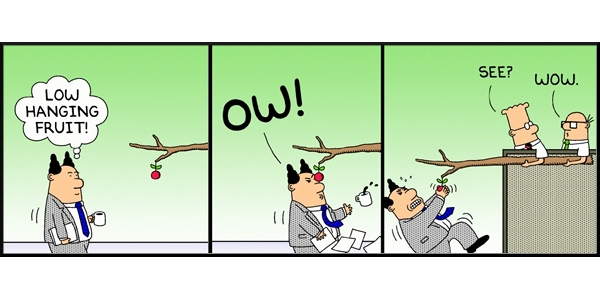
Low Hanging Fruit for the new USATH GM

No, these three apples can really be plucked easily.

As anyone who has followed the trials and tribulations of USA Team Handball through the years knows the sport has some huge challenges.  Rome wasn’t built in a day and it won’t be quick and easy to solve all of USA Team Handball’s challenges either.  New General Manager, Matt Van Houten, most likely already has a massively long checklist of things to do.  Some of these items may take years to fully address and it’s only a matter of time for a chorus to rise up and start complaining that nothing has changed.

Fortunately, however, there are a few items that should be relatively easy to fix.  Items that can be accomplished to show near term progress while the more difficult items are addressed.   Herewith, is the low hanging fruit:

1) FIX THE WEBPAGE

This hardly needs any explanation.  Not only has it been updated way too infrequently for over a year it is has been woefully lacking in substance and style.   Here are a couple of recent examples to highlight a few obvious problems.

  • Don’t post a one paragraph link to a bland IHF story on the upcoming challenge tournament.  Two USA youth teams are going to the tournament, but you wouldn’t know about it from this post.  Why not a story about some of those athletes and their ongoing preparation?  Or better yet, strongly encourage those athletes to blog about and during the upcoming event.
  • There was a major club tournament last weekend in Chicago.  Why not a photo and a story or at least a link to a site with all that information?    Heck, I’m guessing, if asked, Craig Rot would have done a nice little write-up of the whole event.
  • Find better quality photos.  The blurred “IHF trophy” block letters and the photo of the new GM just don’t cut it.
  • Finally, if a site has an audio interview with the new GM, wouldn’t it make sense to link to relevant content like that.

The need to fix the webpage simply cannot be understated as it is the all important, first impression for literally thousands of potential fans and players of the game.   Probably more than a few potential sponsors, as well.  USA Team Handball cannot afford to let folks conclude as this Orange County register reporter did during the Olympics, that the sport is not a priority and that our webpage looks like it’s hosted by Geocities.

2) Secure a sponsorship deal with U.S. TV networks currently broadcasting Team Handball

Yes, there are networks broadcasting the sport in the U.S.  In former USATH CEO Mike Cavanaugh and former USATH GM Steve Pastorino’s fantasy world they would have walked on to the job with this situation in hand.  Cavanaugh tried for years to secure a TV deal unsuccessfully and Pastorino finally was able to facilitate a deal with the MHz network.   The MHz deal is gone, but now two networks (beIN Sport and Univision Deportes) have chosen to broadcast the sport totally on their own.

As far as I can tell (multiple emails regarding this topic to the Interim GM and BoD President have not merited a response) there has been no dialogue between the Federation and these two networks on potential sponsorship of USA Team Handball.  The MHz Network had some sort of deal with the USA Federation, so I’d like to think these two entities would also jump at the chance of sponsoring the Federation in exchange for a little promotion on the USA website.

3) Post USA Team Handball’s financial data on the Federation website.

The Federation’s own by-laws state the following:

Section 17.5. Website.

USATH shall maintain a website for dissemination of information to its members. USATH shall post on its website its Bylaws.  Additionally, USATH shall post on its website its most recent annual financial statement and its most recent 990 Form filed with the Internal Revenue Service.

Yet, the latest and greatest information is the 2009-2010 IRS Form 990 and a bad link to the 2011 BoD approved budget (it goes to a Form 990).    As we are approaching calendar year 2013 it’s more than high time to post more current information.   Not only is it a requirement, it’s the right thing for a transparent federation to do.

And to be even more transparent, some explanatory documents which highlight what key financial decisions are being made, and why in greater detail would be highly appreciated.   As an example of what not do, just try to decipher the notes regarding finances in the last two board meeting minutes (Feb 2012, May 2012).  These explanatory documents would not have to be a detailed prospectus, but they should give members real insight as to how much funding is going to support the various programs, be it club development, national team trips or organizing the Club National Championships.

So, three easy tasks that hopefully can be checked off the To Do List.  In the coming weeks, I’ll try to highlight some of the more important and challenging tasks that will require some heavy lifting.

post

Flare-up on the issue of the workload and the divided loyalties of the elite players

Michael V. Knudsen of Flensburg and Denmark; who or what prevents him from playing in the World Championship?


Although I recently commented briefly on the apparent increase in injuries to top players, and the possible impact of the Olympic Games, the topic of the overload for the elite players has not caused major headlines. Yes, some clubs with Olympic players have commented on the difficulties in getting those players reintegrated when the new season was about to start, and there have been some suggestions that the increase in injuries could be related to the added workload, but I had really expected more of a boost to the debate about the competition calendar.

But now we have had a sudden signal that clubs and players may become fed up with the status quo and the lack of serious action on the part of those who have the main role in determining the calendar and thus the workload. With two different versions being presented, it became clear that Michael Knudsen from Flensburg and Denmark had been ruled out from participation in the World Championship next January. It had nothing to do with injuries. Rather, it was suggested (supposedly according to statements from Knudsen) that Flensburg had forced him to accept such a clause as a condition for having his contract extended. By contrast, Flensburg insisted that the decision was really initiated by the wishes of the player himself.

The news caused an outrage in Denmark, because Knudsen is a key player. It was also noted, on the one hand, that such a contract clause is not permitted under IHF regulations and, on the other hand, Knudsen was criticized for showing up at a Danish training camp if he was not going to be a team member in January. It would not be the first time that a player had been formally prevented from his/her club to participate in a World Championship. But it could really trigger a major debate about who has the prerogatives, the club or the national federation. It should be recognized that the players are really caught in between. They do not want to be forced to abandon their national team, if they do not have their own reasons for staying out. But, of course, they do not want to spoil the relations with their employer, the club, so it would always be possible to come up with a plausible explanation that nobody could formally criticize.

Essentially the issue is linked to two basic conflicts: first, it has been argued for a long time that it is just too much to have more than one major international championship per year. So in a sense it is the participation of handball in the Olympic Games that becomes the trigger. But as nobody suggests that this should be changed, then it is the pattern of having either a World Championship or a European Championship every year that is the crux. Compromises have been sought but with no result so far. The EHF does not really want to budge, and the IHF must protect the interests of all the other continents. The second issue is that, added together, games in the national leagues, the EHF Champions League and for the national teams simply add up to being a bit too much. (When one talks about the national team, this includes not just the Championships but the qualifying events leading up to them).

Martin Heuberger, the men’s national team coach in Germany, suggested recently that it would be fair and necessary to ‘shave off’ some portion of each of the three workloads. Of course, one could suggest that the top nations could have their burden reduced by entering at a later stage in the qualifying events, as compared with the model that is being played precisely this weekend. And, as I have done before, one could argue that the current Champions League model causes too many ‘unnecessary’ games for the participants. Or one could suggest, as Heuberger did, that the number of teams in the German Bundesliga should be reduced. Every year, essentially the same teams gain the top positions and then also play in the Champions League or the EHF Cup, while several other teams are clearly at a lower level. But Heuberger got the reaction from his own Federation that “it would really be difficult to deprive some teams of the chance to play in Bundesliga, and even the top teams want the extra income from a couple of additional home games”. Clearly, one could argue ‘forever’ how the reduction should best be achieved.

But the reality that most people overlook, when they propose one solution or the other as ‘the obvious one’, is that the situation is far from similar in all the top handball countries in Europe. The one thing that most of them have in common is that they attach a lot of importance to their national team, but even that may vary from country to country. In some countries there is relatively more interest in the EHF Champions League, and handball fans rally around the team that represents their country. But so far, it is much more common that the fans really care about their own club and everything else becomes secondary. However, that is very much related to the third dimension: many countries have a national league that, year after year, creates a strong interest on account of many evenly matched teams. But other countries, even some of the very best, have only one or possibly two dominating teams, so the league becomes unimportant. And then we have the unique case of Germany, who ‘has it all’. The Bundesliga has strong traditions, also among the smaller clubs, the national team is a matter of real pride, and they have at least six-seven teams in the EHF competitions.

So one of the reasons for reluctance in other countries to change things is that they primarily see the problem as one that is caused by the German situation. This has been quite clear from media comments and views expressed by fans. They are upset if a German club ‘interferes’ with the participation of a player on the national team in country X. And they do not have much sympathy for the ‘dilemma of the German clubs’. On the contrary, it reminds them that Bundesliga dilutes the quality of the leagues in many other countries. Perhaps the most interesting and astute comment I saw in recent time was along the following lines: ‘the problem is caused by Germany, where they have teams and players for an absolute elite league but still insist on adding many comparatively mediocre clubs that really belong in a lower league’. I can appreciate these arguments; and at least the strong divergence of views within Europe (and even more if one adds the top other countries in other continents) will make it really tough for the IHF and the EHF to achieve serious change.

post

VIDEO: 2 HBL Showdowns this weekend

Hamburg vs. Kiel this Saturday

The Champions League is on hiatus until mid November, but LAOLA1.TV is stepping into the void with two great matches in the German Handball Bundesliga (HBL) this weekend.  On Saturday, Hamburg hosts Kiel and on Sunday, Flensburg hosts Berlin. It’s early in the season and all 4 teams are bunched near the top of the HBL table.

Thanks to Berlin’s draw with them earlier this season Kiel no longer has their winning streak, but they’ve still got an “unbeaten” streak.  Hamburg has been decimated by injuries and will probably need some help from the “8th man” home crowd to knock off the defending champions.

Flensburg has stumbled a little bit in the early going and is currently in 6th place.  If they want to return to the Champions League next year, they’ll want to win this key home clash against 2nd place and unbeaten Berlin.  Both matches will be available live for viewing at LAOLA1.TV and one of these matches will surely be posted later as the “Match of the Week” for on demand viewing.

Saturday, 27 October 2012
Hamburg vs. Kiel  3:00 PM (CET)/9:00 AM (U.S. East Coast) Live Video Link

Sunday, 28 October 2012
Flensburg vs. Berlin 5:30 PM (CET) / 11:30 AM (U.S. East Coast) Live Video Link


post

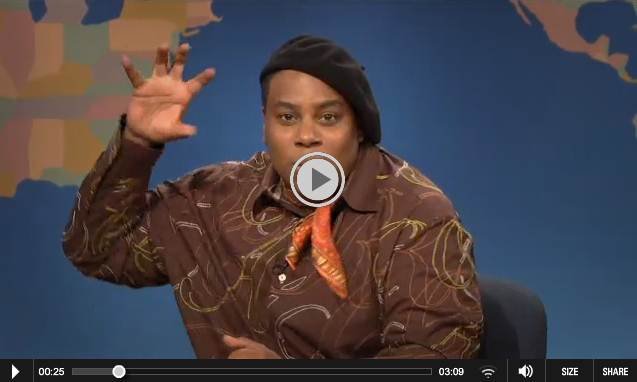
Zut Alors!: A Team Handball reference on Saturday Night Live?

“Us French brothers, throw a handball like this.”

Famous French Def Comedy Jam performer, Jean K. Jean, made an appearance on Saturday Night Live a couple of weekends ago and did a riff on French and Belgian Team Handball.   Really?  Really!

The first part of the video is about the French reaction to the Lance Armstrong doping report, but around the two minute mark Jean talks about a recent France – Belgium handball match he attended.  Jean obviously knows handball as Belgium has long been a weak sister in European Handball.  The U.S. has even had had a few victories against them.

When I saw this sketch, I had to do a double, then a triple take.   “Hey,” I concluded, “Kenan Thompson really is talking about Team Handball and not the wall version.  He really knows the difference.”   Maybe the U.S. awareness quotient is holding steady at 10% if it can get a Saturday Night Live reference.   Who nows, maybe Kenan Thompson could even become for USA Team Handball what Stephen Colbert is for USA Speed Skating. Zut Alors!

Watch the video: Link

post

AUDIO: Handball Talk (Episode 8): Interview with USA Team Handball’s new CEO

Colorado Springs:                                                      The new home for USA Team Handball

USA Team Handball’s new CEO, Matt Van Houten, reflects back on his Handball career, his experience working with the USOC and some of his top priorities going forward.  One tidbit of news:  Van Houten will be performing his duties from Colorado Springs.

Running time is 37:27