post

Odds and Times for the Quarterfinals

France defeated Croatia 25-22 in the semis in London.  They meet again in the quarterfinals today.

France defeated Croatia 25-22 in the semis in London. They meet again in the quarterfinals today.

Here’s the schedule for today’s quarterfinals with the handicap (point spread) in parentheses

1815 Slovenia (-.5) vs. Russia
1900 Spain (-4.5) vs. Germany
2045 Denmark (-4.5) vs. Hungary
2130 France (-.5) vs. Croatia
Times listed are Central European Time (CET). (Subtract 6 hours for the U.S. Eastern Time zone.)

According to play by play commentator, Bogdan Pasat, beIN Sport will broadcast live from 12 Noon to 2:40 PM (U.S. Eastern Time) and will start out with the first half of Slovenia vs. Russia and then switch to Spain vs. Germany. This is, however, subject to change and Bogdan has indicated that he will post on our Facebook page any changes to the schedule.  He also indicated that beIN Sport plans to air the semifinals live on Friday and the Final live on Sunday.

Unfortunately there are no plans to broadcast the Denmark vs. Hungary and France vs. Croatia matches so if you want to catch those games you’ll need to subscribe with livesport.tv: Link
The good news is that the full matches will be available “on demand” for the quarterfinals.

Here are the revised odds to win the World Championship

Spain 1.375-1
Denmark 3.33-1
France 4.5-1
Croatia 6-1
Slovenia 20-1
Germany 21-1
Russia 29-1
Hungary 34-1

post

From the World Championship: Post-Olympic trauma and decline?

Slovenia, with Gajic as a key player, has been the pleasant surprise!

Slovenia, with Gajic as a key player, has been the pleasant surprise!

I should be a little bit careful, when for the first time in 20 years I am following a men’s World Championship via TV and internet broadcasts instead of by being present at courtside. But I am really a bit baffled and disappointed overall. Perhaps I have been unlucky, watching the wrong games, but I have not been able to find many brilliant performances by teams or individual players. Instead of technical skills and new tactical ideas, I have seen much more emphasis on physical strength and ‘power handball’, both on defense and offense. I surely hope that we are not seeing the beginning of a negative trend!

It has also been puzzling to see that many teams have been unable to perform at a high level and with good concentration for more than about half of the game, even in games where they desperately needed to win. Teams falling behind do not seem able to use time-outs and new ideas to get back in the game; instead they start getting nervous and frantic, with crazy shooting and technical mistakes. And teams which are easily winning start getting sloppy and undisciplined, perhaps thinking about saving energy for the next game. In some games it has also been apparent that traditionally strong teams must be going through a transition, where the new, young talents have not yet become fully integrated.

Yes, I know I am sounding negative, but I want to optimistic and think that the best is yet to come. On balance I prefer the format with knock-out matches from the ’round of 16′ in comparison with the system of having ‘main round groups’ after the preliminary round. It really seems that we have a great day to look forward to on Wednesday, with two great rivalries in the form of Germany-Spain and Croatia-France; and also the other two quarterfinals look really promising: Denmark-Hungary and Slovenia-Russia. But that is what I said about the match-ups yesterday and today, and especially today became an anticlimax, with three of four matches decided by half-time and Hungary running away from Poland in the second half of the remaining game.

The teams that I will be particularly interested in following are those who are clearly in a transition and therefore quite unpredictable: Germany and Russia. Slovenia is probably for many of us a pleasant surprise; I had never anticipated that they would have a chance to be in the medal round, but that is now quite realistic. I would see a good chance for Croatia to get revenge against France for key losses in recent years, as the French team has so far been confirming the suspicion that they are in decline, whereas precisely Croatia has managed their rejuvenation quite well. And then we will see if the home crowd will be an advantage for Spain or if instead it will cause too much pressure. But I see no reason to change my pre-event prediction that this time it may be Denmark’s turn.

For me the negative surprises have been Poland and Serbia. Both of them got thrashed today. I had thought that one of them would win their preliminary group and then march on to the medal round. It has also been disappointing to see that the gap between the Europeans and the rest seems to be widening or at least not be closing. I had predicted that the young Brazilian team might be the best of the non-Europeans this time and this is how it turned out. They came frustratingly close to eliminating Russia yesterday. Argentina and Tunisia met again in a critical game, just as in the Olympics and again with Tunisia as a winner. But both teams seem clearly weaker than in London.

Of course, it is mainly up to the individual federations, but the IHF also must realize that it is not good for the image of handball when the ‘continental gap’ remains so obvious. Support is urgently needed, because as it now looks, it is regrettably easy to understand why the Europeans argue that their continental events are of higher quality and more interesting.
Let us now at least hope for a great finish in the coming days, so that we can maintain our faith that the quality of the highest level of handball is not declining! And for our handball fans in the U.S.A., it is great to be able to count on high-quality TV transmissions thanks to beIN Sport!

post

2013 World Team Handball Championships (On TV and in HD!)

beinsportwc2

A major breakthrough for Team Handball in the U.S. The beIN Sport Network is airing the World Championships Live and in High Definition.

The beIN Sport network is currently broadcasting two matches/day of the 2013 Men’s World Handball Championships.  Some of the matches are live and some are tape delayed and they all are in crystal clear High Definition.  The commentators also feature a couple of familiar voices to American handball fans.  Bogdan Pasat, who has written previously for THN is the play by play voice and former USA National Team Coach, Olympian and professional handball player, Cristian Zaharia is providing the color commentary.

About beIN Sport

The beIN Sport Network is a relatively new network and while it has a soccer focus they also broadcast other sports like rugby and Team Handball.   beIN Sport can currently be found on:

· DIRECTV channels 620 (English-language) and 426 (Spanish)
· DISH channels 408 (English) and 871 (Spanish)
· Comcast Xfinity
· Time Warner Cable
· Bright House Network
· Advanced Cable Communications
· Liberty Cablevision of Puerto Rico

Apparently, there’s been quite a few folks out there letting their cable providers know that they want their Italian and Spanish League soccer.   To find out whether you can get the channel, click here.  And if it’s not offered by your cable company, why don’t you add a Team Handball complainer to the mix.

Commentary

Sometimes great news comes seemingly out of nowhere.  I’ve been watching the Champions League “match of the week” broadcast on beIN Sport for a couple of months, but had no idea that they would also broadcast the World Championships.  There’s nothing quite like checking your DVR queue and seeing that your “handball” search has automatically recorded some matches you weren’t expecting.

As someone who’s bemoaned the lack of TV broadcasts in the U.S. it’s great to be able to announce a major breakthrough like this.  The significance could be far reaching as nothing is more powerful at creating new fans and new players like watching top flight Team Handball on TV.

And believe me, as America’s self proclaimed #1 Team Handball fan there’s nothing like cracking open a beer and watching a match in High Definition from your living room couch.  The Round of 16 is almost over and the quarterfinals are coming up.  You really ought to add beIN Sport to your channel lineup if you already haven’t.

beIN Sport:  Link

post

USA Announces Full Time Coaching Assignments

NewUSACoaches2

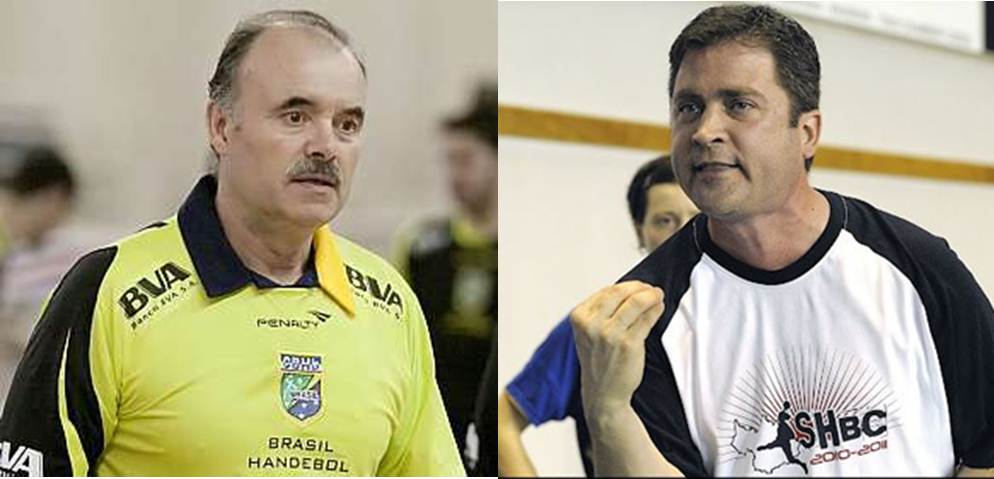
USA Team Handball has formally announced the hiring of full time head coaches for its men’s and women’s programs.  Javier Garcia Cuesta will take the reins for the men and Christian Latulippe will head the women’s program.  This marks the first time the U.S. will have had full time coaches in several years (since 2007 for the women and depending how you want to define “full time” back to the 1990’s for the men).  Both new coaches have previous experience as U.S. head coaches.

Garcia Cuesta, 65, is a Spanish National and was the Men’s National Team Coach for much of the 1980’s and led the USA to a 9th place finish at the 1984 Olympics.  Although, the U.S. overall record was 1-4-1, every match was competitive and the U.S. lost by no more than 3 goals.  Garcia Cuesta continued to coach the USA through the 1987 PANAM Games, where the USA narrowly defeated Cuba to qualify for the 1998 Olympics.  After leaving the USA program he had a number of head coach assignments.  He had two stints as Spain’s head coach (89-93 and briefly in 2008). He also coached Egypt (95-99) and Portugal (99-05).  His most recent assignment was with Brazil (09-11) with his last coaching duty there ending after Brazil’s loss to Argentina in the final of the 2011 PANAM Games.

Latulippe, 41, has Canadian and French citizenship and was the USA Women’s National Team Coach from 2002 to 2007.  During that period he was responsible for running all aspects of the residency program in Cortland, NY.  The U.S. team was not very successful during his tenure, but also was clearly operating under an austere, shoestring budget.  Latulippe left the program in 2007 under somewhat of a cloud just prior to the USA’s unsuccessful attempt to qualify for the PANAM Games.  Since his resignation Latulippe has coached in France as both an assistant and head coach at different club levels.  From 2010-2012 he coached at 2nd Division (D2) club, La Motte Servolex, leaving in February last year with the club struggling financially, mired in last place and enroute to a 3-22-1 record and relegation to the 3rd Division (N1).  Latulippe is currently the coach of 4th Division (N2) club, Le Pouzin HB 07.  Le Pouzin was relegated last year and Latulippe has the team on track for a return to the 3rd Division as they are leading their pool with an 8-0-1 record.  Latulippe also has been a Canadian assistant coach and had a short stint this past summer as the coach of the USA Men’s team at the Pan American Championships where the USA team finished in 7th place with a 2-3-0 record.

In an email response to questions, USA Team Handball CEO, Matt Van Houten, indicated that the written contracts have not yet been signed, but the terms of service will be one year with the expectation that the coaches will continue on through the qualification process for the 2016 Olympic Games.  (This would be the PANAM Games in July, 2015) Although, not explicitly stated in the Federation announcement, Van Houten confirmed that the employment is full time.  Garcia Cuesta is engaged in player development and coaching education programs and will be conducting monthly talent identification clinics in Colorado Spring at the Olympic Training Center.  Latulippe will move to the U.S. later this spring at which time he will begin his full employment.  Both coaches would also be fully involved in the operation of the “long term, flexible residency program” tentatively scheduled to begin later this fall.

On a side note, Van Houten indicated that no date has yet been set for the Women’s North American and Caribbean Regional qualifier for the 2013 Pan American Championships later this summer.  Previously, it had been announced that a tryout would be conducted in January.  This tryout will be rescheduled dependent on the date of the subject tournament.

Note:  this mundohandball article was the source of some of the dates for Garcia Cuesta’s coaching assignments:  Link

Podcast interviews with Coach Latulippe discussing coaching in France and development challenges in the U.S.:  Link

post

AUDIO: Soundtrack for World Championship viewing

While you watch the World Championships here’s a couple of suggestions to supplement your viewing with a little audio.

Following this past summer’s Men’s Pan American Championships I interviewed the Head Coach for that event, Christian Latulippe, both before and after the event.  In the first interview, we discussed his previous experience coaching the U.S. Women’s team and coaching club handball in France.  In the 2nd interview we discussed some of the issues affecting the sport’s development in the U.S.  With Latulippe now announced as the Women’s national team coach these discussions are worth revisiting.

Interview with Christian Latulippe (8 June 2012): Link

Interview with Christian Latulippe (27 June 2012):  Link (Development discussion starts after 26:00 minute mark)

Rugby Mag has an interesting discussion regarding issues and conflicts between grass roots development and national team support in that sport.   It’s always amusing to me how almost every discussion that occurs in rugby circles has a direct Team Handball parallel.   Seriously, just replace “rugby” with “team handball” as you listen and see how often the discussion still makes perfect sense.   A new parallel that I hadn’t heard before was the lack of organized competition between Canadian and American rugby clubs.  The first part of the podcast discusses an inner city rugby program and documentary file.  The most relevant discussion from a Handball/Rugby context starts at around the 42:00 mark.

Rugby Mag Podcast (Jan 2013): Link

post

Handball WC 2013: Spain and France are Bookmaker’s Co-Favorites

SpainFrancesmall

A lucky rebound goal by France’s William Accambray in the closing seconds let France slip by Spain in an Olympics Quarterfinal. The oddsmakers think these two teams will meet in the Final this time around.

The 2013 Men’s World Championships are underway in Spain and for the first time in several years, France is not the favorite to win an International Handball tournament.  Albeit, by the narrowest of margins as host, Spain is listed at 2.4 to 1 and France is right behind at 2.6 to 1.  Croatia (5-1) and Denmark (5.5-1) are also considered strong contenders, but from then on there’s a bit of a drop off.  Hungary (25-1), Iceland (25-1) and Poland (26-1) can be considered the dark horse candidates for semifinal bids while Serbia (40-1), Germany (50-1), Russia (66-1) and Slovenia (66-1) are further out.  Macedonia (150-1) and South Korea (250-1) are seen as remotely conceivable longshots, but from then on every other listed team is an also ran.

Here are the odds courtesy of the Best Betting website which aggregates odd from multiple online bookmakers

Odds to Win Championship

Spain 2.4-1
France 2.6-1
Croatia 5-1
Denmark 5.5-1
Hungary 25-1
Iceland 25-1
Poland 26-1
Serbia 40-1
Germany 50-1
Russia 66-1
Slovenia 66-1
Macedonia 150-1
South Korea 250-1
Argentina, Belarus, Brazil, Egypt, Montenegro, Tunisia 1,000-1
Algeria, Chile, Qatar, Saudi Arabia 5,000-1
Australia 10,000-1

post

VIDEO: Online Web Streaming for the 2013 Men’s World Handball Championships

Livesport2


Spain and Algeria will open the Men’s World Championships, on Friday, 11 January at 7:00 PM Central European Time (1.:00 PM U.S. East Coast).  All of the matches will be available live via the Livesport.TV platform.

For more information click here:  Livesport.TV

Editor’s note:  I’ve been informed that the “On Demand” Full Match viewing option will not be available until the quarter finals.

post

The bald and tough look – an asset for a referee?

Collina and Webb, the best known examples in soccer; how would it work in handball?

Collina and Webb, the best known examples in soccer; how would it work in handball?

Traditionally, men have tended to see hair loss and baldness as a matter of concern and embarrassment. Lots of money has been spent on combating and concealing baldness, often with poor results. The younger the person is, the more of an issue the baldness has tended to be, if baldness is (mis)taken as an indication of aging and reduced strength and fitness. So at the same time as we are increasingly emphasizing youth, fitness and strong personality for our elite level referees, it is then a bit amusing to see the trend that baldness is used as a method or signal for conveying strength and authority.

This has become amazingly common in international football, and it seems for instance that a disproportionate number of the referees in the UEFA Champions League are sporting that bald look. Of course, when it started that way, with PierLuigi Collina, one of the very best referees in recent decades, who undoubtedly would have been an excellent referee also with a full head of hair, it was because of a medical reason and not on a voluntary or intentional basis.

But among the many followers, it is interesting to note that perhaps the favorite method is for those who still have quite a bit of hair growth, often in the male pattern where the top/middle is empty, to remove what remains to get the complete bald, razed look. Perhaps it looks younger, stronger that way? It would be interesting to get opinions from referee, players, fans about this question. Does it really work: does it give the referee a more appropriate look for his task, does it command more respect, does it avoid a sense of aging?

In just a week from now, the handball men’s World Championship is getting underway. Perhaps this would be a good opportunity to test the hypothesis that the bald look is an improvement and has advantages in term of match control and respect. Would these referees, who are already well-known and generally respected, be able to gain a further edge by changing their look? It seems that it would be worth trying! And it would seem to make it easier to do it as a group, rather than having one individual referee or couple trying it on their own. It would not be so awkward if all of them had the same look.

Moreover, I remember having used all kinds of gimmicks as IHF Referee Chief to emphasize the notion that the 16 referee couples in a World Championship must see themselves and act like a TEAM. Of course, there is only one couple on the court in each game, but it is important that they all follow the same approach, do their job with strong consistency and also support each other as a team, even if in a way they are also competing with each other for the top assignments. So just perhaps, the real way to create that team spirit would be for all of the referees to shave their heads!? Surely that would give the clear signal that they want to appear as a team! Naturally, it would require that also the members of the Referee Commission follow this example. And I am sure that Manfred, Ramon and the others would be prepared to do so!

And on a more serious note, it would also be a gesture of loyalty and support for one of the referee colleagues who is sadly missing in Spain, namely Mads Hansen. In a recent article, I wrote about Mads and his valiant struggle to recover from lymphoma. One of the effects of chemotherapy is hair loss, and Mads decided to shave his head rather than seeing his hair falling out randomly. So a show of support for Mads would be yet another reason for that bald look when the World Championship starts.

post

Men’s World Championship 2013 – some further speculation

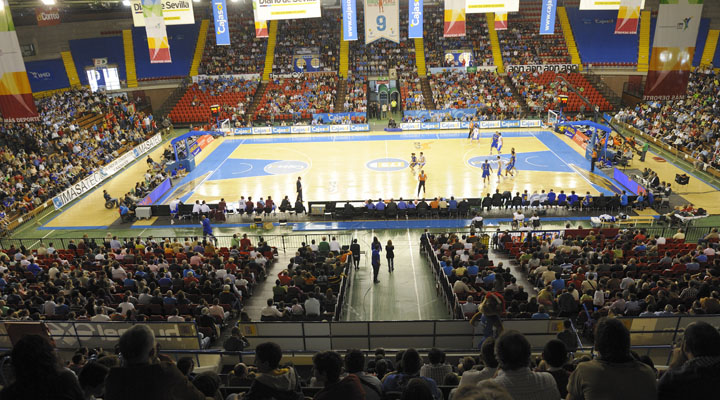
The arena in Sevilla, where the Danish fans will show their usual  enthusiasm

The arena in Sevilla, where the Danish fans will show their usual enthusiasm

In our recent podcast, John Ryan and I spent a few minutes on the upcoming World Championship, getting underway on January 11 in Spain. We had a few suggestions about possible success for Denmark and Poland, together with the notion that John is no longer as high on France as in the past. I also noted that several key injuries together with the some cases of post-Olympic retirement would undoubtedly have some impact.

But several friends, especially over in Europe, have used the New Year’s holiday to harass me about being a ‘coward’ by not offering some more specific suggestions for the outcome of the Championship. Yes, I know that some of you like to see my speculations, simply to be able to determine at the end that, yet again, my forecasts were a bit off the mark. So, I do not want to make you disappointed.

First, even more than in the past, I suspect that the preliminary groups will show a major contrast between some really solid teams and a whole bunch of teams that may be in the running for the ‘Round of 16’ but who really are not at the top level. So in each group it is mainly a matter of picking out the favorites and those who might be next in line.

In Group A, I think it is going to be almost impossible for France to fail to come out on top, and it is equally difficult to see the ‘new’ German team finish below second or third. I do not count on Argentina and Tunisia this time, so my only ‘dark horse’ here is Brazil. In Group B, Denmark seems to be the overwhelming favorite, whereas I do not expect great things from Iceland this time. So it should instead be interesting to see how a partly rebuilt Russian team will do. And let us see if Qatar, already looking ahead to hosting the next Championship in 2015, might be able to surprise FYRO Macedonia.

On the other half of the draw, I envisage a major fight for the first spot in Group C between Serbia and Poland. Some may think that Belarus and Slovenia will be in a battle for third place, but I could see the Koreans coming up with a surprise. Finally, in Group D, it can sometimes be a mixed blessing to be the home team, and perhaps Hungary could manage to win the group ahead of Spain. But I am also really curious about how the rejuvenated Croatian team, this time without Balic, will fare. Perhaps the Egyptians will turn out to be the best non-European team, but I do not have much of basis for that assertion.

So as you can see, I have been rather cautious, but I really do believe that it will in the end be a fight between ‘the usual suspects’. And perhaps I have been a bit less enthusiasm this time, as it will be the first time in 20 years that I am not involved, or at least present, for a men’s World Championship…

post

USA Team Handball’s Past Financial Data and Current Financial Straits

Scale

Balancing limited income with many desired expenses will require some tough decisions for the U.S. Federation.

New USA Team Handball CEO, Matt Van Houten, recently posted an update on his first two months of activity and made a point to highlight the federation’s dire financial straits and that he’s counting every penny.  There have been several indications of this financial stress in the past few years.  In 2011, former Board of Director’s President, Dieter Esch, decided to quit donating personal funds to support the Federation’s operations, forcing a number of cuts to staff and operations. For over a year, USA Team Handball team then functioned with an interim GM, Dave Gascon, serving on a pro bono basis.  More recently, it was announced that athletes wanting to participate in the upcoming Junior Men’s Pan American Championships would each be required to raise at least $1,200.

Beyond the pronouncements, however, it is possible to get a better sense of the situation by reviewing Internal Revenue Service (IRS) Form 990s.  The IRS Form 990 is a requirement for all U.S. tax exempt organizations and provides a window of transparency in regards to finances.  The federation was a little late in providing some of this data, but recently did post its 2010 Internal Revenue Service (IRS) Form 990. (Based on the accountant’s signature date (30 November, 2012) it appears to have only recently been filed.)

The 2010 form covers the period from 1 July, 2010 to 30 June, 2011.  This was a few months prior to the end of the Esch – Pastorino era so it’s now possible to do a little bit more forensic analysis on almost those entire 3 years.  Here are a couple of charts that summarize the Income and Expenses for three years covering the time period from 1 July, 2008 to 30 June, 2011.


Form 990 YEAR

Sponsorship Revenue

Membership Dues and Assessments

National Team Revenue

Special Events Income

Other Income

Contributions/

Grants

Total Revenue

2008

$0

$41,117

$0

$0

$11,434

$489,150

$541,701

2009

$75,760

$38,747

$13,972

$129,302

$5,727

$711,104

$974,612

2010

$146,863

$32,803

$26,862

$20,017

$7698

$656,704

$890,947


Form
990
YEAR

Total Salary /employee benefits

Travel

National Team Expenses

Germany vs Poland Match

USA Club Competition Expenses

Other Expenses

Total Expenses

2008

$285,279

$65,754

$7,071

$0

$36,058

$87,231

$481,393

2009

$442,766

$218,863

$147,448

$0

$68,179

$141,422

$1,018,678

2010

$368,046

$119,919

$145,099

$136,819

$84,408

$92,618

$946,909


A few key data points

– Salaries and other employee compensation constituted the lion’s share of expenses (roughly 40%) during this period.  At its peak the USA staff had as many as 14 (7 full and 7 part time) staff members.  In hind sight (well actually foresight for some) a large staff was not sustainable and did not make much sense given the sport’s state of development.

– A significant amount was also dedicated to travel expenses.  As chronicled on the Federation website there were several overseas trips to build ties and obtain sponsorships.

– Membership revenue declined all 3 years.  This is pretty telling statistic.  With regional staffs and development efforts this revenue area should have seen at least some modest growth.  In contrast, the 2010 membership revenue of $32,803 is the 2nd lowest yearly amount ever collected since 1997..

– Sponsorship revenue apparently peaked at $147K.  Developing sponsorship as a significant source of revenue was a major goal and deem necessary to wean the Federation off reliance of USOC and other donor (mostly Dieter Esch) grants.  There are a number of reasons that could be attributed to this shortcoming and some of them are detailed here.

– The Germany vs. Poland match that was held in Chicago (July 2010) had listed expenses of around $137K and was surely a net loss financially.  The exact amount is difficult to determine.  2009 had a special events income of $129K, so a minimum of $8K was lost and assuming that some other events generated income there probably was an accountable loss of around $30K.  If Dieter Esch opened his checkbook for some other expenses not directly on the books the loss might be far greater.

– It’s not possible to fully determine the contributions of Dieter Esch (and others) since those contributions are not broken out on the forms.  It is, however, possible to get a rough estimate by taking the total amount contributed ($1,857M) and subtracting out USOC contribution ($.857M during those 3 years).   Perhaps, a coincidence, but the number works out to just under $1 million.  (Further note:  There was a $50K contribution requirement for board members, so not all of that $1M came from Mr. Esch’s generosity.  Some of these contributions, though, may be reflected in the sponsorship lines.)

Dire Financial Straits

It doesn’t take an extensive review of this data to better understand the situation.  In simplistic terms, all one has to do is take about $333K off the yearly expenses listed above.  (This is a rough estimation of the Esch (and others) yearly generosity which no longer exists.)  Much like the fiscal cliff discussion the only way to solve the problem is to start cutting and/or raising revenue.

Possible Cuts?

While there are areas which could be (are being) trimmed there’s not a whole lot of margin.  Employee salaries are the obvious expense to put on the chopping block.  There’s no way they can approach the previous levels and the staff is accordingly smaller and leaner.  Board Meeting notes indicated that the CEO salary would have a base of $100K with potential bonuses related to additional revenue being brought in.  Throw in a salary for a Technical Director (~60K) and some Coaching (TBD) and the total salary line (with benefits) is probably around $250K.  Travel expenses surely are another area that will be cut to the bone, perhaps to $25K.  National team expenses in 2009 and 2010 were listed at around $150K.  It’s not clear what all those expenses entailed, but I’d like to think that the bare bones programs of those years will at least be maintained.  With talk of a residency program they might even be increased.  Throw in another $75K for miscellaneous expenses and $50K for club competitions and a rough estimate of total expenses is around $550K.

Additional Revenue?

But what about the revenue side of the ledger?  With yearly Esch generosity no longer coming in the Federation’s biggest source of revenue are USOC grants.  From 2009 to 2011, the USOC contribution was roughly $286K/year.  Reportedly, the USOC has kicked in some extra funding to help pay salary expenses for a couple of years, but it’s not clear how much that will be and whether it will change the overall USOC contribution.  Perhaps the new total will be near $350K.  This means the rest has to be made up through a combination of sponsorships, membership dues and miscellaneous revenues streams (ticket sales, tournament entry fees, etc).

As previously noted the recent high water sponsorship mark was $147K.  Perhaps this number can be matched in the near term, but significant increases are unlikely overnight.  Membership revenue has dipped below $40K and it will surely increase, but near term perhaps $50K can be expected.  Without going into detail on the nuance of the different miscellaneous income items I would be surprised if they also don’t stay in the neighborhood of $20K.  This leaves a total of $607K, but it’s really a rough estimate based on very limited information.

Little margin for error and the importance of transparency

So, this simple estimate projects a surplus of $57K.  To reiterate it’s really rough.  If the USOC doesn’t want to chip in more or the sponsorship projections are off it quickly turns into a deficit.  And then you’ve got to start whacking.  Salary expenses, in theory, could be cut.  So could national team expenses. Maybe the National Championship will need to be a breakeven (instead of a money losing) venture.  Or maybe membership dues could go up.

Which all leads to the importance of transparency when it comes to budget data.  IRS reporting requirements have enabled me to do an assessment of a year and half old financial data.  Informative, but only of limited use after the fact.  It certainly makes you look back on some past Board decisions and really scratch your head.  The Federation couldn’t fund a team to go to the PANAM Games but it could pay for 14 full and part time staff members?  Did the Federation really need to pay over $200K in yearly travel expenses?  Or maybe most importantly, if the Federation had been a little bit more conservative with its spending would it be in such dire straits today?

Switching to present day, you can bet your bottom dollar that a number of decisions will be made soon regarding how to spend limited funds.  Do we have to wait a year and a half to see what funding was available and how that funding was spent? Or can we see what’s available now and what the plans for spending are?  How exactly are the potential spending options prioritized? With limited funds what takes priority: a national team trip, hiring a new coach, or sending funds to support new club programs?  Will a serious effort be made to qualify for the 2016 Olympics or will the Federation quietly opt to focus on 2020? Etc. etc.

To reiterate, the low hanging fruit is there.  With an emphasis on transparency here’s hoping that the Federation will provide real insight into the looming budgetary decisions that will have to be made.

post

AUDIO: Handball Talk (Episode 9): Champions League, World Championships, TV Viewing Options and a Karabatic Rant

Shoeless Joe Jackson, Barry Bonds, Lance Armstrong and Nikola Karabatic. 4 athletes forever tarnished by their actions.

Shoeless Joe Jackson, Barry Bonds, Lance Armstrong and Nikola Karabatic. 4 athletes forever tarnished by their actions.

John Ryan and Christer Ahl discuss the Champions League, Online and TV viewing options and the upcoming World Championships.  Also an extended rant on Nikola Karabatic and the Montpellier betting scandal.   (Let’s just say he’s no longer John’s favorite player.)

THN (4 October, 2012): The Karabatic and Montpellier saga – a follow-up: Link

THN (2 October 2012) “Rien ne va plus!”: Karabatic and teammates betting that their own team would lose – but did they then lose intentionally? : Link

THN (28 July, 2012): 2012 Olympic Preview:  Link  (Note the “Whither Karabatic” paragraph)

RTL website page with articles on the Montpellier scandal: Link


post

Why weren’t the U.S. National Teams at the London Olympics?: Part 8: A lack of awareness and marketing: Europe sees the light, but can’t quite figure out how to properly invade the U.S. market

American sports leagues have successfully invaded Europe.  It's high time for European handball to invade America.

American sports leagues have successfully invaded Europe. It’s high time for European handball to invade America.

In Part 7, I listed several reasons why for many years European handball entities did little to develop the American market.  In this part, I highlight how while Europe has opened its eyes to the possibilities, many of its initial efforts have faltered.  (Part 1) (Part 2) (Part 3) (Part 4) (Part 5) (Part 6)

A European Awakening

For many years European handball entities weren’t very much engaged in the development of Team Handball in the U.S.  The litany of reasons for this include basic indifference, a belief that the U.S. should develop Team Handball on its own, market competition from other sports,  the amateur focus in Europe, an unwillingness to invest, not understanding the American marketplace and ineffective American Federation appeals for help. The good news is that while these challenges still exist they are largely becoming passé as professional European leagues and Federations have awakened to the possibility of American revenue streams.

This has happened primarily for a couple of reasons.  First, European handball executives couldn’t have been blind to an American sports invasion in Europe.  Every kid wearing a Dirk Nowitzki, Dallas Mavericks jersey is one not wearing a Pascal Hens, Hamburg jersey.   Every NBA TV broadcast means a little less interest and money being spent on a Handball Bundesliga broadcast.   Ouch. That’s hitting the old pocketbook.  But, it also surely wasn’t lost upon some handball executive that if the NBA can sign big TV contracts and get kids to wear NBA jerseys, then maybe Handball could do the same thing to the U.S.  market.  Or as the South Korean women’s national team often demonstrates, sometime the best defense is a good offense.

Secondly, while there’s sure to be some trepidation in regards to a risky expansion in reverse, European soccer has proven that it can indeed be done. What once was a trickle of minor TV contract deals to get the European foot in the door has evolved into “no kidding” bidding wars.  Case in point was the recent NBC purchase of the English Premier League (EPL) rights for $80-85 million/annually.  This was four times what Fox was paying previously and, get this, you couldn’t even find any soccer matches on TV anywhere in the U.S. not too long ago.  That’s right a bidding war for something nobody, but a few Expats would have watched a dozen years ago.  Sacrilege of sacrilege, these sports networks are even reporting soccer scores on the bottom trailer during broadcasts of American Football games.  I guess I’m an old timer, but I still do a double take when I see Norwich 2, Aston Villa 1; Man U. 3, Reading 0; scroll across the screen.  And call me crazy, but if the EPL can get $85 million, surely the German Bundesliga can get a meaningful fraction of that at some point.  Even 1/100th of $85 million is better than no contract at all.

Stumbles Along the Way

So, with an ongoing American sports invasion in Europe and soccer proving that America could also be plucked, European entities have dipped their toes in the U.S. market.  As often happens, however, there has been some false starts and failures.  Most notably, live events on U.S. soil have only had marginal success.  The French League’s final four cup in Miami (2009) was well staged, but had dismal attendance.  The Poland-Germany match in Chicago (2010) was better attended, but didn’t create the desired post match buzz.  In hind sight it’s clear that these events didn’t fully take into account the basic awareness problem the sport faces in the U.S.  You can’t just simply fly to the states and expect Americans to buy tickets for a sport the bulk of them don’t even know exists.  Well, I guess you can, but there are surely more effective ways to spend your money at this stage of the sport’s development in the U.S.

Showcases on U.S. soil can make sense, but only if they are structured to the current market.  A perfect example of that is the New York City Tournament and All Star Game held the past 3 years as part of a New Year’s Eve package primarily for German tourists; a much smaller event which has a chance to grow.  No, in order to properly stage a big event, you first need to grow your market.  Case in point, are the NFL regular season matches in London that now sell out 80,000 strong.  The NFL plotted this out over many years, slowly but surely developing a fan base in the UK that were hungry to see a live match.

And how was such a fan base developed?  Through TV, of course.  In fact, it’s kind of amazing when you think about it.  American Football had no historical background whatsoever in the UK.  Only a handful of people even play it there today, yet now there’s even talk of a London franchise.

Finally, on TV, but on the right channels?

Encouragingly, European entities have recently been able to break into the U.S. TV market.  The German Bundesliga was first on the scene with matches available first on the “My Sports Germany” Network, and now with Univision Deportes.  The EHF Champions League has also been available, first with MHz and now with beIN Sport and Univision Deportes.  The bad news, however, is that these networks are way off the beaten path.  In many parts of the U.S. they are either not available or require an a la carte or top tier purchase option with a Cable or Satellite TV provider.  In other words, die hard fans can now seek out and find Team Handball on TV, but the likelihood of new American fans stumbling upon Team Handball is pretty slim.

I’m not privy to the negotiations that resulted in Team Handball rights being sold to beIN Sport and Univision Deportes, so I have no idea how much these networks paid and whether any other networks were courted.  Further it’s unclear as to whether other factors such as a network’s market reach factored into the awarding of TV rights.  Let me put it another way.  If ESPN (the #1 behemoth in the U.S. with near total market reach) showed even the slightest inkling of interest (FYI: this suggests they had an inkling) into broadcasting the sport the EHF and/or HBL should have been prepared to bow down and serenade ESPN HQ in Bristol, Connecticut.  Such a possibility would be the ultimate game changer for the sports development in the U.S.  Seriously, every other commentary on this website would start with sentences like, “Before ESPN broadcast Team Handball or “After ESPN….yadda yadda yadda.”  Instead of a glorious two weeks of attention every 4 years during the Olympics there would be a constant stream of new fans and players picking up the sport.

A job too important to give to a middleman

Of course, I don’t know how beIN Sport and Univision Deportes were chosen for broadcast.  Perhaps, they were the only ones interested.  I do know, however, that in the recent past, that this website actually broke the news to one European Handball entity that their matches were now being broadcast in the U.S.  How could that possibly be, you might ask.   Well, it was certainly something that had me scratching my head.  It turns out that the primary reason for this was the farming out of TV rights to a 3rd party to distribute and make deals in foreign markets.   As I understand it, the 3rd party then gets compensated for each deal that’s made around the world.  Again, I’m not privy to the contract specifics, but such an arrangement probably makes it more likely that the highest bidder is going to win.  After all, the middleman has a short term contract and wants to make money.

The trade off of less money (heck, even paying ESPN) for greater exposure is simply not there for a middleman.  That’s not to say that money shouldn’t play a factor, but the right, smaller deal now could lead to better deals later.  Case in point was the EPL decision to go with NBC when reportedly beIN Sport was offering more money.  According to NBC Executive, Jon Miller, EPL Representatives “understand how a property can be hamstrung if it doesn’t have distribution.”  I’m not so sure, however, that the same can be said for European Handball representatives.

Going further, there’s probably a pretty good case to me made that the Europeans should have at least 1 person, if not a fully staffed office section, 100% devoted to the growth of foreign markets like the USA, China and India.  For sure, the U.S. Leagues have done so.  In fact, it wouldn’t surprise me if the staff for NBA Global is bigger than the combined staffs of the EHF, IHF, HBL and the Liga Asobal.

Closing Thoughts on the Awareness Problem

I’ve gotten some negative feedback regarding my characterization of the awareness problem the sport faces in the U.S.  I’ve been told that I’m simply a Negative Nelly for exaggerating the problem and giving it too much prominence.  Essentially, by exposing the problem I’m making too strong of a case to Europeans and TV executives that it’s really mission impossible and they would foolish to waste time and money on something that’s never going to happen.

As you might expect I don’t buy that argument for a second.  I’ll just re-emphasize the crazy opportunity this awareness shortcoming presents.  The fact that such a great sport, tailor made for TV viewing has around 300 fans in this country is really unfathomable.  Despite all the challenges and obstacles I firmly believe that this sport will become a part of the American Sports landscape.  It’s not a question of if, but when?

So, I’ve now covered the underlying reasons why the U.S. didn’t qualify for the Olympics.  Namely the U.S. hasn’t had the funding/resources and that there’s a basic awareness/marketing problem which precludes the ability to secure more funding/resources.  Next, I’ll tackle some management/leadership shortcomings that have at times exacerbated the problems that USA Team Handball has faced.  

(Editor’s note:  At this time I haven’t delved into these shortcomings.  This currently is the last part of this series, but it may continue at some point in the future.)

post

Support Mads Hansen in his fight!

We wish Mads a full recovery and hope to see him soon on the court!

We wish Mads a full recovery and hope to see him soon on the court!

When it is reported that a public figure has been struck by serious illness, it may often be more prudent to keep the information more private, out of the concern for the person and his family. But in this case it seems fully appropriate to make an exception. Mads Hansen is known to many of you who follow international top handball as a young, talented referee, who has quickly reached the top level together with his partner Martin Gjeding. They were in the Olympic Games 2008, they handled various World and European Championships and more recently the PanAmerican Championships, They were nominated for the Men’s World Championship next month but sadly they will not be there.

Last month, soon after Mads had lent his name to a campaign for cancer, ironically it was discovered that he had himself been hit by this illness, in the form of lymphoma. Courageously, Mads and his wife Marianne started dealing with this situation in an open way, using it to bring further attention to the need for public support for this often devastating illness. At first, the diagnosis gave reason for pessimism, but thankfully further examinations gradually turned this around, so that the prognosis is now considerably more optimistic. Mads has left the hospital and is undergoing chemotherapy.

Those who have followed Mads on the handball court, as I have had the opportunity to do, know that he has a great personality, always dealing with the players and coaches in a constructive manner, ready to handle hectic situations with a disarming smile. It is clear that he enjoys the task and that he is focused on supporting the teams on our sport in the process. It is fortunate that he has this attitude, because he will now need it to fight his illness in a positive spirit and with the same energy that he has always displayed in the handball matches. Being a cancer survivor myself, I know how much depends on contributing with everything that your own mental and physical capacity has to offer.

So when we are now finding ourselves in what for most of us is our main holiday season, normally in a happy mood together with family and a lot of expectations for the New Year that is awaiting us, I would ask you to join me in thinking about Mads and his family. If you know him, by all means contact him by mail or Facebook or whatever, as a way of showing him your support and wishing him a good recovery. And why not consider the idea of spending some money in the form of a contribution to the fight against this illness or for some other worthwhile cause; there is always someone or something that needs and deserves our support, when we are otherwise inclined just to think about ourselves.