post

VIDEO WEBSTREAMING: Berlin vs. Kiel: Can Berlin end Kiel’s 40 game winning streak?

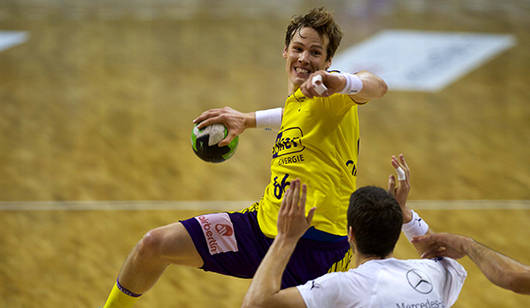
Can Sven Soren Christophersen and the Foxes end Kiel’s run?

Courtesy of LAOLA1.TV, Team Handball fans in many parts of the world will have the opportunity to watch Berlin host Kiel in a key early season German Handball Bundesliga (HBL) class.  It may be only mid-September, but if last season is any indication of this season Berlin needs a win here if they have any hope of challenging the defending champions.  That’s because last season Kiel ran the table, going a perfect 34-0-0 in the HBL

In fact, Kiel hasn’t lost a game in the HBL since a 4 May, 2011, 30-24 loss at Magdeburg; a total of 40 consecutive victories.  Sure, they’ve got the best team, but it’s still a remarkable feat in a league which is pretty competitive from top to bottom.  If Kiel doesn’t bring its “A” game when they travel on the road, probably about 14 of the other 17 teams in the league are more than capable of sending them home with a loss or a draw.

Can current league leaders, Berlin, end the streak?  On Sunday we’ll find out.

Berlin vs. Kiel, Sunday, 16 September (17:30 Central European Time, 11:30 USA Eastern Time)
(Kiel is a 3 goal handicap favorite)

LAOLA1.TV webstream: Link

NOTE:  HBL matches at LAOLA1.TV are unfortunately not available “on demand.”  If you want to see this match, you’ll need to watch it live.

post

New competition/qualifying system in PanAmerica

for the entire group to improve and succeed: the stronger ones need to help the others to join them at the top!


One of the main topics during the PATHF Congress was the discussion of a new system for the qualifying to the PanAmerican Championships in the different categories (men, women, juniors and youth). If one goes back to the ‘old days’ it was simpler. There were essentially only five member nations down in the ‘cone’ of South America, the Central America rarely participated outside their region, Mexico and Puerto Rico were regulars, with Cuba joining on a capricious basis, and then we had USA and Canada before Greenland joined the fun. So a major qualification system was not really needed, and the main Championship was THE regular competition.

But now the irony is that there are more interested participants and nevertheless less competition opportunities for them. Most of the other South Americans have become active, the Dominican Republic is a force to be reckoned with, and the Central Americans want to measure themselves against their more advanced colleagues. However, the size of the continent and the lack of resources on the part of most federations create a dilemma. If you need to travel from North to South in the qualifying process and are successful, then you soon need the money to travel again to the main Championship, perhaps again in the South. So imagine that you then try to go back to government, sponsors and player families and find the money if you actually get a slot in the World Championship in another continent!

For some short period, the idea was to create a ‘second division’, as a way of eliminating qualification tournaments. This meant that the only duplication of events was for those who moved up from one level to the next for the coming year. But this concept did not work out, because it put teams from all over the continent together in the ‘second division’, and who would find it easy to obtain the funding for long-distance travel in something that was not even a meaningful Championship.

So in connection with Mario Moccia taking over as a President, the emerging new proposal was now to return to a regional qualifying concept, BUT with the difference that the focus should not just be on the qualifying but on what the regional events could –and needed to – do in terms of ‘forcing’ more regular competition among neighbors, especially among those of approximately equal strength. There was general agreement that such tournaments, which might also spur additional competition in between the qualifying events, are absolutely necessary to raise the standards for both individual countries and the continent as a whole. With rare exceptions, the ‘number 3 and 4’ teams from the continent have been doing very poorly when getting their opportunities in various World Championships, and no clear trend for improvements has been seen.

So the idea now is that 10 teams should be allowed for each PanAmerican Championship, assuming of course that in the younger age groups you actually get that many teams interested in participating. The slots should then be distributed in a standardized way among three regions: the South, where Chile and Uruguay have been responsible for much of the progress in recent time, would get FIVE slots. This means that the ‘big four’ (ARG, BRA, CHI, URU) would often qualify but that there would always be room for at least one team from among the newer ones, where for instance Venezuela has come on strong. ONE slot would be set aside, as some kind of development tool or motivation, for the six Central American countries to fight about in their regional events, as they would otherwise never have much of a chance to get to the Championship.

This leaves FOUR slots for a rather evenly matched group of seven member federations: CAN, GRL and USA from the North, and CUB, DOM, MEX and PUR from the Caribbean. So the three North teams now have to ‘mix it up’ with some other teams instead of just doing the qualifying among themselves. This could be a really interesting group, often with a real struggle to avoid being left out from the subsequent championship. Much will depend on the resources that GRL and CUB may or may not have in order to participate in the lower age groups, for GRL due to travel expenses and for CUB due to internal politics. I suspect all these 7 member federations are a bit apprehensive about the implications of this approach. It really makes them have to weigh the advantages of more frequent and intensive competition against the risks that too many of the others will turn out to be stronger.

It should be noted that the system above applies only to the process leading to the PanAmerican Championships; the system for the quadrennial PanAmerican GAMES, which is controlled by the continent’s Olympic organizations and not by PATHF, remains unaffected, and only eight teams will qualify for the men’s and women’s competitions in Toronto 2015.
Finally, increased competition of good quality and between teams of about equal strength sounds really exciting. But this will highlight another current weakness: the standard and the quantity of the top level referees in the continent have gone downhill in recent time. So as there now will suddenly be increased demands, there is a major challenge for the new Referee Chief, Salvio Sedrez, to move quickly to strengthen the troops. On the other hand, for the longer term, if one has some patience, the intensified competition level should also in itself help improve the refereeing, as it provides the necessary basis for growth.

post

Harmony and revitalization in the PanAmerican Congress

Important new developments in a united PanAmerican Team Handball Federation


During the weekend, PATHF organized the combination of an Extraordinary Congress and a Regular Congress in Panama City. The event was attended by 23 of the 26 PATHF member federations. This included nine of the ten from South America, all the six Central American members, five from the Caribbean region (CUB, DOM,HAI, MEX and PUR) and then the Northern trio Canada, Greenland and USA.

The proceedings were characterized by harmony and a good meeting of minds on all the major issues. This was particularly remarkable inasmuch as the agenda included the revision of the Statutes, the Competition Regulations, and the introduction of a first-ever regulation for a Disciplinary and Ethics Tribunal. I will come back to these issues in a separate article.

But, apart from the elections, the ‘hot topic’ was the revamping of the overall competition structure, especially as regards the system for qualifying to the different categories of PanAmerican Championships. The reality has been that only a small proportion of the PATHF federations have participated regularly in the Championships or in the qualifying leading up to them. Clearly, an effort needs to be made to encourage or ‘force’ more competition, especially on a regional basis among teams of relatively equal strength. This is the key to raising the level across the continent. I will came back to the details of the new system in a couple of days.

For the moment, I will just comment on the election results. The big change was that, after 16 years, there was a consensus that new leadership through a new President was needed, and the unanimous choice was the former Vice President Mario Moccia (ARG). In this team on the Executive Committee, we also have Julio Noveri (URU) as 1st Vice President and Rafael Sepulveda (PUR) as 2nd VP with special responsibilities for development. Hector Fernandez (CHI) moved over to the position of Secretary, making room for Carlos Ferrea (ARG) as Treasurer. Mario Garcia de la Torre (MEX) remains as Representative to the IHF.

The Council has six additional members, including four Regional Vice Presidents: Brian Hayes (CAN – North), Jose Duval (DOM – Caribbean), Carlos Morales (GUA – Central) and Geraldo Paniagua (PAR-South). The two other members are Carlos Gonzales (CUB – Pres. of the Competition Committee and Salvio Sedrez (BRA – Pres. of the Referees Committee).

A new important arrangement is the establishment of an Office with a General Manager function connected to the President; this will be occupied by Miguel Zaworotny (ARG). Finally, the brand new, independent Tribunal for Disciplinary and Ethics matters also had a President named. My ‘modesty’ prevents me from indicating who was placed in that position…

post

Qatari Sports Paper criticizes local clubs for mercenary squads at IHF Super Cup


Doha Stadium Plus makes a strong case for local development

Hats off to the Doha Stadium Plus, a sports website and weekly based in Doha, Qatar.   In a well written commentary and editorial, they take on local clubs, Al Sadd and El Jaish for fielding squads largely composed of European professionals.  No need to rehash the articles in detail;  Here are the links:

Doha Stadium Plus (5 Sep 2012):  Commentary by Aju George Chris: Is Super Globe a Vanity Fair?

Doha Stadium Plus (5 Sep 2012):  Editorial from the Editor in Chief, Dr Ahmed Al Mohannadi:  Let’s bide our time and develop own champions

I must admit that my  impression of Qatar was that is was an autocratic Arab state where the press toes the line and doesn’t critique the established sporting organizations.  These articles blow that impression out of the water and make a strong case for Qatar to work harder to develop local talent.  All the more relevant as there are rumors of even the national team getting stocked with mercenaries in preparation for the 2015 World Championships which will be hosted by Qatar.


post

AUDIO: Handball Talk (Episode 7) Olympics Wrap Up

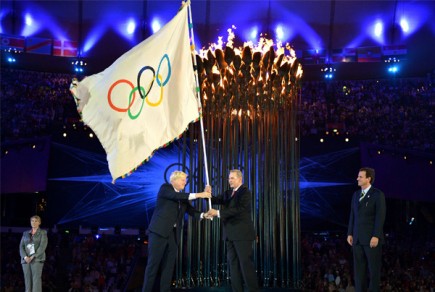
London hands over the Olympic Flag to the IOC.

John Ryan and Christer Ahl discuss a potpourri of Olympics Handball topics to include some top level analysis of the Women’s and Men’s competition, the competition format, NBC’s TV/Web production and the earlier podcast interview with the U.S. 1972 Olympic team.  The podcast also includes a brief discussion on the recent IHF Super Cup in Qatar.

post

Apropos the Olympics – Part 10 (final): An overall impression

The London Games were in the Closing Ceremony declared “happy and glorious”, and this was illustrated already in the Opening Ceremony through the image of a ‘happy and glorious’ Queen!


It would be silly to think that Olympic organizers simply are self-less ‘philanthropists’, who go to the effort and expense of organizing the Games just for the sake of the athletes, visitors and TV audiences. Of course they believe that, in one way or the other, it is going to be so beneficial to them that they will turn out to be justified in having made the sacrifices. Their precise motivation may differ from one occasion to another. For instance, much was made of China’s determination to show the world four years ago that they had ‘arrived’ on the world scene in a major way. But that, I believe, is to some extent always part of the picture. The British government clearly made statements somewhat along the same lines. Being able to organize the Olympics in a competent and friendly manner is always going to be a matter of prestige.

And as I see it, as long as we want the Olympic tradition to continue, we should be grateful that there are countries and cities who are willing and able to help us keep it going. It is a totally different matter that some organizers will obviously miscalculate, in their belief that it will all be worth it. Beyond the prestige, there has to be a more tangible, longer-term benefit. Showing off a host city as a place that deserves a major increase in its ability to attract tourists is one calculation. Making a case for being a modern, strong and reliable business partner is another one. Those potential gains are always hard to pin down, but the sense it that reputation of Britain and London surely got a valuable boost.

Therefore, it tends to be more common to point to the benefits for the country’s and the city’s own population. This typically includes the notion that a major redevelopment of a previously lagging part of the city will always be worthwhile. One hopes that this will come true in the long run, because the initial, inevitable upheaval may seem more like a negative to some, even if the approach in London may have been much more considerate than the seemingly ruthless one in Beijing. The construction of new stadiums and arenas is a more double-edged issue. While to some extent new facilities may in fact become useful additions for the locals, more and more the concern has been that the Olympic Games tend to leave behind ‘white elephants’ that will never again be fully utilized. But London seems to have found a good approach, with a clear plan for ‘recycling’ (with Rio 2016 as the beneficiary) or remodeling into more usable facilities.

During the Closing Ceremony, IOC President Rogge referred to the London games as “happy and glorious”. Organizers always hold their collective breath at that moment, hoping for an expression of high praise. Now that, for the first time in a very long while I was not present myself, I still came away with a sense that ‘happy’ was a very appropriate label. The atmosphere around the events and in London seemed to match that. And many of the potential problems that had been discussed in advance did not materialize. There was no crime wave, let alone any hints of the Games being a target for terrorism. Traffic is inevitably going to be a cause for complaints, but how could it not be, considering the huge number of visitors who are not used to finding their way in London. And even the weather cooperated, which may be the most remarkable achievement for a place like London.

Going back to what I said before, it seems more of a concern that the Olympic Games have become a rather overwhelming affair for both host country and host city. So instead of demanding perfection and complaining when we do not get it, we should be appreciative when someone manages to pull it off in an efficient and attractive manner. But one wonders, particularly given the tendency that nobody wants to come across as being less impressive than a predecessor, how realistic it is going to be to find willing and successful organizers in the future, notwithstanding the prestige involved. What countries will be willing to take the risk, and what cities will have the infrastructure and resources to make it work? Of course, some countries may have the political situation and the attitude that ‘the end justifies the means’ and that the will of the people matters less. But it would be sad and dangerous to see such a trend develop, so the question is: what could and should be done to bring the Games down to a scale that would make the demands on an organizer more reasonable!? The options of reserving the opportunity for a handful of locations or else encouraging potential hosts for whom the effort and expense would be unconscionable, seem equally undesirable.

post

AUDIO: Interview with Ben Teitelbaum: Co-Director of Team Handball Documentary, “Home Court”

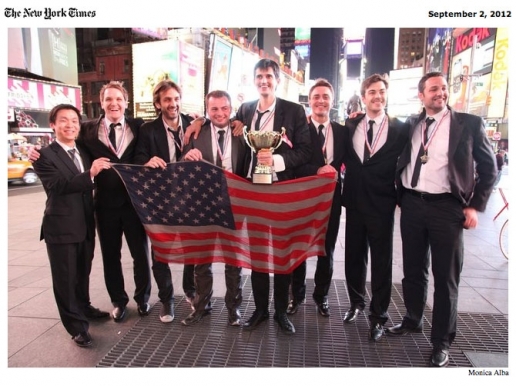
New York City Team Handball Club players pose with their latest national title trophy in Times Square

A new documentary focused on the current U.S. Club National Champions, the New York City Team Handball Club, is in the final stages of editing.  The film focuses on the multi-cultural aspects of the team which includes expats from all over the world.  In this 30 minute interview, Co-Director, Ben Teitelbaum discusses the film and its genesis.

New York Times (1 Sep 2012):  Unified, in America, by an International Sport

“Home Court” Official Website:  http://handballfilm.com/

New York City Team Handball Club Website: http://newyorkcityteamhandball.com/

THN Commentary from 2009 on Team Handball Related Movies: https://teamhandballnews.com/2009/12/in-search-of-a-handball-invictus/

post

Why Weren’t the U.S. National Teams at the London Olympics?: Part 4: A lack of funding: Where are the sponsors and donors?

If only it were so easy to get substantial funding from these sources.

In part 3, I provided an overview of USA Team Handball’s funding since 1993 and some background as to why the USOC has decreased funding since the 96 Olympics.  Continuing with the theme of funding sources, in this part I look at why the sport hasn’t received much in terms of funding from sponsors and donors.   (Links to Part 1, Part 2)

Sponsors:  As the concept of a “sponsor” might mean different things to different people, I’ll define it as any company that contributes funding to USA Team Handball for the promotion of their product.  (Note:  This is significantly different from the concept of a donor (discussed later) for which there is nothing expected in kind.)

Companies with Handball Specific Products:  There are a number of products that are directly related to the sport of Team Handball.  The obvious products include balls, goals, nets, flooring, shoes and stickum.  Companies with make these products have an incentive to sponsor USA Team Handball since the use and promotion of these products by the Federation is pretty much guaranteed to reach almost everyone in the U.S. that would consider buying these products.  Over the years, USA Team Handball had had a number of sponsorship agreements with companies that make these products, but I don’t have access to the documentation which shows how substantial these agreements were.  In recent years, USA Team Handball did score a $50,000 sponsorship deal with SnapSports (a maker of floor courts), but I wouldn’t be surprised, however, if in most instances the primary benefit was simply equipment being provided for national team use.  (Side note:  Another item, worthy of a lengthy discussion are TV rights and that will be covered in the next installment.)

So, first the good news:  USA Team Handball can pitch to these potential advertisers its phenomenal market reach.  Seriously, if you advertise on USA Team Handball’s webpage, you are probably going to reach nearly 100% of the U.S. Handball market.  But, now the bad news:  The number behind that 100% is probably in the neighborhood of around 500 people.  If these companies do the math, and they generally have people that really do the math (if they want to stay in business), this means that the dollar figures behind these sponsorships isn’t going to currently amount to much.

Companies with Sports Related Products:  There are a number of sports related products not specific to Team Handball that also might find merit with a sponsorship relationship with USA Team Handball.  The most obvious item is team uniforms, but other items such as protective undergarments could come into play.  These sponsors, however, are also pretty aware of the relatively few numbers they will reach through USA Team Handball.  USA Team Handball has generally been pretty successful in finding a uniform sponsor, although it’s not clear how much funding these deals brought in.  If the U.S. could find more success on the court and qualify for the World Championships and convince a U.S. network to air a few national team matches the uniform contract would certainly increase in value.

Companies with Generic Products:  There’s nothing to prevent Coca-Cola, Chevrolet, or some other random company from joining the USA Team Handball sponsorship family.  Well, nothing other than the same argument:  They’d be paying to reach only a few potential customers.  Still, despite this USA Team Handball has had some success in this area in the past.   If companies with Team Handball specific products have taken a pass on advertising with USA Team Handball, you might wonder why on Earth some other random company would give it a go?

The answer generally falls into a couple of categories.  First, some companies want to get aligned with the Olympic movement in any way possible and USA Team Handball can provide an entrée for doing so.  The most striking example was a substantial sponsorship (reportedly around $1M) from the Weather Channel during the 96 Olympics timeframe.  I don’t the full specifics of how this came to pass, but I suspect that the Weather Channel, based in Atlanta, wanted to join the Olympic family and was either coaxed or steered in USA Team Handball’s direction.   I’ll never forget the bizarre juxtaposition of seeing USA Team Handball promotional ads being aired in between weather forecasts and contemplating just how many people watching even knew what they were seeing.  Unfortunately, enticing these companies usually requires being in the Olympics which has proven problematic in recent years.

The second category generally requires someone in the company having an affinity to Team Handball.  How else to explain USA Team Handball’s current sponsorship from Grundfos, one of the world’s leading manufacturers of water pumps?  This Danish company clearly has an affinity to the sport because the likelihood of a USA Team Handball follower also having a need of a water pump is probably pretty small.  In many respects, the distinction between this sort of sponsor and a straight up donor is pretty negligible.

Donors:  If a sponsor provides money with the intent of promoting their product, a donor is someone or some company providing money with no real expectation of profit or promotion.  Donors support a charity, a movement, or a sports federation because they believe in the cause.   I don’t know how much money has been donated over the years, but I suspect that with the exception of Dieter Esch’s fairly recent generosity it hasn’t amounted to a whole lot.

Much like a presidential campaign there’s two ways to accumulate significant funding from donations.  You can either get a few people to contribute a lot or you can get a lot of people to contribute a little.

The millionaire donor:  During the Olympics, sports columnist Jack McCallum whimsically suggested that some altruistic millionaire should take it upon himself to fund USA Team Handball.

Not the first time somebody has come up with that idea as it is the simple solution to the big funding problem.  It seems somewhat silly, but it is at least conceivable.  After all, a lot of millionaires have purchased sports franchises and then bought players to win regardless of how much it costs their bottom line. The team becomes essentially a toy for them in the big scheme of things.  And even outside of professional sports, Paul Allen of Microsoft fame and T Boone Pickens have respectively, turned the Oregon and Oklahoma State NCAA Football teams into top programs.

From that perspective why not spend money turning around an Olympic sport?  The funny thing is, is this is sort of what happened to USA Team Handball on a smaller scale when Dieter Esch bankrolled the Federation from 2008-2010.  I say, “sort of” because Mr. Esch’s generosity had its limits, somewhere perhaps between $500K and $1M.  While his generosity was substantial, we would need Mark Cuban dollars for a full and complete turnaround.  And while I wouldn’t count on this happening, if there ever is someone with idle cash and a love for the sport, I sure hope USA Team Handball is ready to pounce with a pitch that will close the deal.

In the mean time, USA Team Handball could still make inroads with more donors being willing to contribute substantial, but still sizable donations.  Indeed this was the strategy behind the $50K cost for a Board of Director’s seat that Mr. Esch implemented.  And this was how Grundfos was brought into the fold.  Problem is, though, that more companies and businesses did not follow suit.  This could have been a salesmanship problem, but perhaps it’s more of a product problem.

Salesmanship Problem or a Product Problem?

One of the things that I’ve found amusing in online forums or in postgame discussions at the bar are critical comments directed at USA Team Handball for not raising more funds and/or being content to live off the USOC.  As if incompetence and laziness were the only things keeping us from going out in to the backyard to pick corporate checks off the fundraising tree.

I don’t have full insight into how much effort USA Team Handball put into fundraising over the years, but it clearly appears to have been a priority of the last GM and Board President.  Unfortunately, while they made good progress in establishing relationships with several European entities significant funding streams didn’t materialize.  Maybe they were simply bad salesmen, but I would assess their lack of success more to the bitter truth that there is little present value with the product of USA Team Handball.

It’s true that there are some incredible salesmen that can seemingly sale anything to anyone.   But in the midst of a struggling world economy even the Billy Mays of the world are going to come up short if the product doesn’t cut it.

So, given this currently reality how can we convince potential donors and sponsors to step forward and provide more funding to USA Team Handball?  Two answers:

1) Sell the future.  While the present value of USA Team Handball is paltry, the potential future value is exceedingly bright.  A nation of 308 Million people and only around 500 dedicated followers?  A sport tailor made for Americans?  For a long time sponsors and donors couldn’t see that potential future or thought it was a pipedream, but a number of developments have occurred in recent years to start turning some heads.  (To be discussed in the next installment)

In order to sell that future, however, USA Team Handball is going to have to convince the sponsors, donor and international partners that a clear plan is in place to make that future happen.

2) Improve the current product.  Of course, this is obvious, but it’s important to note that is not necessarily fully aligned with National Team performance.  No, the goal here is to improve the product from the viewpoint of potential sponsors and donors.  This means a number of things, but more than anything it means turning 500 dedicated followers into 5,000 and then 50,000 and then more.

So that wraps up the discussion on sponsor and donors.  In part 5, I further elaborate on some of the reasons the sport of handball is so little known in the U.S.  

post

Apropos the Olympics – Part 9: The refereeing in handball brings more concerns than reassurance

British referees Battlett and Stokes had a game during the Olympic tournament


In two pre-Olympic articles, I commented on refereeing. First I noted that the group of referees nominated for London was almost completely lacking in Olympic experience, and then I previewed the issues and instructions that would need to be discussed with the Olympic handball referees to get them to maintain a correct and uniform line. It now seems inevitable that I offer some comments on my observations and evaluation.

Although I watched, through high-quality TV broadcasts or live streaming, 49 complete games and 15 at least half games (making me miss only 12 games of 76), which provides me with a very solid basis, it is of course conceivable that the official IHF evaluation will differ somewhat from my own informal effort. But I am reassured to know that the IHF Referee Commission, strongly supported by the Coaching and Methods Commission, has collected a wealth of information to be able to come up with a solid analysis in due course.

I noted in my article about the nominated group of referees that this is group that I have reason to trust as a serious and honest team, who will do their utmost to handle the games with integrity and to protect their own reputation as unbiased officials. Nothing that I saw from London makes me modify that evaluation in the slightest. To the extent that, in some games, the refereeing may have given the impression of being a bit lop-sided, it was more a result of an inability to recognize, in that particular game, that one of the two teams was much more cynical than the other, in terms of acting outside the rules. And if they did not get caught, some unfairness may have been created.

From a technical standpoint, it was clear that the areas of emphasis, which the referees heard about from the IHF before the start of the event, and which were basically also the ones that I commented on a month ago, were indeed the ones creating the main challenges during the Olympics. This is obviously not because the referees ‘refused to listen’; it simply confirms that there are some specific aspects of the game that always tend to be the more difficult ones and that, despite the reminder and the support from the IHF, these will still be the ones that cause problems and lead to criticism.

It may be frustrating to point it out, but the key issue was most likely the frequently shifting line in individual punishments. There were tendencies to differences between referee couples, but also for the same couple from one game to the next. Even more awkwardly, there was a general trend towards more leniency as we moved toward the later stages of the event and, similarly, the referees sometimes became too soft and ‘diplomatic’ during the critical final stage of a game. Also, direct 2-minute suspensions and direct ‘red cards’ were used too sparingly.

In many games it seemed that the players on the offense could do nothing wrong, as almost all the decisions went against the defenders. And unfortunately, this did not quite match the reality, so it led instead to an escalation of the methods by the desperate defenders. But in individual games, it was suddenly turned around so that all the attention seemed to be on infringements by the attackers. Of course, this tended to cause confusion.

As so often in the past, many of the problem situations occurred around the 6-meter line. Often this was in the sense that a ‘wrestling’ or ‘shoving’ match was taking place, without any action from the referees. And another issue involved the well-known trend of ‘detecting’ defenders inside the goal-area and awarding a 7-meter-throw, even when this was not really the situation. It would be a major break-through if, one day, one could get a consistently more accurate observation by the referees about this.

And the final realization was that too many of our top referees are not used to, and comfortable with, refereeing women’s matches. So precisely in the Olympic Games, which is the only time when we have simultaneous men’s and women’s competition, it was noticeable that the judgment of body contact in the women’s games often was flawed or at least inconsistent.

This year’s Olympic handball tournaments may not have been of the absolute top level that one might have hoped. But the speed, dynamics and physicality were nevertheless sufficient to make observers begin to wonder if we have reached the stage where it is beyond the capacity of TWO pairs of eyes to register everything that is happening on the court. Or alternatively, what are the scientific methods that have not yet been tried, in the area of helping the referees to maintain the concentration, focus, recognition and interpretation that is needed?

More generally, most of the referees in London will also by appearing in the Men’s World Championship in just five months time. On the basis of the observations now made, will the IHF, in collaboration with the continental federations, be able to apply the resources needed to follow these referees in the meantime, offering feedback, mentoring and practical advice? As I have commented, these referees are not ‘beginners’, but they also are not ‘ready’ in the sense that can be left to their own devices. They constitute a key resource for our elite handball, who need and deserve constant support and nurturing!

post

Apropos the Olympics – Part 8: Tired of hearing about ‘the best of all times’

so what does a medal tell you?


Already during the two Olympic weeks, but even more after the completion of the event, there has been an absolute hysteria around the discussion about ‘the best Olympic athlete of all times’. What caused this particular focus was of course the ability of Michael Phelps to add to his medal collection so that he has now, after three Olympic Games, 18 gold medals and four ‘lesser’ ones. This is obviously much more than anyone else gained throughout a career.

This causes some people to proclaim that the mere numbers make it obvious that Phelps is the best athlete who has ever existed. Let me say that I happily recognize his great achievements, his efforts, and his ability to persist over a considerable period of time. But in my opinion, ANY attempts to use medal counts, or any other method, to try to establish who is the best ever, are completely flawed and really undesirable. I know that it is in the human nature to want to make such comparisons and proclamation, so nothing I say will put a stop to it, but I still want to make my arguments.

I have some appreciation for the desire to make comparison over time within one and the same sport. For instance, who is the best handball player ever? And I understand that it is both tempting and interesting to compare performances in different sports and then try to establish who has made the greatest accomplishments, whose achievement requires the broadest skill set, the strongest talent, or the greatest effort. But for me personally, it is a rather futile exercise, in part because most of us understand too little about each event to be able to compare, and mainly because there are no meaningful criteria by which comparisons across sports can be made.

Presumably that is part of the reason why it is so tempting, and so supposedly convincing, to use medal counts as a basis. But it should be rather obvious that this does not tell us a lot. What is the real reason that Phelps can win so many medals; is it really that he is superior to a boxer, runner, rower, shooter, wrestler or fencer? Well, of course not! Even after I leave out the team sports, it is clear that most other athletes have only ONE chance to win a medal, while a few have a realistic opportunity to win two or more.

In some sports you have different distances or variations that require such similar skill sets that it is realistic to be a multiple medal winner. A runner or kayaker could combine two distances, a tennis or badminton player could win in singles and doubles, and in some individual sports there is a separate medal chance for teams, simply by aggregating the results of individuals. (This latter approach is in my opinion unfortunate, as it goes against the spirit of the Olympic Charter which de-emphasizes such aggregating of results by nation).

Then of course you have a few sports that are designed to be testing the capacity to handle totally different activities, viz., decathlon/heptathlon, modern pentathlon and triathlon. I think it is a good illustration that even the most outstanding participant in decathlon never really has the skills to compete for the medals in one of the ten individual events. To my mind, such versatile athlete would have every reason to wonder why it is possible for others, such as Phelps, to use a much narrower set of skills to win a multitude of medals.

Put differently, again without taking issue with the achievements of Phelps, his ability to win so many medals really speaks more about a clearly inappropriate generosity in the number of very similar medal events in swimming. The ability to win medals in different styles plus in individual medley suggests that there is clear an excess of events, and if you then add the relays it really has gone too far. To start with, one could surely eliminate one distance for each of three ‘special’ strokes and individual medley and two of the distances for freestyle, without creating any unfairness for the participants, if one compares with other sports. And two forms of relays seems to be at least one too many.

The IOC is generally striving to modernize the Olympic Games by inserting new sports, and the efforts and experiments in the Youth Olympic Games seem to be a step in the right direction. Apart from the apparent excesses in swimming, there are other team competitions in individual sports that add very little (except space for additional participants) and there are entire sports that are no longer as ‘modern’ as even their explicit names suggest. As I was noting in an earlier article, a major purpose of the Olympic Games is to be a source of INSPIRATION. But this means that, to get the attention of younger generations, the program of the Games has be constantly renewed, so the IOC would be wise to speed up this effort. And this cannot happen unless some cuts in the current program are made!

post

Apropos the Olympics – Part 7: The British deserve the blame!

their gift to mankind...


In connection with their hosting of the Olympic Games, the British have been very quick and proud to use a lot of media articles to proclaim that they are the ones who ‘invented’ a large proportion of the sports in the Games and a whole lot of other sports as well. The lists vary from source to source, but they often include sports which some other countries have been in the habit of claiming as theirs.

Most people are ready to accept that soccer/football originated in Britain, but the lists generally also tend to include archery, badminton, boxing, field hockey, rowing, sailing, swimming, table tennis, tennis, track & field and water polo. If you disagree, please do not blame me; I am just passing on the consensus of British media! Of course, they also want to take credit for some (currently) non-Olympic sports, such as cricket, croquet, golf, rugby and squash. I think they probably also have the rights to some other strange things such as netball.

But they are quite prepared to accept that, by contrast, other countries deserve the credit for a small number of Olympic events, such as the U.S. inventions of basketball, volleyball and triathlon. Similarly, they are willing to admit that the Germans seem to be the ones who started gymnastics. And in some footnotes there are references to the competing claims for the obscure sport of handball from Denmark and Germany. The British seem quite content not to have anything do with that ‘un-British activity’.

And yes, this confirms what I have always noted, both in conversations with British friends and with people from around the ‘Anglo part’ of various continents: it is really the ‘fault’ of the British that our revered handball has had such a scattered emergence around the globe. In Africa, for instance, it is very clear that North Africa and some francophone countries on the West Coast keep dominating, together with the special case of Angola. By contrast, I remember asking government officials about handball during visits to Kenya and Ghana, former British colonies, and I was met by a blank stare.

The same fate was generally bestowed upon Commonwealth nations in Asia, so this is why handball has always had this awkwardly polarized situation in Asia, with strongholds around the Persian Gulf and in China, Japan, and Korea. India is only recently beginning to participate in handball, but at a very modest level. Similarly, the Australians were, and mainly remain, handball novices when they were hosting the Olympic Games in the year 2000.

Another interesting twist involves the French overseas ‘regions’ of Guadeloupe, Martinique and Reunion, which you could say have amounted to ‘secret weapons’ for France in the international competition, producing world-class talents such as retired stars Richardson and Abati, together with current top players Dinart, Narcisse and Sorhaindo. I bet the British team would not have minded having some reinforcements like that on their team in the London Olympics.

The early starters in PanAmerica were Canada and USA in the north and Mexico and Argentina in Latin America. But this certainly had nothing to do with a British (or Spanish) influence. Migration and contacts related to specific ethnic groups provide more of an explanation. As I noted in one of my recent articles, the lack of immigrants from regions with handball background to this day remains a handicap for handball in the U.S., compared with the steady and natural inflow of newcomers who have grown up with soccer. So when we ponder this reality, let us remember that, essentially, the blame for handball’s difficulties in the U.S. really lies with the British and their lack of appreciation for handball…

As a ‘footnote’, while it has been very nice to see the enthusiasm of British spectators for a sport which has no background in their country, and while the preparations and competitive spirit of the British handball teams were admirable, there are already signs that handball in Britain may not be able to count on a sustained boost in the aftermath of the Olympic Games. Quite surprisingly, it was already reported shortly before the start of the Olympics that the participation of the British women’s team in the upcoming World Championship qualifying had been cancelled. And now we are finding media reports to the effect that the government is already bringing the British handballers down to earth after their Olympic excitement. Much in line with the situation in the U.S., the government has declared that funding will only be provided for sports with genuine chances for an Olympic medal!!!

post

Why weren’t the U.S. National Teams at the London Olympics?: Part 3: A lack of funding

Since the 96 Olympics the bottom line for USA Team Handball has been trending down.

In Part 1, I provided some top level analysis as to why our current national teams didn’t qualify for the London Olympics- we’re simply not very good.  In Part 2, I addressed the challenges USA Team Handball has had in finding and developing athletes.  In Part 3, I tackle the current lack of funding, some potential sources of additional revenue and why the U.S. has struggled to raise more funds.

It doesn’t take long for anyone observing the state of Team Handball in the U.S. to come up with a number of potential solutions as to how things could be turned around.  Very few of those solutions, however, come free and even the lowest cost options require some level of funding to implement.  It can be amusing to hear or read these would be solutions and then do some back of the envelope cost analysis to quickly determine that  the first year of implementation alone would bust the entire U.S. budget for the last decade.

Just how lacking is this “Lack of Funding?”

So, just how cash strapped is USA Team Handball?  I don’t have all the financial details, but the U.S. Government’s tax reporting requirements do provide a pretty good window of the trend that have occurred in the past two decades.  Using the Internal Revenue Service (IRS) Form 990s that are available through different online resources, I was able to do some forensic analysis.   For each year, the first number is the amount listed on USA Team Handball’s Form 990s in regards to “gifts, grants and contributions received.”  The second number is the contribution amount listed in U.S. Olympic Committee (USOC) Form 990s as being granted to USATH.

Year       Total Contributions         USOC Grant
1993       $841,615
1994       $1,396,152
1995       $1,204,365
1996       $1,383,813
1997       $867,116
1998       $585,000
1999       $563,152
2000       $741,322
2001       $652,364              $510,000
2002       $614,930              $379,000
2003       $547,091              $487,561
2004       $458,621              $354,237
2005       <<N/A>>             $281,620
2006       <<N/A>>             $3,184
2007       <<N/A>>             $500
2008       $489,150              $0
2009       $974,612              $238,268
2010       <<N/A>>             $335,552
2011       <<N/A>>              $283,202

First, a few notes regarding the data above:

– I couldn’t find USOC Form 990s prior to the year 2000.
– From 2006-2008 there was essentially no USA Team Handball Federation due to the USOC’s decertification of the Federation.  During that time period, however, the USOC took over many of the responsibilities of the Federation.  It would be interesting to see what it cost the USOC to run Team Handball during that period, but those numbers aren’t available.
– The USOC fiscal year is the same as the Calendar year while USA Team Handball’s Fiscal Year is from 1 July to 30 June.  In other words 2009 data is actually from 1 July 2009 to 30 June 2010.
– Reportedly, there was a number of accounting problems with USA Team Handball’s 2010 Form 990 and I think that is why it hasn’t been filed yet.
– There are several other items that I could have listed in the table to include total revenue and total expenses.  With few exceptions, however, total revenue and expenses track very closely to the total contribution number.  In other words, almost all of USA Team Handball’s revenue has been in the form of grants and USA Team Handball expenses have matched that revenue.  (Although, based on reports of debt problems this is probably not true for the 2010-2011 timeframe.)
– The Form 990 does not require the filing organization to fully break out where the contributions come from and for what amount.  This is why I include the USOC reporting of grants to Team Handball.  Additionally, it appears that older versions of the form don’t clearly delineate between grant and sponsorship funding.

While there are a lot of limitations with this data, it does provide a pretty good indication of the downward trend in funding.  Certainly from the high water mark (around the 96 Olympics) to the demise of the Federation in 2006 there’s a significant drop in funding.  And not surprisingly, there was a corresponding drop in performance on the court with the U.S. not coming anywhere close to qualifying for the 2000 and 2004 Olympics.  Aside from the drop in national team performance the lack of funding undoubtedly exacerbated USA Team Handball’s management/leadership problems leading to the Federation’s eventual decertification by the USOC.

With the establishment of the new Federation in 2008 there was an uptick in funding, but this uptick was mostly attributable to the generosity of Dieter Esch.  USOC funding from 2009 to 2011 has ranged from $238K to $335K, still far below reported figures from 2000-2004 and surely below grants provided during the 1996 Olympics timeframe.  With Dieter Esch deciding to turn off the spigot in 2010, USA Team Handball is reportedly back to a budget in the $300-500K range.

It can be debated as to just how much USA Team Handball needs in terms of funding to field competitive teams, but few would argue that $300-500K is sufficient.  Certainly, if $1.3M budgets were required in the 1996 timeframe to be “respectable” in Atlanta, then probably at least that much (adjusted for inflation) is needed today.  And not to mention, there’s a whole lot more than just national team budgets to consider.  How do you also pay for development and the interests of the membership at large.  And marketing, staff salaries, etc, etc.  Really, to do things right you probably need more like $5M.

So, Where’s the “Mo Money” Going to Come from?

So, if it’s so obvious you need more money, why you just craft a plan and go get it.  Right?  If only, it was so easy.  On the plus side, it is fairly obvious what the potential sources of additional revenue are, it’s just that convincing those sources to actually cough up the bucks is easier said than done.  What follows is a list of the potential sources, why they haven’t contributed as much as maybe they should and some top level assessment as to what it’s going to take for them to change their minds.

USOC:  For decades the USOC has been the main funding source for USA Team Handball.  This funding has varied over the years at times probably pushing the $1M mark at the high end and bottoming out to zero at the low end.  (It would be interesting to see more definitive financial data going back to the 1970s and adjusted for inflation, but that information is not readily available.)   In more recent years it has been around $300K.  So what happened?   Why the dramatic decrease in funding support?

The simple answer is that since the 96 Olympics the USOC has increasingly decided to base their funding decisions on what a sport’s chances for getting a medal are.  With the U.S. not being coming close to a medal in 96 and clearly no chance of medalling on the horizon it’s easy to see how Team Handball is going to come up short when competing against the likes of Swimming and Gymnastices.  Even worse as a team sport the costs of fielding a competitive team are pretty substantial and the return on investment can only be one medal in each gender.  The bitter reality is that no matter how you slice and dice it, if you’re trying to maximize medals for the least cost, investing in Team Handball is a fool’s errand.

Might the USOC, however, rethink its current medal emphasis?  I can think of a number of other factors that should be considered when the USOC makes these decisions.  Those factors include Federation need, potential TV audience and health/fitness for the nation as a whole.  In each of those areas USA Team Handball scores pretty high.  “Need” certainly doesn’t need to be explained.  As witnessed by the buzz from the recent Olympics it should be even clearer to USOC reps that the sport is tailor made for TV.  I’m obviously biased, but I don’t think it should be lost on anyone that the dynamics of attractive Team Handball match is inherently more entertaining than watching an arrow hit a target or boat crews rowing their oars back and forth.  Finally, with obesity becoming an increasing health concern the prospect of thousands of youths running up and down the court is a selling point that the USOC will/should at least listen to.

While these are factors that the USOC appears to consider, the goal is still clearly gold, silver or bronze.  And as long as that’s the case the best USA Team Handball can probably hope for is probably around $500K/year, an amount which is more in line with the funding levels of some of the other minor Olympic sports.

But the USOC isn’t the only game in town, in Part 4 I’ll review why funding has also been lacking from international entities, sponsors and other sources of potential revenue.

post

Apropos the Olympics – Part 6: Would an ‘under-23’ limit be good for handball?

not even the younger French players Accambray and Barachet would be eligible for an 'under-23' team


As most of you are likely to be aware, the IOC and FIFA have worked out a special deal under which the Olympic football tournament is essentially available only to players under the age of 23. Three players per team are allowed to be above that age. This particular rule came into effect in 1992. In 1984, the previous prohibition against participation by ‘professional’ players was lifted, and the rule for 1984 and 1988 limited the participation on European and South American teams to players who had no previous World Cup experience, whereas no such limit existed for the rest of the world. The 1984 ruling was disliked, inasmuch as it created an inconsistency between countries, so this led to the change in 1992.

The reason behind the current rule is that FIFA absolutely does not want the Olympic tournament to compete with FIFA’s own World Cup, while on the other hand the IOC really does not want FIFA to withdraw from the Olympic Games. So this is what causes IOC to allow this unique compromise. It has led to relatively interesting Olympic football tournaments, with a considerably more balanced strength between continents, as compared with the World Cup. African nations have benefitted in the past, and now in London we saw a final between Brazil and Mexico, while Korea and Japan played for the bronze medals. In other words, not one single European team, including the host country, managed to qualify for the semifinals, but the quality of the tournament was still relatively good.

Among some of our readers, it raised the question whether a similar arrangement could be feasible, beneficial and allowed also in handball, and I decided to get the reactions of a number of handball friends from around the world. From a U.S. perspective, it had been suggested that some form of age limit would lead to a ‘more equal playing field’, with better opportunities for non-traditional handball nations. Similarly, it was suggested that in such countries one could hope that this kind of rule could spur an increased emphasis on youth development in handball. And the benefit for the traditional handball powers in handball would be that it would remove the Olympic Games as an additional burden in the competition calendar, which in Europe already entails four other major events in every four-year period. Right now we hear top club teams in Europe complaining that many of their players are coming back tired from London.

But, not surprisingly, I have quickly been overwhelmed by skepticism or, more bluntly, sharply negative reactions during my inquiry. It appears that, as one could sense from the enthusiasm with which even the most experienced players seem to embrace the Olympic opportunity, that this would absolutely not be the way in which the top players would want to have their burden reduced. They would instead want to cut back on World Championships or continental events. Moreover, there is no expectation that the IOC would ever be prepared to discuss such an arrangement for handball. Football is unique in its power base to ‘get away with’ such an arrangement, and IHF would probably be told that if the best players were not be made available, then the IOC would be happy to drop handball and replace us with some other sport(s).

Moreover, as many have noted, the level of a handball tournament for, say, ‘under-23’ would be so vastly inferior to a full-strength tournament that handball would ‘shoot itself in the foot’ from an image and PR standpoint, under the hypothesis that the IOC would allow it. And it is clear that if one looks at the quality of the World Junior Championships, and also reviews what players would in fact remain on the Olympic rosters from London, then the depletion would really be quite dramatic. The top teams in the Olympic soccer tournament had emerging stars who knew how to dazzle the crowds, but we could not count on the same situation in handball.

Several of my sources even doubted the premise that there would be more of a ‘nivellation’ between continents and nations. In fact, I heard the suggestion that the traditional handball countries would be even more likely to have the upper hand if one moved down in the age brackets. And indeed the results from recent years of Junior World Championships seem to confirm such an assumption, especially on the women’s side. To the extent that the ‘other’ continents may have seemed to have had a relatively better chance on the men’s junior side, this is in fact more related to a deliberately more generous allocation of slots to the other continents. So, all in all, the notion of an age limit clearly seems to fail to create any enthusiasm!