post

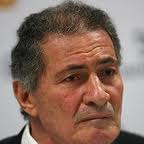
A week of personal tragedies for IHF President Moustafa

For any person it may come to the unfortunate point where self-inflicted wounds in one’s professional life and grief due to tragedies in one’s personal life coincide in a macabre way.

Hassan Moustafa, IHF President, has for many years been in a state of denial regarding the numerous manifestations of his cynical and despotic regime at the IHF. Whether he is now able also to ignore and shake off the impact of having had the IHF Offices and his own private penthouse apartment raided by police two days ago, that remains to be seen. I will follow up on this topic later today or tomorrow.

But for some time now, Hassan Moustafa has had to focus on a personal tragedy in the form of a serious illness of his wife, Dr. Magda Fahmy Ezz, who has been in coma in a hospital in Cairo. I had the pleasure of meeting her, and she was very clearly a charming and highly accomplished woman, with major successes both in sports and in the arts, especially ballet. I will not forget the superb opening ceremony that she choreographed and produced for the Handball World Championship in Cairo in 1999. However, the message has now gone out that she passed away last night.

Yes, personal and professional tragedies can be intertwined in this way. But while the strong concerns about the impact of President Moustafa’s decisions and actions in the IHF will continue to be severely pursued by me and others, it is appropriate at this time to step back and convey condolences to Hassan Moustafa and his daughter (whom I have also met) in their moment of personal grief.

post

IHF Office and President’s home raided by Swiss authorities


Swiss investigators were uninvited guests at IHF HQ

According to the Swiss news site, Online Reports, on Wednesday Swiss authorities raided and searched the Basel offices of the International Handball Federation (IHF) and the private residence of IHF President Hassan Moustafa.   According to the Swiss report, the investigation is related to payments that President Moustafa allegedly received in exchange for the awarding of World Championship TV rights.

Editor’s note:  The allegations of this conflict of interest were previously addressed in January of last year in a commentary by Christer Ahl.

Online Reports (German): http://www.onlinereports.ch/News.99+M5e629327211.0.html

THN (28 Jan 2010): Conflict of Interest – or worse !?: https://teamhandballnews.com/2010/01/conflict-of-interest-%E2%80%93-or-worse/


post

Ramon Gallego, IHF/PRC, in New York Marathon

Marathon runner Ramon Gallego with sprinter Carl Lewis


When IHF teaches its top referees to focus strongly on their fitness, there is someone who can set a good example for all the referees of the younger generation. Ramon Gallego was always extremely fit in the days when he was still an active referee, with Olympic and World Championship finals among his top achievements. But he has remained in shape, and the current group of referees have a tough time following him when he takes them out on training runs. And this instills respect when he preaches fitness and agility.

And despite the large amount of time he spends for the benefit of the IHF referees, in addition to his professional career as a university professor back home in Spain, he also finds enough time to stay in sufficient shape to compete in some of the top marathon races of the world. I have lost track of exactly have many marathons that Ramon has completed, but a few days ago he made his debut in the difficult and prestigious New York City marathon which had over 40000 participants. Of course I am little bit frustrated that I could not convince him to make his U.S. debut in last weekend’s marathon in the Washington D.C. area, where the course takes the runners through my street.

Anyway, Ramon posted a very respectable time of 3.28.47. He was carrying on like a machine for the first 25km, at a steady pace of 47 minutes per 10km. But then he must have spent too much energy waving back to the cheering crowds during the next 10km, where his pace slowed down just a bit. In any case, I would be interested to see if anyone among our top referees would be prepared to challenge Ramon in one of his upcoming races. And now I just look forward to cheering him on when he comes to the Washington marathon next year!

post

Army takes Team Handball’s Commander in Chief Trophy

Air Force on attack against Army

Army easily defeated Air Force  this past Friday 45-30 cadet gym at the Air Force Academy to secure Team Handball’s version of the Commander and Chiefs trophy.  Army’s second team also won a match against Air Force 34-27.  In the football match the next day Air Force beat Army 24-14.  For the past 20 years or so Air Force Football has dominated Army Football by roughly the same measure Army Team Handball has dominated Air Force  Team Handball.

Photos from matches: http://www.facebook.com/media/set/?set=a.10150345010461759.343605.326245611758&type=1

post

Play the Game – Is FIFA capable of real change?

just how much change should we expect??


Some days ago, I wrote about the problems caused by a tendency to give far too little exposure to corruption and mismanagement in sports. I noted that these problems are regrettably very widespread but do not get much attention, in part because of frantic efforts to cover up the problems and in part due to a lack of investigative journalism in sports.
However, there are a couple of exceptions, in the form of organizations that are too big and too important to be able to stay under the radar. In this category we find the International Olympic Committee (IOC) and the International Football Federation (FIFA). The image of IOC, notwithstanding some stories related to the decision to award the 2018 Winter Olympics to Korea, is currently less of an issue than it used to be in connection with the Games in Salt Lake City, and the notion of scandals in the IOC currently pales by comparison with what is constantly brewing regarding FIFA. So FIFA will be my topic.

But I will not use this posting to explain much about FIFA’s size, structure and basic operations. This information can be found in great detail on their web site www.fifa.com . At least their transparency goes that far. And I will not delve into years of stories and accusations involving FIFA: despotism, large-scale bribery, election fraud, and misuse of resources under its current president Joseph (Sepp) Blatter. Andrew Jennings ( www.transparencyinsport.org ) and www.JensWeinreich.de , have done such a fantastic job over the years to document all these issues, that it would be both insulting and meaningless for me to try to summarize all that here.

Nevertheless, many readers have probably found it unavoidable to read recent stories about strong suspicions related to the decisions to award the hosting of the 2018 and 2022 World Cup to Russia and Qatar respectively. And many are likely to have heard about accusations of wrongdoing and subsequent withdrawals or expulsions of Executive Committee members, in connection with the recent FIFA Congress where Blatter was reelected yet again. Revelations related to a vast bribery affair, involving a Swiss sports marketing firm paying millions and millions in personal bribes to the top-level FIFA officials (in exchange for obtaining TV rights) are still pending and brewing. Essentially I am reminding about these issues to make clear that corruption is alive and ‘well’ in FIFA as we speak.

So the real issue is actually: can one attach any credibility to the suggestions (by Blatter) that FIFA is really going to be turning things around firmly and quickly, and is there reason to believe that the many new processes that very recently were set in motion by the President and the Executive Committee will actually amount to more than window-dressing. Those who understand how enormous an impact it would have on sports corruption everywhere if FIFA actually managed to change its ways so completely, may of course like to take an optimistic view. And there are also many who think that Blatter, despite what he says in public, is so well aware of his dismal personal reputation and the awful image of FIFA, that he just might want to try to leave a legacy of being the person who should get credit for turning things around, rather than getting the blame for having created the pervasively corrupt atmosphere.

Personally, I find it tough to believe in the prospects of real, major change, when it all depends on a President who is not even willing to admit openly how bad the situation is, on an Executive Committee where the majority of the members seem to be under a major cloud of suspicion (to say the least), and on the broader group of FIFA insiders where many would stand to lose a lot. But I am willing to remain optimistic while awaiting the deadlines and the actions that have been promised. The structures that have been set up seem just fine on paper but, as we all know, it is action and results that count.

Four Task Forces have been established: Revision of the FIFA Statutes; Revision of FIFA’s Code of Ethics: Transparency and Compliance; and Football 2014 (focus on rules, refereeing, women’s football, competitions etc.). These Task Forces will report to an overarching Good Governance Committee comprised of representatives for broad spectrums of stakeholders inside and outside football. This Committee is described as a ‘solutions committee’ that will oversee the reforms of FIFA. The Task Forces will report in stages until March 2012, and the Good Governance process will continue until the FIFA Congress in June 2013. However, several segments are scheduled to be ready for approval throughout 2012.

It seems that a lot will depend on the clout and the independence of the Good Governance Committee. But the real test will come when this Committee reports its findings and recommendations to the FIFA Executive Committee. Will they listen, and will they be prepared to accept what is recommended?? Clearly, the real intentions of the powerful Blatter will make all the difference at that point in time. And it will be interesting, and telling, to observe what type of recommendations will be emerging during this process and how they are received when they are officially put forward.

The problem is that the changes that are needed are absolutely fundamental, or even earth-shattering, by FIFA’s standard. Minor tweaking will not serve any purpose, even if it is ‘dressed up’ to look significant. That, if anything, would simply serve to confirm suspicions that real change was never intended. But even smaller installments of significant changes would be a positive signal. Not just the world of football but the entire world of sports will be anxious to see the outcome.

post

U.S. Naval Academy Team Handball: Why are you letting Army and Air Force take all the glory?

Will Annapolis ever compete for this trophy?

This weekend several hundred Army cadets from the U.S. Military Academy at West Point, NY will travel to the Air Force Academy near Colorado Springs, CO for the annual Army – Air Force football game.  American Football, however, is not the only sport that will be contested this weekend as the Army and Air Force will also battle it out for Service Academy Team Handball bragging rights.

And it may seem like hyperbole, but this is also the longest and most storied Team Handball rivalry in USA collegiate and arguably club history as well.  For at least 25 years (I know, I was there in 1986) and surely longer the two schools have been playing each other on a regular basis.  They’ve also been the two most consistently successful collegiate programs producing several Olympian and National Team players.  And while I will begrudgingly admit the rivalry has largely been one sided in favor of Army, I think it’s safe to say that both sides get fired up for the match against their fellow service academy.

But, now it’s time to get around to the title of this commentary:  Why is this rivalry just an Army – Air Force affair.  Where is the Naval Academy Team Handball Club?  For the record, this is not a new question.  I first asked the question a quarter century ago.  While living in DC a decade ago I made some phone calls to Annapolis, but meant resistance from the intramural leadership there.  Then out of the blue a couple of years later I got an email from someone at the Naval Academy looking for some advice on where to buy some handballs.  Yes, believe it or not they were starting an intramural program.

At that point I figured it was only a matter of time before a bunch of like minded midshipmen would start a club.  After all, that’s how I got introduced to the sport.  If you’ve got 500 or so Midshipmen taking up the game in intramurals there’s got to be at least 10 or so who fall in love with the game.  And when those 10 guys find out that AF and Army duke it out every year there going to want a piece of the action.  And for a year or two in the early 2000’s Navy did have a new club, but for whatever reason the club never got traction and faded away.

In a sense, the failure for a quality club to get started at Annapolis is a perfect example of the struggles this sport faces in the U.S.  In theory, this should be the easiest college in the country to start a club.  Here’s why:

Existing model/rivalries: There are differences between the 3 service academies, but there are probably not three institutions of higher learning with more in common in terms of structure and organization.  The rivalry goes without saying.

An existing intramural program:  It’s probably not an exaggeration to state that there are probably more people playing Team Handball at Annapolis than just about anywhere else in the country (excepting, of course, Army and Air Force).  Contrast that to the challenge of starting a club program where you have to first explain the sport to people.

A perfect location:  There’s one other college besides AF and Army with a pretty well established collegiate program:  North Carolina.  And Annapolis just happens to be about halfway between UNC and Army.  Navy could easily drive to matches between the two existing major programs on the East Coast.  Additionally, there is a relatively new club, the DC Diplomats only 40 minutes away.  Clubs in Seattle, Minneapolis, Phoenix and other locales can only dream of such convenience

Folks willing to help:  It goes without saying that Army and Air Force would bend over backwards to help start a program at Annapolis.  In fact, efforts have been made in the past.  The DC Diplomats would also love to have a nearby foe.  The USA Federation would also surely step in, simply based on the wealth of national team athletes that Army and Air Force have provided.

The wonders of Google and a challenge

Finally, the ulterior motive behind this posting, in particular the title, is that it’s only a matter of time before some Midshipmen looks into Naval Academy Team Handball and stumbles upon this webpage.  (There’s a good chance:  type in Bernd Wulffen into Google and see what comes up.)  And should that happen, Midshipmen X, please drop me a line at john.ryan@teamhandballnews.com. We’ll help you get your team started so that one day Navy makes it a 3 way battle.

Naval Academy summary of NCAA, club and intramural sports: http://www.usna.edu/admissions/athletics.htm

THN (3 May 2011): Commentary: USA Team Handball National Teams: Are there too many guys with short haircuts and accents? (Part 1: Military Athletes): https://teamhandballnews.com/2011/05/commentary-usa-team-handball-national-teams-are-there-too-many-guys-with-short-haircuts-and-accents-part-1-military-athletes/


post

Play the Game – Corruption in sports gets too little exposure

Deal with the problems openly -- do not sweep them under the rug!


As I indicated in my recent article summarizing the Play the Game conference, I will now embark on a series of postings on specific topics. Here is the first one, focusing on the regrettable fact that corruption and governance problems in sports tend to get far too limited exposure.

We are all conscious of the sad reality that corruption is a widespread phenomenon in politics, business, even in our churches, and essentially in most aspects of life. It is not that we like it or accept it, but we have come to realize that it is there and that it is not going away. It is less clear, therefore, we so many are ready to believe that the world of sports somehow should be an exception, should have managed to insulate itself from what is happening elsewhere. Perhaps it is just wishful thinking, perhaps we so desperately need to find some refuge in some field that we make ourselves believe something that unfortunately is not true!?

But there are also other reasons. One is that in the world of sports it does not seem popular to write about negative aspects or, as a reader or viewer, to pay attention to the ‘bad news’. Newspapers and news broadcasts often go out of their way to emphasize stories about war, accidents, crimes, scandals and other sad stories. But on the sports pages the focus is on providing results and statistics, glorifying the achievements of teams, and giving us the personal stories of the athletes. At the most, we might get some sob stories about injuries. All other fields seem to attract ‘investigative reporters’ but in sports there seem to be very few. (At the Play the Game conference, two remarkable exceptions were honored: www.JensWeinreich.de and Andrew Jennings at www.transparencyinsport.org ).

Some people, both within the sports movement and outside, try to argue that it is better if we do not hear so much about the ‘dirty business’ within sports, because it is likely to damage the image of specifics sports organizations and of sports more generally. In other words, it would be better to sweep the problems under the rug, and attach hope to the idea that the different sports and their organizations will be able (and willing) to clean up their mess voluntarily. And this sounds like a tempting approach, because surely it is in everyone’s interest to protect the image of sports…!? After all, we do need sports, for the opportunities to participate and for the pleasure of watching.

But this wishful thinking needs to be dismissed. Just like in business or politics, the people who are corrupt, greedy or just hungry for power are not normally inclined to give up the positions and the methods that are so good for their pride and for their bank accounts. They will not give up unless they are caught doing something criminal (with witnesses or evidence) or until they are voted out by people who are tired of the impact the corruption is having. Unfortunately, evidence is normally hard to find, and ‘whistleblowers’ do not come forward very often. Moreover, too many people are benefitting from staying loyal to those who instigate the corruption. So mouths are kept closed.

The International Olympic Committee (IOC) has traditionally taken the position that each sport (and their federations) need to clean up their own act. In other words, IOC will not generally step in, and there is currently no other supervisory or regulatory entity. At the Play the Game conference, IOC veteran Richard Pound showed up, as is his habit. He is not hesitant about speaking the truth as he sees it. He noted that, ideally, the changes have to take place within each organization. But he noted that, generally speaking, the sports movement needs help in turning things around.

National governments are generally ‘forbidden’ by IOC to intervene in the managements of sports, but clearly they have a strong interest, often a heavy financial interest, in ensuring that national sports organizations function well. At the international level, it seems that one should be able to attach some hope to the role of major sponsors. Surely major corporations would not want to spend money on sports, only to have their image tarnished by their involvement with corrupt organizations. But so far the sponsors seem reluctant to ‘pull the plug’. It seems to be more convenient to join those who help sweeping things under the rug.

So, in summary, wherever you come across corruption in sports, do your part, however modest in bringing it out in the open. It will not go away by itself. We do need to expose the darker side of sports to have any hope of achieving change. In my next article I will focus on FIFA and football, and this is perhaps the one case of sports corruption that you have heard a lot about. But the sad reality is that the problems are widespread and entrenched. The only difference is that football is so much bigger and involves so much more money than other sports.

post

Audio: Handball Talk: PANAM Games Recap

Karoline Borg's performance at the PANAM Games was one of the bright spots for Team USA

The USA Women’s and Men’s National Teams had a disappointing Pan American Game tournament.  The women played hard but were overmatched and struggled to be competitive at times on their way to a winless 8th place finish.  The men were more competitive, but high hopes of reaching the semifinals were squashed early and the team only managed one victory enroute to a 7th place finish.

John Ryan and Christer Ahl discuss the results of the PANAM Games, the current state of the USA National Teams and prospects for the near term future and 2016.

post

VIDEO: Remarkable goal by Argentina’s Federico Pizarro

An Incredible goal by Argentina's Pizarro

Right before halftime of the PANAM Games Gold Medal match, Argentina’s Federico Pizarro somehow found a way around the Brazilian wall to put his side up by 15-14.  Link is courtesy of www.mundohandball.com

Video: http://www.youtube.com/watch?v=VaF4pCSA1FM

Mundo Handball article: http://www.mundohandball.com/Continentes/Panamerica/2011/pizarro-golazo.html


post

Argentina Men and Brazil/South Korea Women secure Olympic Berths

3 Nations have recently secured Olympic bids.

The past few days saw 3 nations secure 2012 Olympic berths.  Last night in the Men’s Gold Medal match at the PANAM games, Argentina beat rival Brazil 26-23.  The match was a see-saw affair with both teams running off strings of unanswered goals.  Brazil’s had the first big run to get a 12-7 lead, but Argentina was able to respond and 1st half ended with Argentina leading 15-14.  In the second half they extended the lead to 19-14 and kept the lead throughout as Brazil could only narrow the gap to two goals.  Argentina has directly qualified for the Olympics and Brazil has qualified for an IHF qualification tournament next spring as has the third place team, Chile.  Notably, Chile gave Argentina a huge challenge in the semifinals, losing by just 1 goal, 26-25.

In the PANAM Women’s competition, Brazil clearly showed that they are in a class all by themselves as they won all five of their matches by an average of 26 goals.  The Dominican Republic came the closest with a 14 point loss in Group play.  In the semifinals they had a narrow 19-18 loss to Argentina who in turn lost to Brazil in the Gold Medal match 33-18.  Argentina’s 2nd place finish means that they will qualify for an IHF Olympic qualification tournament next spring.  The Dominican Republic may as well, but this will depend on where the Pan American region ranks at the World Championship next January.  As Brazil is hosting the event, they could very well secure an additional tournament slot for the region.

In Asia, the South Korean women prevailed in an Olympic qualification tournament in China.  6 nations played a straight round robin and South Korea came through unbeaten to secure the Asian bid.  They did, however, receive a strong challenge from runner-up Japan in their final game.  The score was tied 10-10 at halftime before the South Korea pulled away for a 27-22 win.

Olympic Qualification for the Asian Men is currently taking place in South Korea.

Here’s the current status of Olympic Qualification.

2012 Olympic Games Qualification (Women): https://teamhandballnews.com/2012-olympic-qual-women/
2011 Olympic Games Qualification (Men): https://teamhandballnews.com/2012-olympic-qual-men/

As always, these links are available on the right hand side of the page.


post

Play the Game – the most important conference on corruption and other controversial issues in sports

A couple of weeks ago, I attended the ‘Play the Game’ conference at the German Sports University in Cologne. This organization is Danish-based and has gained a reputation over the past dozen years as the main forum for the fight against corruption and the debate of other critical issues, both through its conferences and its ongoing work. You can find out more about both the organization and the recent conference through their web site www.playthegame.org Over the next few weeks, I will be providing brief reports on a whole range on different topics from the conference.

A general problem in the fight against corruption is the regrettable fact that such issues are given far too little exposure in the media, inadequate attention by stakeholders such as sponsors, and very limited reporting by ‘whistleblowers’. This makes the job of ‘cleaning up’ much more difficult, something that was the topic of my interventions at the Conference.

In the world of sports today, the main focus is on the obvious state of corruption in FIFA, the international football federations. Football has more exposure and FIFA deals with much larger amounts of money than other sports. Accordingly its wrongdoings set a very negative example for all other sports.

Doping continues to be a topic of major controversy. It is generally felt that those who want to use science for illegal purposes are ahead of the detection efforts, something that causes a demand for stricter policies and procedures. At the same, there are increasing concerns about the rights of the athletes.

Gender issues have typically tended to involve accusations about inequities in the treatment of female athletes and a delay in getting their events recognized for the Olympics etc. But increasingly it has become necessary to deal with transgender issues, including the balance between fairness vis-à-vis other athletes and the rights to privacy and to participate in some way.

The role of sports in the Middle East has often focused on the participation of women. But during the political events in several countries this year, it has become evident that the sports fans have often used their strong organization and ‘anti-authoritarian tendencies’ to play a vital role.

The autonomy of the sports movement has been pushed very strongly by the IOC in recent years, to the point of suspending countries where governments have interfered in the management of sports. However, it is increasingly becoming clear that it is unrealistic and undesirable to force the governments to stay out in many instance where sports federation desperately need their support financially or in terms of managerial or organizational know-how.

Both the Olympic Games and the football world championships have created a very questionable and costly legacy in recent decades, through the construction of numerous large stadiums that become ‘white elephants’ and remain unused when the big event is over. This tends to be a huge waste of public money, often in countries that can ill afford it.

Match fixing, either in connection with illegal betting operations or simply in the traditional form of ‘arrangements’ between teams/athletes or with referees, has become the new cause for serious concerns in many sports. The amount of money involved can be huge, so the temptations are large, and the systems for monitoring and discovery are finding it difficult to keep up.

Other topics that may show up in some of my future articles include the feeble role of sponsors in the fight against corruption, the challenges facing Brazil as a host of both the football world championship in 2014 and the Olympic Games in 2016, the clear tendencies to an increase in violence in sports (especially on the part of spectators). I also plan to explain the circumstances surrounding the ‘Cologne Consensus’, a document that was the final product of the conference after consultations with the participants. It lays out possible ways in which the IOC could use its experience and leadership position to play a coordinating role in the overall fight against corruption in sports.

post

Jan Boye, Danish Handball President, passes away

It is with great sadness that we today receive the report that Jan Boye passed away last night. Of course, the real shock came about two weeks ago in the form of the news that Jan had suffered a massive stroke, and that there was virtually no hope for a recovery. Jan’s passing came at the age of 49, at the height of multi-faceted career. We send our deepest sympathy to Jan’s family and to everyone in Danish handball.

Jan Boye was elected as President for the Danish Handball Federation just three months ago. This seemed like an excellent decision at a moment when the otherwise formidable Danish ‘handball machinery’ had suffered some setbacks at the managerial and institutional level. Jan was an experienced politician, who had served several years as mayor of Odense, Denmark’s third largest city and, among other things, famous for being the home town of Hans Christian Andersen. Jan had an energy and enthusiasm that seemed to inspire people and to get them to pull in the same direction.

But Jan was not just a career politician; he had his roots in handball. The reason for my feeling compelled to write about Jan’s passing is that I had the privilege to get to know him personally in his capacity as a top level international referee (where his partner was Bjarne Munk Jensen, currently member of the IHF Rules and Referees Commission). They performed successfully in both Olympic Games and World Championships, following in the footsteps of many great Danish referees. What I especially remember about Jan was his unflappable presence on the court and, above all, his disarming smile. Indeed, he really personified the famous ‘Danish smile’… May he rest in peace!

post

New developments regarding PATHF competitions

As John Ryan briefly mentioned a few days ago, it appears that important changes are tentatively underway regarding the competition system for PanAmerican championships. While the proposals need to be formally ratified during an Extraordinary PATHF Congress that is planned to be held in December during the Women’s World Championship in Brazil, it seems that the changes have gained sufficient momentum so that one could expect them to be approved. The person who ‘spilled the beans’ was PATHF Vice-President Mario Moccia, whose interview was captured by Ruben Gomez on his web site Mundohandball.com

Some years ago, a structure was introduced under which there would be an Elite Division and a ‘Division 1’, with promotions and relegations between the two levels on the basis of the rankings in these events. The Elite Division has had eight participating countries under this format. While this system on paper has a fair and professional look, it has caused major problems for those countries whose teams are on the borderline between the two levels or who rarely make it out of the Division 1 level. The main issue is that these countries have major difficulties in encountering government support or sponsors for the often expensive participation in these events.

Very few governments find it very interesting to support participation at what is really a secondary level, despite the label ‘Division 1’. Moreover, if the team does quality for promotion to the higher level, it entails a doubling of the expenses. And the interest among spectators, TV broadcasters and sponsors for a secondary level event is obviously also very limited, so there is not much of a PR value involved in hosting or participating in such an event.

Accordingly, the tentative proposal is to abolish the Division 1 and instead increase (from 8 to 12) the number of participants in THE PanAmerican Championship. Of course, the PanAmerican continent has a much larger number of countries with handball federations, so the issue of how the 12 participants will be selected clearly may become a matter of debate. The PATHF may find some formula for the first event in each category (senior, junior, youth for both men and women), on the basis of recent results. For future years, the lowest ranked teams may be replaced by the winners of some form of less costly regional qualifying. But these important details remain to be worked out.

It seems that there will be some difficulties in finding organizers for the expanded events, as few of the national federations in PanAmerica have the infrastructure, resources and experienced needed to host such large events. It is likely that the bulk of the events may have to be held in either Argentina or Brazil, something that would not be greeted with enthusiasm by the participants from the Northern or Central parts of the continent.

At least it seems understood that there is a basis for determining the host of the 2012 Men’s Championship. This event serves as the qualifying event for the 2013 World Championship, and it would make a great difference in the ranking and seeding for 2013 if a team wins or ‘only’ comes in second in the 2012 PATHF Championship. Both Argentina and Brazil would like to have that edge, which would be easier to obtain as a host. So it now seems agreed that the winner of tomorrow’s final Argentina-Brazil will win not just the Olympic tickets but also the right to host in 2012.