post

IHF By-Law Proposals: Important changes seem to be emerging

Almost a year ago, I wrote several articles severely criticizing the then emerging proposals for changes in the IHF By-Laws.  These changes were planned to be discussed and adopted at the IHF Congress in Rome last April, but this Congress had to be postponed due to the ash cloud spreading over Europe.  Instead, the proposals will now be put forward at an IHF Congress in Marrakech in the first week of May this year.

My main points of criticism (see article dated April 11, 2010) were:  (1) ‘indications of a heavy-handed shift of power in favor of the IHF, at the expense of all other levels and members in the international handball family’, and (2) ‘a major expansion of the personal power of the President’.  As I noted, ‘this would run counter to all sound and modern principles for the management and decision-making in an international sports organization or, for that matter, in any democratic institution’. 

I am pleased to convey to our readers that it now seems that important changes are being put forward on precisely the two main points above.   Much of the debate a year ago was between EHF representatives and the IHF, and it now appears that it may be a quiet resumption of that dialog which has led to a positive break-through.   From several sources I am getting the information that, although there is no revised version of the overall proposals available at this time, there is indeed an IHF Council decision to adopt key modifications.

It appears that an elimination of the excesses in terms of ‘a power grab’ has been undertaken, and that the intended shift of authority from continents to the IHF regarding responsibility for certain key events has been stopped.   More specifically, this involves the long-standing dispute regarding the responsibility for organizing qualification events to World Championships and Olympic Games.  This is not just a matter of principle and prestige, but potentially also a huge financial issue, involving the revenues from such events.

While there are several other aspects of the initial proposals for new By-Laws that preferably should be changed, this presumably means that key continental representatives in the IHF are now more satisfied with the revised version at least regarding the relations between the IHF and its stakeholders and regarding the personal powers of the President.  The latter had become even more of an issue after the President convinced the IHF Council to convert his role from that of an elected volunteer to a full-time employee.

It may be premature to celebrate, but at least this movement away from what appeared to be hardened positions must be seen as a small triumph, not just for the people directly involved but for the entire international handball family.   While I am eagerly looking forward to the opportunity to read the revised version of the proposals, I want to congratulate those who worked hard to create a positive momentum.  I am also pleased that the IHF President was able to find a way of moving towards a compromise.

THN (21 Mar 2010): President Moustafa’s proposals for new IHF Statutes would legitimize his dictatorship and despotism — who will stop this madness?? https://teamhandballnews.com/2010/03/president-moustafa-proposals-for-new-ihf-statutes-would-legitimize-his-dictatorship-and-despotism-who-will-stop-this-madness/

THN (11 Apr 2010): Changes in IHF By-Laws/Statutes: What is the issue?: https://teamhandballnews.com/2010/04/changes-in-ihf-by-lawsstatutes-what-is-the-issue/

post

New rules for punishing players are good – but only if the referees use them

I have earlier commented on the overall good performances of the World Championship referees. But I have also noted that there were concerns about inconsistencies from one game to another and from one referee couple to another. Separately I wrote about the beneficial and irreplaceable impact of experience and the reality that many of the elite referees today are relatively young and inexperienced.

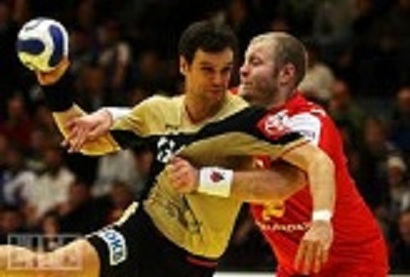
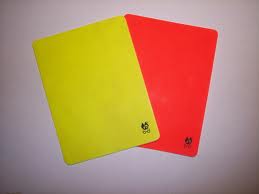
The specific area where inconsistencies and inexperience could be observed was the way in which the referees utilized the recently modified (or clarified) rules for punishment of players in situations that go beyond the ‘routine’ fouls. I am talking about the new emphasis placed on having players sent off for 2 minutes without a prior warning (or before the team reaches the limit of three yellow cards). This was always possible, but the 2010 rules specify that this should be seen as a normal decision and not an extreme one. Moreover, very useful criteria are provided for fouls that should be seen as belonging in this category. The same thing applies for the serious fouls that should lead to an immediate disqualification.

This is a very welcome and necessary improvement in the rules, but it works only if the referees have the judgment and the courage to apply them correctly and consistently!! It seems that there are too many examples, both in World Championship, in the recently resumed EHF Champions League and in national leagues, where the referees are too timid or hesitant. Perhaps the traditional insistence on using the yellow cards systematically, three per team in the early part of the game, has become so ingrained that the referees use this old approach a bit like robots, without really considering whether a particular fouls deserves a more harsh action.

Alternatively, the referees in some situations may be too hesitant because they worry that they then set too high a level for the punishments early in the game, and that this will lead to an untenable situation as the game progresses. But what they should instead be thinking about is the preventive aspect. Most players are smart enough to make the same distinction as the rule book does; they will appreciate that a particular action simply went too far and warrants a more severe reaction. And if the players do not get this signal, chances are that the actions will escalate and the game will get out of hand.

Similarly, referees may hesitate to give a direct red card, especially early in the game. This may be even more likely if it involves a key player, and the referees start thinking about the impact for the team and perhaps the crowd reaction. But for many years now, we have had a definition of a disqualification that should make it much easier for the referees to apply the rules as intended. Some decades ago, we still had the same concept that makes a red card so drastic in football, i.e., that the team has to play short-handed for the rest of the game. But in handball we allow the player to be replaced on the court after two minutes, precisely because we want the disqualification to be a way of getting the cynical and dangerous players out of the game, without unduly punishing the team and distorting the entire game.

This means that, just like in the case of the direct 2 minutes, there must be no excuse for the referees when it comes to showing the red card in a situation where a player’s health is endangered and where a player simply has been too reckless. It should not be a question of courage, because it is not such a drastic punishment. I can have more understanding if it is a matter of a failing instinct, related to a lack of experience with games at a very difficult level. Here the responsibility must be shared between the young referees who aim to join the elite category and the supervisors/instructors who must use their position to help clarify the necessary instincts and actions.

I am glad to see now that EHF is strengthening its capacity for high-level education of referees through the use of new technology. They have started collaboration with FIBA Europe and are introducing a new super-efficient software that would greatly facilitate the feedback efforts for both the instructors and the referees through a web-based approach. (Apparently, it is also connected to a broader system for the game reports, statistics etc.). I hope, or assume, that the IHF will quickly follow this example!

post

Europe vs. the Rest of the World – How many teams in the World Championships?

This is common topic for discussions before, during and after a Championship.  Clearly, each continent wants to protect its rights and its participation.  Of course, there are many different views about the underlying principles.  Should we try to get as close as possible to having the 24 best teams in the world, or should we recognize that this is a World event where each continent must have a chance to take part and be seen?  What is the right balance?

The debate tends to start when the qualification events are finished, also in other continents but especially in Europe.  There are always some “traditional” powers that fall by the wayside, like Russia, Slovenia, or Switzerland in the case of 2011.  How could it be that they are “left out” while some “clearly weaker” teams from other continents get to participate…?  And then the discussions resume when the draw of the Championship groups become known: how could it be that this team from continent X is ranked so high and gets such a favorable draw, while that other team from continent Y gets such a difficult group because of its lower ranking etc.

Then the event starts and some seemingly unexpected results are noted.  How could it be that Austria is showing such weak form in comparison to what they did in the 2010 EURO?  And how come that both Egypt and Tunisia are so mediocre?  And what happened to Slovakia after their seemingly promising start?  Is it really possible that Asia does not have a better men’s team than Korea?   And what happened to Romania’s expected return to the top?  Of course, the Australians are fun to watch, but when will they ever win a game again?

I am sure that I will set myself up for screams of protest, but my focus is inevitably on the quality of the weaker European participants.  The Europeans are so fond of noting that the European Championship with its 16 teams is tougher than a World Championship, “because there are no teams from the other continents!”  But did Austria, Romania and Slovakia really did bring any qualities that we needed to see in a World Championship, so was there really any justification for their taking up spaces?

In my opinion, we need to make sure that at least the top 12 teams are all present and get a chance to compete for the top positions, but beyond that it is the really the non-European countries who are more in the need of being present.  They do not have a strong equivalent of the European Championship and they need this one chance to compete in a top event.  By contrast, Europe’s teams number 12-16 belongs in their continental top events, but that should really be enough for them.

Immediately the Europeans will ask:  but which other teams deserve to replace the weaker Europeans?  Well, the reality is that handball is perhaps currently where football was 20-30 years ago.  At the most, the other continents in most years have about two teams each that are really (or reasonably) competitive.  In football you can easily find four or five.   So perhaps the real answer is that nobody else deserves those extra slots.  Perhaps we moved to fast to 24 teams and perhaps 20 would be about right.  Of course, the problem is that 20 does not allow for an attractive format.  Realistically, 24 is here to stay for a while.

So please be patient, and in a couple of weeks I will come back with some ideas for a compromise solution regarding a new format and a new distribution of slots!  But do not relax, Europeans, because you might not be happy, and do not relax Australian friends.  (Perhaps I might join those who say that your only way of getting real respect is to make the same change as in football and join the Asian qualifications…).

post

Do we really need more speed in the game at the top level?

There have been suggestions, including from the IHF President, that changes in rules and attitudes would be needed to speed up the game and to create more excitement.  Apart from focusing on this aspect when I watched the games in Sweden, I took the opportunity to ask some players, coaches, journalists and TV producers.

I have rarely heard such unanimous opinions on any technical topic in handball.  Many very surprised at the question.  They felt the issue at this time is that the emphasis on pure speed and quick action may have gone too far.  For instance, they noted that there are now many more fast counterattacks than just 10-20 years ago.  And the rules changes that allow for a throw-off, after a goal, to be taken more quickly have really been effective.  There is now a lot of pressure on the team that scored to get back on defense, and the mere “threat” of a rapid restart creates a bit of drama.  Similarly, only in some tactical situations are there any delays caused by substitutions.  Teams are now used to (and forced to) handling it very efficiently.

So from the standpoint of coaches and players, the main argument was instead that a further emphasis on speed would have a negative effect on ball handling and technical skills.  It would simply be impossible for players to maintain the same control as they have now.  And the view was that the game is nicer to play and to watch with this degree of control.  There was also a sense that the fitness of the players is generally as strong as it can reasonably get.  A further push for speed would cause a change in physical preparation and training methods that would be not just undesirable but in fact unrealistic.  It was also noted that the risk for injuries will probably increase with higher speed and constant action.  A loss of overview and body control would tend to cause more collisions with defenseless players.

I also chatted with some spectators.  Here the response was often that “we watch handball precisely because it has so much speed and action”.  Some compared with basketball which they found boring in this respect.  “We also need time to digest and celebrate what we see”, was another reaction.  The only negative remark involved excessive stoppages for real or “fake” injuries.  It was felt that some teams use this kind of tactics to slow the game down against a superior opponent.

The journalists I canvassed had roughly the same opinions as the ordinary spectators.  The separate category of TV commentators and producers had their own special concern.  They liked the speed of the game with counterattacks and quick ball movement.  But they felt that the restarts were often too immediate to allow them the necessary time for commentary or for slow motion repetitions.  So they would not be in favor of having a quicker turn-around in the game.  Instead, their focus tended to be at the overall concept of time-outs, but of course only at the top level where TV broadcasts are common.

post

Iceland – what happened to the fighting spirit??

The results from the preliminary round in the World Championship suggested smooth sailing for the Icelandic Viking ship.  They brought the maximum of four points to the Main Round and seemed to have had a relatively easy time in most of their five games.  It clearly looked as if it would be realistic to gain two or four more points in the Main Round, which then would help secure a place in the semi-finals.

But this was not to be.  Of course, if one looks at the final ranking, a sixth place and a spot in the Olympic qualifying do not seem so bad.  And one should not expect that the results from the 2008 Olympics and the 2010 European Championship could be repeated every time.  But the issue is HOW it all happened!

One might say afterwards that perhaps winning the preliminary group so easily created an illusion, because this group is likely to have been the weakest one, with Austria, Brazil and Hungary playing below normal standard.  But when an Icelandic team needs to get two-four points out of three games, then they normally get it.  Or at the very least, they fight to the last drop of sweat (or blood!) to try to do so.

There have been many instances of this famous fighting spirit in the past.  Personally, having been present, I remember primarily the final preliminary round match against France in the 2007 World Championship.  Iceland had “messed up” against Ukraine and now absolutely needed to win against France to be in the Main Round.  This seemed too big an obstacle, but the Icelandic team came at it with an attitude that just helped demolish the baffled French opponents, 32-24.

The player who for many years personified this attitude was Sigfus Sigurdsson.  Being somewhat of a giant, he is a really friendly person off the court, but on the court he was always a “tiger”, amounting to a real challenge for both the opponents and the referees.  His methods may sometimes have been a bit “borderline”, but he sure knew how to fire up his teammates.

This year’s team really seemed to miss Sigfus.  In the critical opening game in the Main Round against a desperate German team, it was the Germans who took charge by playing an enormously spirited game.  And after Iceland seemingly unnecessarily lost this game, it seemed as if any remaining fighting spirit was completely gone, so both the remaining two games against Spain and France were lost, as was the fifth place game against Croatia.

And it is not as if Iceland is without stars and players with substantial top club experience.  They had no less than nine players with more than 100 games for Iceland, most of them also playing for top clubs in Germany and elsewhere.  And they had Olafur Stefansson, a world-class player for many years, and a team leader with tremendous personality.  But perhaps Olafur is no longer able to “carry” a team in the same way he was, and he is not really a Sigfus character.

Whichever team an international handball fan is supporting, there would always be a special fondness for these remarkable Icelandic players, who have done such a fantastic job in drawing on their limited resources in terms of overall population.  The handball fanaticism is enormous there, and no other country (except Greenland!) has more handball players per capita.  But all of us really have come to expect not just strong results and great player; above all we have come to enjoy that special fighting spirit.  Let us hope it returns soon!

post

The pressure on the players in a World Championship

One of the proud statements from the IHF apropos this topic was that this time there had been an additional rest day inserted, in recognition of the concerns about fatigue and related issues.  The twelve teams who played in the Main Round typically had to play eight games in twelve days.  For the majority of them there was also travel on one of the rest days.  This is obviously a somewhat more intensive schedule than during the normal club season, but it is indeed a slight improvement over schedules in the past.

So how could one then summarize the different aspects related to the participation in World Championship for elite players who are already expressing concerns about the impact of the overall competition schedule?   Well, there are indeed several different aspects.  One involves the different practices in different countries regarding an adequate break in the league schedule, not just to accommodate the World Championship as such, but also to ensure adequate preparation and recuperation time for the players on the national teams.  Here it seems that most countries value the role of the national team enough to allow a rather generous gap in the league schedule.  But the opposite was really true in the case of Germany, where one could even observe an accelerated schedule immediately prior to what must be seen as a rather minimal break.

Then there is the tension between clubs and national teams, with the players themselves caught in the middle, regarding the fitness of a rather substantial number of key players, whose readiness to participate in the World Championship was debated heatedly up to the last moment.  Some clubs felt that there was undue pressure on players who were not really healthy, and some national teams clearly held the opposite view.  And sure enough, some players who had been noted as being only marginally fit indeed suffered relapses or new problems through their participation in Sweden.   In some cases it is suggested that players kept playing even when they perhaps should have been kept off the court.  There are now accusations about carelessness and inadequate concern for the longer-term health of these players.

Other players, whose health was never an issue prior to the event, happened to suffer the kind of injuries in Sweden that inevitably will happen during a period of intensive and hard-fought competition.  And of course it involved some players who are key figures on their club teams.  It may be of some consolation that the IHF for the first time provided insurance to keep the clubs whole, in terms of salary payments for periods during which the players are now unavailable for club duty.  But this is likely to be a limited consolation for teams who are now entering the critical stage of both the league season and continental competitions such as the final phases of Champions League etc.

Another new feature was the permission to allow each team to use all its 16 players in each game, instead of having to rely on 14.  While this may have created some peace of mind for the coaches, who had maximum flexibility in using their troops in each game, it is not likely to have had much impact in terms of reducing playing time for the star players or reducing the likelihood that risks with semi-injured played were avoided.   For the most part, four-five players were sitting on the bench rarely getting out of their warm-up clothes and setting a foot on the court.  The team will simply rely on their key players.  In fact, a couple of experienced coaches commented that the only benefit of the new regulation was really that it helped avoid the awkward decision of which two players would have to be placed as spectators in the stands.

But there is one aspect that seemed to be relevant.  When many teams had players unavailable due to injuries during, or from before, the event, it seems clear that those with the “deepest” teams had an edge.  They were able to integrate newer players who were able to play important roles throughout the Championship, and/or they could trust their marginal players so fully that they put them in for entire games or long portions without any risk.  This meant that they were able to rest their stars in some games where the outcome or the goal difference was not so important.  In this way, as the Championship came down to the final stages, there was a noticeable difference between teams that had constantly had to rely on five-six players and those who had been able to spread out the burden somewhat.

However, generally speaking, one cannot get around that the stars are the stars.  These are players that both the national teams and the club teams must draw on.  And these are the players whom the spectators and TV/web viewers love to watch.  They are the ones whose skills help create the necessary excitement around our sport.  One can come up with new regulations and fine-tuning in the schedule; but in the end we must realize that there is a limit to the intensity with which our biggest assets can be utilized.

post

Refereeing – nothing replaces experience

Last week I wrote about the World Championship refereeing and characterized it as “fair and honest”.  I also noted that, overall, the standard was good if one takes into account that many of the referee couples did not previously have much experience from this type of event.  I have now received some feedback from acquaintances who were present in Sweden and felt that they I should have noted the inconsistency that was evident from couple to couple and also from match to match with the same couple.

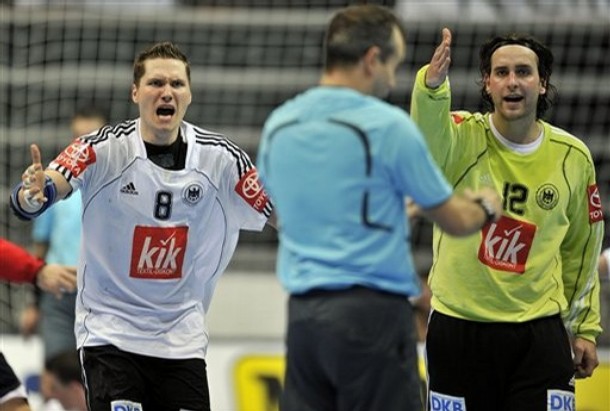
I have to agree with these comments to some extent.  This kind of inconsistency was noticeable, although, as I emphasized, the teams in a match were generally treated in a very even-handed way.  To some extent, a lack of consistency (or a “clear line”) for instance in handling personal punishments can sometimes depend on a lack of clarity in the instructions received.  But here I felt that most of the concerns were related to a shortage of Championship level experience on the part of several couples.  When the pressure is on, then there is a risk that more spontaneity and reliance on sudden instincts will become apparent, as opposed to the ability to draw on years and years of experience with the same kind of situations in the same kind of atmosphere.

There is simply no easy substitute for experience.  If a referee needs to analyze and think about every situation and decision, instead of just relating it to his/her vast “archives” of game situations, there will inevitably be deviations from a clear line and instead a sense of relative inconsistency.  But this does NOT mean that the IHF policy for nominating referees is incorrect.  As I noted in my previous article, there is not much choice, as the previous generation of top referees is for the most part no longer available.  So it is a matter of making good judgments in selecting and supporting the best of a younger generation.

And it cannot be emphasized enough: it is not sufficient to make good selection decisions; these referees need a particularly strong education and nurturing to help make up for their lack of experience.  Of course, they need to be supported in their respective continents through optimal assignments as a preparation between Championships, something which particularly outside Europe is easier said than done.  But the IHF needs to see them as a group that constantly needs to be monitored and supported.  In addition to those who were in Sweden, there may be up to ten more couples who could be seen as legitimate candidates for the next Men’s World Championship in 2013.

This combined group simply must get special attention, not just through sporadic moments of observation and feedback, but through a massive and systematic follow-up effort.  While there are no shortcuts in making up for experience, this kind of close and personal monitoring will clearly contribute to increased stability and consistency.  I know from my own experience that the IHF Referee Commission has only limited resources, especially in terms of manpower.  But these resources can be supplemented, and especially used better through substantially increased financial resources.

Surely the IHF top management, including President Moustafa, will realize that the investment in the IHF Global Referee Training Program that has been so successful up to this point is just a start.  Now the continuous development of this asset must follow, without any constraints in political and financial support.  This is the only hope of having “the best of both worlds”:  young and talented referees who are suited to the fast-paced game but also trained and competent well beyond their years of experience.

post

Tunisia and Egypt lethargic on the court – ‘distractions’ had an impact?

When the group with the three most recent world champions (France, Germany and Spain) was referred to as the ‘group of death’, this was partly because it was furthermore believed that Tunisia and/or Egypt might be strong enough to surprise one of the three favorites.  It turned out, however, that both of these North African teams played below their recent standard, something that may well have rescued the feeble German team from even greater embarrassment.

Perennially among the key players on the Tunisian team, Megannem was this time unable to impress, and Tej had become a heavy and immobile version of his past figure.  The team played inconsistently and without real cohesiveness, despite drawing on many players with substantial club handball experience from abroad.  Egypt seemed listless and without their typical fighting spirit.  There were comments to the effect that the very late decision to bring back the German coach Lommel had led to confusion and divisiveness.  I cannot remember having seen such an unimpressive Egyptian team for many, many years.

I happened to witness the game between these two teams.  These rivalries are unpredictable: sometimes they offer very exciting spectacles but sometimes they are very disappointing.  This time it was about as bad as it can get.  The teams seemed to compete with each other not to win the game but to give it away.  Tunisia seemed to have a solid lead, mostly because the Egyptians were so error-prone.  But then suddenly Tunisia lost their thread completely, and within 12 minutes Egypt scored 9-0.  After that, Tunisia more or less seemed to give up.  And the usual tendency to cause a lot of stoppages by being down on the floor in exaggerated pain was worse than ever.  At times it was really anti-handball.

I did not have many opportunities to talk with my old acquaintances on the two teams and delegations.  And I did not want to get much involved with delicate matters.  But ‘off the record’ I got unsolicited comments from Tunisians along the lines:  “surely you appreciate that, while we try to concentrate, our thoughts are really elsewhere at this point in time”.  And an Egyptian comment suggested that they had indeed had occasion to discuss a bit with their brethren, even though nothing overt had yet taken place in Egypt at that moment.  One cannot escape the sense, however, that this group of Egyptians, like perhaps the broader population, was ‘seeing the writing on the wall’ and was beginning to worry about what might happen.

Let us hope that in future international events the two teams will come back to old form and with a new spirit of pride and determination.  And more important than what might happen on the handball courts, let us be optimistic that the evolution will turn out to be what our many friends in these two proud countries are hoping for!

post

This time Argentina is the pride of PanAmerica

Following Cuba’s short period of glory in the late 1990s, culminating with an 8th place in 1999, PanAmerica’s representation has mainly been a matter of Argentina and Brazil.  But Argentina never placed better than in the 15th-18th range, despite the sensational triumph in 2003 against Croatia who later went on to win the gold medals that year.  And Brazil often got the upper hand in the PanAmerican finals against Argentina, but in the World Championships they had to be content with positions in the range 16th-24th.

So it was really a special moment, especially for Argentina but also for PanAmerican handball as a whole, when Argentina now managed to qualify for the main round in Sweden and then went on to finish 12th.  And to make it clear, it was not a fluke that gained this position; it could easily have ended even better!  Already in the preliminary round, where Argentina shocked the handball world with a 5-goal win against hosts Sweden, they could have brought one or two more points with them to the main round.  They lost 23-24 against Poland, in a game where only the lack of experience made them come out at the losing end.  Similarly, both a one-goal loss against Serbia and an overtime defeat against Germany could easily have been turned into victories.

But the main thing is that Argentina really played a very attractive handball, with a sophisticated and quick-footed offense and a spirited and tenacious defense that frustrated most opponents.  I heard spectators and TV commentators expressing amazement over the abilities of the young team from Argentina.  And their relative youth and lack of international experience is what both make their success this time and their prospects for the future so remarkable.  Their top scorer, Federico Fernandez is 21, and their great trio playing club handball for Torrevieja in Spain is also very young (Diego Simonet 21, Sebastian Simonet 24 and Federico Vieyra 22).  Another outstanding contributor was the goalkeeper Matias Schulz who is 28.  Perennial team captain Andres Kogovsek is the contrast at 35.

It is clear that the performance of Argentina was an eye-opener for many, and that it will help increase the respect for PanAmerican handball.  Brazil was clearly not at their usual level this time.  They were missing several key players, including their main star Bruno and their top goalkeeper.  As a result, the Brazilians were somewhat resigned to a modest outcome and tried instead to integrate several younger players.  One could even say that they used a World Championship as a preparation for the upcoming PanAmerican Games in October, where the continent’s one and only automatic slot for the 2012 Olympics is at stake.  And the Brazilians know now that they must be at their absolute best to have a chance to knock off Argentina.  That will be quite a duel in Guadalajara!  But for the first time PanAmerica might have a serious chance of qualifying TWO men’s teams for the Olympics, by also making good use of the subsequent qualification tournament.

The third PanAmerican team participating in Sweden was Chile, much to the delight of the numerous Chilean immigrants in Sweden.  Clearly they would have a long way to go to reach the level of Argentina and Brazil.  But unlike some previous Championships where the performance of the No. 3 team was negative PR for the continent, this time the Chileans showed a bit more.  They played in an optimistic style and showed a relatively more advanced type of handball, with at least 6-8 players showing good technical and tactical skills.  Especially the Feuchtmann brothers took the opponents and the spectators by surprise.  It seems that the Chileans might be able to establish themselves as medal favorites in upcoming men’s events in PanAmerica.  Of course, there is some hope that the Cuban government one day will resume the support of their team and that the ‘North Americans’ will return to old levels, but the other contenders will probably find it difficult to remove the Chileans from the medal podium.

post

Oh la la — France loses to Qatar — perhaps just ‘comme il faut’

Following the IHF Council meeting on January 27, there was a sense of ‘deja vu all over again’…  Just a couple of months ago, Qatar surprised many, and angered some, by winning the rights to host the World Championship in football 2022.  Now the IHF President was getting ready to reveal the name of the host for the 2015 World Championship.  French representatives seemed tense but hopeful – surely it would be enough to rely on recent years of successes on the court and a reputation for being able to organize events!?

But, au contraire, out of the envelope came the dreaded 5-letter word: QATAR!   A philosophical French representative was heard mumbling: c’est la vie…   but the more typical representatives were instead commenting to the French media in terms of ‘deception immense!’ (Note: deception in French means disappointment) ‘How could this have happened’, they seemed to ask.  ‘What did they do to avoid this defeat’, might have been a more relevant reflection.

Two other candidates never seemed to be in the running, namely Poland and Norway.  The Norwegian bid was heard being described as lacking in conviction.  And the Poles seemed to have done a great job of explaining in writing everything that might have been needed to answer serious questions.  But had they done any ‘selling’?  Yes, technically speaking, the only ones voting on the matter are those Council members who are not from one of the candidate countries.  But in this day and age of constant bombardment of advertising through a multitude of media, is it not obvious that a serious contender needs to create a ‘hype’, an ambience of having the winning product?

So what did the French do, en route to the final decision-making in Malmoe.  Well, they relied a lot on reputation, they used their proud French team as the ‘poster boys’ par excellence, and they seemed to feel it would be a bit too ‘gauche’ to do any heavy selling of their bid.  This may have been a major faux pas.  By contrast, the Qatari spared no effort (or riyal) to draw attention to their bid and to what would be special about a Championship hosted in their country.  The rented a banquet room and hosted a reception in what looked like a large-size Bedouin tent, with Middle Eastern food as the piece de resistance, but also with plenty of sophisticated advertising material and some small souvenirs available.

Of course, advertising and appearances are not the only considerations.  In a global sport there are different ways of enhancing the growth outside the traditional handball countries.  One of them is to allow a non-traditional, non-European country to host the Men’s World Championship every now and then.  After four consecutive events in major European handball countries 2007-2013, perhaps it is ‘comme il faut’ that one of the few non-Europeans that is likely to have capacity for such an event gets a chance in 2015.

Moreover, when Spain applied for 2011 (and later on were rewarded for 2013) they argued rather awkwardly and arrogantly that they should get the votes for 2011 simply as a major handball country that had never organized the event.  At least they were correct on the fact.  But France organized the Men’s Championship as recently as in 2001 and the women’s event in late 2007. So are they really overdue for another chance?

I do not personally know if Qatar ‘deserved’ to win, whatever this means.  But I have the sense that just because there were/are some concerns about football and 2022, it may be too easy to taint handball and 2015 with the same brush.  Also, the ‘noveau riche’ do not tend to get much respect.  But just as we accept that our teams are winning and losing, I think it now behooves the international handball family to rally around this event and do everything to ensure that it creates the global propaganda that we all are hoping for and that our sport needs.

post

New focus for the offense (and for the referees)

During many years, one of the more difficult and controversial aspects of the game has been the struggle between the pivot and the defender(s) on the 6-meter line.  The difficulties partly result from the fact that much of the struggle occurs long before the ball gets anywhere near the pivot. The pivot tries to get into a good position to receive a pass, or at least wants to disrupt the defense to make it easier for the teammates to shoot from the backcourt.  But the reliance on the this approach depends on the availability of a strong but agile pivot.

All of us can think of many such specialists over the years, but in this World Championship I was surprised to observe that very few teams really had a first-rate and effective pivot. Yes, Gille and Vori were as difficult as always to get a grip on, but Denmark, Sweden, Spain and Iceland all suffered a bit from not having outstanding pivots this time.  Among the other teams, Myrholt from Norway may have been one of the few to give his team an edge.  So this may explainwhy there were not so many scenes where the players were seen wrestling or falling to to the floor at the 6-meter line, without a clear indication of who really initiated the battle.  I am sure that the ones who were particularly greatful for this were the referees, who had been prepared to have to focus a lot on this situation.

By contrast, it seems that several teams had instead concentrated on developing a more effective attack from the wings.  I saw several absolutely superb players with very elegant and surprising moves.  Especially Denmark impressed, with at least two or three such specialists, even if none of them got on the All-Star team.  The attacks from the wing were typically facilitated by unsually fast ball movement, which caused the defense to have to move laterally and then often helped an attacker to get an amazing amount of space and a very good angle for a shot.  But many of the wing players were also real acrobats, who needed very little space to have room for a quick and surprising move from the corner.

It also seems that both the attackers and the defenders have become considerably more sophisticated in executing the wing play and the defense against it.  In the old days, the attacker wanted to get away from the defender, avoiding contact.  Now it is common that the attacker seeks a slight and quick body contact, just enough to gain some extra momentum for a spin move.  Similarly, the defenders are aware that taking a big step into the attacker, using legs or arms will always be too obvious, creating a risk for a 7-meter throw and/or a personal punishment.

But this means that the referees have a new area of difficulty.  If both players are moving towards each other for what could be seen as a ’50-50′ contact, there may be no reason for action.  But just how much body contact should the attacker be allowed to iniate without being seen as guilty of an offensive foul?  Surely it should not be allowed to make the defender lose his balance and prevent him from blocking the shot or to force him to step into the goal-area.  And the defender who now uses ‘small’ methods to have an impact on the shooter!?  A last-second minor hip movement/tackle, where arms and legs are kept demonstratively still, will have the necessary (illegal) effect, but it is awfully difficult to observe.  (Do you remember the situation where Dalibor Doder got injured against Spain.  There was no 7-meter or 2-minute suspension against , but in some strange kind of justice Doder incurred an injury…).

post

Disastrous German decline

When the German women failed to qualify for the main round in the European Championship last December, one thought that this was about as low as it could get for German handball.  The German women just needed to avoid losing by more than 7 goals in a game against a mediocre team from Ukraine, and miraculously the Germans lost by 9.  This meant that the team will now have to face the strong Hungarians in play-off games for the right to participate in the Women’s World Championship in November.  And if they should fail to qualify, then the chances of participating in the 2012 Olympics are also gone.

But most observers figured that the Germans, one of the traditional powers of handball and the base for the superior Bundesliga, would get their revenge in the Men’s World Championship.  After all, the Germans won the gold as recently as in 2007, albeit with a bit too much advantage of playing at home.  And they were close to the medal round in 2009, so surely they would be at roughly the same level again!?

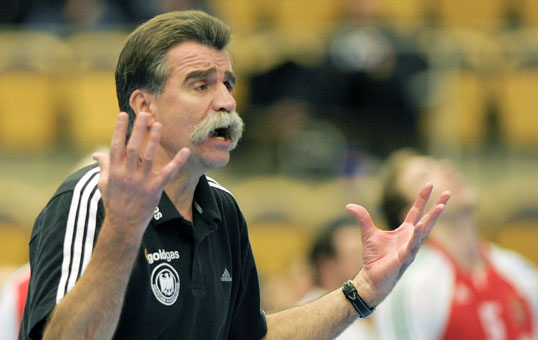
Of course, the German coach/icon, Heiner Brand, had done his best in recent months to sound pessimistic and frustrated.  He had talked about injury problems, the lack of adequate time of preparation for the team due to the Bundesliga schedule, and also the notion that German players were being ‘crowded out’ by all the foreign star players in the Bundesliga and therefore not getting enough playing time.  It almost sounded as if Heiner Brand wanted to set up an alibi in the case of a negative surprise.

I think one than needs to point out that Germany has two goalkeepers of absolute top class, and that among the court players there were 7 players with 90-170 international games to their credit, and another 5 with 40-70 games.  Not exactly an inexperienced group…  And do not tell me that anyone on the German team is seriously lacking in playing time in Bundesliga.  It may turn out that some younger talents who have been on junior national teams but have not yet reached the level of the senior team are having their opportunities affected to some extent.  But there can be no suggestion that the Germans are worse off then their counterparts from other countries, many of whom spend their year playing for clubs in mediocre leagues.

In any event, the German team did not look like it usual self in the preliminary round.  They benefitted from the fact that the Tunisians and Egyptians were not nearly as strong as in recent years.  In the game against a Spanish team that did not seem to wake up until half-way through Championship, the Germans really had the game in their hands but managed to throw it away despite their many experienced players and really strong goalkeeping.

In the main round, they seemed to come with a new attitude, taking on the previously undefeated Icelandic team with a spirited style and lots of energy.  They won the game, perhaps in part by being allowed to play an overly physical game, but it seemed that they might now be ready to win their next two games and protect their small chance for a semi-final slot.  But instead it was back to the listless style, and both games were lost.  The Germans mostly looked confused and helpless on the attack, and without the necessary cohesiveness on defense.  So the only win came in the placement game against Argentina, where Germany after much effort managed to win by one goal and avoid the bottom ranking among the teams in the main round.

Shocked German supporters and journalists seemed to have difficulties in understanding what had happened.  This result now means that Germany failed to secure a slot in the qualification tournaments for the Olympian Games.  The only remaining chance would come through a sudden resurge and a top position in the European Championship next January.

Heiner Brand has a contract through the next World Championship in 2013, but there was strong speculation that he would announce his early resignation directly after the game against Argentina.  What has now instead happnened is that he has announced he will stay on under ‘certain conditions’.  And here we are back to the issues of more preparation time for the national team, at the expense of the Bundesliga schedule.  And the issue of limiting the contracting of foreign players on the Bundesliga teams again seems to be back.  But the Bundesliga clubs quickly have shown a lack of sympathy, and the the German Federation vice-president has already speculated in public that Brand might soon decide to resign after all.

What a mess!  Clearly the German handball ‘pyramid’ is still capable of fostering young talents, if one judges from results in European and World Championships at the youth level, so the long-term prospects do not seem so bleak.  And like most traditional ‘powerhouses’, the Germans must accept that there are some ups and downs, so that medals cannot be guaranteed in every World Championship.  But right now it seems that the Federation, the Bundesliga and all other stakeholders really need to ‘roll up their sleeves’ and start pulling in the same direction.   German handball fans will to some extent be absorbed by the fate of their club teams, but they will not have a lot of patience with two faltering national teams!

post

World Championship refereeing seen as fair and honest

Being the former President of the IHF Referee Commission, it is only natural that I received a lot of spontaneous feedback on the refereeing from old handball acquaintances during the Championship.  Of course, I also had my own observations from watching 27 games live and another 7 or 8 on television.  The feedback I received reflects what people see as the most important aspect, especially considering some bad experiences they may have had in the past.  “The referees are being completely fair and honest” is the best way of summarizing the comments I heard.

What my sources imply is that they understand that mistakes are inevitable and must be tolerated.  But as long as the mistakes come out roughly 50-50, as a sign of an unbiased and evenhanded refereeing, then there is general acceptance.  And clearly this matches my own observations.  Yes, there may have been some games where some individual mistakes may have come at a critical stage and possibly may have had an impact on the outcome.  But that is the ‘human factor’ in sports.  With so many games being decided with just a margin of just a couple of goals, also a very strong referee performance may include a critical error or two.

To some extent, I would ascribe the fair and honest refereeing to the emergence of a young new generation of referees.  As I intend to discuss in some future posting, their lack of experience may occasionally become apparent, and there may have been problems with some particular aspects of the rules interpretations in a game.  But these referees are at the beginning of what they hope to be a long career at the international top level, so they will not risk everything by being conspicuously, or even marginally, biased in their work.  They know that they have knowledgeable and alert observers keeping an eye on them, with video software available to capture and confirm any problems.

If anything, the young referees may in some instances have gone too far in instinctively deciding on the basis of their first impressions, somewhat ignoring ‘tactical’ considerations in their game management.  (I will get more into this in a separate posting).  In some other cases, they may have either been too eager to project toughness or, alternatively, a little bit lacking in courage in some situations.  But this is something totally different from bias or favoritism.

One might say that the IHF initiated a ‘youth movement’ at the elite level a number of years ago.  In part this happened out of necessity, with many older, more experienced couples retiring, and in part as a response to the increasing speed of the game requiring a stronger emphasis on fitness and agility. It may be too early to be sure, but it seems from the indications so far that the IHF can be proud of the emerging competence of the new generation of elite referees, especially their adherence to the motto of ‘honesty above all’.