Here’s some photos from yesterday’s action (All photos are courtesy of Clarke Ortega)

LA Women vs Chicago


A legend blows the whistle one more time.


Your independent news and commentary outlet for the Olympic sport of Team Handball
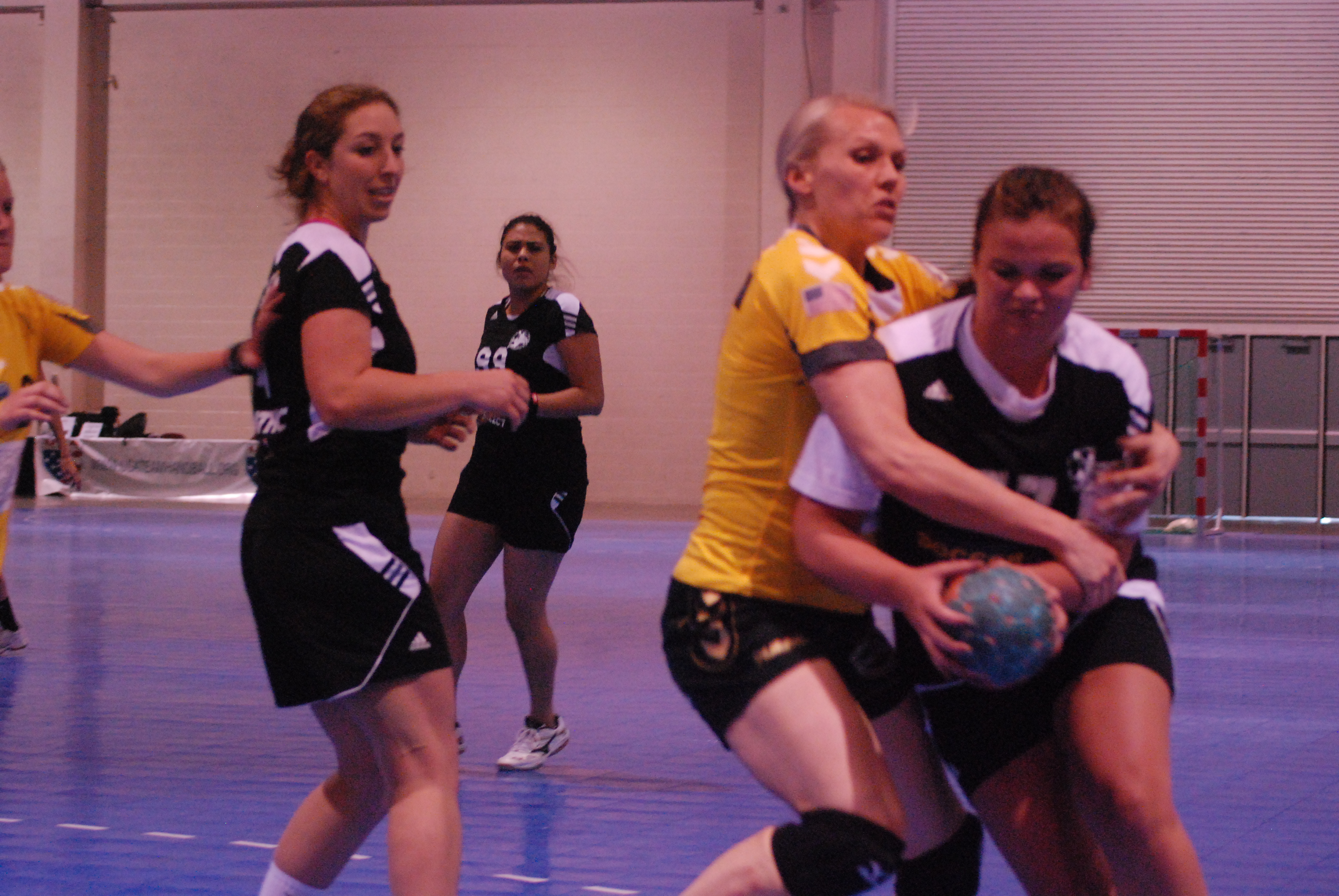
Here’s some photos from yesterday’s action (All photos are courtesy of Clarke Ortega)
LA Women vs Chicago
A legend blows the whistle one more time.
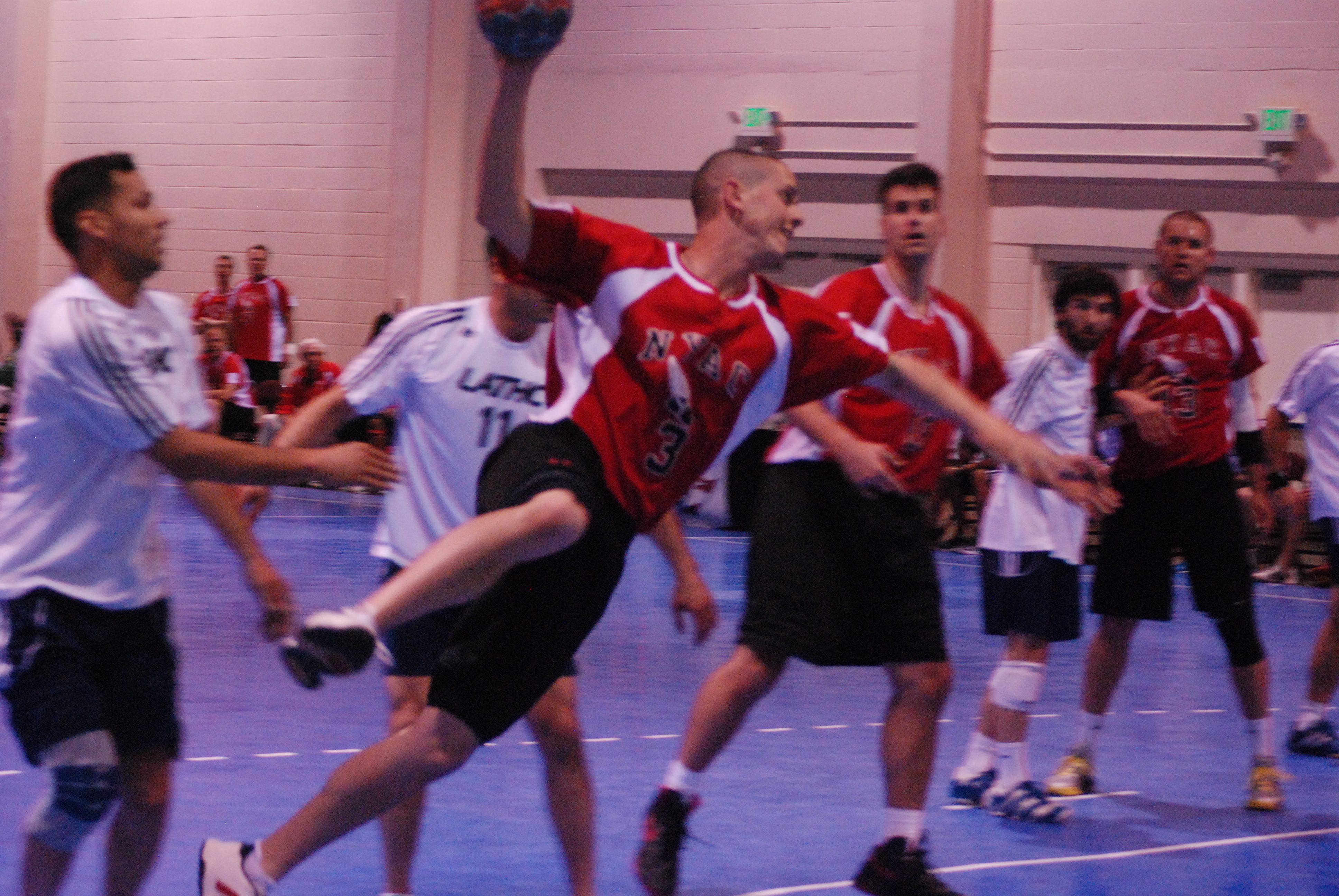

The USA Men’s Final between NYAC and NYC will be broadcast live from Reno on Sunday, 19 May at 4:00 PM (East Coast Time)
Jim Thome and former national team player Mark Wright will provide the commentary.
SORRY- DUE TO TECHNICAL DIFFICULTIES THERE WILL BE NO LIVE STREAM OF THE MEN’S FINAL


NYAC’s Danny Caparelli in the goal get’s ready to block LA’s Armen Amirkhanian Penalty shot (Photo: Clarke Ortega)
Elite Semifinals Results
NYAC vs LA THC 1 28:20 (13:7)
NYAC led start to finish behind a strong performance in the goal from Danny Caparelli. Jordan Fithian led NYAC scoring with 8 goals and Jackson Divine added 6. Armen Amirkhanian led LA with 7.
NYC THC vs West Point Black 37:31
West Point took an early lead, but NYC stormed back to take command of the game and coast to a relatively easy victory. NYC had a balanced scoring attack with Ole Winter and Djordje Radovanovic scoring 6 a piece. West Point was led by Bryan Teaton with 8 and Sean Boyle with 7.
Women’s Semifinals are 7:15 PM
LA THC vs Dynamo
Carolina Blue vs Chicago Inter
Men’s Open Semifinals 6:00 PM
West Point Gold vs Denver
NYC THC 2 vs Georgia HC
| Rank | Mens Elite Division | Pool Play | Xover | Win | Loss | Tie | PTS | GF | GA | GD | FRI | SAT | SUN |
| NYAC E | E_A3 | ExA2 | 1 | 1 | 0 | 2 | 58 | 58 | 0 | ||||
| NYC THC 1 E | E_A1 | ExA1 | 2 | 0 | 0 | 4 | 59 | 50 | 9 | ||||
| SF CalHeat 1 E | E_A2 | ExA3 | 0 | 2 | 0 | 0 | 54 | 63 | -9 | ||||
| LA THC 1 E | E_B1 | ExB1 | 2 | 1 | 0 | 4 | 100 | 95 | 5 | ||||
| WP Black E | E_B2 | ExB2 | 2 | 1 | 0 | 4 | 106 | 95 | 11 | ||||
| Chicago Inter E | E_B3 | ExB3 | 1 | 2 | 0 | 2 | 76 | 85 | -9 | ||||
| Boston HC E | E_B4 | ExB4 | 1 | 2 | 0 | 2 | 74 | 81 | -7 | ||||
| Rank | Mens Open Division | Pool Play | Xover | Win | Loss | Tie | PTS | GF | GA | GD | FRI | SAT | SUN |
| WP Gold O | O_A1 | OxA1 | 3 | 0 | 0 | 6 | 85 | 44 | 41 | ||||
| LA THC 2 O | O_A2 | OxA2 | 1 | 2 | 0 | 2 | 53 | 79 | -26 | ||||
| SF CalHeat 2 O | O_A3 | OxA3 | 0 | 2 | 0 | 0 | 24 | 62 | -38 | ||||
| NYC THC 2 O | O_B1 | OxB1 | 3 | 0 | 0 | 6 | 74 | 36 | 38 | ||||
| Seattle HC O | O_B2 | OxB2 | 0 | 3 | 0 | 0 | 42 | 57 | -15 | ||||
| Denver O | O_C1 | OxC1 | 2 | 0 | 0 | 4 | 45 | 39 | 6 | ||||
| AFA O | O_C2 | OxC2 | 1 | 1 | 0 | 2 | 49 | 46 | 3 | ||||
| NYC THC 3 O | O_C3 | OxC3 | 0 | 2 | 0 | 0 | 34 | 43 | -9 | ||||
| Georgia HC O | O_D1 | OxD1 | 2 | 0 | 0 | 4 | 49 | 38 | 11 | ||||
| Dynamo HC O | O_D2 | OxD2 | 1 | 1 | 0 | 2 | 46 | 36 | 10 | ||||
| LV Scorpions O | O_D3 | OxD3 | 0 | 2 | 0 | 0 | 31 | 52 | -21 | ||||
| Game Times | |||||||||||||
| Rank | Womens Division | Pool Play | Xover | Win | Loss | Tie | PTS | GF | GA | GD | FRI | SAT | SUN |
| Chicago Inter W | W_A1 | WxA2 | 3 | 1 | 0 | 6 | 71 | 46 | 25 | ||||
| LA THC W | W_A5 | WxA1 | 4 | 0 | 0 | 8 | 73 | 56 | 17 | ||||
| SF Smurfs W | W_A3 | WxA3 | 2 | 2 | 0 | 4 | 65 | 62 | 3 | ||||
| NYC THC W | W_A2 | WxA4 | 1 | 3 | 0 | 2 | 57 | 59 | -2 | ||||
| Ocean NJ W | W_A4 | WxA5 | 0 | 4 | 0 | 0 | 33 | 76 | -43 | ||||
| Carolina Blue W | W_B1 | WxB1 | 3 | 0 | 0 | 6 | 50 | 29 | 21 | ||||
| Dynamo W | W_B2 | WxB2 | 2 | 1 | 1 | 5 | 59 | 48 | 11 | ||||
| WP Black W | W_B5 | WxB3 | 2 | 1 | 0 | 4 | 45 | 40 | 5 | ||||
| Phoenix W | W_B4 | WxB4 | 0 | 2 | 2 | 2 | 44 | 52 | -8 | ||||
| Boston W | W_B3 | WxB5 | 0 | 3 | 1 | 1 | 32 | 61 | -29 | ||||


The previous parts of this series (1, 2, 3, 4, 5) raised some questions in regards to USA Team Handball’s plans to establish residency programs and full time coaches. This installment sets aside the plan itself and takes a look at the planning and decision making processes that were used to develop it. And finally some suggested actions going forward.
It’s easy to critique a plan
As I’ve spent the last several parts of this series highlighting some shortcomings with USA Team Handball’s plans for its National Teams I think it’s appropriate that I also acknowledge the basic truism that it’s relatively easy to sit on the sidelines and critique a plan. This is especially true when the plan is tackling a difficult problem or objective. And trust me, as someone who’s thought quite a bit about what could be done to improve the quality of our National Teams we’re talking about an incredible challenge. Just about any plan could be picked apart by naysayers.
It’s not so easy to critique a plan developed through a structured process.
But, maybe the plan that’s been developed, while flawed is still the best plan that could be conceived. A plan that was first compared with other options and possibilities and stood out as the best option to pursue; A plan fraught with risks, but one that still makes sense to pursue; A plan that’s designed to meet the clearly articulated goals and objectives of the organization. When confronted with a plan that maps everything out, the critic can’t help but see the rationale for the course of action chosen.
What I’m alluding to here is Strategic Planning. This Wikipedia article provides an overview, but in simple terms, Strategic Planning can be described as the process of figuring out what you want to do before you go off and do it. It involves determining your goals and objectives and then assessing the feasibility of different options (tactical plans, if you will) to achieve those goals and objectives.
While this seems like an inherently obvious first step all too often it’s given short shrift by many organizations. This happens for a number of reasons. Sometimes organizations think they already know exactly what they are trying to accomplish. And, all too often it’s human nature to want to work on the solutions because it’s more concrete and tangible.
USA Team Handball’s Goals and Objectives: Do they exist?
Let’s first consider the possibility that it’s readily clear what USA Team Handball is trying to accomplish. At first blush, it’s pretty clear. Take a look at the Federation mission statement:
The mission of USA Team Handball shall be to develop, promote, educate and grow the sport of Team Handball at all levels in the United States and to enable United States athletes to achieve sustained competitive excellence to win medals in international and Olympic competition.
Just about anyone involved with the sport in the U.S. will agree with these very broad goals. But, if you start to break that one sentence down piece by piece consensus will quickly disappear. For instance, which is more important developing and promoting the sport at all levels or enabling athletes to win medals? Which part gets more resources/funding? What’s the timing involved? What are the lower level goals objectives? etc., etc. To the best of my knowledge USA Team Handball has never clearly identified lower level goals and objectives and their priority. Perhaps it’s been done at some point in the past, but I’ve never seen that sort of documentation. Instead, best that I can tell USA Team Handball has always made a beeline to implementing initiatives, activities, action plans (whatever you want to call the different things that have been tried), without spending enough time assessing whether those efforts make sense in the grand scheme of things.
This is not to intimate that those efforts were a total waste of time and resources. On the contrary, very few efforts had no value and if even if there were negligible results there usually was some rationale for trying. The question, however, is not whether an effort has value. The questions instead are how well does that effort map to goals and objectives and how does that effort fair in terms of “bang for buck” against other competing efforts. Because rest assured when the Federation makes an announcement that there is “no funding in the budget” for a National Team trip what it’s really stating is that other budget items were assessed as a higher priority.
Or, at least one hopes that such a comparative assessment was done. The troubling reality is, however, it can’t really be done without something to “grade” the effort or plans to. Without clear goals and objectives you’re flying by the seat of your pants. Deciding what efforts to pursue becomes largely intuition or even worse a yes/no on the first plans presented without an in depth exploration of other possibilities.
The way ahead for U.S. National Teams: Numerous possibilities
As a case in point, I’ll just list out some possibilities that could be considered for U.S. National Teams and player development. I won’t go into great detail. That’s not the point. The point is to just show the varying options:
– Establish regional Centers of Excellence
– Establish a European based training center in collaboration with the IHF and other developing nations
– Provide stipends for overseas training with clubs to the nation’s top 30 players
– Provide funding to 10 U.S. based clubs to support player identification and training
– Designate one metropolitan area in the U.S. for Elite competition and apply funding to make it happen
– Identify national team coaches for an extended period of time, but pay them only part time wages
– Hire a full time recruiting coordinator and have them focus on expanding the player pool at ages 18-22
– Hire a full time youth development coordinator and have them focus on developing a model program in one U.S. metropolitan area
– Work with a designated school district to implement a sanctioned High School Team Handball League to serve as a model for other school districts.
– Work with the NCAA to identify one Division 1 conference to support a Team Handball League
– Conduct a 10 day U.S. Olympic Festival style training camp for 120 elite NCAA athletes.
– Sharply curtail current expenditure on U.S. Senior teams and focus entirely on Under 21 development in hopes of improving odds for 2020 qualification
– Sharply curtail Men’s National Team funding and focus on the brighter prospects (weaker competition/Title IX) for Women’s team development .
– Sharply curtail funding and resources related to adult club teams and focus efforts on college and youth teams. (i.e., Don’t waste time organizing competition and national championships for predominantly Expat players or athletes over the ages of 25)
Could I, or anyone for that matter, poke holes in regards to the merits of any one of these possibilities? Of course. But, I could also make a case for any one of these to be the best course of action. Yep. The reality is that depending on how you interpret the Federation’s Mission Statement, you can make the case for or against any one of these possibilities.
Right Idea
To the credit of former Board Chairman, Jeff Utz, and Interim General Manager, Dave Gascon, they recognized this problem and set in motion some plans to fix it. In April of 2012 they organized a Strategic Planning Conference that was attended by around 25 individuals (Board members, USOC Reps, and assorted members of the Team Handball community at large). As someone who’s done Strategic Planning for a living and has recognized this problem for years I’ll say that the conference was a good start to solving this problem. The second day devolved way too quickly into the implementation of potential solutions, but again it’s human nature to want to work on something tangible. The good news, from my perspective at the time was that the work would continue via committees that would focus on specific topical areas. Here’s an interview with then Chairman Jeff Utz discussing the conference and here’s a list of the committees that were set up. (Editor’s note: 8 of the 10 committees that were established after the 2012 conference were removed without explanation from the Federation committees webpage sometime in 2013. This Federation news item from June 2012 lists the 10 committees and solicits additional volunteers.)
Flawed Execution
Following the conference, however, for reasons that are still unclear to me the work of the committees towards a Strategic Plan was stopped. The committees were asked to send their ideas for implementation and then lacking further guidance and direction they essentially ceased to function. At least this was the case for the 3 committees I was on: High Performance, Pipeline Development and Event Management. While I might have thought that the High Performance and Pipeline Development committees would be involved in reviewing the merits of different efforts for Board of Director consideration that simply was not the case.
Instead, several months later I read the following in this posting on the Federation webpage:
“Garcia-Cuesta and Latulippe, as volunteers, as well as Gascon, and Technical Director Mariusz Wartalowicz, have collectively developed a long-term strategy for the development of the USATH High Performance Program which focuses on the recruitment, training, development, and elevating the stature of our National Teams.”
Is it lost on anyone that two former National Team coaches that coached U.S. Residency teams were part in parcel to the development of a strategy that calls for hiring National Team coaches and establishes residency teams? Strikingly, this reminds me quite a bit of the Vice-Presidential Selection Committee that Dick Cheney conducted for George Bush.
Setting all sarcasm aside, however, it’s really not that surprising that they went with what they know and one would hope, anyway, an improved version of what they know adapted to current realities. And for all I know those four gentlemen might actually have spent countless hours reviewing dozens of possibilities, carefully analyzing their pros and cons and presented a full up report consisting of multiple options for the Board’s consideration. (i.e., the kind of work a High Performance or Pipeline Development committee might do). If such work was done though, it would be nice to read it.
And, as an aside, I should point that National Team plans is just one piece of the puzzle. An important piece, but just one piece. Plans for grass roots development, marketing and fundraising, for example, to the best of my knowledge haven’t been developed at all.
Time to Right the Ship
I think in this series I’ve made some fairly compelling arguments that call into question USA Team Handball’s National Team Plans. In the end, though, it’s really not about who’s right and who’s wrong. Nobody’s keeping score and we really all are on the same team.
But, in order to get everyone on the same page and rowing together I would suggest a couple of actions to right the ship:
And it should be pointed that such fixes shouldn’t be too hard to implement. It’s acknowledged by many that we need a Strategic Plan, the committees are in place and that transparency is important. All USA Team Handball needs to do is finished what it started.


The Champions League quarterfinal matches will be played this weekend and next. The winners of the two game (aggregate goals) contests will advance to the Final Four in June. Unlike the Round of 16 there are few complaints to be had with these pairings. Barcelona and Kiel are both favorites to advance, but an upset is not out of the question.
Below are the four pairings along with links to the match videos at ehfTV. I will replace the live links with on demand links when they are available. And since the Final Four doesn’t take place until 1-2 June, you’ve got plenty of time to watch all 8 matches at your leisure. To remain oblivious to the outcome just bookmark this page and return when you have time to watch a match. Finally, don’t forget to write down the scores of the first legs as it’s the total aggregate score that counts.
Point spreads are in parentheses. Game times are Central European Time. Be sure to check out the short video preview before you watch the matches
Madrid vs. FC Barcelona
Preview: Link
20 April, 1900 Barca (-3) Video Link
27 April, 1900 Video Link
Skopje vs. Kielce
Preview: Link
21 April, 1700 Kielce (-.5) Video Link
28 April, 1700 Video Link
Kiel vs. Veszprem
Preview: Link
21 April, 1715 Kiel (-4) Video Link
27 April, 1600 Video Link
Flensburg vs. Hamburg
Preview: Link
21 April, 1845 Flensburg (-2) Video Link (Audio Links are below)
I’ve done at audio commentary (see below) for the first and second halve. You can synch up this MP3 file with the video.
1) Forward the video to exactly 4:00 (1st Half) or 46:20 (2nd Half) and then pause the video player.
2) Open the pop up player for the audio and wait for the synchronization count.
3) Unpause the video as the count starts
28 April, 1830 Video Link
(Note: The second leg will be shown on beIN Sport)
EHF’sFirst Leg preview article: Link
Current odds to win the title
Kiel 2 to 1
Barcelona 2 to 1
Veszprem 7 to 1
Flensburg 8 to 1
Hamburg 9 to 1
Kielce 12 to 1
Madrid 16 to 1
Skopje 50 to 1


Flensburg vs. Hamburg: Again and again and again and again!: Who wants to see that? Me and anybody else who loves the sport!
Two years ago I wrote a series of articles on why European Handball should form a super league. In the third part of that series I made my case that the playoff system of determining a champion is far superior to simply having a regular season only.
One of the issues supposedly with a playoff is the boring prospect of two clubs playing each other over and over with only the residents of those two cities caring about the outcome. Well, now thanks to a strange quirk of scheduling this issue is being put to the test with Flensburg and Hamburg over the next few weeks.
How strange a quirk? Well, the two clubs, of course have to play each other in the HBL regular season (2 matches), but they also got paired up in Group Play in the Champions League (2 more matches), the German club cup (1 more match) and finally they got drawn against each other in the quarterfinals of the Champions League (2 more matches); for a total of 7 matches. Yes, a seven match series! Even more unusual is the fact they will be playing each other 4 times in 3 weeks; and they will all be meaningful matches.
OK, I’ve never been to either of those two cities and I may never visit them in my lifetime, but that is not a prerequisite to being drawn into this rivalry. Yesterday, I finished watching the April 9 regular season match and the first half of the Cup semifinal. Talk about great handball in exciting atmospheres. Seriously, it doesn’t get any better than this. Yes, these matches are even better than Olympic or World Championship matches as far as I’m concerned. This is because these teams have more time practicing together and time to prepare for the matches.
And you can watch all of these matches for yourself thanks to LAOLA1.TV and ehfTV. Some have already been played and some will be played soon. I’ll post the links when they are available. And, of course, you can always go to the EHF or HBL websites for more information, but you might want to bookmark this page if you want to avoid score outcomes.
April 9, 2013 Flensburg vs. Hamburg (Regular Season Match): Video Link
April 13, 2013 Hamburg vs. Flensburg (Semi-Final of German Cup): Video Link
April 21, 2013 Flensburg vs. Hamburg (1st Leg, Champions League, Quarterfinal)
April 28, 2013 Hamburg vs. Flensburg (2nd Leg, Champions League, Quarterfinal)
Here are some other video links to the German Cup Final Four
Kiel vs. Melsungen (Semifinal 2 of German Cup): Video Link
Hamburg-Flensburg winner vs Kiel-Melsungen winner: Video Link (Note: don’t look to closely at the picture and quickly start the video to avoid finding out who wins before you watch it.)
My only wish is that the powers that be in European Handball will see the light and decide that they shouldn’t wait for quirks of scheduling, but make it happen every year. Imagine if Kiel was playing a best of 7 vs. Barcelona or Kielce vs. Rhein-Neckar or Paris-SG vs. Veszprem. Oh, would that be so awesome to watch.
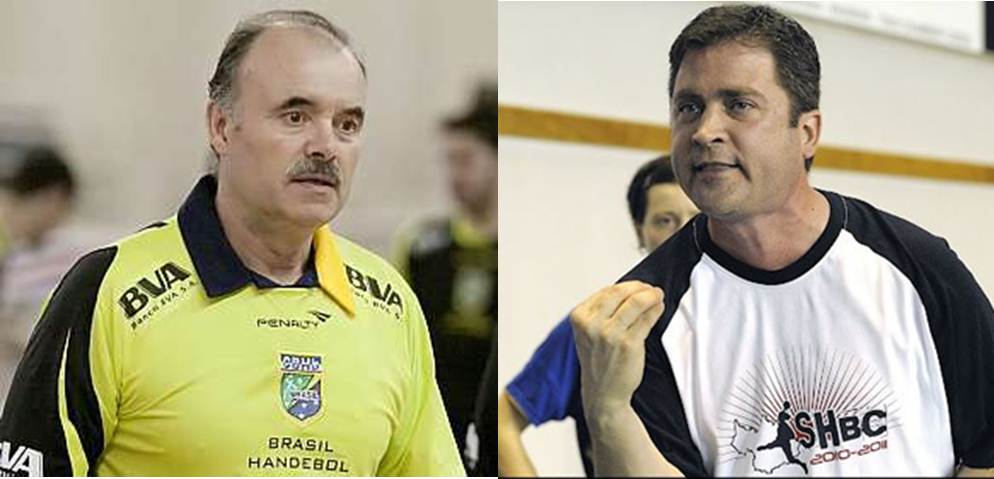

Team USA’s Head Coaches (Javier Garcia Cuesta and Christian Latulippe): Did it make sense for the cash strapped Federation to hire 2 full time coaches at this point in time?
Parts 1, 2, 3 and 4 focused on National Team Residency Programs and whether the time was right for USA Team Handball to start these programs. This installment addresses the related questions of whether we need full time head coaches and if we do, whether the recent hires have the right skill sets to meet USA Team Handball’s current needs.
What does a national team coach do anyway?
Before I tackle the question of whether it’s the right time to hire full time head coaches for the U.S. National Teams I’ll first try to identify the roles and responsibilities of a national team coach and some semantics in regards to what it means to be full time. In many respects being a national team coach is like being a coach for any team. You train players, conduct practices, scout opposing teams and make coaching decisions during a match. Where being a national team coach is different from being a club coach is that the actual periods of competition are fairly limited and in many nations players are attached to their clubs most of the time. Accordingly, actual coaching consists of periods of intense activity and periods of relative inactivity. We could argue about how just inactive the slow time between competitions is, but without a doubt there’s less to do when a coach doesn’t have players to train and matches to prepare for.
Because of these realities National Federations have come up with several different models of employment for their National Team Coaches. Here’s a short summary of the most common models of employment:
What employment model is right USA Team Handball?
In recent years, USA Team Handball has gone with a revolving door of part time coaches being selected in conjunction with qualification tournaments. And when the U.S. had Residency Programs, full time coaches were hired to run the programs. But, setting aside history what makes sense right now for USA Team Handball?
Well, first off let’s clearly establish that at this point in time it makes little sense for the U.S. to hire full time coaches. The U.S. cannot afford the luxury of having someone 100% focused on its National Teams (model 3) and it also does not have Residency Programs in place (model 4) that would necessitate a full time coach. So unless USA Team Handball can find coaches willing to work for pauper’s wages part time coaches will be the reality.
The part time coach (with full time employment elsewhere) certainly has its limitations. It can be challenging for a fully resourced coach in Europe to take professional athletes and organize them into a cohesive and competitive team in a short period of time. To expect a marginally resourced coach with amateur athletes to do the equivalent is asking quite a bit. Certainly, the U.S. National Team results in recent years haven’t been very good. I would argue, however, that poor results in recent years have had little to do with the coaches being part time. Instead the poor results are more related to the quality of our players and other systemic problems related to a very thin talent pool. As further proof, it should be noted that the U.S. has also piled up quite a few losses against other developing nations with part time coaches.
The part time coach (with other Federation responsibilities), could be a beneficial arrangement, particularly if that coach is also well suited for “other responsibilities.” In effect, such an arrangement becomes a great “two for one” deal. During the “down time” the coach can spend the bulk of his time taking on other tasks and still remain engaged with National Team related responsibilities. Then when competition and training camps ramp up the coach can smoothly shift their focus to the National Team without the start/stop problems that a coach employed elsewhere has to deal with.
But, this only makes sense if the coach is well suited for the other responsibilities. Otherwise it can become a “half for one” deal. In other words, the Federation gets a part time coach for the cost of a full time employee. And even worse, that part time value of “half” might not be the right fraction. If the Federation has a lot of tasks that are not coaching related and the employee keeps finding ways to work on coaching related tasks that they are more interested in doing the Federation might even end up getting a 1/3 or 1/4th deal.
The recent USA Team Handball hires: Huh?
With funding in short supply I would argue that it would probably make sense in the near term to stay with part time coaches that still receive the bulk of their employment income elsewhere. There’s just too many other things that the Federation could fund or focus its efforts on. But, perhaps if the right multi-talented candidates can be found a case could be made to hire them as full time employees to take on coaching and other responsibilities. As this is apparently, what USA Team Handball has decided to do so here’s a look at the “High Performance Coaches” and whether they are a good fit.
Coach Javier Garcia Cuestas: The perfect coach to run a Residency Program; If only we had one
If one looks at USA Men’s National Team Coach Javier Garcia Cuesta’s career resume one cannot help but be impressed. Not only is he arguably the most successful National Team coach in U.S. history, he’s also turned around programs in Egypt and Portugal. He was never my coach, but I’ve heard dozens of friends and former players speak highly of him and his ability to understand the psyche of the American athlete. Give him the talented raw athletes and the resources and he’s proven that he can assemble a competitive team. If USA Team Handball starts up a fully resourced Residency Program similar to the one that was at the Olympic Training Center in Colorado Springs, he should be the first coach interviewed to head that program.
Problem is, of course, we don’t have a Residency Program in place, it’s not certain when it will start and it’s doubtful that it will be resourced as well as the program Coach Garcia ran so well in the 1980’s. Taking this reality into account in then becomes a question as to whether Coach Garcia is the right hire to take on the “other responsibilities.” As anyone who’s followed or been involved with Team Handball in the U.S. knows there is no shortage of things needed to be done to further advance the sport in this country. I haven’t seen the list of responsibilities in his contract, but the hiring announcement does indicate that Coach Garcia as well as Coach Latulippe participated in the development of a long term strategy focused on the “recruitment, training, development, and elevating the stature of our National Teams.” A follow up email from CEO Matt Van Houten further indicated that he would be “focusing his efforts on collaborating with the USOC Coaching Education department to develop several different projects for athlete identification and coaching education” and that he would “also be conducting athlete identification clinics focusing on bringing in new talent.”
These are certainly logical areas that need to be addressed by the Federation and it doesn’t take much investigation to determine that the U.S. is really lacking in the recruiting department. This problem can be attacked in a number of different ways either through short term fixes, (primarily through cross over athlete identification) or through the slower development of grass roots program. (This article provides a top level overview of issues related to recruitment/development.)
What’s highly debatable, however, is whether there is anything in Coach Garcia’s background that suggests he has the right skill set to take on recruiting challenges in the U.S. Don’t get me wrong; give him the players with the raw talent and I’m sure he can evaluate their potential and develop them fairly quickly into decent Handball players. He’s a proven quantity in those areas.
But, asking a Spanish National to navigate the American sporting culture and develop an effective recruiting strategy? That’s a tough ask and this huge challenge might actually even suggest someone with a strong understanding of the U.S. sporting landscape and only a minimal knowledge of Team Handball.
This skepticism doesn’t mean that Coach Garcia can’t become the recruiter extraordinaire. Just that I don’t see that as his strong suit. From the outside looking in, I can only think why didn’t USA Team Handball just wait and consider hiring this outstanding coach when it would truly need him.
Coach Christian Latulippe: How bad a record do you have to have in order not to get a 2nd chance?
Unlike with Coach Garcia there are some very pronounced question marks with Coach Latulippe’s record as a coach. In particular, his stint as the USA Women’s coach from 2004-07 was downright dismal. They were routinely beaten by many other developing programs in the Pan American Federation and couldn’t even win the Quebec Women’s club league. Depending on your perspective Coach Latulippe was either fired or resigned his position under a cloud right before a second chance qualification tournament for 2007 PANAM Games.
Following this departure Coach Latulippe got some experience as an assistant and head coach for several women’s club teams in France. But, again the record here is mixed. Coach Latulippe’s current club, le Pouzin is leading its pool in Division N2 with a 16-2-1 record. All well and good, but he left his previous club, La Motte Servolex, before the end of the season. A season in which La Motte Servolex ended up with a record of 3-22-1 and resulted in their relegation from D2 to N1. Further, it should be noted that the two clubs are on significantly different levels as N2 is down two levels from the more prestigious and professional D2. Or to put it another way, there are 48 coaching positions in France above N2 and 48 coaching positions at N2. To be sure fully assessing the coach’s culpability in club performance is an inexact science especially when your research consists of club records and a few articles on the internet. Still looking at these results they are nothing to write home about.
There’s also no denying that Coach Latulippe’s program at Cortland was a shoe string operation and he deserves credit for holding it together. Still, results are results. It’s not credible to look back at the Cortland years and state anything along the lines of “Look at what he accomplished with negligible resources; Imagine what he could do with a real program.” Instead, there’s almost nothing to show for.
And, on top of all this poor W-L record there is still no Residency Program in place so the issues highlighted with Coach Garcia also apply to Coach Latulippe. Further, if one looks at the recruiting that took place during his years at Cortland it should be noted that very few high caliber players were identified. So, there’s even hard evidence to suggest that recruiting is not Coach Latulippe’s strong suit.
Does all this mean that the 2nd time around can’t be different? No it doesn’t; and on the plus side Coach Latulippe surely has some ideas on what needs to be corrected. Still, one has to wonder at what point does such a poor record preclude the opportunity to get a 2nd chance?
Which leads to the next part of this series; Just how exactly did USA Team Handball make the determination that residency programs were the best course of action, that the time was right to start them and apparently hire coaches to run them? Part 6


USA Team Handball recently announced its roster for the upcoming IHF Continental Cup in Guatemala City, Guatemala, Apr 27 – May 5. The roster includes several players who played in last November’s Challenge Cup in Mexico City, including the leading 3 scorers from that event, Javier Galindo, Abu Fofana and Connor Holt. Galindo and Fofana are among 5 roster players who are playing with clubs in Europe. USA based players include collegiate players from West Point, Air Force, Ohio State and North Carolina and 2 athletes affiliated with Los Angeles THC.
One interesting addition is Nico Mukendi who is an 18 year old high school student from Hillsbourough, NJ. Mukendi was identified via a tryout through USA Team Handball’s partner Athletic Standard.
Hillsborough Patch (6 Mar 13): Three-Letter Athlete Finds a New Sport—and Olympic Dreams: Link
THN (23 Nov 12) IHF Challenge Cup: Some numbers behind the results: Link


20 years ago USA Team Handball conducted its own Philadelphia Experiment: A flawed, austere Residency Program for the Men’s National Team that was shut down after only one year. It provides a cautionary tale for the current administration as it apparently makes plans to restart Residency Programs.
In the first part of this series I tackled the basic question of whether Residency Programs were in principle a good strategy for developing U.S. National Teams. In the next two parts I addressed the question of whether now was the right time to start Residency Programs. Part 2 looked at prospects for qualifying for the 2016 Olympics and Part 3 addressed financial considerations. Continuing the “Right time?” discussion I look at some planning considerations that need to be factored into any decision to start Residency Programs.
A Major Decision with Big Consequences
In most everyone’s life there are a handful of major decisions that have to be made. What we decide for a career, where we choose to live and who we choose to marry are probably the three biggest ones. Make a poor decision on any of those and be prepared to face the consequences. No wants to spend their day doing a job they don’t like, residing in a place they don’t like or living with a spouse they don’t like. In most cases we can recover from our decisions that haven’t turned out the way we wanted them to. We can start a new career, move to a new city and divorce/remarry. But, it goes without saying taking those steps in not always easy and without major consequences.
Starting Residency Programs is the rough sports federation equivalent of making all 3 of those decisions at the same time. It is a huge decision and if USA Team Handball makes a poor choice there are some potentially big consequences. And this isn’t just random conjecture from “some guy with a blog.” No, USA Team Handball has been down this road before. And the decision to pull the trigger sometimes has had disastrous consequences.
A Cautionary Tale: The Philadelphia Experiment
As I gathered my thoughts for this series, I reflected on my own personal experience with Residency Programs. Part of the trip down memory lane included a decision made almost exactly 20 years ago in 1993 to move the U.S. Men’s program from Colorado Springs to Philadelphia. At the time the move was sold with the following rationale:
Needless to say many members of the National Team weren’t pleased with the prospect of moving. Pretty much everybody liked Colorado Spring and some had started to set down roots in the place. The move was made right before the National Team headed to Europe for the 1993 World Championships with some players moving their personal belongings and others (myself included) hedging their bets until after the World Championships. The team gathered in Philadelphia for a few days prior to flying to Finland for a training camp and I caught a glimpse of what the program would be like. The dorms at LaSalle University were a bit run down and it wasn’t clear if there would be access to a cafeteria or even a gym. In short there were quite a few questions to be answered.
When the team came back from the World Championship, I personally had to make a decision regarding my future with the sport. For those that have seen my less than spectacular talents it may seem somewhat laughable to think that I had any real decision, but playing in the World Championships had been a revelation for me. Somehow, the afterthought player who had actually failed to even make a regional Olympic Festival team a year and a half earlier had worked his way into the starting lineup. Albeit, only on defense and for a team that didn’t win a single game, but trust me if you are passionate about the sport and you get to play on the world’s stage, you’re allowed to have illusions of grandeur.
I contemplated the possibilities. Leave the Air Force; find an aerospace job in Philadelphia; go to the Olympics in 1996. But rationale thought and reality kicked in. I assessed the odds were too long and the consequences were too severe. And, easing that decision along for this athlete was an assessment that the Residency Program in Philadelphia wasn’t up to snuff. It would have been one thing to continue the dream in quality surroundings; It would have been another thing entirely to so in a crappy environment.
And while losing me as a prospect was no real loss, it does illustrate the type of negative impact a shaky Residency Program can have. I wasn’t the only player to make a similar decision and I can think of at least two talented athletes (Luke Travins and Brian Parath) who probably could have made the 96 Olympic Team if they had kept playing. Not to mention the fact that the year in Philly was in many respects a lost year of prep for the 1996 Olympics. I was not there, but the hardship stories are legendary. It’s safe to say that training really didn’t get into full swing until the Philadelphia Experiment was unceremoniously ended and a Residency Program was established in Atlanta in 1994. Would have another year of preparation made a difference? Perhaps a close loss to Sweden becoming instead an upset victory? We’ll never know, but a consistent training program wouldn’t have hurt.
And, this is but one example. More recently, the Women’s program trained in Cortland, NY. The setup there was also less than desirable with the athletes there making all sorts of sacrifices in terms of living conditions and job prospects. (This ESPN article highlights some of those conditions.) Not surprisingly, the program struggled to find quality recruits and was not very successful. Even more recently, the U.S. held a training camp in Edmond, OK and at a press conference the Federation highlighted the possibility of starting Residency Programs there. Alarmed, I wrote this commentary on that prospect.
Criteria to consider in locating Residency Programs
My commentary included a top level list of factors to consider when evaluating locations for Residency Programs. These criteria included the following:
This is just a top level summary, there’s a little more detail in the commentary from two years ago.
Olympic Leverage
In all likelihood USA Team Handball will evaluate these factors and more and will consider multiple locations before making such an important decision. So, what are the chances that it can secure an arrangement with at least some of them in place? At this point in time (March 2013) I would assess there’s probably only one scenario whereby a decent arrangement could be started. And that would be the USOC reversing long standing policy to let a minor sport with negligible chance of medaling in the near term set up shop (beds for 32 athletes, meals in the dining hall, weight room access and dedicated court time) at one of the Olympic Training Centers. It’s certainly possible, but the prospects seem slight due to the competing demands from a lot of sports, many with smaller footprints and more feasible medaling prospects. Perhaps facility access might be provided, but room and board is probably a stretch.
Entities with a loose affiliation with the USOC are probably a more likely prospect, but it’s also hard to see them offering up much more than a gym to practice and perhaps in-state tuition rates. (This should immediately conjure up images of Philadelphia and Cortland.) The problem is simply a lack of negotiating leverage– as in USA Team Handball has little if anything to offer up at this point in time.
But, maybe there is a point in time, in the not too distant future, where USA Team Handball might have a little leverage. Yes, I’m referring to the prospects of a USA hosted Olympics in 2024. Hey, that’s over 11 years away, you might say. Working back the timeline back from that future date, however, shows that host city campaigns and selection isn’t that far away.
2017: IOC selects 2024 Olympic host city
2015: Bid cities selected by nations start campaigning
Late 2014: USOC intends to select USA candidate city Link
Early 2014: USOC intends to narrow USA candidates to 2 or 3
So, might a U.S. city interested in getting selected to host an Olympics be willing to do a little bit more than they normally would to help a minor sport. Maybe as part of a bid package San Francisco or some other city would include a training program for USA Team Handball at one of the local universities and job employment assistance with Silicon Valley companies. (Finish your degree at Cal-Berkeley, work for Google and play Team Handball: wouldn’t that be a nice recruiting pitch.) With hundreds of millions of dollars on the line, it’s at least conceivable that competing cities will at least entertain possibilities that might make their host city bid package more attractive.
Besides the leverage possibilities in the host selection bid process the advantages of simply co-locating with the city that gets selected are also very significant. Local sponsorship would certainly be easier to secure. Start the program in 2015 and you would even have time to implement a Title IX High School program. And those are just some of the possibilities.
The cart before the horse?
There’s no guarantee, of course, that the U.S. will get the 2024 Olympics, but surely the odds have never been better. And, perhaps USA Team Handball can get a good deal at an Olympic Training Center without having to wait. If it’s truly a good deal with good guarantees, why not? But, if all USA Team Handball can get is a so-so deal for an austere program with a lot of question marks there’s a lot to suggest that it would be a smarter move to wait a bit. To sum up, here are 3 big reasons to really think twice before moving forward with Residency Programs anytime soon.
So that sums up my concerns with starting Residency Programs. In the next installment I tackle the issue of whether it makes sense to hire full time coaches at this point in time and whether USA Team Handball has hired coaches with the right skill sets to match its current needs. Part 5


Silvio Heinevetter will mind the nets for the Berlin Foxes in their marquee showdown vs Madrid in the Round of 16.
The Champions League Round of 16 matches will be played this weekend and next. The winners of the two game (aggregate goals) contests will advance to the quarterfinals in April.
Below is a handy reference page of the games, times, and video links. Of course, you can always go the EHF website for this info, but if you want to be kept in the dark as to outcomes, this is the place to start.
I’ll post a link to the full match replays when they are made available at the ehfTV site.
Live matches: Link
Archive of matches: Link
Game times are Central European Time (NOTE: Europe has not yet started Daylight Savings Time, so the time difference to the U.S. East Coast is just -5 hrs instead of the usual -6)
Here are the 4 matchups between the #4 and #1 seeds. The #4 seeds are listed first and will host the first leg. Point spreads are in parentheses.
Bjerringbro-Silkeborg vs. FC Barcelona
17 March, 1700 Barca (-5.5) Video Link
24 March, 1715 Video Link
Reale Ademar Leon vs. MKB Veszprem
17 March, 1700 Veszprem (-3.5) Video Link
23 March, 1600 Video Link
Pick Szeged vs. Kielce
17 March, 1500 Kielce (-2.5) Video Link
24 March, 1700 Video Link
Celje vs. Hamburg
16 March, 1615 Hamburg (-2.5) Video Link
21 March, 1930 Video Link
(Note: The First leg will be shown on beIN Sport on Wednesday)
Here are the 4 matchups between the #3 and #2 seeds. The #3 seeds are listed first and will host the first leg.
Chekhovskie Medvedi vs. Kiel
14 March, 1930 Kiel (-2.5) Video Link
24 March, 1930 Video Link
Minsk vs. Metalurg
14 March, 1900 Minsk (-2) Video Link
23 March, 1800 Video Link
Madrid vs. Berlin
17 March, 1800 Madrid (-2) Video Link
24 March, 1800 Video Link
(Note: The 2nd leg will be shown on beIN sport via tape delay)
Velenje vs. Flensburg
17 March, 1930 Flensburg (-2) Video Link
23 March, 1715 Video Link
Current odds to win the Title
Kiel 1.5 to 1
Barcelona 2 to 1
Veszprem 6.5 to 1
Hamburg 12 to 1
Flensburg 12 to 1
Madrid 14 to 1
Kielce 17 to 1
Berlin 28 to 1
Medvedi 80 to 1
Skopje 199 to 1
Minsk 249 to 1
Celje 299 to 1
Leon 500 to 1
Velenje 499 to 1
Silkeborg 500 to 1
Szeged 500 to 1
Odds point to Madrid vs. Berlin as the pairing to watch
The handicap point spreads for the first leg only have 2 home teams (Minsk and Madrid) favored to win. Coupled with the very long odds for those 6 teams to win the title this suggests that the other 6 matches may be foregone conclusions. After all, if they aren’t even favored to win on their home floor what can be expected from the on the road in the return leg? Further, the Minsk-Metalurg matchup while it might be a close contest between two evenly matched sides whoever wins that matchup will face long odds regardless of who they play in the quarterfinal. All this points to there being only one quality pairing: Madrid vs. Berlin.
Suggested viewing guide
As many of you know since I moved back to the U.S., I rarely, if ever watch any of the Champions League games live. The time difference in a busy schedule just doesn’t make it very practical. Fortunately, ehfTV has a great archive of all the matches and if you’re careful you can access that archive without finding out the scores first. With so many games and limited time here’s how I suggest you watch the matches over the next couple of weeks. (Or take a month, if you like the 1/4 finals aren’t till later in April)
1) Watch all of the first leg between Madrid vs. Berlin
2) Check out the first leg of the 6 matches where the home teams are underdogs. Fast forward through match and if the home team is putting up a fight plan on watch more of the match towards the end. Keep in mind, though, that with the two game aggregate format these underdogs can’t be content with a narrow win as it will be a lot tougher on the road in the 2nd leg.
3) Watch all of the 2nd leg of Madrid vs. Berlin (or at least as long is interesting in terms of aggregate)
4) Hopefully watch all of a “surprise” 2nd leg contest(s) where the favorites has a sizable aggregate to make up.
5) Watch the Minsk-Skopje contests
EHF First Leg Preview: Link
VIDEO Archive: ehfTV Full Matches: Link


A novel way to stop a nearly invincible team.
A Norwegian comedy/sports show called “Golden Goal” came up with a unique was to stop Larvik HK, which has dominated the Norwegian women’s league for several years. Using Electronic Shock collars the players were subject to shocks at key moments of the match by the show’s host. Check out the video on Euro 2013 webpage story.
Thanks to Stefan Fatsis and the Hang Up and Listen Podcast for bringing this to my attention. They have an amusing discussion of the video and potential copy cat possibilities for American sports at the 56:45 minute mark.
Euro 2013 webpage story: Link (click on CC for English subtitles)
Hang Up and Listen Podcast discussion: Link
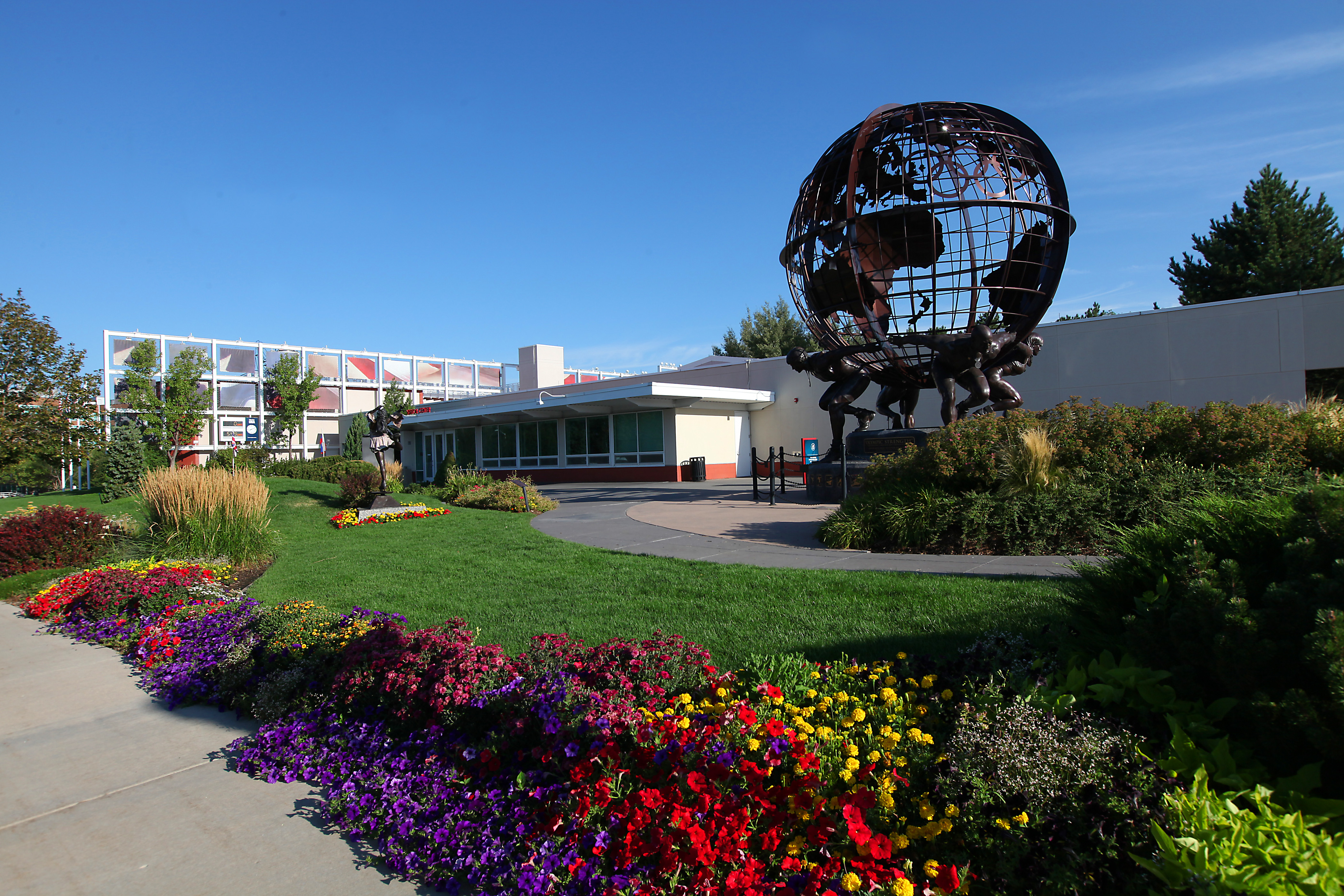

Will the US National Teams reside at an Olympic Training Center or will they have more austere arrangements?
In part 1, I tackled the top level question of whether Residency Programs were a good strategy for U.S. National Team development. In Part 2, I started to address whether it was a good time to start Residency Programs by assessing U.S. chances for 2016 Olympic Qualification. In this part, I continue that assessment, this time by addressing the financial costs of Residency Programs and whether the U.S. Federation can afford such programs at this point in time.
How much does a Residency Program cost?
The obvious first step in assessing the funding considerations for Residency Programs is to figure out how much those programs would cost. I won’t try to break down exact dollar figures as doing so would require quite a bit of research and guesswork as there are several variables in terms of “in kind” support that might be provided by organizations like the USOC. What I will try to do, however, is identify the key budget line items and provide a few notes as to what each might entail in terms of costs at the high and low end.
Practice Facilities
– High end: Rental fees for gym and weight room
– Low end: Free; provided by USOC or other source
Coaching
– High end: $100K/year/coach or $200K/year
– Low end: Volunteers with minor stipend; $10K/year/coach or $20K/year
Athlete Lodging
– High end: Rental costs for apartments or dorm rooms
– Low end: Nothing (athlete’s responsibility) or free; provided by USOC or other source
Athlete Meals
– High end: Contract costs for cafeteria
– Low end: Nothing (athlete’s responsibility) or free; provided by USOC or other source
Athlete Insurance/Medical
– High end: High end plan paid by Federation
– Low end: Low end plan paid by Federation or free; provided by USOC or other source
Athlete Stipends
– High end: $25K/year/athlete or for 32 athletes ($800K)
– Low end: Nothing provided
Athlete College Tuition Assistance
– High end: Full ride scholarship provided as part of host college program arrangement
– Low end: Nothing provided
Athlete Travel
– High end: 2 round trips home/year; extra funding also available to bring European based athletes to U.S. for periodic training
– Low end: Nothing provided
Recruitment
– High end: Full time recruiting coordinator; substantial travel budget for athlete tryouts and recruiting visits
– Low end: Recruiting performed by coaches; very limited travel budget.
Full Fledged vs. Austere
If one does a little back of the envelope calculation into the high end costs it’s fairly easy to come up with Residency Program costs of $2/3M/year. Of course, given the current state of Federation finances it would be impossible to fund programs at anywhere near that level. Even when the Federation had more funding the Residency Programs were more towards the low end even if in kind support from the USOC at the Olympic Training Center in Colorado Springs, helped stretch limited funding.
Obviously, more can be done when the funding is tilted toward the high end of the scale and such a full fledged program would have a better chance of success. Better facilities, better coaching and more competition opportunities are bound to result in better results. And better living arrangements and financial incentives would vastly improve the odds of attracting talented athletes to the program. In particular, if these programs are ever going to have any chance of attracting decent athletes in the 18-22 age bracket they are going to have to provide benefits that approach those that are offered by NCAA sports.
If the funding is not available for a full-fledged program, however, it’s still possible to offer a more austere one. And, even without all the bells and whistles there will still be athletes interested in participating such programs. From 2004 to 2007, the women’s team trained in Cortland, NY and this program was clearly at the low end of the scale. This account of an ESPN writer’s tryout with the team gives you some insight as to how austere that program was. A men’s program that was in place for a year in Philadelphia had similar conditions and even the Residency Programs that were established in Atlanta prior to the Olympics were nothing to write home about.
Hidden Costs
Aside from the actual dollars that would have to be spent on Residency Programs it’s important to note there are also some pretty significant costs that won’t necessarily show up in any accounting ledger. In particular, the man hours involved in the initial organization and continued management of the programs would be substantial. These programs would also become the most visible aspect of the Federation and how they are managed and how the teams perform will be closely scrutinized, especially if the USOC is providing assistance.
And, as anyone who works for a living knows, where you are scrutinized is where you usually spend more of your time and energy. Not always, mind you, but it’s usually the case. For better or for worse, more and more time will be spent by Federation staff to support National Team activities. We could argue about just how pronounced that shift will be, but there will be one. And the hidden cost is whatever grass roots development, marketing initiative or club programs activity that might have been done will now not be undertaken.
Austere Program or No Program?
So, if one factors in the actual dollar costs and hidden costs of even an austere program does it still make sense to start Residency Programs? Maybe, but rest assured it not’s a simple decision or one that should be taken lightly. A lot of it depends on what the available funding is and how austere it is. If the program is too austere, it runs the risk of being pointless. If it’s too robust, it runs the risk of diverting too many resources from everything else the Federation would like to accomplish.
It remains to be seen just what the “flexible residency programs” that are being mentioned will consist of, but they will surely be pretty austere programs if the U.S. Federation is counting every penny. Either that or the USOC is going to come through in a big way with Olympic Training Center access to include facilities, dorms and cafeteria.
When will these programs actually start?
In addition to the lack of information regarding what these programs will consist of there’s been some strong indications that there are no firm plans in regards to their start. The initial announcement indicated that the programs were “tentatively scheduled to begin in early fall of 2013.” A follow up email from CEO Matt Van Houten, indicated that athletes identified at tryouts would “be sent to the club system to learn the game but the goal is to establish a residency program for full time training.” A federation webpage on national teams also referred to the Residency Programs starting in 2013/2014.
The words which I’ve put in bold face (tentatively, goal and 2014) all point to a fair bit of uncertainty in terms to their actual start. This could be for a number of reasons, but I’ll speculate that the actual start hinges on a number of factors to include sponsor funding, USOC support and Women’s team performances in upcoming tournaments. And on top of the shifting date there surely are some floating plans as to where the programs will be on the sliding scale between full-fledged and austere. One could even conclude that there might not even be funding currently in place for even an austere program. All of this leads to some very obvious questions:
Did it make sense for the Federation to announce plans for Residency Programs if it doesn’t really know when they would start or what they would consist of?
Or, would it have been better to wait until plans were more firmly in place?
So, I’ve now addressed Olympic qualification and financial issues in regards to the timing for starting Residency Programs. In the next part I’ll tackle planning issues. And, in particular, planning considerations that should be carefully weighed in order to get the best possible arrangements for Residency Programs. Part 4


In Part 1 I addressed the basic question as to whether Residency Programs were a good strategy for our National Teams. I concluded that if the programs were focused on developing younger athletes it could be a good thing, but if the program had too many athletes in the tail end of their careers it was a highly questionable strategy. This installment, however, sets aside that conclusion and assumes that Residency Programs are definitely the way to go. Instead, the question under consideration is simply, does it make sense to start these programs now?
Why don’t we already have Residency Programs in place?
To assess whether now is the right time to start Residency Programs it makes sense to first explore why we haven’t had programs for several years. In fact, the last time the U.S. had a full-fledged residency program was 1996. Following that Olympics, USA Team Handball’s budget dropped precipitously. There simply was no way that Residency Programs could be maintained at the same level they had been maintained in Colorado Springs or Atlanta, so it was discontinued. Later in 2004 a residency program was established for the women’s team in Cortland, NY, but it was an austere setup that was only a shadow of earlier programs and it closed down in 2007.
In 2008, a new federation was certified by the USOC and with substantial seed money being contributed by its primary backer, Dieter Esch one of the first questions I asked him and the newly installed General Manager, Steve Pastorino was whether they had any plans to restart Residency Programs and hire full time coaches. The answer then and in subsequent years was always along the lines of “No plans at this point in time; Maybe on down the road.” And, as we all know, “on down the road,” never materialized during the Esch-Pastorino era. My informed speculation is that it was never started due to three primary reasons:
In hindsight, those reasons actually appear to have been pretty valid for the most part. The U.S. didn’t come close to qualifying so there’s little to suggest that a Residency Program for either the Men or Women would have put them over the top. Funding could certainly have been diverted from some grass roots effort, but it still would have been a pretty austere setup that would have probably looked a lot like the Cortland program. Finally, while Chicago didn’t get the Olympics the positive opportunities of setting up shop in a host city surely merited the decision to wait and see what would happen.
But, that was the decision 4 years ago. Let’s take a look at each of these three considerations now in the context of the Federations decision to pull the trigger on residency programs.
Olympic Qualification Considerations
While Residency Programs aren’t necessarily established solely with the intent of Olympic Qualification it nevertheless is something that factors into the equation. How much so is open for debate, but the Federation’s own words stating that the program is aimed at 2016 Olympic Qualifications suggest that it’s the major reason for the program. If this emphasis is true, that carries lot of implications in terms of the program’s structure and how quickly it will need to move from a developmental program to one more focused on winning now or at least very soon. Time is of the essence as the next PANAM Games, the most likely path for Olympic qualification are now less than 2.5 years away (July, 10-25, 2015). Depending on the qualification format that means Team USA could be playing in qualification matches as early as December, 2014. Here’s a quick look at the prospects for both the Men and the Women.
U.S. Men Prospects: Can they beat Argentina?
Based on recent national team performances there is a lot to be done if the U.S. is going to be a serious contender for Olympic qualification. The Men finished 7th out of 8 teams at the 2011 PANAM Games and lost 36-19 to Argentina, the Pan American qualifier. This past June they faced Argentina again and lost 33-13 on their way to finishing 7th out of 9th at 2012 Pan American Championships. With better training and more opportunities to play together the U.S. would have done better, but it’s hard to see them making up 20 goals without some quality additions to the roster.
In theory, those quality additions could be new crossover athletes from other sports that would get their training through a Residency Program. The best case scenario I can envision is the Men’s Residency Program starting up this fall and having a half dozen players developing rapidly in to raw, but decent handball players. Those players would then mix with the more experienced players playing in Europe to field a team at the summer 2014 Pan American Championships that still isn’t strong enough to beat Brazil and Argentina, but can upset Chile for 3rd place and qualification for the World Championships. That same team would then parlay that World Championship experience in Jan 2015 to field a team on top of its game by July 2015. I still think it’s highly unlikely that the U.S. would be good enough to beat both Brazil and Argentina, but with Brazil already qualified as Olympic host, it’s possible the U.S. could play Argentina in a semi-final match that decides the Pan American qualifier. And in a one match scenario it is at least possible to envision a big upset.
But, let’s keep in mind this all assumes quite a bit. For starters, with Argentina having several of their top players playing in top leagues in Europe they are likely to improve as a team. Chile, likewise and don’t forget that Canada will have the home court advantage. Not to mention the wildcard of a Cuban entry. No, the reality is that even making the semifinals at this point in time is less than a 50-50 proposition. And then actually beating Argentina? Anything is possible 2.5 years out, but it’s hard not to look at it as anything but a long shot (perhaps 20-1) at this point in time.
U.S. Women: Can they emerge as the best of the also rans?
The performance of the U.S. Women in recent years at first suggests there is no hope whatsoever for qualification. They didn’t even qualify for the 2009 or 2011 Pan American Championships and while they squeaked into the 2011 PANAM Games they finished 8th out 8 teams, including a total defeat by the eventual champion Brazil, 50-10.
Sometimes, however, it’s not how good you are, but who you’re playing against. Beating Brazil in 2.5 years is a near impossibility, but Brazil’s hosting of the Olympics throws them out of the equation. At the same time Argentina which has been the consistent #2 has conveniently regressed back to the pack of the also rans. While they’ve been able to hold on to second place in the past two competitions they’ve been trounced by Brazil and have had to fight off teams like the Dominican Republic and Cuba in the semifinals. So if one uses the following logic from the PANAM Games results: Argentina beat the Dominican Republic 19-18 and the Dominican Republic beat the U.S. 33-26 then the U.S. only has to get around 8 goals better.
While such logic if often faulty it does suggest that an improved women’s team would have a decent chance of qualifying. But, before we get our hopes up too much let’s keep in mind that all of the also-ran teams have been beating the U.S. in recent competition and it would be foolhardy to assume that they won’t also improve with an Olympic bid on the line.
As I see it the best case scenario for the women is significantly different from the men. In particular, I would assess that they don’t need just a few new players, but instead could use a significant roster overhaul. This assessment is based on the results of the past few years and what appears to be several players in the player pool who are older and unlikely to improve significantly in another 2.5 years. Of course, that’s just one man’s opinion and it will better to just take a look at the results at next month’s North American qualifier in Mexico and at the 2013 Pan American Championships this summer in the Dominican Republic. In particular, these two events should paint a pretty good picture of where the U.S. stands among the also rans.
And if a roster overhaul is seen as necessary this is where a full-fledged Residency Program with some top notch cross over athletes could make a difference. Comparing different eras can be a shaky proposition, but I think if the U.S. brought in some raw talent similar to what they brought into the program in the 80s and 90s, they could assemble a team in two years time that is capable of taking 2nd place in Toronto. Certainly, there’s little doubt in my mind that the U.S. Women’s team from 88, 92, or 96 would take 2nd if they could magically time travel to participate in the event.
It wouldn’t be easy, though, with just two years to work with. The U.S. would need to do some phenomenal recruiting and it would require sufficient funding so that it was a full-fledged program. A program that could entice the right athletes to commit and provide them a training environment in which they could improve quickly.
So, if one looks at Residency Programs primarily with a focus on 2016 Olympic Qualification prospects it appears that it will do little to enhance the Men’s teams prospects, but could, in theory, give the Women’s team a chance to qualify. But, is the U.S. currently capable of establishing and supporting full-fledged Residency Programs? Or, can all we expect at this point in time is an austere setup that can’t quite do the job? In the next part of this series, I’ll look at the funding considerations inherent in managing Residency Programs and try to answer those questions. Part 3