post

Handball WC 2013: Spain and France are Bookmaker’s Co-Favorites

SpainFrancesmall

A lucky rebound goal by France’s William Accambray in the closing seconds let France slip by Spain in an Olympics Quarterfinal. The oddsmakers think these two teams will meet in the Final this time around.

The 2013 Men’s World Championships are underway in Spain and for the first time in several years, France is not the favorite to win an International Handball tournament.  Albeit, by the narrowest of margins as host, Spain is listed at 2.4 to 1 and France is right behind at 2.6 to 1.  Croatia (5-1) and Denmark (5.5-1) are also considered strong contenders, but from then on there’s a bit of a drop off.  Hungary (25-1), Iceland (25-1) and Poland (26-1) can be considered the dark horse candidates for semifinal bids while Serbia (40-1), Germany (50-1), Russia (66-1) and Slovenia (66-1) are further out.  Macedonia (150-1) and South Korea (250-1) are seen as remotely conceivable longshots, but from then on every other listed team is an also ran.

Here are the odds courtesy of the Best Betting website which aggregates odd from multiple online bookmakers

Odds to Win Championship

Spain 2.4-1
France 2.6-1
Croatia 5-1
Denmark 5.5-1
Hungary 25-1
Iceland 25-1
Poland 26-1
Serbia 40-1
Germany 50-1
Russia 66-1
Slovenia 66-1
Macedonia 150-1
South Korea 250-1
Argentina, Belarus, Brazil, Egypt, Montenegro, Tunisia 1,000-1
Algeria, Chile, Qatar, Saudi Arabia 5,000-1
Australia 10,000-1

post

VIDEO: Online Web Streaming for the 2013 Men’s World Handball Championships

Livesport2


Spain and Algeria will open the Men’s World Championships, on Friday, 11 January at 7:00 PM Central European Time (1.:00 PM U.S. East Coast).  All of the matches will be available live via the Livesport.TV platform.

For more information click here:  Livesport.TV

Editor’s note:  I’ve been informed that the “On Demand” Full Match viewing option will not be available until the quarter finals.

post

USA Team Handball’s Past Financial Data and Current Financial Straits

Scale

Balancing limited income with many desired expenses will require some tough decisions for the U.S. Federation.

New USA Team Handball CEO, Matt Van Houten, recently posted an update on his first two months of activity and made a point to highlight the federation’s dire financial straits and that he’s counting every penny.  There have been several indications of this financial stress in the past few years.  In 2011, former Board of Director’s President, Dieter Esch, decided to quit donating personal funds to support the Federation’s operations, forcing a number of cuts to staff and operations. For over a year, USA Team Handball team then functioned with an interim GM, Dave Gascon, serving on a pro bono basis.  More recently, it was announced that athletes wanting to participate in the upcoming Junior Men’s Pan American Championships would each be required to raise at least $1,200.

Beyond the pronouncements, however, it is possible to get a better sense of the situation by reviewing Internal Revenue Service (IRS) Form 990s.  The IRS Form 990 is a requirement for all U.S. tax exempt organizations and provides a window of transparency in regards to finances.  The federation was a little late in providing some of this data, but recently did post its 2010 Internal Revenue Service (IRS) Form 990. (Based on the accountant’s signature date (30 November, 2012) it appears to have only recently been filed.)

The 2010 form covers the period from 1 July, 2010 to 30 June, 2011.  This was a few months prior to the end of the Esch – Pastorino era so it’s now possible to do a little bit more forensic analysis on almost those entire 3 years.  Here are a couple of charts that summarize the Income and Expenses for three years covering the time period from 1 July, 2008 to 30 June, 2011.


Form 990 YEAR

Sponsorship Revenue

Membership Dues and Assessments

National Team Revenue

Special Events Income

Other Income

Contributions/

Grants

Total Revenue

2008

$0

$41,117

$0

$0

$11,434

$489,150

$541,701

2009

$75,760

$38,747

$13,972

$129,302

$5,727

$711,104

$974,612

2010

$146,863

$32,803

$26,862

$20,017

$7698

$656,704

$890,947


Form
990
YEAR

Total Salary /employee benefits

Travel

National Team Expenses

Germany vs Poland Match

USA Club Competition Expenses

Other Expenses

Total Expenses

2008

$285,279

$65,754

$7,071

$0

$36,058

$87,231

$481,393

2009

$442,766

$218,863

$147,448

$0

$68,179

$141,422

$1,018,678

2010

$368,046

$119,919

$145,099

$136,819

$84,408

$92,618

$946,909


A few key data points

– Salaries and other employee compensation constituted the lion’s share of expenses (roughly 40%) during this period.  At its peak the USA staff had as many as 14 (7 full and 7 part time) staff members.  In hind sight (well actually foresight for some) a large staff was not sustainable and did not make much sense given the sport’s state of development.

– A significant amount was also dedicated to travel expenses.  As chronicled on the Federation website there were several overseas trips to build ties and obtain sponsorships.

– Membership revenue declined all 3 years.  This is pretty telling statistic.  With regional staffs and development efforts this revenue area should have seen at least some modest growth.  In contrast, the 2010 membership revenue of $32,803 is the 2nd lowest yearly amount ever collected since 1997..

– Sponsorship revenue apparently peaked at $147K.  Developing sponsorship as a significant source of revenue was a major goal and deem necessary to wean the Federation off reliance of USOC and other donor (mostly Dieter Esch) grants.  There are a number of reasons that could be attributed to this shortcoming and some of them are detailed here.

– The Germany vs. Poland match that was held in Chicago (July 2010) had listed expenses of around $137K and was surely a net loss financially.  The exact amount is difficult to determine.  2009 had a special events income of $129K, so a minimum of $8K was lost and assuming that some other events generated income there probably was an accountable loss of around $30K.  If Dieter Esch opened his checkbook for some other expenses not directly on the books the loss might be far greater.

– It’s not possible to fully determine the contributions of Dieter Esch (and others) since those contributions are not broken out on the forms.  It is, however, possible to get a rough estimate by taking the total amount contributed ($1,857M) and subtracting out USOC contribution ($.857M during those 3 years).   Perhaps, a coincidence, but the number works out to just under $1 million.  (Further note:  There was a $50K contribution requirement for board members, so not all of that $1M came from Mr. Esch’s generosity.  Some of these contributions, though, may be reflected in the sponsorship lines.)

Dire Financial Straits

It doesn’t take an extensive review of this data to better understand the situation.  In simplistic terms, all one has to do is take about $333K off the yearly expenses listed above.  (This is a rough estimation of the Esch (and others) yearly generosity which no longer exists.)  Much like the fiscal cliff discussion the only way to solve the problem is to start cutting and/or raising revenue.

Possible Cuts?

While there are areas which could be (are being) trimmed there’s not a whole lot of margin.  Employee salaries are the obvious expense to put on the chopping block.  There’s no way they can approach the previous levels and the staff is accordingly smaller and leaner.  Board Meeting notes indicated that the CEO salary would have a base of $100K with potential bonuses related to additional revenue being brought in.  Throw in a salary for a Technical Director (~60K) and some Coaching (TBD) and the total salary line (with benefits) is probably around $250K.  Travel expenses surely are another area that will be cut to the bone, perhaps to $25K.  National team expenses in 2009 and 2010 were listed at around $150K.  It’s not clear what all those expenses entailed, but I’d like to think that the bare bones programs of those years will at least be maintained.  With talk of a residency program they might even be increased.  Throw in another $75K for miscellaneous expenses and $50K for club competitions and a rough estimate of total expenses is around $550K.

Additional Revenue?

But what about the revenue side of the ledger?  With yearly Esch generosity no longer coming in the Federation’s biggest source of revenue are USOC grants.  From 2009 to 2011, the USOC contribution was roughly $286K/year.  Reportedly, the USOC has kicked in some extra funding to help pay salary expenses for a couple of years, but it’s not clear how much that will be and whether it will change the overall USOC contribution.  Perhaps the new total will be near $350K.  This means the rest has to be made up through a combination of sponsorships, membership dues and miscellaneous revenues streams (ticket sales, tournament entry fees, etc).

As previously noted the recent high water sponsorship mark was $147K.  Perhaps this number can be matched in the near term, but significant increases are unlikely overnight.  Membership revenue has dipped below $40K and it will surely increase, but near term perhaps $50K can be expected.  Without going into detail on the nuance of the different miscellaneous income items I would be surprised if they also don’t stay in the neighborhood of $20K.  This leaves a total of $607K, but it’s really a rough estimate based on very limited information.

Little margin for error and the importance of transparency

So, this simple estimate projects a surplus of $57K.  To reiterate it’s really rough.  If the USOC doesn’t want to chip in more or the sponsorship projections are off it quickly turns into a deficit.  And then you’ve got to start whacking.  Salary expenses, in theory, could be cut.  So could national team expenses. Maybe the National Championship will need to be a breakeven (instead of a money losing) venture.  Or maybe membership dues could go up.

Which all leads to the importance of transparency when it comes to budget data.  IRS reporting requirements have enabled me to do an assessment of a year and half old financial data.  Informative, but only of limited use after the fact.  It certainly makes you look back on some past Board decisions and really scratch your head.  The Federation couldn’t fund a team to go to the PANAM Games but it could pay for 14 full and part time staff members?  Did the Federation really need to pay over $200K in yearly travel expenses?  Or maybe most importantly, if the Federation had been a little bit more conservative with its spending would it be in such dire straits today?

Switching to present day, you can bet your bottom dollar that a number of decisions will be made soon regarding how to spend limited funds.  Do we have to wait a year and a half to see what funding was available and how that funding was spent? Or can we see what’s available now and what the plans for spending are?  How exactly are the potential spending options prioritized? With limited funds what takes priority: a national team trip, hiring a new coach, or sending funds to support new club programs?  Will a serious effort be made to qualify for the 2016 Olympics or will the Federation quietly opt to focus on 2020? Etc. etc.

To reiterate, the low hanging fruit is there.  With an emphasis on transparency here’s hoping that the Federation will provide real insight into the looming budgetary decisions that will have to be made.

post

AUDIO: Handball Talk (Episode 9): Champions League, World Championships, TV Viewing Options and a Karabatic Rant

Shoeless Joe Jackson, Barry Bonds, Lance Armstrong and Nikola Karabatic. 4 athletes forever tarnished by their actions.

Shoeless Joe Jackson, Barry Bonds, Lance Armstrong and Nikola Karabatic. 4 athletes forever tarnished by their actions.

John Ryan and Christer Ahl discuss the Champions League, Online and TV viewing options and the upcoming World Championships.  Also an extended rant on Nikola Karabatic and the Montpellier betting scandal.   (Let’s just say he’s no longer John’s favorite player.)

THN (4 October, 2012): The Karabatic and Montpellier saga – a follow-up: Link

THN (2 October 2012) “Rien ne va plus!”: Karabatic and teammates betting that their own team would lose – but did they then lose intentionally? : Link

THN (28 July, 2012): 2012 Olympic Preview:  Link  (Note the “Whither Karabatic” paragraph)

RTL website page with articles on the Montpellier scandal: Link


post

Why weren’t the U.S. National Teams at the London Olympics?: Part 8: A lack of awareness and marketing: Europe sees the light, but can’t quite figure out how to properly invade the U.S. market

American sports leagues have successfully invaded Europe.  It's high time for European handball to invade America.

American sports leagues have successfully invaded Europe. It’s high time for European handball to invade America.

In Part 7, I listed several reasons why for many years European handball entities did little to develop the American market.  In this part, I highlight how while Europe has opened its eyes to the possibilities, many of its initial efforts have faltered.  (Part 1) (Part 2) (Part 3) (Part 4) (Part 5) (Part 6)

A European Awakening

For many years European handball entities weren’t very much engaged in the development of Team Handball in the U.S.  The litany of reasons for this include basic indifference, a belief that the U.S. should develop Team Handball on its own, market competition from other sports,  the amateur focus in Europe, an unwillingness to invest, not understanding the American marketplace and ineffective American Federation appeals for help. The good news is that while these challenges still exist they are largely becoming passé as professional European leagues and Federations have awakened to the possibility of American revenue streams.

This has happened primarily for a couple of reasons.  First, European handball executives couldn’t have been blind to an American sports invasion in Europe.  Every kid wearing a Dirk Nowitzki, Dallas Mavericks jersey is one not wearing a Pascal Hens, Hamburg jersey.   Every NBA TV broadcast means a little less interest and money being spent on a Handball Bundesliga broadcast.   Ouch. That’s hitting the old pocketbook.  But, it also surely wasn’t lost upon some handball executive that if the NBA can sign big TV contracts and get kids to wear NBA jerseys, then maybe Handball could do the same thing to the U.S.  market.  Or as the South Korean women’s national team often demonstrates, sometime the best defense is a good offense.

Secondly, while there’s sure to be some trepidation in regards to a risky expansion in reverse, European soccer has proven that it can indeed be done. What once was a trickle of minor TV contract deals to get the European foot in the door has evolved into “no kidding” bidding wars.  Case in point was the recent NBC purchase of the English Premier League (EPL) rights for $80-85 million/annually.  This was four times what Fox was paying previously and, get this, you couldn’t even find any soccer matches on TV anywhere in the U.S. not too long ago.  That’s right a bidding war for something nobody, but a few Expats would have watched a dozen years ago.  Sacrilege of sacrilege, these sports networks are even reporting soccer scores on the bottom trailer during broadcasts of American Football games.  I guess I’m an old timer, but I still do a double take when I see Norwich 2, Aston Villa 1; Man U. 3, Reading 0; scroll across the screen.  And call me crazy, but if the EPL can get $85 million, surely the German Bundesliga can get a meaningful fraction of that at some point.  Even 1/100th of $85 million is better than no contract at all.

Stumbles Along the Way

So, with an ongoing American sports invasion in Europe and soccer proving that America could also be plucked, European entities have dipped their toes in the U.S. market.  As often happens, however, there has been some false starts and failures.  Most notably, live events on U.S. soil have only had marginal success.  The French League’s final four cup in Miami (2009) was well staged, but had dismal attendance.  The Poland-Germany match in Chicago (2010) was better attended, but didn’t create the desired post match buzz.  In hind sight it’s clear that these events didn’t fully take into account the basic awareness problem the sport faces in the U.S.  You can’t just simply fly to the states and expect Americans to buy tickets for a sport the bulk of them don’t even know exists.  Well, I guess you can, but there are surely more effective ways to spend your money at this stage of the sport’s development in the U.S.

Showcases on U.S. soil can make sense, but only if they are structured to the current market.  A perfect example of that is the New York City Tournament and All Star Game held the past 3 years as part of a New Year’s Eve package primarily for German tourists; a much smaller event which has a chance to grow.  No, in order to properly stage a big event, you first need to grow your market.  Case in point, are the NFL regular season matches in London that now sell out 80,000 strong.  The NFL plotted this out over many years, slowly but surely developing a fan base in the UK that were hungry to see a live match.

And how was such a fan base developed?  Through TV, of course.  In fact, it’s kind of amazing when you think about it.  American Football had no historical background whatsoever in the UK.  Only a handful of people even play it there today, yet now there’s even talk of a London franchise.

Finally, on TV, but on the right channels?

Encouragingly, European entities have recently been able to break into the U.S. TV market.  The German Bundesliga was first on the scene with matches available first on the “My Sports Germany” Network, and now with Univision Deportes.  The EHF Champions League has also been available, first with MHz and now with beIN Sport and Univision Deportes.  The bad news, however, is that these networks are way off the beaten path.  In many parts of the U.S. they are either not available or require an a la carte or top tier purchase option with a Cable or Satellite TV provider.  In other words, die hard fans can now seek out and find Team Handball on TV, but the likelihood of new American fans stumbling upon Team Handball is pretty slim.

I’m not privy to the negotiations that resulted in Team Handball rights being sold to beIN Sport and Univision Deportes, so I have no idea how much these networks paid and whether any other networks were courted.  Further it’s unclear as to whether other factors such as a network’s market reach factored into the awarding of TV rights.  Let me put it another way.  If ESPN (the #1 behemoth in the U.S. with near total market reach) showed even the slightest inkling of interest (FYI: this suggests they had an inkling) into broadcasting the sport the EHF and/or HBL should have been prepared to bow down and serenade ESPN HQ in Bristol, Connecticut.  Such a possibility would be the ultimate game changer for the sports development in the U.S.  Seriously, every other commentary on this website would start with sentences like, “Before ESPN broadcast Team Handball or “After ESPN….yadda yadda yadda.”  Instead of a glorious two weeks of attention every 4 years during the Olympics there would be a constant stream of new fans and players picking up the sport.

A job too important to give to a middleman

Of course, I don’t know how beIN Sport and Univision Deportes were chosen for broadcast.  Perhaps, they were the only ones interested.  I do know, however, that in the recent past, that this website actually broke the news to one European Handball entity that their matches were now being broadcast in the U.S.  How could that possibly be, you might ask.   Well, it was certainly something that had me scratching my head.  It turns out that the primary reason for this was the farming out of TV rights to a 3rd party to distribute and make deals in foreign markets.   As I understand it, the 3rd party then gets compensated for each deal that’s made around the world.  Again, I’m not privy to the contract specifics, but such an arrangement probably makes it more likely that the highest bidder is going to win.  After all, the middleman has a short term contract and wants to make money.

The trade off of less money (heck, even paying ESPN) for greater exposure is simply not there for a middleman.  That’s not to say that money shouldn’t play a factor, but the right, smaller deal now could lead to better deals later.  Case in point was the EPL decision to go with NBC when reportedly beIN Sport was offering more money.  According to NBC Executive, Jon Miller, EPL Representatives “understand how a property can be hamstrung if it doesn’t have distribution.”  I’m not so sure, however, that the same can be said for European Handball representatives.

Going further, there’s probably a pretty good case to me made that the Europeans should have at least 1 person, if not a fully staffed office section, 100% devoted to the growth of foreign markets like the USA, China and India.  For sure, the U.S. Leagues have done so.  In fact, it wouldn’t surprise me if the staff for NBA Global is bigger than the combined staffs of the EHF, IHF, HBL and the Liga Asobal.

Closing Thoughts on the Awareness Problem

I’ve gotten some negative feedback regarding my characterization of the awareness problem the sport faces in the U.S.  I’ve been told that I’m simply a Negative Nelly for exaggerating the problem and giving it too much prominence.  Essentially, by exposing the problem I’m making too strong of a case to Europeans and TV executives that it’s really mission impossible and they would foolish to waste time and money on something that’s never going to happen.

As you might expect I don’t buy that argument for a second.  I’ll just re-emphasize the crazy opportunity this awareness shortcoming presents.  The fact that such a great sport, tailor made for TV viewing has around 300 fans in this country is really unfathomable.  Despite all the challenges and obstacles I firmly believe that this sport will become a part of the American Sports landscape.  It’s not a question of if, but when?

So, I’ve now covered the underlying reasons why the U.S. didn’t qualify for the Olympics.  Namely the U.S. hasn’t had the funding/resources and that there’s a basic awareness/marketing problem which precludes the ability to secure more funding/resources.  Next, I’ll tackle some management/leadership shortcomings that have at times exacerbated the problems that USA Team Handball has faced.  

(Editor’s note:  At this time I haven’t delved into these shortcomings.  This currently is the last part of this series, but it may continue at some point in the future.)
post

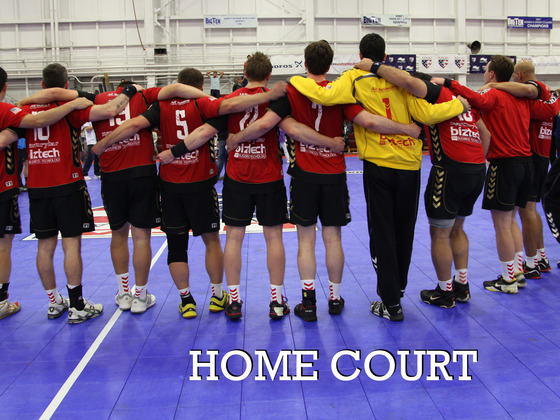
Kickstarter Campaign launched for Home Court documentary

Documentary on NYC Handball starts Kickstarter Campaign

Documentary on NYC Handball starts Kickstarter Campaign

The directors, Monica Alba and Ben Teitelbaum, of the Team Handball Documentary, “Home Court” have launched a Kickstarter campaign to raise $8,000 for the final editing of their film.  They are looking to add a good soundtrack, professional editing touches and to pay entry fees for film festivals.

The documentary focuses on the multi-cultural New York City Team Handball Club and their run to last year’s national title.  For more on the documentary listen to my interview with Director, Ben Teitelbaum: Link

If you’re not familiar with Kickstarter the basics are this.  You make your pledge through an Amazon account.  If the campaign gets enough pledges by the due date your credit card charged.  If the campaign fails to get enough funds by the due date, then your card is never charged.  Home Court needs to raise $8,000 by January 13th.


post

Why weren’t the U.S. National Teams at the London Olympics?: Part 7: A lack of awareness and marketing: The historic lack of European support

Who Cares?: For many years this was the European attitude towards the development of Team Handball in the U.S.

In Part 5, I tried to fully capture the extent of Team Handball’s basic awareness problem in the U.S.  In part 6, I explained how more TV broadcasts could solve that exposure problem, but that a catch 22 TV paradox has kept the sport off the U.S. airwaves for decades.  In this part, I explain why the entities that would stand the most to gain if the U.S. was turned into even just a minor “handball nation” failed for years to lend an effective helping hand.  (Part 1) (Part 2) (Part 3) (Part 4)

Why should Europeans even care if the U.S. isn’t any good at handball?

First off, it’s probably a good idea to dispel the notion held by some that it just doesn’t matter that the U.S. isn’t any good at Team Handball.  After all, Americans are plenty good at a lot of other sports.  At the London Olympics the U.S. won the most overall medals and the Men and Women both won the Gold in America’s preeminent Olympic team sport, basketball.   With all this winning it’s not hard to contemplate how many might conclude that the Olympics will do just fine and dandy if the Americans don’t qualify in Handball and go without medals in field hockey, indoor volleyball and other sports.   And, it’s hard not to argue that for a typical non-American fan that is a perfectly rational viewpoint.

It is, however, more difficult to understand how any handball executive, coach or player could come to the conclusion that it doesn’t matter if most of the U.S. is oblivious to their sport.  A vast, untapped affluent market of over 300 million people?  A sport tailor made for the American mindset and only about 300 fans?  Oh my goodness!   Imagine just a small portion of that 300 million watching the sport on TV and buying merchandise.  It’s a potential bonanza that could raise the profile and income of virtually anyone involved with the sport.   Why then, for so many years did European handball entities not see and try to exploit the opportunity here?

Historical reasons for the lack of European support

As often is the case it was a combination of several different reasons that contributed to this lack of European support.  In no particular order, here are those reasons and some rationale as to why they may or may not have been valid:

1) Basic indifference:  While executives should have recognized the opportunities that the U.S. presented, I suspect that many simply had the same basic mindset of the typical indifferent fan.  Throw in some “Anti-Americanism” and you further compound the problem.

2) A belief that the U.S. can or should fix it themselves:  It’s no secret that the U.S. is one of the wealthiest countries in the world.  Why should they get any help?  If the U.S. wants to promote handball then it should spend its own money to do so.  This contextual viewpoint, however, doesn’t appreciate the fact that the U.S. government does not provide any funding to its sports federations.   And whereas many nations have a fairly egalitarian distribution of funding to their federations the USOC can and has limited its support to handball.

3) The lack of professionalism:  For many years European handball was more amateur than professional.  Accordingly, there was less structure and less concern with growing and bringing in more revenue.  As the club leagues became more professional and revenues increased, however, executives became more inclined to explore new marketing opportunities.

4) Market share struggles at home:  While the IHF has often proudly proclaimed that handball is the 2nd most popular sport in the world this is simply not true.  The reality is that even in countries where the sport has a significant following there are a lot of resources that have had to be expended to simply maintain market share at home.  The thought of expending scarce resources in a foreign country probably seemed foolhardy in many instances.

5) Unwillingness to pay upfront for potential return on investment.  Even when Europeans saw the potential they were usually unwilling to invest the necessary funding required for promotion in the U.S.  While this is somewhat understandable in the context of all the other challenges listed above, there have been unsubstantiated reports of lost opportunities along the way; Rumors of networks like ESPN expressing interest in broadcasting, but the deals not being closed due to European insistence on more money for rights fees.

6) Not understanding American sports structures and marketplace.  While anyone who’s traveled and/or lived in both Europe and the U.S. will find a lot of similarities between the two, there are still some significant differences.   Just try explaining the importance/relevance of collegiate and high school sports to a European or conversely explaining the European club structure to an American.  Or the concept of rotating seasons (U.S.) and the September to June model that Europe uses for most of its sports.  On top of all this is a U.S. sports marketplace which has been evolving rapidly in terms of TV channels and promotion.  Heck, U.S. sports (Baseball and Ice Hockey) have had trouble keeping up; Pity, the poor Europeans attempting to navigate this minefield.

7) Ineffective American sales pitches.  Well, it’s quite simple for me to sit back and whine about how clueless Europeans have been.  But, it would be disingenuous to not fully acknowledge that each of the reasons listed above also has an American failure component to it.  I wasn’t around for any of the pitches that have been made through the years by the U.S. Federation and others, so it’s impossible for me apportion “blame.”  It could be that past Federation officials were master promoters that couldn’t convince obstinate Europeans to do more.  Or, it could be that they were bumbling fools that savvy Europeans quickly determined weren’t worth supporting.  I will speculate, however, that it was somewhere in between with the U.S. being good, but not great promoters and the Europeans being a little more resistant then they should have been.

So, that’s why the Europeans for years paid scant attention to the development of Team Handball in the U.S.  In Part 8 I will highlight why Europeans have awoken to the possibility of turning the U.S. into a handball nation, but still haven’t quite figured out how to awaken the sleeping giant, that is USA Team Handball.

post

EHF Doubles Down on it’s failure to take action

You’re kidding me? The shirt pulling incident is now a lighthearted whimsical non-event.

The jersey pulling incident at the Women’s European Championship has just gotten a little bit more bizarre.  Here’s a refresher as to what happened.  During the Serbia – Norway preliminary round match, the Serbian coach, Sasa Boskovic, grabbed Norwegian right wing, Linn Jorum Sulland’s jersey and arm.  Yes, standing on the sidelines the head coach of one team reached out and physically disrupted the play of an opposing player.

What’s the penalty for such a transgression?  Well, the referee’s didn’t see anything during the match so there was no immediate penalty.  Afterwards, however, as my colleague, Christer Ahl, noted it would be appropriate for European Handball Federation (EHF) officials to bar coach Boskovic from the rest of the tournament.

But, then the hand wringing began.  First, the EHF issued one of their traditionally oblique memos regarding an “incident.”

Nobody saw it, nobody complained and therefore we can’t do anything about it.  I’m not certain as to the regulation nuance, but this was ridiculous.  Federations should be able to make use of video footage to evaluate conduct like that and to take appropriate action.  But the EHF compounded their handwringing by adding “It is however evident that the media, through the selection of match scenes, has not presented a complete picture of the incidents.”  Alright, here’s some video to peruse.  Judge for yourself what more evidence you need.

The Serbian Federation also issued an apology:  “Please accept our apology,” the statement reads. “Since it all happened in the heat of the match.”

So, “not a complete picture” and “heat of the moment.”  Maybe the Serbian coach had some good reasons for being upset with the Norwegian winger?  Nothing that would justify his actions, of course, but maybe they would at least explain the non-punishment.  Well, according to this Serbian website article Coach Boskovic was upset with Sulland for invading his space and preventing him from communicating with his players.  Huh?  Quite frankly, I’ll actually give Boskovic credit for perhaps playing a role in taking a Norwegian player out of the game mentally on offensive.   The little game that was being played between the coach and the wing was undoubtedly a distraction for Sulland.  She, however, is a player and can stand anywhere she wants to.  All he had to do was move a few feet to the left.  Instead he reaches out and grabs her.  Trust me coach, there’s nothing you could have said to your players that was so important to physically make contact with a player on the court.

As someone who wishes handball would be taken more seriously, you get used to shaking your head at such events, and moving on.  It’s hard to know for certain why the EHF doesn’t take more action.  It shouldn’t come as too much of a surprise that the coach in question is the coach of the nation hosting the tournament.  Moreover, Serbia agreed to host at the last moment when the Netherlands bowed out.

And I was ready to move on until I saw this posted on the EHF webpage.  I don’t know where to begin here.  The EHF has now double downed on its failure to take action by trying to pass off this incident as a light hearted moment.  What could possibly be the message behind this?  Ha, ha, it’s no big deal for coaches to make physical contact with the opposing players?  How can you make light of such a transgression?  Wouldn’t it be hilarious if this happened again in the final of a close match?  What’s going to be the reaction then?  Well, unfortunately the precedent has been set.  I’m wondering what the written words will be for that jersey gift.

Seriously, I don’t know what I’m going to see next.  Maybe, players will get caught betting against their own team and then add a betting sponsor as an advertiser on their jerseys.


post

VIDEO: USA vs. Canada, IHF Challenge Cup


USA’s Orton Fofana about to take a hard foul in the closing minutes. (Check video 8 of 8 at around the 6 minute mark to see how cooler heads prevailed.)

Alberta Team Handball has posted video of the USA – Canada, Men’s Under 20 group play match that was played in Mexico this past November.   Canada won that contest 37-30 and later beat the Americans 40-38 in the Bronze Medal match.

It doesn’t take long to see how pivotal the back court tandem of Fofana, Binderis and Galindo were to the U.S. performance.  These players definitely have a future with the U.S. national team.

Video 1
Video 2
Video 3
Video 4
Video 5
Video 6
Video 7
Video 8

Player #, Name, Club/country of residence, goals scored
#1, Chris Hesser, Dynamo HC, Goalie
#2, Stefan Paunovic, Denmark, 0 goals
#3, Tylert Shukert, Minnesota HC, 0 goals
#5, Domenic Lapore, Salt Lake City, 0 goals
#6, Jerome Nohr, Germany, 0 goals
#7, Ian Pinson, LA THC, 1 goal
#8, Orton Fofana, France, 10 goals
#11, Alex Binderis, Sweden, 4 goals
#15, Javier Galindo, Spain, 9 goals
#16, David Brown, West Point, Goalie
#17, Andrew Donlin, Air Force, 2 goals
#24, Connor Holt, West Point, 2 goals
#25, Ryan Petersen, Cary HC, 0 goals

THN (23 Nov 2012): IHF Challenge Cup: Some numbers behind the results


post

IHF Challenge Cup: Some numbers behind the results

Team USA’s Olivia Goncerz (#4), Lynn Hodderson (#11) and Anja Borg (#5) try to stop a Mexican attack.

The USA recently competed in an IHF Challenge Cup Tournament in Mexico from 7-11 November.  The Challenge Cups are an IHF initiative to give more playing opportunities for less developed handball nations.  A men’s under age 20 competition and a women’s under age 19 competition was held and the other nations participating were Mexico, Canada and Puerto Rico.  The USA Teams did not fare well overall.  The men placed 4th losing all four of their matches, while the women placed 3rd, managing a draw and a win against Puerto Rico.

Men’s Results

Group Play
USA – Mexico 23-33 (13-15)
USA – Canada 30-37 (17-19)
USA – Puerto Rico 30-35 (15-16)

3rd Place Match
USA – Canada 38-40 (19-20)

Roster/Place of Residence/USA Club/Scoring
Javier Galindo, Spain, 38 Goals
Orton Fofana, France 29 Goals
Connor Holt, West Point, 17 Goals
Alex Binderis, Sweden, 15 Goals
Andrew Donlin, Air Force, 12 Goals
Ian Pinson, LA THC, 6 Goals
Stefan Paunovic, Denmark, 3 Goals
Jerome Nohr, Germany, 1 Goal
Tyler Shukert, Minnesota, 0 Goals
Domenic Lapore, Salt Lake City, 0 Goals
Ryan Petersen, Cary HC, 0 goals

Goalies
Chris Hesser, Dynamo HC
David Brown, West Point

While it’s disappointing that the men didn’t win any games, the scorelines indicate that all four matches were competitive, with the half-time differentials all 2 goals or less.  A far better than last year’s Under 19 team which lost 60-8 to Argentina at the Pan American Championships.  The two leading scorers for the U.S. appear to have been dual citizen athletes, Javier Galindo (Spain) and Orton Fofano (France).  As they accounted for 55% of the U.S. offensive output, one can conclude that their addition to the roster was pretty pivotal to the U.S. respectable performance.  Other key contributors were Alex Binderis who lives in Sweden and two cadets, Connor Holt of West Point and Andrew Donlin of Air Force.

Women’s Results

Group Play
USA – Puerto Rico 29-29 (16-11)
USA – Mexico 23-14 (7-9)
USA – Canada 34-13 (10-18)

3rd Place
USA – Puerto Rico 34-27 (13-15)

Roster/Place of Residence/USA Club/Scoring
Anja Borg, Norway, 19 Goals
Stefanie Hesser, Dynamo HC, 18 Goals
Maja Storm, Germany, 13 Goals
Morgan Thorkelsdottir, Iceland, 12 Goals
Lynn Hoddersen, Germany, 9 Goals
Alana Steinarsdottir, Iceland, 6 Goals
Olivia Goncerz, Jersey Girls, 5 Goals
Sierra Thompson, Sweden, 4 Goals
Natalie Dabrowski, Jersey Girls, 2 Goals
Izabela Szymanski, Jersey Girls, 1 Goal
Essence Jones, LA THC, 0 Goals
Kamila Pawka, Jersey Girls, 0 Goals

Goalies
Sophie Fasold, Dynamo HC
Freja Dobreff, Germany

The USA Women fared better overall with a draw and a win against Puerto Rico, but the 34-13 pounding at the hands of Canada was a clear demonstration of a stronger Canadian youth program.  The U.S.  foreign resident scoring attack was even more pronounced for the women with 2/3 of the goals coming from overseas based players.

Commentary

I have mixed feelings about the benefits of these tournaments for our younger players.  On the one hand, I like to see the USA competing in international competition.  It’s a tremendous opportunity for those athletes and potentially a great motivating tool to encourage more athletes to take up the sport in the U.S.  But, if the bulk of the team is composed of athletes who already have great playing opportunities in Europe, then it’s less of an incentive for those U.S. based players.  But, then again if the U.S. had sent teams composed primarily of U.S. based players they would likely have suffered some truly embarrassing losses even in this challenge competition against other lower level handball nations.

On the whole, I think that the funding and resources expended to participate in these tournaments could probably be spent better on U.S. based development programs.  (Especially, if you factor in the transportation costs to send European based athletes to a tournament in Mexico.)  For example, a week long camp in the USA with multiple regional teams, similar to the U.S. Olympic Festivals of the past could perhaps be conducted with similar overall costs.  And instead of evaluating 15 athletes, the U.S. could evaluate maybe as many as 60 athletes, including some that can’t get released for a November tournament due to school and other sport commitments.  (It’s hard to fully calculate costs as there would be a lot of variables in terms of lodging and transportation.)

I’m probably not the first individual to think of such an alternative event.  The problem is, however, that the funding and resources for the IHF Challenge Cups comes from the IHF and the U.S. Federation simply can’t redirect that support somewhere else.   And as the IHF hasn’t always spent its funds very judiciously, I can’t complain too loudly at a program that is clearly attempting to spread the wealth even if it may be a bit misguided.

As a final commentary, I’ll point out that the Federation really needs to get their act together in regards to its reporting of an event like this.  A tournament where Americans (teenagers, no less) are representing their country should be a prime recruiting tool for athletes with daily reports and plenty of action photographs on the website and facebook.   Instead, the scores and results were never even posted.   As the saying goes, if a tree falls in a forest and no one is there to hear it, does it make a sound?

Related commentary

THN (3 May 2011) Commentary: USA Team Handball National Teams: Are there too many guys with short haircuts and accents? (Part 1: Military Athletes)

THN (10 May 2011): Commentary: USA Team Handball National Teams: Are there too many guys with short haircuts and accents? (Part 2: Dual Citizenship Athletes): 

THN (17 Jul 2011): Partille Cup: How can USA Team Handball best maximize this opportunity?

THN (7 Aug 2011): Embarrassing outcome for PanAmerica in Junior Championship:

post

Low Hanging Fruit for the new USATH GM

No, these three apples can really be plucked easily.

As anyone who has followed the trials and tribulations of USA Team Handball through the years knows the sport has some huge challenges.  Rome wasn’t built in a day and it won’t be quick and easy to solve all of USA Team Handball’s challenges either.  New General Manager, Matt Van Houten, most likely already has a massively long checklist of things to do.  Some of these items may take years to fully address and it’s only a matter of time for a chorus to rise up and start complaining that nothing has changed.

Fortunately, however, there are a few items that should be relatively easy to fix.  Items that can be accomplished to show near term progress while the more difficult items are addressed.   Herewith, is the low hanging fruit:

1) FIX THE WEBPAGE

This hardly needs any explanation.  Not only has it been updated way too infrequently for over a year it is has been woefully lacking in substance and style.   Here are a couple of recent examples to highlight a few obvious problems.

  • Don’t post a one paragraph link to a bland IHF story on the upcoming challenge tournament.  Two USA youth teams are going to the tournament, but you wouldn’t know about it from this post.  Why not a story about some of those athletes and their ongoing preparation?  Or better yet, strongly encourage those athletes to blog about and during the upcoming event.
  • There was a major club tournament last weekend in Chicago.  Why not a photo and a story or at least a link to a site with all that information?    Heck, I’m guessing, if asked, Craig Rot would have done a nice little write-up of the whole event.
  • Find better quality photos.  The blurred “IHF trophy” block letters and the photo of the new GM just don’t cut it.
  • Finally, if a site has an audio interview with the new GM, wouldn’t it make sense to link to relevant content like that.

The need to fix the webpage simply cannot be understated as it is the all important, first impression for literally thousands of potential fans and players of the game.   Probably more than a few potential sponsors, as well.  USA Team Handball cannot afford to let folks conclude as this Orange County register reporter did during the Olympics, that the sport is not a priority and that our webpage looks like it’s hosted by Geocities.

2) Secure a sponsorship deal with U.S. TV networks currently broadcasting Team Handball

Yes, there are networks broadcasting the sport in the U.S.  In former USATH CEO Mike Cavanaugh and former USATH GM Steve Pastorino’s fantasy world they would have walked on to the job with this situation in hand.  Cavanaugh tried for years to secure a TV deal unsuccessfully and Pastorino finally was able to facilitate a deal with the MHz network.   The MHz deal is gone, but now two networks (beIN Sport and Univision Deportes) have chosen to broadcast the sport totally on their own.

As far as I can tell (multiple emails regarding this topic to the Interim GM and BoD President have not merited a response) there has been no dialogue between the Federation and these two networks on potential sponsorship of USA Team Handball.  The MHz Network had some sort of deal with the USA Federation, so I’d like to think these two entities would also jump at the chance of sponsoring the Federation in exchange for a little promotion on the USA website.

3) Post USA Team Handball’s financial data on the Federation website.

The Federation’s own by-laws state the following:

Section 17.5. Website.

USATH shall maintain a website for dissemination of information to its members. USATH shall post on its website its Bylaws.  Additionally, USATH shall post on its website its most recent annual financial statement and its most recent 990 Form filed with the Internal Revenue Service.

Yet, the latest and greatest information is the 2009-2010 IRS Form 990 and a bad link to the 2011 BoD approved budget (it goes to a Form 990).    As we are approaching calendar year 2013 it’s more than high time to post more current information.   Not only is it a requirement, it’s the right thing for a transparent federation to do.

And to be even more transparent, some explanatory documents which highlight what key financial decisions are being made, and why in greater detail would be highly appreciated.   As an example of what not do, just try to decipher the notes regarding finances in the last two board meeting minutes (Feb 2012, May 2012).  These explanatory documents would not have to be a detailed prospectus, but they should give members real insight as to how much funding is going to support the various programs, be it club development, national team trips or organizing the Club National Championships.

So, three easy tasks that hopefully can be checked off the To Do List.  In the coming weeks, I’ll try to highlight some of the more important and challenging tasks that will require some heavy lifting.

post

VIDEO: 2 HBL Showdowns this weekend

Hamburg vs. Kiel this Saturday

The Champions League is on hiatus until mid November, but LAOLA1.TV is stepping into the void with two great matches in the German Handball Bundesliga (HBL) this weekend.  On Saturday, Hamburg hosts Kiel and on Sunday, Flensburg hosts Berlin. It’s early in the season and all 4 teams are bunched near the top of the HBL table.

Thanks to Berlin’s draw with them earlier this season Kiel no longer has their winning streak, but they’ve still got an “unbeaten” streak.  Hamburg has been decimated by injuries and will probably need some help from the “8th man” home crowd to knock off the defending champions.

Flensburg has stumbled a little bit in the early going and is currently in 6th place.  If they want to return to the Champions League next year, they’ll want to win this key home clash against 2nd place and unbeaten Berlin.  Both matches will be available live for viewing at LAOLA1.TV and one of these matches will surely be posted later as the “Match of the Week” for on demand viewing.

Saturday, 27 October 2012
Hamburg vs. Kiel  3:00 PM (CET)/9:00 AM (U.S. East Coast) Live Video Link

Sunday, 28 October 2012
Flensburg vs. Berlin 5:30 PM (CET) / 11:30 AM (U.S. East Coast) Live Video Link


post

Zut Alors!: A Team Handball reference on Saturday Night Live?

“Us French brothers, throw a handball like this.”

Famous French Def Comedy Jam performer, Jean K. Jean, made an appearance on Saturday Night Live a couple of weekends ago and did a riff on French and Belgian Team Handball.   Really?  Really!

The first part of the video is about the French reaction to the Lance Armstrong doping report, but around the two minute mark Jean talks about a recent France – Belgium handball match he attended.  Jean obviously knows handball as Belgium has long been a weak sister in European Handball.  The U.S. has even had had a few victories against them.

When I saw this sketch, I had to do a double, then a triple take.   “Hey,” I concluded, “Kenan Thompson really is talking about Team Handball and not the wall version.  He really knows the difference.”   Maybe the U.S. awareness quotient is holding steady at 10% if it can get a Saturday Night Live reference.   Who nows, maybe Kenan Thompson could even become for USA Team Handball what Stephen Colbert is for USA Speed Skating. Zut Alors!

Watch the video: Link