post

EHF Final Four (Best Weekend of the Year for Handball Webstreaming Fans)

Four teams will battle for the Champions League Trophy this weekend and you can see it all at ehfTV.com

No complaints from this Handball fan in regards to this weekend’s matchups.  The semifinals on Saturday should be interesting to say the least with the Liga Asobal and the Handball Bundesliga going head to head in both matches.  Rhein-Neckar is a 2.5 goal underdog to Spanish champions Barcelona.  Rhein-Neckar will have the home country court advantage while Barcelona will be going for a rare 2 sport “double” with their sister team going for the Champions League soccer title later in the evening.  The second match pits German champion Hamburg vs. Spanish runner up Ciudad Real.  The oddsmakers couldn’t pick a favorite between these two titan, so don’t be surprised if it goes down to the end.

On Sunday, there will be two more matches with the semifinal losers squaring off for 3rd place, before the final match.  ehfTV will be broadcasting all four matches live and will have English commentary with Tom O’Brannagain on hand for pre and post game commentary as well.

Match Schedule (Handicap point spread in parentheses)

Saturday, 28 May

Rhein-Neckar vs. Barcelona (-2.5) (ehfTV: 3:15 PM CET, 09:15AM (U.S. East Coast)
On Demand Broadcast: http://www.ehftv.com/final4/ec/cl/men/2010-11/video/001671

Ciudad Real vs. Hamburg (Pick em) (ehfTV:  6:00 PM CET, 12:00 PM (U.S. East Coast)
On Demand Broadcast link:  http://www.ehftv.com/final4/ec/cl/men/2010-11/video/001672

Sunday, 29 May

3rd Place Game: 3:15 PM CET, 09:15AM (U.S. East Coast)

On Demand broadcast at ehfTV: http://www.ehftv.com/final4/ec/cl/men/2010-11/video/001711


Final: 6:00 PM CET, 12:00 PM (U.S. East Coast)

On Demand broadcast at ehfTV:  http://www.ehftv.com/final4/ec/cl/men/2010-11/video/001712

U.S. TV Broadcast

There is also a televised tape delayed broadcast of the Final on the MHz Network in the U.S. at 4:00 PM (U.S. East Coast) on Sunday, 29 May. For information on how you can watch MHZ see this link: http://www.mhznetworks.org/mhzworldview/carriage/

Side note:  For those of you who can’t watch the matches live, be advised that you may want to strategically use a sheet of paper to avoid seeing the still photos used for the on demand video link.  I’ve pleaded with the EHF to not use a trophy hoisting celebration photo (for those who don’t want to know the outcome), but I haven’t got any response as to whether they will meet this reasonable demand.  UPDATE:  If you use the links above you can watch the games without knowing the outcome.  However, if you go to ehfTV.com directly be advised- you’ll immediately know the outcome.

ehfTV Preview of Final Four: http://www.ehftv.com/ehfCL-show

post

Time for a True European Super League (Part 3): Why playoffs are overwhelming superior to season long championship

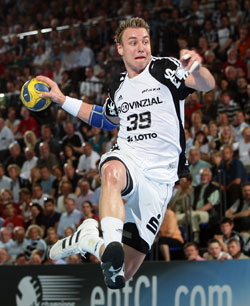
For the past few weeks, America's #1 Handball fan has been watching this German athlete more than the German Bundesliga. Why?


In Part 1, I highlighted how Europeans might want to consider making their sports leagues more like their Governments.  In Part 2, I provided an overall framework for a European Super League  In Part 3 of this series I take on the totally absurd notion that NBA/NHL style playoffs won’t work for European Professional Handball.

First, let’s establish that I’m a big fan of the sport of Handball.  Heck, I’ll go out on a limb and state that I am the #1 fan of the sport in the U.S.  Certainly, I doubt that any of my 308,000,000 compatriots watch more Handball on TV or the internet on a yearly basis.  (If you think you’re a bigger fan, please drop me a line at john.ryan@teamhandballnews.com and will compare notes.) So, it should be clear, I’m not here to bash the sport.  In fact, you’ll be hard pressed to find a bigger promoter of it.

Secondly, I’m not some clueless American who doesn’t understand European sports traditions.  On the contrary, I lived five years in France and became totally immersed in the club sport culture.  I played one season of lower division Handball and four years of over age 35 basketball in Levallois, a suburb of Paris.  Ask me what I enjoyed the most about living in France and I will say without hesitation it was playing club sports.  Oh, how I wish the U.S. had clubs where individuals of every level can play from the age of 5 years to 70.  (Yes, incredibly there was a 70 year old player on our basketball team.  I’ll never forget figuring out just how old he was after he told me about the Americans throwing him candy from the tanks back in 1945.)

Third, I think I’ve got a pretty good understanding of European professional club handball.  Living in France, I became a pretty big of the French League and this year, I’ve enjoyed watching around 70 German Bundesliga matches.  It’s truly been great to immerse myself in what is clearly the top professional Handball league in the world.

So, sorry for the diatribe, but I think I’ve got some pretty strong credentials to take on this topic.  And while there are many aspects of the American sports model, I’d like to see Europeans adopt, the most needed reform is clearly the addition of playoffs.   I’ve always thought this, but the TV viewing choices I have made the last few weeks have brought even greater clarity to the validity of this position.  To further explain, let’s just say that there are only so many hours in a day available to watch sports.  And earlier this year, for the first time in my life, I could choose to watch traditional American sports or Handball.  And while I didn’t go cold turkey on the sports I grew up with, Handball took priority.  Even more remarkably, basketball, my first sport passsion, became an afterthought.

But as Hamburg’s run to an HBL title became all but apparent my interest started to wane and since the NBA playoffs started in mid April my DVR queue has started to pile up with HBL matches.  Why would
America’s self-proclaimed #1 Handball fan suddenly prefer to watch basketball over handball?  Do I really have to explain this? OK, the answer is:

In terms of entertainment value, meaningless games with no bearing whatsoever on a championship cannot even begin to compete with the compelling “do or die” nature of a playoff format.

I’d like to maintain that even defenders of the championship format won’t argue this point.  They might argue about the logistics and the fairness of playoffs, but nobody in their right mind should argue about the entertainment value.   Seriously, do you want to watch Balingen-Kiel with nothing on the line or game 5 of Kiel vs. Hamburg for the title?

However, entertainment value is not everything.  Although, arguably for a professional sports league it should be the most important thing.  But, since this is Europe there are other reasons to defend the Championship model.  Herewith are some of those reasons and a rebuttal as to why they aren’t valid.

1) It’s not the fairest way to determine a champion. Players could be injured at the end of the season and a team that was playing poorly earlier in the year could get “hot” and win the title.  Only a championship format will fairly reward a team for consistent performance.
Rebuttal: If every club knows the rules for determining the league winner before the season starts, then whatever method is used can be considered fair.  Furthermore, what can be fairer than to have two teams play each other in a best of 5 or best of 7?  Seriously, the likelihood that an inferior team is going to put together 4 upsets is pretty unlikely.  No, if you can beat the other team 4 times, then clearly you are the better team.

2) Europeans only care about their local teams and are not interested in watching other teams play.
Rebuttal: If you have two high quality teams going head to head in a playoff series people will watch and when they watch, if they have a pulse, they can’t help but get drawn in.  In the recent NBA playoffs, I found myself becoming a fan of the Memphis Grizzlies, an 8 seed that knocked off the 1 seed, San Antonio and then battled Oklahoma City to a game 7 final in the next round.  I knew absolutely nothing about that team prior to the playoffs, yet ended up making sure I saw everyone of their games.  Could the same thing happen in Handball?  You bet and I would probably put middle of the road HBL side like Grosswalstadt in that category.  Sure, their victory over Kiel in Kiel was interesting, but other than dropping Kiel down a notch what did it mean?  Now, imagine Grosswalstadt as an 8 seed that #1 seed Hamburg has to be wary of in a 5 or 7 game series.  Hey, that sounds interesting.  I’m going make sure I see that.

3) It’s too many games. The season is long as it is.  Adding playoff games will make it even longer.
Rebuttal: If you structure the league properly it won’t be too many games.  In particular, in order to properly stage playoffs, it will be necessary to shorten the regular season a couple of months.

4) Clubs that don’t make the playoffs will have fewer games and will lose revenue. With a shortened regular season clubs that don’t make the playoffs will have nothing going on for the last couple of months.  What will the players do and won’t that be devastating financially to those clubs?
Rebuttal: Well, I can’t argue about the fewer games.  That’s life in the big city.  The financial loss will not be devastating, however, if the league has revenue sharing for their TV contract.  Not all of the revenue would be shared 100% equally, so clubs and players would still have lots of incentives for winning and advancing in the playoffs.  As an aside, you might find it interesting to note that NBA players (especially those with high salaries) are ridiculously underpaid during the playoffs, making only a fraction more than their base salaries.  In theory, if money was their only object, many of them would be better off losing and relaxing on the
beach.

5) These playoffs would interfere with Champions League. If two clubs were going head to head and one of them was still in the Champions League it would give an unfair advantage to the team that wasn’t.
Rebuttal: No argument from me on this one.  This is why, if you re-read part 2, you’ll see where I highlight that Super League teams would not participate in the Champions League or National Cups.  You can’t do both and as I explained if there was a true Super League, you wouldn’t want to.  Don’t get me wrong as things are currently structured the Champions League is the best thing going.  Next weekend, I’m really looking forward to the semifinals and final.    Those games mean something as they are “do or die” and a championship is on the line.  Still, if I had my druthers, those 4 sides wouldn’t be playing 2 knockout games.  No, they’d be playing two best of 5 semifinal series.  And instead of watching the Bulls vs. the Heat or the Mavericks vs. the Thunder on TV every other night I’d be taking turns watching R-N L vs. Barca and Hamburg vs. Ciudad Real.  I can dream, can’t I?

post

The IHF Super Globe is fine as an all star event, but not as a serious competition

The IHF Super Globe is anything but "Super"

Once again the IHF is staging the Super Globe in Qatar this weekend.  It purports to be a club championship of the continents, but with most of the world’s best players playing in Europe it’s more of an all star event, especially with the other continents hiring additional Euros to beef up their rosters.

Christer Ahl had a commentary last year that pretty much covers it.  As not much has changed, here it is again:

https://teamhandballnews.com/2010/05/the-ihf-super-globefine-as-an-all-star-event-but-not-as-a-serious-competition/

post

Commentary: USA Team Handball National Teams: Are there too many guys with short haircuts and accents? (Part 2: Dual Citizenship Athletes)

Swedish-American Martin Clemens Axelsson and Norwegian-American  Karoline Borg are key members of the U.S. National Teams

Anyone who follows USA Team Handball’s excellent American’s Abroad updates has surely noticed that two groups of Americans (military members and dual citizens) are very well represented. In Part 1, I assessed that having a lot of military athletes on our National Teams isn’t a problem, but rather a symptom of a problem (thin talent pool). In part two, I’ll consider whether the same is true for dual citizenship athletes.
Dual Citizenship Athletes
USA Team Handball, since its inception has had dual citizenship athletes playing for its National Teams and certainly it isn’t the only sport to have sprinkled its roster with these dual citizen athletes. Notably, USA soccer, particularly in its development years in the 80s and 90s, has had its fair share of foreign imports. Additionally, a number of Handball nations (e.g. Spain) where there is no shortage of homegrown players have bolstered their roster with mercenaries (naturalized citizens) simply to improve their national team.
Until recently, however, dual citizen athletes have been a distinct minority on U.S. teams that have been overwhelmingly comprised of born and raised, domestic based players. Arguably, at no other time in the history of the sport in the U.S. have so many dual citizen athletes (e.g. El Zogby.Axelsson, Borg) played such pivotal roles on U.S. National Teams.
So, should we be concerned that we have too many guys with foreign accents?
Yes, for three reasons.
1) Again, this is a very clear indication that we have a thin talent pool. First off, let’s acknowledge that most dual citizens if presented a choice between 1) playing for the Handball nation where they’ve learned to play and spent most of their life or 2) playing for Team USA they are going to choose the Handball nation. Only, if they have no realistic prospects are they going to consider the U.S. option. There might be exceptions to this (perhaps, Adam El Zogby), but it’s a good rule of thumb. So, if a second tier (or third, or fourth or even lower caliber) player from Europe can make the U.S. team it’s probably a good indication that our homegrown talent pool is third tier (or lower). This isn’t all bad. Such players can still be huge contributors that can help us knock off the likes of Canada, Greenland and maybe even Brazil or Argentina someday. But, they are not likely to put us into the next echelon in the World Championships or Olympic Games.
2) Integrating dual citizenship athletes can be disruptive. It should also be noted that the integration of dual citizens on a national team can be a tricky business. I got a sense of this during my short stint on the U.S. National Team when we had tryouts for a couple of dual citizens from Norway and Sweden right before the World Championship in 1993. Both athletes that tried out were nice enough guys and experienced players, but there was also a little resentment with these “outsiders” potentially taking a roster spot from the born and raised Americans. As two outsiders amongst 15 players that had been practicing together for several months there were few integration problems. The only minor problem I recall was when they started conversing in Nordic to each other in front of their teammates. Never a polite move in any context and this was put to a halt with some friendly counseling.
As the current National Team structure has most players playing with clubs overseas, the context is clearly different from my stateside experience. And everything might be all hunky-dory now as relatively few athletes are competing for roster spots. As competition for National Team spots heats up, though, politics will undoubtedly enter the picture. Heck, I remember divisions and accusations of political favoritism based on geographical regions within the U.S. Those New York accents can take a while to get used, but add an even thicker one with an accompanying separate cultural identity and there could be real cohesion problems. An American citizen is an American, but let’s be clear that there’s no getting around the fact that there’s a big cultural identity difference between growing up in the U.S. and growing up in a foreign country. It doesn’t matter how well someone speaks English and how frequently they connect with relatives in the States, they’re going to be more culturally attuned to where they’ve lived. Fortunately, the U.S., more than any other country, is a melting pot of different cultures, so team integration of such a diverse group is still likely to occur. All things being equal, though, it’s simpler not to have such a diverse team.
3) Dual citizens are less likely to support development in the U.S. An ancillary benefit (at least a hoped for one, anyway) of athletes participating in National Team competitions is that those athletes will use that experience to support development of the sport in the U.S. Anyone who has been around the sport in the U.S. knows full well that is not always the case. In fact, it happens a lot less than we’d like it to. Still, it goes without saying that it’s even more unlikely that a dual citizen with stronger ties to another country will decide to move to the U.S permanently and become involved in development efforts. Also, not to be forgotten is the role model aspect of a local club member getting promoted to the National Team. This can inspire younger players to new heights with the thought, “well if he can do it, I can do it.”
Should anything be done to remedy this imbalance?
In many respects this problem can be resolved the same way the military athlete imbalance can be fixed. If we widen our domestic talent pool with better players then the standard for dual citizens getting consideration will be higher and accordingly there will be fewer of them.
While this should occur naturally I also think that USA Team Handball should have some policies that will indirectly boost opportunities for domestic players. Right now, with no U.S. based residence program it’s pretty much impossible for a domestic player to improve significantly as a player without moving to Europe. As such, by default, this has given the dual citizen athlete already conveniently living and acclimated to Europe a distinct advantage. While, I’m not advocating a return to the full-up residence programs of the 80’s and 90’s, I do think that some resources need to be spent on preparing domestic based athletes for overseas competition. (This is outlined in Part 3: A Framework for Creating U.S. National Team Success) In addition, more time and resources should be devoted to getting those domestic athletes on good clubs with strong training programs. A watchful eye should be kept on dual citizen athletes, but logically they will be more able to fend for themselves.
In the end, I’d like to see U.S. National Teams with a smattering of dual citizens playing key roles. Not because I don’t like dual citizens, but because I’d like to have the quality of our domestic players be such that only a few talented athletes can make the cut. And who knows, maybe I’m dreaming, but perhaps one day I’ll even get to read a German (or Danish, pick your country) commentary deploring the fact that they’ve lost a prized dual-citizen prospect to the Americans.
post

Commentary: USA Team Handball National Teams: Are there too many guys with short haircuts and accents? (Part 1: Military Athletes)

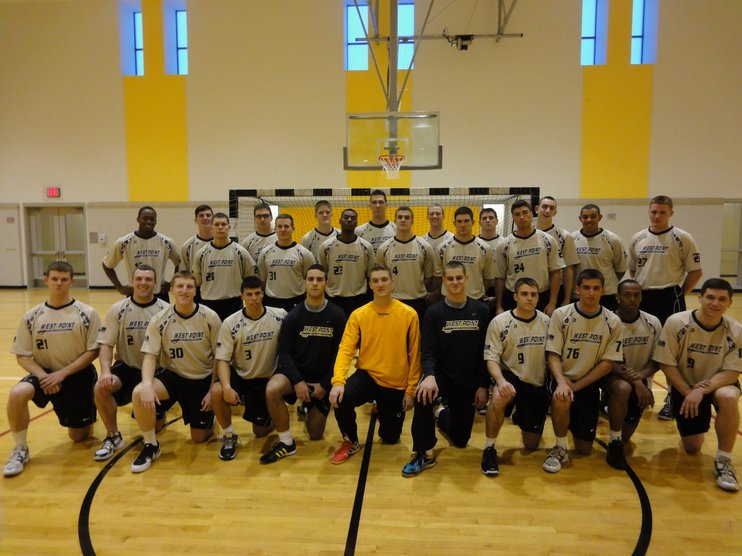
West Point (pictured) and the Air Force Academy have several graduates in the USA National Team player pool. Is it too high of a percentage?

Anyone who follows USA Team Handball’s excellent American’s Abroad updates has surely noticed that two groups of Americans (military members and dual citizens) are very well represented.  It’s worth reflecting upon whether this presents a problem or concern with the sports development in the U.S. Here’s my analysis on military athletes.

There has been a long tradition of athletes with military backgrounds playing on U.S. National Teams.  The 1972 Olympic team, in particular, included several army athletes that were introduced to the sport via Army sponsored training camps.  Anecdotally, I’ve even been told that making the team back then had the added incentive of avoiding a tour in Vietnam.  In terms of collegiate club programs West Point and to a lesser extent, the Air Force Academy have been the bulwark programs that have been around for years as other programs (with the exception of North Carolina) have come and gone.  So it should come as no surprise that more graduates from these schools have gone on to join the National Teams than from any other college in the nation.

I am obviously biased, but I think most non-partial observers would also agree, that the typical service academy graduate who continues to play handball is both highly dedicated and disciplined in their approach to the sport. In simple terms they are usually highly coachable and true team players.  Aside from the right attitude, their Handball skills have generally been a notch above most other collegiate programs.  In other words a service academy graduate transitioning to the National Team isn’t starting at ground zero.

I suspect that the current preponderance of military athletes in the national team player pool is due to two primary reasons.  First, as I already alluded to, it’s simply a reflection of a very thin talent base.  This is clearly evidenced by only 4 men’s universities (West Point, Air Force, N Carolina and Texas A&M) and 2 women’s universities (West Point and N. Carolina) being represented at the recent collegiate championships.  With half the schools being Service Academies and the West Point men being so dominant that they played an intrasquad scrimmage for the championship it’s no surprise that our national teams have a lot of guys with short haircuts.

The second factor, undoubtedly trending towards more military athletes is the financial support being provided by the U.S. military’s World Class Athlete Program (WCAP).  This program allows military athletes in a number of different sports the opportunity to train full time in preparation for the Olympic Games.  I’m sure USA Team Handball would prefer to have its own funding line to provide generous stipends to any promising athletes, but that’s not currently in the cards.

So, should we be concerned that we have too many guys in short haircuts? Yes, for two reasons.

1) First, it’s a stark indication that we need more colleges playing the sport in the U.S.  If all of the athletes being identified for the next level (National team competition or pro leagues) in any sport are coming from only two schools that’s an anomaly.  And such an anomaly can only be the result of either powerhouse programs gobbling up all the talent or that there just aren’t very many people playing.  West Point obviously has a top notch program, but it’s more the latter than the former.  So, it’s a problem, but it would be a problem if it was any two colleges in the U.S.  They just happen to be Service Academies in this instance.

2) The second concern, however, is legitimately tied to the unique circumstances of military athletes.  And that is what the military can giveth with WCAP it can also taketh with military service.  This is evidenced by several Army players being pulled from the program after the loss to Canada last December. Relying too heavily on military athletes can severely impact a
program and given the choice (free of WCAP incentives) I’m sure that USA Team Handball would prefer developing players with no strings attached.

Should anything be done to remedy this imbalance?

Yes, but there’s no need for a plan with the specific goal of reducing our dependency of military athletes.  Rather, it should simply be a natural reduction based on more top players being identified and developed through youth based programs and more colleges playing the sport.  As the talent pool widens it’ll become more likely that only the top couple of players from any one school in the country will be identified as National Team prospects.   And with strong traditions at schools like West Point and the AF Academy it’s probably a good bet that they will continue to provide top prospects, they just will have a smaller percentage.

So, I’ve assessed our current preponderance of military athletes on our National Teams as not a problem, but a symptom of a problem (thin talent pool).  In part two, I’ll consider whether the same is true for dual citizenship athletes.

post

EHF Game of the Week (Quarter Finals): Barcelona at Kiel (Live webstreaming with English language commentary)

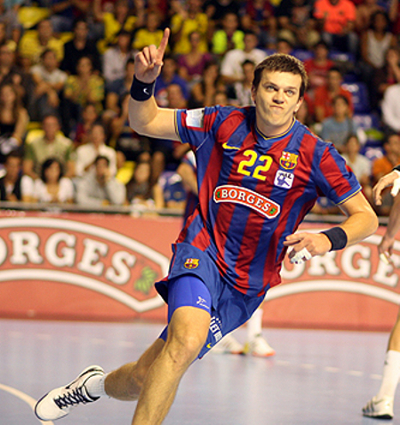
Can Siarhei Rutenka and Barcelona hold off Kiel?

Last weekend’s first leg had two great matches and two duds.  The two duds were Hamburg-Chekov and Flensburg-Ciudad Real.  Hamburg and Ciudad Real both won by 14 goals, so barring turnarounds of epic proportions those two sides will formally punch their tickets for the Final Four in Cologne this weekend.

The two great matches were Montpellier’s 29-27 victory over Rhein-Neckar in Germany and Barcelona’s 27-25 victory over Kiel in Spain.  Montpellier’s victory in Germany was a mild surprise, so they will have the luxury of a two goal cushion at home.  This, of course, means they will still advance if there’s a draw or they lose by 1 goal.  If they should lose by 3 or more Rhein-Neckar will advance and in the event of a two goal loss the tiebreaker will be away goals.  While the 2 extra goals provide comfort anyone who’s seen Rhein-Neckar play this year knows they are more than capable of a road win in France.

The other matchup, Kiel hosting Barcelona is also a 2 goal margin, but this time the away team has the cushion.  The oddsmakers think it will go down to the wire as they’ve made Kiel a 2.5 goal favorite.

ehfTV will be broadcasting each of the matches live and will have English commentary with Tom O’Brannagain for the Kiel vs. Barcelona matchup.  Subject to the availability of the ehfTV on demand stream and the demands of the Ryan family household, I plan to do an audio commentary of the Montpellier – Rhein-Neckar match.  Hopefully, I’ll be able to post it Saturday afternoon in the states. Check back at the site for updates.

Match Schedule (Handicap point spread in parentheses)

Rhein-Neckar at Montpellier at (-1.5) (ehfTV: Saturday, 30 April: 5:00 PM CET, 11:00 AM
(U.S. East Coast)

On Demand link:  http://www.ehftv.com/ec/cl/men/2010-2011/video/001619

Audio files are below
1st half commentary starts at 18:20 on ehfTV Clock
2nd half commentary starts at 66:30 on ehfTV Clock

Barcelona at Kiel (-2.5) (ehfTV: Sunday, 1 May: 6:30 PM CET, 12:30 PM (U.S. East Coast)
Live Broadcast link:  http://www.ehftv.com/ec/cl/men/2010-11/live/high/001622

On Demand Broadcast Link:  http://www.ehftv.com/ec/cl/men/2010-11/video/001622

There is also a televised tape delayed broadcast on the MHz Network in the U.S. at 4:00 PM (U.S. East Coast) on Sunday, 1 May. For information on how you can watch MHZ see this link: http://www.mhznetworks.org/mhzworldview/carriage/

Note:  Chekhov-Hamburg is on Saturday and Ciudad Real-Flensburg is on Sunday.  I  recommend only checking the score halfway through the on-demand video, on the off chance that a miracle is taking place.

Audio recording links are below. Open the on demand video in one window and then click on the podcast link. I do a countdown of the ehfTV clock in the lower left hand of the screen. Pause the audio when I start the countdown and then play the video. Then unpause the audio when you get to the appropriate time on the clock.

post

Bonus Audio Commentary (Barca vs Kiel)

Filip Jicha and Kiel take on Barcelona

ehfTV Video Link: http://www.ehftv.com/ec/cl/men/2010-11/video/001618

Barcelona hosts Kiel in the the first leg of the quarterfinals.

Audio recording links are below. Open the on demand video in one window and then click on the podcast link. I do a countdown of the ehfTV clock in the lower left hand of the screen. Pause the audio when I start the countdown and then play the video. Then unpause the audio when you get to the appropriate time on the clock.

Note: 2nd half commentary start at the 52:53 mark on the ehfTV clock.

post

EHF Game of the Week (Quarter Finals): Montpellier at Rhein-Neckar (Live webstreaming with English language commentary)

Karol Bielecki and the Rhein-Neckar Lions will host French side Montpellier

Well, while I might prefer a Super League with “Best of 5” playoffs, I certainly shouldn’t have too much to complain with the upcoming Champions League quarterfinal matches that start Thursday.  The pretenders are all gone and each of the remaining eight clubs has legitimate aspirations for advancing to the Final Four in Cologne at the end of May.

Based on the betting lines, the oddsmakers have made Ciudad Real a significant favorite over Flensburg as they are favored to win by 2.5 goals tomorrow in Germany.  In the other 3 matchups the home teams are favored to hold serve in the first leg.  Rhein-Neckar is a 2.5 goal favorite over Montpellier and Kiel is a 2 goal favorite vs. Barcelona.  Hamburg is expected to have fewer problems with Chekov and is a 5 goal favorite.  All of the home teams will be hoping to build up a goal differential
cushion as they know that a difficult return leg on the road awaits them next weekend.  Conversely, the visitors will be looking to steal a victory or at least keep it close.

ehfTV will be broadcasting each of the matches live and will have English commentary with Tom O’Brannagain for the Rhein-Neckar vs. Montpellier matchup.  Subject to the availability of the ehfTV on demand stream and the demands of the Ryan family household, I may do some bonus audio commentary of the other 3 matches.  Check back at the site for updates.

Match Schedule (Handicap point spread in parentheses)

Ciudad Real (-2.5) at Flensburg (ehfTV: Thursday, 21 April, 8:00 PM CET)
On Demand broadcast at ehfTV:  http://www.ehftv.com/ec/cl/men/2010-11/video/001615
Audio link at bottom of post

Chekhov at Hamburg (-5) (ehfTV: Saturday, 23 April, 3:45 PM CET)
On Demand broadcast at ehfTV:  http://www.ehftv.com/ec/cl/men/2010-11/video/001616
Audio link at bottom of post

Montpellier at Rhein-Neckar (-2.5) (ehfTV: Sunday, 24 April: 5:45 PM CET, 11:45 AM (U.S. East Coast) (With English language commmentary)
On Demand broadcast at ehfTV:  http://www.ehftv.com/ec/cl/men/2010-11/video/001617

There is also a televised tape delayed broadcast on the MHz Network in the U.S. at 4:00 PM (U.S. East Coast) on Sunday 24 April. For information on how you can watch MHZ see this link: http://www.mhznetworks.org/mhzworldview/carriage/

Kiel at Barcelona(-2) (ehfTV: Sunday, 24 April: 7:30 PM CET)
On Demand broadcast at ehfTV:  http://www.ehftv.com/ec/cl/men/2010-11/video/001618

EHF Preview of Quarterfinals: http://www.ehfcl.com/men/2010-11/article/13862/Last+steps+to+Cologne

Audio recording links are below. Open the on demand video in one window and then click on the podcast link. I do a countdown of the ehfTV clock in the lower left hand of the screen. Pause the audio when I start the countdown and then play the video. Then unpause the audio when you get to the appropriate time on the clock.

post

EHF Game of the Week (Quarter Finals): Bonus audio commentary (Flensburg vs Ciudad Real)

Anders Eggert and Flensburg look to upset Ciudad Real at home

Well, while I might prefer a Super League with “Best of 5” playoffs, I certainly shouldn’t have too much to complain with the upcoming Champions League quarterfinal matches that start Thursday.  The pretenders are all gone and each of the remaining eight clubs has legitimate aspirations for advancing to the Final Four in Cologne at the end of May.
Based on the betting lines, the oddsmakers have made Ciudad Real a significant favorite over Flensburg as they are favored to win by 2.5 goals tomorrow in Germany.  In the other 3 matchups the home teams are favored to hold serve in the first leg.  Rhein-Neckar is a 2.5 goal favorite over Montpellier and Kiel is a 2 goal favorite vs. Barcelona.  Hamburg is expected to have fewer problems with Chekov and is a 5 goal favorite.  All of the home teams will be hoping to build up a goal differential
cushion as they know that a difficult return leg on the road awaits them next weekend.  Conversely, the visitors will be looking to steal a victory or at least keep it close.
ehfTV will be broadcasting each of the matches live and will have English commentary with Tom O’Brannagain for the Rhein-Neckar vs. Montpellier matchup.  Subject to the availability of the ehfTV on demand stream and the demands of the Ryan  family household, I may do some bonus audio commentary of the other 3 matches.  Check back at the site for updates.
Match Schedule (Handicap point spread in parentheses)
Ciudad Real (-2.5) at Flensburg (ehfTV: Thursday, 21 April,8:00 PM CET)
On Demand broadcast at ehfTV:  http://www.ehftv.com/ec/cl/men/2010-11/video/001615
See bottom of post of for audio commentary
Chekhov at Hamburg (-5) (ehfTV: Saturday, 23 April, 3:45 PM CET)
On Demand broadcast at ehfTV:  http://www.ehftv.com/ec/cl/men/2010-11/video/001616
Montpellier at Rhein-Neckar (-2.5) (ehfTV: Sunday, 24 April: 5:45 PM CET, 11:45 AM (U.S. East Coast) (With English language commmentary)
Live Broadcast link:  http://www.ehftv.com/ec/cl/men/2010-11/live/high/001617
On Demand broadcast at ehfTV:  http://www.ehftv.com/ec/cl/men/2010-11/video/001617
There is also a televised tape delayed broadcast on the MHz Network in the U.S. at 4:00 PM (U.S. East Coast) on Sunday 24 April. For information on how you can watch MHZ see this link: http://www.mhznetworks.org/mhzworldview/carriage/
Kiel at Barcelona(-2) (ehfTV: Sunday, 24 April: 7:30 PM CET)
On Demand broadcast at ehfTV:  http://www.ehftv.com/ec/cl/men/2010-11/video/001618

Audio recording links are below. Open the on demand video in one window and then click on the podcast link. I do a countdown of the ehfTV clock in the lower left hand of the screen. Pause the audio when I start the countdown and then play the video. Then unpause the audio when you get to the appropriate time on the clock.

post

Time for a True European Super League (Part 2): League Structure

In Part 1 of this series I highlighted the interesting dichotomy between the capitalistic league structures and socialistic government systems in Europe and why it might not be so outrageous to contemplate a European Super League. In this part, I provide an overview of just what such a league might look like.

Arguably, this is the best time of the year for fans of club handball. The National League races are nearing the final stretch and the Champions League has been whittled down to 8 of Europe’s best clubs. The home and away Quarterfinals and Final Four are sure to be a treat for Handball fans everywhere. That being said this very committed Handball fan is going to spend the next couple of months flipping back and forth between the NBA playoffs and the HBL/Champions League, wondering all the while, why can’t the Euros get their act together and create a “Super League.”

I’m not the first fan or executive to ponder this very question, but I think it’s worth pointing out that the term “Super League” is a grandiose term that means different things to different people. For Europeans, I’ve found that it usually means simply modifying/improving the existing European Champions League structure. Some want to have fewer participating clubs to weed out the weaker teams. Others want to add more games or change the playoff structure.

Simply tweaking the Champions League structure, however, will not solve the inherent problems with European Handball. I’ve written about this before (What’s wrong with European club handball?: Part 1 and Part 2), but the cliff notes version is that there are too many leagues with clubs haphazardly located in less than ideal locales.  This inefficient organizational structure, kind of, sort of, works for European soccer, but only because soccer is so popular in Europe that any crazy system will suffice.  But, for a less popular sports like handball inefficiency is a luxury that results in a substandard product that has European kids staying up until 3:00 AM to watch NBA games. No, real change will require scrapping the current structures (both Champions and National Leagues) entirely and replacing those structures with an American style league eventually reaching from the Atlantic to the Urals, and from Oslo to Cairo.  Anything less is merely applying band-aids to a broken leg.

There’s a lot of ways to skin the cat so to speak, but if I were king here’s how I’d do it.

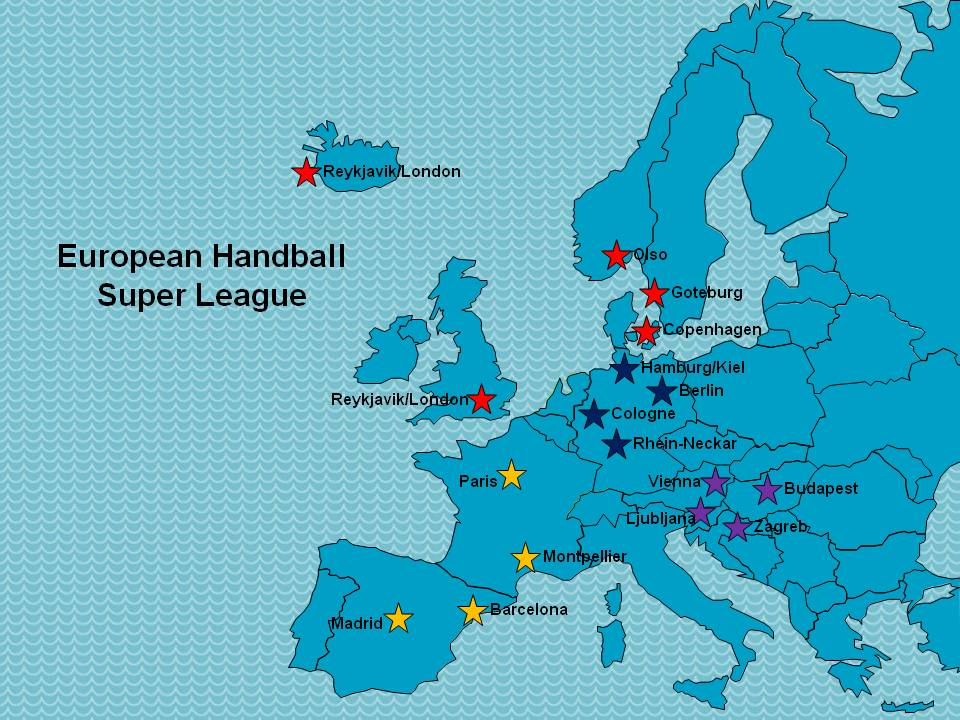
The Franchises:

Western Conference

Southwest Division

– Madrid
– Barcelona
– Montpellier
– Paris

Northwest Division
– London/Reykjavik
– Oslo
– Goteborg
– Copenhagen

Eastern Conference

Northeast Division
– Hamburg/Kiel
– Cologne
– Berlin
– Rhein Neckar

Southeast Division
– Vienna
– Budapest
– Ljubljana
– Zagreb

How did I choose these locales? The following factors were considered:

1) Market size: Franchises for the most part should be located in major metropolitan areas.  Large cities mean more fans for arenas and more importantly, bigger regional markets for TV purposes. Also, two franchises shouldn’t be located too close to each other.

2) Tradition: Franchises should usually be located in regions that already have a significant number of Handball fans.

3) Growth opportunity: Some franchises should be located in select areas with strong potential for growth

Admittedly, this is only a top level assessment and you could poke holes in the selection of several of these locales. For example, Montpellier might not be in a big enough market. How can you snub clubs like Flensburg and Ciudad Real? (too small of market)  Kiel and Hamburg will never share a market? (sorry, traditionalists, the cities are too close to each other)  Can London and Reykjavik share a franchise? Does the growth opportunity of a London franchise offset the lack of Handball tradition there? And on and on. Still, I would argue this is a pretty good starting point for discussion.

Franchise location is simple on paper, but much more complicated in reality.  And, of course, no matter how you would slice and dice such a league plenty of folks will be upset that they weren’t invited to the party.  Exclusivity, however, will be needed to ensure that the product is of top quality.  And if everyone is invited to the party, we’ll be right back where we started.

Scheduling

The Regular Season: Each club would play 40 matches with the following breakdown:

– 4 matches each against division rivals (4×3=12)
– 3 matches each against clubs in the other division of their conference (3×4=12)
– 2 matches each against clubs in the other conference (2×8=16)

Most weeks would have 2 regular season matches played either on a Friday/Sunday or Thursday/Saturday schedule. Occasional matches would also be played on Monday, Tuesday or Wednesday for TV purposes. Each team would be “partnered” with another team in their division to minimize travel costs. For instance, Barcelona and Madrid would host Budapest and Prague on the same weekend. On Thursday, Budapest would play Barcelona and Prague would play Madrid. On Saturday they would swap opponents. As the two opponents are nearby travel costs would be minimized. The regular season would run from September to March

The Playoffs: The top 2 teams in each Division would advance to the postseason. In the first round the 1st place teams would play the 2nd place teams from the other division in their conference.  The second round would be the Conference Championship and the Final Round would pit the winners of each Conference. I would have each series be played as a best of five game series. The format would be 2 games at home, 2 games away, 1 game home, with the “home” team being the team with the better regular season record. The Playoffs would run from March to May.

National Leagues and National Cups: Super League Clubs would not participate in either National Leagues or National Cups.  The schedule won’t allow for it and the clubs in the Super League should be far and away more superior so no one should want
to see those matches anyway.

National Team Competitions: There has always been some level of conflict between clubs and national teams in regards to player availability. Currently, National Federations have the upper hand as the World and European Championships are generally regarding as the marquee events. The creation of a true super league, however, would dramatically tip the scales
towards the clubs as fans would fairly quickly figure out that Super League competition is a better product. Don’t get me wrong, National team competitions can be compelling, but let’s recognize them for what they are: They are all-star tournaments crammed with too many games in too few days.  Even more bizarrely, they take place in the middle of the club season and are essentially a charitable transfer of assets from the clubs to the IHF, EHF and the National Federations.  A true Super League won’t stand for this and will flex its muscles like the NBA walks all over FIBA.  In my world, there would still be European and
World Championships, but those tournaments would be moved to the summer.  Players would certainly be free to participate in these events, but much like basketball, veteran top players would often opt out of participating. Only the Olympics and
to a lesser extent the World Championship would continue to receive high levels of participation by the top players.

So, I’ve now provided a top level overview of what a true Super League would look like, but, I’ve only touched upon some of the sacred cows that would be thrown to side of the road.  I know European traditionalists are already pooh-poohing the mere thought of the Champions League going away and National Team competitions becoming only a passing interest. In part 3, I’ll take on the usual arguments from the traditionalists who think they are happy with the wonderful way things are currently organized.

post

Handball Competition Manager, Alex Gavrilovic, on 2012 Olympics Preparation

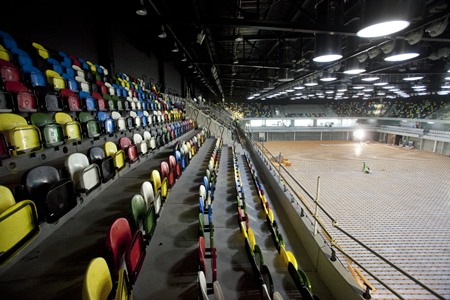
Construction for London 2012's Handball Arena is nearing completion

British Handball has an interview with Handball Competition Manager, Alex Gavrilovic, concerning preparations for the 2012 Olympics in London.

London 2012: Excitement Mounts for Handball Manager: http://fastbreak-handballnews.blogspot.com/2011/04/london-2012-excitement-mounts-for.html

In the interview it’s noted that construction on the Handball venue is nearing completion and that there will be a 6 team international tournament there later this year in November.  Alex, also optimistically notes that he thinks there is a real chance for Great Britain to make significant inroads into become a stronger handball nation.

For more background on the 2012 Handball Competition Manager check out this interview that Christer Ahl had with him a year and a half ago.

THN (Nov/Dec 2009): Alex Gavrilovic: a true fighter for the global progress of handball

Part 1: https://teamhandballnews.com/2009/11/alex-gavrilovic-a-true-fighter-for-the-global-progress-of-handball-part-1/

Part 2: https://teamhandballnews.com/2009/12/alex-gavrilovic-a-true-fighter-for-the-global-progress-of-handball-part-2-of-3/

Part 3: https://teamhandballnews.com/2009/12/alex-gavrilovic-a-true-fighter-for-the-global-progress-of-handball-part-3/

post

EHF Handball Champions League Webstreaming: Barcelona at Veszprem (Bonus English language commentary)

Can Laszlo Nagy and Barca withstand a Veszprem comeback?

After watching a remarkable first half between Barcelona and Veszprem earlier today, I decided to record an audio commentary for the second half.  In the first leg, Barca beat Veszprem 28-21 in Spain.  The second leg started out well for Veszprem, though on their home court.

My audio coverage picks up in the second half, with the ehfTV clock reading 49:00.  I ran into some technical difficulties, so a second download starts at the 61:00 minute mark.

On Demand broadcast at ehfTV: http://www.ehftv.com/ec/cl/men/2010-11/video/001560

Audio recording links are below. Open the on demand video in one window and then click on the podcast link. I do a countdown of the ehfTV clock in the lower left hand of the screen. Pause the audio when I start the countdown and then play the video. Then unpause the audio when you get to the appropriate time on the clock.

post

EHF Game of the Week (Round of 16, Leg 2) Hamburg at Valladolid

Hamburg's Blazenko Lackovic and his teammates have a 6 goal cushion heading into the 2nd Leg vs Valladolid

The Round of 16 concludes this weekend and based on the first leg results I’ve grouped the games into 3 categories.  Handicaps (point spreads) for the matches are in parentheses.

1) All over, but for the crying

Sarajevo at Chekhov (-10.5)   (Chekhov won first leg, 31-22) (ehfTV, Thursday, 6:00 PM CET)
Kolding at Kiel (-9.5) (Kiel won first leg, 36-29) (Saturday)
Chambery at Ciudad Real (-8.5) (Ciudad Real won first leg, 27-24) (Saturday)

Sarajevo and Kolding lost handedly at home.  If either side overcomes these huge deficits from the first leg it would be an upset of epic proportions.  Chambery kept the score respectable in France, but beating Ciudad Real in Spain by 4 goals is too much to ask.

2) Victory on the road is feasible, but not likely

Zagreb at R-N L (-3.5) (R-N L won first leg, 31-28) (ehfTV, Thursday, 7:00 PM CET)
Szeged at Flensburg (-4.5) (Flensburg won first leg, 27-26) (ehfTV, Sunday, 7:30 PM CET)

 Zagreb and Szeged lost close matches at home so it’s conceivable that these sides could return the favor with victories in Germany.  Szeged is the more likely of the two to pull off the upset as they just lost by 1 in Hungary.

3) Definitely worth watching; Can these home teams overcome big deficits?

Barcelona at Veszprem (-2.5) (Barcelona won first leg, 28-21) (ehfTV, Saturday, 4:15 PM CET)
Schaffhausen at Montpellier (-7.5) (Schaffhausen won first leg, 31-26) (Sunday)
Hamburg at Valladolid (-1.5) Hamburg won first leg (28-22) (ehfTV, Sunday, 6:00 PM CET)

These 3 matches will likely prove to be the most interesting because even though the deficits are substantial the home teams will have their fans behind them.  Veszprem and Barcelona will play a repeat of last year’s quarterfinal.  A year ago Veszprem need a 6 goal turnaround, but could only muster a one goal victory.  Due to injuries, Montpellier looked all out of sorts with a makeshift backcourt that had winger Michael Guigou playing left back at times.  If Accambray is back it should be an easy victory.  If not, the world’s best player, Nikola Karabatic, will need to step forward and prove it. 

The EHF match of the week, live and with English language commentary, pits Hamburg and Valladolid.  Valladolid led the first leg 15-11 at halftime, but could only muster 7 goals in the second half and let Hamburg tag on some extra goals in the closing minutes.  Still that first half performance in Germany should give them some hope that they can do something similar at home.

The match is at 6:00 PM (Central European Time), 12:00 Noon (U.S. East Coast) on Sunday, 3 April. 

Live Broadcast link:  http://www.ehftv.com/ec/cl/men/2010-11/live/high/001563

On Demand broadcast at ehfTV:  http://www.ehftv.com/ec/cl/men/2010-11/video/001563

There is also a televised tape delayed broadcast on the MHz Network in the U.S. at 4:00 PM (U.S. East Coast) on Sunday 3 April. For information on how you can watch MHZ see this link: http://www.mhznetworks.org/mhzworldview/carriage/

(Note:  The Champions League knock out phases involves paired teams playing a home and away, 2 game series with the overall aggregate goal differential deciding who advances.  If the aggregate goal difference is 0, the next tie breaker is away goals scored.)