ESPN Broadcasting Handball in the U.S. Our handball world is about to change.
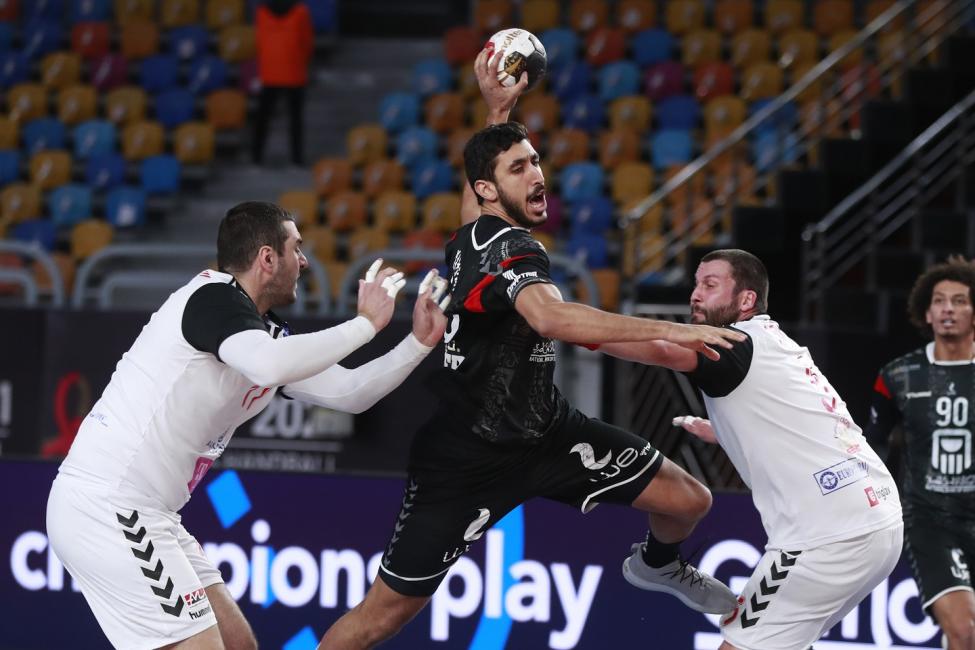
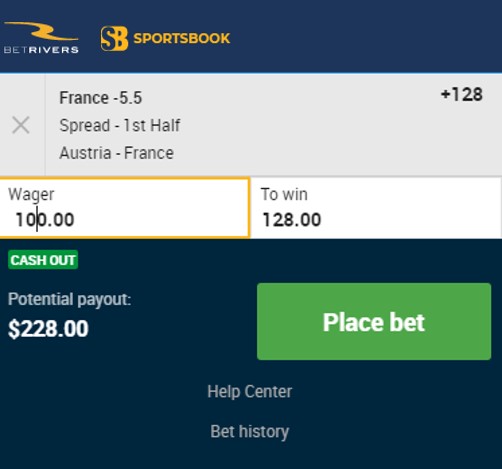
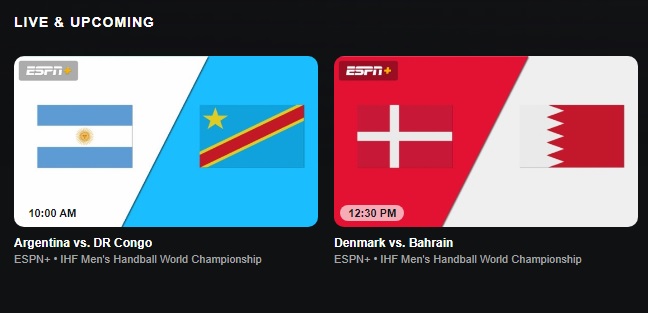
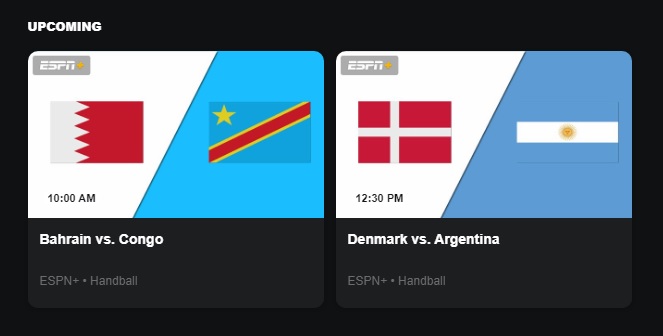
Yesterday, USA Team Handball announced that 31 matches of the upcoming IHF Handball World Championships will be broadcast on ESPN+, ESPN’s streaming platform. Pretty big news… Right? Actually, no, it’s not just “big” news.
In fact, It it the biggest and most important development in the entire history of team handball in the United States.
Long time readers of this website shouldn’t be surprised by my hyperbolic statement as I’ve been saying this in one way or another for years. Why friends will know that I’ve been espousing the critical need for more handball on TV since the late 1980s.
Most prominently, I’ve stated the following prediction several times: If handball were to be broadcast on a regular basis on a network like ESPN, virtually every statement discussing handball’s progress in the U.S. from that point forward would start with these words:
“Well, after handball started being shown on ESPN…”
Pick how you want to finish the sentence. Here are some possibilities:
Collegiate handball really took off with an expansion to several hundred clubs
Youth programs expanded in several cities feeding the collegiate programs
USA Team Handball had year on year membership growth of xx%; Along with accompanying increases in website visits and social media engagement
Merchandise sales of professional handball clubs in Europe gradually increased as more Americans became fans of the game
The quality of stateside play improved dramatically
The level of stateside talent making our national teams starting improving
One Marketing Objective Above All Others
As I highlighted in this commentary from last year getting more handball on TV more trumps all other marketing objectives for the sport… because it’s a true force multiplier that greatly improves the likelihood of better results in all other areas.
So after many years of frustration why are we finally celebrating such big news? As with many great successes it’s the result of a combination of things.
Better European Engagement: For starters the Europeans and the IHF have finally recognized the need for an American market and are starting to put some resources in place to make it happen. The handball world can bemoan the granting of a wild card to a USA team, but actual USA participation in the WC made it a more attractive TV product to ESPN.
Education on Finding the Right Network: Over time, through a variety of means, the key handball content owners now fully understand that not “just any ol’ network” will do for the U.S. market.
Better engagement from USA Team Handball: While I would have liked to have seen action sooner, I’ll just say I’m real pleased that it’s now taken place. Hats off to new CEO, Ryan Johnson, for helping to facilitate the finalization of this deal. In his first week on the job, no less.
Luck: Behind the scenes some connections were made that facilitated making this deal happen. And, most importantly, that good fortune was capitalized upon.
The Great Experiment Begins
So, will my prediction come true? Will every statement about handball in American now begin with a qualifier about whether is was before or after ESPN started broadcasting the sport?
Time will tell, but I’ve never ever been more optimistic about the future of the sport in this country.
Previous Articles/Commentary about Getting More Handball on TV in the U.S.
Why weren’t the U.S. National Teams at the London Olympics?:
Sep 2012: Part 5: A lack of awareness and marketing: One in a million? The 312 real fans of Team Handball in the U.S.: Link
Oct 2012: Part 6: A lack of awareness and marketing: The Catch 22 TV paradox: Link
Dec 2012: Part 7: A lack of awareness and marketing: The historic lack of European support: Link
Dec 2012: Part 8: A lack of awareness and marketing: Europe sees the light, but can’t quite figure out how to properly invade the U.S. market: Link
Dec 2015: 20 Team Handball Matches have been Broadcast the Past 2 Weeks on a U.S. TV Network: Few Know, Fewer Watch and No One Seems to Care: Link
Aug 2016: The Olympics are Over. Thanks for Watching. See you in 2020. How about Sooner?: Link
Feb 2020: ESPN Missed out on the English Premier League: Will they Miss the Boat for Handball Too?: Link
Everybody loves ehfTV… Just like Team USA this weekend you can check out preliminary group opponents France and Austria.
More 2022 European Championship qualification matches scheduled for ehfTV this weekend. Plus, quite a few Women’s club matches as well.
2022 European Handball Championships Qualification Wikipedia page: Link
All matches are at ehfTV All times are CET (CET is 6 hrs ahead of US ET) Odds courtesy of Bet MGM
Friday, 8 January
1815 CET Norway (-6.5) vs Belarus (Don’t be fooled by this betting line. Norway’s emergency squad lost to Belarus. 33-25 earlier in the week, but now Belarus isn’t sending the first team to Norway for the 2nd match.
Saturday, 9 January
1800 CET Spain (-1.5) vs Croatia (Unfortunately, postponed) 1900 CET France (-6.5) vs Serbia (I’m thinking there’s a Team USA watch party in Denmark for this one) 2000 CET Poland (-6.5) vs Turkey
Sunday, 10 January
1410 CET Latvia (-1.5) vs Italy 1700 CET Iceland (-1.5) vs Portugal 1810 CET Germany (-7.5) vs Austria (I’m thinking there’s a Team USA watch party in Denmark for this one) 2000 CET Bosnia & Hercegovina (-5.5) vs Estonia 2000 CET Slovenia (-8.5) vs Netherlands
American Athletes in Action
The U.S. Men’s National Team is in Denmark and will be playing friendlies vs Danish club teams. If any of these matches are available for viewing I will post web streaming links here.
Is the U.S. winless in World Handball Championship Competition? Maybe. It depends if you want to count B World Championships.
Next week the USA Men’s National Team will take part in the IHF Men’s Handball World Championship. It’s been 20 years since the U.S. last appeared in a Sr World’s Championships and the questions that keep cropping up are:
How well did the U.S. do in previous World Championships?
What’s the U.S. record in previous World Championships?
The short answer to the first question is “not very well,” but, the long answer is a bit more complicated due to the changes in the qualification paths, the number of participants and the competition formats the IHF has implemented since the first indoor championship was held in 1938. And, the answer to the second question is open for debate depending on what you count as a World Championship. The discussion below should help explain why answering these questions aren’t as simple as you might think they would be.
Changes in Qualification Paths (A, B and C World Championships)
Notwithstanding the complications COVID has caused with qualification for the 2021 World Championships, qualification for the World Championships is now fairly straight forward. Various continental federations are awarded a number of slots and continental championships are held to determine which nations will qualify for the final tournament.
But, this was not always the case. In fact, from 1976 to 1992 the IHF organized 3 separate World Championships designated as A, B and C World Championships. As you might assume the A Championship was for the top teams and the B and C Championships featured lower level teams. And, much like a European league there was relegation and promotion between the different championships. If one looks back at the nations participating in these various tournaments it’s not entirely clear how nations qualified for the different tournaments. The C World Championships just featured European teams and the same was true with the B World Championships until 1985 when nations from other parts of the world were added.
Presumably, the idea was to give nations like the U.S. an opportunity to get some quality competition on the world stage since only one nation from Pan America qualified for the A Championships. As you might expect the competition in B tournaments was a bit easier and this is reflected with the 6-0-14 record the U.S. compiled with its 3 participations in 1985, 1987 and 1992. Certainly better than the 0-0-25 goose eggs the U.S. has for its six A World Championship appearances.
Changes in the Nations Participating
It also should be noted that the number of participating nations has grown over the years. From 1964 to 1993, A World Championships featured 16 teams. From 1993 to 2019 the field consisted of 24 teams. And, 2021 will be the first time 32 teams will participate. In general, the fewer teams that participate in a World Championships, the stronger the overall field is.
Making the 16 team tournaments even more challenging was the inclusion of just one team from Africa, Asia and the Americas. It’s no real surprise that the U.S. failed to get a win in 1964, 1970, 1974 and 1993 against the European teams playing in these tournaments. I am a little surprised, however, that the U.S. couldn’t get a win vs an Asian side during these tournaments.
When the tournament was expanded to 24 teams that also should have given the U.S. a win or two, particularly at the 1995 WC just a year prior to the 96 Olympics where the U.S. picked up 2 wins and was fairly competitive against the European teams. Not sure what happened there… Although I did find out recently that Darrick Heath did not participate due to a contractual commitment with his club that precluded his fully participating in a National Team training camp. The 2001 WC was simply an overmatched team and they were undoubtedly the weakest team in that 24 team field.
Changes in Format
The final reason the U.S. hasn’t picked off a win at a World Championship yet is that with the exception of the 1993 tournament they’ve never played in a consolation or President’s Cup round. With the President’s Cup there are multiple matches against other teams that fail to make the Main Round and only the last place team goes home without a win. I could be wrong, but I don’t think the U.S. was the very worst team at every tournament they played in. If the President’s Cup format had been in place the U.S. in some of the earlier tournaments the U.S. would have picked off a win somewhere.
Should the B World Championship Matches Count?
Well, there are a couple of ways to look at this. One way is to go with the semantics of if you’re going to call something a “World Championship” then a win there counts. The counter to that argument is the “B” classification in front of it… As in, sorry, you’re not playing with the big boys, therefore it doesn’t count.
I tend to side with the latter argument. Yes, those B World Championships weren’t as weak as the “B” designation would seem to make it, but they were still “the little kid’s table” at Thanksgiving.
That’s not to say that those wins at the B World Championships are meaningless. On the contrary, they are documented proof that U.S. teams back in the 80s and 90s had a measure of respectability. We were clearly better than 3rd tier European sides, could beat 2nd tier European teams, and on a good day give the top teams in the world a bit of a scare. If one looks at the score lines at the 1985 B World Championships the U.S. was competitive in every match. Even played the 2nd half to a draw with the eventual tournament winner, E Germany.
These results suggest that the 85 B WC was the best ever U.S. performance and that the 1995 WC was the best “A” World Championship performance.
As one looks ahead to the 2021 campaign, one can hope for a similar distinction: A measure of respectability against the really good teams and hopefully a couple of wins in the President’s Cup against similar sides trying to prove themselves. And, probably most importantly, real signs of promise as to even better performances at future World Championships leading up to the 2028 Olympics.
Every World Championship Match the U.S. Has Played in
Here’s a compilation of every World Championship the U.S. has participated in and the score from every match played.
IHF Competition Archive: Link (PDF with all competitions through 2009)
1963 Men’s Outdoor Field Handball World Championship (Switzerland)
The IHF staged one more Outdoor Field Handball World Championship in 1966 and then discontinued the tournament. The 1963 Championship was the only outdoor world championship that the U.S. particiated in.
1964 Men’s Handball World Championship (Czechoslovakia)
Euro 2022 Qualification matches available for viewing on ehfTV this week.
There’s not much happening on the club level this week, but there is a plethora of national team competition taking place. Normally, these matches would all be friendlies in preparation for the World Championships, but thanks to COVID-19 related postponements there are ten 2022 European Championship qualification matches scheduled for ehfTV this week with 7 more on tap this weekend.
2022 European Handball Championships Qualification Wikipedia page: Link
All matches are at ehfTV All times are CET (CET is 6 hrs ahead of US ET) Odds courtesy of Bet MGM
Tuesday, 5 January
1530 CET Belarus (-1.5) vs Norway (Don’t be fooled by this betting line. Due to COVID, Norway has sent the 2nd/3rd team to Belarus while the 1st team preps for the WC) 1700 CET Serbia vs France (-5.5) 1715 CET Croatia vs Spain (Slight Favorite)
Wednesday, 6 January
1345 CET Austria vs Germany (-4.5) (I’m thinking there’s a Team USA watch party in Denmark for this one) 1700 CET Turkey vs Poland (-2.5) 1815 CET Netherlands vs Slovenia(-3.5) 1830 CET Estonia vs Bosnia & Hercegovina (-3.5) 2030 CET Portugal (-2.5) vs Iceland
Thursday, 7 January
2030 CET Italy vs Latvia (-2.5)
American Athletes in Action
The U.S. Men’s National Team is in Denmark and will be playing friendlies vs Danish club teams. If any of these matches are available for viewing I will post web streaming links here.
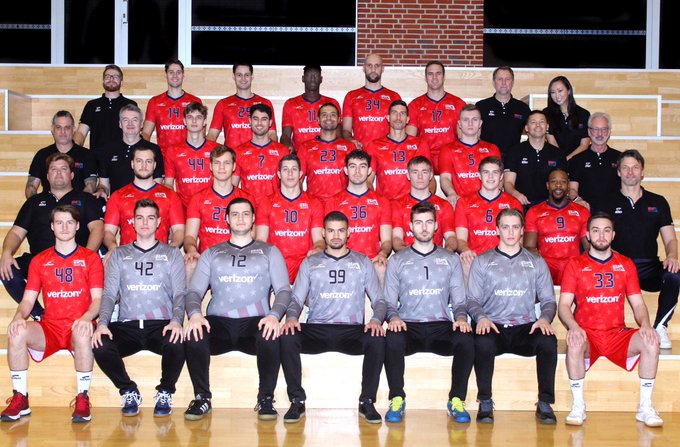
The Hueter brothers (Ian (center bottom) and (Patrick (left corner) are key members of the USA Men’s National Team.
There’s a long line of handball brothers playing for their country in international handball competition. France’s Bertrand and Guillaume Gille, Spain’s Alex and Daniel Dujshebaev, Poland’s Krzysztof and Marcin Lijewski, Argentina’s Diego, Pablo and Sebastian Simonet and Chile’s Emil, Erwin and Harald Feuchtmann to name a few. Why, even the U.S. had the Fitzgerald brothers (Joe and Tom) representing at the 1996 Olympics. Now added to this long line are Team USA’s Hueter brothers, Ian and Patrick.
Ian and Patrick join the podcast to discuss several topics to include their handball origins, connections to the U.S. despite mostly growing up in Germany, playing for TSV Bayer Dormagen youth teams and transitioning to the pro club, playing in the super competitive HBL 2, their recent contract extensions with Dormagen, Team USA’s upcoming training camp in Denmark and, of course, the upcoming 2021 World Championships.
Lois Abbingh and Martine Smeets are all smiles after back to back empty net goals give the Netherlands a 6 goal lead over Serbia with 17 minutes left in the match. Yet again, the stupid, desperation 7v6 strategy is failing miserably…
We’ve all seen it… We’ve all thrown objects at the TV… We’ve all cursed at the stupid coach when yet another ball is casually thrown into the empty net. The 7v6 strategy is a hopeless strategy and it never works… Except when it does.
Down 6 at the Half and Running out of Options
Lost in the midst of Croatia’s incredible run of surprising wins at the 2020 Women’s European Championship was arguably the most remarkable upset of the entire tournament: Serbia’s come from behind 29-25 defeat of the Netherlands in the preliminary round.
The match surely didn’t look like an upset for the first 43 minutes of the game. At halftime the defending World Champions, the Netherlands, had a commanding 15-9 lead and to make matters worse for Serbia they had lost their star player, Andrea Lekić, to injury. Without any obvious solutions, Serbian coach, Ljubomir Obradovic, decided to switch things up dramatically at halftime, choosing to employ the 7v6 offensive strategy. This tactic involves pulling your GK on offense and replacing them with an extra player on offense. This is called 7v6 since the offensive set has 7 offensive court players playing against 6 defensive court players.
7v6 Pros and Cons
The one obvious advantage to this strategy is that, in theory, one offensive player is always open and unguarded by the defense. The other less obvious advantage is that the extra circle runner generally forces defenses to hug the 6 meter line more closely, thus opening up more jump shot possibilities.
The obvious drawback to this strategy is the open net at the other end of the court. If you turn the ball over chances are the defense is going to get an easy goal. The same is true if the GK makes a clean save and retrieves the ball quickly, or worse, catches it. Perhaps nothing demonstrates this more ably than this video compilation that the (Un)informed Handball hour put together to highlight Croatia’s use of the strategy against Brazil at the 2019 Men’s World Championship. The six empty net goals were certainly a huge factor in Brazil’s 29-26 upset win.
The First 11 Minutes of the 2nd Half: Decent Results, but Simply Trading Goals
The first 11 minutes of the 2nd half: Trading Goals
Serbia – Netherlands Match Video: Link (The 2nd half starts 1:03:27 on the ehfTV clock.)
For the first 11 minutes of the 2nd half the strategy works fairly well. Serbia has 9 possessions using the 7v6 strategy and they score on 5 of them. And, the Netherlands also fails to cash in on two empty net opportunities with GK Tess Wester whiffing on a long shot and Dannick Snelder getting blocked on a fast throw off shot after a made goal, by a just in time return by Serbian GK, Jovana Risovic. At the 38:42 minute mark the score is 20-14 with both teams have scored 5 goals a piece. The Netherlands then gets a 2 minute penalty and Serbia scores 2 goals when playing 6v5, cutting the lead to 20-16.
A Huge Setback: Back to Back Empty Net Goals
Disaster Strikes
With the lead cut to four goals Serbia seemed to be showing some signs of life, but then at the 41:36 minute mark everything seemingly falls apart. On back to back possessions Serbia turns the ball over to the Netherlands for 2 open net goals. In less than a minute the score is 22-16 and the game is right back where it was at the start of the 2nd half, a 6 goal deficit.
There aren’t too many things more demoralizing to a team than a string of empty net goals in quick succession. It’s one thing to give up a goal after playing tough defense for 40 seconds. It’s another thing entirely to watch the other team effortlessly score against literally no defense whatsoever. On more than one occasion I’ve seen obviously demoralized players hanging their head, or worse, glaring with not very well concealed anger toward their coach and the stupid 7v6 strategy the coach is making them play.
We don’t see anything like that, however, from Serbia in the video feed. Instead, we see the Netherlands team with all smiles. The defending World Champions have weathered the storm. They’ve got a 6 goal lead and things are seemingly looking good for them in their opening match of the tournament.
Cue Tchaikovsky’s 1812 Overture: Time for a 7 Goal Barrage from Serbia
Relentless Execution: 7 straight goals in 6 minutes
But, as we all know in handball, “seemingly” is often replaced with “reality.” And, the reality that happens in just 6 minutes is a combination of great defense at one end combined with a textbook, masterclass in how to execute the 7v6 tactic at the other end. 7 offensive possessions for 7 straight goals and a 22-16 deficit turns into a 23-22 lead. One of the goals is on a fast break, but the other 6 are all scored using the 7v6 offensive strategy. And, the shots come from all over the place. Wing shots, breakthroughs and jump shots now coming from a bit shorter range thanks to the strategy.
Why, if I had better video editing skills I would make a video like the (Un)informed Handball Hour did, but this time I would replace the Dating Game theme with the 1812 overture with each of the 7 goals being synchronized with the cymbal clashes.
Seriously, it’s a rapid and relentless beatdown worth reviewing. For the full effect, start by first watching the Netherlands score their two fast break goals (1:17:15 on the ehfTV clock)
Continued Execution, but at a Less Efficient Pace
Continued success, albeit at a less successful rate.
The remaining 11 minutes offer more of the same, but the success rate drops from perfect to just pretty good. Serbia just scores on 5 of its 8 remaining 7v6 possessions. They also turn the ball over a couple of times with one of those turnovers leading to an empty goal for the Netherlands. Serbia’s defense also allows a couple of more goals for a final score of 29-25.
Keys to Success
Here are a couple of summaries of the 2nd half. First, a look at Serbia’s offensive possessions.
Key 1: High offensive efficiency: 16 of Serbia’s 26 7v6 possessions resulted in a goal, a success rate of 62%. That’s pretty good and certainly better than the 9 for 28 (32%) success rate in the first half. I’d have to do more research on Serbia’s average over several matches, but I think it’s safe to say that 2nd half performance was well above average.
Key 2: GK Readiness: Perhaps, just as important if not more important was Serbia’s GK readiness following 7v6 possession. Of the 26 7v6 possessions their GK was read in the net on 20 of those possessions. And, the Netherlands was only able to cash in with goals on just 3 of the 6 possessions when the GK was either late or not in the goal at all.
The Real Key (scoring instead of turnovers): However, it should be noted there is a huge correlation between 7v6 offensive success (scoring a goal) and GK readiness. And, of course, there is a huge correlation with turnovers and GKs not being ready on the other end.
An Outlier?
Well, clearly this match is documented proof that the 7v6 strategy can be very, very effective. But, is it simply an outlier amongst an overwhelming number of failures like the Brazil-Croatia match? I wish I knew the answer to that question, but I don’t. To varying degrees I’ve seen this strategy work before. In fact, back in 2016, I saw Belgium almost pull off a similar upset against France. At the time, I chalked this up to an unprepared French team that didn’t know how to counteract this new fangled strategy. Four years later, no such excuse can be valid anymore.
Anecdotally, I can assess that this strategy fails more often it works. But, I don’t have the hard data to say how often it works and how often it fails. And, even if I did it would be hard to read too much into it because there are so many other factors to consider. In particular, a big part of Serbia’s comeback was their defense in the 2nd half.
But, here’s one aspect to consider: If one changes just 2 Serbia 7v6 possessions from goals to turnovers it’s likely a 4 goal swing, meaning 29-25 becomes 27-27. One always wants more goals than turnovers, but with 7v6 the impact of that ratio is even more pronounced. Perhaps one could even come up with a benchmark ratio for success if they had enough data.
Finally, regardless of what the numbers might say regarding how unlikely 7v6 was to work for Serbia, the reality is that it worked. And, it surely was more likely to have worked than a conventional strategy would have.
Translation: Sorry 7v6 haters: This strategy isn’t going away anytime soon. Not without a change to the rules, anyway.
Final Four 3rd Place and Championship (CET is 6 hours ahead of US ET)
EHF Champions League Final Four
Seven months later than planned due to the coronavirus pandemic the EHF Champions League Final Four takes center stage this Monday and Tuesday. It will be a little surreal seeing the normally sold out Laxness Arena in Cologne empty, but it will still be handball well worth watching.
How to Watch: If there is no TV contract where you live the matches will be available live on ehfTV. In the U.S and Canada the only way you can watch will be on beIN Sports XTRA, which is a free streaming service: More Info List of TV contracts by nation: Link Tom ‘Brannagáin will be providing English commentary for all 4 matches.
Odds: Barcelona, which is undefeated this season in all competitions, is a big favorite: Here are the odds for each team to win the tournament:
TSV Bayer Dormagen vs Gummersbach (-2.5) (Wednesday, 1930 CET): Link (VPN required; More info; What I use)
Ian and Patrick Hueter play for Dormagen. Dormagen is on a roll and will finish 202 with a huge challenge, taking on VFL Gummersbach which has lost only one game all season
Would you like to be informed as to when handball can be streamed online? If yes, follow Team Handball News on social media for updates like this as well as breaking alerts for unplanned opportunities like the free HBL matches that seem to pop up from time to time.
The EHF Champions League Final Four will only be on beIN Sports XTRA in the U.S. and Canada
Attention American and Canadian handball fans: If you are planning on watching the EHF Champions League Final Four this coming Monday and Tuesday (28-29 December) on ehfTV I’ve got some bad news for you:
The bane of handball fans everywhere, the dreaded geo-block, will be in force at ehftv.
The good news, however, is that the matches will be available for free on beIN Sports Xtra. beIN Sports Xtra is a free streaming service that is now available with multiple streaming channels.
How to Watch beIN Sports XTRA on Roku
To watch on your Roku, go to your home screen and look for the “Roku Channel” icon. It’s a streaming channel just like Netflix or Hulu and should be readily available. (If not, you can add it just like you would any other channel.) Click on the Roku Channel icon and then scroll down until you see “beIN Sports XTRA” icon. Click on it and the channel should start playing. It’s live so, there are commercials just like what you would see on a TV channel.
How to Watch Over The Air
The Roku channel is also available “Over the Air” on the following digital channels in these cities. Yes, many of us are used to our cable/satellite options, but in these cities you can switch your TV input to Digital and watch over the air in HD.
Another Option: VPN
I guess there’s another option. One could also use VPN to watch from another country. However, as VPN sometimes results in a less quality signal and beIN Sports XTRA is free there aren’t too many good reasons to resort to VPN. I suppose if none of the multiple methods for watching beIN Sports XTRA are available it could be an alternative. More info on VPN: Link
beIn Sports XTRA Final Four Schedule
Would you like to be informed as to when handball can be streamed online? If yes, follow Team Handball News on social media for updates like this as well as breaking alerts for unplanned opportunities like the free HBL matches that seem to pop up from time to time.
Ian Hueter and Dormagen take on Wilhelmshaven in a Boxing Day Matchup
Most of the pro leagues have shut down for the winter break, but the German Bundesliga marches on. Odds courtesy of Unibet.
American Athletes in Action
Germany HBL 2:
TV Wilhelmshaven vs TSV Bayer Dormagen (Pick em) (Saturday, 1930 CET): Link (VPN required; More info; What I use)
Ian and Patrick Hueter play for Dormagen. Dormagen had a huge win over VfL Lübeck-Schwartau on Wednesday and they have climbed the table to 4th place. Wilhelmshaven is in 12th place and 2 points will solidify their place in the standings. Dormagen has one more match to play and it’s a big one. On the 30th they will host 2nd place Gummersbach which is coached by the Icelandic legend, Guðjón Valur Sigurðsson.
Leipzig vs Flensburg (-2.5) (Sunday, 1430 CET): Link (VPN might be required; More info; What I use)
1st Place Flensburg travels to 6th place Leipzig. Flensburg needs every point to stay ahead of Kiel while Leipzig wants to move up in the standings for a shot at a European League slot for next year.
Would you like to be informed as to when handball can be streamed online? If yes, follow Team Handball News on social media for updates like this as well as breaking alerts for unplanned opportunities like the free HBL matches that seem to pop up from time to time.
The following is an English translation of an article that appears in the latest edition of the German magazine, HANDBALL Inside
The Los Angeles Project
By Erik Eggers
Because qualification was canceled due to the Coronavirus, the USA received a wildcard for the 2021 World Championships. This unexpected participation is only one step on the ambitious road to the Olympic Games in 2028.
Ian Hüter, 23, was sitting at his desk in Neuss and was completely immersed in his studies. He is working on his Bachelors Degree in International Business in Venlo. But then his WhatsApp almost knocked him off his chair: Robert Hedin, the USA head coach, in short, informed the team that they had received a wild card for the upcoming World Championships in Egypt from the IHF. “I got goose bumps when I read that,” says Hüter. “That’s really sheer madness”!
And so he will, Hueter realized, soon lead Team USA onto the court in Egypt against France, Norway and Austria. The center back for second division Bayer Dormagen has been the captain of the team for a while and his brother Patrick is also a member of the squad. “It will be fantastic, we are all just happy to be part of it “, he reports in an interview with HANDBALL inside. “We are all nuts for it, everyone can easily imagine that.”
This wildcard fuels the long-term project to bring handball in the USA up to world-class by the Olympic Games 2028 in Los Angeles and to popularize the sport on the most important market in the world (see “Utopia of handball”, Inside Handball Edition # 23) . The influx of potential candidates is increasing. “Since it has become clear that we will be at this World Championship already, a lot of players with an American passport have contacted us,” confirms national coach Hedin.
Among them were two professionals or semi-professionals from the Liga ASOBAL, the top Spanish league. “For one of the two players the World Championship won’t be happening this time, since his passport won’t be ready in time,” says Hedin. But he will invite the second player, Alexandré Chan Blanco (Dicsa Modular Cisne) to the preparatory training camp. Another will be a Hungarian pro who sent Hedin a video of himself playing against Veszprém in the Hungarian league. “I will also take a very close look at him during the camp,” says Hedin.
The criticism, especially in the Scandinavian media, that Greenland didn’t get the wild card award because the IHF has was only interested in economic goals, has little effect on the Swedish coach. “There will always be people who are dissatisfied with it,” says the European champion from 1994. The IHF simply had to make a decision after the qualifying tournaments in Mexico and Puerto Rico were cancelled.
From an athletic point of view, he cannot understand the allegations anyway. Says Hedin, “In comparison, we are no worse than Greenland.” With players like the Hüter brothers or circle runner, Domagoj Srsen, (Wilhelmshaven), we have already made progress. Circle runner, Drew Donlin, who also played in Dormagen, is meanwhile gaining valuable experience with Ademar Leon.
The national team is logistically controlled from Germany. The team manager is Andreas Hertelt, who won the European Cup in 1989 under Hotti Bredemeier with TuRu Düsseldorf (see also questions in Handball Inside Edition #29). Hertelt is looking for ways to organize the training camp originally planned in Norway. “It looks like we’ll all meet in Denmark at the beginning of January,” says Hedin, explaining the current state of affairs.
Hertelt, who lives in Krefeld, is also trying to acquire additional sponsors for the World Cup on short notice. A major sponsor has been emblazoned on the jersey since January: the American communications company Verizon. Its CEO, Hans Erik Vestberg, was once the president of the Swedish Handball Federation. In the long term, sponsor acquisition should also be easier, because the IHF Council has already decided to provide Team USA with a wildcard for the World Championships in 2025 (in Croatia, Denmark and Norway) and 2027 (in Germany) in order to help the team be more competitive at the 2028 Olympic tournament.
Also embedded in the US project is Stefan Bögel from Solingen, who used to work as a player’s agent in the Bundesliga, but now is primarily responsible for the female second division team HSV Solingen-Gräfrath. Bögl specifically coordinates the scouting of the younger age groups who are eligible for the 2028 Olympics, today’s A and B youth (ages 16-19) players. “The prospect of participating in the Olympic Games in Los Angeles is extremely tempting,” says Bögl.
PROMISING OUTLOOK
When they showed up with a US team at the Sauerland Cup in January, many young people with a U.S. passport had already approached him. Unfortunately, the coronavirus pandemic prevented further scouting. A training camp planned in Luxembourg was canceled. “A lot has been destroyed by Corona,” complains Bögl, who emphasizes that the US association does not find players with money. “We are not Qatar, which has naturalized ready-made professionals with a lot of money,” he says.
“For a long time many players even have had to pay for their own transatlantic flight tickets,” assures Bögl. Ian Hüter confirms that. Yes, that happened in his early days with the program, especially during the training camp in Alabama. “We paid for the flight to Atlanta ourselves,” he says. “But for the PANAM Games in Lima in 2019, the Federation paid all the costs.”
Even before the surprising wildcard at the beginning of November, the U.S. federation was testing some highly talented junior players. Hedin has high hopes for Luke Bolte from Tiffin, Ohio. The 20-year-old pivot, who is 1.95 meters tall, weighs over 100 kilograms and has a perfect physique for handball, made his debut during the Sauerland Cup. Bolte will also take part in the Pre-World Championships training camp, said Hedin.
Most of all, however, there is Tristan Morawski, 15, a very promising left-handed backcourt whose father played for the Polish national team and who is not shy about aiming for very big goals: “I want to become the Michael Jordan of handball,” the over two meter tall teenager announced in conversation with the Olympic Channel. Hedin says he thinks it’s good when kids set high goals for themselves. But for the World Championships in Egypt Morawski will not be able to participate. “The age limit is 16 years.” Morawski’s 13-year-old brother Kailan is also assessed as having excellent talent.
Tristan Morawski also made his debut at the Sauerland Cup in January playing for the U.S. U19 team as a 14-year-old and has been even more motivated ever since. “I want to be the best,” he says, emulating his role model, Mikkel Hansen. “I want to play in the Olympics, win gold and be an MVP.” He dreams that handball will be as popular as basketball in the US in the not too distant future. It is his goal to expose handball to a larger audience, said Morawski.
Initially, however, he will also benefit from the support program established by the Forum Club Handball (FCH) to provide handball training for talented prospects. The association of the leading European top clubs is spending a total of seven figures on this, announced its managing director, Gerd Butzeck, in this magazine two years ago. The German goalkeeper René Ingram is now with IFK Kristianstad, and the talented goalkeeper Nico Robinson moved from the upper division TuS Dotzheim to Elverum this past summer.
Circle runner, Bolte, and Morawski are to be trained at the SG Flensburg-Handewitt Academy. “I can’t even put into words how much I’m looking forward to it,” says the young left-hander. “I can hardly wait.” Exactly the same development is intended for the female talents, because the US women will also have a team at the 2028 Olympic Games in Los Angeles.
FEMALE ADVANCEMENT
The idea behind the training program is that sustainable development is only possible if the US prospects are fully immersed in the handball environment associated with a top club. It would be a mistake to rely solely on athletes like winger Gary Hines, who played for a long time in the 3rd division at HSC Bad Neustadt and now, as a 36-year-old, is finishing out his career with Bögel’s home club Solingen-Gräfrath while concentrating on his coaching education. “Gary is incredibly fit,” says Bögel about the man who has already proven his physique several times on the RTL show “Ninja Warrior Germany”. “But, of course, you can tell that he didn’t play handball in his youth.”
A strong US team for Los Angeles is one thing. “The other thing is that handball has to grow in the USA,” says Hedin. “At some point we need a league system in the United States that also generates presence in the U.S. media.” Jean Brihault, the former EHF president, who also sees opportunities in college sport, has been working towards this goal for more than two years (see Interview in Handball Inside Edition #23: Translation). Initiatives like this have, of course, taken place in the past: The successful participation of the U.S. team in the 1972 Olympic Games in Munich fizzled out, as did as the international match between Germany and Poland, which the German Horst-Dieter Esch, who was in charge of USA Team Handball at the time, played and organized in Chicago in 2010. In any case, there is a lot of work ahead for the handball developers in the USA.
In Egypt, however, as everyone involved is well aware, they will have to set their sights quite a bit lower. “I’m afraid we will get kicked in the face really hard at the World Cup,” Bögel suspects. “It’s not going to be enough for France and Norway” Hedin says and laughs out loud on the phone. We will probably end up in the Presidents Cup, in which places 25 to 32 will be determined. “Our goal is to win USA’s first World Championships game,” says Hedin. “Every game at this level is important for our development.”
Captain Ian Hüter regrets he won’t encounter injured legend Nikola Karabatic on the Giza pitch. “But there are also a lot of other great players that we will be up against, like Sander Sagosen,” he said. Above all, he is looking forward to meeting the French double world champion Kentin Mahé, who was trained like Hüter in Dormagen. “Kenny even went to the same school as me then,” says Hüter, “and as a kid I stood in the stands when he played. Of course, I looked up to him.” Perhaps in Giza there will be an opportunity to chat with his former idol about Dormagen. Or even outplay him and score a goal.
Thanks to Erik Eggers for providing a copy of the article and to Christa Ingram who assisted with its translation.
A few notes:
Luke Bolte will not be taking part in the Pre World Championship training camp mentioned in the article.
Tristan Morawski is already training at the Flensburg Academy.
Pal Merkovszki, a GK for Gyöngyösi KK is the unnamed Hungarian player.
Analysis of the USA’s 20 man roster for the World Championships: Link
For more on the Forum Club Handball’s support to USA athletes check out this podcast interview with Andreas Hertelt: Link
Istres hosts Montpellier on Youtube Channel LNH TV... Would you believe me if I said saw these two sides play each other in a neutral site match in Florida?
It’s getting closer to the winter break, but there’s still a smattering of matches this week. Odds courtesy of Bet MGM.
American Athletes in Action
Germany HBL 2:
TSV Bayer Dormagen vs VfL Lübeck-Schwartau (Wednesday, 1930 CET): Link (VPN required; More info; What I use)
TV Wilhelmshaven vs TSV Bayer Dormagen (Saturday, 1930 CET): Link (VPN required; More info; What I use)
Ian and Patrick Hueter play for Dormagen. While many of the national leagues have shut down for Christmas, that’s not the case with Germany. In fact, Dormagen has yet another game scheduled for the 30th.
Granollers (-5.5) vs Nava (Tuesday, 1900 CET) Video Link
Would you like to be informed as to when handball can be streamed online? If yes, follow Team Handball News on social media for updates like this as well as breaking alerts for unplanned opportunities like the free HBL matches that seem to pop up from time to time.
Times above are CET. The Bronze Medal Match will air at 9:30 AM (US ET) and the Gold Medal Match will air at 12:00 PM (US ET)
Sunday, 20 December(Herning, Denmark) All Times Local (CET) / US ET is -6 hrs) Odds courtesy of BetMGM
Bronze Medal Match 15:30Croatia vs Denmark (-5.5) (Live on ehfTV) (Commentary: Paul Bray)
The bronze medal match features hosts Denmark vs “just happy to be here” Croatia. Going into the tournament my one prediction was that this tournament would be unpredictable. And, I guess I was somewhat right. Croatia making the semifinals is a truly out of nowhere outcome that no one saw coming. They came back down to earth on Friday vs France and they would surely like to put on a better show today vs Denmark.
Denmark is surely smarting from the loss to Norway. A game that looked liked within their reach, but gradually slipped away. I suspect, however, that they will shake off that disappointment for a bronze medal. 5.5 goals seems about right to me, though, and I’m staying away from any wage on this match.
Gold Medal Match 18:00 France vs Norway (-2.5) (Live on ehfTV and beIN Sports Xtra: How to watch) (Commentary: Paul Bray) EHF Euro website preview: Link
Well, it took awhile for everything to sort itself out, but the 2 strongest favorites going into the tournament will indeed meet each other in Final. Norway looked unstoppable until Friday when they had to dig themselves out of a 3 goal halftime hole vs Denmark. They erased that deficit and went on to win, 27-24. Meanwhile France had no problems whatsoever in their semifinal, easily defeating Croatia, 30-19.
I like France in this match, mostly for their tough, physical defense that can cause real problems for Norway in their set offense. How good can France’s defense be when they put their mind to it? They held Croatia to 5 goals in the first half. Now, obviously, Norway has quite a bit more firepower than Croatia, but that same type of defensive effort should give France a leg up in this match. I like France (+270) to win this match outright.
Will the incredible Croatian fairy tale continue? Photo courtesy of Stregspiller. Check out their Website and Instagram Account.
Friday, 18 December(Herning, Denmark) All Times Local (CET) / US ET is -6 hrs) Odds courtesy of BetMGM
5th Place Match 15:30Russia (-1.5) vs Netherlands (Live on ehfTV) (Commentary: Paul Bray)
The big question regarding this match? Why is it even being played? The EHF is awarding 4 direct tickets to the 2021 World Championships and the 5th place match in many instances would serve to identify the 4th ticket. This is because one of the semifinalists might already have a World Championships slot. However, since Spain and the defending World Champions, Netherlands, both failed to make the semifinal all four semifinalists have taken all the direct tickets. Therefore this match is essentially a pointless friendly. And, really pointless in the middle of a pandemic.
Semifinal #1 18:00 France (-4.5) vs Croatia (Live on ehfTV and beIN Sports Xtra: How to watch) (Commentary: Paul Bray) EHF Euro website preview: Link
Heading into the tournament Croatia were 100-1 odds to win it all. 40-1 odds to finish in the top 3. They’ve been underdogs in all 6 matches they’ve played and they are outright winners in 5 of those matches, losing like every other team, to Norway. And, get this:
The Croatian women have never played in a semifinal at a major international tournament before.
Never? Yes, kind of surprising when one things of all the success the Men’s team has had over the years. Can they buck all the odds and naysayers yet one more time?
I just don’t think so. On paper, France is clearly the better and more experienced team. Strong defense accompanied by fast breaks should make things rather tough for Croatia. Yes, unfortunately, I think this great story will likely come to an end.
Semifinal #2 20:30 Norway (-4.5) vs Denmark (Live on ehfTV and beIN Sports Xtra: How to watch (Commentary: Paul Bray) EHF Euro website preview: Link
Norway has steam rolled over the competition so far barely breaking a sweat. They’ve won the 6 matches they’ve played by an average of 11.5 goals. The Netherlands came closest losing to Norway by just 7 goals. Are they that good? Or… have they largely benefitted from a grouping of weaker competition with a depleted Netherlands side actually being the best team they’ve faced so far?
Meanwhile Denmark has had to fight it out with France and Russia. Could they be the battle tested side ready to take down mighty Norway? Denmark did play Norway close in a couple of friendly matches before the tournament. Losing both contests by scores of 29-26 and 27-25.
Normally, this match would be in front of a packed house with a Danish crowd cheering on the hosts. Perhaps willing the home team on towards an upset. In the time of Coronavirus, however, it will be a rather quiet surreal affair. And, because of this I suspect the clinical Norwegian side will gradually wear down the Danes for a comfortable victory.