USA Women Chances for 2020 Olympic Qualification: A couple of stories to highlight what we’re up against

Brazilian school girls training in Rio. Some ride the bus an hour and a half to practice. Can the U.S. field a team in 3 years time to beat Brazilian athletes that come up through their grass roots programs?

Brazilian school girls training in Rio. Some ride the bus an hour and a half to practice. Can the U.S. field a team in 3 years time to beat Brazilian athletes that come up through their grass roots programs?

Go on twitter during an Olympic broadcast and you’ll find plenty of tweets from viewers wanting to know how they can make the USA team and play in 2020 Olympic Games in Tokyo.  The USA coaches are also surely fielding a number of inquiries regarding tryouts: Link

Hopefully, among those queries are some high quality athletes that aren’t too old so that they will have some time to develop into quality handball players.  Thing is, though, these would be National Team members should realize what they are up against.  That’s because qualifying for Tokyo is a real long shot.

Can Team USA close the huge gap with Brazil?

The Pan American region gets 1 slot for the Olympics (For 2016, since Brazil was host the Pan American regions got 2 slots) and this is awarded to the winner of the PANAM Games handball competition, something the Men haven’t done since 1987 and the women haven’t done since 1995.

For the women it will mean beating Brazil, which had an up and down tournament at this Olympics.  In group play they beat the bronze medalists, Norway, and finished first.  But, in the quarterfinals they suffered a surprising and disappointing loss to the Netherlands which finished 4th.

Brazil will have a number of players retiring in the near future, but they have many up and coming players. In fact, an experimental B side, largely composed of new talent beat Team USA 28-14, the last time the 2 nations met in formal competition at the 2015 Pan American Championships.  It can’t be definitively assessed how the USA would have fared against the top Brazil team, but scorelines from 2013 (44-10) and 2011 (50-10) might not be a bad indication. Further, according to online competition records, it appears the USA women have not beaten Brazil (or Argentina for that matter) since the 1995 PANAM Games.

What has happened since 1995? Well, all appearances are that Brazil has developed a fairly decent grass roots program that is identifying and developing talent well before most Americans even touch a handball.  This New York Times article was written to highlight the shortcomings in Women’s Athletics, but for me, it instead highlights a pretty decent development program.  For sure the U.S. would love to have even a handful of committed female athletes riding the bus an hour and half to play handball instead of some other sport.  Handball even well enough, according to the article, to beat a boy’s team!

New York Times: In the Shadow of the Olympic Park, Women’s Sports Lag Behind: Link

So, Team USA would have to make up a considerable amount of ground between now and August 2019, when the PANAM Games will be held in Lima, Peru.  And, remember, the USA women didn’t even qualify for the 2015 PANAM Games, losing to Uruguay in a 2 game series prior to the games.  Next time around the qualification path should be a bit easier with Canada being the primary opponent.

Can we find the phenomenal talent needed? Can we train that talent in 3 years time?

Can it be done? Well, anything is possible, but 3 years is not much time to work with.  It would be one thing if the USA had some young up and coming talent already training at Auburn, but for the most part the players are in their mid to late 20s (some even 30s).  A roster overhaul is really needed.  Heck, it was really needed 3 years ago when I wrote this commentary:  Link

And, the prescription is roughly the same today.  The USA would have to do some phenomenal recruiting and hope they can improve quickly enough to field a team that can qualify for the December 2017 World Championships.  This means just 10 months to assemble a team that can snag the 3rd place slot at the Pan American Championships in Canada.  A challenge, for sure, but conceivable as the quality of teams drops off fairly sharp after Brazil and Argentina.  Then playing in a World Championships which is a huge opportunity for team growth and experience.  Maybe a few players could be seen and signed to play professionally in Europe. 2018 and 2019 would then see a progression in growth whereby the US would catch up to Brazil to the point where beating them in a one off gold medal in August 2019 might be at least conceivable.

But, recruiting that top talent isn’t easy.  Maybe in all the emails sent to USA Team Handball there are some real gems willing to put in the time and hard work necessary, but I suspect that the raw talent is a notch or two below what is needed.  Why? Well as I’ve highlighted previously Div 1 athletes have more options than they did in the 70s and 80s.

Feb 2012: Air Force Basketball (Lessons for USA Team Handball): Lesson #2) Blue Chip Athletes from other Div 1 Sports are harder to come by nowadays: Link

As a more recent example look no further, then 29 year old, Danielle Page, bronze medalist for the Serbian basketball team.  Serbia? Huh?  Well, Page grew up in Colorado and played collegiately for Nebraska, before embarking on a pro career in Europe that eventually led to a Serbian passport.  She is exactly the type of athlete that would have been a natural for the US Women’s National team after a middling NCAA career.  Unfortunately, as her success story illustrates, those players have some pretty good alternatives that will preclude such a choice.

Colorado Springs Gazette Telegraph (July 2015):Lewis-Palmer grad Page realizes Olympic dream with Serbian basketball team: link

Time to focus on 2024

Again, can it be done? Yes, but it’s so very, very unlikely.  Even if we get the talent needed there’s just not enough time to catch Brazil.  In my opinion, the U.S. should go ahead and try to qualify for 2020, but with both eyes squarely focused on the 2024 Olympics, which might even mean automatic qualification if LA hosts.  And, if you are focused on the long term that means every single athlete being considered even for competitions in 2016 should be assessed as to how they might fit into a potential 2024 roster.  Translation:  Add 8 years to their current age and assess what the likelihood is that “life issues” will impact them between now and then.

And, seriously look at some alternative ways to spend resources on grass roots to create some talent similar to the Brazilian method.  One solution:  How about a high school girls handball league in the greater Los Angeles area, maybe even partially funded by LA 2024 sponsor? Link

The question, though, is whether USA Team Handball will take such a position or whether the US will continue to focus on near term goals that are likely unachievable.

Make Handball Great Again?

This might actually be a better goal for the Donald.

This might actually be a better goal for the Donald.

Bill Simmons of HBO’s “Any Given Wednesday” gave a shout out on his most recent show to USA Team Handball in his “I believe” segment saying:

“I believe we need to find a billionaire to save USA handball.  Some wacko who will bribe eight NBA players and bring us handball gold.  Is it you?”

The video contains a stock handball photo a cartoon scene in shadow of someone tall getting a briefcase of money and as Simmons asks, “Is it you,” a picture of the Donald.

Simmons has been a fan of handball since the 2012 Olympic games in London when he wrote this commentary after a day at the handball arena: Link

The billionaire bailout is not a new conceptual idea to save USA Team Handball:  This commentary from 2012 touches highlights this possibilty and Dieter Esch, the millionaire, who essentially took over USA Team Handball in 2008, but got frustrated and left in 2011.

Why Weren’t the U.S. National Teams at the London Olympics?: Part 4: A lack of funding: Where are the sponsors and donors? (September 2012): Link

USA Team Handball’s Esch – Pastorino era comes to a quiet end (Nov 2011): Link

Could LeBron James Really Become the Best Handball Player in Just 6 Months? Why, it’s just not going to happen; But what about LeBron Lite? (Part 2)

LeBron with a Gold Medal.  Why it's unlikely he could be convinced to take the handball challenge.  And more realistically, why it will be hard to convince and train the would be LeBron Lites

LeBron with a Gold Medal. Why it’s unlikely he could be convinced to take the handball challenge. And more realistically, why it will be hard to convince and train the would be LeBron Lites.

In part 1, I just assumed that LeBron decided that becoming the best handball player in the world was his new mission in life.  In this part, I address the impossibility of that ever happening for LeBron and the unlikelihood it will happen for the would be LeBron Lites out there.

Identifying and Recruiting the Cross-Over Athlete

Unsaid, but obvious in the hypothetical question of LeBron James becoming the best handball player ever is that convincing James to take on such a task is pretty much impossible for a number of reasons.

  1. Money. Fresh off an NBA title James resigned with the Cleveland Cavaliers for a 3 year, $100 million contract.  The entire USA Team Handball annual budget is currently around $500,000. Athletes training with the U.S. currently even have had to pay some of their own travel expenses.  That wouldn’t be a problem for James, but why would he walk away from $100M?
  2. Desire. James has been playing basketball all his life and it’s still his primary focus.  He surely wants to win some more NBA titles and he hasn’t even ruled out a return to Team USA for the 2020 Olympics.  Why would he give that up?
  3. Life Issues. The rigors of an NBA career are hard enough, but transitioning to handball would be pretty disruptive.  Right now that could mean a move to Auburn, AL to train with the U.S. National Team or a move to Europe.  Pretty disruptive on family life.  It would also probably get in the way of other career goals like his reported desire to own an NBA franchise.

It’s pretty hard to envision a scenario by which LeBron could be convinced to take up handball. But, if the U.S. can’t get LeBron, what about LeBron Lite?

Well, the answer to that question depends on how “lite” you want to get.  For those thinking that other NBA athletes or other professional athletes might be available, think again.  Money, desire and life issues will preclude just about any professional athlete from making such a leap.  And, we’re not just talking about U.S. based professionals, but Americans playing in Europe as well.  Just about any player with D1 basketball talent can play professionally in Europe at some level.  They aren’t making NBA money, but they are making a living.  Plus, as any professional athlete knows their sporting career can only last so long.  Many will be looking to cash in on their skills before they have to go get a “real job.”

What about other sports?  American football is a good candidate, but players have options like the Arena and Canadian Leagues. Baseball players have multiple minor league opportunities and will hold on to the dream of making the major leagues as long as possible.  There are other sports, of course: Lacrosse, volleyball, etc.  But, with those sports there’s a smaller athlete pool and accordingly you’re going to draw athletes that clearly won’t overwhelm those Euros athletically.  And the same can be said for the talent that will come out of the lower collegiate divisions in hoops and football.  You’ll find pretty good athletes, but a notch below are best pros.  That’s why they’re not pros.

What about the pro that had a decent career, made a little money and now wants to chase an Olympic dream?  All good in theory, but you’ll need to factor in desire and life issues.  If you’ve played on a big stage toiling away learning a new sport in obscurity might not be so appealing.  And if you’re a 20-something year old adult, life issues such as getting married, having kids and contemplating what you’re going to do work-wise the rest of your life will become more and more important as you start getting closer to being a 30-something.

Bottom line:  The LeBron lites will be decent athletes, but not NBA level.  Hopefully, not too much below, but recent recruiting suggests otherwise. Yeah, if we’re lucky we might get athletes comparable to the athleticism of the Croatian handball squad.  So much for overwhelming the opposition with superior athleticism.

For more on recruiting challenges in the US, read the “Moneyball Handball” commentaries at this page: Link

How exactly are you going to train the cross over athlete?

Another element left unsaid in the whole concept is just  how exactly LeBron would become the best player in 6 months.  The original quote is from the U.S. Men’s National Team Coach, Javier Garcia Cuesta, so one could imply that Coach Garcia Cuesta would take on the task.  Currently, he is running the U.S. Men’s residency team program at Auburn, AL so one could further imply that LeBron would head to Alabama for 6 months of intense handball training.  The team practices 5 days a week on the court and has additional strength and conditioning training.  The number of athletes currently training isn’t clear, but for the last couple of years it seems to have fluctuated between 7 to 20 athletes.  Most of these athletes are relatively new to handball and this past summer some didn’t even make the U.S. team that competed at the Pan American Championships.  Further, in the competition the key backcourt positions were primarily filled by non-residency athletes.

So, if LeBron was to head down to Auburn, there would really be no one for him to observe and play against to learn how to play at the highest level.  Now a lot can still be learned from a knowledgeable coach in a vacuum so to speak.  Just learning 3 steps and how to properly shoot a jump shot for instance.  But, becoming a world class player in essentially a vacuum?  Sorry, it’s just not going to happen.

No, the only way it would even begin to happen is if LeBron was added to a roster at one of the world’s top professional clubs, like Paris-SG.  In theory, he would be treated like an NBA “project player.”  He would have individual sessions with a top coach and also be allowed to practice with the team as he got up to speed.  With Hansen, Karabatic and Narcisse around he surely would pick up a lot and as I mentioned in part 1, I think he would become a pretty decent defender fairly quickly.  Learning how to play backcourt, though, that surely would take a while even in the perfect circumstances I describe.  This is pretty far fetched, but I bet if LeBron really wanted to pursue handball a top club would actually accommodate him.  The publicity for sure would be awesome.

But, again, it’s not going to happen so we need to talk about how the U.S. would train some LeBron Lites.  Right now, USA Team Handball seems to be locked into using the Residency Team model at Auburn University.  For the uninitiated the Residency Model seeks to find the best possible athletes, put them in a central location and then train them up with handball skills.  Further, the goal is to keep the national team together in preparation for national team competition.

For those new to handball or this website I’ve already spent quite a bit of time railing against the Residency Model. (Read the series of commentaries about the Residency Model and the Auburn Decision towards the bottom of the page: Link)  A model that I participated in and one that really helped me become a decent player.  Here’s the cliff notes version as to the major problems:

  1. It was only modestly successful under far better conditions. S. teams achieved a measure of respectability, but still couldn’t beat the top teams in WC or Olympic competitions
  2. European handball has become more professionalized. The Euros always had a technical skill advantage, but superior American athleticism could make up for that somewhat.  This is simply not true anymore.  Professional athletes will top amateurs almost every time.
  3. Pan American competitors have improved substantially. A team of athletic Americans with limited technical skills could at one time win the Pan American ticket without too much trouble.  Now Argentina and Brazil are pretty athletic, plus have good technical skills.
  4. Lack of resources. The USOC used to provide substantial support to residency programs.  Not true anymore.  The current programs are so austere that athletes are essentially provided nothing.  They are even asked to pay for travel to competition. Link
  5. Lack of competition: Training in the USA means that the USA athletes would lack meaningful competition. You can’t get better unless you play top competition on a regular basis.  This would mean more costs to travel to Europe, but even then the professional club season limits the windows for meaningful competition.
  6. The location (Auburn) is far from ideal. A college town in a rural Alabama really limits the opportunity to create a regional hub for the sport.
  7. Athletes have more options. European opportunities have resulted in fewer athletes seeking an outlet like team handball.

Bottom Line:  We don’t have the money to do it right, we don’t have the athletes to get us there and even if we did have the money and athletes about the best we can really hope for is a team that doesn’t embarrass at a potential LA 2024 Olympics.

Worse, when you focus most of your time, energy and resources on a residency program it also detracts from everything else, particularly grass roots efforts.  The opportunity costs are immense.  I fear that we will again look back and wonder why we sought a quick short term fix.  And, yet again wonder what might have been if different strategies for long term sustainable growth had been considered.

Three years into the program little has been accomplished.  Neither the Men’s or Women’s team have come close qualifying for an Olympics or even a World Championship.  Ironically, the U.S. actually did better in 2012 qualification when no residency program existed.  The athletes are hard working, but none have yet showed world class promise or significant interest from a 2nd tier pro team.

Honestly, it’s a bit frustrating to see newbies to the sport tweet that a bunch of D1 hoops players could win gold after a year of training.  Frustrating, but to be expected.  But, it is totally exasperating to hear our coach spout such nonsense, even if it is just to be a bit provocative to promote the sport.  To see Federation leadership march blindly down such a short sighted path.  I just don’t get it.

I keep thinking that a preponderance of evidence plus some thoughtful consideration of possible alternatives will inevitably result in a change of plans, but it hasn’t happened to date.  And really, I would be thrilled to eat my words; to watch Team USA march on the court in Tokyo and stampede through the tournament like a wrecking ball.  I really would.  But, I’m an analytical type guy and there’s just absolutely nothing to suggest such a miracle.  At least I’ve yet to read anything which made me stop and think that perhaps I’ve got it all wrong.  Again, the open invitation for someone to educate is out there for anyone willing to string a few words together:  Link


Podcast (Episode 6): Men’s Olympic Quarterfinals Preview

John Ryan and Christer Ahl review the final results of Men’s Group Play and preview the upcoming quarterfinals.  Also, a mea culpa or two about the women’s quarterfinals this morning.

Updated odds to win gold (from bet365.com)

France 11-10
Denmark 11-2
Germany 11-2
Croatia 7-1
Slovenia 9-1
Qatar 16-1
Poland 17-1
Brazil 20-1

Subscribe in iTunes: Link

Podcast (Episode 5): Women’s Olympic Quarterfinals Preview

John Ryan and Christer Ahl review the final results of Women’s Group Play and preview the upcoming quarterfinals

Updated odds to win gold (from best365.com)

Norway 11-8
Russia 7-2
Brazil 3-1
Spain 9-1
France 10-1
Netherlands 15-1
Sweden 15-1
Angola 100-1

Subscribe in iTunes: Link

post

Podcast: 2013 Interview with Team USA’s Jordan Fithian

Team USA and NYAC Circle Runner Jordan Fithian

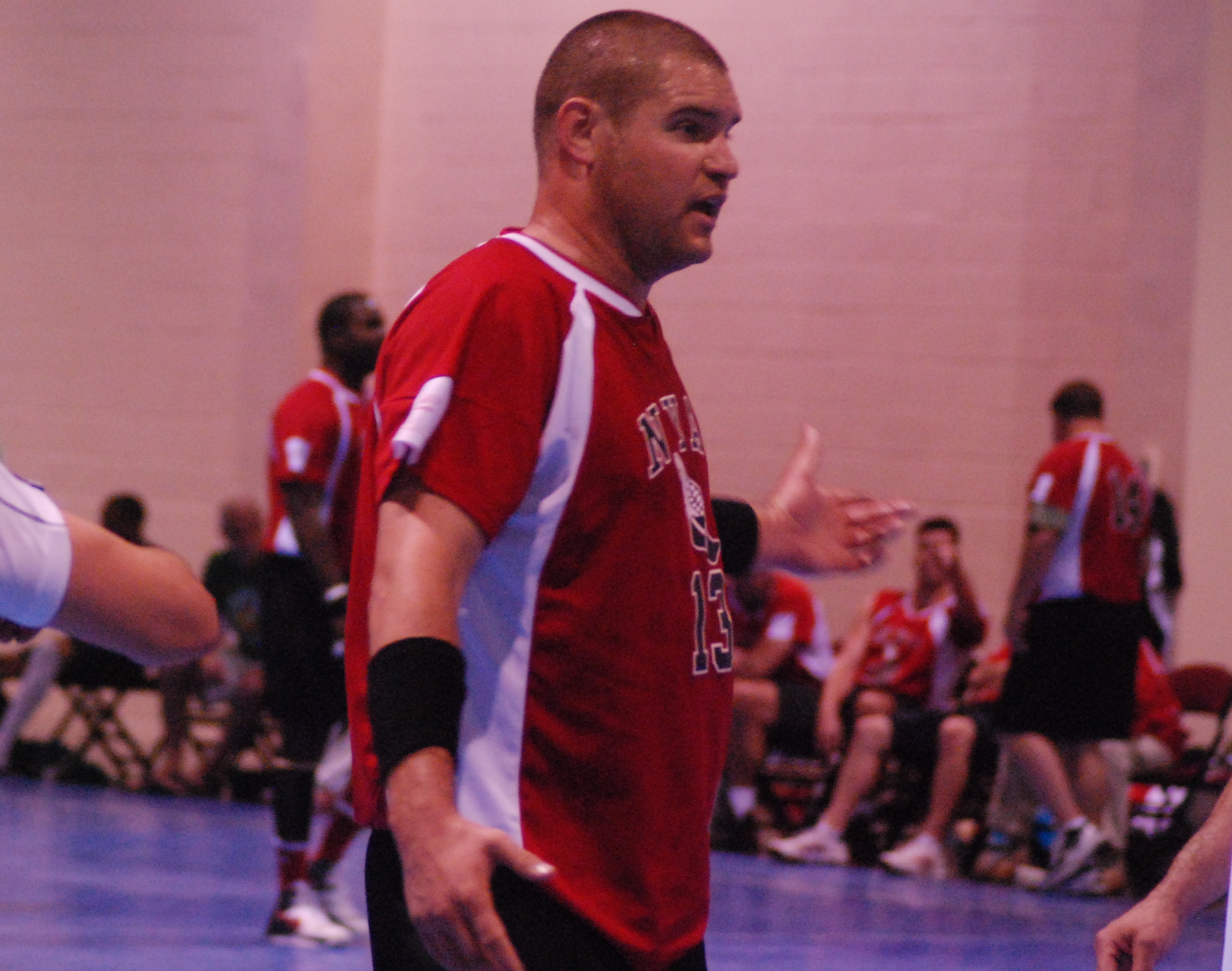
U.S. National Team Circle Runner, Jordan Fithian.  Fithian played D1 basketball prior to transitioning to handball.  A prime example of LeBron Lite.

My recent commentary regarding LeBron James becoming the world’s best handball player sparked a question regarding USA National Team player, Jordan Fithian, and his thoughts on basketball players transitioning to Team Handball.  Fithian played in college at Div 1, Binghampton and Div 2 Emporia before transitioning to handball.  One might consider Fithian a prime example of “LeBron Lite” a solid athlete with raw athletic skills ideal for handball.

This interview from May 2013 doesn’t specifically answer that question, but it touches on a number of related topics like learning how to play handball, playing professionally in German, “life issues” impacting his continuing development as a player, the challenge of recruiting crossover athletes younger than 22 and what it might be like for a U.S. National Team to play overseas in a European League

post

Could LeBron James Really Become the Best Handball Player in Just 6 Months? Do I really have to explain how crazy that notion is? (Part 1)

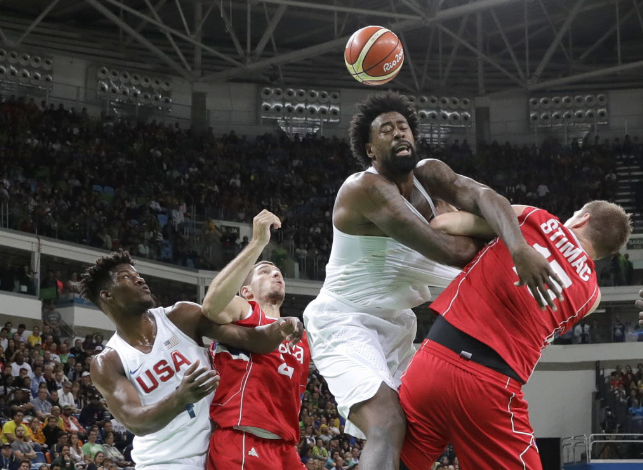
The Serbian basketball (with just 1 NBA player) lost narrowly to Team USA in Group play 94-91.  What’s the difference athleticism wise between the Serbian Hoops team and the Croatian and Slovenian Handball teams?  The Serbian hoopsters are a little taller and a little slower, but for all practical purposes, it’s a wash.  And, to think that USA NBAers could learn how to play handball in a few months and take Gold? Against similar athletes who’ve spent their whole lives playing handball?  That LeBron could be the best player in the world in 6 months?   Don’t get me started… Alright, you’ve got me started and I can’t stop.   For handball fans everywhere it’s time to take down these totally ridiculous notions.

The Serbian basketball (with just 1 NBA player) lost narrowly yesterday to Team USA in Group play 94-91. What’s the difference athleticism wise between the Serbian Hoops team and the Croatian and Slovenian Handball teams? The Serbian hoopsters are a little taller and a little slower, so for all practical purposes, it’s a wash. And, to think that USA NBAers could learn how to play handball in a few months and take Olympic Gold? Against athletes who’ve spent their whole lives playing handball? That LeBron could be the best player in the world in 6 months?
Don’t get me started… Alright, you’ve got me started and I can’t stop.
For handball fans everywhere it’s time to take down these totally ridiculous notions.


In Adam Kilgore’s recent Washington Post article on handball, “U.S. athletes run fast, jump high, throw hard — why are we so bad at handball?“,  USA Men’s Coach, Javier Garcia Cuesta, was asked how long he thought it would take for LeBron James to become the best player in the world.  Garcia Cuesta replied

“Maybe six months. This is just a hypothetical. He has everything. When you see him playing, your mouth drops.”

I’m thinking/hoping that Garcia Cuesta was just being provocative, but this quote has unfortunately given top cover to every back of the napkin postulation that all the U.S. has to do to be good at handball is convert a few basketball stars and maybe a few other stars from other sports, give them a few months of training and we’ll win the gold medal.

Reverse Angle Perspective #1 (Karabatic to the NBA)

So, let’s take a look at this backwards.  Could we take the world’s best handball player, give him 6 months of basketball training and make that player the best basketball player in the world?

For my money, the best handball player in the world is Nikola Karabatic.  While I think he is a heck of an athlete I think 6 months of solid basketball training would only make him a lower tier NCAA player at best.  There’s a lot of handball that translates well to basketball, but there’s specific skills such as dribbling and shooting that take thousands and thousands of hours of practice to master.  And, really there’s no way to predict whether any one individual is going to excel at the finesse task of shooting.

In short, this is a totally ludicrous notion which hopefully gives you a bit of perspective as to why handball fans are annoyed with the reverse postulate.  Because if you think about it, it means you believe the following:

  1. That the unique handball skills required to be a world class handball player are either relatively simple to learn or perhaps so similar to basketball that there’s not much to learn.
  2. That professional handball players are marginally gifted athletes, a couple of notches below the NBA in terms of athletic skill.

Let’s take a look at each of these beliefs in a bit more detail.

Reverse Angle Perspective #2 (LeBron, the life long handballer tasked with learning basketball

For additional perspective, let’s ask the question of whether a handball player could become the world’s best basketball player again.  But, this time let’s imagine that LeBron didn’t grow up in Akron, but instead grew up in the banlieue on the outskirts of Paris and in this alternate universe he became the world’s best handball player, the old fashioned way: Years of practice and experience in game situations.  (Tsk, tsk, poor Nikola, 2nd fiddle to the world’s greatest year after year…)

Anyway, could this alternate universe handballer LeBron, also become the world’s greatest hoops player? In 6 months? At the age of 31? Anybody want to make that case?  Buehler? Buehler? I didn’t think so.  Because it’s pretty darn ludicrous.  For sure, we know he’s got the raw skills to be the greatest, but anybody who’s played even a little bit of basketball knows there’s simply no way that can be accomplished in 6 months.  Why, it would take at least 2 years for him to be NBA ready and even then he would simply be a stalwart defender, a Dennis Rodman like force with limited offensive skills.

Handball: A simple game to learn, but a hard game to learn really well

So, what makes folks who’ve never played handball, have only watched it for a few days think that the reverse could be done.  Well, they must think the game of handball is pretty simple. And, it is a simple game, but deceptively so.  Having played thousands and thousands of hours of both sports I will tell you first hand that handball is an easier game to learn.  Basketball with its dribbling and shooting components is significantly harder to learn and requires more finesse.  That being said, it’s one thing to get halfway decent at handball, but another thing entirely to learn the skills necessary to become world class.

For sure, LeBron would almost immediately grasp the fast break aspects of the game.  They are remarkably similar to basketball and I can envision him flying through the defensive area and burying shots past the goalie.  He’s also got great court sense in the open floor and I think he would be pretty good at delivering passes on the break.  He would also figure out how to play defense pretty quickly as it is similar to basketball except that you can grab players in front of you and it’s more physical.  (Yes, newbies, when hoops players play their first handball game they are always taken aback the first time they get hit hard at 9 meters.  And, they are sore the next day.)

Where LeBron would struggle, though, is the same place everyone new to the game struggles: playing in a set offense.  The world’s best backcourts run, jump and shoot from 9 meters with accuracy all at the same time they are aware of their surroundings for that smart drop off pass to the wing or circle.  They make it look easy, but it ain’t.  The timing, footwork and decision making required to do so against quality defenders effectively and consistently takes years of practice and game time experience.  Try as I might, I never could do so and that’s one of the reasons I played the far simpler position of circle runner.  And, that’s just at a club level.

Of course, I’m no LeBron James, but trust me wouldn’t learn how to become an effective offensive threat overnight especially against a professional defense.  Christ, the U.S. has only had a handful of backcourts that were respectable from 9 meters and that was only after years of training.  They too weren’t LeBron James, but they were still solid athletes with D1 talent.  Sure LeBron’s learning curve would be better, but not that much better.

To sum up I think LeBron could play handball professionally as a defender immediately, but he would struggle offensively.  Teams could play him at circle runner, but even at that simpler position it would take him a year to get comfortable offensively.  Finally, at age 31 I’ve got my doubts as to whether he could really learn how to play backcourt effectively at the highest level. As his handball skills improved his athletic skills would also steadily decline.  And, as he learned the ins and outs offensive attacks with limited technical skill would be meant routinely by stiff defense.  LeBron’s 30 something body would be real sore.

The NBA:  The World’s Greatest Athletes, but not that much ridiculously greater

I suppose it depends on your criteria, but I would argue that the NBA has the world’s greatest athletes.  Probably, being an American and loving the sport of basketball since childhood has something to do with that, but I think a pretty solid case can be made that this is true.  Take the 100 best players in the NBA and the 100 best handball players in the world and handball would come out short in terms of raw athleticism.

Some then argue that this superior athleticism would carry the day.  They look at the handball national teams playing at the Olympics and think, “Those Croatian guys look like the Weber State (or insert your favorite marginal D1 school) basketball team.  LeBron would jump over them and run circles around them.

To which I say, are you conveniently forgetting some not too recent history?  Remember the 2004 Olympics and the U.S. Bronze Medal in basketball?  The U.S. squad lost to Puerto Rico, Lithuania and Argentina.  How did our superior athleticism work out in those matches? In a sport where we are also really, really skilled?  Suffice to say I would say that the athleticism of many of the national basketball teams in the Olympic tournament is very comparable to the athleticism of the national basketball teams.

Take for example, Team Australia which lost to Team USA 98-88.  Is there any doubt that the USA is more athletic, but that the Australians weren’t in awe?  Or that the Australian team might even be a little less athletic than some of the handball teams in Rio?  For sure, I don’t think France would be intimidated by Matt Dellavedova at Center Back.  Andrew Bogut would be too slow to do much of anything on a handball court.

So in a sport where we’ve always been the best, for sure athletically, and probably technically too, we may dominate, but not by a crazy amount.  To think that a technically weak LeBron would run roughshod over handball opposition because he’s a man among boys has no grasp in reality.  The athleticism gap is there, but it’s not that great.

Chill out dude:  It’s just a fun bar stool “What if” question. It’s never going to happen anyway.

Well, I would chill out.  I really would.  Except for the fact that the logic flows like this:  Well, we can’t get LeBron, but we can still get some pretty good athletes a notch or two below.  And, it will take longer than 6 months, but it won’t take that much longer.

And, then my friend, you will have the history of the U.S. national teams for the last 44 years or so.  Marginal respectability in the 70s and 80s when the Euros weren’t fully professionalized yet.  No respectability as the sport has become professionalized and we’ve gotten further and further behind nations like Brazil which have developed grass roots programs.  The USA is not going to win any medals with a “LeBron lite” strategy of taking pretty good athletes in their mid 20s and training them for several years.  And my very real fear is that despite overwhelming evidence that this strategy hasn’t worked, it’s where USA Team Handball is headed yet again.

In part 2, I’ll highlight some practical problems with first convincing athletes like LeBron to switch to handball and then I’ll address the complications with getting them up to speed on the finer points of the game.  In the meantime, if you’re interested you can read some of my earlier commentary on handball in the USA: Link

Podcast (Episode 4): New Rules Follow Up

Christer Ahl and John Ryan discuss how the new handball rules have impacted play so far at the 2016 Olympics.

Note:  The Team Handball News Podcast is now available on iTunes or as an RSS Feed

iTunes: Link

RSS Feed: Link

post

Throw Back Thursday: Memo to the Main Stream Media: Give us your naive solutions if you must, but also keep promoting the sport after the Olympics

Throw Back Thursday. What's old is new again: Main Stream Media Reports on handball and quickly figures out how to make the U.S. better.

Throw Back Thursday. What’s old is new again: Main Stream Media Reports on handball and quickly figures out how to make the U.S. more competitive in 2008, 2012, 2016….

Adam Kilgore of the Washington Post has written a nice story/commentary on Team Handball

Aug 2012 (Washington Post): U.S. athletes run fast, jump high, throw hard — why are we so bad at handball?: Link

So, far it’s the main stream media story about handball that has gotten the most traction.  For sure, it makes a number of assumptions and provides some back of the napkin analysis that drives the few handball fanatic in this country a little batty, but hey it’s great publicity for our sport.

It definitely has some great quotes including a mind-boggling one from U.S. Men’s coach, Javier Garcia Cuesta, assessing that LeBron James could become the best handball player in the world in just 6 months.  I’m guessing (really hoping) that coach Garcia was just being provocative, because he surely knows better or he has completely forgotten how long it took him to turn some pretty decent athletes  back in the 80s into just competitive player.  And that was when handball was far less professional.

Kilgore’s article is not the first article to propose solutions.  Back in 2008 Sean Gregory of Time Magazine provided some analysis in.
Aug 2008 (Time Magazine): Hey, America, What about Handball: Link

Annoyed, I provided a detailed critique:
Aug 2008 (Team Handball News): Thanks for promoting team handball, but save us your naïve solutions: Link

Prior to the 2012 Olympics I wrote this commentary as a plea to the articles that were sure to follow
July 2012:  Memo to the Main Stream Media: Please do your research prior to posting your Team Handball stories:  Link

It didn’t do a whole lot to stop the flood of articles. Bill Simmons of Grantland and now the host of HBO’s Any Given Wednesday had a great article, but again with naïve solutions.
Aug 2012 (Grantland) London Chronicles Part 2:  Handball, Handball, Handball: Link

To date, the only mainstream writer to get his handball facts straight for the most part has been Stefan Fatsis.
May 2009 (NY Times): Handball has it all, but an American interest: Link

I would assess this simply from his willingness to maintain interest with the sport beyond a 4 year cicada like presence.  You watch, you learn, you appreciate and in the case of Fatsis you find every little excuse you can to promote this woefully under reported sport.

Sorry, if I come off a little petulant.  In the end, I can’t complain too loudly. Any promotion is really good promotion when it comes to Team Handball.  Every time someone sees the sport it picks up a new fan.  At some point there will indeed be a tipping point by which the sport gets the following it should have in this country.  And, once that happens it will only be a matter of time before we’re cheering on Team USA in an Olympics.  So, if you must intrepid main stream reporters give us your wisdom, but at the same time please keep promoting the sport beyond 20 August 2016

post

Podcast (Episode 3): Olympic Handball: Review and Predictions Halfway through Group Play

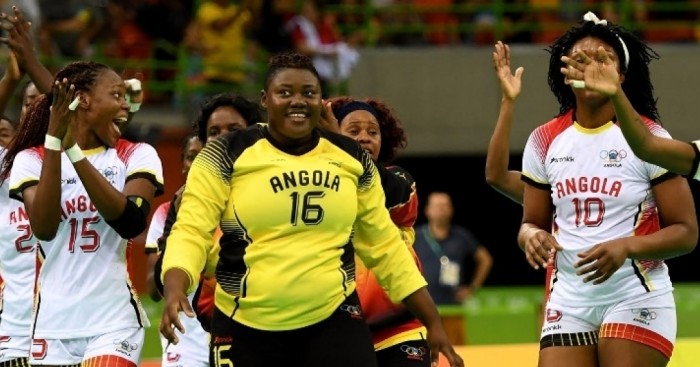
Crowd favorite, goalie Teresa Almeida, and her Angolan teammates surprised with victories over Romania and Montenegro before coming back to earth against defending champs, Norway

Crowd favorite, goalie Teresa Almeida, and her Angolan teammates surprised with victories over Romania and Montenegro before coming back to earth against defending champs, Norway

In this podcast episode John Ryan and Christer Ahl review group play at the halfway point. Surprises, disappointments and predictions for the quarterfinals.

post

Qatar’s Rafael Capote: What a Long Strange Trip it’s Been

In 2007 Cuban Handball Player Rafael Capote defected in Rio at the PANAM Games. Nine years later he’s back in Rio, this time playing for Qatar. Can his journey to become an Olympian actually make you cheer a bit for the mercenary team in maroon and white jerseys?

In 2007 Cuban Handball Player Rafael Capote defected in Rio at the PANAM Games. Nine years later he’s back in Rio, this time playing for Qatar. Can his journey to become an Olympian actually make you cheer a bit for the mercenary team in maroon and white jerseys?

Well, in the midst of reports chronicling the mercenary nature of Qatar’s national team there’s surely been a couple of questions folks have been wondering.  How does a Cuban become a world class handball player? And, how does a Cuban end up playing for Qatar?

Well, the answer to the first question is that he’s a product of Cuba’s development system.  Perhaps the last remaining example of a communist style sports program, even if it’s been running on life support for the last decade or so.  Handball is not a huge sport in Cuba, but nevertheless it’s gotten some level of government support for years.  Players with potential are identified and they train together as a national team.  I’m sure there’s some choice in doing so, but the arm of the government also surely makes recruitment easier and participation strongly encouraged for those selected.

And, because other nations in Pan America put little emphasis on the sport Cuba has traditionally been a power in this hemisphere.  At times, they’ve even been competitive on the world scene.  But, every time this has happened defections have decimated the team.  Two notable players from earlier times are Rolando Urios and Carlos Perez who played for Spain and Hungary, respectively.

Capote’s defection is more recent and ironically enough Capote has now come back full circle to the city of his defection.  At the 2007 PANAM Games in Rio, Capote snuck out of his room with the clothes he had on, $300 and in the pouring rain he took a taxi to Sao Paulo where a former teammate was living.  Just 19 at the time, Capote then began a rather eclectic handball journey.  Playing first in Brazil, surely at a semi-professional or low paid level before moving on to Italy.  Italy is by no means a handball power, but for some reason it’s league that has been a stepping stone for a number of players from Latin America.  Obviously he played well otherwise he wouldn’t have been signed in Spain where he really started to get noticed, even becoming the EHF player of the week.  And, then when Qatar was awarded the World Cup, and hired a Spanish coach, it probably didn’t take Coach Rivera to consider bringing along a Cuban who hasn’t played internationally for several years.  Heck, I’m guessing that the crafty Rivera figured he could turn this pretty good back into a great back with a little time.  Something that’s clearly been accomplished and is just but one piece to the puzzle that has made this collection of decent cast offs a medal contender.

I wonder how Capote feels now having returned to the scene of his defection?  Just 9 years ago, he was 19 years old, scared, making the decision to leave the country of his birth (perhaps forever).  Surely not really knowing if this risk was worth taking.  Think about the “big decisions” you’ve made in your life and whether they pale in comparison. Talk about a leap of faith and crossing the Rubicon!  He could not have even imagined a journey that would take him from Brazil to Italy to Spain to Qatar and back to Rio nine years later as an Olympian. Walking into the opening ceremonies in flowing Arabic robes representing a country he probably had never heard of before.?  Heck, I can hardly imagine it.  And, while I’m no fan of the mercenary nature of the Qatari team I can’t fault Capote for taking this monetary and career opportunity.  Heck, I can’t help but root for him.

Rafael Capote Wikipedia page (Spanish): Link

Brazzil.com article on his defection in 2007: Link

post

Podcast (Episode 2): New Handball Rules (Part 2)

I know what you are thinking regarding whether I’m going to call passive play: Do you have to shoot on goal yet? Have you made 5 passes or 6?  Do you feel lucky? Do ya, punk?

I know what you are thinking regarding whether I’m going to call passive play: Do you have to shoot on goal yet? Have you made 5 passes or 6? Do you feel lucky? Do ya, punk?

My discussion with Christer Ahl, the former IHF head for Playing Rules and Competition, continues.  In part 2 we discuss the new rules regarding passive play, the last 30 seconds of a match and blue cards

Point-Counter Point on Handball’s Last Minute Problem from 2009 (Or why I was so gleeful at Christer’s mea culpa)

Part 1: John: Time to add a technical penalty shot: Link
Part 2: Christer: John has good intentions, but gets his solutions from the wrong sources: Link
Part 3: John: No, Christer, post game sanctions are not working and referees should be empowered and trusted: Link

It’s not very often (heck, this might be the only time) that I’ve gotten Christer to side with me.  There’s a reason for this: He knows handball rules about 10 times better than I do.  But, every dog has his day

If the Dirty Harry reference has no meaning to you, here’s a link to the classic scene: Link

post

Podcast (Episode 1): New Handball Rules (Part 1)

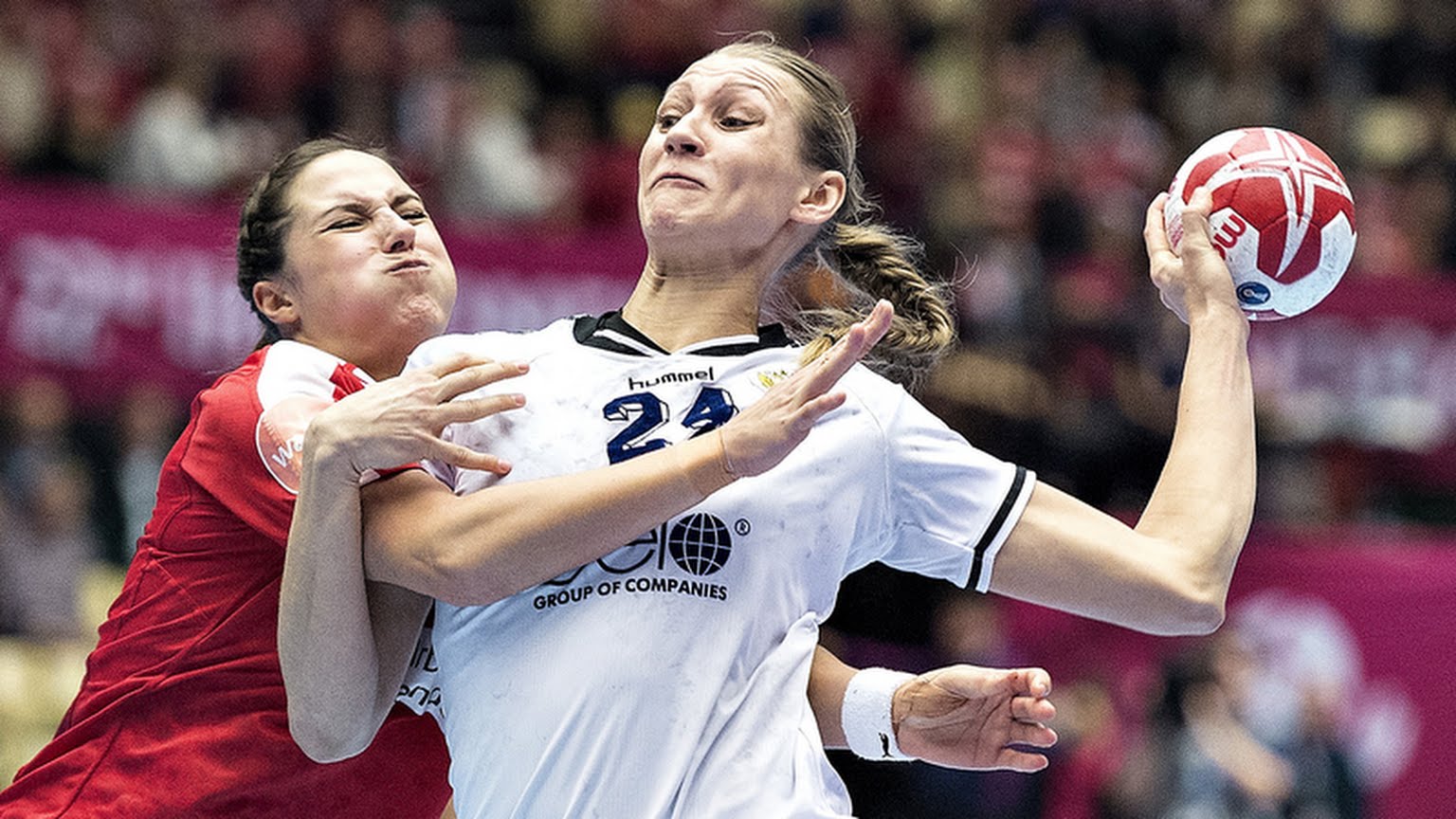
Irina Bliznova penetrates opposing defenses on a regular basis and gets fouled a lot. Against S Korea on day 1 she was fouled fairly hard, but chose to get back on her feet quickly. Why? I'm thinking the new rules had something to do with it.

Irina Bliznova penetrates opposing defenses on a regular basis and gets fouled a lot. Against S Korea on day 1 she was fouled fairly hard and started to relax and recover a bit on the floor, but then chose to get back on her feet quickly. Why? I’m thinking the new rules had something to do with it.

The International Handball Federation (IHF) has recently added 5 new rule changes and the Olympics is the first major event to see them implemented.  And, while at its core the game remains the same these rule changes are having an impact.  The ability to now substitute any court player for the goalie has resulted in goalies being pulled even more.  Why, it’s practically standard practice for some teams when they are a man down.  We’ve even seen a few instances of 7 court players being used on offense.

The rule change requiring injured players to exit for three possessions has also sped up the game.  Irina Bliznova went down after being hit fairly hard during Russia’s comeback vs S. Korea.  But, it wasn’t a 2 minute and when it looked like the refs might call for medical protection she hopped to her feet quickly.  With Russia’s offense really relying on her steady play in the backcourt she didn’t want to nurse her minor injury on the sideline for a couple of minutes.

There’s a lot of nuance to these rule changes, and who better to explain and discuss their potential impact then Christer Ahl, the former IHF head for Playing Rules and Competition.  In part 1 of this podcast Christer highlights the overall intentions behind these rules and we delve into the details of the new rules as they relate to goalkeepers and injured players.

Summary of new rules: Link