post

2016 Olympics:  Men’s Team Handball Preview

The World's best court player and the world's best goalie.  Why would you predict any other side to win?

The World’s best court player and the world’s best goalie play for France which took gold in 2008 and 2012. Why would you predict any other side to win?

Tournament Format:  12 Men’s teams will be competing in the Olympics and preliminary play will consist of a round robin competition in 2 groups of 6.  The top 4 teams in each group will then advance to a knock out tournament consisting of quarter finals, semifinals, and finals (gold and bronze medal games).

Recent Results: The 2016 European Championships held this past January and the 2015 Men’s World Championships held in January 2015 are the most relevant recent reference points.  France won the World Championship with Qatar taking 2nd and Poland 3rd.   The more recent European Championships were won by a surprising German side which played excellent defense with a roster which featured several younger players.  Spain, which surprising failed to qualify for the Olympics placed 2nd and Croatia took 3rd.   France which has usually been in the semifinals of every major tournament finished a disappointing 5th.

2015 WC Results: Link

2016 EC Results: Link

Bookmaker Odds to Win Gold:  Below are the pre-tourney odds for each team to win the gold medal

France                  7-5
Denmark             7-2
Croatia                  7-1
German               10-1
Poland                  18-1
Qatar                     22-1
Slovenia               25-1
Sweden                28-1
Brazil                     50-1
Tunisia                  300-1
Egypt                     500-1
Argentina            2,000-1

These odds seem pretty accurate to me.  I would probably give Brazil, Tunisia and Egypt odds that are a bit closer to the lower tier European sides.  It’s hard to see them winning gold, but they can play with the Europeans.  Argentina could to, but minus injured star Diego Simonet they will likely not win a match.

Assessing Group Play:  First a few thoughts on the format.  Because 4 out of 6 teams will move on to the all important knockout tournament the first goal is simply to make it out of Group play.  Yes, a higher placement in the group should improve the odds that you will have a weaker quarterfinal opponent, but all too often this has not been the case.  And with Group A being a lot stronger (on paper) it could really be the case in this tournament.

Bookmaker Odds to Win Group A

France                  5-4
Denmark             11-4
Croatia                  5-1
Qatar                     10-1
Tunisia                  55-1
Argentina            225-1

I’ll start from the bottom and point out that Argentina will likely lose all 5 matches.  The next question, then is whether Tunisia can crack its way into the top 4.  I think they will put up a good fight in a couple of matches, but I don’t see them qualifying for the quarterfinals.  And, as previously discussed this is a ridiculously strong group.  France, Denmark, Croatia and Qatar could each win their quarterfinal match against their opponents coming from Group B.  Yes, Group A could simply be some friendly match previews of the semifinals when the outcomes will really count.

Bookmaker Odds to Win Group B

Germany             9-4
Poland                  7-2
Slovenia               7-2
Sweden                6-1
Brazil                     11-1
Egypt                     110-1

In my opinion this group is totally wide open with every side having a legitimate shot at reaching the quarterfinals.  The German wall in defense was very effective at the European Championships and they along with Poland should make it through.  Slovenia and Sweden, however, should watch out for Brazil and Egypt.  In fact, I think hosting will help propel Brazil to the knockout stage.

Overall Predictions:  As has been the case for the past decade or so there’s one big question.  Will France show up or not?  Basically, they win or the they somehow beat themselves.  Why is this the case?  Well, they’ve got the best player in the world, Nikola Karabatic, and the best goalkeeper in the world, Thierry Omeyer.  The supporting cast, however, isn’t quite what it used to be and that’s one of the reasons they disappointed at the recent European Championships.  I’m thinking they will show up and win their 3rd straight Olympic title.

As far as the other sides go, as I’ve implied I think Group A will sweep Group B in the quarters.  Only Germany and Poland have a decent chance.  Germany has shown they can play great defense, but I think they lack quality and consistency on the offensive end.  Poland is experienced and capable, but I also think they will come up short.

So, I’ll predict a final four of France, Denmark, Croatia and Qatar.  Qatar, as they’ve just shown with their 1st round convincing win over Croatia, is more than just a flash in the pan.  Still I think they are a bit thin depth wise and they will be a bit spent by the time the semifinals roll around.  Denmark has been a disappointment the past couple of tournaments, but they are due for a return to form.  I’ll go with France beating Denmark for Gold and Croatia beating Qatar for Bronze.
post

2016 Olympics:  Women’s Team Handball Preview

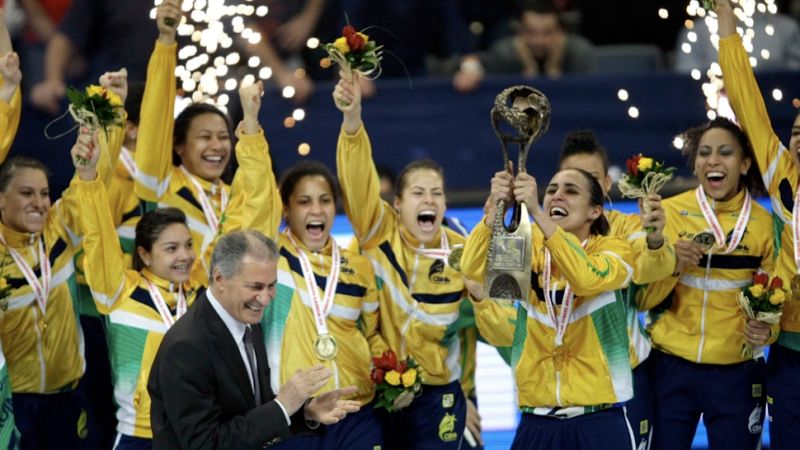
Brazil celebrating their world championship in 2013.  Can the hosts also win an Olympic title?

Brazil celebrating their world championship in 2013. Can the hosts also win an Olympic title?

Tournament Format:  12 Women’s teams will be competing in the Olympics and preliminary play will consist of a round robin competition in 2 groups of 6.  The top 4 teams in each group will then advance to a knock out tournament consisting of quarter finals, semifinals, and finals (gold and bronze medal games).

2015 World Championship Results: The 2015 Women’s World Championships held last December is a good, if somewhat flawed reference point for projecting the tournament favorites.  Norway won the championship with the Netherlands and Romania taking 2nd and 3rd.  Norway has also won the last 2 Olympic tournaments and is the clear favorite on paper.  The Netherlands success has been more recent, but they also have a solid team.  Russia placed 5th at the worlds, but had an 8-1 record at the tournament including a 26-25 win over Norway.  Tournament hosts Brazil finished a disappointing 12th, but this was a result of losing to a strong opponent, Romanian in the round of 16.  Having won the 2013 World Championships and being the host they surely are a team to reckon with.

2015 WC Results: Link

Bookmaker Odds to Win Gold:  Below are the pre-tourney odds for each team to win the gold medal

Norway               15-8
Russia                   5-1
Brazil                     7-1
Netherlands       9-1
Romania              14-1
France                  16-1
Montenegro      16-1
Spain                     16-1
Sweden               22-1
S Korea                 35-1
Angola                  2,000-1
Argentina            4,000-1

These odds seem pretty reliable to me.  I would probably give Brazil a bit better odds, though then 7-1.  (Editor’s note:  I’m writing this after Brazil’s opening win against Norway, but I’d still say this even if Brazil had lost the match.)  I would also give South Korea a little more respect as they usually perform above expectations in Olympic tournaments.

Assessing Group Play:  First a few thoughts on the format.  Because 4 out of 6 teams will move on to the all important knockout tournament the importance of each individual game is minimized.  The first goal is simply to make it out of Group play.  Yes, a higher placement in the group should improve the odds that you will have a weaker quarterfinal opponent, but all too often this has not been the case.  And the way these groups have been drawn it’s a virtual certainty that there will be no cakewalk opponents in the quarterfinal.

Bookmaker Odds to Win Group A

Norway              13-10
Brazil                     7-2
Montenegro      8-1
Spain                     8-1
Romania              12-1
Angola                  275-1

These odds suggest that Norway and Brazil will go 1-2, while Montenegro, Spain and Romania will battle for the other 2 quarterfinal slots.  Angola is a real longshot.  They could conceivably surprise one team, but it’s a stretch to think they could pull off two wins.

Bookmaker Odds to Win Group B

Russia                   13-8
Netherlands       7-2
France                  5-1
Sweden                8-1
S. Korea               10-1
Argentina            600-1

Much like the Group A odds, this group is projected to be Russia-Netherlands 1-2 with France, Sweden and South Korea battling for the other 2 slots and Argentina being an even longer shot than Angola.  I’ll buy into that logic.

Overall Predictions:  I would assess Norway as a virtual lock for the semifinals.  And, based on Brazil’s first game win, one has to think that Brazil will be there as well.   I’m thinking Russia will be there as well and having missed out at the last world championships I’m thinking they’ll be pretty focused in their quarterfinal match.  The other semifinal slot could belong to any of the other teams except Angola and Argentina.  And, when it comes right down to it, everything will depend on those all important quarterfinal matchups.  A lot of handball is yet to be played, but if I’ve got to predict now I’ll go with Brazil knocking off Norway in a rematch for the gold with Russia taking 3rd.

PATHF Tournament Assignments:  North America with 3 Major Championships

PATHF-header-2-300x97

The Pan American Team Handball Federation (PATHF) met this past week in Argentina and the North American Zone was able to secure 3 major championships for 2017 and 2018.  Link

Canada will host the Women’s Sr. Pan American Championships from June 15-26, 2017 in Edmonton, Alberta.  Canada’s hosting of this tournament will be a major opportunity to showcase the sport’s growth in Alberta.  The top 3 teams from this tournament will also punch tickets to the 2017 Women’s World Championships in Germany. (Commentary on Handball’s growth in Alberta: Link)

Greenland will get the opportunity to host its first major tournament when it hosts the Men’s Pan American Championships in 2018 in the nation’s capital, Nuuk.  Air travel has always been an issue in the past with commercial flights to Greenland being expensive and only available via Denmark.  The tournament will likely be played in June and the top 3 teams (or more pending 2017 WC results) will qualify for the 2019 Men’s World Championships that will be cohosted by Denmark and Germany.

Finally, the USA will host the 2018 Pan American Beach Handball Championships.  The tournament will be staged in either Miami or Southern Californian in the March timeframe.  Both Men’s and Women’s tournaments will be played with a TBD number of places to be awarded spots at the 2018 Championships in Sochi, Russia.  The USA Men are the defending PATHF Champions.

Commentary:  I’ve commented on more than one occasion about South American dominance in PATHF affairs.  Canada was once denied participation in a PATHF Championship, despite having qualified for the previous WC (Link) and Greenland was even unceremoniously voted out of PATHF not to long ago: Link.  A decade or so ago it was pretty bleak.  Now 3 major tourneys all awarded to North America. Brazilians and Argentinians getting the opportunity to get a lot of frequent flier miles.  No complaints from me.  It’s time to sing Kumbaya around the PATHF Congress table!

Now we’ll see if the North American sides can take advantage of these opportunities to get some World Championships berth.  In particular, it should be interesting to see how Greenland will fare with what surely will be a loud and boisterous crowd backing them.

post

Gary Hines: Handball Ninja Warrior

USA National Team player Gary Hines celebrates after hitting the buzzer.

USA National Team player Gary Hines celebrates after hitting the buzzer.

Well Team USA won’t be at the Rio Olympics, but long time Men’s National Team Player, Gary Hines is having some success off the handball court as a Ninja Warrior.  Hines, who plays handball professionally for HSC Bad Neustadt in Germany’s 3rd Division is competing in Ninja Warrior Germany.  Shown on German TV Friday night, he successfully completed his preliminary run and is one of 28 qualifiers for the finals.

Video of Hines completing the course: Link

Hines is not the first handball athlete to have success at Ninja Warrior.  Notably, Japanese handball player Daisuke Miyazke was a top competitor on the original Japanese show: : Daisuke Miyazaki: The Ichiro Suzuki of Handball (or maybe the Kyle Rote Jr.) (Jun 2010):  Link

And, here’s the closing paragraph from that commentary:

“I’ve noticed that a U.S. version of the Japanese obstacle course called Wipeout is starting up again. For some strange reason, ABC somehow thinks it’s more interesting to have out of shape nobodies try to complete the course. I’m predicting, though, it’s only a matter of time before they wise up and get some real athletes taking part. And when they do why not get a Team Handball athlete to take part? I think somebody like Gary Hines would do well.

Nothing more satisfying then seeing a prediction come true, even if it does take 6 years!


Why a Residency Program at Auburn is the Best Way Forward for USA Team Handball… and Why Those Reasons Fall Way Short in Justification”

Screen Shot 2016-03-24 at 10.50.52 AM

Back in September after Auburn was designated as an USOC Olympic Training Site I posted a plea asking for someone to explain how this was such a great deal for USA Team Handball. Six months later I haven’t gotten any takers. Somewhat disappointing, but not a real surprise. For sure, lots of folks have better things to do with their time. But, also don’t kid yourself: Lots of folks surely don’t want to get in a debate when they’ve already made up their minds and don’t have much backing up their position.

I first saw this play out four years at a 2 day meeting in Salt Lake City that USA Team Handball called to develop a strategic plan for the sport in this country. As I highlighted in this earlier commentary this meeting was a good kickoff discussion that could and should have set the table for the development of a strategic plan. As outlined by the professional facilitator who led the first day’s discussion proper Strategic Planning requires following a deliberate and structured process:

  1. Identify and prioritize the goals and objectives for USA Team Handball
  2. Develop potential action plans to accomplish those goals and objectives
  3. Carefully review and select action plans for implementation based on their merits, feasibility and alignment with established goals and objectives

As I pointed out in my commentary, however, steps 1-3 were never accomplished. Heck, it’s debatable as to whether they were even started. Instead USA Team Handball jumped straight to step 4 to implement a residency program model.

One possible action plan of many was given free ride without even an inkling of due diligence. Worse, there never really was an action plan, just a vague notion that a residency program similar to what had been done in the past was desired. USA Team Handball even went way out on a limb and hired head coaches for teams that didn’t exist without any idea where they might put a residency program.

Without a real plan in place, funding or a suitable location it looked like this concept would never get off the ground, but then Auburn stepped forward with a limited offer of support. Never mind, there really wasn’t the money to do a residency program properly, it’s what had been decided. It’s the no-brainer solution for what ails handball in America. Don’t worry about whether it matches the long term goals and objectives of the Federation. Those goals haven’t been identified let alone validated, so you don’t have to. Don’t even bother to set benchmarks and expectations for success. Just do it.

Alright… Deep breath. OK. I’ll take another… Deep breath.

Am I missing something here?

For sure, I’m confident that I know quite a bit when it comes to the topic of Team Handball in the U.S. I played at the college, club and national team levels. I experienced first hand both the good and bad aspects of a residency program. I started two clubs in the U.S. where none existed previously. I lived in France for 5 years, played recreationally there and saw how the sport was organized in Europe. I’ve followed professional and national team handball developments very closely for a dozen years. Perhaps, there’s a half dozen folks in the U.S. with a comparable resume when it comes to both national team concerns and grassroots development.

I’m also a pretty reasonable guy.  Hardly, a “My way or the highway”, type.  More often then not, when presented with data and rationale, I’m inclined to see the light. I might not agree with decisions that have been made, but I respect them when they are made with due process and after a careful consideration of all options. But, this was never done 4 years ago which is one of the reasons why this “reasonable guy” is a little upset.

Now, after 3 years of diplomatically pointing out that due process was skipped and that the resulting decision is very flawed, even I’ve had a bit of self doubt creep into my consciousness. Yes, I have rhetorically asked myself, “Could I be totally wrong here? How could smart people reach such a dramatically different conclusion from mine? How can they be so comfortable with skipping well established planning steps and jumping straight to a solution? Maybe, it is a no brainer? What am I missing? Why am I being ignored?

I’ve posed these questions to myself and in one form or another to several key players in the USA Team Handball Community. Some of those folks have been decision makers and some simply, like me, have been around a long time.  Broken into 2 broad categories here are some reasons I, and others have come up with as to:

“Why a Residency Program at Auburn is the Best Way Forward for USA Team Handball… “

And, further when you step back and take a closer look: 

“Why Those Reasons Fall Way Short in Justification”

Category 1: Actual Reasons Provided by Federation Leadership. These have been provided with perfunctory short answers (verbally and email) or can be inferred from Board of Director Meeting Minutes.

  1. Auburn is providing a great financial deal that the Federation would be crazy to turn down or leave.
    • Really? How Much “Value” is there really in Value In Kind (VIK) Funding?:  Link
  2. The U.S. had its greatest success with the Residency Programs of the 80s and 90s and therefore a Residency Program is obviously what’s needed today.
    • Part 1: True Statement, but How Glorious were our Glory Days?: Link
    • Part 2: True Statement, but Perhaps Some Key Decision Makers Don’t Fully Appreciate the Professional Aspects of Today’s Handball: Link
    • Part 3: True Statement, but that success occurred when handball was only “somewhat professionalized”: Link
  3. A Residency Program is needed because it provides a great platform to build around for sponsorship and grass roots development.

Unfortunately, there’s no documentation that I’m aware of that further defines, explains or supports why these reasons are valid.  Unless, somebody wants to step forward with that further explanation, you’ll be stuck with my analysis.

Category 2: Reading Between the Lines.   Here are a couple of reasons that I’ve come up with based on budgetary decisions and how some key decision makers might view historical relationships and grass roots alternatives. These reasons have not been officially stated, but one can infer them by reading between the lines:

  1. USA Team Handball needs a Residency Program because of USOC expectations.
  2. Grass Roots development is at best a secondary goal for a sports federation and accordingly should receive less funding and attention.

As the title of this series of commentaries indicates I have assessed each of these reasons as faulty to one degree or another. And, this wasn’t summarily done. I’ve considered each of these reasons carefully looking at possible rationales only to repeatedly come up empty. Some reasons are just totally out to lunch while others at least on the surface, have a kernel of legitimacy. In the coming months I’ll be posting new commentaries addressing these reasons. I’ll first do my best to present the logic behind the given reason and then some counter-reasons as to why that logic is faulty.

As always, if you think that I’m not playing the role of Devil’s Advocate sufficiently feel free to chime in with some more coherent arguments. This can be done on the Facebook page or as I’ve said before, I’m more than willing to post to the website anyone willing to write a thoughtful commentary.

post

Commentary and Analysis: USA Men vs. Alberta Jr. Team Series

It's a long way to Tipperary and to Auburn for that matter: Does it make more sense for the U.S. to Train in Europe? That thought along with analysis of the 4 match series played between the USA Men and Alberta Jrs

It’s a long way to Tipperary and to Auburn for that matter: Does it make more sense for the U.S. to train selected athletes in Europe? That thought along with analysis of the 4 match series played between the USA Men and Alberta Jrs.

The USA Men recently hosted the Alberta Men’s Jr. Men’s Team in a series of 4 matches played over 4 days (15-18 February, 2016). The U.S. won all 4 matches by the following scores

Match 1: USA 35, Alberta 25
Match 2: USA 30, Alberta 23
Match 3: USA 32, Alberta 25
Match 4: USA 29, Alberta 27

Links to Video of the matches courtesy of the Alberta Team Handball Federation: Link

The Good

4 games; 4 wins: A team should always get credit for winning matches. The U.S. faced some adversity and still came away with 4 victories.

Sticking with Residency Players: The U.S. has previously called in veterans and expats to shore up weaknesses against modest competition like Puerto Rico. Not so this time around. The U.S. fielded a roster entirely composed of players participating in the Residency Program. That’s the way it should be if you’re a believer in the Residency Program model.

Teamwork: It’s hard to get a full sense from Youtube videos of how well a team is working together, but I’ve got the impression that these players are bonding together as a unit.  Undoubtedly, they are facing a lot of adversity and a little bit of “us against the world” mentality has helped make that happen.

Better Handball Skills: It’s clear that these players, many of whom are relatively new to the game have leaned the fundamentals of the game. They look like a handball team. That’s real progress.

Notes on a few players:
– Joshua Norman: Norman plays a pretty good point on defense. His quickness and court awareness disrupted Alberta’s offense and made the U.S. defense better across the board.
– Alden Mezick: Mezick has developed into a pretty decent goalie. For his limited experience this is a significant accomplishment and it makes me wonder how much more progress he would make with regular competition against better players.
– Ty Reed: Reed has developed into a capable wing in a short period of time.

The Not So Good

Handball Skills Still Need a lot of Work: While the players have the fundamentals down one doesn’t have to look to hard to see that there’s still a lot of work left to be done. Backcourt play, in particular, is still pretty ineffective. There’s little question in my mind that veterans like El Zoghby, Hines and Axelsson are still far better options for those 3 critical positions. And, sight unseen I suspect some of the younger dual citizens playing in Europe are also better options as well. Yes, talent wise all that Auburn has accomplished so far is a promising goalie and a couple of credible options on the wing.

No Future Elite Professionals: Predicting future success on the handball court is a challenging proposition. It’s not easy even for professional scouts. Still, I don’t think I’m going too far out on a limb by stating that I don’t think any of the athletes currently training at Auburn will ever don a jersey for a top professional club some day. Hard workers for sure, but I would be very surprised to see any of them playing in the HBL, LNH or for a Champions League side. 2nd Tier or 3rd Tier sides might be possible, however, for a few, but even that is a few years away.

The Lack of Promotion: Where was the best place to get information on these matches? Unfortunately, it was the Alberta Team Handball Federation. They posted scores on their Facebook page in a timely fashion and match videos on their Youtube page. They also posted travelogues with behind the scenes video of their trip. By contrast the U.S. only managed a couple of Facebook posts and the Federation website doesn’t even mention the games. The crowd in attendance was also pretty sparse. It’s almost as if the Federation didn’t want anyone attending or knowing about these matches.

The Unintended Contrasts

Competition Availability (North America vs. Europe): Perhaps nothing could drive home the “lack of regular competition” problem inherent with a U.S. base Residency Program more than the scheduling of a 4 game series between teams located in Alberta and Alabama. 2,400 miles, a 35 hr drive or a 10 hr plane trip with 2 stops. The European equivalent would be Barcelona playing Minsk. Many thanks to our Canadian friends who are willing to foot the bill for such a journey.

It makes me wonder if the cash strapped U.S. will be returning the favor at some point. Or more appropriately, it makes me wonder if anyone with the U.S. Federation will look a little more closely at moving selected athletes to a European training site like the Aarhus Academy. Instead of competition against a team like the Alberta Jrs. every 2 months or so they could be playing against more experienced European club teams on a weekly basis. And, some of those players could even get discovered for a coveted pro contract.

More information on the European Based Training Program the U.S. could consider: Link  

Grassroots vs. Residency Programs (Alberta vs. Alabama): I also can’t help but watch these matches for a couple of minutes without asking myself the following questions:

  • – How does a Canadian Province put together a Jr. Team that can compete with the U.S. Sr. National Team? The Alberta roster included five 18 year olds and no player older than 21. And, they’ve done it with no national federation funding.
  • – Could the U.S. develop a program in one U.S. state similar to what has been developed in Alberta? Seriously, just one state would be a good start. That’s all I’m asking.
  • – Why aren’t members of the Board of Directors and the Staff at USA Team Handball asking themselves the same questions?

More information on the “Alberta Option” for USA Team Handball to consider: Link

At least I’d like to think some decision makers are asking such questions. In the meantime, I’ll just keep shaking my head in puzzlement and keep telling myself it’s only a matter of time before smart people see the light.

post

VIDEO: USA Men Beat Alberta Jr. Team 35-25

USA on attack vs. Alberta

USA on attack vs. Alberta


The USA Men beat the Albert Jr. Men’s team 35-25 last night in a game played at Auburn, Alabama. The U.S. trailed Albert 20-18 at the half, but played some outstanding defense in the second half, limiting the Canadian Provincial team to just 5 goals. This is the first match of a four game series and the teams will play again on Tuesday, Wednesday and Thursday of this week.

Video of the match is available on the Alberta Federation Youtube page: Link

Video for the upcoming matches as well as travelogues (video logs) from the Albertan team are also available for viewing there.

post

ehfTV: The Gift that Keeps on Giving: How Long Will this Incredibly Good Deal Last?

logo

ehfTV: The gift that keeps on giving? How long will this good deal last?

The past couple of weeks have been busy ones for me with end of semester grading and the start of the FIRST Robotics building season. Couple that with NFL playoff games and even this very devoted handball fan has a little trouble finding time for the European Handball Championships.

All, I can say is thank goodness for ehfTV. Every match from the Euros is available on demand and I’ve spent a good part of this weekend catching up on what I’ve missed. The web stream quality is outstanding now and it’s great to listen to Paul Bray with his insightful commentary.

So far, lots of storylines and questions. Iceland’s looking for a new coach following their disappointing exit. Can Poland keep using their home court advantage to good effect? Can the injury riddled and somewhat aging French side continue their domination of major competitions? Probably, as long as Karabatic is directing traffic and Omeyer is in the goal.

What a great tournament the European Championships is. Why, I would pay good money to see all these games and it’s being provided free of charge if you live in the U.S. and a number of other countries. For sure it’s a far cry from the IHF web streams that have been provided in the past or even one’s the EHF has charged fans for. The 2008 debacle is still fresh in my memory. Choppy video and American expats in Italy calling the action. Americans who clearly had never even seen the sport before and I paid 30 Euros for that package!

All is forgiven EHF. All is forgiven. My only question is just how much longer can such a good deal last. I don’t know what the business model is for ehfTV, but it’s hard to see it being very profitable. Yes there’s some advertisement, but it’s pretty low key. Just a commercial at the start of the video feed and a little banner at the bottom of the screen throughout the game. A minor annoyance, but not a major intrusion to my viewing experience.

My guess is that the EHF is being forward thinking and is seeking to develop more fans via this free platform. Get fans hooked and then start charging a subscription. Or get enough fans so that TV broadcasters will be willing to pay for the rights in select countries. With the U.S., that strategy is a bit puzzling since beIN Sports does buy the rights to the 2016 Euros, but has simply decided to not show any matches.

It would certainly be interesting to see the number of views and unique IP Addresses that are watching the Euros from different countries. My guess is that the U.S. has perhaps around 800 viewers with a good portion of those being European Expats. Which may be part of the problem with the free web stream marketing strategy. The vast majority of people watching are the already converted and at least some of those fans would actually pay for the stream. Meanwhile potential new fans aren’t likely to discover ehfTV by accident.

No, in order to acquire new fans some sort of partnership is probably needed with a traditional TV network that’s willing to help market the sport. With more TV networks developing and marketing streaming platforms this could very well be the next step. Case in point is the watch ESPN App and their streaming offerings linked to services like Roku. ESPN has dozens of cricket and rugby matches that can be viewed in this manner and they even have a Roku handball page now with a link to the EHF and the IHF. Alas, nothing is there yet and the only handball related offerings now are of the wall handball variety.

Still, it makes me think that something is afoot. That someday in the not too distant future just about every meaningful handball match played in the world will be available on your web connected TV. Some of the content will be free to draw in new viewers, but more content will come with a cost. The free ride will be over, but as long as it’s a quality product with a reasonable price, I’ll be happy to foot the bill.

In the meantime, I’ll continue to enjoy efhTV for free.

post

Christer Ahl Seeks Donor for Kidney Transplant

Play the Game 2009 in Coventry, UK 8 - 12 June 2009. World handball hi-jacked by its president: Structural problems, scandals, and anurgent need for change Christer Ahl Outgoing President Playing Rules

Christer Ahl

Dear handball friends and followers of Team Handball News:

You may have noticed that after many years of regularly posting commentaries at Team Handball News, I am now virtually absent. One of the reasons for this has been my health situation. Twenty years ago, I lost a kidney to cancer. This situation has been manageable, but now, quite suddenly, my remaining kidney has begun faltering. The situation in the U.S. is such that the waiting list for kidney transplants from deceased donors is very long. I am told that I should expect to wait at least 5-7 years, and my doctors have warned me that there is a big risk that at that time I will no longer be healthy enough to benefit from a transplant.

Therefore, I am being urged by my doctors and kidney donation organizations to make an all-out effort, with great urgency, to try to reach out through all possible contact nets, in the hope that this will identify a living, voluntary kidney donor.   So, it is for this purpose I am writing to you today. I am asking you to use your contacts and information, in the hope that it would yield some results. If you have any such leads to an offer, I would be very grateful if you would contact me at christer.ahl@comcast.net

Thanks for your support,

Christer Ahl

[For those of you who do not know Christer personally, he has been involved with handball for over 50 years, first in his native Sweden and later as one of the pioneers developing the sport in the U.S. He was the chief of referees for the U.S. and the Pan American Team Handball Federation (PATHF) for over 20 years and was instrumental in bringing officiating standards up to higher levels. These efforts did not go unnoticed and resulted in his election as an IHF Council Member as the President of the IHF Rules & Referees Commission. Few people have done more for the sport and perhaps no one has had more influence in ensuring that the rules of the game have adapted to the changing times. Please do whatever you can to spread the word regarding his situation- John Ryan]

post

Charting a Way Forward for USA Team Handball: Option 6: The Title IX Field Hockey Strategy (Part 2): Possible Steps and Timing for Implementation

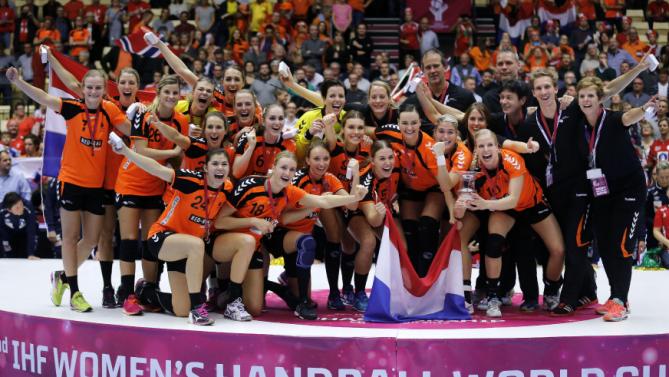
The Netherlands celebrating their silver medal at the Women’s World Championships. Yet another nation with little handball tradition finding success on the Women’s side. How might a U.S. Women’s focused initiative be implemented?

The Netherlands celebrating their silver medal at the Women’s World Championships. Yet another nation with little handball tradition finding success on the Women’s side. How might a U.S. Women’s focused initiative be implemented?

Part 1 highlighted why it’s more feasible for the U.S. to develop a competitive women’s national team.   This part further explores the implementation and merits of a women’s program development focus.

Overview and Premise: To continue the discussion from the previous part this option would call for a very focused emphasis on developing women’s handball in the U.S. In short, a conscious and deliberative decision to direct the bulk of USA Team Handball’s resources towards women’s program activities. In terms of percentages it would be in the neighborhood of 90 to 95%. Obviously, such a decision would be controversial, but doing so would almost double the funding available for the women’s program. Instead of having 2 overly austere programs, USA Team Handball would be moving closer to having 1 legitimate program. And, as previously discussed the focus would be on the program with a far greater chance of national team success.

Impact to the Men’s Program: The defunding of the men’s program would require a number of cost saving measures to include switching to a part-time unpaid volunteer coach, closing the men’s residency program, and foregoing overseas trips for friendly matches. I would suggest that support would be limited to funding World Championship and Olympic qualification match participation and even this funding might require some self-funding from athletes. In many respects this rollback would be a return to the minimal approach used for both the men’s and women’s programs from 2007 to 2012. (Don’t get me wrong: I understand how painful such steps would be, but it would be necessary if this initiative were approved.)

Possible Implementation Steps

A number of steps could be taken with this initiative, many in conjunction with other initiatives highlighted in this series. Here’s a short list:

  1. Hire an experienced European Coach with a strong track record. This would not necessarily be a top club coach, but perhaps a coach affiliated with a strong development program. Someone involved with the recently successful Netherlands development program might be a prime target.
  2. Hire an assistant coach/recruiter. Combining these two roles would theoretically result in more productive recruiting. (Link to option 2)
  3. Facilitate the establishment of a Women’s collegiate conference. As previously discussed Title IX requirements may draw NCAA interest in supporting women’s handball. Further the USOC is stepping up its efforts to work with the NCAA on funding for nonrevenue Olympic Sports. In theory a quality NCAA supported league could provide the pipeline for a competitive U.S. Women’s team. (Link to option 4)
  4. Facilitate the development of a Women’s high school league. Again, Title IX could provide a vehicle for development. If high schools are establishing competitions for non-Olympic, non-NCAA sports like flag football, it’s not a stretch to seeing competitions established for Team Handball. As previously discussed High School/Collegiate League development in one geographic area would have additional benefits. (Link to HS flag football commentary)
  5. Facilitate and provide support to select athletes so that they can join European clubs. It’s hard to imagine league play reaching the level of top clubs in Europe anytime soon. Therefore, developing athletes who can go to Europe at a young age should have renewed focus.  The U.S. might even considering an overseas program.  (Link to option 3)
  6. Provide scholarships for select athletes to attend school at Auburn. As previously discussed if funding becomes available a handful of top prospects should be given financial assistance to join the program at Auburn.(Link to option 2)
  7. Provide funding for multiple overseas trips for competition and exposure to European Clubs. These trips would provide an opportunity for the Women to grow as a team, but also strategically give them needed exposure for a potential professional contract.

Of course, if one adds up all these possible implementation steps it doesn’t take very long to bust the budget. Currently, there’s not enough funding available for one program, let alone two. If more funds do become available, however, the impact of this initiative will continue to grow at a 2-1 ratio.  In other words a legitimate, non-austere program might become a reality.

Pros

Less strain on resources: As previously highlighted the U.S. would no longer be fully funding 2 programs. Instead resources would be focused on the women’s program giving that program a better chance of sustained success.

Clear focus on fewer goals: And, of course, this will also mean that the bulk of the tasks and issues with running a men’s program would be put on the back burner.   Time spent addressing a day to day issue related to the men’s program would now instead be spent tackling some aspect of support to the women’s program. Perhaps several hours on the phone contacting potential recruits or organizing extra clinics for prospective women’s athletes.

Cons

Decreased support to men’s activities: There’s no getting around this elephant in the room. Providing less support to men’s activities will stifle development and growth for that gender.

Greater challenges in promoting women’s sports: While it’s more feasible to support and develop a successful women’s program on the court it will likely be more challenging to promote the women’s game via TV and other media opportunities. Rightly or wrongly there is simply more interest in men’s sports. One simply has to look at the limited Women’s sports viewing options on TV and the attendance for women’s sporting events to acknowledge this as a reality.

Risks

Pressure to more evenly split resources.   Favoring the women’s program is guaranteed to cause controversy even if folks can see the potential benefits. Many observers will surely point out that it’s possible to walk and chew gum at the same time. Why forgo supporting the Men’s program? Maybe a women’s focus, some will say, but why not split resources more like 60-40 or 70-30. Doing so, however, would simply water down the initiative and limit its impact. The U.S. would again be running two austere programs.

It also would not surprise me if some male athletes would take legal action and before this initiative is approved research on how other Federations like Field Hockey have handled legal concerns would be needed.

Costs

There are no added costs to implement this option. Instead this is simply a focused redirection of existing resources.

Timing for Implementation

This initiative could be implemented at any time, but a logical starting point may be the summer of 2016. Right now the women’s program is in somewhat disarray with only around 7 players training at Auburn. The program sorely needs new talent and a strong recruiting push in conjunction with the 2016 Olympic Games should have a decent chance of landing some quality athletes. And, some high quality recruits coupled with a better funded program could make some inroads towards respectability fairly quickly in Pan America. I highly doubt that it would lead in Olympic Qualification for 2020, but if the right recruits (younger, more athletic) are found it could set the stage for a realistic run for 2024.

Meanwhile, the first half of 2016 will be an excellent time to review and assess the Men’s Residency Program at Auburn. The U.S. Men will play in two meaningful World Championships Qualifying events. In March they will first participate in the North American & Caribbean Championships (NORCA) at a TBD location (reportedly Auburn is under consideration). Then, if they place in the top 4, they will participate in the Pan American Championships (18-26 June) in Argentina. I’ll speculate, however, that if the U.S. Men are going to have a respectable showing it may well necessitate fielding a roster mostly composed of Non Residency Program athletes. And, if this indeed is the case management should question the validity of the Residency Program after 2.5 years.

Final Thoughts

As a former Men’s National Team athlete it doesn’t take much for me to speculate how I would have reacted to such a move. Heck, I probably would have led the charge on legal action. But, then again, I would have also reluctantly seen the logic behind such a move. Finally, I fully recognize that while it might be logical to direct resources towards tackling one tough challenge (the one where we’ve got more chance at succeeding) then hopelessly trying to fight two battles, sometimes logic alone doesn’t carry the day.

post

Former 16 Year Old Women’s National Team Player Contemplates a Return to Handball

Taylor Proctor on defense 5 years against Canada. She’s barely touched a handball since, but could immediately be an elite player on our national team. What does that say about our current program? And, should more resources be directed towards grass roots programs that can develop talent than can contribute to our national teams at age 16?

Taylor Proctor on defense 5 years ago against Canada. She’s barely touched a handball since, but could immediately be an elite player on our national team. What does that say about our current program? And, should more resources be directed towards grass roots programs that can develop talent capable of contributing to our national teams at age 16?

There’s a nice article on former senior Women’s USA Team Handball athlete Taylor Proctor on the University of San Francisco Basketball website.  Proctor, a 21 year old senior is averaging 22.9 points/game for the Dons and is currently the 9th leading scorer in NCAA Div 1. The article highlights her role 5 years ago in helping the U.S. Women come from behind to beat Canada and qualify for the 2011 PANAM Games.

Perhaps you’re now doing a little bit of mental math (as in 21-5 = 16 years old) and a little retrospective contemplation (the U.S. qualified for the 2011 PANAM Games, but failed in its 2015 attempt.) If you are, your reaction should be along the lines of:

“Really! Huh? Too bad we don’t have her still playing. What if she had continued playing handball and had roughly the same success that she’s had playing basketball at the collegiate level. Why maybe the U.S. would have qualified for the 2015 PANAM Games. Maybe a 6’, 21 year old might be signing a contract with a top European Club?”

Whoaa. Let’s not get ahead of ourselves. It is truly amazing that a 16 year old could make some major contributions in a Senior Women’s Handball match, but it was against Canada, another struggling side in PATHF. And, it’s a bit of an assumption that NCAA Div I basketball success would equate to similar Team Handball success.

Regardless, if Proctor does forgo a post collegiate basketball career it could be a good news story for USA Team Handball. My personal opinion, is that 22 years of age is right on the edge of being too old for a residency program, but the fact that she’s had prior handball training tempers that a bit. Sure, it would be nicer to get a quality athlete like her at age 18, but it’s just not practical when a full college scholarship beckons.

But, the really big questions folks should be asking are:

  • What does it say about our current residency program if an athlete who’s barely touched a handball in 5 years could “walk on and already be an elite handball player in our program”?
  • What happened to the youth movement that seemed to be on track in 2010?
  • What are USA Team Handball’s strategic plans to facilitate the development of more athletes like Taylor Proctor (i.e. younger with real raw athletic talent)?

Here are some answers to those questions. The current women’s program is on life support. There are perhaps around 7 women athletes at Auburn training sporadically while the U.S. national team coach is living and coaching a lower level men’s club team in France. A recent national team tryout had zero female attendees. Just about any player with decent athletic talent would move very quickly up the U.S. depth chart.

What happened to the youth movement?  Only Sophie Fasold has played recently with the Women’s National Team.  She is currently playing for her club in Germany.  Kate Louthan is playing basketball at Colorado Christian University and Kiah Hicks is on the track team at Colorado State.  Morgan Thorkelsdottir was playing Club handball in Iceland in 2013, but I couldn’t confirm her current status.  Stephanie Hesser led the U.S. National Team in scoring at the 2013 Pan American Championships, but couldn’t make the 2015 tournament roster.  Outside of Fasold the youngest player on the 2015 roster were 23 years of age and the average age of the roster was 28.5.  Essentially, there is no youth movement.

And, as far as I know, there are no strategic plans to facilitate the development of younger athletes. Instead, the focus for the past several years has been to develop a residency program for national team athletes. And, then to recruit athletes as best we can to populate the program. This has resulted in the program being populated mostly with marginal, older athletes, some in their mid to late 20s. Essentially, an austere pyramid tip has been created for a virtually non-existent base.  You can decide for yourself whether resources (funding and man-hours) expended the past few years towards a residency program have been worthwhile or whether they might have been better spent towards programs like the Colorado Landsharks.  Programs that might still be producing some new talent instead of having closed up shop.

I would speculate, however, that it’s not all doom and gloom. The 2016 Olympics are just around the corner and recruiting should pick up. Hopefully, it will pick up enough so that USA Team Handball can attract some high quality athletes that are still relatively young enough to develop into quality handball players. Players that could then play overseas with a professional club to further develop their game.

And, maybe, just maybe some folks in charge will finally start to take a more critical look at the glaring disconnect between grass roots and national team efforts. And, come to the obvious conclusion that more thought and effort ought to be expended toward creating and sustaining clubs like the Colorado Landsharks/Dynamo. Clubs that found and developed talented athletes in their teens that could make real contributions on the Senior Women’s Team. Why if that were done we might even have a few more Taylor Proctor’s out there ready to join a Residency Program when their collegiate basketball careers are over.

Article highlighting youth contributions to Senior Women’s team back in 2010: Link

post

20 Team Handball Matches have been Broadcast the Past 2 Weeks on a U.S. TV Network: Few Know, Fewer Watch and No One Seems to Care

Holy crap! Is there something wrong with my DVR? 20 World Championship matches available for viewing. I must be dreaming I’m still living in France. No station here in the U.S. would ever show that much handball on TV. Why, if that were true the USA Team Handball community would be jumping up and down in celebration…

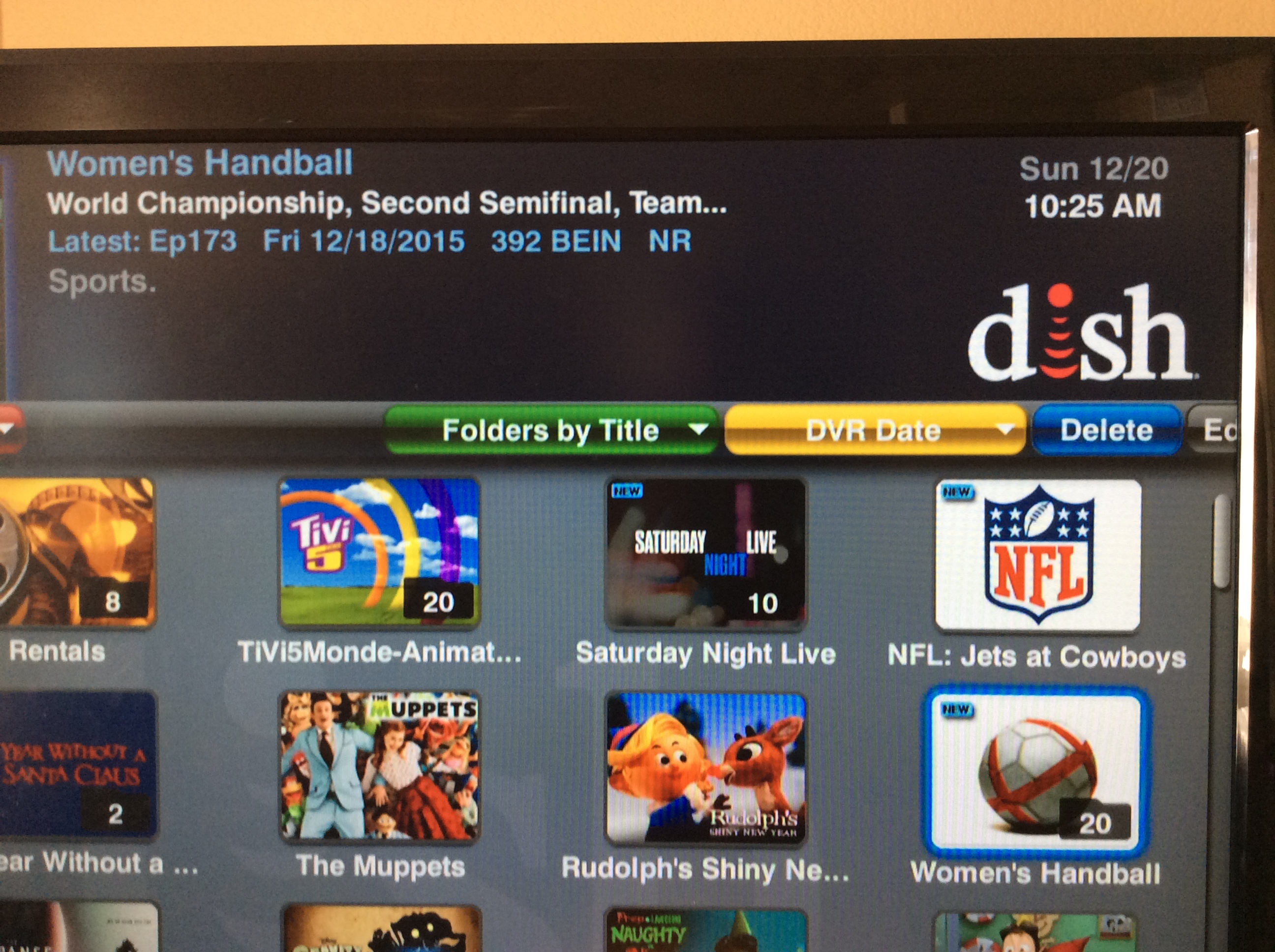
Holy crap! Is there something wrong with my DVR? 20 World Championship matches available for viewing. I must be dreaming I’m still living in France. No station here in the U.S. would ever show that much handball on TV. Why, if that were true the USA Team Handball community would be jumping up and down in celebration…

Sit down for a minutes to talk about handball with me or just peruse a few articles on this website and you’ll know just how important I think getting more handball on TV is for the development of the sport in this country. How important? I would argue that it is not just 1 of many important needs, but empirically the most important need.

Why? Well, it’s quite simple: Our sport’s awareness quotient is so dramatically low in this country that it hampers everything that we want to accomplish, be it better performing national teams or expanded youth development. There’s a reason why National Team Tryouts are so sparsely attended and why clubs struggle to fill rosters. It’s not because Team Handball is a crappy sport. It’s because too few people even know the sport exists. And, nothing could change that reality as effectively as regular TV broadcasts.

We’ve all seen the effect of Olympic broadcasts and many of us have lamented how it’s just a once every four year phenomenon. If only we could get events like the World Championship and Champions League on U.S. TV airways to keep the sport constantly in the public eye, Why, that could be the game changer of all game changers.

A Dream Come True…

Well, in some respects this dream has pretty much come true as beIN Sports US has aired 20 matches Women’s World Championship matches. Along with the weekly EHF Champions League match that means that American fans have been able to watch about 35 hours of team handball the past 2 weeks. That’s unprecedented and should be cause for celebration.

Unfortunately, though it’s just one more reason to shake your head or start banging it against the wall in frustration. Why? Well, for a number of reasons to include the following:

  • – beIN Sports has a small subscription base
  • – beIN Sports US is not promoting the sport effectively
  • – USA Team Handball is not engaging beIN Sports US for promotional coordination

Who’s Fault?

Well, I’ll point some fingers at several organizations

IHF: The IHF owns the TV rights to the Men’s and Women’s World Championships and unfortunately the IHF doesn’t appear to place any emphasis on selling those rights to networks that will maximize exposure. Instead the rights are sold to the highest bidder. Obviously, price should be a consideration but for emerging markets with huge potential more consideration should be placed on maximizing the number of homes where your product will be viewed. Case in point: A few years ago beIN Sport reportedly submitted the highest bid for the US TV rights for the English Premier League (EPL). The EPL, however, went with NBC Sports to maximize exposure. How’s that working out now? The next rights buy was for a billion dollars over 6 years and NBC shows an EPL match live every Saturday.  A billion! Still hard for this old timer to believe that development

EHF: The EHF owns the rights to the Champions League and the Men’s and Women’s European Championship. And, just like the IHF they aren’t putting any emphasis on finding the right network: Again beIN Sports is the buyer and beIN Sports does show the Champions League match of the week 3 or 4 days after its played, but has yet to show any European Championship matches. This is all very disappointing and surprising as the EHF has shown to be more forward thinking in terms of promoting the sport.

European Professional Club Leagues: Just like the IHF and EHF, pro leagues should be looking for the right network. They’re not, though. Most notably the German HBL sold its TV rights to, you guessed it, beIN Sports, which doesn’t even bother to air any matches!

USA Team Handball Management (Past): So, how did the U.S. get stuck with beIN Sports in the first place? Well, while the U.S. Federation doesn’t sell TV rights it doesn’t own, the organizations that do own the content (IHF, EHF and HBL) have a genuine interest in waking the sleeping handball financial bonanza the U.S. could be. To the best of my knowledge, however, the USA Team Handball has not effectively engaged those organizations on the importance of steering their content to the “right” channel.

A couple of striking examples: Back in 2010, yours truly informed both USA Team Handball and the German HBL, that HBL matches were being shown in the U.S. on Dish’s My Sports German Channel. Then in August 2012 with Olympic handball buzz reaching unprecedented levels no one seized the opportunity to engage ESPN and NBC on the possibility of acquiring rights to broadcast this great “new” sport after the Olympics. Pure speculation on my part, but I’m thinking the right facilitation by USA Team Handball might have resulted in upcoming TV rights for key properties heading to the “Worldwide Leader” or perhaps their top competitor, the NBC Sports Network. Instead no such facilitation occurred and beIN Sports scooped up the rights. Now, I’m not suggesting that ESPN would now be airing weekly handball matches on one of its networks, but could I see regular streaming on Watch ESPN?: Yes. And could I see the occasional match on TV like the gold medal WC game: Yes, most certainly.

beIN Sport US: So, beIN Sports US has the North American TV rights to pretty much all the worthwhile handball related TV content. They surely are doing everything within their power to get the word out regarding their handball products.  Right? Well, in theory that should be true, but, for all intents and purposes beIN Sports US has done almost nothing to promote its Handball monopoly. In most cases they don’t even bother to show the content they’ve purchased. Then when they do show the content they own it’s almost always delayed. Their “handball” page is full of articles, but amusingly just soccer articles where a “handball” occurred.  Finally, there is virtually no advertising of their handball product. Not that there’s a whole lot of places to market the sport, but there are websites and social media possibilities. And, of course a partnership/sponsorship with USA Team Handball would be a logical course of action. But, yet somehow that hasn’t happened…

U.S. Team Handball Management (Present): While USA Team Handball surely would prefer another TV network, beggars can’t be choosers- right? And, isn’t it a good thing that a network has chosen to become America’s Home for Handball on TV?

Makes a lot of sense to engage this network to discuss a number of promotional opportunities that could be a win-win for both beIN Sport and USA Team Handball. For sure, it shouldn’t take much effort to convince beIN Sport to become a USA Team Handball sponsor. A beIN Sports advertisement on the USA website is a no brainer win-win. Surely banners at National Championships make sense too. And, why not a prominent jersey sponsorship: Watch America’s team on America’s Handball channel. Maybe beIN Sport could even be convinced to cover TV production costs for some matches in the U.S. to be aired, of course, on beIN Sport.

Well, as this article title suggests if there has been any effort expended by USA Team Handball to engage beIN Sport it has been unsuccessful. I know that a few phone calls have been made but I suspect that little beyond that has been done. Heck, it wouldn’t surprise me at all if several members of the Board of Directors don’t even know that beIN Sports is broadcasting handball on a regular basis. Regardless, it’s pretty clear that while I might think that engagement with beIN Sports should be a top priority it’s clearly pretty low on USA Team Handball’s job jar list.

John Ryan: Well, I would be remiss if I didn’t point a finger back at myself. After all I am the biggest and loudest advocate for getting more Team Handball on TV the U.S. I’ve set up a Facebook page which trickles in a few more members each and every week. I’ve learned far more than I would ever have wanted too about the arcane business of TV rights distribution. I’ve contacted every single entity listed above multiple times about the need to better promote Team Handball on TV in the U.S., but I have totally failed to affect change in any shape or form.

20 World Championship matches broadcast on a U.S. TV channel in HD. Cause for celebration for the handful that know and care, but the needle for this sport’s very low awareness quotient is still suck at near zero. Honestly, I’m starting to wonder if Team Handball is just cursed and doomed to forever to be a backwater sport that no one cares about.

post

Puerto Rico on the World Stage


Puerto Rico Asst Coach Julio Sainz gets a haircut after Puerto Rico's victory over Kazakhkstan

Puerto Rico Asst Coach Julio Sainz gets a close shave after Puerto Rico’s victory over Kazakhkstan

Puerto Rico’s surprise 4th place finish at last Summer’s Pan American Championships earned them a ticket to their first ever World Championship.  Going into the tournament I figured the debutants were all but guaranteed to lose all their games on the way to a 24th place finish.  And, after their first four games in Group Play it sure looked like a good prediction as they lost to Romania, Norway, Russia and Spain by an average of 28 goals.  Their last Group Play game against also winless Kazakhstan presented an opportunity, but they were still big underdogs.  Kazakhstan is by no means a world power, but they’ve been respectable in the past, even qualifying for the 2008 Olympics.  Perhaps, motivated by assistant coach Julio Sainz’s promise to shave his head Puerto Rico used their speed and quickness to win 30-27.  (And, for those of you don’t know, Coach Sainz has been the Assistant coach for the U.S. and the LA Women’s side for several years.  Apparently, he’s on loan to the “Commonwealth”)

I’ve been able to watch bits and pieces of Puerto Rico’s matches on beIN sport.  They’ve got a really young side with an average age of 22.  And, they are undersized as well with an average height of just 5 ft 6 inches.  The inexperience really shows with lots of turnovers, but their quickness is comparable to the top teams.  If they can get some of their players playing in Europe where they can get more experience this team could have a bright future.  One player in particular, 20 year old Jailene Maldanado will likely garner some interest from a European club.  Teams are always looking for a decent lefty and surely some coach has already figured out that if she’s doing pretty well already with little experience, she might just become a star with quality regular competition.

What Might Have Been

Watching the matches on beIN Sports also has me reflecting quite a bit on what it might have meant for the U.S. Women if they had qualified.  It’s not entirely clear, but as far as I can tell there’s only a handful of women currently training at Auburn.  Certainly there’s not enough to scrimmage and reportedly a tryout last month had no women candidates.  The Head Coach is coaching a Men’s club team in France.  Essentially, there’s almost no program right now.  Qualifying for the World Championships would have kept the program intact and have given several players a tremendous experience on the world stage.  That being said, with an average age of 28.5 I’m not so sure that enough of the U.S. players were young enough that they could have realistically used the experience to build upon for future success


Also, seeing Puerto Rico play on a U.S. based TV network had me contemplating what it might have meant if the U.S. had qualified.  For several years now I’ve been advocating a sponsorship or partnership deal between USA Team Handball and beIN Sports US.  A no brainer deal that would be a clear win-win for both sides.  U.S. qualification could very well have been a tipping point that would have facilitated such an arrangement.  For sure one would think there would some promotion of a U.S. National Team playing on U.S. TV.  Something that doesn’t happen very often.