post

Handball News Summary (21 October 2013)

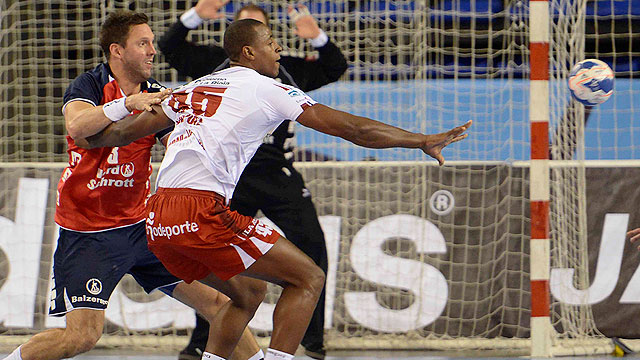
Rafael Capote scored 10 goals on Saturday against Flensburg.  Will he play for Cuba again?

Rafael Capote scored 10 goals on Saturday against Flensburg. Will he play for Cuba again?

1) Cuban player scores 10 and makes EHF CL weekly Best 7 player list. Rafael da Costa Capote who plays for Naturhouse La Rioja in Logrono, Spain was on fire this Saturday against Flensburg. The 26 year old Capote defected while in Brazil for the 2007 PANAM Games and has apparently bounced around a little, first playing in Italy and now Spain.

ehfTV: Video (Best 7 of week 4): Link
ehftTV: Video (Match Highlights): Link
THN article from 2007 on his defection: Link

2) New Danish head coach advocates a shot clock for handball. Gudmundur Gudmundsson, following a Rhein-Neckar 23-22 loss to Luebbecke expressed his frustration with handball’s “passive play” rule and its inconsistent application. Even going so far as to advocate an NBA style shot clock.
Handball-World: Link
Original article in Mannheimer Morgen (German): Link

3) Alex Dujshebaev called up to Spanish National Team. In what will likely be the first of many International Games, 20 year old Alex Dujshebaev will play next month for Spain in two friendlies against Hungary.
Handnews.fr (French): Link

post

VIDEO: Champions League Group Play (Week 4)

Geipel/Helbig:  They handled the pressure in Reno.  Can they handle the PSG-Barca showdown?

Geipel/Helbig: They handled the pressure in Reno. Can they handle the PSG-Barca showdown?

ehfTV’s designated “Match of the Week” has two well known European soccer sides (Barcelona FCB and Paris St-Germain) meeting for the first time in EHF Champions League play.  Barca, of course, has also long been a handball power as well, but Paris St-Germain has only recently teamed up with Paris Handball.   And not only teaming up, but providing through their new Qatari owners an influx of cash and player signings to reportedly making it the highest player payroll team in Europe.  PSG, however, has stumbled a bit in CL playing, losing and drawing in Skopje to Metalurg and Vardar, respectively.   Barca also drew against Vardar in Skopje, but they are on top of Group C, thanks to their convincing wins at home against Wacker Thun and Metalurg.

A side note for U.S. fans watching the match:  The German referees assigned for the match, Lars Geipel and Marcus Helbig, were the same International officials on hand earlier this year in Reno, Nevada for the USA National Championships.  During the tournament I interviewed both officials and discussed their perspective on the quality of the American sides as compared to German clubs and their experiences in Reno.  The interview is a short 5 minutes and can be accessed at the bottom of this post.

Paris St-Germain vs. Barca (Sunday, 20 Oct 1700 CET/1100 U.S. Eastern Time)
Video: Link

If you can’t catch the match live it will also be available later “on demand”. Further, U.S. residents with beIN Sport can also catch a retransmission on Sunday at 1800 (Eastern Time).  (Thanks, beIN Sport, for not making me wait until Wednesday!)

The other big match this weekend will be a Group B showdown between Poland’s Kielce and Germany’s Kiel.  Last year both sides made it to the Final Four with Kielce beating Kiel, 31-30 for 3rd place.  This year both side are undefeated and Group B and it won’t be surprising if the two matches between these sides decides who gets 1-2 in the Group.

Kielce vs Kiel (Saturday, 19 Oct 1815 CET/1215 U.S. Eastern Time)
Video: Link

On paper, the other matches this weekend are of less interest, featuring either mismatches or battles for 3rd place on the table.   That being said, mismatches on paper sometimes end up being far more interesting in real life.  The times and links are easily accessible at the ehfTV web page.

(Note:  I will replace the live video links with on demand video links when they are available at the ehfTV website. If you go to the ehf website yourself click on the side arrows to get to the “Full Match” page. A word of caution, however, the EHF sometimes posts match interviews with revealing titles like “Jicha scores the decisive goal,” so you might want to use a sheet of paper to mask the screen if you want to watch the matches oblivious to the outcome.)

ehfTV Page: Link

EHF Week 4 Preview: Link (A written summary by Bjoern Pazen previewing all 12 matches)

Tom Ó Brannagáin’s latest blog post: Link

post

Handball News Summary (16 October 2013)

With lots of recent developments here's an all Pan American update.

With lots of recent developments here’s an all Pan American update.

With several articles of interest from the Mundo Handball and Handball Deprimera websites here’s an all Pan-America edition.

1) NOR.CA Championships to be played in Mexico. Citing a Handball Deprimera interview with PATHF Executive Director, Miguel Zaworotny, Mundo Handball reports that the tournament will be held in Mexico the last part of January. Separately, USA Team Handball CEO Matt Van Houten has indicated via email that the latest information he had been provided was for 23 February to 1 March 2014 in Mexico City.  (Note:  Historically, dates, times and location for PATHF related events have often changed multiple times before being confirmed.)
Mundo Handball (Spanish): Link

2) Cuba to compete for 2016 Olympic Qualification. In the same Handball Deprimera interview, Zaworotny indicated that Cuba intends to compete for 2016 Olympic qualification. (Note: I’ve inquired as to whether Cuba will also participate in the upcoming NOR.CA Champioship, but I haven’t received any confirmation yet.)
Mundo Handball: Link

3) Haiti to begin participation in PATHF Competitions. Again, from the Zaworotny interview. Haiti has not participated any events in a long time, if ever.
Mundo Handball : Link

4) Peru Handball Federation reaction to Lima’s selection as the 2019 PANAM Games host city. Ruben Gomez recaps an interview on the Handball Deprimera website with the Peruvian Federation and compares Peru’s situation to GBR and the London Olympics.
Mundo Handball (Spanish): Link

5) Argentina requests nearly a 1 month release for professionals playing in Europe. The South American Games in March 2014 will serve as the qualification even for the 2015 PANAM Games and the 2014 Pan American Championships. This is a key event for the Argentinian national team, but it remains to be seen whether their clubs will release them for that length of time.
Mundo Handball (Spanish): Link

post

AUDIO: Aarhus Handball Academy: Developing handball players through a combination of focused training and club competition

Aahus3

Athletes training at the Aarhus Handball Academy in Denmark.


Last month a notice that 11 players from Alberta, Canada were training at the Aarhus Handball Academy in Denmark took me by surprise.  To find out more about the program and why so many Canadians were trekking over to Denmark  I then interviewed, Alberta Team Handball Federation Executive Director Mike Nahmiash.

This time around I get the perspective from the staff at the Aarhus Handball Academy.  In this podcast interview with Headmaster, Aksel Nørgaard, and Coach Jesper Holmris we covered a number of topics including how the Handball Academy got started, the player experience at the Academy and playing with Danish club teams and whether age 22-23 is too late for a newcomer to start playing handball.

With Coach Holmris we also discussed his experience coaching the Great Britain Women’s National Team, the role the Handball Academy played in training British players in preparation for the 2012 London Olympics and what worked well and what in hindsight might have been done to better support the program.

We then close out the interview with a discussion of what could be done with a team of top athletes from the U.S. or another country could accomplish with a focused 2-3 year program there.

Aarhus Handball Academy website:  Link

Alberta player blogs: Link   (Several players at Aarhus are blogging about their experience)

post

VIDEO: Champions League Group Play (Week 3)


Talant Dujshebae will be in the stands in Skopje to see Vardar take on Paris SG.  Will he soon be the coach of either of those teams?

Talant Dujshebaev will be in the stands in Skopje to see Vardar take on Paris SG. Will he soon be the coach of either of those teams?

ehfTV’s designated “Match of the Week” has the two evenly matched foes with France’s Dunkerque hosting Denmark’s Kolding facing off in a Group B clash.  It’s still early in Group Play, but with two losses under its belt Dunkerque need’s a win badly if it still has plans on moving to the round of 16.   Dunkerque is a .5 goal favorite.  ehfTV’s Tom Ó Brannagáin’s will be on site with English language commentary.

Dunkerque vs. Kolding (Sunday, 13 Oct 1700 CET/1100 U.S. Eastern Time)
Video: Link

If you can’t catch the match live it will also be available later “on demand”. Further, U.S. residents with beIN Sport can also catch a retransmission on Wednesday, 16 October at 1700 (Eastern Time).

While Dunkerque vs. Kolding is the designated match of the week, in my opinion there are two far more interesting contest taking place on Sunday:

Vardar Skope vs Paris SG (Sunday, 13 Oct 1900 CET/1300 U.S. Eastern Time)
Video: Link

Two weeks ago Paris lost to the other Skopje team, Metalurg.  Now they return to play Vardar in the same arena.  Vardar already fought Barca to a draw there so could the world’s richest club lose again in Skopje to fall to 5th place in Group C?  Maybe Coach Philippe Gardent’s job is in jeopardy?  And what of Vardar?  They just sacked their coach and rumors are running rampant that former Madrid Coach, Talant Dujshebaev could be their next coach.  Dujshebaev will be in the stands to watch his son Alex play for Vardar and he swears that this trip was planned weeks in advance.  Who knows?  Maybe Dujshebaev will end up coaching who ever loses this match.  Has there ever been a match with so many questions?  All in the cauldron that is Boris Trajkovski Sports Center: perhaps the best place in the world to watch a handball match.

Nothing against the fine folks in Northern France, but Tom Ó Brannagáin and the rest of the EHF team should accidentally get on the wrong flight and head for Skopje. This is the real Match of the Week.   Quite frankly I don’t think I’ve ever been so eager to see a Group Play match.  Let’s hope it lives up to expectations. (Paris is a 2 goal favorite.)

Wisla Plock vs Kielce (Sunday, 13 Oct 1930 CET/1330 U.S. Eastern Time)
Video: Link

This all Polish clash should be entertaining.  Kielce has been the top Polish side for the past few years, but Wisla Plock with a few new roster additions would like to unseat them.  Kielce already beat Plock 32-28, so this will be a chance for them to make amends.  .

I will replace the live video links with on demand video links when they are available at the ehfTV website. If you go to the ehf website yourself click on the side arrows to get to the “Full Match” page. A word of caution, however, the EHF sometimes posts match interviews with revealing titles like “Jicha scores the decisive goal,” so you might want to use a sheet of paper to mask the screen if you want to watch the matches oblivious to the outcome.

ehfTV Page: Link

EHF Week 3 Preview: Link (A written summary by Bjoern Pazen previewing all 12 matches)

Tom Ó Brannagáin’s latest blog post: Link

post

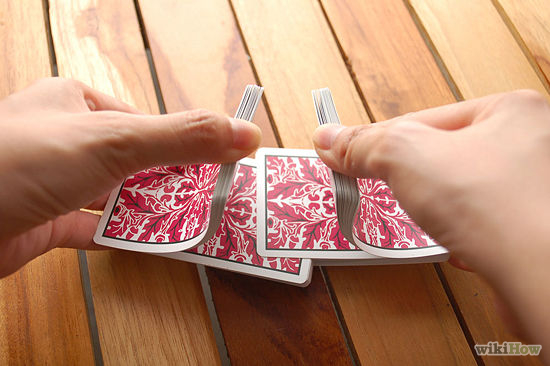
Shuffling the Deck: Rethinking the IHF Olympic Qualification Tournaments

Shuffling the deck:  Rethinking the seeding of Olympic Qualification Tournaments

Shuffling the deck: Rethinking the seeding of Olympic Qualification Tournaments

Christer Ahl’s preview of the upcoming IHF Congress he noted that Japan and South Korea were proposing changes to Olympic qualification to add more slots for non-European nations.  As anyone who’s watched Olympic handball  knows with the exception of the South Korean women these tournaments have been very heavily weighted towards European nations.  And yes, that reflects actual relative strengths of the continents, but the optics of a mini European tournament on the Olympic stage are problematic.

I haven’t seen the exact proposals, but reportedly they would give Africa, Asia and Pan America 2 guaranteed slots each thus limiting Europe to a maximum of 6 of the 12 slots for the Olympics.  Christer concluded that this was going a bit too far and suggested that instead one of the 3 Olympic qualification tournaments be set aside for the non European nations.

This got me wondering just what exactly this might mean for the Olympic Qualification tournaments in terms of competition so I took a look at the 2012 tournaments and reshuffled them using Christer’s suggested compromise.

2012 Men’s Olympic Qualification (actual tournaments and results)

IHF Qualification Tournament #1
2nd at 2011 WC (Tournament Host): Spain
7th at 2011 WC: Poland
Europe (2nd place at 2012 EC): Serbia
Africa (2nd place at 2012 African Championships): Algeria

Results
1) Spain (3-0-0) 6 Points
2) Serbia (1-1-1) 3 Points +5 Goal Differential
3) Poland (1-1-1) 3 Points -10 Goal differential
4) Algeria (0-0-3) 0 Points

IHF Qualification Tournament #2
3rd at 2011 WC (Tournament Host): Sweden
6th at 2011 WC: Hungary
Pan America (2nd at 2011 PANAM Games):  Brazil
Europe (3rd at 2012 European Championships): Macedonia

Results
1) Sweden (3-0-0) 6 Points
2) Hungary (2-0-1) 4 Points
3) Brazil (1-0-2) 2 Points
4) Macedonia (0-0-3) 0 Points

IHF Qualification Tournament #3
4th at 2011 WC (Tournament Host): Croatia
5th at 2011 WC: Iceland
Asia (2nd at Asian Olympic Qualification Tournament): Japan
Pan America (3rd at 2011 PANAM Games): Chile

Results
1) Croatia (3-0-0) 6 Points
2) Iceland (2-0-1) 4 Points
3) Japan (1-0-2) 2 Points
4) Chile (0-0-3) 0 Points


2012 Men (with proposed alternative)

IHF Qualification Tournament #1
2nd at 2011 WC (Tournament Host): Spain
4th at 2011 WC: Croatia
6th at 2011 WC: Hungary
Europe (2nd place at 2012 EC): Serbia

IHF Qualification Tournament #2
3rd at 2011 WC (Tournament Host): Sweden
5th at 2011 WC: Iceland
7th at 2011 WC: Poland
Europe (3rd at 2012 European Championships): Macedonia

IHF Qualification Tournament #3
Pan America (2nd at 2011 PANAM Games) (Tournament Host): Brazil
Africa (2nd place at 2012 African Championships): Algeria
Asia (2nd at Asian Olympic Qualification Tournament): Japan
Pan America (3rd at 2011 PANAM Games): Chile

2012 Women’s Olympic Qualification (actual tournaments and results)

IHF Qualification Tournament #1
France (2nd at 2011 WC) Host
Montenegro (7th at 2011 WC)
Romania (Europe #2)
Japan (Asia #2)

Results
1) Montenegro (3-0-0) 6 Points
2) France (2-0-1) 4 Points
3) Romania (1-0-2) 2 Points
4) Japan (0-0-3) 0 Points

IHF Qualification Tournament #2
Spain (3rd at 2011 WC) Host
Croatia (6th at 2011 WC)
Argentina (Pan America #2)
Netherlands (Europe #3)

Results
1) Spain (2-0-1) 4 Points (+3 GD in head to head games vs Croatia and Netherlands)
2) Croatia (2-0-1) 4 Points (+0 GD in head to head games vs Spain and Netherlands)
3) Netherlands (2-0-1) 4 Points (-3 GD in head to head games vs Spain and Croatia)
4) Argentina (0-0-3) 0 Points

IHF Qualification Tournament #3
Denmark (4th at 2011 WC) Host
Russia (5th at 2011 WC)
Tunisia (Africa #2)
Dominican Republic (Pan America #3)

Results
1) Russia (3-0-0) 6 Points
2) Denmark (2-0-1) 4 Points
3) Tunisia (1-0-2) 2 Points
4) Dominican Republic (0-0-3) 0 Points

2012 Women (with proposed alternative)

IHF Qualification Tournament #1
2nd at 2011 WC (Tournament Host): France
4th at 2011 WC: Denmark
6th at 2011 WC: Croatia
Europe (2nd place at 2012 EC): Romania

IHF Qualification Tournament #2
3rd at 2011 WC (Tournament Host): Spain
5th at 2011 WC: Russia
7th at 2011 WC: Montenegro
Europe (3rd at 2012 European Championships): Netherlands

IHF Qualification Tournament #3
Pan America (2nd at 2011 PANAM Games) (Tournament Host): Argentina
Africa (2nd place at 2012 African Championships): Tunisia
Asia (2nd at Asian Olympic Qualification Tournament): Japan
Pan America (3rd at 2011 PANAM Games): Dominican Republic

Analysis

If one compares the actual tournaments that took place and the hypothetical tournaments that would have taken place a few trends can be discerned.  Here are the major impacts as I see it:

1) Every nation would have a shot at qualifying:  In theory, this was already the case, but in reality the prospect of any of the non-European teams knocking off 2 European teams at a tournament staged in Europe was pretty remote.  Intead those non-European teams would have legitimate chances with a tournament featuring evenly matched 2nd tier nations.  I suspect that Brazil and Algeria would have qualified in the Men’s tournament, but I wouldn’t have counted out Japan or Chile.  With the Women’s tournament I’m guessing that Tunisia and Japan would have qualified, but Argentina as the theoretical host would have been in the mix as would have been the athletic Dominicans.  And it goes without saying that any of the European sides could have envisioned themselves placing 2nd in the European tournaments.

2) Every nation would have a a very real possibility of not qualifying.   Conversely, those European nations would also face a very real prospect of slipping up and not qualifying.  Again, this was already the case, but pretty unlikely.  Most egregious are the 3rd qualification tournaments with 2 European and 2 non-European teams.  Those tournaments have been essentially glorified exhibitions that unfairly reward the 4th and 5th place WC qualifiers with all but free tickets to the Olympics.  With 4 European nations participating in the alternative setup even the host nations would have to be very wary of a slip up against 3 opponents each capable of beating them.

3) Tournaments worth watching:   A corollary of 1 and 2 above, from a fan perspective is that 3 tournaments with relatively predictable results would be replaced with 3 wide open tournaments.  Instead of perhaps 1 or 2 interesting matches among the 3 tournaments almost every match in the alternative setup will be competitive.  Heck, I would even bet that some of those tournaments would see a final day with every side still having a chance at qualification.  Talk about TV worth watching!

4) New nations qualifying for the Olympics.  Aside from the better qualification tournaments, opening up 2 spots provides an Olympic opportunity for nations like Japan, Algeria, Chile and the Dominican Republic.  Participating in an Olympics can provide a tremendous boost to the development of the sport in countries where the sport is less popular.  While, I’ve seen first hand how this boost wasn’t  sustained as much as I would have liked it to have been in the U.S. after the 84 and 96 Olympics it still was significant.  (For instance this website surely wouldn’t even exist.)  And while the U.S. example might not be a good one, take a look at what has happened in countries like Egypt, Tunisia, Brazil, Argentina and South Korea.  Creating more opportunities for more nations means more potential for making the sport truly global.

5) Two European nations would miss out.  Of course, this is the corollary to #4.  Is it fair to “punish” a better European side, perhaps a side that could beat the non-European side by 10 goals?  Should a professional player who’s devoted his/her life to the sport sit at home while an amateur player who’s played for a few years walks into an Olympic Stadium during the opening ceremonies?  It’s hard not to be sympathetic to the plight of those would be athletes.

6) The quality of the Olympic Tournament would decline.  Obviously, if you take out 2 of the top 9 nations of the world and replace them with 2nd tier nations the overall quality of the tournament will decline.  The question then becomes one of how serious of a decline would it be?   Realistically, at this point in time I don’t think any of the 2nd tier nations that would be capable of reaching the semifinals.  Whereas, the 8th and 9th European representative would have a legitimate outside chance of doing so.  So, we would be replacing a really long shot with just a long shot.   And there would likely be a couple more lopsided scores, but I think these 2nd tier nations are capable of playing competitively against the top nations maybe even getting an upset along the way.   In other words, losses of 5-10 goals instead of 20 goal shellackings.

Overall, I would argue that the benefits of  the proposed tweaking of the qualification system to allow more non-European nations outweigh the negative consequences.  As Christer suggested, balance is what’s desired.  Adding 2 non European nations seems about right at this point in time and it would help the growth of the game.
 

post

Handball News Summary (9 October 2013)

2014 African Championships Draw Results

2014 African Championships Draw Results

1) Draw results for African Nations Cup. Earlier today the draw for the 21st African Championships was held. Both the men’s and women’s tournaments will be in Algiers, Algeria from 15-26 January, 2014. The top 3 men’s teams and a TBD number of women’s teams will qualify for the 2015 World Championships.
Africa Top Sports (French): Link

Men
Group A: Tunisia, Egypt, Cameroon, Gabon, Libya, Senegal
Group B: Algeria, Morocco, Congo, DRC, Angola, Nigeria

Women
Group A: Algeria, Congo, Senegal, Cameroon
Group B: Angola, Congo, Equatorial Guinea, Tunisia

2) Speculation is rampant that Talant Dujshebaev will soon be the coach at Vardar Skopje.  Vardar abruptly dismissed coach Zoran Kastratovic earlier this week and with Dujshebaev’s son Alex playing with the club many are thinking he will be the next coach.
Marca.com (Spanish): Link
Video: EHF Google Hangout: Link  (Talant Dujshebaev’s future is debated for several minutes at the start of the discussion.)

3) Gudmundur Gudmundsson to be named new coach of Denmark. Gudmundsson who previously coached his native Iceland to the 2008 silver medal is expected to be announced as the designated successor to current coach Ulrik Wilbek. It’s also widely speculated that he will end his coaching duties with Rhein-Neckar at the end of the season.
Handball-World: Link

4) Lar Christiansen supplements his retirement income. Following in the tradition of Jim Palmer and Michael Jordan Christiansen is pitching men’s underwear.
Handball World :  Link

5) Diego Simonet on Canal+. French Channel Canal+ has a short video feature on the Argentine finding a home with French club, Montpellier.
Handnews.fr (French): Link

post

The IHF Congress: Part 3 — Proposed Changes in the IHF Statutes and other Motions

Dangerous indications of plans for stronger autocracy still remain.

In the two previous installments (Part 1 and Part 2), I commented on the elections and on issues related to the budget.  In this final pre-Congress article I will make some observations on the ‘motions’ which have been submitted by the Executive Committee and by member federations.  This may seem a rather ‘boring’ topic and I will not get into the small details; instead I will focus more on the overall impression created by these motions.

Motions for Changes in the IHF Statutes

In connection with the previous two Congresses, I strongly criticized the attempts by the IHF president to change the IHF Statutes in ways which were consistently intended to strengthen his power and that of the Executive Committee in totally inappropriate ways, at the expense of all other stakeholders.   On those occasions, several very important provisions were involved, which would have substantially and negatively affected the decision-making process and the operations of the IHF.  Many of these attempts were fortunately resisted by the Congresses and therefore dismissed or modified.

On this occasion, the proposals from the president are relatively more innocent, although only in the sense that they do not involve the ongoing decision-making.  But it is apparent that he cannot just resist the temptation to act in a heavy-handed and top-down fashion, which just confirms his belief in autocracy instead of democracy.  Most of the proposed changes involve new limitations, prohibitions, suspensions and other forms of punishment.  There is also a strong notion of more direct control and interference from the president and the Executive at the level of Continents and National Federations.  Here is the gist of some examples:

– A new clause is being proposed with the suggested intention of protecting the IHF and its member federation from external political influence, clearly in the spirit of the newly elected IOC President, who has always been obsessed with this topic.  It is fine that ‘political influence’ is resisted, but this amounts to hypocrisy when one knows that the IHF has member federations governed by the country’s regime, just like the IOC has many members from ruling families.  Moreover, more external insight is just what the corruption-prone IHF and some its members really do need!

– It is being specified that when continents organize qualifications for the IHF events, these games must be played under the IHF Rules of the Game.  This should be self-evident, as no member federation has the right to deviate from those rules without special permission.  Based on the experience in Asia for the 2008 Olympics, it would seem more important to insist that such events be held with a guarantee of fair play and freedom from manipulation…

– It is proposed that the IHF shall have the right to supervise elections in all member federations, and that they shall be required to invite the IHF president to all congresses of Continental Confederations.   This idea is really laughable or insulting, considering the reputation of the IHF president and the running of the IHF elections.   Moreover, it is proposed that the IHF president should be able to recommend the suspension of a Continental Confederation, its right to be represented in the IHF Council, and its teams participation in IHF events, “if the IHF president deems that the Continental Confederation does not respect normal democratic procedures’!!!   Who is he to judge anyone in such matters??

– You might think that a whole set of proposals regarding an Athletes’ Commission would be a positive step.  But, as I have reminded recently, such a Commission has in theory existed for many, many years, except that the IHF president has not allowed it to work, to meet, to participate in the IHF.  So, even if it is now proposed that the Chair of this Commission should become a member of the IHF Council, the more basic issue is if the Commission is going to be allowed to do meaningful work and have any influence.   Moreover, player representatives have already expressed objections to the idea that the players will not be allowed to nominate their own candidates.   Instead, they will be limited to voting for candidates proposed by the member federations.

Motions from Member Federations on Other Topics

– China and Korea have submitted very similar motions regarding the opportunities for teams from outside Europe to qualify for the Olympic Games.  Currently each continental federation (Europe, Africa, Asia and Panamerica) are guaranteed one participant each. One spot is reserved for the host and the reigning World Champions and the remaining 6 places are awarded in 3 qualification tournaments.  European teams have dominated these qualification tournaments resulting in either 8 or 9 (when Europe hosts) of the 12 nations at the Olympics being European sides.  While this may reflect traditional strengths, it also presents an image of a sport that is not truly global.   China and Korea now want to see at least two entrants from each continent, with a chance for even more non-European teams through qualifying.   The Council has concluded, correctly in my opinion, that this goes too far as it would diminish the quality of the competition.   A more realistic approach might have been to keep the mandatory places remaining unchanged, but with a total of two more slots being reserved for the three continents via the qualifying.  With twelve teams participating in the 3 qualification tournaments, the four non-European nations could simply be placed in the same group.

– Norway is seeking a change in the playing rules.  This is somewhat unusual, as it is normally understood that such changes have a separate process, so the IHF tends to refer proposals to the Rules and Referees Commission.   The motion deals with a genuine issue:  too often it happens that a player tries to fake or exaggerate an injury to get the referees to stop the game, thus avoiding a counterattack for the opponents or simply gaining a tactical stoppage.  So the idea would be that the player would then have to leave the court until there is a change in possession, in the hope that this would discourage the faking.   The idea has some complications, as it equates a ‘fake’ with a genuine injury caused by an opponent, something that may not be so fair.   But what is interesting from a U.S. perspective is that the idea is not new.  It was forcefully pursued by our former federation president Peter Buehning Sr. some 20 years ago.  There was some support at the time, but the IHF concluded then that the complications outweighed the advantages.

post

American Football and Team Handball (Part 1): Proof that an alien game can take root in unlikely places

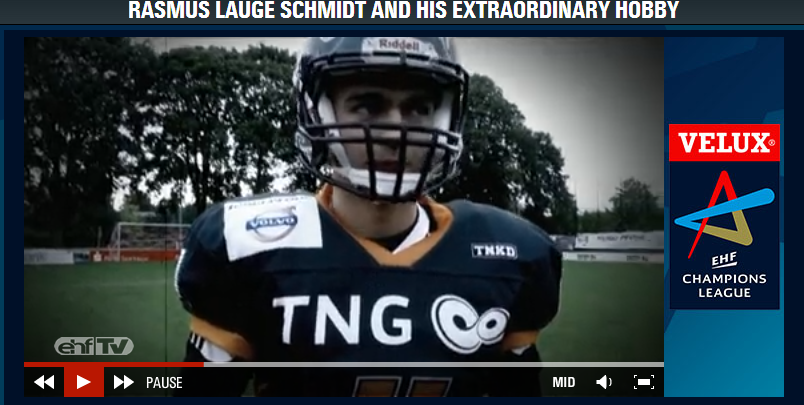
Rasmus Lauge-Schmidt is a huge fan of American Football; How about finding and creating some American footballers who are fans of Team Handball?

Rasmus Lauge-Schmidt is a huge fan of American Football.  How about finding and creating some American footballers who are fans of Team Handball?

The ehfTV “Rewind” show is highlight show of Champions League action with a few interviews thrown in for good measure. Last week, as an American I did a double and triple take when I saw the “Inside the Game” profile with Kiel’s Danish center back Rasmus Lauge-Schmidt. The cause of the double take? The video shows Lauge-Schmidt practicing a bit of American Football in full pads.

It turns out that the 22 year old, Lauge-Schmidt is a huge fan of the National Football League (NFL), the professional football league in the USA. So much so that every Sunday night he watches from 7:00 PM until the early hours of the morning. (As a former resident of Europe, I can attest to doing the same thing; That time change certainly alters your NFL viewing clock.) I haven’t confirmed with Lauge-Schmidt, but I’m pretty sure that his fandom has been restricted to viewing and he’s never actually played the game. I suspect that the EHF set up a mock practice with the local club in Kiel to provide some good optics for the interview. After all, it can be a little boring to just watch someone talking. And the interview did get me thinking about the current status of American Football in Europe and some lessons that might be applicable to Team Handball in the U.S.

American Football popularity abroad

A lot of people in the U.S. are probably under the impression that the game isn’t played much outside of the U.S and Canada and while that’s certainly true to an extent, the sport is played in most European nations. I was first made aware of this many years ago when I stumbled upon a full contact scrimmage of the London Ravens in Hyde Park. Long time LA handball player, Mika Maunala, amused me with stories of playing QB in Helsinki and I had a German work colleague in Paris that played, by coincidence for the club in his hometown, Kiel. (Yes, ironically I was the bigger handball fan in my office.) Sure enough Lauge-Schmidt photo op was with the local club there, the Kiel Baltic Hurricanes.

It’s hard to fully gauge how popular a sport is from a few personal anecdotes, but clearly American Football is gaining a foothold in Europe. NFL broadcasts are readily available in most countries even if it’s usually with a cable outlet. In London the NFL now plays two regular season matches to sell out crowds of 80,000 plus at Wembley Stadium.  There’s quite a list of nations with leagues even if it’s uncertain as to the level of amateurism/professionalism, but at least some of the teams appear to draw decent crowds. The Hurricanes for instance drew 7,000 fans for a semifinal match recently. While that doesn’t even begin to approach a typical crowd at an NFL game the U.S. right now can only dream of a crowd approaching that for a handball match in this country.

Such a foothold wasn’t obtained through osmosis. Sure, it’s a great game to watch and generally when newcomers are exposed to the sport they become fans. Lauge-Schmidt is but one example. Virtually every expat I’ve met who’s emigrated to the U.S. has become a fan of the sport. (count my colleague, Christer Ahl in that category.)  There’s lots of sports that fall into that category and just like American Football generally newcomers to Team Handball like what they see when exposed. And that’s where the NFL is the difference maker as they do an absolutely masterful job of packaging and promoting the sport. Perhaps this can best be summed up by what I heard French basketball player Tony Parker say once in describing American sports production:  “They make every weekend of games seem like the World Cup.”  The pageantry, aesthetics and TV production involved in packaging the sport are simply unmatched. And the promotion is strategically planned both home and abroad. For years the NFL has cultivated a following. Even going so far to create an NFL developmental league there for several years. While that league eventually folded it surely played a key role in the sports development overseas.

Proof that foreigners can learn to play an alien game at the highest level

If there ever was greater proof staring the handball world in the face that it’s possible for a game totally alien to a country’s sporting culture to take root there is no better example than American Football in Europe. Sure, the sport isn’t as popular as many other sports, but think of all the crazy obstacles it’s overcome to reach the level of popularity it has. First off, there are probably only a handful of games more expensive to play. Unlike the typical school team in the U.S. with equipment handout on the first day of practice every player has to buy his own personal set of pads. Then think of the complexities of the game that have to be learned. The idiosyncrasies of the rules and the penalties might seem second place if you’ve watched it all your life, but coming in cold it’s pretty complex. Finally, think of all the unique skills like blocking and tackling that have to be taught and learned. Not to mention the concept of intricate play calling where every single player has to memorize responsibilities and formations for every single play. With all those obstacles to overcome it’s a wonder that the sport is played anywhere outside the U.S. and Canada.

Yet, amazingly the level of play has risen to the point where there’s now a trickle of foreigners getting recruited by American colleges and then eventually making it into the ranks of the NFL. Notably, there are now two established German players, Bjoern Werner and Sebastian Vollmer. Probably not household names back home, but with salaries of $2M and $4M respectively they make more on a yearly basis than anyone playing handball in the German Bundesliga. If Germans can learn to play American Football to the highest level it’s not so difficult to think that Americans can do the same with Team Handball. And while it has indeed happened in recent times, Americans (who learned the game in the U.S) haven’t ascended to anywhere near the highest levels in Europe. For instance, arguably America’s current best player, Gary Hines, plays for German 3rd Division side, HC Bad Neustadt.

Probably, for Americans to make the leap into the upper pro ranks in Europe, it will take a greater number of athletes picking up the game at younger ages. And then those athletes heading over to Europe at younger ages with enough time to further develop as players so that top clubs are interested in signing them.

Or, alternatively, some absolutely top quality athletes could be enticed to give Team Handball a try after their career with their first sport winds downs. In Part 2, I’ll take a closer look at this possibility with a focus on the American Football to Team Handball pipeline.

post

Handball News Summary (4 October 13)

Karabatic


1) The percentage of non-German players in the HBL is most pronounced at Center Back.  Handball Time magazine in Germany provides a detailed analysis of foreign participation in the HBL. Additionally, it’s noted that the percentage of foreign players in the HBL isn’t that different from other sports.
Handball World (German): Link

2) Barca with bargain season ticket plan. 73 Euros is all that is required to get a seat for every home Liga ASOBAL and Champions League match. For roughly the same price you can get tickets to 2 matches at Flensburg. If it wasn’t obvious before it’s totally self evident now that only a tiny fraction of Barca’s payroll is paid with handball related revenue.
Diario ASOBAL (Spanish) : Link

3) Arab Gulf nations stage first ever Women’s International Tournament.  Kuwait is hosting Qatar, Bahrain, Oman and the United Arab Emirates in a 6 day long tournament.
Arab Times: Link
Kuwait Times: Link

4) Nikola Karabatic supplements his income. The Stade Francais Rugby Calendar has a guest handballer gracing it this year. It’s the 3rd time Karabatic has posed for the promotional calendar.
Handnews.fr (French):  Link 

post

The IHF Congress: Part 2 – Budget, Planning, New Members, Events

It is an embarrassingly small portion of the IHF budget and the technical resources that is spent on true development aid

An embarrassingly small portion of the IHF budget and its technical resources are devoted to legitimate development efforts.

In part 1 of my IHF Congress preview, I reviewed the upcoming elections for some key IHF posts.  In this part, I review mainly the budgeting and planning aspects..

My main concern under this heading is the traditional lack of strategic planning, and the complete silence regarding visions, goals and methods.   There is no room on the agenda for a discussion of such matters.  The only reporting about activities is the president’s personal report, which tends to be a retrospective about his meetings and travels, and certainly not an explanation of the big picture.  Similarly, during my many years in the IHF, there was no attempt to discuss broad strategies and goals in the Council, and I cannot imagine that this has changed after the president became a full-time occupant in the office in Basle, with a focus on micromanaging the activities.

Budget

The budget proposal for 2014-15 looks very similar to budgets I have observed in the past.  There is a slight difficulty in seeing changes and trends from year to year, as the budget oscillates because every other year has the two senior World Championships and a Congress.   However, if one chooses 2015 as an illustration, then the total expenses are in the order of 22 million Swiss Francs (Currently 1 Swiss Franc = $1.11).  From this total, about 2 million, less than 10%, goes to the item ‘development aid’.  A special ‘four-year program’ is in roughly the same category and gets 1 million (5%) and other technical efforts (global referee training, beach handball, and women’s handball) get about 1 million (5%).  Then one could say that the IHF Trophy, competitions for the new handball countries in an indirect way also helps with development. It has a budget of 2 million.

It seems that for an organization that has global development of handball as its main reason to exist, the overall amounts are certainly not of a magnitude that should cause the developing countries to be grateful and happily re-elect the senior IHF officials!  Especially if one sees that the money budgeted for World Championships in 2015 is 8.5 million, i.e., 40% of the budget and much more than goes to development.  The remaining 30% goes to various aspects of administrative expenses, with no less than 4 million (20%) going to salaries, benefits and other forms of personal compensation…

On the income side, the totally dominating item is the money from the selling of the IHF TV rights, so no wonder that this is an area which lends itself to manipulations and suspicions of wrongdoing (see my recent article).  On average, the annual income in recent years was 10 million, which is the ‘placeholder’ level also in the 2014-15 budgets, as there is not yet a contract for that period.  The average distribution of Olympic revenues to the IHF is 4.5 million per year.  Marketing brings in a very modest 3 million, and the aggregate sponsor income is a measly 1.5 million.  As I see it, those numbers are embarrassing.  And then comes the question:  what is the purpose of a projected surplus of almost 5 million in 2013 and projected surpluses of 1-2 million per year in 2014-15?  Considering the huge needs in the new and small handball countries and the very modest amounts that are being spent on them, what is the IHF saving this money for or what investments are being contemplated?

New members and Coming events

As both John Ryan and I have commented in recent articles (1 and 2), it should be of major concern to our sport that, in terms of serious competition, it is so dominated by Europeans and a small number of countries from the other continents.  As we have noted, it seems that focus of the IHF is instead of boasting with an increase in the number of new member federations, many of which appear to exist mostly on paper and badly would need help to get handball going in a serious way.   But judging from the budget, it does not seem that the obvious responsibility that goes with enrolling new members is being recognized.  Two years ago, the IHF celebrated the arrival of no less than eight new member countries from PanAmerica, including Belize, Cayman Islands, Dominica and Grenada.  PATHF certainly does not have resources to do much for them, and it would be interesting to know how they have developed in the last two years, with or without IHF assistance.  The new members proposed for inclusion in 2013 are: Bhutan, Brunei Darussalam, Cambodia, Swaziland and Tuvalu.   Associated membership is proposed for South Sudan and Tahiti.  Finally, a form of regional membership is being proposed for French Guiana, Guadeloupe and Martinique, which are overseas regions of France.  What will be the role of the IHF?

A trend has been observed in the last decade, under which it is feasible only for a limited group of member federations to consider hosting the Youth and Junior World Championships.  The viability exists only in countries with a modest price level or countries where wealthy governments can subsidize.  This has led to an abundance of youth and junior events being awarded, almost by default, to countries in the Balkans or nearby regions.   For events in 2015-17 this trend seems to continue, with Croatia, Georgia, Russia and Slovakia ready to fight it out for several events, with Bahrain as the only rival for one of those competitions.  The men’s junior event in 2015 does not seem to have a formal applicant yet, but there have been rumors that Brazil might be allowed to host, with the strange motivation that this might help them offset the debt to the IHF which they incurred in the failed 2011 women’s world championship.  Finally, the only applicant for hosting the 2015 IHF Congress appears to be Hungary.

post

Handball News Summary (1 October 2013)

Kathy Darling on attack for French club, Le Pouzin

Kathy Darling on attack for French club, Le Pouzin

1) IHF to pay all travel costs for upcoming Women’s World Championships.  As Ruben Gomez at Mundo Handball noted this will enable non European teams to take that cost savings and apply it to additional prep matches in Europe prior to the World Championships :
IHF website: Link
2) Brazil wins Wheelchair Handball Championships
Mundo Handball (Spanish): Link
Official website: Link
3) Paris St-Germain star Mikkel Hansen won’t participate in a Danish National Team training camp.  Apparently, his club want him to rest a knee injury.
Handnews.fr (French):  Link
4) Pan American Team Handball Federation (PATHF) website upgrade.  The PATHF website has a new look and design with separate sections for North, Central and South America.
PATHF Website: Link 
5) German National Team coach suggests that HBL require clubs to have a minimum number of German players.  The complaint is that in addition to top level outside talent, mid-level non-German players are taking spots that would go to developing young German players.
Handball-World (German): Link
6) American Kathy Darling makes debut with French Club, Le Pouzin.  Darling scored 3 goals helping Le Pouzin to a 28-27 victory over Coach Latulippe’s former club, La Motte Servolex.
Le Pouzin website: Link
Pictures from match:  Link
post

The IHF Congress: Part 1 – The elections

It is too easy too fall for the group pressure instead of having the courage to use independent judgment

The International Handball Federation (IHF) will hold its Ordinary Congress in Doha, Qatar, October 26-27.  Every four years, the main item on the congress agenda is the elections for all the governing positions in the IHF.  However, under the current president, the elections have become rather perfunctory as far as many of the key positions are concerned.  For reasons which I have described on many occasions in the past, the notion of democracy in these elections is in many ways an illusion.  By using his position of power skillfully, the president and his closest followers have managed to gain such control of the majority of the electorate that it is not a situation where clear indications are obtained and individual opinions are expressed by the presumably more than 100 voting member federations.

Unfortunately, large blocks of votes belong to federations whose representatives are essentially uninformed about what happens in the inner circles in the IHF and moreover have reasons to follow the hints and instructions they get through continental bosses or other power brokers.  Many of them are indebted to the IHF due to different forms of support which has been received or promised, and they would not want to take the risk of assuming that another regime would be treating them more appropriately.  And the ‘middlemen’ have their own reasons (financial or power) to defend status quo, as they do not want to risk their own personal positions.  Those who understand what is going on and would like to see change, (e.g., the majority of the stronger and experienced handball countries), do not have the votes or the influence to prevail, and they therefore see no point in stirring things up.

So the result is that for the three top positions, president, first vice-president, and treasurer, the three incumbents (Moustafa, Roca and Sola) are running unopposed, despite what many people know about their background and think about their suitability.  The hope for some balance or gradual change would then rest with the elections for the two at-large positions on the Executive Committee.   Here we have, as of this moment, a slate of eight candidates:  Bobinac (Slovenia), Delplanque (France), Hauksson (Iceland), Johannesen (Norway), Lavrov (Russia), Rubeli (Switzerland), Taborsky (Czech Republic) and Ms. Turlykhanova (Kazakhstan).

I would venture the opinion that among these eight candidates one could find five who would capably fill all the five slots on the Executive Committee, but unfortunately that is not the situation we have.  Delplanque may have the inside track, being an incumbent in a position that is being eliminated.  Many of the others have a very strong background, as presidents or managers of a national federation and with an impressive business experience.   Among the candidates there is also a woman, who could become the first woman as an IHF Executive.  It would be desirable to get some balance against the excessive Mediterranean influence in the Executive, so an experienced Nordic candidate might fit in.  But it seems a bit puzzling from a tactical standpoint that two Nordic federation presidents are in the competition against each other, so perhaps some ‘synchronization’ will take place prior to the election.

I will comment only on a few more positions.  It is interesting to note that two Asians are competing for the position as Chair of Coaching and Methods, with the more ‘political’ incumbent Bu Marzouq from Kuwait being challenged by the strong technician (national team coach and IHF referee) Chung from Korea.  The Chair of the Development Commission has been vacant for a while, after having most recently been held by a Panamerican, and another representative from our continent, Sepulveda from Puerto Rico is now up against former star player Tuchkin of Russia.  From a personal standpoint, I would certainly want to see the added influence of a third Council member from our continent.

Finally, in the context of what I reported just a few days ago, about the latest developments regarding allegations of serious wrongdoing in the process of granting the IHF TV rights for 2010-13, one would want to suggest that the position of Chair of the newly established Ethics Commission is a critical one.   Of course, considering that it is the IHF president himself who is yet again in the focus of the accusations, one might wonder how much he really desires to give this Commission power and independence.   So it is really disconcerting that the only two candidates in similar ways seem highly questionable choices.  Strombach, who recently left the presidency of the German federation, has a well-known record of being ‘extremely closely aligned’ with the IHF president.  Petersson of Sweden was until recently the President of the International Sailing Federation,  in other words for many years a counterpart and close colleague of the IHF president in the association for summer Olympic sports.   This does not create the right image of an arms-length distance to the IHF president and a strong independence.