post

2012 Men’s Pan American Championships (Day 1): Argentina dominates USA; Chile holds off Greenland

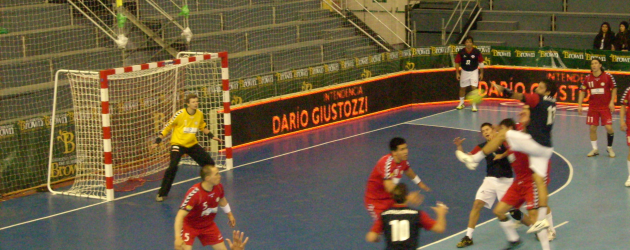
Greenland on defense vs. Chile

Argentina – USA

Host Argentina lived up to their mantle as pre-tournament favorite with a dominating 33-13 victory over Team USA.  The outcome was never in doubt as Argentina limited the U.S. to only 4 goals in the first half for an 18-4 lead at the break.  The U.S. can get some consolation in that the 2nd half was a more competitive 15-9 defeat and that they still control their own destiny for a ticket to the semifinals.  Team USA will need to shore up their defense and find more scoring, however, if they are to beat either Greenland or Chile.

Team USA Scoring: Gary Hine (3), Devine Jackson (3), Adam El Zoghby (2), Vladimir Adjelic (2), Rickey Royal (2), Martin Axelsson (1)

Chile – Greenland

In a key Group A showdown between 2 teams that have qualified recently for the World Championships, Greenland (2007) and Chile (2011), Chile pulled away from Greenland late in the 2nd half for a 31-28 victory.  Assuming that Argentina wins out, this victory puts Chile in the driver’s seat for 2nd place in Group A.

LINKS

Tournament homepage: http://www.handballargentina.org/escuela/?p=2749

Argentina Federation: USA vs. Argentina summary: http://www.handballargentina.org/escuela/?p=3014

Argentina Federation: Chile vs. Greenland summary: http://www.handballargentina.org/escuela/?p=3068

Video (on demand) Argentina vs. USA http://www.handballargentina.org/escuela/?p=3055

Team USA’s Lewis Howes Blog: http://handballjourney.com/


post

Further indications of mishandling of punishment procedures in EHF competition

Time to add a BLUE card to the yellow and red!?


I have written about other aspects of this general topic before, but now additional information has come to my attention that raises issues. What triggers my reaction is the sudden decision by the EHF Court of Arbitration (the third and highest level in the EHF structure for legal matters) to accept the appeal from the German Handball Federation (DHB) and rescind the 2-game suspension that had previously been given to Dominik Klein for an unusual situation in the last game of Germany against Poland in EURO 2012 last January.

Many of you will remember this situation, where Klein pushed a Polish player, who in turn fell on top of another German player which caused a serious leg injury. The referees showed Klein a red card, indicating a disqualification, and some days later there was an announcement that Klein had been given a 2-game suspension by the Disciplinary Commission at the EURO 2012, which would keep him out of last week’s and this week’s qualifying games against Bosnia. (The suspension did/does not apply to club games). It was later announced that DHB had appealed the verdict to the Jury (in the case of a centralized competition such as EURO 2012 the second level, equivalent to the EHF Court of Appeals in the case of decentralized competition). The Jury confirmed the decision of the Disciplinary Commission.

But this was not the end of it. More recently it was found that the DHB had appealed to the EHF Court of Arbitration. Many, myself included, found this DHB action rather tasteless, because our observations of the incident when it happened, made us feel that a suspension of that length was quite justified, not because of the injury that happened to occur but because of the seemingly reckless nature of the action. We assumed that the referees had classified the action as ‘particularly reckless or dangerous’ and warranting a report, and that the Disciplinary Commission had used its authority and judgment by reviewing the report and concluding that a suspension of 2 games was warranted. Therefore, there was puzzlement when the recent decision by the Court of Arbitration was announced. What could possibly have been the reason for this reversal? It caused speculation, some of a rather sinister kind, insinuating favorable treatment for DHB etc.

Of course, all the speculation could have been avoided if only the EHF had been using a more transparent system for announcing the decisions of its disciplinary and legal bodies. It is the norm that we just get the result but no indication of the rationale. This is really not a very helpful and appropriate approach. (As a sharp contrast and good model, one could point to system used by the National Hockey League (NHL), where great care is taken to explain exactly why (or why not) a suspension has been decided). More facts and clarity would clearly help provide more credibility for the application of the EHF legal system.

Before I go on and explain what actually seemed to happen back in January and now later in the Court of Arbitration, let me remind about the applicable rules. For many years, the two serious types of personal punishments were ‘disqualification’ and ‘exclusion’. The exclusion meant that not just was the player out for the rest of the game, but the team had to play shorthanded for the duration. This was seen as a far too drastic punishment, so in 2010, the universal IHF rules were changed and the concept of ‘exclusion’ was eliminated. Instead, the rules now have ‘disqualification without report’ and ‘disqualification WITH report’. (As I noted earlier, the latter category is for actions that are seen as particularly reckless or dangerous).

When the referees decide, and the point is that nobody else can decide it, that a foul belongs in the category ‘without report’ (rule 8:5), then there shall be no action beyond the end of the game. (Regrettably, both EHF, DHB and some other federations go against this universal rule and sometimes decide on punishments in any case…). If the referees decide that the foul needs to be classified as warranting disqualification WITH report (rule 8:6), then of course they must indicate this in the match report and submit a separate report directly after the game. The decision as to which category applies must be taken immediately when the situation happens. After showing the red card, the referees must inform both the official for the team and also the match delegate if they have decided that it is ‘8:6 and report’. The team has the right to know immediately. If nothing is being said, this means that the decision was ‘8:5’ and that no report will follow. The player will be eligible for the next game.

BUT, it has now come out that in the case of the Klein incident, the referees did not say anything about 8:6 and report, so the DHB had reason to assume that this was the end of the story. This was apparently confirmed by the absence of a notation in the Match Report. Instead, it seems that the EHF Disciplinary Commission in that group of the EURO 2012, despite having no such authority, must have taken upon itself to change the decision of the referees, placing the action in the category of ‘8:6 with report’ and adding a 2-game suspension. It is astounding that an EHF Disciplinary Commission can show such ignorance or disregard for the playing rules and their own lack of authority. It is equally amazing that the Jury did not discover and counteract this serious error, instead choosing to rubberstamp the initial decision. In other words, when reviewing the matter more carefully, the EHF Court of Arbitration had no choice: it simply had to set aside the decision of the lower levels.

In a nutshell: it is irrelevant whether we agree with the initial decision of the referees, because only they have the right to take the decision of choosing between 8:5 and 8:6. So the DHB opinion on that aspect is not of interest. And it is irrelevant what the reasoning of the EHF Disciplinary Commission was, even if they were present and saw the situation. They have no role to play, if the referees decide that it is 8:5 that applies.

It occurs to me that one small change in the playing rules might be of help. In the past, everyone could immediately see the difference between disqualification (red card) and exclusion (hand signal with crossed arms). Now what we see is simply a red card in both cases, and typically a spectator or TV viewer does not notice if the referees also give verbal information to the match delegate and the team official. Perhaps the time has for an additional/separate card; let me propose a blue one…

But more important is the need for the EHF to improve its decision-making procedures, its adherence to the universal IHF playing rules, and the transparency in its communications about disciplinary cases.
post

Pan American Championships to be live streamed

Good news for Pan American Handball fans: Every match of the upcoming championships will be live streamed

The Argentine Handball Federation web page has announced that all matches for the upcoming Men’s Pan American Championships will be live streamed from Buenos Aires.  The Argentine Federation has also set up a tournament homepage with links to standings, news and related video.  Most likely, these pages will provide the most up to date information on the tournament.

The tournament starts on Monday, 18 June with hosts Argentina taking on Team USA at 6:00 PM, Local Time (5:00 PM U.S. East Coast)

Tournament Homepage: http://www.handballargentina.org/escuela/?p=2749
Live Stream Homepage: http://www.handballargentina.org/escuela/?p=2828

USA Schedule (All Times: USA East Coast)

Monday, 18 June, 5:00 PM, USA vs. Argentina
Wednesday, 20 June, 6:00 PM, USA vs. Venezuela
Thursday, 21 June, 7:00 PM, USA vs. Greenland
Friday, 22 June, 5:00 PM USA vs. Chile
Saturday, 23 June (TBD)
Sunday, 24 June (TBD)


Commentary:  I’ll go along with Ruben Gomez’s commentary at Mundo Handball.  Webstreaming is becoming more practical and it should be standard practice for it to be provided at major PATHF tournaments.  I’m not so sure as to whether it should be mandatory yet, but we are rapidly approaching the point where such a requirement will make sense.

Mundo Handball: http://www.mundohandball.com/Continentes/Panamerica/2012/handballtv-panamericano-baires.html

Mundo Handball:  http://www.mundohandball.com/Continentes/Panamerica/2012/panamericanos-con-transmisiones-online.html


post

AUDIO: Interview with new USA Men’s Coach, Christian Latulippe

New USA Men's Coach: Christian Latullipe

John Ryan interviews new USA Men’s Coach, Christian Latulippe.  Discussion topics include:

– Christian’s previous role with the USA Women’s team
– His experiences coaching in France
– The USA Men’s roster selected to for the upcoming Pan American Championship
– Team USA’s opponents in Pool Play: Argentina, Chile, Greenland and Venezuela

Time: 34:52

post

The Impact of the Financial Crisis in Europe

can we afford elite sports in the same way as before?

It seems that the economic realities across Europe, with substantial unemployment and uncertainties about the future cause different reactions among sports fans. Some seem to hope or believe that top level sports should somehow stay immune to the repercussions and simply continue to provide at least some enjoyment and escape from the daily struggle. Others are heard commenting that it is becoming increasingly awkward and unfair that sports stars and performers in the world of entertainment should be able to continue to ‘earn the easy money’ when so many are suffering.

It seems the reality is that while many clubs are trying to keep up a good front to avoid ruining their image, many big name clubs are suffering substantially in both handball and football. When you are start hearing about financial problems in top football clubs in Spain and Italy (leaving aside other reports of scandals there), then you might wonder how clubs in less lucrative leagues can survive. And clearly it would be realistic for handball to suffer even more, as the financial stability of handball clubs, in terms of sponsors and ticket revenue tends to be even more questionable. And indeed, there are not many clubs left in the mighty ASOBAL league in Spain, clearly ranked No. 2 in Europe, which are not encountering serious problems. Players are not being paid and contracts are dissolved. Smaller budgets and lower ambitions are the result.

The impression is that of a polarization. Just like the Germany economy is the ‘locomotive’ in Europe, the Bundesliga and at least the top half of its clubs are just going strong. It would probably not be far from the truth today to say that close to half of the top 20 clubs in Europe are from Germany. And then there are about ten countries with just one strong club each. Perhaps France and Denmark would disagree. But it means that the polarization is also becoming evident within many handball countries where there is no longer much excitement about who will win the national league. And the participation and the results in the EHF Champions League are instead becoming more and more important. I can see John Ryan beginning to speculate that the days of a true Euroleague are not too far ahead, a league with one German and one non-Germany group perhaps.

It is also becoming obvious in connection with the EHF Final Four that Germany is dominant, perhaps too dominant. Not just did they have the winner and one more team among the Final Four. Moreover, while the other teams complain about the unfairness of always playing the event in Germany and the pressure this puts on the referees etc., one can just turn around and ask: where else could this event realistically be played?? First of all, there are virtually no suitable arenas, and in any case, which country could guarantee four sold-out matches despite very expensive tickets, especially if no team from the organizing country was playing!?

And then the surprise announcement during the weekend: immediately after the qualifying groups had been finished and days before the draw for the tournament was going to take place, there was an announcement from the Netherlands that they were suddenly backing out from organizing the women’s EURO 2012 in December. So there is now a mad scramble for another organizer with such short notice, and one of the ideas seems to be a joint Scandinavian venture involving Denmark, Norway and Sweden, who all have strong experience from organizing such events. But it is really a shock for the Netherlands, where there are strong traditions for women’s handball and where the financial situation generally did not seem so disastrous. But the sudden loss of the major sponsor made the situation untenable. So here again is the question, what countries have the stability, infrastructure and spectator interest to handle such big events?  It seems that very few have a realistic chance.

post

AUDIO: U.S. Team Handball Foundation (USTHF): 28 years of supporting Team Handball in the U.S.

Handball at the 1984 Olympics: Still paying dividends 28 years later

At the USA Team Handball (USATH) Strategy Conference in April I took the opportunity to conduct a short interview with U.S. Team Handball Foundation (USTHF) President, Rick Hurst.  The interview (see below) provides some background on the USTHF and its role in supporting Team Handball in the United States.  The USTHF was established after the 1984 Olympics in Los Angeles and its mission is to encourage, improve and promote amateur team handball in the United States.  It is a separate organization from the USATH and its current Board Members are Rick Hurst (President), Rod Oshita (Vice-President), Tom Fitzgerald, Mark Noble and Kathy Dean.

For more information on how to send a donation or apply for a grant contact Rick Hurst at RHurst@nkhurst.com


post

Bad PR for handball at the international/Olympic level

A style and image that are not helpful


It has been known for years that the IHF President is frantically trying to find a way to become a member of the International Olympic Committee (IOC). On the surface of if, this would seem harmless, or perhaps even a good cause; to have a sport represented in this prestigious body might be having some beneficial effect. But when gradually the impression is that the IOC does not care much for this pursuit or that it is done in a way that generates controversy, then it seems that it is the kind of attention that handball would prefer to do without.

The IOC has four categories of active members: (1) a maximum of 70 members ‘whose memberships are not linked to any specific function or office’; one could say that they are elected simply on the basis of their personal merits; (2) up to 15 athletes; (3) up to 15 presidents or other executive/senior leaders of International Federations (IFs) or associations of IFs; (4) up to 15 presidents or other executive/senior leaders of National Olympic Committees or their world/continental associations. The members are elected by the IOC Session, i.e., the annual meeting of the current IOC members.

Hypothetically, the IHF President could be seen as eligible under category (1), but there has never been any suggestion that the IOC sees him as deserving such consideration. Alternatively, by virtue of being an IF president, he could be considered under category (3), either as being IHF President or as representative of handball in ASOIF, the entity where the 28 Summer Olympic sports come together to pursue their common interests in relation to the IOC and Olympic organizers. Currently, many of the IF Presidents are already members of the IOC, including the IF Presidents for football, basketball, volleyball and icehockey. Undoubtedly, this is a particularly sore point with the IHF President. However, as noted, there are only 15 slots and there are currently 35 IFs in the summer and winter Olympics combined. While handball as a sport may deserve attention, the elections are based on the persons.

It should be noted that, by tradition and not by any provision in the IOC Charter, the IOC allows the ASOIF to nominate one representative to the IOC Executive Board. (Technically, the IOC session votes and ‘rubber stamps’ the person wanted by the ASOIF). However, there is a caveat: the designated person must already be a member of the IOC. In other words, you cannot become an IOC member ‘through the backdoor’ by having the ASOIF nominate you.

When very recently the current ASOIF President, Denis Oswald, an old nemesis of the IHF President, announced his retirement, it opened up a seemingly attractive vacancy. However, the IHF President did not come forward as a candidate, perhaps precisely because it would not bring IOC membership with it. So when the ASOIF had its meeting last week, the President of the International Tennis Federation, Ricci Bitti, was the only candidate. But to complicate matters, while Bitti is an IOC member, for age reasons he is not eligible to become a member of its Executive Board. Accordingly, a separate election became necessary, for another person to represent the ASOIF. The person elected was the President of the International Boxing Federation, C. K. Wu, a veteran IOC member.

And again the IHF President had come up against the same obstacle as before: he was not eligible as he is not an IOC member. This really must have ‘added insult to injury,’ and there are reports both in the media and through other channels that it caused the IHF President to argue angrily against the ASOIF leadership, especially Oswald and Vice-President McQuaid. It seems he was upset that they refused to entertain his proposal that ASOIF should insist that the IOC change its Charter to make all IF Presidents automatic IOC members during their tenure as IF Presidents. (This is an idea that the IHF President has been known to push in the past). Alternatively, ASOIF should argue that the representative they wanted to elect to the IOC Executive Board should automatically become an IOC member if not already having that status.

Ideally, an IHF President should be able to use his position with ASOIF and his relations with the IOC in ways that are beneficial to our sport. As a minimum, one hopes for respect and a positive image. But over the years, there have been too many reasons to question that. The angry pursuit of a personal agenda has not been helpful, and the signals from the IOC and from the ASOIF colleagues have been unmistakably negative. The international handball family needs to take notice. Our sport deserves to have someone who can represent us better

post

Nicklas Lidstrom – a true role model; Juergen Klinsmann – an embarrassment

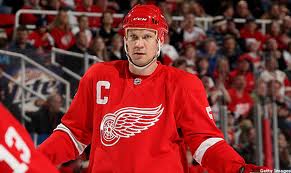
Nicklas Lidstrom - setting an example throughout his career


It is not my/our habit to write about icehockey players in Teamhandballnews, and we do not know how many our readers know or care about this sport. Perhaps we touch a bit more often on football, in the context of governance, playing rules or some other aspect that lends itself to interesting comparisons with handball. For me personally, both sports are of great interest. In Sweden I grew up playing both handball and football, and I became a football referee just two years after I started in handball. In fact, I kept up the football refereeing for a dozen years also after moving from Goteborg to Washington D.C. And while I never really played icehockey (my skating was not very good!), it remains special for the simple reason that it is a sport where the traditions in Sweden and the U.S. are more equally prominent.

So I do follow the NHL regularly, especially now during the race for the Stanley Cup. And while he has often made life difficult for ‘my’ team, the Washington Capitals, my favorite player during the last 20 years has been Nicklas Lidstrom of the Detroit Red Wings. Yes, it may have something to do with the fact that he is a Swede, but it is much more related to the fact that he is one of the best role models whom I have ever come across in elite level sports. When he announced his retirement today, at the age of 42, he was immediately given a tremendous attention and many great current and former stars were lining up to offer him words of the highest praise.

He was voted the best defensemen in the NHL seven times; he was on the All-Star Team 12 times; he won the Stanley Cup four times with Detroit and on one of those occasions he was the MVP, the first one from Europe; he also won both Olympic and World Championship gold with Sweden. He played 1,827 NHL games, spending all his 20 years with Detroit. During those games he scored, as a defenseman, 318 goals and had 1,007 assists. Experts agree that he is one of the best two or three defenders ever to play the game. So it is not surprising that his retirement is drawing attention.

But more remarkable perhaps, during all these games, where he typically played more minutes than anyone and in all the important situations, he only had 590 penalty minutes. This is roughly one penalty per every six or seven games. It was suggested that his sense for the game and his anticipation allowed him to ‘be in the right place’ and avoid fouls, but it also said something about his sportsmanship. This also fits in with the remarks that were always heard but now today are the most conspicuous ones: he is humble, he is respectful, he is a leader, he is simply a great person! I really wish that, in handball and all other sports, where fair play and sportsmanship seem like old-fashioned qualities that have been shoved into the background, we had more players, more athletes who deserved to be talked about in this way!

And then, as I was preparing this write-up, came to my attention something that almost ruined my day but also provided a rather telling contrast, namely the comments from Jurgen Klinsmann, the football coach, after the U.S. lost 1-4 against Brazil last night. The U.S. team had won handily against Scotland a few days ago, and now the time had come to show perennial world champions Brazil that the U.S. team had ‘arrived’. But the Brazilians wanted none of that and simply went ahead and outclassed the U.S. team with a technically brilliant performance. So what were the comments from Klinsmann, himself a former world star player, afterwards: “maybe we are a little naïve; it seems we don’t want to hurt people, but that’s what you’ve got to do”; that echoed comments after a previous loss: “we need to get nastier!” Enough said….. Fortunately, U.S. media have reacted strongly.

post

The Draw of the Olympic Handball Tournaments

and now we are all waiting for the fun to begin...


As I see it, today’s Olympic draw serves two main purposes: it allows the participating teams to start preparing in a more focused way on their initial opponents; and it provides handball fans around the world with a more firm basis to begin speculations about the outcome. But I do not think it really affects in a major way the race for the medals. Yes, it sets up some intriguing match-ups in the preliminary groups, but the system that allows no less than four teams in each group to go to the quarter-finals really does not seem to create an unfair or unreasonable burden for any top contender.

Moreover, especially on the women’s side, the recent qualifying event suggests that the field is perhaps more even than ever. I do not see any clear favorites for the medals. And almost any team could advance to the medal round without being seen as a tremendous surprise. Well, I guess I must exclude the home team! Any win for them would be a surprise, despite their famous fighting spirit. Perhaps one should not base too much on the results of the qualifying groups, but the Russian second half against Denmark was impressive, and the same goes for the Montenegro victory in France. Much of the speculation will most likely involve Norway’s chances for a repeat. But I will be more excited about the possibility of a Brazilian surprise or a return to the top level by the Korean team.

On the men’s side, it may seem easier to pick favorites: it would be difficult to ignore any of the medal winners in the 2011 World Championship: France, Denmark and Spain. It may be too early for the Serbs to be a serious medal contender this time; but who knows, perhaps their success in EURO 2012 inspired them enough. Or what about a ‘last gasp’ from the current Croatian generation? Most likely Tunisia and Iceland will act as ‘spoilers’ in some games, but I do not see them as medal winners. And of course I will upset my Swedish friends if I say the same thing about their team…

The speculation about the draw itself had largely focused on what would be the effect of the British privilege to be in the fourth row and, above all, their right to choose groups after the teams from all the other rows had been placed. It had been feared that this might cause a major imbalance. On the women’s side, undoubtedly the teams who will now play Great Britain instead of France will tend to be satisfied. But it is on the men’s side where the effect may be more noticeable. As can be seen below, the teams in Group A who get Great Britain instead of Serbia, will also get an injury-ridden Argentina instead of Denmark, because Great Britain did not hesitate to choose the group with Argentina, even though it will set up an intriguing ‘Falklands/Malvinas’ battle as some have labeled it. And it will revive the anger in Denmark about their unfair treatment as World Championship silver medalist.

Finally, looking at the geographic distribution of the European teams on the men’s and women’s side combined, it is first interesting to see the overall ‘perimeter’ concentration of the participants: the Nordic countries, France/Spain, the Balkans, and Hungary/Russia. What happened to Central Europe (well, the Hungarians may quarrel) and, in particular, where is Germany!? And to take it a step further, it is really amazing that on both the men’s and the women’s side, the ‘Eastern’ teams got clustered in the same groups, while among the women there is a distinctly Scandinavian/Latin combo. Now the groups:

Women A: Montenegro, Russia, Croatia, Great Britain, Brazil, Angola
Women B: Norway, Spain, Denmark, France, Sweden, Korea

Men A: France, Sweden, Iceland, Great Britain, Argentina, Tunisia
Men B: Spain, Croatia, Hungary, Serbia, Denmark, Korea

post

Sorry, Netherlands: IHF and Spain had a part in ruining your Olympic dreams

Dutch star Lois Abbingh and her teammates now planning their revenge in EURO 2012

I was explaining the scenario already last night: Spain could today afford to lose by two goals against Croatia and still win the group; they could lose by six and still qualify for London. As we know, from so many similar situations in handball, football and other sports, when there exists such a ‘convenient’ result that rescues BOTH team, then often that is the result we will get. So, the final result was 23-22 in favor of Croatia. Please note that I am NOT accusing anyone of any intentional wrongdoing. But the IHF game schedule did not provide for a logical and fair situation.


Netherlands beat Croatia on the first day, and Spain beat Netherlands on the second day. In both these games, both teams desperately needed to do their best. But in the final part of the triangle, today’s Spain-Croatia, the Croatians had the huge advantage of playing against a team that did NOT need to win. If one knows that two teams out of four qualify, and if one assumes that the ranking is often correct, then it would be logical to assume that typically the 2 vs. 3 game will decide, and then it would seem logical, natural to play that game on the LAST day, so that the teams get the same conditions. But IHF keeps sticking to the ‘autopilot’ approach of playing 3–4 and 1-2 on the last day….

The Croatians will undoubtedly prefer the easier explanation: in the ‘triangle’ they had the second-best goal difference, so that is why they now have their tickets for London. But for a neutral observer it leaves a bad taste. (And one should also note that the IHF format makes the other two groups totally anticlimactic today, as the teams ranked 1 and 2 are already qualified). The Dutch, with their young, exciting team will now need to focus on getting their revenge in December when they play EURO 2012 in front of their home crowd. And many of their talents will have an even earlier opportunity in July, during the U-20 World Championship. They were runners-up in the EHF U-19 last year, so they are clearly among the favorites. Good luck!

All the participants in London are now known, and the draw for the groups, for both women and men, will take place on Wednesday May 30th. The seeding rows for the women’s competition are now as follows: 1. Norway and today’s group winner France/Montenegro; 2. Spain and the group winner Denmark/Russia; 3. Croatia and loser Denmark/Russia ; 4. the loser France/Montenegro and Great Britain; 5. Sweden and Brazil; 6. Korea and Angola. Each one of the bottom four teams undoubtedly hopes that Great Britain will choose the group that THEY are placed in, as this might make the path to the quarter-finals slightly easier.

Full summary of Olympic Qualification competition:  https://teamhandballnews.com/2012-olympic-qual-women/ (Note:  Always available in our links section on the right.)

post

Women’s Olympic Qualifying: Montenegro and Russia advance in convincing manner

Handball in London: this is the place


Just like in the men’s qualifying event last month, there is not much left to decide on the final day. Two of the three groups are already settled, with France, Montenegro, Denmark and Russia having secured their places. To some extent, this is due to the unfortunate game sequence; with two teams out of four qualifying from each group, it does not make sense to have the games 1 vs. 2 and 3 vs. 4 on the final day. Instead, it would make sense to have 2 vs. 3 to maintain more suspense.

This would have meant that Croatia and the Netherlands would have a directly deciding game tomorrow. Instead they must depend on the efforts of a Spanish team that can afford to lose against Croatia. If they lose by one or two goals, they will still win the group, and the Dutch are out. If Spain win by three to six goals, they still qualify as runner-up, and with Croatia as group winner. In a normal game tomorrow, Spain should win on the basis of the level they and Croatia has shown until now, but who knows what might happen when winning is not strictly necessary.

In the other groups, France and Denmark did their job against Japan and the Dominican Republic, respectively. Montenegro had an easier time than expected, but it was tough for Romania to keep up in the absence of Neagu and after an early injury for Vizitiu. The final score was 34-23. Russia had the advantage of having observed Tunisia on the first day, so they were not about to get caught by surprise. But at an early stage they were unable to pull away, managing only a 9-7 lead. However, then the Russian machine had the steam up, and the result changed to 17-7 and 27-10, before they relaxed a bit and allowed a final score of 33-20.

post

Women’s Olympic Qualifying: some clarity already

Mouna Chebbah, here in Viborg colors, today starred against Denmark


Well, in my focus yesterday on Tunisia and Japan, and on the hope for surprises, I gave short shrift to the Dutch women. They have proud traditions, through a strong and exciting team roughly in the period 1995-2005. Their best result was a fifth place in the 2005 World Championships. But if this new generation of Dutch players were to gain a place in London, as now seems realistic, then it would be the first appearance in the Olympics for Dutch handball. Today they played an even game against Croatia for 40 minutes and then seized control. They had a three-goal lead but the final margin was 29-28. A win against Argentina on Sunday should be enough, unless the Croatian team surprises against Spain.

France made the task difficult for themselves against Romania by playing in a less than concentrated way. They were saved by their goalkeeper and by the fact that the Romanians were making even more mistakes at times. So it may come down to a thriller tomorrow between Romania and Montenegro, although the Montenegrins were almost caught by surprise in the opening game against Japan. The Japanese women showed no respect and even had the lead for a brief moment in the second half. But in the end Montenegro managed to pull away and win 30-24.

Russia had no problems with an inexperienced team from the Dominican Republic, but they may have to show more determination against the surprisingly strong Tunisians. I had commented about their progress, but nobody, especially not the Danish team and their supporters had expected such a tough fight. And the special twist was that the star for the Tunisian team was Mouna Chebbah, who plays for the Danish club Viborg, although normally in a more modest role. Tunisia had 13-12 at half-time and were only two goals behind close to the end, before the final result was set at 28-24 in favor of Denmark.

post

Handball’s anticlimactic weekend for national teams? Any hope for the ‘rising sun’?

Tunisia progressing nicely, but are they good enough?


John commented yesterday about the EHF Final Four, and the excitement that this event creates among handball fans, not just in Europe but worldwide. By contrast, and through unfortunate planning during this same weekend, IHF has what could or should be a really exciting event for women’s handball. Because what could be more interesting than seeing which teams grab the remaining six slots in the Olympic women’s handball tournament, joining Norway, Sweden, Brazil, Angola, Korea and hosts Great Britain!? But unfortunately, not even the IHF’s own web page is able to create much suspense or show much enthusiasm…

There are three groups of four teams each, and from each group the best two qualify for London. I have been impressed by the nice progress of Tunisian women’s handball in recent years, but is there really anyone who believes that Tunisia or the Dominican Republic would knock out Denmark or Russia in their group? That would be a sensation that would steal the thunder from the Final Four!

At least it seems that in the other two groups there will be a fight for the second spot. France playing at home will be hard to defeat, even in the absence of injured star player Pineau. So, while either them of might be strong enough to cause an upset against the hosts, I suspect that Montenegro and Romania will have to concentrate on fighting for the all-important second place. Romania must try to do so without their key player Neagu, and Montenegro may feel a boost from recent Champions League triumph of Buducnost. This will most likely be the most excited game of the weekend. It is hard to see that ‘the rising sun’, i.e., Japan will have much of a chance.

In the group played in Spain, it is conceivable that Croatia will be able to threaten the home team, but normally they would have to be content with winning the qualification by defeating the Netherlands. This team came into the qualifying event through the back door, having to rely on Angola to free up their qualifying position from the World Championship by winning the African Championship. But for the Dutch women it is an important PR and preparative opportunity, as they are hosting the next women’s European Championship in December this year. Argentina did not do well in last year’s World Championship and is not expected to be competitive.

So if things go according to plans, all the six remaining slots would go to European teams. This special qualifying event is, on paper, meant to give the other continents an additional chance to get someone into the Olympic tournament beyond their continental champions. But instead it is likely to confirm the European dominance beyond the ‘traditional’ powers of Korea, Brazil and Angola. One would hope that the IHF would see fit to put in a special effort in support of the ‘second tier’ of non-European teams, so that eventually the Olympics and the World Championships stop looking too much like European Championships!