post

Promoting Team Handball in the U.S. (Part 2): How is Rugby getting promotion done right?

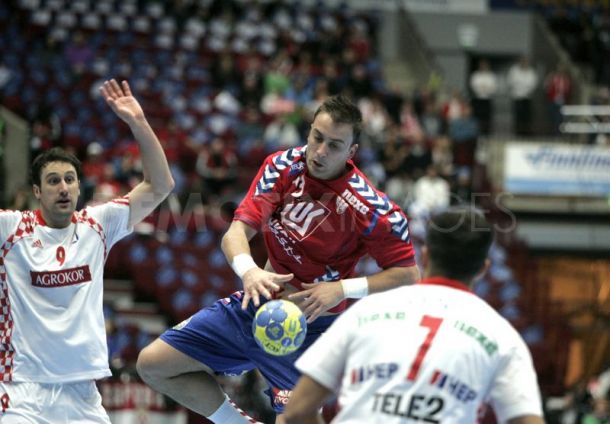
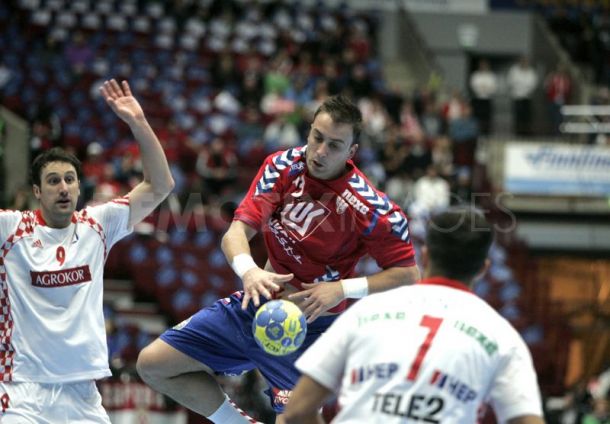
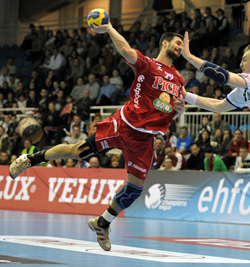
Should a promotional event like the Poland-German Friendly in Chicago be turned over to a private entity?

In Part 1 of this series I provided an overview of the Las Vegas Rugby 7s tournament and what a boon it was for promoting the sport of Rugby in the U.S.  In part 2, I explore how Rugby is succeeding and whether something similar can be for Team Handball.

Before, I tackle how the Rugby community is promoting the sport in the U.S. it’s worth pointing out that the Team Handball community hasn’t been sitting idly by.  In fact, there have been 3 noteworthy events in just the past two years which sought at one level or another to promote Team Handball in a similar vein.  Two years ago, the French Professional League staged its League Cup Final Four in Miami, last summer the Polish and German National Teams played a friendly match in Chicago and for the past 2 years, New York City has hosted an All Star Game and tournament in conjunction with New Year’s Eve celebrations.  I attended both the French tournament in Miami and the Chicago friendly match and am familiar with the New York tournament, so I think I can say with some authority that each of these events succeeded in some areas, but failed in others.

The Miami event proved that professional club teams could be convinced to come to the U.S. and play competitive matches with a championship at stake.   This is roughly the equivalent of American forays into Europe like the NBA’s recent trip to London to play regular season games that count.  Unlike the NBA games, however, the French Miami experiment was a dismal failure attendance wise and was not shown on TV in the U.S. 

The Chicago event proved that National Federations could be convinced to play a match, albeit a friendly one in the U.S.  The attendance was respectable, but still less than desired.  There was also good promotion with regional broadcasts of the match to many parts of the country.  It wasn’t live on a major network, but it was still the first U.S. TV broadcast outside of the Olympics in 15 years. 

The New York Big Apple Tournament is a smaller scale event, but arguably has done the best job in terms of promoting a U.S. event, to the rest of the world.  This is demonstrated by its successfully packaging of tours to get Germany to cross the Atlantic and the Eurosport broadcast of the All-Star game in Europe.  All well in good, but for a number of reasons it’s not been designed to capture the attention of the citizens of New York.

In contrast to these attempts, the Rugby 7s event is running on all cylinders. 

Good Attendance:  25,000 for each day of a two day event
Atmosphere:  A festival like event with fans from across the country in attendance. 
TV exposure:  Broadcast to a world-wide audience including 5 hours on a major network (NBC) in the U.S.

So, how is Rugby doing it and why can’t we do the same thing for Team Handball?

1) Rugby’s larger USA fan base gives them a running start on ticket sales and courting TV networks.  I asked several informed rugby folks a fairly simple question, “How many people in the U.S. care (really care) about the sport of rugby?”  The answered varied, but around 100,000 seems like a pretty good estimate.  And, of course, this is a very subjective question anyway.  After all what does it mean to “really care”?  But, this is a base to work with and if you already got 10% of that 100,000 excited, that means there’s fewer folks that you need to convince to pay good money for a ticket.  Contrastingly the “really care” Team Handball number is somewhere in the 300-500 range.  This woefully small number means that anyone looking to fill seats for a U.S. based event has to “convince” almost everyone to buy a ticket.  Doable, but it adds an extra degree of difficulty the Rugby folks don’t have to deal with.

In terms of TV, it’s the same deal.  While at the tournament I had the opportunity to chat with John Miller, President Programming, for NBC Sports and Versus.  As you might expect, my pitch was, “Hey when are you going to do something like this for Team Handball.”  The answer, I got was positive in some respects.  He’s familiar with the sport (never a given in the U.S.) and has enjoyed watching it in person at the Olympics.  But, it was negative in that he expressed that the base for Team Handball was too small compared to Rugby and that Rugby also had the advantage of being similar to American Football.   For sure, our base is clearly smaller, but I think it’s only a matter of time before a major USA network climbs on board.  Team Handball is just too good of a product to be absent from our TV screens and it’s only a matter of time before the right decision maker realizes that.  For more on NBC’s plans for rugby be sure to check out the short audio interview at the bottom of the page.

2) Rugby’s International Federation, the International Rugby Board (IRB), is investing heavily to promote and grow the sport, both world-wide and in U.S.  Oh my goodness, how they are investing.  We are not talking Continental challenge cup tournaments and balls to Guatemala.  We’re talking about funding the entire World Series 7’s circuit with additional assistance to the local organizing committees and national teams participating.  We’re talking millions of dollars being pumped directly into USA Rugby, both to help run the Federation and to organize meaningful National team competition.  We’re talking a Federation produced TV and Radio shown world-wide to promote the sport.

These aggressive efforts are now starting to pay dividends.  And no more so is this evident than in the inclusion of Rugby 7s in the Olympics.  Sometimes I think the world handball community doesn’t realize how fortunate that the sport is already on the Olympic Program.  Despite the fact the IOC is top heavy with Europeans, I have serious doubts as to whether the IHF could even begin to mount a lobbying campaign similar to what the IRB has done in the past 10 years.  The IHF occasionally talks about promoting the sport, but its efforts are paltry compared to the IRB. 

But, perhaps it is unfair to compare the two Federations.  Undoubtedly, the money stream from the IRB world cup that is held every four years is substantially greater than the cash flow the IHF gets every 2 years for its World Championships.  Still, I’ve never seen the IHF present any type of a coherent strategy or plan to develop the game worldwide.  Rest assured if USA Team Handball got a little more help from the IHF, its job would be a lot easier.

3) An independent company, rather than the USA Rugby Federation is responsible for the Las Vegas 7’s Tournament.   Whether it was a prescient strategic move or simply a desire to lighten the workload, USA Rugby sold the 7s program several years ago to an independent company, USA 7s, LLC.  Accordingly, USA 7s, LLC is responsible for organizing, promoting and conducting the Las Vegas Tournament.  There clearly is a relationship with USA Rugby, but USA 7s is calling the shots.  A small full time staff is developing the brand, courting sponsors, engaging with TV networks and even developing new tournaments like the collegiate 7s championships later this spring. 

The benefit to USA Rugby is that they’ve been able to focus on other aspects of developing the sport and the 15s program.  Handing off the 7s program means there is one less thing on their very full plate.  Of course, that’s also meant a loss of control and a little bit of criticism from the USA Rugby community.  In particular, critics have pointed out that USA Rugby has sometimes taken a little bit too much credit for an event they’re not really running and that perhaps it shows that others (e.g. USA 7s, LLC) are doing more than the National Federation to develop the sport. 

This may sound a little familiar to some folks in the USA Team Handball Community.   Although, anything that’s been done independently to date, like the French Miami experiment and the Big Apple tournament have not been anywhere near as successful as the Las Vegas Rugby event.  If an event like the Germany-Poland friendly were formally sold off it would have the benefit of freeing up the USA Team Handball staff to work on the many tasks that there currently aren’t enough hours in the days to do now.  The Federation would lose control, but could still benefit greatly.  The fact that the USA 7s tournament has shown that it can work suggests it may very well be worth a try.   After all, if no one cares who gets the credit, a lot can be accomplished.

So, I’ve further highlighted how Rugby is making marketing inroads while Team Handball is trailing behind with fits and starts.  In part 3, I’ll further address what it will take to adapt the Rugby model and apply aspects of it to further promote Team Handball in the U.S.

THN (28 Feb 11) Promoting Team Handball in the U.S. (Part 1):  Las Vegas Rugby 7s Tournament:  Undoubtedly, a model to follow: https://teamhandballnews.com/2011/02/promoting-team-handball-in-the-u-s-part-1-las-vegas-rugby-7s-tournament-undoubtedly-a-model-to-follow/

THN (18 Apr 2009):  If You Build It, Will They Come?: https://teamhandballnews.com/2009/04/if-you-build-it-will-they-come/

THN (26 Jul 2010):  Miami and Chicago: Assessing two European Handball Ventures in America: https://teamhandballnews.com/2010/07/miami-and-chicago-assessing-two-european-handball-ventures-in-america/

THN (7 Jan 2011): 2nd Annual Big Apple Handball Tournament: A Definite Upgrade: https://teamhandballnews.com/2011/01/2nd-annual-big-apple-handball-tournament-a-definite-upgrade/

THN (3 Jul 2010):  USA Team Handball Development:  Why it matters: https://teamhandballnews.com/2010/07/usa-team-handball-development-why-it-matters/

post

Russia determined to come back, with whatever means necessary!

Russia appears to be resorting to offcourt shenanigans to improve its chances of qualification for Euro 2012

When I was in Sweden for the World Championship, I cannot remember hearing anyone regretting that the Russian team was not participating.  From a spectator standpoint, it is hard to remember when a Russian/Soviet team displayed the kind of attractive style of handball that today’s top teams show us.  Russia was in 16th place in 2009.  Their next opportunity now, on the men’s side, is the European Championship next January.

I should insert the comment that, contrary to what handball people around the world might think, despite Soviet/Russian successes at the international level, with national or club team, handball is NOT a major sport in Russia.  I remember being told by their federation officials a few years ago, that handball is in fact not among the top 20 sports in the country.  Possibly, the situation might be a bit better on the women’s side, due to traditions with strong coaching and a thin base of really outstanding talents from the youth level and on up.

Anyway, it seems now that Russia is determined to be back for the EURO 2012.  The methods, however, may not be very fair and pleasant.  There has been an outrage in Denmark this week, which has on the schedule home and away qualification matches between the two countries.  For the match in Russia yesterday, the Danish team had some injury problems and needed to insert some reserve players.  However, with the excuse of offices being closed due to some obscure and extended public holiday, the Russians simply informed that there was no possibility to provide a visa.

Things got worse, when it was discovered that three key players who are on the Flensburg club team would not be allowed to enter Russia either.  The completely weird explanation was that these players, with their club team, had been to Russia very recently and could not now be allowed to enter Russia so soon again.  It is not that crazy bureaucratic and despotic rules interpretations are so surprising in Russia, but it is understandable if the Danes really assumed that this was a machination specifically intended to weaken the Danish team.  Danish protests did not help, and the EHF declared itself impotent.

It is rather awkward that this comes soon after a remarkable incident in the previous home game for Russia in the qualification event.  In a game against Switzerland, where Russia had a narrow lead close to the end, the final chance for Switzerland was removed by an incorrect intervention by the EHF match supervisor, who ‘saw’ something that clearly did not happen and thus took away the ball from the Swiss and instead gave them a 2-minute suspension.  The Swiss formally protested afterwards, and the protest was accepted by the first level in the EHF appeals mechanism.  A replay was ordered. 

Given the serious ramifications of that decision, concerning the fundamental rules principles involved, the EHF itself found it necessary to appeal to the second level.  While emotionally one must sympathize with the Swiss sentiments, I have to state that such rules interpretations must be based on principles and not on sentiments.  Accordingly, I must hope that EHF prevails, even if it means that Russia will have benefited from a mistake in its favor.  Perhaps it will, regardless of the outcome, be a reminder to the EHF about the necessity of being extremely selective in nominating supervisors for games where intensive pressure in different forms can be anticipated…

Finally, it is ironic that the fourth team in the qualification group is Belarus.  It may well turn out that Russia’s chances of qualifying will depend on the result of the final game, at home against Belarus.  I would not want to be Danish or Swiss and have my hopes based on Belarus being given a chance to gain any points in that match-up…

post

All Star Team, an increasingly boring concept in its current form

It is generally positive to try to create some PR around a Championship by creating awards and other forms of recognition for deserving persons.  The most common concept has been the nomination of an All Star Team, together with a Most Valuable Player (MVP).  But the concept has become increasingly boring, with a combination of predictability, strange choices and politics.

There tend to be persons available who have the necessary expertise to select the nominees, but the criteria are always unclear.  For instance, how much attention should be paid to goal scoring?  How important is it to get a perfect fit for each of the 6 court player positions, even if this means that a deserving player is left out?  Should one go more for longevity, i.e., players who are already established stars, or should one try to find some emerging stars?  And how much does one need to think about spreading the nominations over the top four or five teams, with an extra slot for the gold medal winners and/or a special recognition for the host team?

Moreover, the selection process can make the whole situation anticlimactic.  If, as now was the case in Sweden, the team is announced immediately before the two medal games, it is clear that nothing that happens in the finals could change the outcome.  This is really a bit strange but perhaps necessary for practical reasons.  And this may be why the MVP is sometimes, like now in Sweden, left off the All Star Team.  Is seems that this is by definition impossible, but at least it opens up one more place.  And when now Karabatic showed in the final how important he is to the French team, it seemed that he was a most appropriate choice for MVP.  But perhaps that selection could wait until after the finals?

This time there were reactions of surprise and disagreement, when some of the members of the All Star Teams were announced.  Surely Norway had better candidates than someone who was simply their reliable 7-meter shooter!  And did really many think that Doder was the best choice from the Swedish team?  And if now Balic and Vori did not deserve to be included, was it necessary to have a Croatian, if Zrnic somehow was the best choice.  And conversely, how could the Danish wing players be left out, and was there really nobody deserving on the Spanish team?  Perhaps one should have demonstratively refrained from choosing a pivot, considering that this must be the weakest year for pivots in a very long time!?

It came to my mind during the late stages in Sweden that one could perhaps create more excitement by introducing a different type of All Star Team, either in addition to the normal one or instead of the traditional approach.  For me, one of the most exciting aspects of the whole Championship was to observe the many new, younger players who had a dominating or surprising role on their respective teams.  This time there were plenty of them, as many of the top teams are undergoing a bit of a generation change.  I also heard many experts and ordinary spectators talk with excitement about these players.

So perhaps what we should have is some kind of ‘Newcomers’ or ‘Discovery’ All Star Team.  Not one with a lot of rigid rules regarding age or previous experience, but one based on the excitement and surprises caused by these emerging top players.  Perhaps one should call them ‘Future All Stars’.  And one might not need to have exactly 7 players, one for each basic position.  Perhaps one could select more freely up to 10 such players regardless of position.  I really do think this would create more genuine excitement and debate!  And people always seem to find it interesting to speculate about the future, rather than discussing if the All Stars from last time deserve to be nominated yet again…

post

Rivals Croatia and Serbia on opposite trajectories?

Serbia vs Croatia at the 2011 WC

After the independence, Croatia and (to a lesser extent) Slovenia immediately became important participants in the Men’s World Championships.  Later on, FYR Macedonia has twice participated in a respectable way, and it is beginning to look as if Montenegro might soon be able to join in.  Bosnia can now point to a nice success at the club level, by having a team qualify for the last 16 in the EHF Champions League.  Meanwhile, the Serbs (albeit as Yugoslavia) had great success in 1999 and 2001, and then had good showings again in 2005 and 2009.

But as the world of handball has come to recognize, the super power has been Croatia, with Olympic gold twice and also one gold and three silver medals in the World Championships between 1995 and 2009.  Clearly the success has largely depended on the star power in the form of players such as Balic, Dzomba, Goluza, Lackovic, Metlicic, Sola and Vori, just to mention a few.  It seemed in 2009, even though it was a disappointment to all Croatians that the expected gold turned into silver, that a new generation was also beginning to be ready to step in, more or less guaranteeing top positions also for many years to come.

In this year’s Championship, however, one had reason to begin to doubt what was happening to the idea of a new generation.  Far too much depended on the Balic-Vori axis, and especially the absence of Metlicic seemed to be a severe handicap.  Lackovic and Alilovic did not reach their level of recent years, and many observers questioned the inclusion of Zrnic on the All-Star team.  Was it because Croatia simply had to have someone on the team and because Balic/Vori did not deserve it, or was it because Zrnic had such success with his 7-meter throws?  But the biggest letdown was clearly the performance of  Balic.  He often looked tired and frustrated, seemingly unable to shine in the absence of a good supporting cast.  He even demonstratively left the game and sat sulking on the bench in some critical moments.

Serbia played in the same group as Croatia both in the preliminary round and in the main round.  Their chances seemed to have been downplayed by the international media.  The prevailing expert opinion was that they did not have enough top players on the team, with only Ilic, Vujin and possibly someone else being worthy of special mention.  But the Serbs really went about business with tremendous spirit and team cohesiveness.  In many games it was really refreshing to watch them and their positive attitude.  It was not just the special battle in the game against Croatia that created such a spark. 

While the Serbian team in the end lost a bit of their energy or edge, they managed to convince many of the experts that here we have a team to be reckoned with over the next few years.  They displayed strong technical skills and their coaching staff brought out good tactical elements in the tradition of the best of the Serb teams of the past.  The scoring strength is clearly there, and the goalkeeping did not turn out to be the weak spot that some had anticipated.  All in all, it is obvious that there is an adequate pool of players to draw from, not just to keep the rivalry with Croatia going, but perhaps enough to put Serbia on a more positive trajectory at a point in time when the Croatians need to show that they have the capacity to manage a generation change successfully.

post

EHF Game(s) of the Week: Barcelona at Celje (Live and with English Language Commentary) and Veszprem at Montpellier


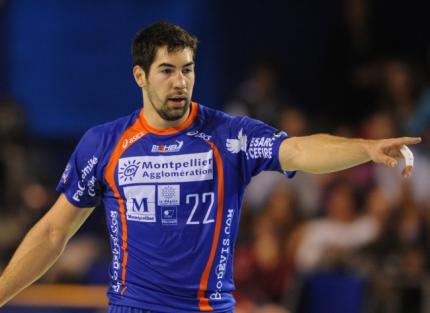
Nikola Karabatic and Montpellier will battle Veszprem in a Group B showdown


Barcelona at Celje

OK, there’s only one official game of the week with live English commentary from Tom O’Brannagain.  That would be the Group A match between Slovenia’s, Celje and Barcelona.  With Barcelona locked into a third place seed, however, it’s debatable as to how good of match it will be.  Barca is clearly the better side but they won’t have any incentive to win.  Celje, on the other hand will be fully motivated as they are currently tied with France’s Chambery for the fourth place seed.  A win guarantees that Celje will advance, but they will also qualify if Chambery loses to Rhein-Neckar.  As the Chambery match starts 30 minutes ahead of time, don’t be surprised if there is some scoreboard watching in Slovenia.

The match is at 6:00 PM (Central European Time), 12:00 Noon (U.S. East Coast) on Saturday, 5 March.  Barcelona is a 3 goal favorite.

On Demand broadcast at ehfTV:  http://www.ehftv.com/ec/cl/men/2010-11/video/001451

There is also a televised tape delayed broadcast on the MHz Network in the U.S. at 4:00 PM (U.S. East Coast) on Sunday 6 March. For information on how you can watch MHZ see this: http://www.mhznetworks.org/mhzworldview/carriage/

Interview with Celje right wing Gasper Marguc: http://www.ehfcl.com/men/2010-11/article/13725/Margu%C4%8D%3A+%22As+big+as+the+universe%21%22

 Veszprem at Montpellier

The unofficial game of the week is clearly the Group B showdown between Montpellier and Veszprem for first place.  Veszprem won in Hungary 27-26, so Montpellier will need to win by 2 goals (or just 1 goal if they keep Veszprem under 26).  There’s a lot of incentive to finish first as the potential round of 16 opponents on the fourth rung are a significant step down from the third rung.  Not to mention the first seed opponents are also guaranteed not to meet each other until the Final Four in Cologne, thus avoiding a potential quarter-final pairing vs. Kiel or Ciudad Real.  Montpellier definitely has the edge here, but with Michael Guigou out and Vid Kavticnik questionable due to injuries, Karabatic will need to carry the load in this match. 

The match is at 5.30 PM (Central European Time), 11:30 Noon (U.S. East Coast) on Sunday, 6 March.  Montpellier is a 3 goal favorite.

On Demand broadcast at ehfTV:  http://www.ehftv.com/ec/cl/men/2010-11/video/001456

EHF: Interview with Veszprem backcourt player,Gabor Csaszar:  http://www.ehfcl.com/men/2010-11/article/13724/Cs%C3%A1sz%C3%A1r+to+steal+points+in+France

Audio recording links are below.  Open the on demand video in one window and then click on the podcast link.  I do a countdown of the ehfTV clock in the lower left hand of the screen.  Pause the audio when I start the countdown and then play the video.  Then unpause the audio when you get to the appropriate time on the clock. 

post

Promoting Team Handball in the U.S. (Part 1): Las Vegas Rugby 7s Tournament: Undoubtedly, a model to follow

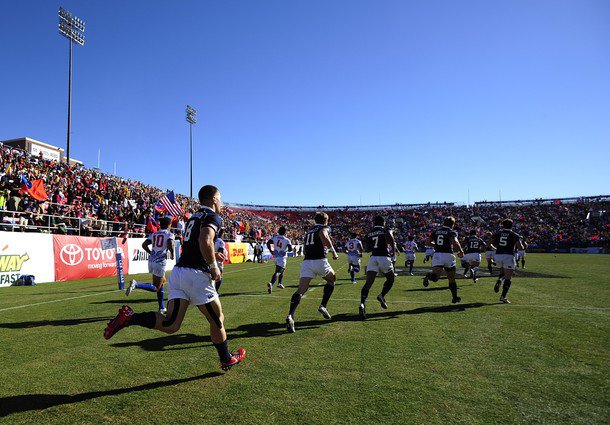
Team USA takes the field in front of 25,000 fans

As frequent readers are well aware, I’ve written a number of pieces on the sport of Rugby and how its challenges to develop in the U.S. are similar to that of Team Handball.  Both are sports with similarities with sports Americans already excel at and follow passionately (basketball for Team Handball; American Football for Rugby).  And both sports are very popular in parts of the world (Scandinavia, the Balkans and Germany for Team Handball; the British Commonwealth for Rugby) but are minor sports in the U.S.  And finally, both sports have passionate followers in the U.S., who dream that one day their sport will crack into the big time and become part of the American sports landscape.

I live in Las Vegas, a town full of dreamers, and a couple weekends ago I saw and heard firsthand how Rugby is maybe, just maybe, turning that dream into a reality.  It was the second year that the USA 7s tournament was held in Las Vegas as part of the International Rugby Board’s (IRB) World Series for Rugby 7s.  A crowd of around 25,000 attended each day of the 2 day event held at Sam Boyd stadium on the outskirts of Vegas.  This may not seem like much of a crowd, but I can attest that it’s more than the UNLV football team often draws and without doubt you’ll be hard pressed to see spectators anywhere having more fun.  The event has a party time atmosphere with expats from many nations dressed up in costumes or their nation’s colors.   Outside the stadium is a festival area with rugby drills for the kids, assorted booths with national food dishes.   And as it’s an all day event, let’s just say that if fans start drinking beer before noon most of them are going to be in a good mood come nightfall.

But aside from the festive mood onsite an even more important indication of Rugby’s growth was the presence of NBC sports at the event.  In all, 5 hours of coverage (much of it live) was broadcast over the airwaves to every corner of the United States and 17 hours of coverage was available to much of the nation via the NBC Universal Sports online platform.  I’m not an expert on TV broadcasting, but based on the equipment, numbers of trailers and personnel running around NBC didn’t cut any corners on their production.  TV coverage like this alone, isn’t going to turn the U.S. into a Rugby power overnight, but there’s no denying that nationwide exposure like this is a godsend to a niche sport.

Here are a couple of audio excerpts from NBC’s broadcast.  It doesn’t take much to imagine a Team Handball broadcast and the same type of Olympic advertisement for our sport.

[display_podcast]

From time to time I’ve gotten into verbal and written forum spats with members of the U.S. Team Handball community that pooh-pooh the importance of TV exposure.  The standard argument is that it’s a diversion of scarce resources (time and money) that would be better spent on grass roots development.  My counter argument is that it’s a numbers game and we sorely need new fans and players to support our grass roots programs and TV is the best way to grow those numbers.  Heck, you might even find a real gem of a player who takes a liking to a game he’s never seen before.  Last summer during the USA National Team – LA match in Chicago I whimsically made such a point on the Comcast broadcast.  Essentially issuing a challenge to anyone watching that if they think they can play this game better contact the U.S. Federation for a tryout.  For those of you who like to pooh-pooh the possibility of finding such a player, I suggest you check out this audio interview of Miles Craigwell, a former NFL player who saw a broadcast last year of Rugby 7’s, got in touch with the USA Rugby Federation and 8 months later started several matches for the U.S in Vegas. 

I’ll be the first to tell you that Rugby 7s is a much simpler game to learn than Team Handball, but we could still use a few more Miles Craigwells showing some interest in our sport.  And as I’ve argued many times before, we still need to have the grassroots programs in place.  Because, if you do your promotion well, you need to be ready to handle all those newcomers. 

But, are we doing our promotion of Team Handball as well as we could?  As I soaked in the enormity of this event for Rugby, I couldn’t help but contemplate “how is Rugby doing this?” and “why can’t something similar be done for Team Handball?”  In part 2 of this series I’ll tackle that very question.

Universal Sports (3 Feb 2011): Craigwell a football player turned rugby star: http://www.universalsports.com/blogs/blog=thescrum/postid=514632.html

The Economist (3 Feb 2011) Rugby in America: Worth a try: More and more Americans are being converted to the sport: http://www.economist.com/node/18070557?story_id=18070557&fsrc=rss

THN (11 Feb 2011): https://teamhandballnews.com/2011/02/nbc-to-broadcast-5-hours-of-7-on-7-olympic-team-sport/

post

IHF By-Law Proposals: Important changes seem to be emerging

Almost a year ago, I wrote several articles severely criticizing the then emerging proposals for changes in the IHF By-Laws.  These changes were planned to be discussed and adopted at the IHF Congress in Rome last April, but this Congress had to be postponed due to the ash cloud spreading over Europe.  Instead, the proposals will now be put forward at an IHF Congress in Marrakech in the first week of May this year.

My main points of criticism (see article dated April 11, 2010) were:  (1) ‘indications of a heavy-handed shift of power in favor of the IHF, at the expense of all other levels and members in the international handball family’, and (2) ‘a major expansion of the personal power of the President’.  As I noted, ‘this would run counter to all sound and modern principles for the management and decision-making in an international sports organization or, for that matter, in any democratic institution’. 

I am pleased to convey to our readers that it now seems that important changes are being put forward on precisely the two main points above.   Much of the debate a year ago was between EHF representatives and the IHF, and it now appears that it may be a quiet resumption of that dialog which has led to a positive break-through.   From several sources I am getting the information that, although there is no revised version of the overall proposals available at this time, there is indeed an IHF Council decision to adopt key modifications.

It appears that an elimination of the excesses in terms of ‘a power grab’ has been undertaken, and that the intended shift of authority from continents to the IHF regarding responsibility for certain key events has been stopped.   More specifically, this involves the long-standing dispute regarding the responsibility for organizing qualification events to World Championships and Olympic Games.  This is not just a matter of principle and prestige, but potentially also a huge financial issue, involving the revenues from such events.

While there are several other aspects of the initial proposals for new By-Laws that preferably should be changed, this presumably means that key continental representatives in the IHF are now more satisfied with the revised version at least regarding the relations between the IHF and its stakeholders and regarding the personal powers of the President.  The latter had become even more of an issue after the President convinced the IHF Council to convert his role from that of an elected volunteer to a full-time employee.

It may be premature to celebrate, but at least this movement away from what appeared to be hardened positions must be seen as a small triumph, not just for the people directly involved but for the entire international handball family.   While I am eagerly looking forward to the opportunity to read the revised version of the proposals, I want to congratulate those who worked hard to create a positive momentum.  I am also pleased that the IHF President was able to find a way of moving towards a compromise.

THN (21 Mar 2010): President Moustafa’s proposals for new IHF Statutes would legitimize his dictatorship and despotism — who will stop this madness?? https://teamhandballnews.com/2010/03/president-moustafa-proposals-for-new-ihf-statutes-would-legitimize-his-dictatorship-and-despotism-who-will-stop-this-madness/

THN (11 Apr 2010): Changes in IHF By-Laws/Statutes: What is the issue?: https://teamhandballnews.com/2010/04/changes-in-ihf-by-lawsstatutes-what-is-the-issue/

post

EHF Game of the Week: Valladolid at Pick Szeged (Live and with English Language Commentary)

Szeged's Frantisek Sulc

Another Group C match is served up for this week’s game of the week.  Spanish side Valladolid travels to Hungary to take on Szeged.  Both sides are likely to advance to the round of 16, but still have strong motivation to win.  A win in Hungary would pretty much lock up second place for Valladolid and give them an outside opportunity to win the group.  Meanwhile, a Szeged win will qualify them for the round of 16 and put them in third place with a possibility of even moving up to second.

The match is at 6:00 PM (Central European Time), 12:00 Noon (U.S. East Coast) on Saturday, 26 February.  Valladolid is a 1.5 goal favorite

EHF Website interview with Pick Szeged’s Frantisek Sulc:  http://www.ehfcl.com/men/2010-11/article/13698/%C5%A0ulc%3A+%22Szeged+live+for+handball%22

Live Broadcast link:  http://www.ehftv.com/ec/cl/men/2010-11/live/high/001438

On Demand broadcast at ehfTV:  http://www.ehftv.com/ec/cl/men/2010-11/video/001438

There is also a tape delayed broadcast on the MHz Network in the U.S. at 4:00 PM (U.S. East Coast). For information on how you can watch MHZ see this: http://www.mhznetworks.org/mhzworldview/carriage/

post

USA Team Handball Announces New National Team Pool Criteria

USA Team Handball recently posted updated National Team Pool Criteria for prospective National Team players.  Some of the criteria appears to be simply a more structured rehash of criteria that has been previously used to assess and identify players.  There are the usual battery of physical tests and handball skills identified, but there are also some new requirements that caught my eye.

For instance, some basic minimums were identified in terms of matches and practices each year.  A relatively modest number of matches is required (15), but a fairly substantial number of practices are now required (48 court and 72 non court).  This may seem rather simple to our European readers, but I suspect that there are very few club teams in the U.S. meeting the 48/year requirement.

More noteworthy, is a requirement for senior players to relocate to designated Regional or National Centers of Excellence by June 1, 2012(#5, page 13).  Section 5 goes further to highlight that the process for selecting these locations is planned for the first half of 2011 and that preliminary plan is to re-establish a residency program (either walk-in or live-in).  As far as I know, this is the first written indication that USA Team Handball was going to take this significant step.  More details will hopefully be coming soon in regards to the specifics of such a program and how it will fit into the current practice of encouraging European Club participation.

Also added is a requirement off the court in terms of being an Ambassador for the sport with options to support development through recruiting, refereeing and fundraising.  An appropriate requirement, in my opinion, for a sport that needs as many people promoting it as possible.

But what really caught my eye, were the closing comments in the “Athlete Development Pipeline Model” document:

Finally, as uncomfortable, inconvenient and uncanny it may feel, there is absolutely no science based nor practice based evidence of a “fast track” for high achievers to become masters in their fields. To the contrary, as Malcolm Gladwell in his bestseller “Outliers” put it (sic): “researchers and practitioners in variety of fields have settled on what they believe is the magic number of for true expertise: ten thousand hours.”

“The 10,000 – HOUR RULE” sends very clear and strong message to us all involved in handball.  Handball must evolve into year around activity.

A table is then provided which tabulates what this mean in terms of 25 day month (assume you 4 or 5 days off) over a 12 year span (2.77 hours/day) or 16 year span (1.56 hours/day).    I’ll have a follow on commentary about the 10,000 hour rule.  But suffice it to say, this is a very telling stat that speaks volumes as to the historic lack of U.S. success and the challenge of developing handball experts who pick up the sport in their late teens.

USATH: Live the Olympic Dream: Tryout for Team Handball!: http://usateamhandball.org/news/2011/02/23/live-the-olympic-dream-tryout-for-team-handball/40313?ngb_id=42

USATH: National Team Pool Criteria:  http://usateamhandball.org/national-teams/national-team-pool-criteria

USATH: USA Team Handball Athlete Development Pipeline Model:  http://usateamhandball.org/assets/documents/attached_file/filename/38081/USATH_Athlete_Development_Pipeline_Model_Application_Guidelines.pdf

post

New rules for punishing players are good – but only if the referees use them

I have earlier commented on the overall good performances of the World Championship referees. But I have also noted that there were concerns about inconsistencies from one game to another and from one referee couple to another. Separately I wrote about the beneficial and irreplaceable impact of experience and the reality that many of the elite referees today are relatively young and inexperienced.

The specific area where inconsistencies and inexperience could be observed was the way in which the referees utilized the recently modified (or clarified) rules for punishment of players in situations that go beyond the ‘routine’ fouls. I am talking about the new emphasis placed on having players sent off for 2 minutes without a prior warning (or before the team reaches the limit of three yellow cards). This was always possible, but the 2010 rules specify that this should be seen as a normal decision and not an extreme one. Moreover, very useful criteria are provided for fouls that should be seen as belonging in this category. The same thing applies for the serious fouls that should lead to an immediate disqualification.

This is a very welcome and necessary improvement in the rules, but it works only if the referees have the judgment and the courage to apply them correctly and consistently!! It seems that there are too many examples, both in World Championship, in the recently resumed EHF Champions League and in national leagues, where the referees are too timid or hesitant. Perhaps the traditional insistence on using the yellow cards systematically, three per team in the early part of the game, has become so ingrained that the referees use this old approach a bit like robots, without really considering whether a particular fouls deserves a more harsh action.

Alternatively, the referees in some situations may be too hesitant because they worry that they then set too high a level for the punishments early in the game, and that this will lead to an untenable situation as the game progresses. But what they should instead be thinking about is the preventive aspect. Most players are smart enough to make the same distinction as the rule book does; they will appreciate that a particular action simply went too far and warrants a more severe reaction. And if the players do not get this signal, chances are that the actions will escalate and the game will get out of hand.

Similarly, referees may hesitate to give a direct red card, especially early in the game. This may be even more likely if it involves a key player, and the referees start thinking about the impact for the team and perhaps the crowd reaction. But for many years now, we have had a definition of a disqualification that should make it much easier for the referees to apply the rules as intended. Some decades ago, we still had the same concept that makes a red card so drastic in football, i.e., that the team has to play short-handed for the rest of the game. But in handball we allow the player to be replaced on the court after two minutes, precisely because we want the disqualification to be a way of getting the cynical and dangerous players out of the game, without unduly punishing the team and distorting the entire game.

This means that, just like in the case of the direct 2 minutes, there must be no excuse for the referees when it comes to showing the red card in a situation where a player’s health is endangered and where a player simply has been too reckless. It should not be a question of courage, because it is not such a drastic punishment. I can have more understanding if it is a matter of a failing instinct, related to a lack of experience with games at a very difficult level. Here the responsibility must be shared between the young referees who aim to join the elite category and the supervisors/instructors who must use their position to help clarify the necessary instincts and actions.

I am glad to see now that EHF is strengthening its capacity for high-level education of referees through the use of new technology. They have started collaboration with FIBA Europe and are introducing a new super-efficient software that would greatly facilitate the feedback efforts for both the instructors and the referees through a web-based approach. (Apparently, it is also connected to a broader system for the game reports, statistics etc.). I hope, or assume, that the IHF will quickly follow this example!

post

Europe vs. the Rest of the World – How many teams in the World Championships?

This is common topic for discussions before, during and after a Championship.  Clearly, each continent wants to protect its rights and its participation.  Of course, there are many different views about the underlying principles.  Should we try to get as close as possible to having the 24 best teams in the world, or should we recognize that this is a World event where each continent must have a chance to take part and be seen?  What is the right balance?

The debate tends to start when the qualification events are finished, also in other continents but especially in Europe.  There are always some “traditional” powers that fall by the wayside, like Russia, Slovenia, or Switzerland in the case of 2011.  How could it be that they are “left out” while some “clearly weaker” teams from other continents get to participate…?  And then the discussions resume when the draw of the Championship groups become known: how could it be that this team from continent X is ranked so high and gets such a favorable draw, while that other team from continent Y gets such a difficult group because of its lower ranking etc.

Then the event starts and some seemingly unexpected results are noted.  How could it be that Austria is showing such weak form in comparison to what they did in the 2010 EURO?  And how come that both Egypt and Tunisia are so mediocre?  And what happened to Slovakia after their seemingly promising start?  Is it really possible that Asia does not have a better men’s team than Korea?   And what happened to Romania’s expected return to the top?  Of course, the Australians are fun to watch, but when will they ever win a game again?

I am sure that I will set myself up for screams of protest, but my focus is inevitably on the quality of the weaker European participants.  The Europeans are so fond of noting that the European Championship with its 16 teams is tougher than a World Championship, “because there are no teams from the other continents!”  But did Austria, Romania and Slovakia really did bring any qualities that we needed to see in a World Championship, so was there really any justification for their taking up spaces?

In my opinion, we need to make sure that at least the top 12 teams are all present and get a chance to compete for the top positions, but beyond that it is the really the non-European countries who are more in the need of being present.  They do not have a strong equivalent of the European Championship and they need this one chance to compete in a top event.  By contrast, Europe’s teams number 12-16 belongs in their continental top events, but that should really be enough for them.

Immediately the Europeans will ask:  but which other teams deserve to replace the weaker Europeans?  Well, the reality is that handball is perhaps currently where football was 20-30 years ago.  At the most, the other continents in most years have about two teams each that are really (or reasonably) competitive.  In football you can easily find four or five.   So perhaps the real answer is that nobody else deserves those extra slots.  Perhaps we moved to fast to 24 teams and perhaps 20 would be about right.  Of course, the problem is that 20 does not allow for an attractive format.  Realistically, 24 is here to stay for a while.

So please be patient, and in a couple of weeks I will come back with some ideas for a compromise solution regarding a new format and a new distribution of slots!  But do not relax, Europeans, because you might not be happy, and do not relax Australian friends.  (Perhaps I might join those who say that your only way of getting real respect is to make the same change as in football and join the Asian qualifications…).

post

Do we really need more speed in the game at the top level?

There have been suggestions, including from the IHF President, that changes in rules and attitudes would be needed to speed up the game and to create more excitement.  Apart from focusing on this aspect when I watched the games in Sweden, I took the opportunity to ask some players, coaches, journalists and TV producers.

I have rarely heard such unanimous opinions on any technical topic in handball.  Many very surprised at the question.  They felt the issue at this time is that the emphasis on pure speed and quick action may have gone too far.  For instance, they noted that there are now many more fast counterattacks than just 10-20 years ago.  And the rules changes that allow for a throw-off, after a goal, to be taken more quickly have really been effective.  There is now a lot of pressure on the team that scored to get back on defense, and the mere “threat” of a rapid restart creates a bit of drama.  Similarly, only in some tactical situations are there any delays caused by substitutions.  Teams are now used to (and forced to) handling it very efficiently.

So from the standpoint of coaches and players, the main argument was instead that a further emphasis on speed would have a negative effect on ball handling and technical skills.  It would simply be impossible for players to maintain the same control as they have now.  And the view was that the game is nicer to play and to watch with this degree of control.  There was also a sense that the fitness of the players is generally as strong as it can reasonably get.  A further push for speed would cause a change in physical preparation and training methods that would be not just undesirable but in fact unrealistic.  It was also noted that the risk for injuries will probably increase with higher speed and constant action.  A loss of overview and body control would tend to cause more collisions with defenseless players.

I also chatted with some spectators.  Here the response was often that “we watch handball precisely because it has so much speed and action”.  Some compared with basketball which they found boring in this respect.  “We also need time to digest and celebrate what we see”, was another reaction.  The only negative remark involved excessive stoppages for real or “fake” injuries.  It was felt that some teams use this kind of tactics to slow the game down against a superior opponent.

The journalists I canvassed had roughly the same opinions as the ordinary spectators.  The separate category of TV commentators and producers had their own special concern.  They liked the speed of the game with counterattacks and quick ball movement.  But they felt that the restarts were often too immediate to allow them the necessary time for commentary or for slow motion repetitions.  So they would not be in favor of having a quicker turn-around in the game.  Instead, their focus tended to be at the overall concept of time-outs, but of course only at the top level where TV broadcasts are common.

post

EHF Game of the Week: Chekhovskie Medvedi at Aalborg (Live and with English Language Commentary)

After a long layoff the Champions League is back with leg 8 of Group Play.  The featured match this week with English Commentary has Danish side Aalborg hosting Russian side Chekhovskie.  Chekhovskie is tied for first place in Group C with 11 points while Aalborg is in last place with 4 points.  Aalborg still can qualify for fourth place in the Group, but with only 3 matches to play they will need to start winning.  Chekhovskie is also highly motivated as they will want to move ahead of Spanish side Valladolid in their bid to win the coveted first seed heading into knockout play.

The match is at 4:50 PM (Central European Time), 10:50 AM (U.S. East Coast) on Sunday, 20 February.  Chekhovskie is a 3.5 goal favorite

EHF Website interview with left wing Timur Dibirov: Hungry for European handball:  http://www.eurohandball.com/article/013676/Dibirov%3a+%22Hungry+for+European+handball%22

Live Broadcast link:  http://www.ehftv.com/ec/cl/men/2010-11/live/high/001431

On Demand broadcast at ehfTV:  http://www.ehftv.com/ec/cl/men/2010-11/video/001431

There is also a tape delayed broadcast on the MHz Network in the U.S. at 4:00 PM (U.S. East Coast). For information on how you can watch MHZ see this: http://www.mhznetworks.org/mhzworldview/carriage/