post

AUDIO: Handball Talk (Episode 7) Olympics Wrap Up

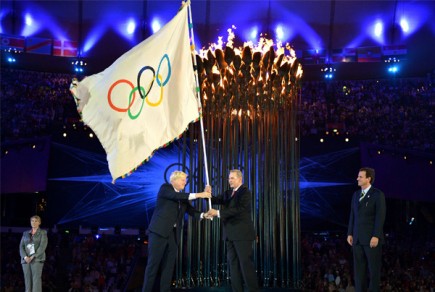
London hands over the Olympic Flag to the IOC.

John Ryan and Christer Ahl discuss a potpourri of Olympics Handball topics to include some top level analysis of the Women’s and Men’s competition, the competition format, NBC’s TV/Web production and the earlier podcast interview with the U.S. 1972 Olympic team.  The podcast also includes a brief discussion on the recent IHF Super Cup in Qatar.

post

AUDIO: Interview with Ben Teitelbaum: Co-Director of Team Handball Documentary, “Home Court”

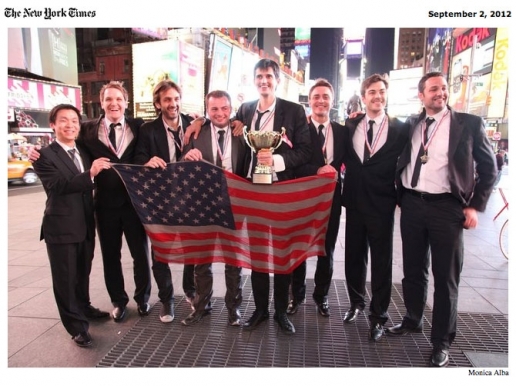
New York City Team Handball Club players pose with their latest national title trophy in Times Square

A new documentary focused on the current U.S. Club National Champions, the New York City Team Handball Club, is in the final stages of editing.  The film focuses on the multi-cultural aspects of the team which includes expats from all over the world.  In this 30 minute interview, Co-Director, Ben Teitelbaum discusses the film and its genesis.

New York Times (1 Sep 2012):  Unified, in America, by an International Sport

“Home Court” Official Website:  http://handballfilm.com/

New York City Team Handball Club Website: http://newyorkcityteamhandball.com/

THN Commentary from 2009 on Team Handball Related Movies: https://teamhandballnews.com/2009/12/in-search-of-a-handball-invictus/

post

Why Weren’t the U.S. National Teams at the London Olympics?: Part 4: A lack of funding: Where are the sponsors and donors?

If only it were so easy to get substantial funding from these sources.

In part 3, I provided an overview of USA Team Handball’s funding since 1993 and some background as to why the USOC has decreased funding since the 96 Olympics.  Continuing with the theme of funding sources, in this part I look at why the sport hasn’t received much in terms of funding from sponsors and donors.   (Links to Part 1, Part 2)

Sponsors:  As the concept of a “sponsor” might mean different things to different people, I’ll define it as any company that contributes funding to USA Team Handball for the promotion of their product.  (Note:  This is significantly different from the concept of a donor (discussed later) for which there is nothing expected in kind.)

Companies with Handball Specific Products:  There are a number of products that are directly related to the sport of Team Handball.  The obvious products include balls, goals, nets, flooring, shoes and stickum.  Companies with make these products have an incentive to sponsor USA Team Handball since the use and promotion of these products by the Federation is pretty much guaranteed to reach almost everyone in the U.S. that would consider buying these products.  Over the years, USA Team Handball had had a number of sponsorship agreements with companies that make these products, but I don’t have access to the documentation which shows how substantial these agreements were.  In recent years, USA Team Handball did score a $50,000 sponsorship deal with SnapSports (a maker of floor courts), but I wouldn’t be surprised, however, if in most instances the primary benefit was simply equipment being provided for national team use.  (Side note:  Another item, worthy of a lengthy discussion are TV rights and that will be covered in the next installment.)

So, first the good news:  USA Team Handball can pitch to these potential advertisers its phenomenal market reach.  Seriously, if you advertise on USA Team Handball’s webpage, you are probably going to reach nearly 100% of the U.S. Handball market.  But, now the bad news:  The number behind that 100% is probably in the neighborhood of around 500 people.  If these companies do the math, and they generally have people that really do the math (if they want to stay in business), this means that the dollar figures behind these sponsorships isn’t going to currently amount to much.

Companies with Sports Related Products:  There are a number of sports related products not specific to Team Handball that also might find merit with a sponsorship relationship with USA Team Handball.  The most obvious item is team uniforms, but other items such as protective undergarments could come into play.  These sponsors, however, are also pretty aware of the relatively few numbers they will reach through USA Team Handball.  USA Team Handball has generally been pretty successful in finding a uniform sponsor, although it’s not clear how much funding these deals brought in.  If the U.S. could find more success on the court and qualify for the World Championships and convince a U.S. network to air a few national team matches the uniform contract would certainly increase in value.

Companies with Generic Products:  There’s nothing to prevent Coca-Cola, Chevrolet, or some other random company from joining the USA Team Handball sponsorship family.  Well, nothing other than the same argument:  They’d be paying to reach only a few potential customers.  Still, despite this USA Team Handball has had some success in this area in the past.   If companies with Team Handball specific products have taken a pass on advertising with USA Team Handball, you might wonder why on Earth some other random company would give it a go?

The answer generally falls into a couple of categories.  First, some companies want to get aligned with the Olympic movement in any way possible and USA Team Handball can provide an entrée for doing so.  The most striking example was a substantial sponsorship (reportedly around $1M) from the Weather Channel during the 96 Olympics timeframe.  I don’t the full specifics of how this came to pass, but I suspect that the Weather Channel, based in Atlanta, wanted to join the Olympic family and was either coaxed or steered in USA Team Handball’s direction.   I’ll never forget the bizarre juxtaposition of seeing USA Team Handball promotional ads being aired in between weather forecasts and contemplating just how many people watching even knew what they were seeing.  Unfortunately, enticing these companies usually requires being in the Olympics which has proven problematic in recent years.

The second category generally requires someone in the company having an affinity to Team Handball.  How else to explain USA Team Handball’s current sponsorship from Grundfos, one of the world’s leading manufacturers of water pumps?  This Danish company clearly has an affinity to the sport because the likelihood of a USA Team Handball follower also having a need of a water pump is probably pretty small.  In many respects, the distinction between this sort of sponsor and a straight up donor is pretty negligible.

Donors:  If a sponsor provides money with the intent of promoting their product, a donor is someone or some company providing money with no real expectation of profit or promotion.  Donors support a charity, a movement, or a sports federation because they believe in the cause.   I don’t know how much money has been donated over the years, but I suspect that with the exception of Dieter Esch’s fairly recent generosity it hasn’t amounted to a whole lot.

Much like a presidential campaign there’s two ways to accumulate significant funding from donations.  You can either get a few people to contribute a lot or you can get a lot of people to contribute a little.

The millionaire donor:  During the Olympics, sports columnist Jack McCallum whimsically suggested that some altruistic millionaire should take it upon himself to fund USA Team Handball.

Not the first time somebody has come up with that idea as it is the simple solution to the big funding problem.  It seems somewhat silly, but it is at least conceivable.  After all, a lot of millionaires have purchased sports franchises and then bought players to win regardless of how much it costs their bottom line. The team becomes essentially a toy for them in the big scheme of things.  And even outside of professional sports, Paul Allen of Microsoft fame and T Boone Pickens have respectively, turned the Oregon and Oklahoma State NCAA Football teams into top programs.

From that perspective why not spend money turning around an Olympic sport?  The funny thing is, is this is sort of what happened to USA Team Handball on a smaller scale when Dieter Esch bankrolled the Federation from 2008-2010.  I say, “sort of” because Mr. Esch’s generosity had its limits, somewhere perhaps between $500K and $1M.  While his generosity was substantial, we would need Mark Cuban dollars for a full and complete turnaround.  And while I wouldn’t count on this happening, if there ever is someone with idle cash and a love for the sport, I sure hope USA Team Handball is ready to pounce with a pitch that will close the deal.

In the mean time, USA Team Handball could still make inroads with more donors being willing to contribute substantial, but still sizable donations.  Indeed this was the strategy behind the $50K cost for a Board of Director’s seat that Mr. Esch implemented.  And this was how Grundfos was brought into the fold.  Problem is, though, that more companies and businesses did not follow suit.  This could have been a salesmanship problem, but perhaps it’s more of a product problem.

Salesmanship Problem or a Product Problem?

One of the things that I’ve found amusing in online forums or in postgame discussions at the bar are critical comments directed at USA Team Handball for not raising more funds and/or being content to live off the USOC.  As if incompetence and laziness were the only things keeping us from going out in to the backyard to pick corporate checks off the fundraising tree.

I don’t have full insight into how much effort USA Team Handball put into fundraising over the years, but it clearly appears to have been a priority of the last GM and Board President.  Unfortunately, while they made good progress in establishing relationships with several European entities significant funding streams didn’t materialize.  Maybe they were simply bad salesmen, but I would assess their lack of success more to the bitter truth that there is little present value with the product of USA Team Handball.

It’s true that there are some incredible salesmen that can seemingly sale anything to anyone.   But in the midst of a struggling world economy even the Billy Mays of the world are going to come up short if the product doesn’t cut it.

So, given this currently reality how can we convince potential donors and sponsors to step forward and provide more funding to USA Team Handball?  Two answers:

1) Sell the future.  While the present value of USA Team Handball is paltry, the potential future value is exceedingly bright.  A nation of 308 Million people and only around 500 dedicated followers?  A sport tailor made for Americans?  For a long time sponsors and donors couldn’t see that potential future or thought it was a pipedream, but a number of developments have occurred in recent years to start turning some heads.  (To be discussed in the next installment)

In order to sell that future, however, USA Team Handball is going to have to convince the sponsors, donor and international partners that a clear plan is in place to make that future happen.

2) Improve the current product.  Of course, this is obvious, but it’s important to note that is not necessarily fully aligned with National Team performance.  No, the goal here is to improve the product from the viewpoint of potential sponsors and donors.  This means a number of things, but more than anything it means turning 500 dedicated followers into 5,000 and then 50,000 and then more.

So that wraps up the discussion on sponsor and donors.  In part 5, I further elaborate on some of the reasons the sport of handball is so little known in the U.S.  
post

Why weren’t the U.S. National Teams at the London Olympics?: Part 3: A lack of funding

Since the 96 Olympics the bottom line for USA Team Handball has been trending down.

In Part 1, I provided some top level analysis as to why our current national teams didn’t qualify for the London Olympics- we’re simply not very good.  In Part 2, I addressed the challenges USA Team Handball has had in finding and developing athletes.  In Part 3, I tackle the current lack of funding, some potential sources of additional revenue and why the U.S. has struggled to raise more funds.

It doesn’t take long for anyone observing the state of Team Handball in the U.S. to come up with a number of potential solutions as to how things could be turned around.  Very few of those solutions, however, come free and even the lowest cost options require some level of funding to implement.  It can be amusing to hear or read these would be solutions and then do some back of the envelope cost analysis to quickly determine that  the first year of implementation alone would bust the entire U.S. budget for the last decade.

Just how lacking is this “Lack of Funding?”

So, just how cash strapped is USA Team Handball?  I don’t have all the financial details, but the U.S. Government’s tax reporting requirements do provide a pretty good window of the trend that have occurred in the past two decades.  Using the Internal Revenue Service (IRS) Form 990s that are available through different online resources, I was able to do some forensic analysis.   For each year, the first number is the amount listed on USA Team Handball’s Form 990s in regards to “gifts, grants and contributions received.”  The second number is the contribution amount listed in U.S. Olympic Committee (USOC) Form 990s as being granted to USATH.

Year       Total Contributions         USOC Grant
1993       $841,615
1994       $1,396,152
1995       $1,204,365
1996       $1,383,813
1997       $867,116
1998       $585,000
1999       $563,152
2000       $741,322
2001       $652,364              $510,000
2002       $614,930              $379,000
2003       $547,091              $487,561
2004       $458,621              $354,237
2005       <<N/A>>             $281,620
2006       <<N/A>>             $3,184
2007       <<N/A>>             $500
2008       $489,150              $0
2009       $974,612              $238,268
2010       <<N/A>>             $335,552
2011       <<N/A>>              $283,202

First, a few notes regarding the data above:

– I couldn’t find USOC Form 990s prior to the year 2000.
– From 2006-2008 there was essentially no USA Team Handball Federation due to the USOC’s decertification of the Federation.  During that time period, however, the USOC took over many of the responsibilities of the Federation.  It would be interesting to see what it cost the USOC to run Team Handball during that period, but those numbers aren’t available.
– The USOC fiscal year is the same as the Calendar year while USA Team Handball’s Fiscal Year is from 1 July to 30 June.  In other words 2009 data is actually from 1 July 2009 to 30 June 2010.
– Reportedly, there was a number of accounting problems with USA Team Handball’s 2010 Form 990 and I think that is why it hasn’t been filed yet.
– There are several other items that I could have listed in the table to include total revenue and total expenses.  With few exceptions, however, total revenue and expenses track very closely to the total contribution number.  In other words, almost all of USA Team Handball’s revenue has been in the form of grants and USA Team Handball expenses have matched that revenue.  (Although, based on reports of debt problems this is probably not true for the 2010-2011 timeframe.)
– The Form 990 does not require the filing organization to fully break out where the contributions come from and for what amount.  This is why I include the USOC reporting of grants to Team Handball.  Additionally, it appears that older versions of the form don’t clearly delineate between grant and sponsorship funding.

While there are a lot of limitations with this data, it does provide a pretty good indication of the downward trend in funding.  Certainly from the high water mark (around the 96 Olympics) to the demise of the Federation in 2006 there’s a significant drop in funding.  And not surprisingly, there was a corresponding drop in performance on the court with the U.S. not coming anywhere close to qualifying for the 2000 and 2004 Olympics.  Aside from the drop in national team performance the lack of funding undoubtedly exacerbated USA Team Handball’s management/leadership problems leading to the Federation’s eventual decertification by the USOC.

With the establishment of the new Federation in 2008 there was an uptick in funding, but this uptick was mostly attributable to the generosity of Dieter Esch.  USOC funding from 2009 to 2011 has ranged from $238K to $335K, still far below reported figures from 2000-2004 and surely below grants provided during the 1996 Olympics timeframe.  With Dieter Esch deciding to turn off the spigot in 2010, USA Team Handball is reportedly back to a budget in the $300-500K range.

It can be debated as to just how much USA Team Handball needs in terms of funding to field competitive teams, but few would argue that $300-500K is sufficient.  Certainly, if $1.3M budgets were required in the 1996 timeframe to be “respectable” in Atlanta, then probably at least that much (adjusted for inflation) is needed today.  And not to mention, there’s a whole lot more than just national team budgets to consider.  How do you also pay for development and the interests of the membership at large.  And marketing, staff salaries, etc, etc.  Really, to do things right you probably need more like $5M.

So, Where’s the “Mo Money” Going to Come from?

So, if it’s so obvious you need more money, why you just craft a plan and go get it.  Right?  If only, it was so easy.  On the plus side, it is fairly obvious what the potential sources of additional revenue are, it’s just that convincing those sources to actually cough up the bucks is easier said than done.  What follows is a list of the potential sources, why they haven’t contributed as much as maybe they should and some top level assessment as to what it’s going to take for them to change their minds.

USOC:  For decades the USOC has been the main funding source for USA Team Handball.  This funding has varied over the years at times probably pushing the $1M mark at the high end and bottoming out to zero at the low end.  (It would be interesting to see more definitive financial data going back to the 1970s and adjusted for inflation, but that information is not readily available.)   In more recent years it has been around $300K.  So what happened?   Why the dramatic decrease in funding support?

The simple answer is that since the 96 Olympics the USOC has increasingly decided to base their funding decisions on what a sport’s chances for getting a medal are.  With the U.S. not being coming close to a medal in 96 and clearly no chance of medalling on the horizon it’s easy to see how Team Handball is going to come up short when competing against the likes of Swimming and Gymnastices.  Even worse as a team sport the costs of fielding a competitive team are pretty substantial and the return on investment can only be one medal in each gender.  The bitter reality is that no matter how you slice and dice it, if you’re trying to maximize medals for the least cost, investing in Team Handball is a fool’s errand.

Might the USOC, however, rethink its current medal emphasis?  I can think of a number of other factors that should be considered when the USOC makes these decisions.  Those factors include Federation need, potential TV audience and health/fitness for the nation as a whole.  In each of those areas USA Team Handball scores pretty high.  “Need” certainly doesn’t need to be explained.  As witnessed by the buzz from the recent Olympics it should be even clearer to USOC reps that the sport is tailor made for TV.  I’m obviously biased, but I don’t think it should be lost on anyone that the dynamics of attractive Team Handball match is inherently more entertaining than watching an arrow hit a target or boat crews rowing their oars back and forth.  Finally, with obesity becoming an increasing health concern the prospect of thousands of youths running up and down the court is a selling point that the USOC will/should at least listen to.

While these are factors that the USOC appears to consider, the goal is still clearly gold, silver or bronze.  And as long as that’s the case the best USA Team Handball can probably hope for is probably around $500K/year, an amount which is more in line with the funding levels of some of the other minor Olympic sports.

But the USOC isn’t the only game in town, in Part 4 I’ll review why funding has also been lacking from international entities, sponsors and other sources of potential revenue.

post

I want my, I want my, I want my HBL: Can somebody get me a good Univision Deportes Contact?


Could this Spanish language sports channel be the new American home for the German Bundesliga?

The German Handball Bundesliga (HBL) 2012-13 season is set to begin this Friday night with Grosswallstadt hosting Melsungen.  Unfortunately, the My Sports Germany channel did not the renew the rights for the HBL, so American viewers planning to get their handball fixing watching the world’s best professional league in their living room are probably out of luck.  Or are they?

According to some email correspondence I received from The Sportmans Media Group (the TV rights distributor for the HBL) the Univision Deportes Network (UDN) now has the rights to broadcast the HBL in the U.S. via their relationship with Televisa Deportes Network (TDN).  As I understand it, TDN is only available in Mexico, while UDN is available in the U.S.   And UDN can and does broadcast a lot of TDN content.  Mostly soccer from what I can tell.

I would like to know whether the UDN will (or could be convinced to) broadcast the HBL this season.  (Heck, even if they show one match a week at 2:00 A.M, I’ll be happy.)  Unfortunately, I haven’t been able to find an email contact on the UDN website and some shout outs on Twitter and Facebook have been unanswered.  Not too surprising as they were in English except for the word Balonmano (Handball in Spanish).

So my plea out there to any of our Spanish readers with a little bit of patience and persistence.  If you can track down the right point of contact at Univision to discuss the possibility of balonmano being broadcasts on their network it would be very greatly appreciated.  And if Univision agrees to advertise with Team Handball News, we will compensate you for your efforts.

If you have some good leads please send me an email at john.ryan@teamhandballnews.com

post

Men’s Gold Medal Match: Live Chat

I’ll be leading a live chat during the Gold Medal match which starts at 10:00 AM, Eastern time.  It looks like NBC is only go air parts of the match live on the NBC Sports Network, so I’ll start of f with the NBC webstream, then switch to traditional TV when it becomes available.

I’ll have a microphone, but won’t use it when the TV broadcast is up.  Everyone who joins the ustream feed will be able to ask questions and comment via text.

Ustream Link: http://www.ustream.tv/channel/team-handball

NBC Weblink: http://www.nbcolympics.com/liveextra/video-watch.html?video=men-medal-matches-placements-gold

post

Move over Fatsis, Scott Van Pelt is the new mainstream media Handball King

ESPN's "Home for Handball"

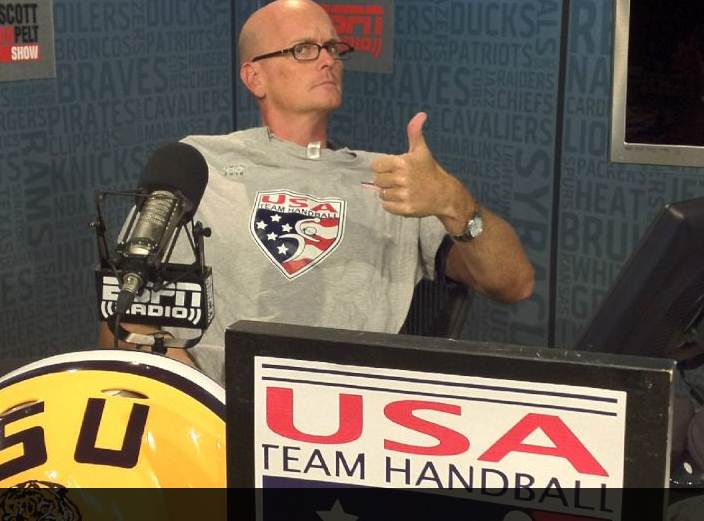
For several year’s NPR’s Stefan Fatsis has proudly worn the mantle as Team Handball’s #1 mainstream media proponent and fan.  But coming on strong and aided by the nationwide blowtorch that is ESPN Radio is Scott Van Pelt, who’s show airs from 1:00 – 4:00 PM, Eastern Time.  Van Pelt and his crew talk about the sport daily and he’s now even sporting USA Team Handball gear.  A shout even to Ulrik Wilbek.  Who’d a thunk it.

But with such a mantle also comes great responsibility. All one has to do is look at early morning offering on any of the ESPN family of networks and quickly conclude that if ESPN wants to be the “Home of Handball” there’s plenty of room to start broadcasting.  Or at the very least get some broadcasts on ESPN3 or ESPN Live or whatever ESPN is now calling their webstreaming channel.  Hey, it’s been done before as the 2009 World Championship final was broadcast online at ESPN360.  I was also told a couple of years ago that ESPN was sitting on the rights for the Liga Asobal, the Spanish Professional League.  Finally, the EHF Champions League is there for the taking if ESPN wants it.

So Scott Van Pelt:  Are you up to the challenge? Are you going to continue to talk Handball after Sunday?  Are you going to shepherd the broadcasting of the sport at ESPN?  Or are we going to spend another 4 years waiting until Rio?

Scott Van Pelt Show Website:  http://espn.go.com/espnradio/show?showId=scottvanpelt2009

Link to show podcasts: http://sports.espn.go.com/espnradio/podcast/archive?id=3028618

Scott Van Pelt Twitter: https://twitter.com/SVPshow (Note the current moniker)


post

Audio: 1972 Olympians reflect on the Munich games and more

72 Team Handball Olympians (From left to right: Vinny Dicalogero, Rick Abrahamson, Dennis Berkholtz, Jim Rogers and Joel Voelkert

This past weekend members of the 1972 Men’s Olympic Team Handball squad gathered in Las Vegas for their 40 year reunion.  Vinny Dicalogero, Rick Abrahamson, Dennis Berkholtz, Jim Rogers and Joel Voelkert sat down with me to reminisce about their “glory days.”  How the team was formed, how they prepared for the games, their qualification tournament in front of a packed house in Elkhart, Indiana, their experiences in Munich and their thoughts about what’s happened with Team Handball in the U.S. in the past 40 years.It’s an hour long, but well worth the history listen.  I suggest you use it as your sound track while watching the 2012 Olympics online.

1972 Results

Group Play (0-3)
USA vs. Hungary 15:28 (8:16)
USA vs. Yugoslavia  15:25 (9:11)
USA vs. Japan 16:20 (9:9)

Placement 13-16th place
Semi: USA vs. Spain 22:20 (8:11)
Final: USA vs. Denmark 18:19 (6:12)

Overall Placement: 14th out of 16 teams


post

Men’s Quarterfinal Matchups: Croatia is the new favorite

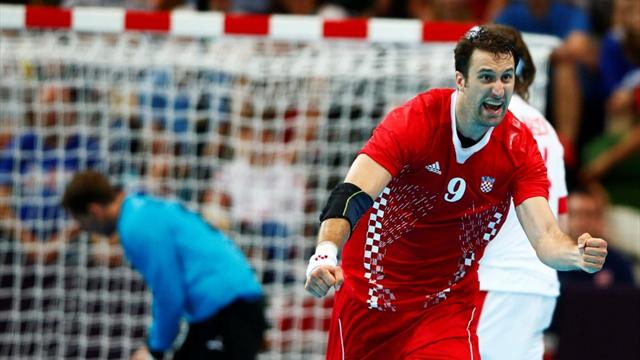
Igor Vori and Croatia should easily advance to the semis

Here are the matchups for the Men’s quarterfinals on Wednesday.  Handicap (point spreads) are in parentheses

Upper Bracket
Iceland (-3)   vs. Hungary
Denmark (-2.5) vs. Sweden

Lower Bracket
France (-2) vs. Spain
Croatia (-7.5) vs. Tunisia

Updated Odds

Here are the updated odds for the 8 remaining teams to win it all:

Croatia: 1.8 to 1 (Pre-tournament: 5.5 to 1)
France:  2.8 to 1 (2 to 1)
Denmark: 4 to 1 (3.5 to 1)
Spain: 11 to 1 (5 to 1)
Iceland: 14 to 1 (19 to 1)
Sweden: 39 to 1 (40 to 1)
Hungary: 50 to 1 (40 to 1)
Tunisia: 2000 to 1 (550 to 1)

Worth noting:  Croatia is the new favorite and they clearly played the best in group play.  Assuming France survives Spain the oddsmakers seem to think that the semifinal between France and Croatia might be the real final.  Denmark is favored out of the other bracket, but Iceland may again be the surprise team.

Link to NBC schedule of online games: http://www.nbcolympics.com/online-listings/sport=handball/index.html

(Note:  If you are time shifting, be careful not to scroll down to far if you want to avoid seeing who’s in the semifinals.)

Personal note: 4 quarterfinal knockout matches to watch.  Time to head into the time shifting tank.  No twitter, facebook and email reading for this fan!

post

Women’s Quarterfinal Matchups: Norway, Russia, Brazil and Korea in the “Bracket of Death”

Chouette! We've avoided the Bracket de la mort!

Here are the matchups for the Women’s quarterfinals on Tuesday.  Handicap (point spreads) are in parentheses

Upper Bracket
Brazil vs. Norway (-1.5)
South Korea vs. Russia (-1.5)

Lower Bracket
Croatia (-.5) vs. Spain
Montenegro vs. France (-1.5)

Badminton tactics?: Conspiracy theorists are accusing Norway of some badminton-like tactics after their 25-20 loss to Spain in their final group play game.  A win would have placed Norway in 2nd place and set up a quarter final show down against Russia.  Norway and Russia have been the top two women’s teams in recent years and they were the oddsmaker’s top two pre-tournament favorites.  Norway’s loss, however, dropped them to fourth place and they will now play surprising Brazil.  Brazil has been playing well, though, so who’s to say whether that really is a better matchup.

Updated Odds: Here are the updated odds for the 8 remaining teams to win it all:

France:  2.5 to 1 (Pre-tournament odds: 6.5 to 1)
Norway: 2.75 to 1 (1.75 to 1)
Russia: 4.5 to 1 (3.5 to 1)
Brazil: 14 to 1 (50 to 1)
South Korea: 14 to 1 (50 to 1)
Montenegro: 19 to 1 (7.5 to 1)
Spain: 20 to 1 (34 to 1)
Croatia: 20 to 1 (75 to 1)

Worth noting:  France is the new favorite, partially due to their strong performance, but also due to a very favorable bracket.  The next four teams (Norway, Russia, Brazil and South Korea) will now battle each other in the “bracket of death”.

Link to NBC schedule of online games: http://www.nbcolympics.com/online-listings/sport=handball/index.html

(Note:  If you are time shifting, be careful not to scroll down to far if you want to avoid seeing who’s in the semifinals.)


post

AUDIO: NBC’s Dawn Lewis on the Olympics so far

Surprising Brazil wins their Group; Up next defending champion, Norway in the Quarterfinals

Women’s Group play has just concluded and the Men have just one more round of games.  NBC Commentator and 1996 Olympian Dawn Allinger Lewis discusses the upcoming women’s quarterfinals and the men’s results so far.  Podcast length is 15 minutes.

post

Why aren’t the U.S. National Teams at the London Olympics?: Part 2: Where do you find and/or how do you develop great Team Handball players?

Targeted recruiting for national teams or grass roots development? Or Both? And why is it so hard?

In Part 1, I provided some top level analysis as to why our current national teams didn’t qualify for the London Olympics.   This analysis simply looked at our current team and compared that team to former U.S. Olympic teams and our current Pan American competition.  That analysis highlighted that our current teams are lacking in the following areas: 1) Raw athletic talent, 2) Conditioning, 3) Individual technique/skills, 4) Team cohesion/experience, 5) Coaching strategy/preparation.  In this second part I start to look at the underlying reasons for failure.

The Underlying Reasons:   A complicated web they weave.

I’ve been asked a number of times over the years, just why the U.S. isn’t any good in Team Handball.  I usually reply with “How much time do you have and where should I start?”  As I started to map out the reasons on paper in a systematic way it became even more clear to me just how complicated it is as all of the reasons are interlocking in multiple ways so there is no clear root cause to failure.  In short, there is no straight line cause and effect like the old “For want of a nail” proverb by which if we just solve this one thing we’ll become a great handball nation.  Perhaps, some reasons like the lack of funding or lack of marketing exposure come close, but there is no “silver bullet” guaranteed to solve all the problems.

So, with that little diatribe in mind I would like to highlight 4 major underlying reasons worth further discussion.  Those 4 reasons are:

1) A lack of good handball athletes
2) A lack of marketing/awareness
3) A lack of funding
4) Ineffective leadership/management

Underlying Reason #1:  A lack of good handball athletes

Perhaps the most obvious shortcoming to the U.S. National teams relates to a distinct lack of athlete with both the raw talent and technical skills to compete at higher levels.  There are two basic solutions or paths to address this problem:

1) Targeted Recruitment: You can recruit some good raw athletic talent and have a dedicated and intensive training program to build up their technical skills
2) Grass Roots:  You can develop broad based grass roots programs to increase the number of players in this country and out of those greater numbers some good athletes with strong technical skills will emerge.

Over the years the U.S. has tried both approaches to varying degrees of success.  In a series of articles I wrote 3 years ago, “A Framework for Creating USA National Team Success” Part 1, Part 2, Part 3, I provided an in depth review of some of the problems with each strategy and proposed a hybrid model for implementation.  Here is a somewhat shortened version of that analysis.

Targeted Recruitment:  The obvious solution?

With the Olympics going on various media observers have been watching the Handball matches and have been zeroing in on the Target Recruitment strategy.  All we need is NBA D-League players or mediocre NCAA talent from the Big Sky conference and train them up a little.  Even USA Team Handball is in the act taking the more modest approach of 1 (all we need is just 1) athlete from each NCAA conference.

It’s easy to see why so many people immediately come up with this strategy as one only has to watch the teams currently playing in London and assess that there are indeed thousands, if not tens of thousands of athletes in the U.S. with the raw athletic talent necessary to compete.  But, it’s just not that simple as there are a number of further underlying reasons:

1) Recruitment of the great raw talent athlete is only feasible when those athletes run out of other options:  Many observers fully realize this and that is why the more credible back of the napkin analysis focuses on athletes that aren’t going to make the big time.  Problem is you need to convince those athletes that they aren’t going to be the next D-Leaguer that isn’t going to make the NBA.

2) More athletes have more “other” options:  Not too many years ago the options for former NCAA athletes were pretty limited making an Olympic handball career an interesting possibility.  This is not as true anymore, particularly for basketball athletes who have a lot more options in Europe.  This article highlights how things have change over the years.

3) Older players are more likely to have “life issues” emerge:  Most great raw talent athletes at least having the option of playing their chosen sport in college.  This means the youngest athletes will be in 22-23 age range.  Certainly from a physicality standpoint this age is not a tremendous problem, but with each passing year athletes will inevitably have “life issues” play a greater and greater role in their overall psyche.  The possibility of marriage, needing to start a career or just waking up some morning and deciding that this training isn’t any fun anymore will come into play.

4) The Olympic carrot is less of a tangible reward:  In the past a USA Team Handball recruiter could confidently wave the Olympic carrot in front of a would be player.  Certainly at the 84 and 96 Olympics there was automatic qualification.  The competition in the Pan American region, however, is now much stiffer and some athletes will be less enticed when they realize that participating in the Olympics is far from a guarantee.

5) Lack of funding:  And right now the USA Federation has nowhere near the funding necessary to establish a credible training program for these would be recruits.  The programs in the 80s and 90s provided room and board, overseas travel opportunities and a small stipend.  With the other reasons outlined above even that model might not be sufficient enough to recruit the players needed.

Grass Roots:  Too hard and it takes too long?

While it’s not the solution du jour, Grass Roots strategies have garnered more weight at other times.  All we have to do is copy what soccer has done (or lacrosse, or rugby, or ultimate Frisbee) and then the sport will be popular in this country.  It’s not so simple and in this post I explained why.

Perhaps the biggest proponents to this strategy are the many expats who remember how they learned the sport at younger ages in their home country.  If we could do it in Elbonia then we can do it in the USA.   Grass Roots takes time, but it’s clearly the way to go if we want to have sustained success.  If you have thousands and thousands playing the sport, you will have great players that bubble up to the top and they will be doing so at age 18, not age 25.  But it’s not easy to develop these broad based programs.  Here are some of the reasons why.

1) Starting up a team sport from scratch isn’t easy:  Team Handball is a team game and you need a lot of players in order to have a good training environment.  We can probably quibble about just exactly how many are needed, but at least 10 is probably a good number.   Then, of course, you have to add the challenge of convincing people who’ve never played a sport before to suddenly decide to devote time and money to it.  The internet and Olympic telecast make such recruiting easier, but as anybody who’s ever started a club knows this is painstaking, unglamorous work.

2) Gym space is needed:  Finding a gym to play in can be a challenge as many in the U.S. were built for smaller basketball courts.  And then all those basketball leagues have to be contended with.  The cost of gym rental can be a crippling blow to new clubs which lack the numbers to share the costs.

3) The tyranny of distance:  The U.S. is a big country.  Even if a good club program is started in one particular city, that club often has to travel considerable distance to play another club.  This means that for real grass roots efforts to succeed that one club in a city often isn’t enough.  This is why to a certain extent that there is a little bit more concentration and development on the East Coast where the population has a bit more density.

4) The dominance of basketball: Team Handball is its own game and has similarities with a number of sports.  Still, it should be obvious that there is a great deal of similarity between the two games.  Not every good basketball player could be a good team handball player (and vice-versa), but there is a massive number of players that could choose either.  Basketball was invented in the U.S. and it’s our national indoor sport.  That’s not going to ever change and those would be athletes at younger ages are almost always going to select hoops over handball.

5) The physicality of team handball:  Team Handball can be a rough sport to play and it’s probably better suited for athletes in their teens.  Accordingly, it’s at a handicap compared to other sports like soccer where there is less injury, or at least the perception of less injury.

6) The pressure to succeed now: It’s a given that Grass Roots programs will not lead to immediate success.  In fact, you could argue that it will take at least 10 years to see any success translated to our national teams.  Meanwhile the USOC, a primary funding source for USA Team Handball, requests a yearly High Performance Plan which is supposed to outline how Team USA is going to win medals when the reality is that even qualifying at this point would be a tremendous success.  This pressure has always existed, so it’s not surprising that funding choices have often been made towards supporting National Teams rather than Grass Roots efforts.  And then when those National Teams have only moderate success (if even that) the Grass Roots proponents out in the sticks have complained, if only you had given me the resources I need, I would have developed several athletes that could make your national teams.

7) Lack of funding:  But, again the reality is that even if USA Team Handball zeroed out all funding for USA National Teams there still wouldn’t be enough seed money to support Grass Roots programs on the scale that is necessary.  Sure, it could be argued that these programs should be self-sufficient, but with the challenges outlined above assistance is needed to better enable success.

The Answer?

When you start to add up the underlying reasons it becomes fairly clear that both strategies have a lot of hurdles standing in the way of success.   As I noted in my framework series there are elements of both models that have merits, so that’s why I think some sort of a hybrid approach stand the best chance of success.  And I say best chance, because there are some other underlying reasons that would have to be resolved before any plan to field better teams has a good chance at success.  Those other areas include a lack of funding, a lack of exposure/marketing,  and yes, a history of ineffective leadership/managemen.  In Part 3, I first address the historical lack of funding.

post

Why aren’t the USA men’s and women’s national teams at the 2012 Olympics?: Part 1: The simple analysis

Brazil scoring one of their 50 goals in their 50-10 victory over the USA last year at the PANAM Games. The USA will need to get a lot better if it wants to qualify for the Olympics.

I’m in the process of updating the Frequently Asked Questions (FAQ) page and as this is easily the question of the moment, I thought it worthwhile to answer it.   In this first part, I simply review the qualification competition and analyze why the U.S. came up short.

Why aren’t the USA men’s and women’s national teams at the 2012 Olympics?

The simple answer:  They didn’t qualify (and they didn’t even come close).  There are two paths to qualification for the USA; either via the World Championships or the PANAM Games.  It’s a somewhat complicated process and the details are at these links (Men’s 2012 Qualification, Women’s 2012 Qualification).  By far, the simplest and easiest way for the USA to have qualified would have been to win the Handball Tournament at the PANAM Games.

At the 2011 PANAM Games the women finished 8th out of 8 teams, failing to win a single match.  In pool play they lost to the eventual winner and Olympic qualifier, Brazil by a score of 50-10.  There’s no way to sugar coat such a loss as it means that Brazil basically scored at will.  In their other 4 games the women were more competitive, but still lost by an average of 7 goals. (Details on PANAM Games Women’s Tournament)

The men fared slightly better and finished 7th out of 8 teams.  In pool play they lost 36-19 to the eventual winner and Olympic qualifier, Argentina.  Their other pool play and placement matches were relatively close.  They lost by 5 goals to eventual 4th place finisher, the Dominican Republic and lost by 1 goal to both Mexico and Canada.  In the 7th place game they managed to beat winless Venezuela by 4.    These margins of defeat make it abundantly clear that there was no realistic scenario by which either the men or women could have qualified for London. (Details on PANAM Games Men’s Tournament)

Why weren’t the U.S. teams more competitive? The U.S. has never been a world power, but in the 80s and 90s, the U.S. fielded competitive sides that were able to earn qualification to the Olympics.   What happened?  Why the lopsided scores?  As this is just the first of two parts, I’ll first give the direct causes of failure.  In thinking about how to best capture this I came up with 5 key areas that factor into how good a team is.  These 5 key factors are:

1) Raw athletic talent
2) Conditioning
3) Individual technique/skills
4) Team cohesion/experience
5) Coaching strategy/preparation

So here’s my assessment of our current national teams and where they stand, both in comparison to their current competition and USA teams of the 80s and 90s.  (Side Note: If this assessment comes across as a cranky old timer who thinks former USA teams walked on water, let me be clear on a couple of things.  I, personally was a border line national team player on a team that only was able to eke out a win and a draw in my 12 International Game; And those were against Canada.  Translation:  I am a has been, that never was.  Going further, no USA team has ever been good enough to beat the top teams of Europe in World Championship or Olympic competition.

1) Raw athletic talent.  If you can jump higher, throw harder and move quicker than your opponent you will have a distinct advantage.   For many years, U.S. teams compensated for their lack of technical skill with superior athletic talent drawn from our sizable population

USA Women:  With the Women’s team, I would assess that only one player (Jennifer Fithian) to have the type of raw talent that would compare with our former Olympic teams.  Karoline Borg comes close and would “have a chance” to make the roster, but mostly based on her strong technical skill.  Against current PATHF competition they are totally outgunned by Brazil.  The gap with the rest of PATHF, however, isn’t as bad, but they still are at a disadvantage.

USA Men:  The men’s team is a bit stronger in this department.  Clearly backcourts Gary Hines and Adam El Zogby have the raw talent.  (Although, Hines would have to play wing instead of back.)  From what I’ve seen Jordan Fithian may have the raw talent, but it’s not as clear cut.  The rest of the roster is filled with some decent talent, but in a competitive environment for roster slots comparable to the 80s and 90s most would come up short.  Against their current competition in PATHF, however, they only have a slight handicap against Argentina/Brazil and have better raw talent than the other also-rans.

2) Conditioning.  Team Handball is a physically demanding game and if athletes are out of shape it can make a big difference.   Former USA Olympic team might have come up short technically, but rarely were they out hustled.

USA Women:  The U.S. Women’s team was clearly lacking in this area and this certainly played a role in the final score line of their matches.

USA Men:  The USA Men seemed to be OK in this department.  Although, perhaps a little better conditioning could have helped the team to overcome some rough patches in close matches.

3) Individual technique/skills: While Team Handball is a relatively easy game to learn, it can be a challenging game to master.  Despite extensive full time training (often for several years) former USA Olympic teams were always outmatched in this area by European teams.  In the 80s and 90s it was a rare occurrence for a USA team to be technically outmatched by their PATHF competition, but several PATHF nations have since made significant gains in training and development.

USA Women:  On the women’s side, arguably only one player, leading scorer and Swedish-American, Karoline Borg, has fully mastered the finer points of the game.  Several other players have made significant progress, but still have a ways to go in this department.  The current USA team is technically weaker than our former Olympic teams, but this is due to substantially fewer training opportunities.  And slippage against PATHF competition is also attributable to improved training in development in those nations.

USA Men:  Several players, primarily dual citizen athletes, are pretty sound technically.  Gary Hines is arguably the most technically developed American player that didn’t also have the benefit of training as part of a fully established USA residence program.   The American born players aren’t as strong technically for the same reasons mentioned in the women’s section.

4) Team cohesion/experience.   Team Handball, as the name indicates, is a “team” game.  How the different individual players combine their talents to form a cohesive team can make all the difference.  Additionally, teams that have played together for years have a distinct advantage in that the players are familiar with each other’s moves, strengths and weaknesses.  Former USA Olympic teams were very cohesive in that they trained and, in many instances, lived together for several years.  USA teams in the past also had the advantage of periodic overseas trips for competition.

USA Women:  The core of the USA Women’s team is a pretty cohesive unit having trained together at Cortland University from 2004-2007.  Since 2007, however, there have only been a few training camps prior to competition for World Championship or Olympic qualification.  There is no comparison to the advantages that former USA teams had in this area.  Additionally, several PATHF programs now have regular training and overseas trips for competition.

USA Men:  The Men’s team is even more handicapped in this department as players often met each other for the first time at the short training camps prior to competition.  The team has done as good as job as can be expected in this department, but they are clearly lacking opportunities to play together as a team.  This has put them at a distinct disadvantage against several PATHF foes where those teams have played dozens of games together.

5) Coaching Strategy/Preparation.  A good coach can make any team a little bit better with good X’s and O’s strategy during the match and by preparing his team with a good scouting report on the opposition.  USA Olympic teams in the past had full time coaches and in most instances they were experienced European coaches with good track records.

USA Women/USA Men:  Both the current men’s and women’s teams do not have permanent head coaches.  Instead coaches have been hired prior to competition.  It’s difficult to assess the performance of these coaches without being more closely involved in the program.  Additionally, as part time coaches with inadequate resources it’s difficult to find great fault with their efforts. In terms of the PATHF programs, Brazil has had full time European coaches in recent years and I suspect that Argentina and Chile’s coaches also receive more consistent support from their federations.

Summary

It’s possible that a team can compensate for a weakness in any of these areas.  I’ve seen superior raw athletic talent trump weak technical skills and I’ve also seen the reverse happen.  I’ve seen inexperienced teams do well with a good coach, and again I’ve seen the reverse as well. But, if you are at a disadvantage in all 5 areas (Women) and 4 out of 5 (Men) there’s simply no way you can expect anything but poor results.

Of course, there are a number of obvious steps that could be taken to improve in all of these areas.  If you need better raw talent, then do a better job of recruiting.  If your players are technically weak, well then train them to be better, etc., etc.,   All of this, however, is easier said than done.  In part 2, I’ll tackle the underlying reasons as to why the USA has struggled to field better teams and qualify for the Olympics.