post

The legend, now in bookstores

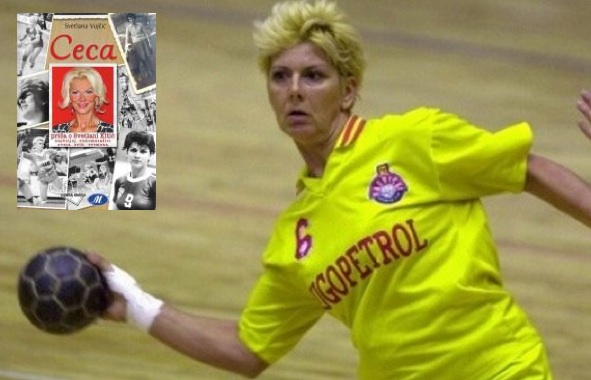
Svetlana Kitic in action, and the cover of her biography

Svetlana Kitic in
action, and the cover of her biography

By Altay Atli

Handball biographies are a rare commodity, probably because publishers do not see any profits in this genre, or also because retired world-class handball players do not bother to put into writing their experiences and reflections on the sports. A recent exception provides a gem of story of a life devoted to handball.

The biography of Svetlana Kitic, a former Yugoslav handball player who is officially designated by the International Handball Federation as the “world’s best female handball player of all times”, is a must read for all handball enthusiasts. Titled “Ceca” after Kitic’s nickname, the biography written by Svetlana Vujcic, journalist and former teammate of Kitic, tells us the story of a woman who rose to the top against all odds, gave her all for the sports she loved and played at the competitive level for more than three decades. “There were good and bad days, tears, broken fingers, noses, jaws, but I would go through all that again”, says Kitic, “Handball is simply my life, the thing which fulfills me the most and makes me happy. If I wasn’t like that I wouldn’t have played it until I was 49. Yes, if I was born again, I would live my life exactly the same.”

The biography tells us actually two stories that are interwoven throughout. First there is the story of Kitic the legend, a handball player par excellence, who won a total of 21 club titles; silver and gold medal in the Olympic Games, Moscow 1980 and Los Angeles 1984 respectively; gold, silver and bronze medals in world championships; and played a total of 202 games for the Yugoslav national team scoring more than 900 goals. Throughout the book, we trace her path, from the very early days in the Bosnian town of Tuzla when she “irresistibly resembled Pippi Longstocking”, to her beloved club Radnicki in Belgrade and on to clubs in Germany, Italy (where she was known as “Maradona in skirt”) and Spain before moving back home. We watch her developing a style, with her feints that break down the defense, her blind passes and bullet-like shots from the knee level sharply to the upper corners of the goal. We watch her perfecting her games, winning games and hearts, sometimes also making “the dumbest mistake, ruin the game, miss a goal many times” but “never tolerating surrender and lack of competitiveness.” Her exploits with the Yugoslav national team provide us with an in-depth overview of not only a successful athlete’s career, but of the history of European handball itself.

Then there is the other story: Kitic the human. What is a perfectly functioning and merciless goal-scoring machine on the handball court has a human face on the outside, with all her desires, fears, frustrations and, well, love affairs. Kitic got married four times and we see in the book that her relationship with her partners have frequently gone through turbulent times. Adding to this, the problems she had with clubs and the federation, with individuals in the handball world, financial troubles and externally induced situations such as the NATO bombing of Belgrade in 1999, we see Kitic trying to stand on her feet, never giving up, and surviving to score another round of goals in the next match. Whenever she needs solace she finds it in two places: her children and handball: “Handball didn’t take anything from me, fooled or deceived me, like people are capable of doing. It gave me everything in the world, and by making magic, it made… me.”

Kitic’s is a life of ambition, struggle and endurance. It is a life of handball. As Serbian coach Milorad Milatovic wrote, hers is a “story about the greatest female handball player of all times, the mother of three, wife and grandmother, the story about a great woman.”

A personal note: Zhongshan, southeast China, the year is 1999. The World Junior Women’s Handball Championship is in progress. Turkey and Yugoslavia are in the same group. Svetlana Kitic is the manager of the Yugoslav team, and the author of this article has the same job with the Turkish team… A talk I had with her, over a cup of rice wine, has been an amazing lesson for me on handball and life. It has been a real privilege, but for those who haven’t had it, the book, which is available in both English and Serbian, is recommended.

And a question to readers: Handball biographies, though they do not exist in large numbers, are/can be a source of both knowledge and inspiration for handball lovers, especially for young players. So, dear reader, whose biography would you like to read the most?

post

Pivotal USA – Puerto Rico Match likely to determine nonqualifier

PATHF-logo-grande

The North American and Caribbean Men’s Handball Championships will qualify 4 teams for this summer’s Pan American Handball Championships in Uruguay.  With 5 nations participating this means only 1 nation won’t punch their ticket for Uruguay.  There’s still quite a few games to be played, but with Puerto Rico having lost their first two matches by large margins they appear to be the weakest team.  Mathematically, there best hope is a win today against the U.S. which is the only other team without a victory.  The U.S. lost 21-15 against Cuba in its only match so far.  Following a 13-5 deficit in the first half the U.S. played much better in the 2nd half, actually outscoring the Cubans 10-8.  Based on that performance the U.S. should be able to get a win and all but punch their ticket for Uruguay.

Match time is 5:00 PM (U.S. Eastern Time) and will be streamed live at the link below.

Tournament Standings: Link

Webstreaming website:  Link

post

Youth action in the Mediterranean


Egypt won the Mediterranean title, beating Tunisia

Egypt won the Mediterranean title, beating Tunisia

Guest columnist, Altay Atli, is a lecturer in international relations and economics based in Istanbul, Turkey.  Altay is a former handball player, a former handball manager, a former handball journalist and forever, a handball fan.  His work involves a considerable amount of travel and the opportunity to see handball played in many parts of the world.  In this article he reports on the recently completed Mediterranean Handball Championship and its emphasis on youth development.

Last week, Chieti, a small town in Central Italy a few miles away from the Adriatic Sea, hosted the Mediterranean Men’s Handball Championship. Eight countries littoral to the Mediterranean, namely Cyprus, Egypt, France, Italy, Libya, Montenegro, Tunisia and Turkey, took part in the event, which was won by Egypt after a penalty shootout thriller against Tunisia (36:34). The championship went largely unnoticed in international sports media, something that can be attributed to the fact that the championship was for under 17s. However thanks to the live streaming provided by the organizers a large audience could enjoy the quality of handball played in Chieti.

This championship makes us rethink the feasibility and the merits of regional events that include participants from more than one continental federation. At professional level international handball, each continental federation has its own busy schedule, which, when global events such as the world championships and the Olympic Games are also taken into consideration, seldom leave any space for regional events in a tightly packed calendar. This is why events like the quadrennial Mediterranean Games fail to attract the crème of the region’s handball to their ranks. Given the hectic schedule of professional sports, developed handball countries either prefer to take their reserve teams to such events or they do not participate at all. The most recent version of the Mediterranean Games, held in June 2013 in Mersin, Turkey, illustrates this trend. In the men’s competition, which was won by Egypt, handball giants like France and Spain did not even take part, while in the women’s competition, which was won by Serbia, developed countries (such as France) either did not participate or competed with junior teams. For instance, from the 16 players Serbia had in Mersin, only five made it to the roster that played the final of the World Championships in December.

In other words, at the senior/professional level, regional events such as those organized in the Mediterranean, do not offer a bright prospect. However, at a lower level, they can be meaningful. The Mediterranean Handball Confederation, which operates since 2003, organizes the Mediterranean Championships on an annual basis for both men and women, and these events are, as the web site of the confederation suggests, “preferably reserved to young athletes.” If the focus had been on senior teams, both the confederation and the championship could have been doomed to irrelevance in the face of the increasingly competitive and commercialized environment of professional handball. By targeting the youth, however, they can serve the sports in other, more purposive ways

First and foremost, the Mediterranean Championship can help the development of handball by providing talented young players with the opportunity to gain international experience. In Chieta, all the players, and particularly those from countries like Libya and Cyprus which do not have strong national competitions, gained high level competitive experience, while some of them including Egypt’s Hassain Anis, Tunisia’s Ghachem Oussama and Turkey’s Halil Ibrahim Ozturk, managed to win international recognition thanks to their successful performance. In the meantime, the championship also offered a platform for young referees to make a debut in international handball. The final match was umpired by the young Italian couple Francesco Simone and Pietro Monitillo, who are on EHF’s candidate referees list, and together with two more couples from Italy, two from France and one each from Turkey and Tunisia, they have taken an early important step in their careers. In brief, the Mediterranean Championship contributed and is likely to continue to do so for the development of handball by giving young players and referees the opportunity to perform at the international level and enter the spotlight.

Youth handball development in the Mediterranean is also important at a different level. The region in question has been going through a difficult period. Southern Europe is still suffering from a financial crisis and youth unemployment is a painful fact of this region. Northern Africa is undergoing a transformation in the post-Arab spring period and the youth is at the center of this process as well. The Asian coast of the Mediterranean, not represented in Chieti, is currently the most problematic part, with the civil war going on in Syria without an end in sight. Empowerment of the youth is a vital requisite for restoring stability in the region, and youth interaction through sports, culture and education, both within and between countries, is the key here. Handball cannot create miracles in this respect, but its contribution can be useful.

post

Handball in Hong Kong

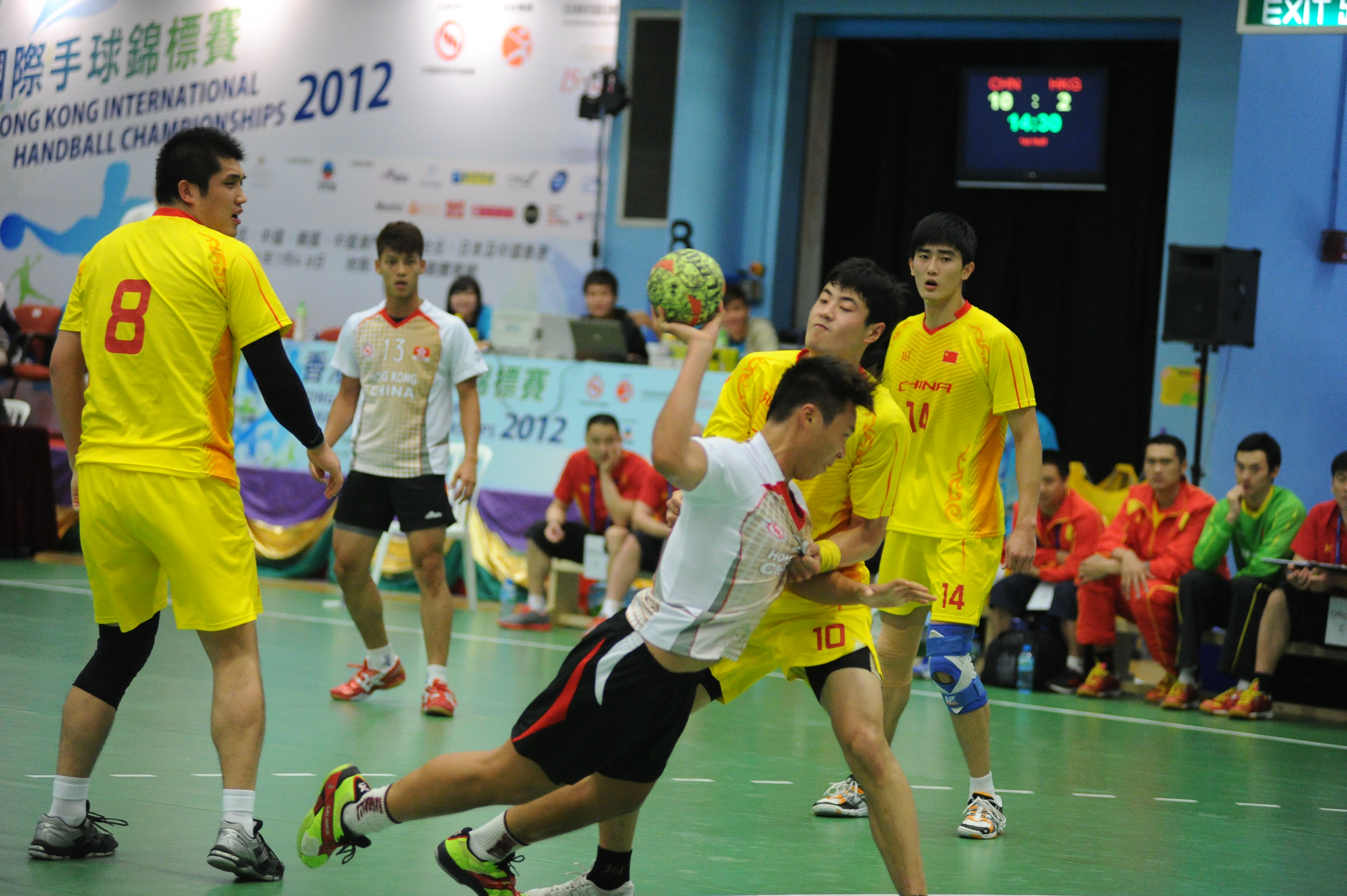
"Hong Kong team taking on China in the Hong Kong International Handball Championships

Hong Kong
team taking on China in the Hong Kong International Handball
Championships

Today’s guest columnist is Altay Atli, a lecturer in international relations and economics based in Istanbul, Turkey.  Altay is a former handball player, a former handball manager, a former handball journalist and forever, a handball fan.  His work involves a considerable amount of travel and the opportunity to see handball played in many parts of the world.  Hence, this article on handball in Hong Kong.

Hong Kong appears to be all about skyscrapers, financial centers and noodle shops, yet there are many other faces to the city-state, including its citizens’ keenness on and its government’s support for Olympic sports. Although handball is not a crowd drawer, at least for now, growing interest in our sports makes it likely for Hong Kong to be more visible on the international handball scene in the near future.

Handball arrived in Hong Kong during the early 1970s with students returning home from Taiwan. The league was launched and the national teams were formed in the 80s. It was in this period that both men’s and women’s national teams have competed in the Asian Handball Championship finals, an achievement that could not be repeated after 1989. After a period of hibernation, handball in Hong Kong is now back on the rise. National teams do not make it to the Asian finals, which are significantly more competitive compared to the 1980s, but they are recently obtaining good results in the international events they are taking part. One such event is the National Games of the People’s Republic China, which is kind of mini Olympic games where the provinces of China compete. Hong Kong, as a special administrative region within the People’s Republic, is taking part in these games, and in last year’s version held in Liaoning, the men’s handball team was ranked seventh, an important achievement considering the improving quality of handball in the mainland. The Hong Kong International Championships, held annually since 2001, provides another platform for the national teams to compete against international opponents, and so far strong handball countries such as Germany, Slovenia, Korea, Japan and China, as well as developing ones like Iran, Mongolia and the French region of La Reunion have taken part in this competition, enabling the teams of Hong Kong to gain international experience.

Handball leagues in Hong Kong are well organized providing the athletes with the opportunity to play as many matches as possible. There are currently four divisions in the men’s competition, and three divisions in the women’s, each division being composed of ten teams. A total of seventy teams for a small city-state of the size of Hong Kong is a significant number. Teams are made up of amateur players from Hong Kong, as well as expatriates and exchange students from European countries. Leagues run from October to April, and they are played in multifunctional indoor sports facilities as well as an outdoor court used solely for handball games. Having adequate facilities is important in Hong Kong, where space is one of the most precious commodities.

The Handball Association of Hong Kong, China (HAHKC) is the organization responsible for the development of the sports in the city-state. The association is funded by the government and its plans for the development of handball are based on two main pillars. One is the development of the player base through a systemized and well structured plan for different age groups, and the other is the attraction of larger audiences through beach handball.

The development plan of HAHKC starts with the elementary training program for kids aged 12 and younger, and the intermediate training program for under 15s. Around one hundred school children are enrolled in these programs each year through a scheme financed by the Hong Kong government. Successful athletes are promoted to district programs from where they are selected into the young athletes training program for the age group between 16 and 19. After a competitive process, better players are taken into regional squads, which undertake overseas training camps every year, such as the one in Korea in 2013 and the one in Taiwan in February 2014. These squads form the player base from which the junior and senior national teams are selected.

This hierarchical structure offers a well-designed system for choosing talents and developing capabilities and skills. On the other side of the coin, beach handball is the instrument used to breed interest for the sports among Hong Kong’s citizens. In 2013, Asian Men’s and Women’s Beach Handball Championships were held in Hong Kong, not on the sandy beaches of the Lantau island, but on a sand filled court right at the center of the buzzling town. It was a wise decision by the HAHKC, which chose to take the game to the people. A total of two thousand spectators watched the event, where the men’s competition was won by Qatar, and the women’s competition by Thailand. Hong Kong ranked fifth in both competitions.

This year the team of Hong Kong was invited to the Asian Men’s Handball Championship in Bahrain, but it could not make it there due to financial problems. Similarly, funding is needed for Hong Kong’s handball teams to compete in the XVII Asian Games to be held in Incheon, South Korea this October, but so far prospects seem bleak. HAHKC officials point out that the government’s priority is to finance “sports for all” instead of competitive events. But perhaps, at the current stage of development, this approach serves handball better. Financing young players’ build-up is definitely more crucial for the future of the sports in Hong Kong and in time sponsors can be expected to enter the scene. Until then, Hong Kong needs to continue to implement its development plan and to gain more supporters through attractive events like beach handball. “We want to play more games with teams from other countries” says Chan Ming Hong, sports executive of HAHKC, “we want to learn more.” So far it has been a successfully pursued learning process for the handball community in Hong Kong. Expect them to do more.

post

Qatar defeats Bahrain in a dramatic final

Rivals Qatar and Bahrain in a tough battle

Rivals Qatar and Bahrain in a tough battle

Qatar were clearly the favorites in the Asian Championship, considering their recent progress and the special efforts they are making to have a strong team when they host the World Championship one year from now. And they lived up to expectations throughout the event, winning all their group matches with large margins and then defeating Iran in the semifinal.

But in the final they had to take on the home team, Bahrain, who probably had been the main surprise of this championship, for instance by winning their group ahead of Iran, Korea and Saudi Arabia. In the semifinal, the Bahraini had easily defeated the United Arab Emirates. Bahrain’s success has been made possible by strong efforts especially by the brothers Jaffar and Mahmood Abdul Qader. The final, where of course the Bahraini had strong crowd support in the fight against their rivals from Qatar, it was a very close encounter up to the very end. But to the frustration of their supporters, the Bahraini fell by a one-goal margin, 26-27, after 14-14 at half-time. It was a real battle, with tough methods and lots of provocations from both sides. A difficult job for the referees, but apparently a solid performance by Johansson/Kliko from Sweden.

As I reported earlier, the semi-finalists were already gaining spots in next year’s World Championship, regardless of the final ranking, where Iran today secured the bronze medals by winning against the U.A.E. The perennial top teams in the Asian continent, from Korea and Kuwait were a disappointment. As I have indicated, Korea failed to reach the semi-finals by the smallest of margins and got the fifth place by defeating Saudi Arabia in their final match. Kuwait placed seventh by beating Oman. But the real fiasco concerns the ranking of Japan in ninth and China in eleventh place, Japan has probably never before had such a weak showing, and China clearly has not made any progress following the Olympic Games. Should one draw the conclusion that the hegemony of the East Asians is now over, and that the Gulf States has once and for all by-passed them.

Looking ahead to the 2015 World Championship, almost half the field is now determined: Qatar; Spain (as defending champions); France, Denmark and Croatia from Europe; Algeria, Tunisia and Egypt from Africa; and now Bahrain, Iran and the United Arab Emirates from Asia. Nine of the remaining thirteen slots will go to the winner of the European play-off pairings in June, three will be determined in the PanAmerican Championship in Uruguay in June, and one place is for the winner in Oceania.

post

Bahrain determining the fate of Iran and Korea

Bahrain's failure to win the game gets Iran a place in the World Championship

Bahrain’s failure to win the game gets Iran a place in the World Championship

When I have followed the Asian Men’s Championship closely in recent days, I have seen it coming: the opportunity for suspicions of ‘orchestration’ on the final day of the preliminary groups. And today the scenario was as intriguing as it possibly could be. In the final game in its group, the Bahraini had it in their hands to ‘decide’ whether Iran or Korea would join them in next year’s World Championship.

The background is that three teams qualify, in addition to Qatar, who are the hosts for the 2015 World Championships. With the format now being used in the Asian Championship, this means that the top two teams in each preliminary group qualify not just for the semifinals but also for the World Championship. This is because Qatar is the superior team and is already through to the semifinal from their group prior to the final game tomorrow.

In the other group, the top teams appeared to be Bahrain, Iran and Korea. Iran and Korea tied, 24-24, on the first day. Then Bahrain beat Korea 26-25 two days ago. So from a Korean perspective, today they first needed to win against Saudi Arabia, which they did (28-24), and then they were in the very awkward position of needing to trust Bahrain to defeat Iran. A tie would mean that Bahrain would still win the group and avoid Qatar in the semi-finals, but above all it would mean that Iran would get the second place in the group on better goal difference than Korea.

One can imagine the frustration felt by the Koreans. On several occasions in the past, they have suffered the consequences when some of the West Asians have ‘ganged up’ on them. One just needs to remember the fraud that was perpetrated against the Koreans in the qualifying event for the 2008 Olympic Games. So surely Korea would have reasons to be suspicious. On the other hand, given that Iran is seen by the Bahrain government as the culprit, when the Shiite population in Bahrain is revolting against repression from the Sunni minority regime, one would wonder why a Bahraini team would feel encouraged to give a helping hand to precisely Iran.

But the final result of the Bahrain-Iran game will clearly raise some eye-brows, because the outcome was 30-30, after a 17-14 half-time lead for Bahrain. Of course, the two teams seem relatively evenly matched, so such an outcome could be just a fluke. And judging from reliable reports, there are no indications of manipulation. The Bahraini really seemed to be determined to win the game until the very end. One must hope that this is also the way it was viewed by the Koreans, and that they instead blame their own inability to defeat Iran in the opening game. A flare-up of overt geopolitical fights and accusations is not what the handball world needs.

post

Championships in Africa and Europe: ‘Déjà vu’ all over again…

The Algerians celebrate the victory of their men's team

The Algerians celebrate the victory of their men’s team

Europe

When a few days ago I predicted that Croatia, Denmark, France and Spain would move through to the semifinals, I was almost hoping that I would be wrong. An event needs some surprises to have real spark, but no other team was capable of causing any upsets towards the end. Poland came back from a weak start in the tournament, but it was not enough. In the fifth place game they lost against Iceland, who confirmed their remarkable ability to stay in the top group year after year. Sweden collapsed in the key games, and the young Russian team did not have the power and experience to make it all the way.

So in the semifinals, we had some rather thrilling match-ups, with Denmark being pressed by Croatia but holding on for a 29-27 win. The Croatians complained about everything being orchestrated to ensure a Danish win. Perhaps the Croatians have forgotten about the World Championship 2009 when they were the hosts and everyone else complained in the same way; not to mention 2007 in Germany which was even more flagrant. That is, whether we like it or not, part of the home court advantage. In the other semi-final we saw a real ‘roller coaster’, with France prevailing 30-27 against Spain. The bronze medal game was the usual kind of anticlimactic affair, with Spain finding slightly more inspiration and winning 29-28.

But who had expected that the final, in front of a fanatic Danish crowd, would become even more anticlimactic? And that we would have ‘déjà vu’ not just in the sense that the French would win their third European title, but that the Danes would collapse in much the same way they did in the World Championship final in Spain last year!? France pulled away with a 13-4 lead en route to a 23-16 half-time result. At that point, they had scored 23 goals on 26 shots, whereas the Danish attack looked desperate and unimaginative. The second half saw France play tactically smart, keeping the lead to between six and ten goals. In the end, all the back-up players got their chance to be on the court, and the result was 41-32 at the final whistle.

Referees in the final were Raluy/Sabroso from Spain, who had their international break-through three years ago when handling the World Championship final in Sweden. As I saw a former colleague put it in an interview: “they may not make fewer mistakes than other couples, but their style and personality make them more convincing”. Yes, a big part of the referee job is indeed to ‘sell’ your ability and your decisions!

In terms of qualifying for the World Championship in Qatar 2015, all the four teams in the medal games are now qualified. Nine slots remain for Europe, and in the draw for the ‘one-on-one’ qualification battles we got some really intriguing match-ups! The referees will really come under pressure in many cases. What do you think about Poland vs. Germany, or Greece vs. FYR Macedonia, or Hungary vs. Slovenia, and even Russia vs. Lithuania!? The other games may not be such ‘hot potatoes’ from a geopolitical standpoint, but there are no really easy ones among Austria-Norway, Romania-Sweden, Serbia-Czech Rep., Montenegro-Belarus, and Bosnia/Herzegovina-Iceland.

Africa

In Africa, the outcome was, if anything, even more predictable in terms of qualifying for the 2015 World Championships. Perhaps it was not so obvious that Algeria’s men would come out of top, ahead of Tunisia and Egypt, but surely these were the three favorites. Angola was the remaining semi-finalist. Among the women, we will see exactly the same three representatives from Africa in the 2015 World Championship as in 2013. But it may have been a bit of a surprise that Tunisia would be the winner, ahead of Dem. Rep. of Congo and Angola. The key here was a dramatic overtime win in the semifinal for Tunisia over Angola. The home team Algeria was the remaining semi-finalist.

post

PODCAST: Interview with Handball Commentator, Paul Bray

Paul Bray, the dean of English language handball commentators

Paul Bray, the dean of English language handball commentators

If you’ve been watching the European Handball Championships online you’ve surely heard commentator Paul Bray’s distinct voice and delivery.  You may not be aware, though, that Paul has been a handball commentator now for 25 years.  Back in 2007 at the Handball World Championship in Germany I sat down to discuss his handball background and how he got started as a handball commentator.  We also talked a bit about the then nascent development of handball online web streaming.  Six years later with every match of the European Championships coming through with pretty high quality video and English commentary Paul’s predictions have come true. (Interview is 13 minutes)

Side note:  On many occasions in the past I’ve chastised the EHF for making it very difficult for fans to access on demand matches without first learning the outcome of the matches.  Dead giveaways in the past have included pictures with smiling players being interviews and trophy hoisting celebrations.  So far, with the nondescript Youtube channel it’s been fairly easy for a fan like me who can’t watch matches live to remain oblivious to the outcome prior to watching.  (Yes, in my little world I’ve got some key final main round matches to watch yet.)  Intended or not, thanks for doing this and here’s hoping there isn’t a change in the current posting strategy.

Euro 2014 Full length matches and highlights (on demand):  Link

post

Championships all over the world

Qatar 2015 is the goal for the top men's teams in all the continents

Qatar 2015 is the goal for the top men’s teams in all the continents

The preliminary round of the African Championships for men and women finished today, even if almost all of the teams advancing to the semifinals were known already yesterday. On the women’s side, I had suggested that the main question was which other team would join the three recent World Championship participants in the semifinals. Not surprisingly the answer is Algeria, who were able to use the home court advantage. They won their group ahead of the team from Dem. Rep. of Congo. In the other group, Angola and Tunisia dominated, with Angola coming out as the winner (25 -19) in today’s encounter between the two. This makes for an intriguing semifinal between Algeria and Tunisia, and the other semifinal is then Dem. Rep. of Congo against Angola. The fourth-placed team will not qualify for the World Championship.

On the men’s side, Egypt and Tunisia were through to the semifinals prior to today’s game between the two, which Tunisia won by 26-20 after a commanding 15-7 lead at half-time. These teams had easily won against all their four group opponents. Third place in the group went to Cameroon. In the other group, Angola had defeated Morocco in the very first game, but then they surprisingly lost against Dem. Rep. of Congo. So today Angola first needed to beat the ‘other’ Congo, which they did convincingly (38-29), and then they needed to hope that Algeria would defeat Morocco. This also happened, as Algeria pulled away to 26-19, after 11-11 at half-time. Judging from the group results, Morocco was never really convincing; and as I wrote a few days ago, it may be good for African handball to have a Sub-Saharan team come through on the men’s side. The semi-finals will now be: Algeria-Egypt and Angola-Tunisia. The top three will go through to Qatar 2015. Algeria-Egypt promises to be a hard-fought battle.

In the European Championship, the teams in the Main Round groups now have one game left on Wednesday and Thursday respectively. Denmark is already through as a group winner to the semifinals from Group A, while Iceland still has a chance to knock Spain out of the other semifinal spot. But this would require both a win for Iceland against Denmark and a loss for Spain against FYR Macedonia. It seems to me that Spain is too strong to allow that to happen. In the other group, the results today meant that France is already the group winner and that, on Thursday, we will have a Croatia-Poland game which directly decides who will be second and third in the group. Sweden had seemed to have a chance, but today they had a complete mental breakdown against Poland, following the near collapse against Russia two days ago.

And before competitions come to an end in Algeria and Denmark, the 16th Asian Men’s Championship will get started on Saturday in Bahrain. Twelve teams will be competing, initially in two groups of six. Three teams will qualify for the next World Championships in January 2015, but as this event will take place in Qatar, it means that the hosts have a spot guaranteed. Undoubtedly, the Qatari will still see it as a matter of prestige to do well now in Bahrain, and they are probably the favorites. But it takes a little bit of pressure off for all the other teams who could qualify even if they come in fourth. The format of the event means that the key is to come in first or second in the group and qualify for the semifinals.

Group A: Korea, Saudi Arabia, Iran, Uzbekistan, China and Bahrain. Group B: Qatar, Japan, U.A.E., Kuwait, Iraq and Oman. Group A has the three top seeds as the main contenders, as China does not seem to have progressed since the 2012 Olympics. The host team from Bahrain will have a tough time. Group B might look just slightly easier, but a tough fight seems to be looming between Japan and Kuwait. On the basis of recent results, U.A. E. may also be capable of a surprise.

The IHF is providing support for both the African and the Asian events. In Bahrain, there are two referee couples assigned, Johansson/Kliko from Sweden and Pichon/Reveret from France, under the supervision of the Referee Committee member Ramon Gallego. In Algeria, ten African referee couples are reinforced by Cacador/Nicloau from Portugal, under the leadership of Manfred Prause, IHF/PRC President and PRC member Roland Buergi.

post

EURO 2014: All set for the main round without major surprises

The Serbs can only watch when the French knock them out of the event

The Serbs can only watch when the French knock them out of the event

The preliminary group matches have now been completed and we can look ahead to the more interesting part of the event. Yes, there were some last-minute fights to avoid the fourth place in the groups and an early departure for home. But at the top of each group, with maximum points brought forward to the main round, we find the four favorites Denmark, Spain, France and Croatia.

Denmark had a relatively easy time, while it was a more close call among the other three teams in the group. However, from the outset it became clear that the Czech team really was not up to the level of its golden days some decades ago. By contrast, the Austrians confirmed the observations from recent months that the have made good progress. In the neighboring group, the reigning world champions from Spain were dominant. Iceland show the effect of missing some key players, and Hungary also failed to impress, but on balance both these teams were strong enough to hold off a very young Norwegian team.

Group C had France as the favorites, but the many injuries and new players on the team had made some observers speculate about a possible surprise. But the French seemed solid (and even had nicer uniforms than the traditional ones…) and won all their games. In my preview I described Russia as the team to watch out for, and their new generation of players with a modern style coach came through, at the expense of the Serbs who were very pale compared with when the played for the home crowd. To nobody’s surprise, Croatia and Sweden were the top teams in group D, with the Croats coming out on top. Belarus managed to beat Montenegro in the game for the final place in the main round.

It is now easy to believe that the four group winners, starting out with four points each, will also be the favorites for the places in the semi-finals. The key games Denmark-Spain and France-Croatia come right at the beginning of the main round. But even the loser in the Denmark-Spain game should be able to hold off the other teams in the group. And it is difficult to imagine that Sweden or Poland should be able to displace the loser from the France-Croatia game. So while the games may be more even and interesting in the main round, chances are that the fight for the semi-final spots will not be so exciting.

The referee performances have been a bit uneven so far. Some of the veteran couples have been unconvincing and some of the couples whose nominations seemed marginal have not been able to justify their nomination. It has been a bit frustrating to see that some decisions seem to come in ‘autopilot’ fashion, without the necessary ability to distinguish between serious fouls and smaller infractions which are exaggerated through ‘theater’ by the ‘victim’.

post

African Championships – Men and Women

The competition in Algeria is about to start

The competition in Algeria is about to start

While handball Europe is focused on EURO 2014 which just got underway, the African continent will start its championship tournaments in Algeria on January 16. This event, which is the 21st of its kind, combines the men’s and women’s competition and serves as Africa’s qualifying event for the World Championships in 2015 (hosted by Qatar for men and Denmark for women).

The African continental handball federation (CAHB) has 50 members, but only about a dozen of these countries tend to take part in the continental championships; the remaining ones participate in regional African competitions and in the African component of the IHF Challenge Trophy. This time there are 12 participants on the men’s side and eight among the women. The groups in the preliminary round are:

Men A: Tunisia, Egypt, Senegal, Cameroon, Gabon and Libya
Men B: Algeria, Morocco, Angola, Congo, Dem. Rep. of Congo and Nigeria
Women A: Algeria, Dem. Rep. of Congo, Cameroon and Senegal
Women B: Angola, Tunisia, Congo and Guinea

Among the women, we have the recent participants in the World Championships in the form of Angola (16th place), Tunisia (17th), and Dem .Rep of Congo (20th). It seems that the only teams which could prevent those three from qualifying yet again in 2015 are the host country Algeria and Cameroon.

On the men’s side, the question is likely to be the perennial one: can anyone else prevent the medal round from turning into a ‘North African Championship’. For the continent’s sake, it would probably be a good thing if this trend could be broken. The best chances for that would seem to rest with Angola and Congo, who might have the strength to knock off Morocco in group B.

post

EURO 2014: What are YOUR predictions?

Yes, Denmark is the right place for this kind of event!

Yes, Denmark is the right place for this kind of event!

On many earlier occasions, John Ryan and I have taken turns ‘sticking our necks out’ and offering predictions for the outcome of major events. This time we want to give YOU the chance to demonstrate your expertise and ability to predict what will happen!

EURO 2014 for men starts in Denmark on Sunday. The format is the now traditional one with four groups of four teams each. Two groups (in Herning and Aalborg) will play Sunday-Tuesday-Thursday, and two groups (in Aarhus and Copenhagen) will play Monday-Wednesday-Friday. Then in the main round, the top three from the Herning group will play the top three from the Aalborg group, with the same system for the top three from the Aarhus and Copenhagen groups.

The composition of the groups is: A/Herning: Denmark, Czech Republic, FYR Macedonia and Austria; B/Aalborg: Spain, Iceland, Hungary and Norway; C/Aarhus: Serbia, France, Poland and Russia; D/Copenhagen: Croatia, Sweden, Belarus and Montenegro. Yes, you have spotted it: Germany did not qualify for this event, and Slovenia is another prominent absentee.

One factor that could be important for the predictions is the unusual number of injuries and last-minute adjustments to the teams. Some other players who used to be key members of their teams have retired since last time. For instance, the French team may be particularly vulnerable for this reason. But it also means that we have the hope of seeing some emerging stars coming to the forefront. And which countries have the deepest talent pools?

It is difficult to imagine that Denmark is not in a good position to compete for the medals. They will have an enormous support of the spectators and the entire country. Moreover, they start out in what may seem to be the weakest group. Iceland is a team with many question marks, and it is tough to anticipate which team will fail to advance from group B. Group C may be the most difficult one to predict. Russia may be the ‘dark horse’ here. Croatia is probably seen by many as the favorite in group D, and here the team that seems to give the ‘experts’ the headaches in Sweden. Will the Swedes be a serious contender or are they destined for a let-down?

Well, I will stop there and ask YOU: who will be number 1, 2, 3 and 4 in this event? Who will be offer the biggest positive surprise, and who will be the negative surprise? Who will win be the Most Valuable Player, and who will win the scoring title? I cannot offer any fancy prices: the competition is just for the honor…

post

Sochi – ten awkward questions

Is this the right environment for the Olympic Games?

Is this the right environment for the Olympic Games?

No, do not worry; you have not missed out on any late-breaking news. Handball is not being moved to the Winter Olympics. But I figured that, as sports fans, you are still taking some interest in what will happen in Sochi, where events will get underway a month from now. Perhaps you will follow the overall medal count, or you may wonder if USA or Canada will have a chance to take the icehockey gold medals away from Russia? (The right answer is of course that Sweden will beat them all in icehockey…!)

Personally I had to get up to speed quickly on issues related to Sochi a couple of months ago, when I was suddenly ‘asked’ to take on the task of introducing the topic of Sochi and chairing a panel debate, during the Play the Game conference in Denmark. This meant getting ready to manage a dialog on topics such as the following. Please be forewarned, I will basically leave it up to you to answer the questions!

Was it right that Russia got the Winter Olympics? Most people recognize that Russia has the capacity and is a country with great traditions in winter sports. But we know that the host country gets a great chance to ‘make propaganda’. And it does seem a bit awkward that these days we see mostly countries run by dictators, oligarchs and oil sheikhs in contentions as hosts. On the other hand, who is really in a position to disqualify others, and what potential hosts would be left if we applied very tough criteria?

But why did they choose Sochi as the site? Unless you can read the mind of President Putin, you may not find a clear answer. The fact that Stalin once had a ‘dacha’ here cannot be the only reason. Sochi is one of the least winter-like sites in the entire country, and it seems that better alternatives would exist. But if propaganda is a factor, then one can see why Putin would feel that Sochi offers a comfortable and attractive setting that should impress the visitors and the TV viewers. And there is no risk for frost-bite!

Can we expect that the venues for the competitions will be first-rate? This is probably one of the most positive aspects. Assuming that buildings do not collapse due to shoddy construction, everything will be brand new and intended to meet the highest standards. The competition sites are split into two clusters, not far from each other, so transportation should not be a problem either. The Athletes Village seems to have passed inspection with flying colors.

Did Sochi really have the infrastructure to make it an easy site? Here the answer is clear. Essentially everything has had to be built and provided from scratch, such as roads, railways, airports, power supply, technological capacity, hotels and other facilities for the tourists. Normally, this would be a big negative for a candidate, as the IOC is generally quite concerned about such huge expenditure and the risk that things will not be finished on time.

Does this not set the stage for major cost over-runs and corruption? These tend to be problem areas for most Olympic hosts, but in Russia it has been much worse than ever. Part of it is the normal level of corruption in the country. But we have the added issue that it is a huge matter of prestige for Putin to finish all projects on time, when everything had to be built. He will not care that the cost overrun is 500% and that half of the money goes into the pockets of people, as long as it is ready by February 6.

What about reports of mistreatment of the workers? It is hard to know if things are worse than elsewhere in Russia, or in Qatar for the World Cup, as human rights observers have not had much access. The conditions look fine on paper, but if wages are not paid, if the hours are doubled to meet deadlines, if safety measures are non-existent, and proper health care and insurances are lacking, then reports of ‘slave labor’ may not be exaggerated. It is the principle that ‘the end justifies the means’.

What about security concerns? The good news is that Russia has vast expertise and resources for both heavy-handed and sophisticated efforts. But the bad news is that different ethnic groups and terrorist outfits are beginning to show their intentions to use the Olympics as a target or at least an occasion. It is awkward to know that Sochi is situated not far from known danger zones in the North Caucasus, but it may be of some consolation that the Sochi area might be relatively easy to isolate and protect. There is security zone of 1500 square miles, where nobody without credentials gets in.

Can one believe that freedom of the press will exist? This is of course in issue in Russia also in normal circumstances, both for Russian media and for foreigners. At my conference, a key Russian participant was from RIA Novosti, the main Russian news agency. But this agency no longer exists. It has been replaced by what looks like a propaganda machine. And it is feared that foreign media will be carefully monitored and restricted beyond a very narrow reporting from the sports events.

—So what about the atmosphere for the athletes and the spectators? It is likely that the legitimate security concerns will become an excuse for managing both athletes and spectators very carefully. The Russians will try to make the security presence less obvious, but monitoring of communications and movements is expected to be part of the picture. I have experienced tough security measures at several Olympic Games, but not to the extent that it has had a negative effect on the atmosphere and the Olympic camaraderie. Here one can have serious doubts, but we will just have to wait and see.

Will the issue of the new, strict anti-gay laws in Russia have a major impact? Clearly, the IOC has handled this issue very poorly. Russian reassurances have just been taken at face value, and the IOC had claimed that there is no breach of the Olympic Charter. Much will depend on whether any groups or individuals will endeavor to use the event for explicit demonstrations in one direction or the other, well beyond the U.S. gesture of including prominent gay and lesbian ex-athletes in the official delegation. One would think that, after all the attention the issue has had, the Russian authorities will go out of their way to avoid provocations, but the issue has become so full of prestige that it is hard to know.