post

Handball News Summary (5 September 2013)

Handball News Summary


1) German Bundesliga clubs overwhelming reject a management proposal to add playoffs.  Handball-World (German): Link

2) A French National Commission won’t approve the contracts of 4 Montpellier players. Contracts for Diego Simonet, Wissem Hmam, Arnaud Sifferet and Antoine Gutfreund exceed Montpellier’s authorized budget. Handnews.fr (French): Link

3) New French power house, Paris St. Germain is not happy with its LNH schedule. At issues is a quick turnaround between French League matches and Champions League matches. Sports.fr (French): Link

4) An update on which nations formally submitted bids for 2019 Men’s and Womens Handball World Championships. Inside the Games: Link

5) The Netherlands Handball Federation appeals EHF fines and suspension. The EHF Court of Handball imposed a 550,000 Euro fine and 3 year competition suspension for backing out of their host responsibilities for the 2012 European Women’s Championship. EHF Website: Link

6) Retiring German referees, Ralf Damian and Frank Wenz reflect on their career. The highlight their officiating at the 2010 USA National Championships in Las Vegas as one of their most memorable events.: Handball-World (German): Link

post

International Olympic Committee – watch out for the news from Buenos Aires

Top row: Wu, Oswald, Bubka; bottom row: Bach, Ser Miang Ng, Carrion

Top row: Wu, Oswald, Bubka; bottom row: Bach, Ser Miang Ng, Carrion

Starting this coming Saturday, the eyes of the sports world will be on Buenos Aires, where the International Olympic Committee will hold its 125th IOC session. This time there will be more suspense than usual, due to confluence of the decision to the taken regarding the host city for the 2020 Summer Olympics, the selection of one of three sports to be the final one included in 2020, and above all, the election of a new President of the IOC to replace Jacques Rogge.

Many of you are likely to be aware that there are three remaining candidates for the 2020 Games, namely Istanbul, Madrid and Tokyo. After roughly 20 cities appeared ready to submit bids, there were six coming forward, with Baku, Doha and Rome being the additional three. Rome withdrew the candidacy for financial reasons, and Baku and Doha were eliminated in a preliminary round. Now, I am not in the possession of a crystal ball and I do not personally claim any special insights as to which city is likely to come out as winner. There are lots of indications to be had from betting companies and self-proclaimed experts, but I suspect it will be as exciting as always in the past, with some room for surprises.

My only take on it is that this time it seems likely that instead of selecting one of the cities for positive reasons, we are more likely to find that the IOC members will see it as a process of eliminating candidates for negative reasons. Istanbul would want to see it as giving an edge that they are the first serious candidate from their region, but in these days of unrest in many neighboring countries, this may instead turn out to be a disadvantage. Many wonder why Madrid is persisting instead of pulling out for the same reasons as Rome did. Will Spain really be in shape financially to take on the burden and risks of such an event in the near future? Tokyo has therefore been seen by some as the ‘safe bet’, but now some wonder if the continuing horror reports in the aftermath of the nuclear disaster at Fukushima soon three years ago might not scare some voters off.

You may wonder how much of a role the technical selection criteria will play in the end. There is an Evaluation Commission assessing each city on the basis of a large number of factors, for instance overall vision, competition venues, Olympic village, transport, environment, finances, safety and security, political and public support and several others. The answer tends to be that nobody can clearly figure out how the written report should be interpreted in terms of weighing together all this factors in an objective manner, when it comes down to the final two or three candidates. It is much more likely that political considerations and subjective judgment will play a role. This time there may also be a link to the election of new IOC President. Could realistically the same continent get the nod twice, will there be some ‘horse trading’ as between the two decision-making processes etc?

It might seem easier to speculate about which one of the three sports (squash, wrestling or baseball/softball) that gets in. Or, in the case of wrestling, stays in. Wrestling seemed to be subjected to some kind of coercion: you will be out unless you clean up your act! But that galvanized strong forces to come to the rescue, including such strange political constellations as USA-Iran-Russia. Chances are that wrestling may have atoned sufficiently. Squash is more and more a true world sport and many would give it a chance, but they may have to wait. Baseball/softball also tries to project itself as more of a global sport than a purely American-based, but the many controversies related to professional baseball may turn out to be too big a handicap.

It may be that most observers see the choice of host city as the most exciting one on the agenda, but for me personally it may be more intriguing to see who gets the chance to become the next IOC President. As some people put it, the bidding host cities get a chance every four years, while the mandate period for the President is eight years with an opportunity for a four-year extension. So the election for the Presidency just may be more important for the world of sport. Of course, some cynics argue that these days the IOC is a glamorous but rather toothless organization, where the role is essentially limited to running the Olympic Games. This makes it a financial and political behemoth, but does it really have much influence over the evolution of individual sports and the sports movement across the globe.

Well, in one sense the IOC can be seen as an umbrella organization for the matrix of International Sports Federations (IFs) such as FIFA, FIBA, IHF etc, and the National Olympic Committees (NOCs). But the reality is in fact that the IOC out of its own volition is really acting rather ‘hands off’ in relation to these many organizations. For instance, many IFs are frequently accused of corruption, bad governance or at least incompetence. But the IOC simply says that the stakeholders within the respective sports must be the ones to clean up their own act. The IOC is more likely to intervene if the politicians in a country try to get involved in running the national Olympic affairs. Then the IOC gets all uptight about the importance of the autonomy of the sports movement. But when in certain countries the Sheikhs, Emirs and Princes de facto run the entire complex of sports organizations and furthermore serve as IOC members, then the IOC does not seem to want to raise a stink.

Apropos Sheikhs, many seem to think the ‘puppet master’ in all the IOC elections is a certain Sheikh, namely Sheikh Ahmad of Kuwait, head of the Olympic movement in Asia and also the powerful chairman of the Association of National Olympic Committees (ANOC). Handball fans will also remember him as an apparent manipulator behind the scenes in the fraudulent Olympic qualifying match Kuwait-Korea some years ago. As I wrote in a recent posting, he has been seen as the crucial supporter behind the frontrunner candidate Thomas Bach of Germany. Whether this support will last until the finish line and whether it will be enough remains to be seen. In recent time, Ser Miang Ng of Singapore seems to be the main challenger, but Puerto Rican Richard Carrion also seems to have considerable support. The other three candidates, Denis Oswald of Switzerland, Ching-Kuo Wu of Taiwan and Sergei Bubka of Russia appear less likely to succeed, unless perhaps President Putin takes over the role of ‘king maker’.

But you can rest assured that all the candidates are insiders from the Olympic movement. If you read their manifestos, you could almost suspect that they have the same agent. They all have very similar ideas in terms of priorities for the IOC and their respective strengths that would make them the best person for the job. They have the experience and the political skills. Whether any one of them could turn out to be a rejuvenator or a person ensuring that ethics and integrity will become more important than money and influence, that remains to be seen. Among the top contenders, there may be small issues and margins making the difference in the end. But while Bach shows signs of becoming less confident and more inclined to ‘play defense’; I think he is still the one to beat.

Now, if you want to go beyond this rather superficial overview, both now and after the decisions have been taken, then I have a really good recommendation for you. The foremost expert on these issues is the German investigative journalist, Jens Weinreich, whose name I have mentioned to you before. At this moment he is already in Buenos Aires, with better access than most other media representatives on account of his ‘seniority’ among IOC followers and also due to his really solid knowledge of the issues and the people involved. You really should follow his blog and buy his emerging E-book. Again: jensweinreich.de

post

Handball News Summary (4 September 2013)

Handball News Summary

1) The German Bundesliga is considering revamping the format for both the National Club Cup (DHB Pokal) and the HBL.  There’s even talk of adding playoffs.  Martin Kloth, DPA, reports on an interview with HBL Managing Director, Frank Bohmann
Suedkurier.de (Martin Kloth, DPA): “Playoff ideas: Club Handball modernized”:  Link
2) Handball-World’s Christian Ciemalla sums up some of the issues with the HBL adding playoffs:  “Playoffs are back on the table:  HBL provides clubs with their plans tomorrow”: Link
3) Bjoern Pazen, writing for DPA, highlights the poor attendance at the recent IHF Super Globe in Qatar
Suedkurier.de: “Sandwich and free admission: Qatar is vying for viewers”: Link
Editor’s Note:  The Handball News Summary is a new feature that we will be experimenting with over the next couple of weeks.  The intent of the Handball News Summary will be to highlight some of the key news developments in the Handball world.  In terms of experimenting we’re not certain yet as to how frequently we will post a news summary and how significant a news event will need to be in order to make the summary.  If you would like to have an article considered for inclusion email us at editors@teamhandballnews.com

A couple of key points
1) We will always try to link and give credit to the original source of the news.  Perhaps in some instances we might not realize that another site has simply taken the material from another website and claimed it as it’s own, but we’ll do our best.
2) The news items will often be in a language other than English.  A number of websites such as Google TranslateBabelfish and Bing Translate provide workable translations.  (Of course, we could simply do an automatic translation, not even bother to clean up the garbled English and then claim the news item as our own creation, but we’ll leave that to other websites.)
post

Handball News Summary (3 September 2013)

Handball News Summary

 
1) Swedish International, Oscar Carlen, retires. Carlen, once a rising star, has had multiple knee surgeries and therefore has decided to end his career at the age of 25.
(Source: ystadsallehanda.se) (Swedish)
Summary story:  Link
Commentary by Jan Ohlsson:  “Could have been one of the world’s best players”: Link
2) Nikola Karabatic likes idea of an NBA style handball league.  He isn’t so sure, however, if the French and German leagues would like it.  Interview with El Periodical (Spanish):  Link  (Subscription required for full article)
3) Champions League qualification for Group Play is now complete.  Summary of the key matches from this past weekend at the EHF Champions League site: Link
Editor’s Note:  The Handball News Summary is a new feature that we will be experimenting with over the next couple of weeks.  The intent of the Handball News Summary will be to highlight some of the key news developments in the Handball world.  In terms of experimenting we’re not certain yet as to how frequently we will post a news summary and how significant a news event will need to be in order to make the summary.  If you would like to have an article considered for inclusion email us at editors@teamhandballnews.com
A couple of key points
1) We will always try to link and give credit to the original source of the news.  Perhaps in some instances we might not realize that another site has simply taken the material from another website and claimed it as it’s own, but we’ll do our best.
2) The news items will often be in a language other than English.  A number of websites such as Google Translate, Babelfish and Bing Translate provide workable translations.  (Of course, we could simply do an automatic translation, not even bother to clean up the garbled English and then claim the news item as our own creation, but we’ll leave that to other websites.)
post

VIDEO/AUDIO Wisla Plock vs. Montpellier


Wisla Plock's Muhamed Toromanović taking a shot vs Montpellier.

Wisla Plock’s Muhamed Toromanović taking a shot vs Montpellier.

France’s Montpellier and Poland’s Wisla Plock battled it out over two games to see which side would earn the right to play in the Champions League this season.  Montpellier won the first match at home, 29-27 this past Thursday.  On Sunday they traveled to Poland for the second leg.  The video for the match is courtesy of ehfTV and my audio commentary is in the MP3 files below.

The first half segment has a synchronization count at 3:00 on the ehfTV clock in the lower left hand of the screen.  Start the video and pause it at 3:00. Then open the MP3 file and when I start my synchronization count unpause the video.

For the 2nd half my synchronization count starts at 48:30

Wisla Plock vs. Montpellier Video: Link

post

Go, Diego, Go! Argentinian Diego Simonet has a grand debut with new club Montpellier

Go, Diego, Go!  (With the tousled hair, there's a bit of resemblance to Dora the Explorer's lesser known cousin)

Go, Diego, Go! (With the tousled hair, there’s a bit of resemblance to Dora the Explorer’s lesser known cousin)

Yesterday, France’s Montpellier shook off an 11-15 halftime deficit to defeat Poland’s Wisla Plock 29-27 in the first leg of a two leg aggregate qualification match.  Playing the major role in that turn around was Montpellier newcomer, Diego Simonet who scored 7 goals and set up several others with his court awareness and quickness.

Diego Simonet is a familiar name for Pan American Handball followers as he is one of the 3 Simonet brothers (Sebastian and Pablo are the other two) that play for Argentina.  Yesterday, courtesy of ehfTV, however, was the first time I had the opportunity to see him play a full match with a quality web stream.  And based on just this one match observation, I’m actually contemplating as to whether already at age 23 he might just be the best player to ever come out of Argentina.

Probably too soon to tell, but based on his career progression so far it might not be too long before it becomes obvious.  In 2007 he was a key member of Argentina’s surprising 4th Place finish at the Youth World Championships and Argentina followed that up 2 years later with a respectable 6th place finish at the Junior World Championships.  His performances in those events surely played a role in his signing a contract with the Spain’s Torrevieja from 2009-2011, then with France’s Ivry from 2011-2013.  And, then top side Montpellier, apparently liking what they saw the previous two years, signed him to a contract this season.  He’s also been a key part of Argentina’s recent success in Senior events, leading the team in goals and assists at both the 2012 Olympics and 2013 World Championships.

It remains to be seen what his future career holds, but certainly, the fans in Montpellier have welcomed his with open arms, already echoing the arena with chants of “Di–e–goooo, Di–e–goooo.”  Sunday’s match will be in less friendly confines as Wisla Plock  will seek to turn the tables and qualify for the Champions League with a 3 goal victory.   This match will also be show on ehfTV with a start time of 1600 CET or 1000, US Eastern Time.

Highlights of his performance yesterday against Wisla Plock:  Link

Full match video of Thursday’s 1st leg:  Link

Live Video (Sunday’s 2nd leg): Link

Mundo Handball article:  Link

post

USA Team Handball Board of Directors Election: A rare opportunity to cast a vote that could make a real difference in the outcome

Board of Director Candidates Jennie Choi, Atilla Agoston and Craig Rot

Board of Director Candidates Jennie Choi, Atilla Agoston and Craig Rot

I’m a huge fan of podcasts for a number of reasons.  One of those reasons is that since I started loading them onto my MP3 player is that I now can totally avoid listening to the seemingly never ending radio commercials while I’m driving.  Another is the wide variety of content.  I listen to a lot of sports related podcasts, but I also like the news and some offbeat shows that think outside of the box.  One of my favorites in the latter category is the Freakonomics podcast.  Last year during election season they looked at voting and the bitter reality that the odds of your one vote mattering in a major election as incredibly remote.  Here’s the podcast and an earlier  article in the NY Times covering the topic.

The basic gist is that with so many people voting in most elections the odds that any election will be freakishly close are extremely slim.  And reflecting back on all the times I’ve voted on something in my lifetime, the only time my one individual vote ever came really close to mattering was the 2004 USA Team Handball Board of Directors elections vote where Mike Hurdle edged Bob Djokovich by a small margin of votes.  (I think around 400 members voted with Hurdle winning by like 3 or 5 votes, but my memory is sketchy.)

This time around the Board of Directors election is much less contentious, but the possibility of a close vote remains.  If you care about Team Handball in the United States and who will be making the key decisions like how much funding should be allocated towards National Team and how much should go toward youth programs and other grass roots efforts this is your chance to make your voice heard.

And, if you’re having trouble making up your mind check out my 30 minute interviews with each of the candidates.  There are no smoking guns in the interviews, but they’ll certainly give you some insight as to what their priorities are and perhaps most importantly give you an idea as to how they would serve and function as a member of the Board of Directors.

Jennie Choi:  Link
Atilla Agoston:  Link
Craig Rot:  Link


As a final note, keep in mind that these 3 candidates are vying for 2 seats on the Board and that voters are required to rank the candidates in order of preference.  The candidate you select as your #1 choice will get 3 points; the candidate you select as your #2 choice will get 2 points; and your #3 choice will get 1 vote.  And the 2 candidates with the most points will be selected to serve.  So while you personally may have a clear #1 choice it could be that your decision between #2 and #3 could be the real difference maker.

For more information on how to cast your ballot check the Federation website:  Link


post

The Dramatic Decline of the Liga Asobal

Spanish Exodus

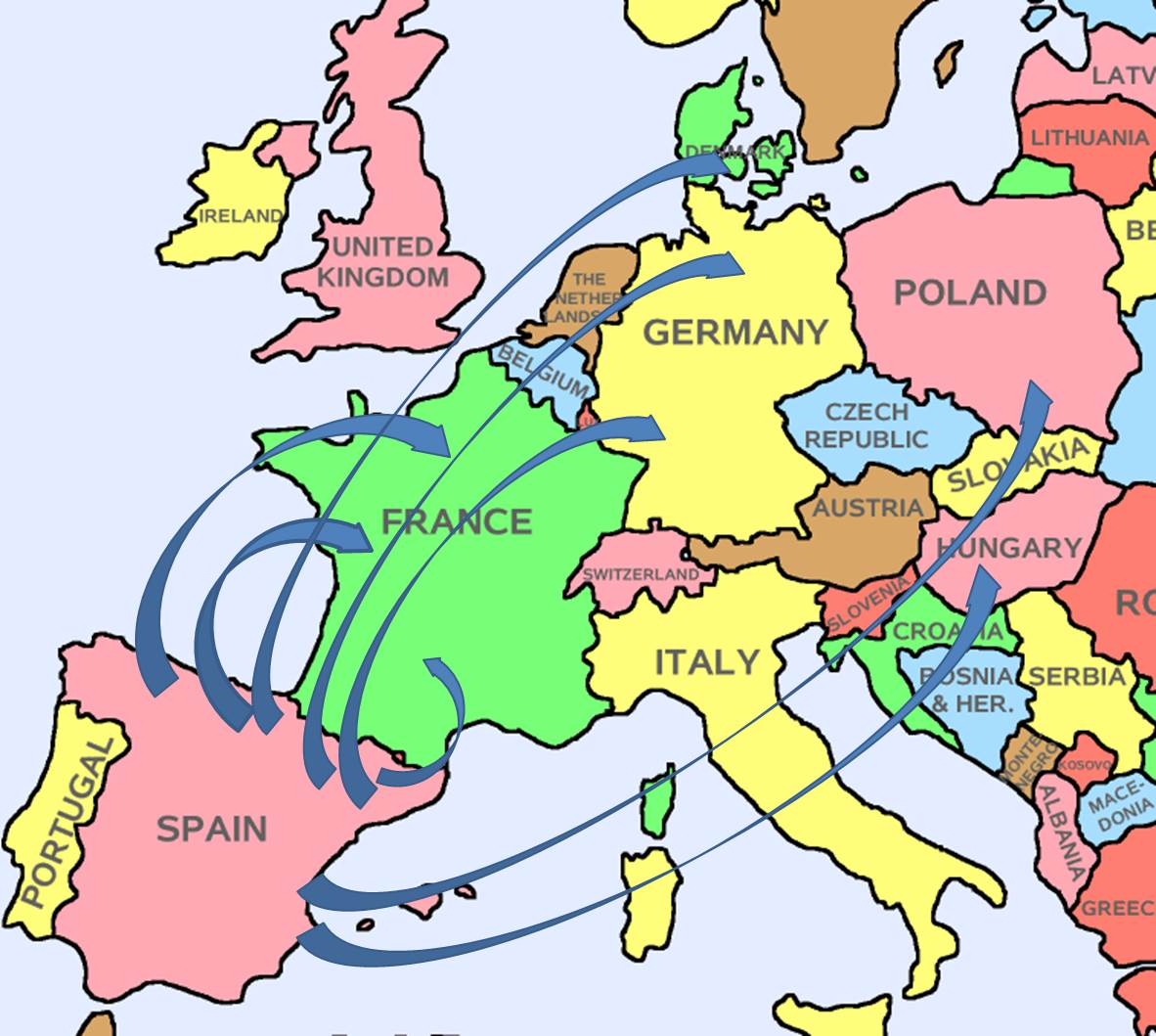
Player Exodus: Where 11 of 16 players from Spain’s 2013 World Championship Team will play their club handball this season
José Manuel Sierra, Paris (France)
Antonio García, Paris (France)
Alberto Entrerríos, Nantes (France)
Jorge Maqueda, Nantes (France)
Valero Rivera, Nantes (France)
Ángel Montoro, Toulouse (France)
Joan Cañellas, Hamburg (Germany)
Gedeón Guardiola. Rhein-Neckar (Germany
Julen Aguinagalde, Kielce (Poland)
Carlos Ruesga, Veszprem (Hungary)
Albert Rocas, Kolding (Denmark)
5 players (Arpad Sterbik, víctor Tomás, Dani Sarmiento, Viran Morros and Aitor Ariño) will remain in Spain and play for Barcelona.

The Spanish National Team player exodus  and Barca’s domination definitively show how this once mighty league has fallen on hard times.

The Great Recession has pretty much impacted in the entire world, but in Spain the crisis has been felt particularly hard.  Property value that once soared to record heights tumbled precipitously leading in turn to banking problems and soaring unemployment.  While a major sport like soccer has been able to weather the storm, handball clubs have had more trouble.  The first warning signs were reports of some of the bottom tier teams in the Liga Asobal not being able to make payroll.  This led to many 2nd tier professional players from other European countries deciding that they were better off playing elsewhere.  Only the two top clubs, Ciudad Real and Barcelona, were able to keep their top players, but then Ciudad Real started to show cracks in its finances with a sudden relocation/merger with Atletico Madrid in an attempt to stave off bankruptcy.  A move that merely postponed that reality to 2013.

Long Odds

With Madrid Atletico’s demise the Liga Asobal has gone from a marginally interesting two horse race between Madrid and Barcelonal to a ridiculously one sided coronation for Barca.  How ridiculous?  Well, the current odds of Barca not winning the Liga Asobal are 200-1.  Online sports books have even posted odds for second place since the mere thought of another side winning seems too remote of a possibility.  Yes, Barcelona is a great side and they are even the top favorite to win the Champions League, but barring a betting scandal (certainly a possibility with one recent roster addition) the only item of possible interest in the Liga Asobal is whether they will run the table with an undefeated season.  And, I haven’t seen the odds on that, but it wouldn’t surprise me if they aren’t something like 1-10.

For several years the Liga Asobal had been regarded along with Germany’s HBL as one of the two top professional leagues in the world.  One just had to look at the club rosters and point to the who’s who list of top players from other countries to see that the league was loaded with talent.  Jackson Richardson, Jerome Fernandez and Didier Dinart from France;  Ivano Balic, Mirza Dzomba and Igor Vori from Croatia; Tomas Svensson and Jonas Kallman from Sweden; Olafur Stefansson from Iceland; Mikkel Hansen from Denmark; Kiril Lazarov from Macedonia, Lazlo Nagy from Hungary and many more.  And surely Talant Dushebajev and his son Alex would not be Spanish citizens if not for the opportunities Spain provided for a talented handball player.  Yes, for many years, with few exceptions, the top players of the world had two options if the wanted to maximize their salary potential:  play in either Spain or Germany.

The Spanish Exodus

Now outside of Barca there’s only a smattering of foreign players in the Liga Asobal.  And many of these foreign players are actually lesser known talents from Latin America.  Even more telling is the exodus of Spanish National Team players to other leagues in Europe.  Previously, it was somewhat of a novelty to see a Spaniard playing anywhere else but Spain.  Now with Madrid’s demise it’s commonplace.  The map above highlights where 11 members of Spain’s January World Championship team are now playing professionally.  And this doesn’t include other notable players like Berlin’s Iker Romero and several 2nd tier players who’ve also left Spain in search of greener pastures.

Tax breaks and subsidies

When I first started following professional club handball 10 years ago I was puzzled as to why Spain rivaled Germany as the world’s top league.  The primary confusion for this American was simply a glance into the stands at the occasional Champions League match I saw played there and at a 30 minute weekly Liga Asobal highlight show.  With a few notable exceptions there were always more empty seats than fans in the stands.  A sharp contrast to the typical HBL match where the attendance was much stronger.  And even the typical match in France seemed to have more fans.  How do these Spanish Clubs pay higher salaries if they’re bringing in less revenue this Capitalist American wondered?

Insight into this answer came from another sport, basketball, where my club in France, Levallois had a professional team in the 2nd division.  As often is the case in Europe, there were usually a couple of Americans playing for the club and their salary was often a significant part of the club payroll.   One season an American playing for the club decided that he wanted more money, in the middle of the season, no less.  Being an uninformed American I assumed my club had two basic choices:  1) They could bow to the demand and pay him more; or 2) They could refuse the demand (after all, he signed the contract) and have a somewhat disgruntled player for the rest of the season.  But, this was France and the tax structure offered a 3rd choice:  They could pay his salary for the rest of the season and send him away; recoup the tax money on his remaining salary; and then use that money to hire another American for the remainder of the season.  And this is what my club did; Successfully, I might add as they moved up into the 1st division that season.

Further research and discussion with my teammates brought up a sore spot in regards to Spain.  The amount that Spanish sports clubs have to pay in taxes is a pittance compared to other countries.  And in some instances cities even provided substantial funds to clubs in the form of subsidies.  These tax breaks and subsidies were the primary reasons why Spanish clubs are were able to pay better salaries despite less revenue being brought in.  The chickens, however, have come home to roost as the financial crisis has resulted in a general collapse in municipal revenues and subsidies have dried up.  Further causing pain has been a decrease in fan discretionary spending causing significant revenue declines.  A double whammy if you will.

Barca Survives (or should I say thrive?)

So while the rest of the Liga Asobal crumbles around it Barca is still a shining beacon for Spanish Club Handball.  Arguably, they are the best team in the world.  How do they do it?  It’s certainly not due to an adoring fan base.  I don’t know how many times I’ve seen a Champions League match with the stands of the Palau Blaugrana half full (or worse) for an attractive match against a top club.  No, Barcelona Handball survives, or more accurately thrives, on the shoulders of Barcelona Football.  With a net worth of $1 Billion dollars the club can afford to throw a few millions at its handball club.  Why, it chooses to do so is less clear.  Perhaps it simply relishes the “mother club” aspect and the prestige of being the best in Europe in multiple sports.  The fact that it is an association with 170,000 members also surely has something to do with it.  It’s one thing for an individual owner to say, “I’m not going to keep spending money on this minor sport if it runs a net deficit year after year” and another thing for a collective to make such a decision.

The recession, however has even hit Barca football and the team has been running a debt in recent years.  Perhaps belt tightening will even hit Barca handball soon.  With the further weakening of its competition in the Liga Asobal, Barca could drop 3 or 4 name players and still run away with the title.  And they would still be competitive in the Champions League, just not a dominant player.

Who knows what the future will bring?  All I can say is that if anybody told me 5 years ago there would be more Spanish National Team players in France (then the reverse) in 2013 I wouldn’t have believed them.

post

Impressions from the IHF and EHF Junior and Youth Championships

Danish gold medal winners in Youth World Championships

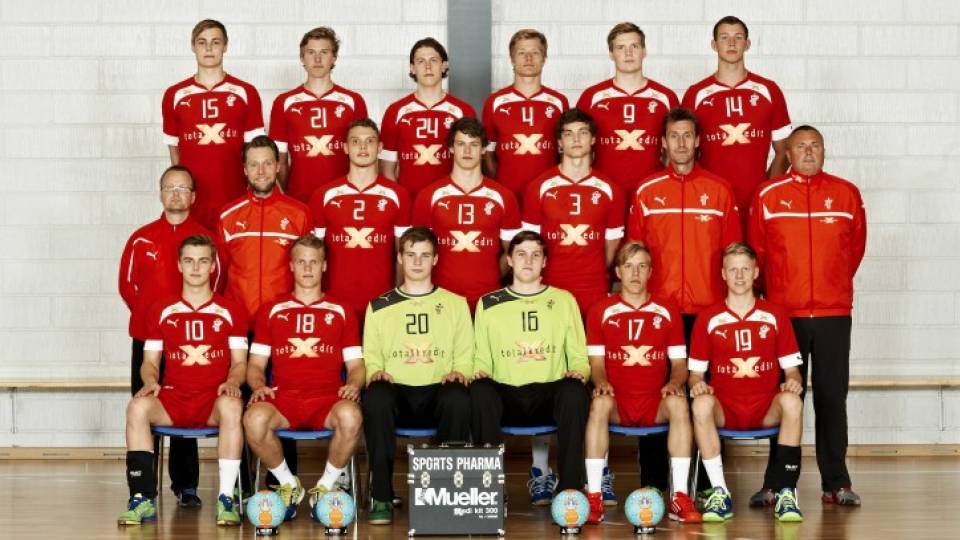
Danish gold medal winners in Youth World Championships

When teams and spectators are now getting ready to focus on the start of the new league season in Europe and the EHF club competitions, one may almost forget that the summer period is really full of activities for both the IHF and the EHF, with a focus on the younger age groups. This is of course in addition to the many outdoor youth events and the beach handball competitions.

For some handball fans, the youth and junior events tend to be relatively less interesting. The players are not yet so well known, the relative strength of the participating nations is not so predictable and varies from year to year, and the performances are more difficult to assess. But many of those aspects may be precisely what make these events so dynamic and attractive. It seems to me that there is a special delight in discovering new talents and speculating about their potential careers. And I am sure that scouts for top club teams also find this discovery process quite important. And now we have a much better opportunity to follow these events, thanks to live webcasts of reasonable quality.

For the young players who have already entered the pipelines of their respective national federations, these IHF and EHF championships have the potential of providing four straight years of international competition during their formative years. Even if their team does not qualify for the World or European Championships, there are qualifying rounds which also bring an intensive level of competition and exposure. Of course, these events also tend to put pressure on the young players, as could recently be seen at the men’s Youth (18 and under) World Championship in Hungary. While the clearly strongest teams did manage to find their way through to the medals, there was a sense of fatigue and general decline in quality in the final stages. Perhaps the format, which requires nine games for the medal teams, may have contributed.

In this Youth Championship, the tendency was the same as what I described some time ago from the Junior (20 and under) event. Only a handful of non-European teams were competitive, with Brazil taking ninth place, while Egypt and Qatar placed 14th and 15th. Moreover, the performances of most of the other non-Europeans were even weaker than in the Junior event. What will the IHF do to try to help remedy this situation? Just providing the opportunity to participate and then be really inferior is clearly not the answer.

The medal winners in the Youth event were Denmark, Croatia and Germany, with Spain, Norway and Sweden rounding out the top six. If one looks at the ‘combined’ results of the Youth and Junior events, it seems clear that the teams that currently are at the top among the adults also dominate in the younger categories. The semifinalists in the Junior event were Sweden, Spain, France, Croatia. Brazil ahead of Egypt were the prominent non-Europeans also in this event. Slovenia, Serbia and Hungary were among the top dozen in both events. The only ‘outsiders’ were the Netherlands and Switzerland who came in fifth and seventh in the Junior event.

While the women this year had their ‘internal’ European events, they should also get a few words. Russia, despite falling behind a bit in the senior women events recently, showed that there is no lack of talent on the women’s side, as evidenced by gold among the 19-year olds and silver for the 17-year olds. Denmark got bronze in both categories, with Norway and Romania also showing strength in both events. The real surprise was presumably the gold for Sweden in the younger event, where also Portugal exceeded expectations with a fourth place. The remaining medal winner was Hungary among the 19 year olds. So now it will be interesting to keep this year’s results and star players in mind, when we follow the senior teams in a few years!

post

Team USA Places 4th in Tournament

Team USA at the Le Pouzin Town Hall earlier this month

Team USA at the Le Pouzin Town Hall earlier this month

Team USA closed out the Bernard Ritter Challenge Tourney in Chomerac, France, yesterday with a narrow defeat to French club, Port de Bouc (N3) 28-27.

Tournament Result Summary:  Link (Note:  the score of the USA-Etoile is transposed; the USA won that match)

Below is a summary of the team’s recent results in France

Aug 14, vs. Le Pouzin (N1) Loss (34-14)
Aux 16, vs. Le Pouzin (N1) Loss (44-13)
Aug 17, vs. Le Teil (N2) Win (28-25)
Aug 21, vs. Livron (N3) Draw (27-27)

Bernard Ritter Challenge Tournament
Aug 23, vs. Etoile sur Rhone (N3) Win (25-24)
Aug 24, vs. St Julien Denice (N3) Loss (30-12)
Aug 25, vs. Port de Bouc (PN) Loss (28-27)

An explanation on club levels in France:  As is the case in most European countries handball is organized in a pyramid structure with a small number of elite clubs at the top and more clubs playing at lower levels.  In France the structure is currently

1) LFH:  1 pool with 10 clubs (10 total clubs)
2) D2: 1 pool with 12 clubs (12 total clubs)
3) N1: 3 pools with 12 clubs each (36 total clubs)
4) N2: 4 pools with 12 clubs each (48 total clubs)
5) N3: 8 pools with 12 clubs each (96 total clubs)
6) PN or Pre-National: Locally organized competitions (~200-300 clubs)

Caveats on the USA’s results:  The USA team is composed of a limited number of players with widely varying experience levels from ages 16-32.  Additionally, the team has had to “borrow” goalies from other teams and has had at least one of their players (veteran Kathy Darling) unavailable due to club commitments with Le Pouzin for some of the matches.

post

Team USA with opening match victory in Tourney

E

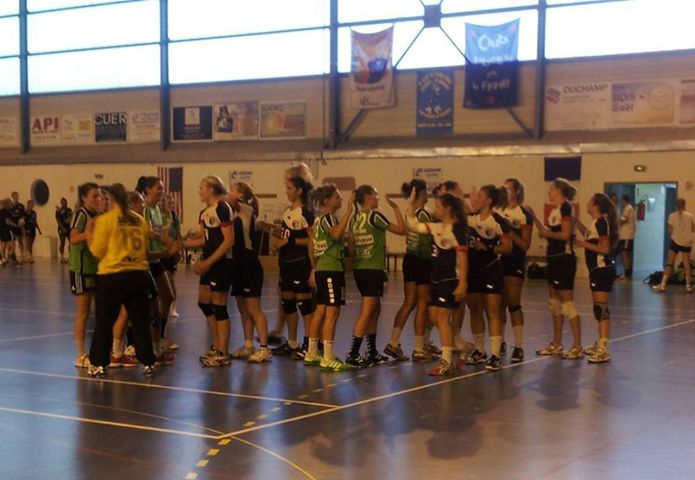
Team USA and Etoile shake hands post match.

Earlier today in the opening match of the Bernard Ritter Challenge Tourney in Charmes-sur-Rhone, France, Team USA beat French club, Etoile sur Rhone (N3), 25-24.  Tomorrow (Saturday, 24 August) Team USA will play the winner of the Sorgues (PN)-St Julien Denice (N3) at 1700 Local.

Tournament Schedule:  Link

post

VIDEO: Hamburg vs. Berlin in pivotal early season match

Hamburg's Hans Lindberg with a penalty goal against Berlin's Silvio Heinevetter.  The first match ended in a 30-30 draw.  Watch the 2nd match live on ehfTV this Friday at 1900 hrs CET (1500 hrs, U.S. East Coast)

Hamburg’s Hans Lindberg with a penalty goal against Berlin’s Silvio Heinevetter. The first match ended in a 30-30 draw. Watch the 2nd match live on ehfTV this Friday at 1900 hrs CET (1500 hrs, U.S. East Coast)

Live Video:  Match already played
On Demand Video:  Link

Hamburg vs. Berlin  Friday, 23 Aug 2013, 1900 CET (1300 U.S. East Coast)

The first leg ended in a 30-30 draw.  On line betting sides have Hamburg as a 2 goal favorite for the 2nd leg.

(Note:  As always, I will replace the live video link with the “on demand” video link when it becomes available.  Additionally, we will not post the score on the Team Handball News website for those interested in watching the match without knowing the result.)

————————————————————————————————————-

All too often in European club handball the early season is rife with matches of limited importance.  The upcoming IHF Super Globe which is a somewhat manufactured event is but one example.  But, this season the Champions League has a Wild Card playoff showdown between Berlin and Hamburg that is truly pivotal.  Both clubs are in the top 10 of Europe, both clubs have legitimate Champions League title aspirations and….

one of those clubs will be eliminated from the competition before the month of August is even  over. 

Instead of top shelf Champions League matches throughout the season, pivotal knockout matches next spring and a good shot at the Final Four, the loser will instead settle for the less prestigious EHF Cup.

Why are two great sides meeting so early you might ask?  Call it the Liverpool Rule.  Back in 2005 the Liverpool Football club won the UEFA Champions League, but finished to low in the English Premiership to qualify for the 2006 Champions League.  That’s right.  UEFA was in the situation of having the defending champions not even in the tournament.  Not wanting this to happen the rules were bent a little and Liverpool was allowed to play its way into the tournament through qualification matches.  Similarly, Hamburg won the EHF Champions League last year, but finished 5th in the German Bundesliga (HBL).  Normally, the top 3 German sides automatically qualify and the 4th German side plays its way in through a qualification tournament.  Hamburg, in fact, did that last year and even had to beat France’s Saint Raphael in overtime to make it into the main tournament.

I’m not sure if the EHF bent the rules or not, but it was determined that the fair way to resolve the situation this time around was to let last year’s fourth place team in the HBL, Berlin take on the 5th place team, Hamburg in a two game aggregate series.

Last night Berlin hosted the first match which ended in a 30-30 draw.   The match apparently was not without drama as Hamburg stormed to an early 12-6 lead, only to see Berlin go on a 6-0 run to tie it back at 12 all.  Towards the end of the match Berlin had a two goal lead, but let it slip to a 30-30 draw.  Berlin, may well miss those last two goals as this makes tomorrow’s 2nd match in Hamburg essential a one match, winner take all affair.  (In the event of another draw, away goals is the tiebreaker).

Here are some links from the EHF website with more information to get you up to speed

After match Report on Leg 1:  Link
Preview of playoff series : Link
Hans Lindberg Interview: Link

post

USA draws French Club Livron 27-27

USALivron

Team USA played to a 27-27 draw last night against the French club, Livron.  Livron plays at the N3 level which is a level below their last opponent, Le Teil (a 28-25 victory for Team USA).

Starting Friday, Team USA is taking part in a preseason tournament composed of clubs at the N3 or Pre-National (PN) levels.  Friday they play Etoile sur Rhone (N3) at 1830 local time.  On Saturday they will play either the winner or loser of the Sorgues (PN)-St Julien Denice (N3) match.  On Sunday, they will then play a placement match for 1st, 3rd or 5th place.

Photos from Livron – USA Match:  Link

Schedule for upcoming Preseason Tournament:  Link