Since mid-April a relatively new start up TV network, the All Sports TV Network, has been broadcasting handball 9 times/week in the U.S. If that headline sounds too good be to true, let’s just say that it does come with a few caveats. Probably the biggest caveat (for already converted handball fans) is that the handball being broadcast is simply repeats of the IHF Olympic Qualification Tournaments that took place in March. Matches that we’ve already seen and can re-watch anytime on the IHF YouTube channel: Link
Another caveat is that the network isn’t available on traditional cable or satellite packages. Instead their strategy is to focus on digital over air channels and on Over the Top (OTT) options like Roku and Amazon Fire. Their website indicates plans to reach up to 70 million homes, but it’s not clear whether that target has been met.
When and How to Watch
The All Sports TV Network is currently showing handball on Monday, Wednesday and Friday at 0300, 1100 and 1900 (US ET). I think a different Olympic qualification match is being repeatedly shown each week and this week it’s a rebroadcast of the Germany vs Sweden Men’s match.
I checked it out via my Roku. To do that first search and add the All Sports TV Network to your channel lineup. Then click on the channel and watch. It’s a pretty decent stream with an HD picture.
Any Handball Exposure is a Good Thing
While this handball viewing opportunity isn’t a big deal for the handful of dedicated handball fans in the U.S. the old adage any promotion is good promotion applies here. The U.S. is a big country and undoubtedly some folks out there unfamiliar with handball are being exposed to the sport for the first time.
Here are a few quotes from the press release highlighting those opportunities:
“We are very excited about having the opportunity to bring team handball to American viewers,” stated ALL SPORTS President Roger Neal Smith. “We truly believe that the United States could, and should, become a major force in team handball. To that end, we plan to do everything we can to help make the American public become more aware of its existence.”
“This is a fantastic opportunity for an American audience to watch top tier handball as the sport continues to gain momentum leading up to the Olympic Games this summer”, stated Ryan Johnson, Chief Executive Officer of USA Team Handball. “The more exposure we can get for this sport in the US, the better. We’re grateful for ALL SPORTS’ efforts to make this happen.”
Future Opportunities?
Again, while today this isn’t a big deal for the dedicated handball fan it does point the way for future opportunities. More and more TV viewing is shifting away from cable/satellite towards streaming/OTT options. Inevitably more handball will be finding its way to channels like the All Sports TV Network. Indeed beach handball has already been shown there and one could envision U.S. National Team matches and our Collegiate and Open Club National Championships eventually finding their way to channels like the All Sports TV Network. Maybe international viewing options too.
Would I prefer to have more prominent OTT options like ESPN+, Peacock and Paramount+ show handball instead? Of course; the more eyeballs the better. That being said sometimes networks like ESPN+ don’t provide the sort of promotion we would like. Case in point: ESPN’s promotion (or lack thereof) of during the 2021 World Championships.
Time will tell, but with handball’s low profile and very small fan base it might be necessary to first start at the lower end of the spectrum and then gradually work our way to more prominent networks. Further, as TV options become more and more fragmented and available for free/low cost a big name network might not even be a requirement to get the handball “foot” in the door.
In case you missed my conversation with Stephen Neilson of the Scottish Handball Association you can watch the replay view here in the embedded YouTube file or at the Conference website: Link
Here are links to some of the topics that came up in our conversation:
The “Iceland Strategy”: Focus a large percentage of USA Team Handball’s resources on one geographical location (Part 1; Part 2)
Podcast discussing the Forum Club Handball’s support to select U.S. Athletes: Link
2021 World Championships USA Men’s National Team roster: Link
Australian Bevan Calvert:
2020 interview with the (Un)Informed Handball Hour: Link
2011 interview with Eurosport: Link (Starts at 7:30)
This whole feature on the British National Team before the Olympics is quite the trip down memory lane.
USDK Dunkerque: The top pro club on Britain’s doorstep: Link
The Scottish Handball Association is hosting an International Conference on Wednesday and Thursday (28-29 April). The theme of the conference is “Beyond Winning and Losing: Collaborating for More Important Results” and all of the briefings and interviews can be viewed online.
There are several interesting items on the schedule (check it out), but here are a few that I’m looking forward to seeing
Wednesday, 28 April
1800 CET: How to build participation in Handball within Scottish Schools
1900 CET: Big Sport, Wee Countries, Big Ambition: What Scottish Handball and other ‘minority’ sports can learn from success of Faroes and Portugal in growing their game
Thursday, 29 April
1600 CET: Challenges of Growing Handball: A North American perspective (with yours truly, John Ryan)
1930 CET: British Handball – past, present and future (with handball TV Commentator and British Handball’s Paul Bray)
Challenges of Growing Handball: A North American Perspective
A few notes on this, as it was a fun, informal discussion with yours truly and Scottish Handball’s Stephen Neilson. We covered several topics including the following:
How the U.S. and other English speaking countries have tried to varying degrees of success to capitalize on Olympic Opportunities
Whether the need to field competitive national teams can be a “distraction” that negatively impacts grass roots development
Which English speaking nation might be best on track for a “breakthrough” in the handball world
How the current U.S. reliance on dual citizens might impact stateside development… (My perspective might surprise you)
The conference is free and available to all who register.
The internet has been buzzing the past few days with what is surely the strangest pop culture handball reference since Kenan Thompson on Saturday Night Live back in 2012. And, that would be rapper Lizzo‘s Instagram DM to actor Chris Evans which mysteriously included a handball girl emoji. This DM is briefly shown in the star’s TikTok video with the following caption:
“Don’t drink and DM, kids…. for legal porpoises this is a joke”
None of this explains, however, why out of the thousands of emojis available she picked the handball girl emoji. Is there some hidden meaning? Does she even know that handball exists as a sport? Does Chris Evans know about handball? My gut feeling is that it was just a random selection.
But, there is another possibility. Maybe she is a huge handball fan and perhaps it was sent to the wrong Captain America? After all, there is another Captain America, Drew Donlin, who actually plays handball. Further, Donlin who plays handball for Team USA and Spanish Club Team, Leon is from Minnesota. Could fellow Minnesotan Lizzo be done with here “New man on the Minnesota Vikings” and seeking a star in another sport?
The quarterfinals finish up on Tuesday with 2nd leg matches. Below are the times for those matches along with the 1st leg scores. Remember, the aggregate score for both matches determine who advances. If the aggregate is zero, the next tiebreaker is away goals. And, the next tiebreaker is a penalty shootout to take place immediately after the match. (And, yes that has happened before: Link)
One thing I find interesting about this competition is that is often a good test as to whether the Germany HBL is indeed the best league in the world. Three German sides entered the competition, three German teams remain and are favored to advance to the Final Four. If indeed that happens it’s pretty much impossible to argue against the HBL not being the best league.
Cisne’s win over Guadalajara has moved them out of last place, but Friday night they face the ultimate test, taking on the best team in the world, Barcelona in the Palau Blaugrana.
5th place Dormagen got a 25-20 road win last week vs 17th place HSG Konstanz. This week they host 9th place Aue in Dormagen
Pro Ligue (France)
Angers vs Dijon (-5) (Friday, 2030 CET): Video Link
Abou Fofana plays left back and defense for Angers
14th place Angers takes on 6th place Dijon. The season is getting short so Angers needs to pick up points anywhere they can find them to avoid relegation.
World Championship Qualification (Europe)
Slovenia (-6.5) vs Iceland (Saturday, 1730 CET) ehfTV
Lovisa Thompson plays left back for Iceland. Although she has no plans to play for the U.S. this is an excellent opportunity to check out the skills of this dual citizen in a big match.
K&H League (Hungary)
Gyöngyös (-4.5) vs Dabasi (Saturday, 1800 CET): Video Link
7th place Harrislee has lost 4 in a row and takes on 8th place Waiblingen which is just 3 points ahead of them in the standings.
Liga ASOBAL (Spain)
Anaitasuna vs Leon (-0.5) (Saturday, 2030 CET): Video Link
Drew Donlin plays defense and circle runner for Leon.
Leon was eliminated by Kristianstad in the EHF European League, but thanks to their Copa Del Rey 2nd place showing they know they’ll have a return ticket to Europe next year. The focus now is building for next year as they continue play in the Liga ASOBAL. Currently in 7th place they take on 9th place Anaitasuna.
Eredivisie (Netherlands)
HV Hurry-Up vs KRAS/Volendam (Sunday, 1430 CET): Video Link
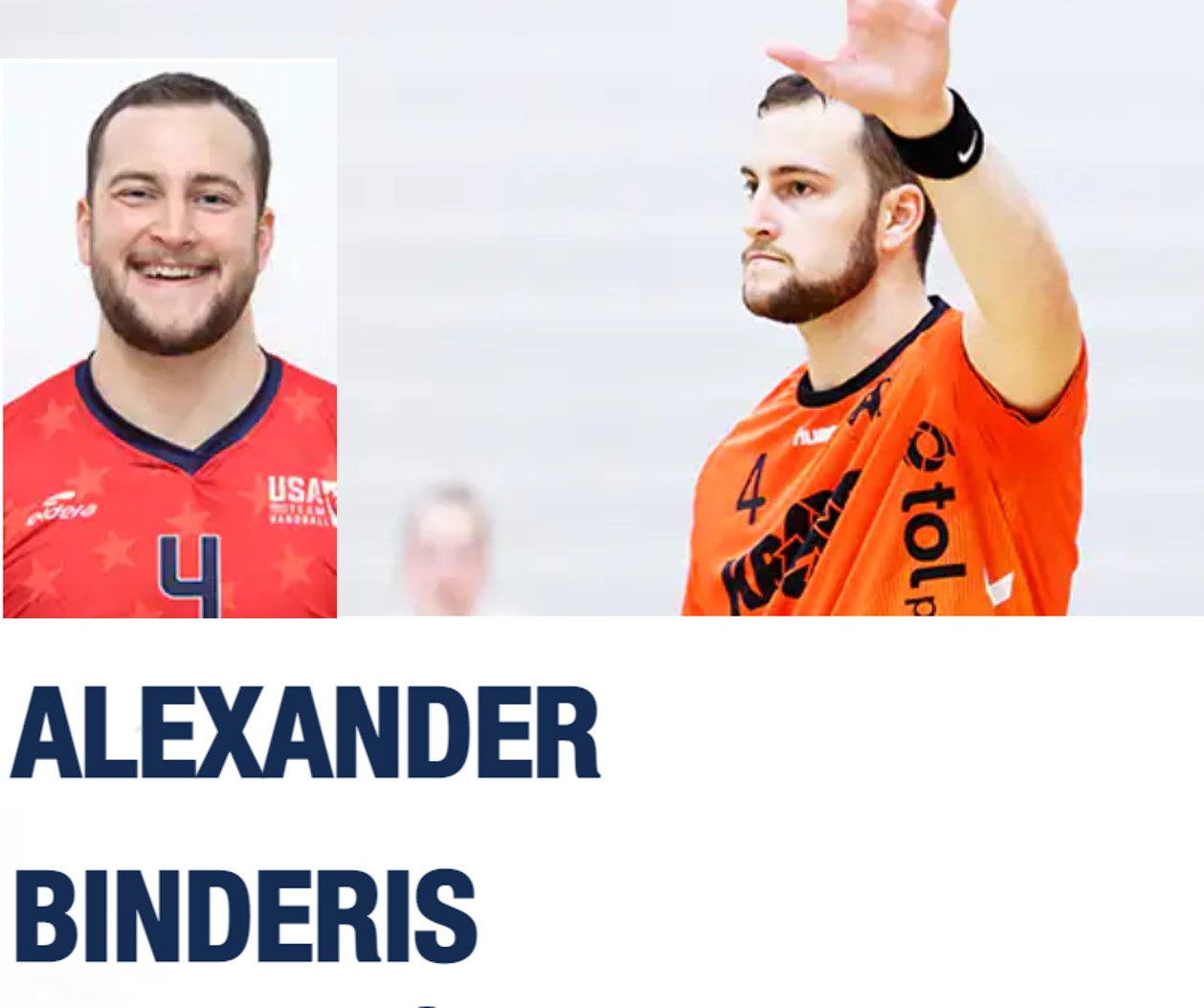
Mark Ortega is Volendam’s coach and Alex Binderis (#4) plays circle runner for Volendam
Volendam is in 4th place and Hurry-Up is in 5th place in the 5 team league. I’m thinking Hurry-Up is one of the strangest if not the strangest club name I’ve ever seen.
The Centre of Elgin, the venue for the 2021 Women’s North American & Caribbean Championships
Last Thursday (April 8th) the U.S. and IHF announced that the U.S. will host the 2021 North American & Caribbean Women’s Handball Championships
Dates: The IHF announcement indicates that teams will arrive on Sunday, August 22 and will depart on Saturday, August 28, leaving 5 days (23-27 August) for match competition.
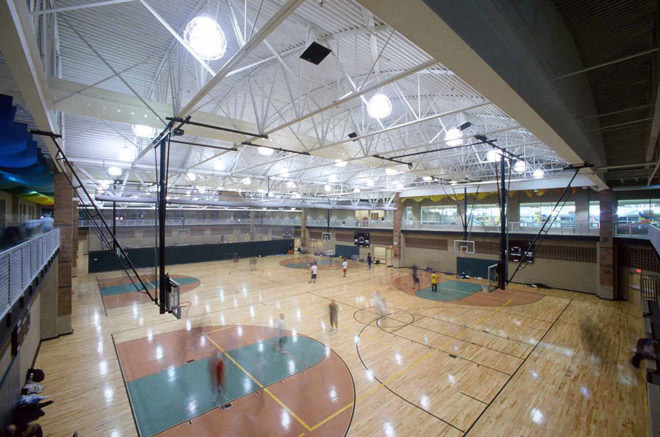
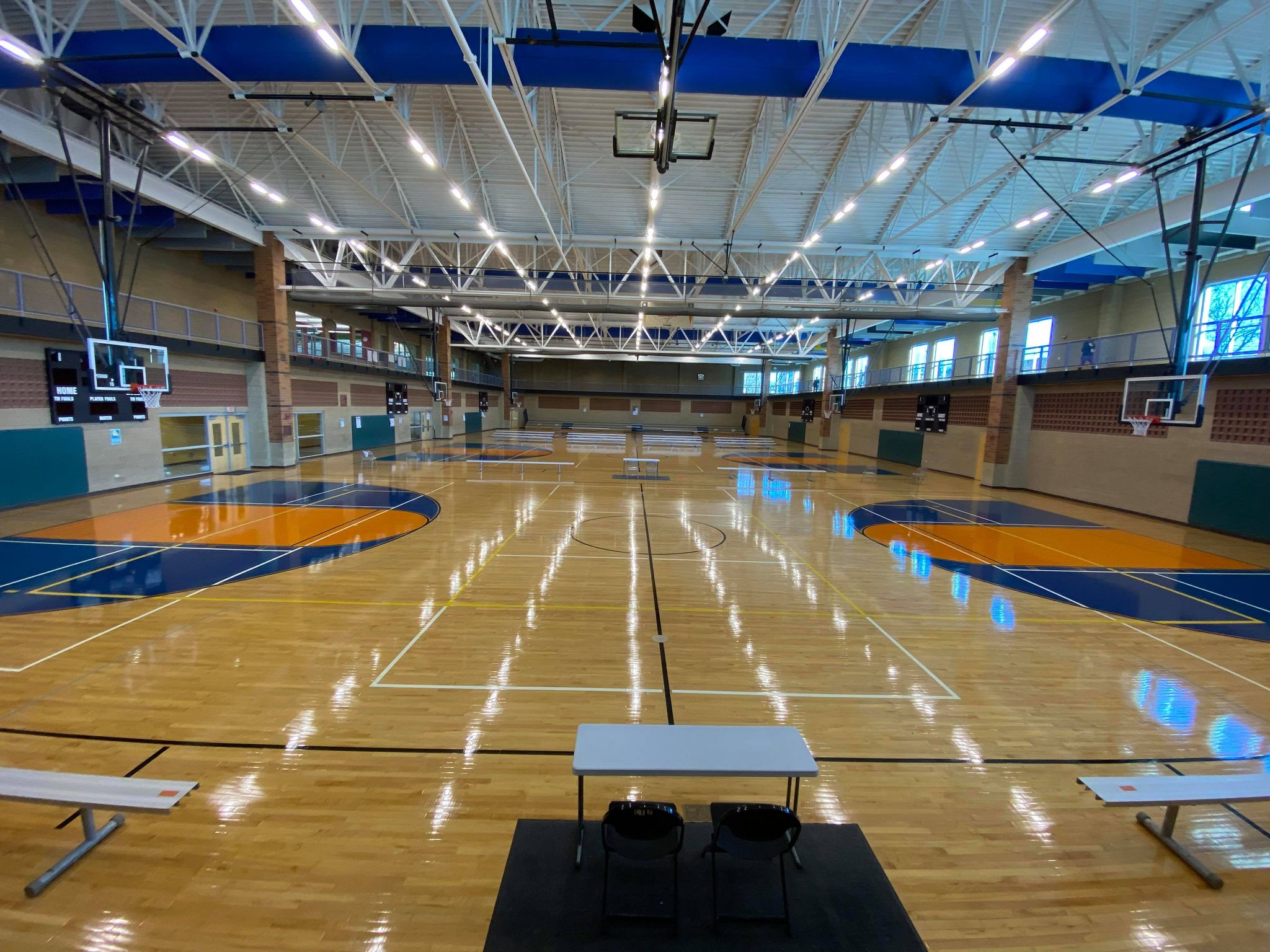
Venue: The competition will be at the Centre of Eglin. This is a multi-use facility and the handball matches will be played in the 3 court field house with a handball sport court laid down across where the 3 basketball courts are normally set up. Here are some photos of the field house:
Weather: As I’m a native of Iowa (next door to Illinois) I can attest that August can be hot and muggy. We can assume that the Centre of Eglin is climate controlled, but according to the Weatherbase website the average high and low temperatures outside for August are 82 and 60 degrees, respectively. That may not sound too bad, but the saying, “It’s not the heat, it’s the humidity” can be a common refrain that time of year.
World Championship Qualification: The winner of the tournament will qualify for the 2021 Women’s World Championships to be played in Spain this December.
Number of Teams: This is TBD, but here are the teams (and, their order of finish) that participated at the previous championships. (Source: Wikipedia)
2015 (6): Cuba, Mexico, USA, Greenland, Puerto Rico, Martinique
2017 (4): Puerto Rico, USA, Dominican Republic, Greenland
2019 (7): Cuba, Puerto Rico, Greenland, Dominican Republic, USA, Mexico, Canada
Format: Again, this is TBD, but if the same teams from 2019 were to participate there would likely be 3 days of pool play followed by 1 day of crossover (semifinals) and 1 day of finals. The schedule would be:
Monday, 23 August Pool Play
Tuesday, 24 August Pool Play
Wednesday, 25 August Pool Play
Thursday, 26 August Crossover Semifinals
Friday, 27 August Finals/Placement Matches
If fewer teams, however, participate the format could switch to a simple round robin as was used in 2015.
Seeding and Performance Rows: Again, TBD, but here are what the seeding/performance rows would be based on 2019 Results:
Row 1 (Cuba, Puerto Rico)
Row 2 (Greenland, Dominican Republic)
Row 3 (USA, Mexico)
Row 4 (Canada)
USA Group Selection: Again, a lot of speculation here, but assuming the draw process that is used for most handball tournaments applies, the U.S. as host will get to choose which group it wants for pool play. This means that rows 1, 2 and 4 will first be drawn and assigned to Groups A and B. The U.S. will then select which group it wants and then Mexico would be assigned to the other Group.
Here are the 4 possible group decisions that the U.S. would have (if the 7 teams that participated in 2019 play in 2021):
Group A (CUB, GRL, CAN); Group B (PUR, DOM, Vacant)
Group A (CUB, GRL, Vacant); Group B (PUR), DOM, CAN)
Group A (CUB, DOM, CAN); Group B (PUR, GRL, Vacant)
Group A (CUB, DOM, Vacant); Group B (PUR, GRL, CAN)
This, of course, will change if some teams don’t participate or new teams show up. But, assuming these are the teams that show up the U.S. might have to decide between avoiding Cuba or having a bye day during pool play. Cuba is the odds on favorite for this tournament, but a rest day in such a short 5 day tournament might be highly desired as well. Another strategy to consider: If the U.S. were to select Cuba’s group, the U.S. would be guaranteed to not face Cuba in a semifinal match. Which would be a good thing, but then that also makes getting to the semifinals a little tougher.
Terminology: I’m not sure how the acronym NORCA or Nor.CA was originally adopted for this event. Basically, it’s a shortening of “North American and Caribbean” and this was a competition that actually started under the old Pan American Team Handball Federation (PATHF). Now that PATHF has split up into the North American & Caribbean Handball Confederation (NACHC) and the South and Central American Handball Confederation (SCAHC) I’ve seen it referred to as the NACHC Championship. If one compares this to other continental handball championships it’s a bit non standard in that the EHF calls their championships the European Championships not the EHF Championships. Anyway… I don’t care much what we call it, but I say the NACHC nations get together and definitively pick a name.
And, here’s a can of worms for you: Google “North America” and see how many different definitions there are. Depending on who you talk to North America can end at the USA-Mexico border, the Mexico-Guatemala border or the Panama-Colombia border.
USA Team Handball seeks a U.S. Women’s Coach that can both build a Women’s National Team program and coach them too. Is there a Handball Bill Belichick out there willing to work for $4,800/year?
On Monday, USA Team Handball posted a job announcement for a Women’s National Team Head Coach. While the job of a national team coach might be a be a relatively straight forward position in most countries with the U.S., the title of head coach has often come with extra responsibilities.
The main job responsibilities of a coach are pretty well known: They are responsible for selecting the best handball athletes available, preparing them during training windows and then coaching the team in international competition.
And, while U.S. National Team coaches have had those responsibilities, historically, this model was insufficient due to the reality that very few people in the U.S. know what handball is, let alone play the game. In other words, there have been few athletes, if any, to select. And, historically, that has meant the added responsibility of creating a team from scratch.
A Nice Addition to the Coaching Search: An Actual Job Description
I’m not exactly sure how the U.S. hired its coaches in the past. I suspect it was mostly done behind the scenes with word of mouth recommendations, followed by lengthy discussions about how the U.S. job would be “different” and how the coach would be responsible for teaching gifted athletes from other sports how to play handball. A not to unreasonable approach given the circumstances and the course of action that had been chosen.
But times change. Circumstances change. And, I think it’s great that USA Team Handball is having an open search and has more clearly defined the job with an actual job description that lays out these extra roles.
First there is a Scope section that summarizes how the job is different:
“Under the general supervision and with the support of Chief Executive Officer of USA Team Handball (“USATH”), the Head Coach of the Women’s National Team will lead the planning and implementation of the Women’s National Team Program, including, but not limited to, design and implementation of an athlete identification and transition pipeline.
In contrast with athletes that participate in many U.S. sports and the handballers that grow up in Europe, most U.S. athletes will join handball later in life (between 16 and 22 years old). Athletes will oftentimes have elite sport experience in other disciplines (such as basketball, baseball/softball, volleyball, or water polo), prior to starting a career in handball. It is, therefore, the chief responsibility of the Head Coach to facilitate the recruitment of athletes into the USA Team Handball pipeline and to provide the path for their transition into an elite handballer.”
And, then some of these extra responsibilities are further defined:
Work in collaboration with USATH CEO and the designated High Performance staff of the U.S. Olympic and Paralympic Committee (“USOPC”) on the development of annual and quadrennial high performance plans.
Recruit and retain elite athletes for the Women’s National Team pool, both domestically and internationally.
Leverage existing global handball infrastructure for placing athletes with professional clubs, handball academies, or other similar situations to enhance athlete development opportunities outside of Team USA training camps and competitions, and to establish team opportunities for tournaments and training camps.
Evaluate the athlete talent pool and continuously upgrade the pool to improve the national team’s competitiveness in international competitions.
The State of U.S. Women’s Handball
Laying out the added responsibilities is all well in good, but probably what’s missing is some context as to just how hard it will be design and implement an athlete identification and transition pipeline.
A while back I started a series of commentaries to address some much needed planning that USA Team Handball needed to undertake. This series, Charting a Way Forwards for USA Team Handball (Reboot), first identifies “What we have”, then takes a look at “What we want” and then tries to figure out “How we get there”. I’ve got the first two steps covered, but had paused on the very difficult and challenging 3rd step. I paused for a number of reasons, but one of those reasons was the enormous chasm between “What we have” and “What we want.”
The series covers everything from National Teams to finances to marketing to grass roots development, but here are the commentaries that specifically address Women’s Handball:
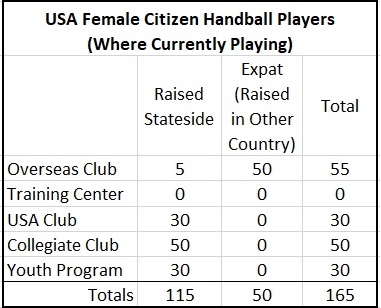
Demographics: American Citizen Female Athletes (Overview): Link
Demographics: USA Women’s Elite Player Pool (Overview): Link
There are a number of factoids in these articles regarding the current state of the U.S. Women’s program, but underlying everything is the reality that world-wide, there are maybe around 100 American Women that play handball on a regular to semi-regular basis. And, that number will go up or down depending on how loose or strict you want to define “play handball”.
Reality… And, these estimates error on the conservative side.
So, if you’re an outside observer, not familiar with handball in the U.S., you’re reaction might well be, “What the hell? I knew handball wasn’t very popular in the U.S., but that’s ridiculous.”
I could go into a long diatribe on why the U.S. is in this position, but that’s not the point here. (If you are interested, there’s plenty to read up on: Link) No, the point here is simply to understand that it is, indeed, reality. And, it’s why the USA Team Handball since it’s inception has almost entirely relied on “transfer talent” from other sports to field it’s national teams. Because…it’s the only way we could even field a team. Further, I should point out that the ages of talent transfer (ages 16-22) listed in the job description are more “aspirational” than a reflection of current reality. Historically, there have been only a handful of stateside national team athletes that first started playing handball prior to graduating from college. And, for the past 20 years or so the average age has been creeping up to somewhere in the mid 20s.
The U.S. Men as a Reference Point: A Focus on Dual Citizens as an Option?
This stateside challenge, as described, is not just a problem for the U.S. Women, it’s also a problem for the U.S. Men. This is perhaps mostly clearly demonstrated by the rapid transformation of the U.S. Men’s National Team from a mix of stateside/dual citizens to almost exclusively a dual citizen squad. Notably, the final 20 man roster for the 2021 Men’s World Championships was comprised of 17 dual citizens and just 3 athletes that had first learned to play the game stateside.
There’s been talk about conducting tryouts and expanding opportunities for stateside athletes, but the reality is that such athletes either entirely new to handball or training at levels significantly below European standards will struggle to make a U.S. roster for years to become. Not because our state side athletes aren’t dedicated or lacking in terms of raw talent, but because the U.S. has been gifted with a pretty good, if not golden, generation of dual citizen athletes. This generational good fortune has meant that very quickly U.S. Men’s Coach Robert Hedin has been able to put together a respectable side that I think would have surprised some folks at the World Championships. Further, the bulk of this roster is actually pretty young and will be around for years to come. That’s not to say I don’t see stateside efforts being built up and eventually more stateside athletes making U.S. rosters. It’s just that it’s going to take several years.
Could the new U.S. Women’s Coach follow the same blueprint as Coach Hedin? Well, undoubtedly whoever’s hired is going to take a look at his current talent pool and try to duplicate it. Unfortunately, while, the U.S. Women have some solid dual citizens they can rely on they have nowhere near the quantity or quality that U.S. Men’s coach, Robert Hedin can rely on. At least, I don’t think there are any hidden Hueter sisters that will magically appear out of nowhere, but I’m open to being pleasantly surprised.
Lacking this dual citizen option and a very thin talent pool means the very difficult task of creating a team from scratch has to be more aggressively pursued. Because if it’s not pursued the U.S. Women will struggle to field a competitive side.
Maybe Coaches Should be Hired to… Coach?
Having been around awhile and having observed and experienced first hand U.S. efforts to create national teams mostly from scratch I’ve come to a conclusion. You can call me old fashioned if you like, but personally I think coaches shouldn’t be hired to design and implement an athlete identification and transition pipeline. I think coaches should be hired to… well, coach.
There’s a couple of reason for this. First, the skill set inherent in planning, designing and implementing a National Team Program doesn’t match the skill set of most coaches. Coaches conduct practices, prepare their teams and lead them in competition. They really know the game and they know how to make their players better handball players. Some of those raw skills could be applied to the very complicated task of planning and designing a National Team Program, but I would argue that it’s a different job requiring greater planning and organizational skills.
The second reason is directly related to the “different mind set” most coaches have. Coaches, at least any coach worth his salt, are hard wired to focus on winning matches. Maybe in the back of their minds they are taking long term goals into consideration, but the focus is primarily figuring out how to win their next match. It’s what they do. It’s what’s expected of them. At the end of the day it’s how their performance as a coach will ultimately be judged. This reality is in direct conflict with the long term goal of building a National Team Program. And, in the unique case of the U.S. with a 2028, seven year timeframe to consider the required mindsets couldn’t be more different. Yes, smart long term program building decisions could in some instances be extremely detrimental to the prospects of near term results.
The analogy (while imperfect) that applies here is the General Manager (GM) / Coach roles and responsibilities split typically used in professional sports organizations. The GM makes the decisions that affect the long term direction of the organization. He ultimately decides what players are acquired and at what cost while the coach is responsible for taking the players he’s been given and… coaching the team. This doesn’t mean that the GM and coach don’t work closely together, just that there is a lead/follower relationship in terms of long term/near term responsibilities.
A Bill Belichick for USA Team Handball?
But, maybe there’s somebody out there in the Handball world who can actually do both the way that Bill Belichick is both the GM and Coach of of the New England Patriots? I guess he’s been relatively successful. That remains to be seen, but I’m guessing he might have higher salary requirements than the $4,800/year currently being offered.
Who’s the top handball athlete playing for a North American & Caribbean nation today? Arguably, it’s this guy: Cuba’s Reinier Taboada. Watch him play for his club team, Dunkerque on LNH TV this Tuesday at 2000 CET / 1400 US ET
For regular updates on when and where handball matches can be streamed online follow Team Handball News on social media: TwitterFacebookInstagram
All times are CET which is 6 hours ahead of US ET. Odds courtesy of Bet MGM and/or OddsPortal.
American Athletes in Action
K&H League (Hungary)
Gyöngyös vs Grundfos Tatabánya KC (-3.5) (Wednesday, 1800 CET): Video Link
8th place Gyöngyös takes on 7th place Tatabanya. However, it’s a bit misleading as Tatabanya has played 7 fewer matches and they are often seen as the 3rd best club in Hungary after Veszprem and Szeged.
The Last 16 playoffs finish up on Wednesday and Thursday with 2nd leg matches. Below are the times for those matches along with the 1st leg scores. Remember, the aggregate score for both matches determine who advances. If the aggregate is zero, the next tiebreaker is away goals. And, the next tiebreaker is a penalty shootout to take place immediately after the match. (And, yes that has happened before: Link)
Flensburg (-13.5) vs Zagreb (Wednesday, 1845) ** Cancelled**
Due to Zagreb’s positive COVID tests the EHF determined that it was not possible for Zagreb to form a competitive team. Therefore, Flensburg advances to the quarterfinals where they will play the winner of Aalborg-Porto.
Aalborg (-2.5) vs Porto (Wednesday, 1845 CET) Video Link