ehfTV with a Fresh New Look… but are the Days of Free Handball Numbered?

Things that make you go Hmm?: “Free” registration at an “ehfpayments” url.

<IMPORTANT UPDATE (3 July, 2020)>

The EHF has informed me that the answer to this question is “No. There are no plans whatsoever to change ehfTV to a paid subscription service. The misleading URL is a result of the switch to a new streaming partner which serves other entities that charge a subscription. The URL has been flagged for an update. The EHF, however, noted that handball fans will need to register and login to ehfTV to watch live matches. A small requirement, though, to watch the world’s best handball free.

<Original Article (Posted 2 July, 2020)>

ehfTV: The Best Thing Ever for Handball Fans in Far Flung Countries

Big things are a foot with the European Handball Federation (EHF). A new 10 year contract for TV and Marketing rights is now in full swing. The result: a revamped Champions League format, fresh new web pages and a new look ehfTV.

If you’re reading this article and are any kind of a handball fan you already know what ehfTV is. Why, it’s the best thing that’s ever happened to me as a fan of the sport here in the U.S. All of the Champions League matches, European Cup matches and even the European Championships available* for free viewing. Free! What a deal.

Are the Days of a Free Ride Coming to an End?

ehfTV is such a good deal that I’ve been wondering for years just how long it would last (Article from 2016). I mean we have to credit the EHF for being so forward thinking with this positive promotion of the sport, but they are a business and “free” generally is not a smart long term business move.

And, indeed in some countries the free ride ended a few years ago. There’s an asterisk on “available” and that’s because some matches are geo-blocked in some countries if the TV rights have been sold. That’s totally understandable. If I was a TV network owner I wouldn’t want the match being shown for free elsewhere. I would want viewers watching my channel.

But, it’s only understandable if the match can actually be seen in the country in question. In the U.S., beIN Sports (the previous rights holder) usually only aired 1 match a week on a delayed basis on Wednesday mornings. But, because they had a TV contract that match and many others were geo-blocked. This was extremely frustrating and forced handball fans like me to use VPN to watch matches on line. VPN is a less than desired workaround, but as a paying beIN Sports subscriber I had no moral qualms with using that alternative.

A New U.S. Network?

With a new 10 year contract kicking in there is now a chance for the EHF Champions League being seen on a new network. There are several possibilities that hopefully are being considered. NBC is a possibility and they’ve already shown the 2019 Men’s and Women’s on the NBC Olympic Channel. Other possibilities include Fox Sports, CBS Sports Network, TNT, 11 Sports or yes, a return to beIN Sports.

My preferred choice, however, is ESPN and specifically a combination of ESPN linear channels and ESPN+. As this earlier commentary highlight ESPN+ practically begs for a dedicated handball sub-channel: Link

Maybe Everybody Pays?

But, there’s another model that might at some point come into play. If you’ve checked out the new ehfTV platform you may have noticed that it invites you to register for free: Link

But… the url is for ehfpayments.streamamg.com. Yup. The “free” registration is at “ehfpayments”. Which is certainly a “Hmm” moment. As in, “Why would you call it that?”

Pure speculation on my part, but I can envision the EHF eventually transitioning ehfTV to a tiered service with some matches still being free, but adding a subscription to watch more matches and additional content.

Assuming such a subscription was reasonably priced this would actually be a good solution. Some matches on regular TV, some matches on free ehfTV and some matches on premium ehfTV. Actually I could get real used to that. HBL, LNH… are you listening?

Podcast (Episode 69): African Americans and Team Handball in the USA

Watch on YouTube: Link (and subscribe to the Team Handball News YouTube Channel)

The death of George Floyd in Minnesota and the Black Lives Matter protests that have taken place all over the U.S., and even around the world have brought the issue of racial discrimination against African Americans in the U.S. to the forefront.

While for the most part overt racism has been practically nonexistent in USA Team Handball circles underneath the surface there have been issues at play that have likely kept African American participation numbers down.

Joining me to discuss this issue and more are 1996 Olympian, Derek Brown, former North Carolina coach and U.S. Jr National Team Asst Coach, Myles Bacon and NYAC/National Team player and USA Team Handball New York City Ambassador, Divine Jackson.

Here is some background information for some of the items that are discussed in the podcast:

USA Team Handball Diversity & Inclusion Data for Total Membership
USA Team Handball Diversity & Inclusion Data for National Team Athletes

Source for Diversity & Inclusion Data: Link

Excerpt from USA Team Handball Newsletter (8 Jun 2020)

Link to the recent USA Team Handball Newsletter: Link

USA Team Handball’s Current Diversity & Inclusion Plan: Link (Note this plan was actually approved in 2017 and called for the formation of a Diversity & Inclusion Committee back then. It would seem that recent events have provided an impetus for getting this work started.)


Don’t miss an episode:
– Subscribe to the podcast in iTunes: Link
– Or use this RSS Feed to sign up for the podcast in your favorite podcast aggregator: Link

And, be sure to check out the podcast archive with interviews and great handball discussion going all the way back to 2006: Link

How We Get There… Or, More Accurately, Can We Get There? (Part 2): National Team Targets and Assessment Methodology

USA Men’s results at the key Olympic Qualifier (The PANAM Games)
Can the U.S. take Gold in 3 years time at the 2023 PANAM Games in Santiago, Chile?

This is part of an ongoing series: Link

A Little History: Ambitious Targets that have become Increasingly Difficult to Meet

Since I’ve been following USA Team Handball the goal has always been to qualify for the Olympics. And, then once at the Olympics to medal or to reach the quarterfinals. Up until the 2000 Olympics these goals were perfectly reasonable. Qualification was expected. Indeed the only failure to qualify prior to 2000 was the Men falling short in 1992. Getting a medal was a bit of a stretch, but the 1984 Women’s team came close as a win over West Germany would likely have earned a bronze medal. (The U.S. lost 18-17)

But, since hosting (and automatically qualifying) for the Olympics in Atlanta in 1996, neither the U.S. Men or Women have come close to qualifying for the Olympics. There are multiple paths to Olympic qualification, but in practical terms for nations in North and South America it has meant winning the PANAM Games Handball tournament in the year prior to the Olympics. Neither the U.S. Men or Women have made it to the title game since 1995 and the few teams that we’ve made the semifinals it has resulted in a double digit loss. In 2007 and 2015 the U.S. even failed to qualify for the PANAM Games. (Historical PANAM Games Results: Link) Here is a summary of the U.S. performances since Handball started being included at the PANAM Games in 1987.

U.S. National Team Targets for the 2024 Quadrennial

Going forward, USA Team Handball appears to have similar targets. As a review here are the Strategic Plan targets for the National Team

  • Qualify for the IHF World Championships by 2024
  • Top 12 Finish at IHF World Championships by 2024
  • Top 2 finish at 2023 PANAM Games
  • Qualify for the 2024 Olympic Games

Additionally, there are some top level plans identified as potential ways to support achieving these targets:

  • Project France, whereby the U.S. National Team would compete as a team in a French league
  • Identifying up to 200 athletes new to handball and sending them to Europe for additional training. I’ll call this the Great Leap Forward Elite Player Pool Project.

Past Projections

Being the analytical type, I’ve done my best to project U.S. chances for Olympic Qualification for the past two quadrennials (2016 and 2020) and I’ve even already projected out to 2024. Here’s a summary of those assessments and when they were made:

  • March 2013: Assessment of U.S. Chances for 2016 Olympic Qualification: Link
  • September 2015: Assessment of U.S. Chances for 2020 and 2024 Olympic Qualification: Link
  • October 2017: Assessment of U.S. Chances for 2020 Olympic Qualification: Link
  • November 2017: Assessment of U.S. Chances for 2024 Olympic Qualification: Link

The cliff notes summary is that I’ve been pretty spot on with only a few things surprising me a bit. (i.e. Perhaps, I just might know what I’m talking about.)

Methodology for 2024 Quadrennial Assessments

While, reviewing my assessments, however, I noticed a couple of shortcomings. First, I didn’t fully characterize and define the “What We Have” starting point that USA Team Handball was working with. Perhaps it was obvious to some readers, but I’m not so sure. In particular, I don’t think key decision makers fully comprehended just how low of a starting point USA Team had been working with for years.

The second key shortcoming was the lack of actual targets and benchmarks to shoot for. This has now been rectified with the Strategic Plan. Again, it’s not a perfect document, but it does provide structure in terms of what we want.

Finally, I’m going to try and take a look at what happens to the “Can We Get There” if we change cost, schedule or performance constraints. Of course, we can’t always actually change them (the 2024 Olympics most likely will occur in 2024), but such analysis can provide further insight as to the feasibility and rationale for different projects

First up: A closer review of how feasible it is for the U.S. Men to qualify for the 2024 Olympics and other targets in the 2020-2024 Quadrennial.

How We Get There… Or More Accurately, Can We Get There? (Part 1): The Project Management Triangle

The Project Management Triangle: There’s just no getting around these constraints.

This is part of an ongoing series: Link

Finding the Sweet Spot: High, but Achievable Goals

I spent quite a bit of time and energy reviewing “What We Have” and “What We Want” (Yikes: 17 articles!) But, that tedious process was really, really necessary.  Sure, it’s a lot more fun to actually draw up the plans to move this great sport forward.  Heck, that’s true with almost any planning process.  Enough, already!  Paralysis by analysis.  Let’s get to work!

Problem is, though, if you don’t do that legwork up front you could well be drawing up plans that given your current situation simply aren’t practical.  Or, you might be planning for something that doesn’t actually match your organization’s goals very well.  Sometimes big projects will even take on a life of their own so much so that nobody can even remember what the original reason for them was in the first place.

All of those are big reasons why it’s necessary to closely look at “What We Have” and “What We Want” and determine how feasible it is to get from one to the other.  Because if it’s not feasible that’s a major problem.  And, that major problem can only be fixed in one way:  By scaling back “What We Want”.  Sure, it would be nice to magically change your “What We Have” starting point, but you can’t change your current reality.  It is, what it is.

And, at the other end it can also be tough to lower your expectations.  To downscale lofty goals.  That’s no fun, either, but often that’s the only thing you can do.  Otherwise you’re simply setting yourself up for failure.  The fix, however, is not to come up with simple goals that can be easily met.   No, the solution is to find the sweet spot of high, but achievable goals.  Obtainable goals worthy of special effort that can genuinely move handball forward as a sport in this country.

The Project Management Triangle: Cost, Schedule and Performance

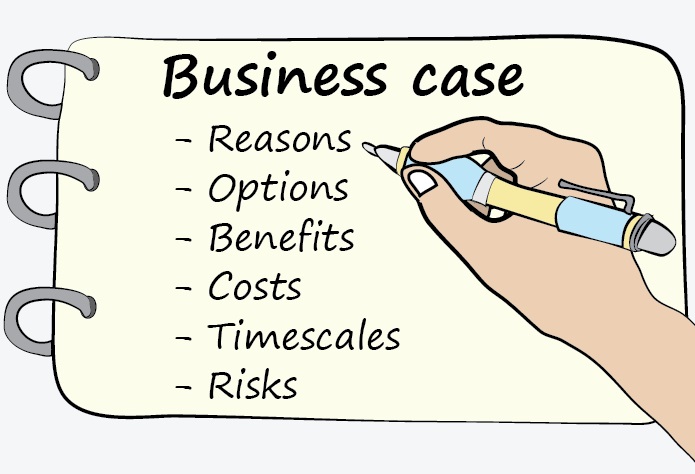
So, how does one determine whether it’s possible to go from “What We Have” to “What We Want”? For “projects” or project like efforts that assessment can be done through a review of the project plan. A “project” is defined as a temporary endeavor undertaken to create a unique product, service or result. In terms of USA Team Handball there have been a number of “endeavors” over the years intended to grow the sport or to produce good national team results.  The Boys & Girls Club pushes in Los Angeles (1980s) and Atlanta (1990s and early 2000s) could be classified as projects.  The various residency programs implemented over the years were projects typically focused on maximizing national team capabilities for the Olympic Handball Tournaments.  Currently, efforts to grow collegiate handball, youth handball, improve near term national team performance and yes, the Big, Hairy, Audacious Project are all projects.

And, like any project they are constrained by cost, schedule and performance.  What is often referred to as the Project Management Triangle.  A project has an intended performance outcome, but only has so much money to spend and time to work with.  And, if you want to alter one element of the triangle it’s a given that you have to change the other parts of the triangle in some respect.

A Test Case for Illustrative Purposes:  Growing College Handball to 100 Clubs

Let’s take growing collegiate handball as an example.  Let’s say our goal is to have 100 collegiate clubs by the end of the 2020.  With currently only 15 Men and 4 Women’s clubs that’s pretty ambitious.  Throw in the COVID-19 Pandemic and it seems pretty unlikely that we can meet our targeted performance (100 clubs) in the desired schedule (31 Dec 2020).  Keep those constraints and you can only attack the problems with more money.  I guess if we had $5M we could provide direct cash payments to 81 colleges to start college handball programs and hire 5 full time staffers to be 100% focused on this effort, but that doesn’t seem very practical.

This logically means scaling back schedule and/or performance.  With the pandemic it’s not clear what the 2020-21 season will even look like and that could make starting new clubs pretty challenging.  It’s debatable, but a better target end date would likely be May 2022 or May 2023.  Further, some more work is probably needed in fleshing out a good target for performance (# of clubs).

Defining Performance: Clearly Defined Deliverables and Targets that can be Tracked and Measured

This leads to another aspect that requires some careful thought and consideration.  Namely, a project plan with a schedule and clearly defined deliverables and targets.  Simply having broad objective statements like “we want 100 college clubs” leaves way too much open to interpretation.  Clear targets like “100 college clubs that contest 15 matches/year” are better along with other deliverables like a college handball start-up kit that will help get to the final project objective.

Competing Goals and Projects

It would be nice if USA Team Handball had just one goal and one project to worry about.  Unfortunately, however, that has never been the reality and this has been most visibly displayed over the years by choices that have been made between grassroots development and national team preparation. There has never been enough funding to properly do both (or even just one) and in most cases, the “decision” has been made to focus on national teams. I’ve put “decision” in quotes because many times it’s not been clear as to whether a thorough decision making process to prioritize limited resources was used or whether the decision just happened by default.

I bring this reality up, because sometimes folks think that it doesn’t matter if we as an organization fall short of lofty, audacious goals. That such goals can serve as inspiration and we’re going to strive for our best regardless of whether we fall short… So, what’s the harm? Well… the harm is that there are competing needs and spending resources on an effort that is unlikely to succeed is highly questionable if there are other options with greater chances of success.

Can We Get There?: Determining Feasibility

The next parts of this series will assess the feasibility of a number of different efforts that USA Team Handball has started or plans to start in the near future. In particular, it will review “What We Have” and assess whether can feasibly get to to “What We Want” in terms of cost, schedule and performance.

Spoiler Alert: We are likely to fall short in almost every instance. Please don’t shoot the messenger

Straight Handball Talk: Someone Asks Me the Burning Questions for a Change

Bini Mustafa, the President of the New York City Team Handball Club has been taking advantage of the COVID-19 lock down to interview several handball personalities both in the U.S. and internationally. I was honored to be one of the personalities he chose to interview and it was great to have someone else ask the questions for a change. He through me a couple of curve balls so, in my opinion, it’s a pretty interesting interview.

Here’s a timeline of some of the highlights of our conversation

  • 05:15 My handball origination story
  • 11:30 Playing at the 1993 World Championships
  • 13:50 Bini asks me, “Someone with a resume like yours, a background like yours… Why, are you not involved with the business of USA Team Handball?”
  • 21:50 Bini asks me, “In your opinion, from the practical and tangible aspect of it, what will be considered truly a successful outcome for this new leadership?”
  • 26:15 A discussion on the latest Pro League concept
  • 32:10 Indoor soccer and why that might be the model for a pro handball league
  • 35:10 How USA Team Handball might coordinate with a pro league
  • 36:40 A discussion regarding handball on TV in the U.S.
  • 40:50 The best thing that’s happened to me all year…
  • 42:20 The financial arrangements for handball on TV in the U.S.
  • 44:30 The problems with 3rd party agencies being responsible for selling TV rights in the U.S.
  • 46:50 Why cornhole is on TV and handball isn’t
  • 48:45 Why handball is headed to a better TV network (fingers crossed)
  • 49:45 The reality handball show concept
  • 52:55 Bini asks me, “If you had $10M to invest in handball how and where would you invest it first?”
  • 56:50 The great advice USOPC Executive, Rick Adams, gave USA Team Handball at the 2012 Strategic Planning Session in Utah
  • 59:15 Bini asks me, “Who’s your all time favorite U.S. Club?”
  • 1:02:40 Bini asks me, “Who’s your all time favorite U.S. born player?”
My apologies for forgetting your name, Richard Jacobs!
  • 1:06:50 Bini asks me, “Who is my favorite expat player in the U.S.?
  • 1:08:50 Discussion on U.S. Nationals still taking place this year
  • 1:11:40 Bini asks me, “Who I think is the best player in the world, currently?”
  • 1:13:25 Bini asks me, “If you were to change one rule in handball what would it be?”
  • 1:16:40 Discussion on adding a 13M line for two point goals

And, my interview is just 1 of 10 recently posted. It’s a diverse group that includes Carlos Prieto, Sayed Shalaby, Danilo Rojevic, Ljubomir Vranjes, Vladimir Bicvic, Julio Sainz, Mark Ortega, Gil Pires, Vid Kavticnik, Kim Ekdahl Du Rietz and Laszlo Nagy. That should keep you busy!

Straight Handball Talk Episodes: Link

Podcast (Episode 68): Beach Handballer and Ultimate Tagger, Charlie White

Charlie White: Ultimate Tag winner and USA Beach Handball Athlete

Earlier this week, Charlie White, won the Men’s competition on the premiere episode of Fox TV’s, Ultimate Tag. He joins the podcast to talk about that experience, how he got started with beach handball, how he and his teammates are coping with the COVID-19 pandemic and since he’s a game developer, whether handball will ever get a cool video game.

Ulimate Tag can be seen Wednesday’s on Fox and past episodes (including Charlie’s win) can be seen on Hulu or FoxNow.

Video

  • Charlie getting caught in the dome competition: Link
  • Charlie’s showdown win: Link

Charlie White on Social Media

USA Team Handball

  • Player Profile: Link
  • Recent article on Charlie: Link

Don’t miss an episode:
– Subscribe to the podcast in iTunes: Link
– Or use this RSS Feed to sign up for the podcast in your favorite podcast aggregator: Link

And, be sure to check out the podcast archive with interviews and great handball discussion going all the way back to 2006: Link

<< Sponsors: Would you like to get the word out on your handball related product? Contact (john.ryan@teamhandballnews.com) for information on how you can sponsor the podcast. >>

What We Want (Part 5): The Big, Hairy, Audacious Project

Yes, that’s the actual title that was given to this mysterious plan. The full details have not been revealed, but the outline of what is hoped to be accomplished is, indeed, truly, big, hairy and audacious.

This is part of an ongoing series: Link

Parts 1-4, covered USA Team Handball’s Strategic Plan which was developed and approved by the Board of Directors. Part 5 identifies what’s known about CEO Barry Siff’s audacious plans for handball in the U.S.

USA Team Handball CEO, Barry Siff, has been on the job now for 13 months and to many, myself included (to some extent), has been a breath of fresh air.  Enthusiastic, energetic with a positive, “can do” attitude.  Those are attributes that folks can get behind.

However, positivity, can only take an organization so far.  You’ve got to have solid plans moving forward.  And, while a strategic plan was awaiting the new CEO, he came into the job with some plans of his own.  To date, not much has been revealed in terms of details, but over the past year some bits and pieces have trickled out.

The Big, Hairy, Audacious Project (Bits and Pieces)

Here’s a compilation of interview quotes and articles that contain the basic elements of the “Big, Hairy, Audacious Project.”  And, yes, that’s the actual title that was given to this effort.

  • Board of Director Meeting Minutes (26 Apr 19): Link 
    • “Sarah Gascon: Is there a plan to recruit athletes leading to a residency program in the future?  Barry Siff:  current model is athletes living and training and competing in Europe but didn’t rule out a residency program in the USA.  SG: A development plan for USA athletes in needed. BD:  The IHF wants a USA Handball Academy in the future, there is current interest in France about a residency program for NT – women in 2020 and men possibly in 2021. Regional geographies are envisioned to feed athletes to Europe and to have pipeline extend to regionally targeted high schools related to a vertical pipeline. BS:  Opening the eyes of top athletes is one path and exposure of the sport through multiple levels will grow the sport.”
  • USA Team Handball Town Hall (26 May 2019): Link 
    • (32:45) “I’m not even getting into talent transfer. I’m not even getting into going after water polo players and basketball players, but those communications are already happening.  I have already met with the Women’s Water Polo team.   I’ve talked to the USA Water Polo directors.  There are ways to grow the sport quickly.  To get athletes in.”
    • (43:00) In response to a question regarding the starting of a new residency program. “I don’t know. I doubt it. … Probably, not in the cards.”  Follow on question: Then how we are going to develop national team caliber players? “That’s what we’re going to do.  I don’t know if it’s a residency program.  I don’t know if it’s a series of training camps.  I don’t know if it’s going out and recruiting people and giving them two months of training in the United States and then sending over a 100 of them to Europe.  I will tell you that’s something I’ve been talking about for two years in my prep for this job is maybe a program where we somehow develop people to a base level and then send them over to Europe and get them onto clubs.”
  • Babbitville Podcast Interview (23 Jul 2019): Link 
    • (29:05) “We’re going to be in Paris… My goal. I think our organization goal… The U.S. with our athletes’ talent; with the number of athletes we have and the support that we are getting from the U.S. Olympic Committee and the International Handball Federation there is no reason our women and men won’t be represented in Paris.”
    • (31:00) “To develop a pro league we need 12 to 16 teams, so we need a couple hundred players. That’s the plan.  We have a strategic plan to get those few hundred players.  Get them trained up.  Get those football players; those basketball, water polo players and youngsters college players playing right now…”
    • (31:57) “and our intention is to get 100 collegiate clubs by the end of 2020 for sure”
    • (34:45) “The concept that I had in 2016 was to have a kind of Netflix, 30 for 30, whatever it is documentary building the next great America sport. What we were going to do was track going out and having tryouts in New York, in LA, San Francisco and Chicago.  Having tryouts; bringing these athletes…”
  • KWMR Radio “Off-Center Sports” Show (21 Sep 2019): (audio no longer available)
    • (22:15) “And, then ultimately the goal in 3 years is to have a professional league here in the United States.  And, we’re working on that today.”
    • (47:10) “Then ultimately, like I mentioned, we’ve got to plan to develop a professional league, but at the same time. I think it’s going to be easy, and I really do mean this. I think it’s going to be easy to get a league, in concept, together.  We just got to have a couple hundred high level players here in the U.S.  And, that’s what Staffan Olsson’s major objective is as a High Performance Director is to figure out how we can develop a couple hundred great players, here in the United States to play professionally on television, on social media, on OTT networks, etc.”
    • (57:00) “Staffan and I are talking about doing tryouts for our national team. Open tryouts.  This will be both a marketing campaign, a media campaign, but also finding our amazing athletes out there and probably doing it, in I’m going to guess, probably southern California and New York.  I don’t know when.  Maybe it’s 3 months.  Maybe it’s 6 months.  But, find those diamonds in the rough who are amazing athletes.   Who we might be able to fine tune and give them the proper training, techniques, etc.  And, who knows they could be the next Olympian.”
  •  Leadership Podcast Interview (15 Oct 2019): Link 
    • (6:10) “The title of our project was USA Team Handball: Big, Hairy, Audacious Project”
    • (39:15) “I know we’re going to have over 100 colleges, collegiate clubs.  Playing, I think by the end of 2020; certainly in early 2021″
    • (39:23) “I guarantee we’re going to have 10s of thousands of youth playing handball in the next couple of years.  We already do, we don’t know about it.”
  • Sport Business Journal Article: Verizon Steps into Rings, Sponsors Team Handball by Terry Lefton (20 Jan 2020):   Link 
    • Article passage: “With few people playing team handball in the U.S., Siff knows the sports must be nurtured at all levels, from grassroots — where he says there is a growing club scene in major U.S. cities — to the formation of an American professional team handball league, a project now under R&D at IOA Sports in Orlando, where former Major Indoor Soccer League executive Paul Garofolo says it reminds him of his early days with that startup. While the new league is yet nameless, and has no completed logos, he expects to be pitching prospective owners before the year is out. Garofolo says it will require a minimum of 10 franchises to launch for a league that would begin play in 2023 with each franchise costing $3 million to $5 million to launch.

      Likely prospects? “NBA or NHL owners in one-tenant arena situations,” Garofolo said. “Some of the big European sports brands like Barca or Paris Saint-Germain also have their own team handball teams.”

  • PlaySqorr TV Interview (21 Feb 2020): Link 
    • “When we do our tryouts later this year I think we’re going to shock some people in the type of athletes that we’re going bring onto handball and onto our team.”
    • “I know this is sacrilegious and I’m insulting a lot of people, but I don’t think it takes these 2, 3, 4, 5 years of learning all the nuances and techniques, etc…”
    • “I don’t think long term that well… I’m only going to be here through Paris, you know. This is like my last stint of full time stuff.  And, you know, we got to get to Paris.  Long term, we’ve got to be really competitive in L.A., but, my personal goal is to have a team or two in Paris for sure.  And, the way to do that is through getting some of these athletes that we’re talking about.  These high, high caliber athletes starting to play right now.”

The Big, Hairy, Audacious Project (Rough Outline)

So taking all of these quotes into account it’s possible to form a rough outline of this plan.  Here it is in a nutshell:

  • Find 100-200 athletes from other sports
    • Mode of finding: Tryouts, communication with other sport NGBs. 
    • Targeted sports: commonly mentioned are water polo, basketball and football
    • Ages: Not clear, but most likely post college 
  • Train athletes to a “base level” in the U.S. for a period of time
    • What is “base level?”: Not defined, but presumably to a level at which a European based club will not have to teach basic fundamentals
    • Time required for stateside training?: Not clear, but 2 months has been mentioned
    • How trained?: Not clear, but it’s hard not to see athletes being trained in a residency program type framework. It could be called an “Academy”, but in function it would be similar to what has been done with residency programs, just for a shorter period of time.  (Perhaps similar to this concept: Link)
  • Send athletes to European based clubs for further development
    • Level of club?: Not defined, but presumably clubs that train professionally on a daily basis (2nd teams for top clubs would be a likely target)
    • Time athletes would stay in Europe?: Not defined, but a 2023-24 USA pro season suggests 2-3 years
  • Start a USA based Pro League in 2023
    • # of clubs: 10 to 16
    • Athletes: Presumably, the athletes would be primarily Americans that had trained overseas;  Also, it’s not explicitly stated, but it is probably just a Men’s Pro League
    • Franchise startup cost: $2M to $5M
    • Potential support envisioned from top European clubs; presumably “sister” franchises

Top Level Thoughts

  • This plan is not a strategic plan, but rather an action plan very focused on developing high level athletes for our national teams and a pro league. And, in a very short, ambitious time frame: A pro league in 2023 and 2024 Olympic Qualification.
  • It’s hard in some instances to sort out what parts of this concept applies to both the Men’s and Women’s programs and what parts are separate.
  • There is some discussion in regards to growing the college game, even with the ambitious target of 100 clubs in 2020, but for the most part collegiate club development is an afterthought for this concept. For sure, there are currently a very limited number of college athletes with the potential to quickly transition to top European clubs.
  • There was a brief mention in one interview of 10’s of thousands of youth playing handball in the next couple of years, but again this plan does not align very well with grass roots development.  Obviously, however, if there is a pro league started youth development is very likely to follow.
  • If this plan is implemented successfully it would be a marketing bonanza that will surely get the word out big time.  Even more so, if the original reality show were to be done in parallel.

Is it Possible?

A pro league populated with a couple hundred born and raised Americans playing handball at a high level. A couple hundred pro handball athletes battling for 16 coveted American National Team roster spots. Just like a European handball nation! As America’s self described #1 handball fan how could I, or any other handball fan in this country, not “want” that. It would be as if I had died and gone to heaven.

But, is it possible? Well, in theory, just about anything is possible… Given enough time and money.  Is it probable? I’ve got my doubts. It would seem at a quick glance that it is just too much of a great leap forward from “what we have” today. And, that we have neither the necessary resources nor the time for this plan to have even a remote chance of success.

But, I don’t do quick glances. Even, if seems like it’s overkill, we need to follow the process.  I’ve spent a lot of time mapping out “What We Have” and “What We Want”.  It’s time to figure out if we can actually get there.

What We Want (Part 4): Marketing

Are more TV broadcasts the “silver bullet” marketing goal for Handball in the U.S.?

This is part of an ongoing series: Link

Marketing Handball in the U.S.: A Long Standing and Vexing Challenge

Virtually every newcomer to team handball in the U.S. has the same reaction, “This sport is awesome! How did I not even know this sport exists?” And, often the next conclusion is, “Wow. Whoever is responsible or behind this sport must be horrible marketers.” After all, what else could possibly explain why you’ve never heard or seen it before?

An understandable, if simplistic response, but if one does a little investigation it becomes clear that there are some underlying issues that make marketing handball in the U.S. is challenging. I first captured some of those issues in a series of commentaries I wrote to explain why the U.S. wasn’t at the 2012 Olympics. The marketing sections are below:

Part 5: A lack of awareness and marketing: One in a million? The 312 real fans of Team Handball in the U.S.:  Link
Part 6: A lack of awareness and marketing: The Catch 22 TV paradox:  Link
Part 7: A lack of awareness and marketing: The historic lack of European support:  Link
Part 8: A lack of awareness and marketing: Europe sees the light, but can’t quite figure out how to properly invade the U.S. market:  Link

While much of what I wrote 8 years ago still rings true there have been some positive developments:

  • Handball has been on TV more often. EHF Champions League matches have been on beIN Sports since 2013. The IHF World Championships have also been aired regularly, first with beIN Sports and then with the NBC Olympic Channel starting in 2019.
  • Social media has become more prevalent and has become another way to promote the sport.
  • Most importantly, the IHF and EHF have seen the light and are starting to more aggressively pursue development of the U.S. market.

USA Team Handball Strategic Plan Marketing Goals

The USA Team Handball Strategic Plan identifies marketing as one of its major goals. Here are the documented goals, objectives and targets related to marketing.

For the most part, I’ve got no problems with the identified objectives. They are all things that need to be done in terms of marketing. Objective C, with it’s Salesforce specific solution is perhaps the exception.

To varying degrees USA Team Handball also appears to be addressing most of these objectives. The organization’s first full time Communications Manager, Melissa Zhang has done a great job with the website, cleaning up athlete profiles and with regular stories on current and former athletes. And, USA Team Handball is also now more active on its social media channels and rarely misses an opportunity to engage with anyone or any outlet discussing or discovering handball.

In terms of targets the 2020 Facebook goal hasn’t been met, but arguably as Facebook has turned into the domain of old timers it’s of less importance than youth focused Instagram and TikTok. I’ve no idea whether the web hits target has been met, but one would suspect that more frequent posting has resulted in greater web traffic.

Feeding the Fan Base vs Expanding the Fan Base

While running a handball website for 14 years I’ve come to grips with a marketing dichotomy which can best be described as “feeding the fan base” vs “expanding the fan base”. I’ll say with some authority that the handball fan base in the U.S. is very, very small. Depending on how generous one wants to be in terms of definition it’s somewhere between 300 and 2,000 people. And, that’s including non U.S. citizens. As someone who’s really passionate about handball and has a website devoted to the sport I’ll just say that reality is downright depressing sometimes.

Does the resigned saying, “It is, what it is” apply? Or, is that self defeatism? Can effective steps be taken to methodically expand that fan base? Perhaps, but I would suggest that it’s very difficult to organically grow a fan base for a narrowly defined topic like team handball. To essentially create new fans of the sport via well written articles and social media engagement. For sure, such efforts are greatly appreciated, but unfortunately only by the “already converted.” Don’t get me wrong: Feeding the fan base is important… just arguably of less importance when your base is so small.

Expanding the Base Hinges Almost Entirely On More and Better TV Exposure

So what can be done to really expand the base? Answer: Regular TV broadcasts of matches and, critically important, on networks with the greatest reach into American homes. I know this sounds, “old school”, but, it’s still the reality. Anecdotally, the percentage of Americans that have first discovered the sport via TV is off the charts. And, I suspect a structured survey would simply confirm that suspicion. Analytically, Google trend data directly correlates to TV broadcasts and I can assure you that internal website metrics do as well.

It’s really simple: Nothing reaches more Americans than TV and nothing reaches more young Americans than the social media engagement that directly or indirectly stems from the video content that major TV outlets can post online to their millions of followers.

I’ve said it a thousand times. If handball were to be broadcast on a regular basis on network like ESPN, virtually every statement discussing handball’s progress in the U.S. would from that point on start with these words:

“Well, after handball started being shown on ESPN…”

Pick how you want to finish the sentence. Here are some possibilities:

  • Collegiate handball really took off with an expansion to several hundred clubs
  • Youth programs expanded in several cities feeding the collegiate programs
  • USA Team Handball had year on year membership growth of xx%; Along with accompanying increases in website visits and social media engagement
  • Merchandise sales of professional handball clubs in Europe gradually increased as more Americans became fans of the game
  • The quality of stateside play improved dramatically
  • The level of stateside talent making our national teams starting improving

One Marketing Objective Above All Others

The point of this discussion is to emphasize that one marketing objective: getting handball on TV more often trumps all others… because it’s a true force multiplier that greatly improves the likelihood of better results in all other areas. In other words, anything and everything that can be done to make that happen should be a very high priority.

For sure it’s seen as important, but it’s not clear where it stacks in terms of priorities. I would make the case that empirically, it’s the #1 goal, and, if the Strategic Plan is updated I would argue that this priority should be clearly stated. Further, there are a number of supporting objectives that could be undertaken to facilitate achieving this goal to include attending TV rights conferences and the hiring of consultants to facilitate coordination between networks and handball content owners. It might even justify the use of limited funds and resources to produce USA based TV content. Or even… in some instances pay to have content aired.

One aspect that helps. Getting handball on TV in the U.S. isn’t just a USA Team Handball goal, but pretty much a goal of anyone who cares about the sport. In particular, content owners like the IHF and EHF would stand to benefit the most from making it happen. Further, developments like OTT web streaming are making it more feasible than it was in the past.

Is getting handball on TV a panacea? The silver bullet to all our problems? I, for one, am generally not prone to such profound, blanket statements, but… yeah it pretty much is. Without a doubt, it is the one thing that could overnight change everything.

That wraps up the review of what USA Team Handball’s future plans are. At least what has been officially documented. But, are there unofficial, undocumented plans as well? It seems that there may be and I will address what those plans are next.

Podcast (Episode 67): Great Lakes Challenge Cup and the U.S. Competition Structure: Time for Some Changes?

Joey Williams (Detroit Handball Club) and Ryan Peterson (Milwaukee United) join the podcast to discuss the Great Lakes Challenge Cup, a new competition for clubs in the Great Lakes region.

As envisioned, this new competition would be similar in format to cup tournaments that are played in Europe and would be open to club teams from Canada and the U.S. that border the Great Lakes.

Competition Format: Link

The discussion then segued to a broader discussion on handball competition in the U.S. and whether it might be time for some reform. Topics and questions addressed include:

  • The “weekend tournament”: Is it detrimental to handball’s growth in the U.S.?
  • Should steps be taken to encourage the splitting of clubs to foster more local competition? What combination of carrots and sticks could be used to facilitate that happening? Should club rosters have limitations on non U.S. citizens?
  • Should steps be taken to encourage league play over weekend tournaments?
  • Should the U.S. National Championship transition to a cup style tournament with a Final Four?
  • What can be done from an entrepreneurial stand point to encourage handball growth? Can handball copy the club growth of Volleyball? What about the opportunity of becoming a pro handball player as a selling point?
  • Should club rosters have tighter controls to prevent the perception/reality of mercenary players?
  • The challenges of starting a new club. Would the Detroit and Milwaukee clubs survive the “hit by a bus” question?

Also, at around 12:40 we get into a tangential discussion on the status of the 2020 National Championships originally scheduled for Detroit this May. Could the Championships be rescheduled for this summer? Assuming safety concerns can be met, could the championships even draw national attention thanks to an uncrowded sports calendar?


Don’t miss an episode:
– Subscribe to the podcast in iTunes: Link
– Or use this RSS Feed to sign up for the podcast in your favorite podcast aggregator: Link

And, be sure to check out the podcast archive with interviews and great handball discussion going all the way back to 2006: Link

What We Want (Part 3): Fundraising

Based on this comparison, was a $2M target for sponsorship revenue by the end of 2020 realistic for USA Team Handball?

This is part of an ongoing series: Link

Pretty much since its inception USA Team Handball has lacked sufficient funding to accomplish what it would like to in terms of National Team performance, grass roots development and anything else.  So, it should come as no surprise that the Strategic Plan has some ambitious goals and targets.  Page 4, Section 2) of the Strategic Plan covers fundraising:

Goal A focuses on near term hires and the establishment of retired executive volunteer and internship programs to support fundraising activity. To date, just the new CEO, Barry Siff, has been hired. There’s no data available yet as to how much new funding has come in, but Verizon has come on board as founding parner. It’s reportedly not a huge amount, but there is real potential for it to leading to more sponsors and sponsorship dollars.

Goal B discusses having a fundraising retreat and developing a fundraising plan. To my knowledge there has been no retreat or specific fundraising plan developed, although surely efforts to raise funds are ongoing.

Goal C discusses a long term strategic plan for fundraising. Again, I’m not aware of any strategic plan having been developed, but one can assume some sort of strategy is being developed. It has been noted that the Verizon deal provides credibility and can be a catalyst for future deals. Three of the sub-bullets refer to using Salesforce.com as a sponsorship platform, but if this platform has been acquired there’s been no announcement. For membership purposes the Sport:80 platform has now been adopted and it does have donation functionality, although not on the level of salesforce.

Goal D highlights focuses on membership and alumni as a source for annual giving. To date, I’m not aware of any new campaigns beyond the usual requests for donations.

Appendix A has several targets listed for specific time periods, but in many cases it’s not very clear what is actually attended.

  • Appendix A references “Finance” several times with a dollar value listed at the end of each quarter along with the amount of money the Board of Directors should raise in the preceding 2 fiscal quarters. It’s not clear to me what those end of Qtr dollar figures are supposed to mean. (Revenue? Cash on hand? Neither seem to make sense). The amount of money that the Board of Directors is supposed to have raised in the near term seem pretty ambitious and I suspect those targets haven’t been met.
    • End 4th Qtr 2018:  $5,000
      • BOD raises $100K
    • End 2nd Qtr 2019:  $100K
      • BOD raises $250K
    • End 4th Qtr 2019:  $500K
      • BOD raises $250K
    • End 2nd Qtr 2020:  $650K
      • BOD raises $500K            
    • End 4th Qtr 2020:  $750K
      • BOD raises $500K
    • End 4th Qtr 2024: $5M
      • “CEO raising money”
    • End 4th Qtr 2028: $10M
      • “CEO raising money”
  • Appendix A references membership several times with targets for the # of members and revenue from membership. No word as to whether these targets have been met. I suspect that membership hasn’t grown much and may have even gone down in 2020 due to the Coronavirus Pandemic.
    • End 4th Qtr 2018:  816/$57K
    • End 2nd Qtr 2019:  850/$60K
    • End 4th Qtr 2019:  900/$63K
    • End 2nd Qtr 2020:  1,000/               
    • End 4th Qtr 2020:  1,200/$84K
    • End 4th Qtr 2024:  5,000/$350K
    • End 4th Qtr 2028:  5,000/$350K
  • Appendix A references sponsors several times with targets for the # of sponsors and revenue from sponsorship. It’s not entirely clear what these numbers mean, but I think the first number refers to the # of sponsors and the 2nd number refers to the total amount of sponsorship dollars. I suspect that the 2018-2020 targets have not been met. At one time the USA website had a page that listed partners/sponsors, but it doesn’t appear that page exists now. To date there have been 2 sponsorship announcements with Verizon and Molten. One can also assume that the jersey sponsorship with Eldera is still in place. Again, I don’t think any of these near term targets have been met.
    • End 4th Qtr 2018:  9/$824K
    • End 2nd Qtr 2019:  10/$900K
    • End 4th Qtr 2019:  11/$1M
    • End 2nd Qtr 2020:  13/$1.5M        
    • End 4th Qtr 2020:  15/$2M
    • End 4th Qtr 2024:  15/$5M
    • End 4th Qtr 2028:  15/$5M

Discussion

In my opinion, the Fundraising section of the Strategic Plan needs to be totally rewritten. Parts of it are overly solution specific while other parts are overly vague. The specific dollar value targets aren’t clearly defined and the targets in many cases are so ambitious that even far more established team sport NGBs would be unlikely to meet them. Add, the current economic reality of the Coronavirus Pandemic and it’s even more clear that it’s time to start over.

What should such a rewrite include? For starters, realistic targets based in part on the fundraising performance of similar team sport federations. I would also suggest that top level strategies be identified for the major revenue categories: Grants, Sponsorship, Membership and Events.

As a reference, take a look at comparable NGB performance for 2013-2016. (The last quadrennial for which public available financial data is available.)

It only takes a glance to quickly ascertain that the desired fundraising targets are out of whack, particularly in terms of sponsorship. I guess it’s theoretically possible that Team Handball can develop some fundraising strategies that would leave these more established sports in the dust. Possible… But, really unlikely.

And, while aspirational goals can be OK sometimes, they’re not OK for realistic strategic planning. This is because plans have to match reality as to what can actually be done. And, this is really true in regards to funding because it is pointless to have grand plans if the funding to implement them won’t be available.

What We Want (Part 2): College Development: More College Clubs… and College Clubs Playing Handball at a Higher Level

World University Championships: This biennial event might be a great way to further develop our collegiate programs and track how well those programs are doing in terms of developing handball athletes.

This is part of an ongoing series: Link

Collegiate handball has been identified as a key focus area for developing handball in the U.S.  As such, several goals and objectives to move the college game forward have been identified both in the broader USA Team Handball Strategic Plan (drafted in 2018) and in a College Specific Strategic Plan (Feb 2018).

USA Team Handball Strategic Plan

A college and university initiative is identified on page 6.

D. Launch collegiate and university initiative.

  • i. Cultivate a competitive university club system across the United States.
  • ii. Target four geographies utilize the well-established collegiate club sports model.
  • iii. Create regional league competition.
  • iv. Host season ending Final Four event.

Target Outcome

  • Increase university club programs to 40 (4th Qtr 2020)

Appendix A

  • Appendix A references “Univ Teams” several times with targets for the number of teams
    • End 4th Qtr 2018:  14 (Accomplished:  15 Men’s Clubs /3 Women’s Clubs)
    • End 2nd Qtr 2019:  20 (Not Accomplished 15/3)   
    • End 4th Qtr 2019:  30 (Not Accomplished 15/4)    
    • End 2nd Qtr 2020:  35 (Not Accomplished 15/4)   
    • End 4th Qtr 2020:  40       
    • End 4th Qtr 2024: 100
  • There are several references to the selection and identification of new regions (Accomplished:  5 “hubs” (New York City, Boston, Chicago, San Francisco and Los Angeles) have been selected.
  • There are several references to the establishment of regional leagues in the 2018-2020 time frame.  (Not Accomplished:  There are currently no regional collegiate leagues.)
  • A Final Four tournament for top collegiate programs was identified for the 4th Qtr of 2019  (Not Accomplished)

Collegiate Strategic Plan (Feb 1st, 2020)

The Collegiate Strategic Plan was developed by a Collegiate Working Group and provides more detail on collegiate goals and objectives.  However, in my opinion, (similar to the more broad USATH Strategic Plan) it strays in some instances into what might more accurately be described as near term action plans.  Here is an over of the plan’s contents:

  • 2050 Vision
    • Team Handball is a sanctioned NCAA Sport
    • Scholarship sport that competes for the best athletes
    • Widespread media presence
    • Handball is a recognizable, established major sport in America
  • 2019-2022 College Strategic Plan Goals
    • 1) Create a comprehensive and streamlined starter pack to allow a college student to create a college handball program in a semester and supply a resource person. 
    • 2) Have sustainable clubs playing 15 games per season in 72 colleges, including 36 women’s teams.
    • 3) Have the structures and systems in place to grow participation of college club players by 400%.
    • 4) Assemble the necessary capacity to achieve the goals of this plan.
    • 5) Raise sufficient funds to achieve the goals of this plan.

In my opinion goals 1 and 4 are near term actions that will be implemented to support goals 2 and 3.  Goal 5 is probably more suited for a broader discussion on fundraising.   As I think they are more “strategic”, here’s a closer look at goals 2 and 3:

  • Goal 2: Have sustainable clubs playing 15 games per season in 72 colleges, including 36 women’s teams.
    • 2.1 Recruit colleges proximal to existing clubs
    • 2.2 Establish new clubs in locations with a concentration of colleges based on receptivity and leadership
      • 2.2.1 Achieve 40 colleges by end of 2020
    • 2.3 Provide competition structure leading toward a National Championship in order to enable the best teams in the country play each other
      • 2.3.1 Consider two-season structure to enable cross-regional competition
      • 2.3.2 Publish competition structure well in advance to enable maximum participation
    • 2.4 Develop and implement a path to ensure club succession and continuation of administration
    • 2.5 Provide support from USATH ambassador
  • Goal 3:  Grow participation of college club players by 400 percent
    • 3.1 Raise the profile of team handball
      • 3.1.1 In concert with USATH, develop and implement a comprehensive promotion plan to have handball recognized across the country 
      • 3.1.2 Offer resources for parents, coaches, athletes
      • 3.1.3 Focus on benefits of participation
    • 3.2 In concert with USATH, ensure a pipeline of athletes to join college clubs using the Athlete Development Model
    • 3.3 Support established clubs
    • 3.4 Provide pathway for athletes post college, e.g. national team, city clubs, coach, referee, volunteering

Discussion

In broad terms, I would assess that the overall goal of collegiate development is to:

  1. Increase the number collegiate athletes, clubs and leagues (Increase participation)
  2. Improve the level of collegiate play

Increase Participation

In terms of increasing the numbers of athletes, clubs and leagues several targets have been presented, but they could use further definition.  Here are some clear targets that I emphasized in bold face in the text above:

  • Have sustainable clubs playing 15 games per season in 72 colleges, including 36 women’s teams.
  • Grow participation of college club players by 400 percent

Of particular note, the text highlighting “playing 15 games per season”, seems to provide a benchmark for a club program.  Essentially, making the point that there’s a significance difference between a club that plays 15 matches and a club that holds a couple of practices and plays in one weekend tournament.  If that is the definition of a collegiate club it also decreases the # of clubs.  Using the 15 match requirement for the last two seasons, there would have been this many clubs

  • 2018-19 (9 Men/2 Women)
  • 2019-20 (7/3) (I used 10 matches as the season has been shortened)

Participation growth is not defined, but it would logically have a strong correlation with the growth of the # of the clubs.  Depending on the “start date” and the number of existing clubs at that point in time one can then project the number of clubs needed to obtain 400% growth.  As an example, the U.S. had 15 men’s collegiate clubs and 3 women’s collegiate clubs during the 2018-19 season for a total of 18 clubs.  400% growth would then be 90 clubs.  If one uses an average of 15 athletes per club, the total number of collegiate athletes for the 2018-19 season would be 18 clubs x 15 athletes for a total of 270 collegiate athletes.  400% growth would equate to 1,350 athletes by the end of 2022.  And, of course, participation could also be simply assessed by totaling up the annual number of collegiate USA Team Handball memberships from year to year.

Improving the Level of Play

In terms of improving the level of play I would assess that both documents could use more specific targets related to accomplishing this goal.  The USA Team Handball Strategic Plan mentions “Athletes identified out of University Programs” in a few places and references “pipeline development”, but there is not much “meat on the bones.”  The Collegiate Strategic Plan included several bullet points that point to improving collegiate competition, but lacks measureable targets.

Here, though are some potential candidates:

  • USA Performance in World University Handball Competitions: Link  (Actually participating would also be good. It’s doubtful that the 2020 Championship will take place, but 2022 could be a possibility.)
  • Numbers of collegiate athletes (Current/Former) on Youth (U19), Junior (U21) and Senior national teams
  • Numbers of collegiate athletes being identified for further development by International Clubs
  • Numbers of collegiate athletes transitioning to U.S. Clubs

I haven’t identified the actual numbers (and dates) that should go with these targets, but would suggest that the Board of Directors consider adding these targets (with dates/numbers) for future updates to the Strategic Plans.

That wraps up “What we want” for College development.  Part 3 will take a closer look at Fundraising and Marketing

Podcast (Episode 66) Former NFL Tight End, Gary Barnidge and the Infamous NFL – FTC Budapest Handball Match

Former NFL Player and newly converted handball fan, Gary Barnidge.

Earlier this month when the Coronavirus was just some issue China was dealing with a group of American NFL players (current and former) had a joint training session with Hungarian Club, FTC Budapest. Video of the match went viral as it seemed to provide what every handball fan wanted after the infamous, Jay Cutler, interview on Pardon My Take: Namely, a match between cocky, over confident NFL players and experienced handball players.

The reality, however, was significantly different. The NFL Players were part of the American Football Without Barriers, a non-profit group that uses sports as a tool to help disadvantaged children live healthy and fit lifestyles through the core values of physical fitness, wellness, and education. And, as the name implies part of that mission is conducting camps and spreading the gospel of American Football in places like Hungary.

Gary Barnidge, played eight seasons as a Tight End for the Carolina Panthers and Cleveland Browns and is one of the founding members of American Football Without Barriers. He joins the podcast to discuss their trip to Hungary, the growing popularity of American Football and what handball might learn from it, and, of course, their handball training with FTC Budapest.

What’s clear: Handball is harder than it looks and the sport has picked up some new and genuine fans from American Football.

Complete video of the entire training session: Link
Shorter video with match footage: Link

FTC Budapest Team Captain, Timuzsin Schuch

Don’t miss an episode:
– Subscribe to the podcast in iTunes: Link
– Or use this RSS Feed to sign up for the podcast in your favorite podcast aggregator: Link

And, be sure to check out the podcast archive with interviews and great handball discussion going all the way back to 2006: Link


The podcast was sponsored by Aspire Products, EMST150 Training Device. Check it out and don’t forget to use the promo code THN30 for a 30% discount.

What We Want (Part 1): Official Documentation and National Team Targets

This is part of an ongoing series: Link

A Bit of History (Sometimes Tilting at Windmills Actually Works)

Long time readers will know that I’ve linked to one particular commentary on several occasions. 

U.S. National Team Plans (Part 6): Federation Planning: Right Idea, Flawed Execution, Time to Right the Ship:  Link

Way back in 2012, the USOPC sponsored a Strategic Planning meeting in Salt Lake City and the outcome of that meeting was…  well, it was pretty much nothing.  Lots of fine discussion, but unfortunately no follow through.  No strategic plan was ever developed.  Not that I didn’t valiantly try to engage leadership, but such pleas fell on deaf ears.  Instead short term plans went forward without much thought in terms of the long term direction of USA Team Handball.  Or, if there was such “thought” it went totally undocumented.

I kept hammering away at this discrepancy every chance I could and eventually in 2018 USA Team Handball decided to draft a Strategic Plan.  I really don’t know whether my hammering actually contributed to that happening, but I like to think that it did.  Regardless that document exists and is available here: Link

I even participated briefly in the plan’s development.  Not as much as I would have liked, but at least I got to attend one meeting and influence its development.  Here’s a commentary on the plan that I wrote back in 2018:  Link

Note:  The Board of Directors met in October 2019 to review and update the 2018 document and I was informed in February that the Board is currently review the final edits on that update

In addition to this strategic plan a separate College Strategic Plan has also been developed:  Link

Background on Strategic Planning

When it comes to strategic planning there are often misconceptions as to what it is intended to accomplish.  First and foremost, strategic plans are intended to be… well, strategic.  They are not tactical.  This means that they look at the big picture and attempt to define what are the mid to long term goals and objectives and some top level actions that should be taken to achieve those goals and objectives.  It’s not a detailed plan of action but the guiding document used to develop such plans.  So, one shouldn’t complain if a strategic plan lacks the detail needed to go out in take specific actions.  In fact, it’s more appropriate to complain if a strategic plan is too detailed and solution specific.

The USA Team Handball Strategic Plan (An Overview)

As I alluded to in my commentary that was written shortly after it was released I have some issues with its structure and content.  It’s too detailed (solution specific) in some instances and in some cases (youth development, beach handball) its discussion is too sparse.  Parts of the document also seem a bit misplaced in that some very near term actions (e.g. staff hires) are spelled out, making the document more of a plan of action, rather than strategic guidance.  As such, I’ve decided to distill the more strategic aspects of the document into some broad areas for further analysis.  Those areas are 1) National Team Performance; 2) College Development; 3) Marketing and 4) Fundraising

1) National Team Performance

National team performance is referenced in several areas of the document and is most closely associated with the fourth focus area, “Organizational and Competitive Excellence”.  Two items (C and E) are closely related to National Team Plans

C. Develop national team training and competition plan for Olympic, Pan American and World Championship Qualifications.

    • i. Set competition goals and objectives.
    • ii. Establish talent acquisition pipeline.
    • iii. Develop national team training schedule.
    • iv. Develop national team competition plan.
    • v. Determine national team training site

On the surface these items seem fairly straight forward, but the “devil is in the details”.   In particular, the U.S. has struggled in the past to simply define what a “talent acquisition pipeline” is, let alone establish one.  The brief mention of a “national team training site” also needs to be fully defined as the simple item is wide open to interpretation. On one extreme it could be a full blown residency program and on the other extreme it could simply be a location for the national team to train for a week or two prior to major competitions.

E. Initiate Project France

    • i. A project of USA Team Handball, International Handball Federation, and the France Handball Federation.
    • ii. The project places USA Team Handball athletes (together as a team) into the French Handball League for regular competition.
    • iii. The French Handball Federation has made an initial invitation for the team to begin competition in September of 2019.
    • iv.  National team athletes benefit through increased playing experience and competition.
    • v.  The national team program gains opportunity to develop as a unit and compete against international teams during national team weeks that are set aside in the European club system.
    • vi. Project France is seen as a recruitment tool for university level athletes interested in advancing their athletic careers.

I personally see a lot of potential with an overseas effort like this. Indeed, back in 2014 I outlined a similar concept. However, this is a very solution specific concept and it is very misplaced to include it as part of a strategic document.  For certain, it needs to be further assessed and compared with other possible actions before it is implemented.

Target Outcomes: 

On the right hand side of page 6 there are several very specific target outcomes related to National Team Performance.

  • Qualify for the 2019 PANAM Games (Accomplished: Men and Women)
  • Top 4 Finish at 2019 PANAM Games (Partially Accomplished: Women: 4th; Men: 6th)
  • Hire Technical Director (3rd Qtr 2019) (Accomplished: Stefan Olsson)
  • Begin “Project France” (3rd Qtr 2019)  (an effort that would see a U.S. team playing as a unit in a French league)
  • Qualify for the IHF World Championships by 2024
  • Top 12 Finish at IHF World Championships by 2024
  • Top 2 finish at 2023 PANAM Games
  • Qualify for the 2024 Olympic Games
  • Top 2 finish at 2027 PANAM Games
  • Top 6 finish at 2028 Olympic Games

I won’t go into detail as regards to the feasibility of these targets, but suffice to say some very realistic expectations were set for 2019, but the targets for the outer years are very ambitious.

Elite Athlete (Appendix A)

Appendix A provides additional detail and targets for select topics from year to year.  One target block is entitled “Elite Athletes” and it’s envisioned that both the Men’s and Women’s programs will have 40 athletes identified as elite and that the definition of elite athlete will continue to evolve, which I presume to mean that the elite will become more elite.  Additionally it’s desired to have a greater percentage of these athletes coming from our improving college programs.

That’s a top level review of USA Team Handball’s Strategic plan and a closer look at what’s desired in terms on National Team Performance. Part 2 will take a closer look at “College Development”