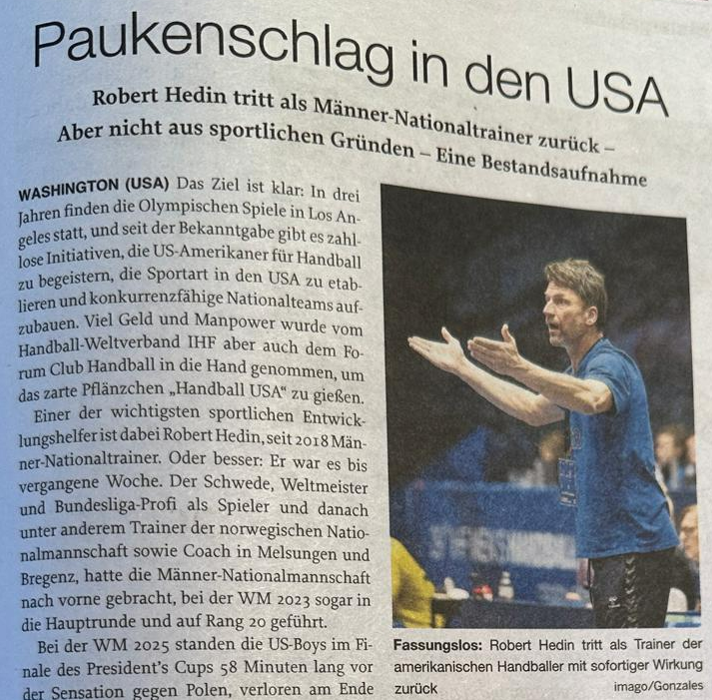
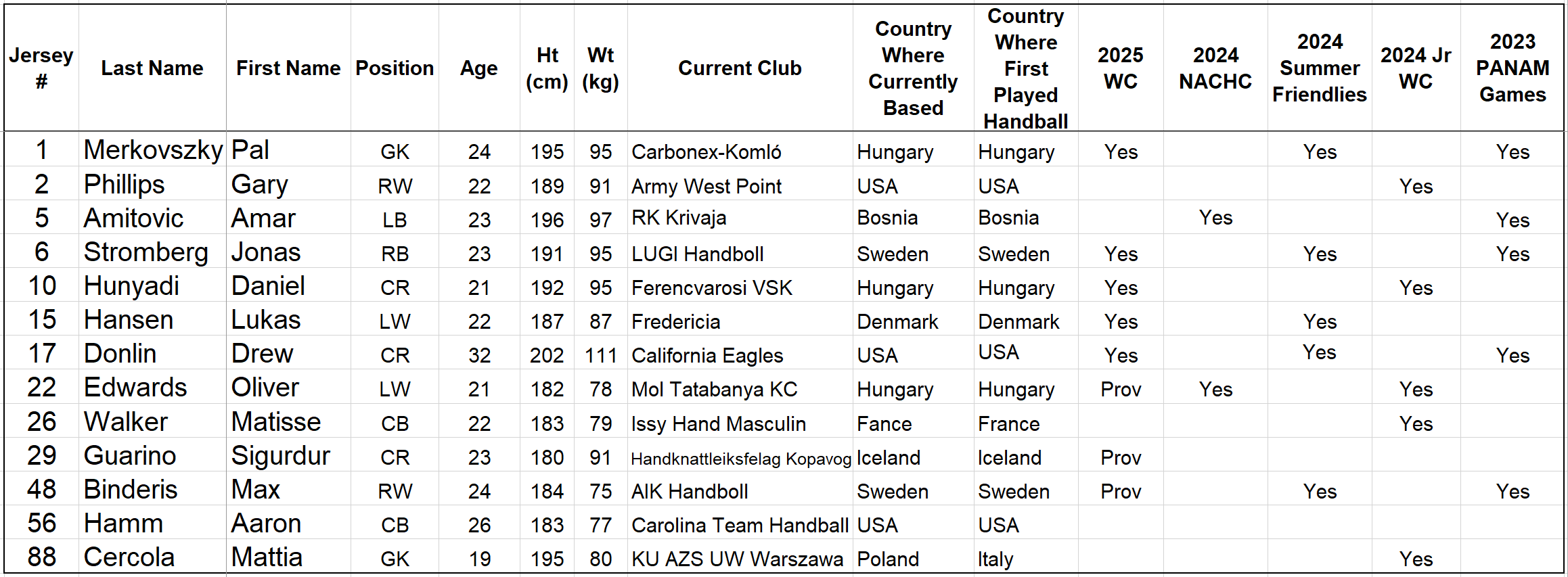
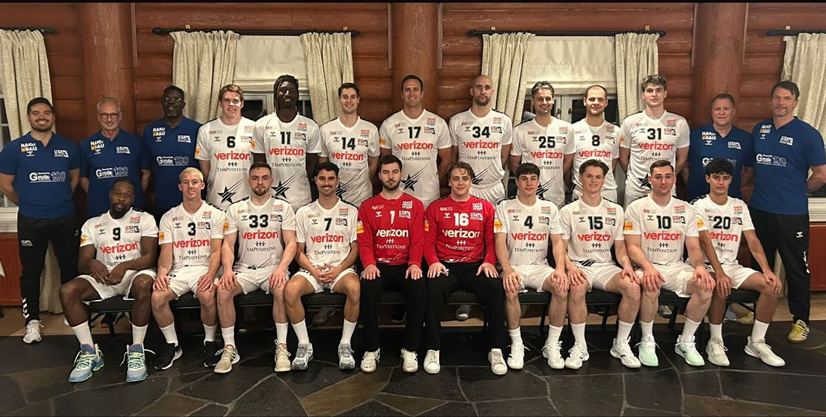
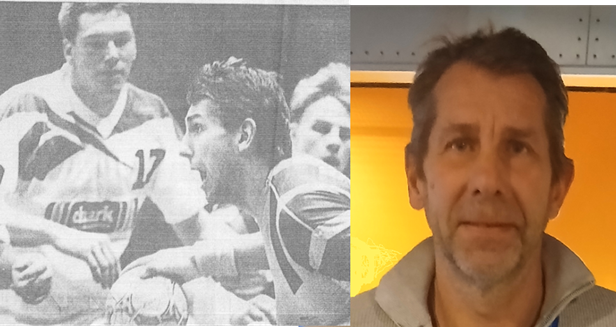
Last Thursday, 8 May, USA Men’s National Team Coach, Robert Hedin submitted his resignation to USA Team Handball. Here is an English translation of an article about his resignation from the German publication, Handball Woche.
Sensation in US handball
Robert Hedin resigns as men’s national coach, but not for sporting reasons
By Björn Pazen
The Olympic Games will take place in Los Angeles in three years, and since the announcement there have been countless initiatives to get Americans excited about handball, establish the sport in the USA and build competitive national teams. The IHF and the Forum Club Handball have invested a lot of money and manpower to water this delicate plant. One of the most important sports development workers is Robert Hedin, men’s national coach since 2018. Or rather: he was until last week. The Swede, world champion and Bundesliga professional as a player and then coach of the Norwegian national team, among other things, in Melsungen and Bregenz, had brought the men’s national team forward, even leading them to the regular round of the 2023 World Championship and to 20th place. At the 2025 World Championship, the US boys were on the verge of a sensation against Poland for 58 minutes in the final of the Presidents Cup, but ultimately lost by a narrow margin. In 2019 and 2023, they successfully qualified for the Pan American Games.
“The team’s development is outstanding, the boys’ commitment is incredible. We’re currently in the process of acquiring new players,” said Hedin, who was chosen from among 70 applicants for the job in 2018, a job that has since become his passion. But no one is getting rich: the players have to pay their own flights, and the costs of training camps in Europe were covered by income from sponsors that Hedin and German team manager Andreas Hertelt secured themselves. “I get $200 for every day I work with the team, but I always have to cover my travel expenses myself,” says Hedin. He financed his living as a coach for Norwegian clubs. “I was always grateful that they allowed me to support the US team during international weeks.” However, Hedin is currently without a club job and is looking for a new club.
There was virtually no financial support from the association; the team survived on its own sponsorship income. “The players, many of whom are students, cover all their travel expenses themselves because they desperately want to play for Team USA,” says Hedin. A training camp was supposed to take place last week, but Hedin had to cancel it. “The association informed us that our sponsorship money was needed to pay other outstanding invoices from the association.” That was the last straw: Hedin resigned from the association with immediate effect. “The association has been operating completely unprofessionally since it had a new managing director,” says Hedin. Due to financial irregularities at the association, the IHF has also cut funding, and project support is currently on hold. According to HW information, this could also be the reason why the IHF has withdrawn the wildcard it had originally promised the US women for the 2025 World Cup in the Netherlands and Germany.
And all of this could have serious consequences: “Without money, there’s no preparation for the World Cup and no preparation for the Olympics. It’s a real shame, because the athletic development is outstanding,” says Hedin. The US project presented at the 2025 World Cup in Denmark, with Mikkel Hansen, Nikola Karabatic, and Stine Oftedal as the most famous faces, won’t benefit the national teams financially either, as it’s more about the introduction of a professional league. Hedin’s only hope: “The association needs to reorganize itself as quickly as possible. There’s been a lot of talk there for the past seven years, but nothing has happened.”
(Iowa. A place to grow up… absolutely; A place to visit… not so much)
Handball Coming to Iowa?
When I first heard that USA Team Handball was headed to Bettendorf, Iowa for its annual National Championships I burst out laughing. I spent the first 18 years of my life living on a farm in Iowa and while it was a great place to grow up, it’s nearly last on my list of places to visit, because there’s virtually no reason to ever visit Iowa unless you have family there. Don’t believe me? Check out this list of places to vist; it even includes my hometown, Brooklyn #7. Your closest option to Bettendorf will be the World’s Largest Truckstop #21)
It’s also generally not one of the easier places to get to. There are worse places, but I suspect there will be quite a few handball people flying to Chicago and then driving 2+ hours to get to Bettendorf.
I couldn’t help but chuckle at the thought of the catcalls and complaints that would have materialized if former CEO Martin Branick was still in charge and had announced that handball was coming to Iowa. Holy crap! There would have been a revolt and calls for his removal. You thought Spokane was bad…
Well, anyway, just something for everyone to contemplate while waiting in line for your rental car, driving the 2+ hours to Iowa, paying your tolls and staring out at the endless corn and soybean fields. Yes, plenty of time to contemplate life, how our handball world has improved and whether all the disruption of the past year has been worth it.
How Should we Decide the Location for our Handball National Championships?
But setting aside the merits of Spokane or Bettendorf the larger question is whether it even matters very much where we hold our National Championships. I think the answer to that question depends on what we or USA Team Handball is trying to accomplish with the National Championshps. Here are some goals/objectives I’ve heard postulated:
Provide particiants the best possible on court experience: Generally everyone likes to play their matches on a good full sized court. Good lighting, actual stands for viewing, working scoreboards, courts in one location are some of the features desired. Teraflex floors are a nice addition too.
Ease of travel for as many participants as possible: It’s impossible to make everyone happy, but typically having the national championships within easy driving distance to several clubs and next to a major airline hub makes travel easier
Minimize costs for participants: This is closely related to ease of travel, but not always. Sometimes having the championships at a location with cheap food/lodging can offset travel inconvenience. In particular, I think the cheapest nationals I ever attended was in 1988 in Marquette, Michigan. Very inconvenient to get to, but free room and board at Northern Michigan University which at the time was trying to broaden its training center bonafides.
Minimize costs for USA Team Handball: Renting a facility can be expensive, but this can sometimes be offset by deals to guarantee visitors. The downside is the deals tend to be in less desired locations.
Introduce handball to a new city/region: While generally not the highest priority bringing a championship to a new locale can spur development. The 2010 National Championships in Las Vegas were a major factor in getting a new club started there.
A “reward” for development efforts in a city/region: Again, this can be an add-on goal, but national championships in Minneapolis (2012) and Detroit (2020) (cancelled by COVID) are examples of this and can be a good opportunity to showcase the sport
Introduce the broader handball community to a new handball residency program location or hub of focused activity: In 1992 and 1993 the National Championshps were held in Philadelpia as kind of a warm up to the short lived residency program there. Several championships were also held in Atlanta in the 1990s as it became a major hub of handball eforts in conjunction with the 1996 Olympics. Originally there was talk of the 2025 National Championships being played in Charlote at the U.S. Performance Center which would be right out of the Philly playbook of the 90s.
Cost Trade Offs and Who Ends up Paying
One doesn’t have to think too long or hard to realize that some of these goals can be met at the same time. And, that some are in direct conflict with each other. In particular, there will almost always be a direct conflict with minimizing costs and providing the best possible experience. i.e., good experiences tend to cost more money. Not always the case, but generally the case.
Probably the biggest trade off relates to whatever deal USA Team Handball ends up making with a host city. I haven’t seen the numbers, but one can surely guess that less desirable locations charge less money and/or offer incentives. Most notably, the two year deal former CEO Ryan Johnson surely cut with Spokane was likely a good one and for a cash strapped NGB it looks better on the bottom line. But, then everyone had to travel to Spokane and that adds up. One would have to have greater insight to all the numbers, but I suspect that the cost savings was essentially paid by greater member travel costs.
Bettendorf by the Numbers
Here’s a rough assessment of how Bettendorf fits with the goals identified
Quality Venue. Sight unseen, the TBK Bank Sports Complex looks like a fine venue. One of the interesting developments of the past 10 years or so has been the addition of facilities like this all over the country.
Ease of Travel. Bettendorf is harder to get to, but not impossible. I was even surprised to see that there’s a direct flight option out of Denver. Others will like find it cheaper to fly to Chicago and drive. A few clubs that normally have to fly like Minnesota, Chicago, and Milwauke can even drive to Bettendorf
Minimize participant costs. Bettendorf is likely pretty reasonable in terms of lodging. As discussed flight and drive will add up for some folks
Minimize USA Team Handball cost. As discussed I suspect the Quad Cities cut a decent deal and with more and more facilities like the TBK Bank Sports Complex being built there’s more competition.
Introduce handball to a new region. See below
A reward for development efforts. See below
Introduce the handball community to a new handball hub. See below
The 50 year Iowa Handball Cicada
As far as I know my home state has been pretty much devoid of handball. In fact, the only handball played there that I know of was a U.S. Women’s National Team tryout held at Iowa State University in the 1970s. And, now in 2025 handball has returned like a 50 year periodical cicada. While it would be nice if a 3 day tournament ignited a new handball passion in the Quad Cities, I’ve been around long enough to know that is very unlikely. There might be a local TV news report and a few random passers-by at the TBK Bank facility, but that’s about it.
As most U.S. clubs are currently reliant on expats, the Quad Cities (population, 385K) is simply too small to realisitically support a handball club. And, the same is true for any city in Iowa. The largest metro area ( Des Moines, pop ~750K) is still too small. I also don’t think Iowa attracts very many immigrants from handball loving countries. Of course, a club not reliant on expats could conceivably get started from scratch, but that would be extremeley challenging. Realistically, the only two possiblities would be starting club teams at the two largest universities, Iowa and Iowa State, but as they are a bit geographically separated from other clubs that would also be challenging.
So… in all likelihood a little handball cicada swarm will hit Bettendorf for 3 days only to return x number of years later… hopefully, shorter than 50 years.
A Missing, Aspirational Goal?
One possible goal that might seem strange in its omittance would be to create the best possible fan experience. After all, it is a National Championship. Shouldn’t we be more concerned with putting on an entertaining show? Of course, that would assume there are actually any fans beyond the participants. Even friends and family members are typically lacking at a U.S. Handball National Championship.
Here are some reasons as to why fans are lacking:
Not a priority: Conducting a National Championships is a major operation with multiple moving parts. The focus is the participants and making sure the tournament runs smoothly
The Format (Too Many Teams): Our National Championships is an all comers event for anyone who wants to come. There are some good teams playing at a decent level, but there are also development teams and weekend warriors reliving their glory days. Everyone that wants to play handball should have the opportunity to do so, but maybe a National Championship should just be for the top teams.
The Format (Too Many Games in Too Little Time): Playing 5 matches over 3 days? Pro handball players in top physical condition complain loudly about playing 2 matches in 2 back to back days. All too often the Sunday championship matches feature two tired teams playing out a battle of attrition. It’s typically not good handball.
While it would be nice to solve this problem by just making the fan experience a priority and changing the format to a Final Four or some other fan friendly format, doing so won’t neccessarily solve this problem. Or, since we’re in Iowa, let’s quote Field of Dreams: “If you build it… They will come.”
And, here’s James Earl Jones end of movie monologue telling Kevin Costner that “People will come”
Sorry, that only works in the movies. It’s not so easy to artificially create demand. I’m not saying we shouldn’t put more priority on packaging our National Championships. Just saying that we should have tempered expectations.
That said.. if you’re intrested and have a little free time you could go and visit the actual Field of Dreams and one of Iowa’s biggest tourist sites. Just an hour and half drive from Bettendorf
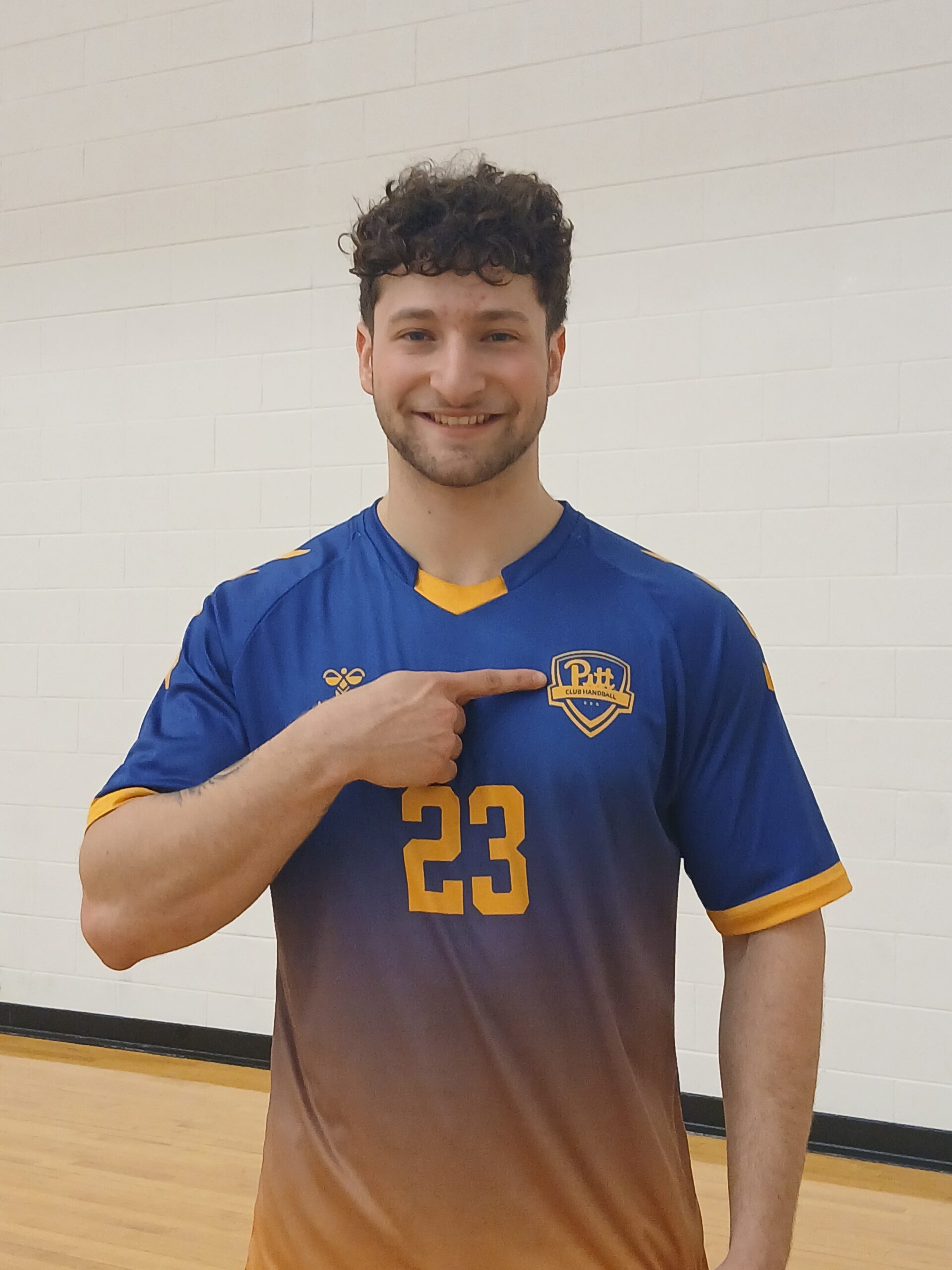
Zach Greenstein led University of Pittsburgh to a D2 title last season and to a 5th place finish this year at College Nationals. He will be playing for the DC Diplomats at Club Nationals and for Volendam in the Netherlands next Fall. We discuss his start with handball, his upcoming European adventure and other handball topics
I sat down with Gary during the Collegiate Championships to learn more about his background and plans for the future. Here are some of the topics we discussed:
How he got started playing handball
What he likes about the culture of handball
His plans to play this fall for Volendam in the Netherlands
The challenge of learning to play with resin in Europe
How stateside Americans lack handball experience relative to their age when compared to athletes playing handball overseas. And, the need for clubs and national team coaches to weigh their future potential differently.
If you have any suggestions for future topics that you would like us to consider please let us know on social media.
Don’t miss an episode:
Subscribe on YouTube: Link (Earliest Availability)
Gary Phillips is one of the best prospects to ever come out of a USA Collegiate Handball club. Earlier this month he led West Point to a 17th straight Collegiate Handball title and was selected as the tournament MVP. At the IHF Emerging Nations Championships he was selected to the all star team. An unprecedented accomplishment for a handball athlete still in college.
I sat down with Gary during the Collegiate Championships to learn more about his background and plans for the future. Here are some of the topics we discussed:
Air Force upsetting West Point in Pool Play (West Point came back in knockout play to win their 17th straight collegiate championships)
Phillips on attack vs North Carolina; Photo courtesy of Rod Apfelbeck
The three players in the past 40 years that had John saying, “Who the hell is that guy…”
Playing on the national team with Americans who’ve learned handball in another country
Playing at the Jr World Championships in 2023 with “glue” and against more experience goalies
Playing with the Sr National Team at the Emerging Nations Championships in March and getting selected as the all-star right wing
Playing right back vs playing right wing
Gary’s backgound and being recruited to playing QB for West Point football
Transititioning from American football to handball
West Point competing at Club Nationals in May
Gary’s chances of joining the Army’s World Class Athlete Program (WCAP)
The challenge Europeans sometime have in properly assessing the potential of stateside Americans who started playing handball at older ages
How playing for a top club on a daily basis can accelerate player development
Watch on YouTube or listen/download the mp3 file at the top of the page.
If you have any suggestions for future topics that you would like us to consider please let us know on social media.
Don’t miss an episode:
Subscribe on YouTube: Link (Earliest Availability)
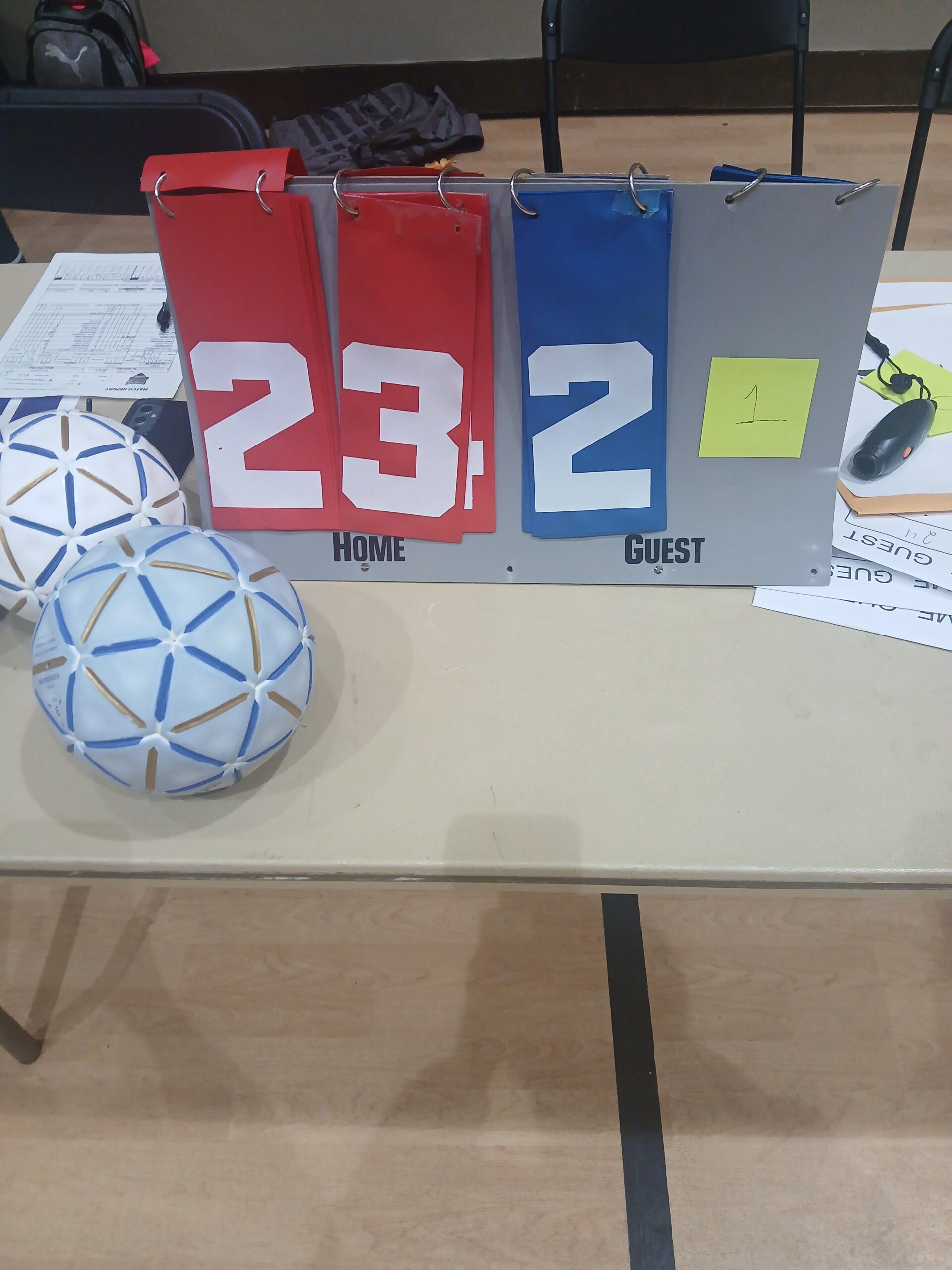
(The analog scoreboard on Court 3 at College Nationals: Not electronic and missing some numbers)
As Usual: Spirited Competition
This past weekend, as I usually do, I attended the Collegiate Handball National Championships. The competition was spirited and didn’t disappoint. From my perspective here are a few notable highlights:
My alma mater, Air Force, defeated West Point in pool play for the first time in several years only to see West Point re-assert themselves in the knockout stages for yet another title. (17 in a row, now)
Meanwhile in women’s play, North Carolina knocked off West Point in the Gold Medal match to end the West Point women’s streak at 4 titles
In Men’s Division 2 play, a new side, Kentucky, ran through the tournament undefeated to take the title over Case-Western. It’s nice to see a new program do so well. And, a shout out to Josh Palmer of Colorado State who did a solid job as a newcomer GK playing for Case-Western. Maybe we’ll see the CSU Rams there next year.
Beyond the play on the court, though, there were some organizational challenges. Here’s a list of what I observed:
Court 3, which was only used on Friday night, didn’t have an electronic scoreboard so the match time was kept by phone and the score had to be kept with the rotating strips. (see photo)
Adding insult to injury the analog score strips were missing a one and a zero… hence the post-it note.
Referees weren’t always on time for match start… but, they were always found without too much delay
Volunteers for scorekeeping weren’t always available… hence my stepping in to the void on Friday night
The cameras for video streaming weren’t always set up for operation
And, when the cameras were set up, they weren’t always manned… hence my stepping in on several occasions
And, the matches were streamed online at some non-traditional website locations, but the price (free) was right
I saw a set of handball goals fall apart on a couple of occasions. Nothing major and nothing a wrench couldn’t fix
Same as it ever was
It’s been quite a few years since I organized a handball tournament, but I still remember what it’s like. And, if you’ve ever organized or even just attended a few handball tournaments, none of what I described should surprise you. Those sorts of things happen. Sometimes the event goes off without a hitch, but usually there are a few hiccups. And, then on occasion (like this past weekend) things add up and it can make the event look at times like a bit of a train wreck. However, in almost 40 years of observing handball tournaments, our handball community pretty much always finds a way to cross the finish line. There’s always complaining, but folks generally step in to help and right the ship. This has been true whether it was a tournament under the old US Team Handball Federation, USA Team Handball, the short lived US Handball Union or at independent events sanctioned by no one.
I’ll now take my 40 year timeline and zoom in on the last 3 seasons. The 2022-23 season organized under USA Team Handball CEO, Martin Branick, the 2023-24 season organized by US Handball Union Director, Michael King and the 2024-25 season organized by USA Team Handball CEO Michael King.
During those 3 seasons I attended a SoCal Beach Handball Championships, 3 Samala Cups in Colorado and 3 Collegiate National Handball Championships. And, I also watched quite a few matches online over the past 3 years. I don’t want to pretend like I was some IG inspector walking around with a clipboard meticulously grading organizational performance using carefully established criteria, but in my opinion there’s not a whole lot to separate the organizational standards of the past 3 years. If anything, last weekend’s college nationals puts this season below the other two seasons, but the sample size is still pretty small, and, as I highlighted previously sometimes things happen.
In very simple terms: Nothing has really changed and I don’t think there was much of a problem in the first place. Collectively, we know how to run a U.S. style weekend tournament. (Maybe, we should rethink whether we should be conducting so many weekend tournaments… but, that’s a commentary for another day.)
Was it all worth it?
So, if I’m a bit generous, and assess that nothing has changed organizationally, the rhetorical question is “Was it all worth it?” And, by “it” I’m referring to the whole crazy sequence of events from the creation of the US Handball Union to the unorthodox firing of Martin Branick and his immediate replacement with Michael King. And, of course, all the Board resignations and reputational damage that USA Team Handball garnered in the process. Well, the answer is so obvious it doesn’t even really need to be answered. I mean we’re talking some serious rationalization here, if you’re firmly in the “Yes, it absolutely was worth it” camp. Because 7 months into the new era… there’s not a whole lot to show for.
And, if you’re in the “Yes, eventually it will all make sense, but it will take some time” camp that blames the current situation on the challenges that were inherited let me clear up something for you. It’s true that any newcomer inherits the problems (and successes) of his predecessor. And, under normal hiring circumstances it’s reasonable to have to some sort of grace period before progress is expected. But, when one comes into a role under very abnormal circumstances… There really shouldn’t be any grace period. This is because the justification for blowing everything up is that things have gone totally to hell in a handbasket… and the newcomer is clearly going to be so much better that we can’t wait or be bothered with a normal hiring process. That any additional, self inflicted new challenges caused by the disruption will be small potatoes in the big scheme of things. Otherwise, you just wouldn’t risk taking such action. It just couldn’t possibly be worth it.
And, while we’re just talking about tournament organization here, if one believes the Board of Director Meeting Minutes from last year the whole US Handball Union situation was the catalyst that eventually led to 3.5 board members deciding to blow everything up. Or… maybe it was just ostensibly the reason given so that other changes could be made? Regardless… it all just has me shaking my head.
The USA Women’s Sr National Team is participating in the 2025 North American & Caribbean (NORCA) Champhionships. The tournament is being played at the Mexican Olympic Training Center in Mexico City. The five participating teams will play a round robin and then the top 2 teams will play a gold medal match and the the 3rd and 4th place teams will play for bonze. The winner of the tournament will qualify for the 2025 IHF Women’s World Handball Championships in December in Germany/Holland. Matches are being live streamed on the Mexician Olympic Committe and Handball Store Mexico Facebook pages.
In 2018, the IHF Council made a decision to award wild card qualifications to the USA Men and USA Women for the 2025 and 2027 IHF Handball World Championships. The rationale for the decision was to support the development of the USA National Teams in preparation for the 2028 Olympic Games in Los Angeles. (2018 IHF Council Minutes, pages 8-9) This has been widely known for several years and from a USA perspective knowing that the U.S. could count on participation and gaining experience in two major tournaments in the lead up to the Olympics was reasurring. Many sites like the Wikipedia page for the 2025 Women’s World Championships had “penciled” in the USA as one of the already qualified nations.
A Quiet Omission and an Important Condition
Eariler this week, however, the IHF published a news article highlighting an IHF Council decision on 27 March to award a wild card to China for the 2025 World Championships. Quietly absent from the article, however, was a passing mention of the other Wild Card that had been awarded to the USA.
I contacted both the IHF and USA Team Handball for clarification. I haven’t heard back yet from USA Team Handball, but the IHF confirmed that the IHF Council has not awarded the 2nd wild card yet. And, a closer look at the wording for the original IHF Council decision in 2018 includes an important caveat or condition to the wild card award. Namely the award is conditional on the USA national teams having “reached a certain performance level”
What Does a “Certain Performance Level” Mean?
With the October 2018 IHF Council Minutes stating that the USA National Teams will be awarded a wild card provided that they have reached a “certain performance level” one can strongly infer that the IHF Council has assessed that the USA Women have not reached that level. While that level is not defined in any way, it’s hard, if not impossible, to argue that recent results have been satisfactory. Since the 2019 PANAM Games the USA Women have failed to win a match in official competition. And, these are not losses to good or even mediocre European sides. No, these are losses to peer competition in our region, the weakest handball region in the world.
Upcoming NORCA Championship: An Opportunity to Show Potential
All is not lost for the USA Women. Next week they will be competing in the North American & Caribbean Handball Championships, where the tournament winner will receive an automatic bid for the World Championships. I haven’t seen a roster yet, but perhaps with some new players and a new coach, the team can surprise and take home a title. And, barring that show some promise and potential to IHF Council members that will be watching from afar. Maybe the U.S. can even show enough potential to merit a “certain peformance level.” After all, that open wild card has not been awarded to another nation yet.
The USA Women’s Jr National Team is participating in a North American & Caribbean Qualification tournament for the Jr PANAM Games. The tournament is being played at the Mexican Olympic Training Center in Mexico City. The top 3 teams will qualify for the Jr PANAM games in Asuncion, Paraguay from 9 to 23 August, 2025. Matches are being live streamed on the Mexician Olympic Committe and Handball Store Mexico Facebook pages.
The USA Men’s National Team is participating in the IHF Emerging Nations Championship. This page is intended to serve as a handy reference point for the tournament
On 12 February, 2025, the USA Team Handball Board of Directors held their monthly meeting and I recorded the open public portion of the meeting. The meeting started out with a seemingly mundane discussion regarding a proposed new member, Margaret Rubin for the Nominating and Governance Committee.
However, I was agape to find out that Rubin, who also serves on the Judiciary Committee had a 7-8 year relationship with USA Team Handball CEO, Michael King. This is relevant because she had played a pivotal role in 3-2 Judiciary Committee decision that prevented the board from reviewing Board decisions that had taken place while Ebiye Udo-Udoma had been improperly removed from the Board. Which, of course, included the infamous 3-2 board decision to remove Martin Branick from the CEO position and immediately replace him with King. The entire sequence of events can be seen here: Link
This podcast focuses on the most recent revelation and some of the inherent problems with the way everthing went down this past summer. Yes, if your “means” to achieve your “ends” is crappy enough… you don’t get the ends you thought you were getting.
Watch on YouTube or listen/download the mp3 file at the top of the page.
If you have any suggestions for future topics that you would like us to consider please let us know on social media.
Don’t miss an episode:
Subscribe on YouTube: Link (Earliest Availability)
The USA Men participated in their second straight World Championships this past January and finished in 26th place with 3 wins and 4 losses. At first glance this doesn’t look like a great tournament result. After all, at the 2023 World Championships the U.S. made the main round and finished in 20th place. But, while the end result was a lower overall ranking, the body of work this time was, in my opinion, clearly better. Here’s a look at how the U.S. did in all 7 matches.
Match by Match Review
Preliminary Round
Portugal – USA 30-21 (15-10): The outcome of this match was never in doubt, but the U.S. made the eventual 4th place Portuguese work the whole way.
Norway – USA 33-17 (13-7): This was clearly the worst U.S. performance of the tournament… But, after Norway lost their first match vs Brazil, was there any doubt that the hosts would do everyting in their power to right the ship and take out their frustration?
Brazil – USA 31-24 (10-12): The U.S. led at the half and the match was tied at 18-18 with twenty minutes left. A remarkable performance against a Brazil side that edged out both Norway and Sweden for a QF slot. While Brazil dominated the final twenty minutes playing a world top 8 team to a standstill for forty minutes was a great confidence booster. One that hopefully serves as a stepping stone to an eventual 60 minute result against a top side.
President’s Cup
USA – Japan 27-25 (15-13): While Japan was missing some key players many players on their roster had just played in the Olympics this past summer and had been part of Japan’s successful Asian qualification. Not a top European side, but an experienced side that had played some big matches. The U.S. trailed early, but came back and led most of the way. Most importantly, they took control of the match in crunch time.
USA – Cuba 27-26 (14-15): Against their continental rivals the U.S. played a subpar match and even fell behind 4 goals (15-19 early in the 2nd half. But, the U.S. didn’t panic and eventually took a 24-23 lead with 9 minutes. Again… the U.S. was the better team in crunch time. Poised, they found a way to win when they weren’t having their best day. And, that’s what confident sides do.
USA – Bahrain 30-28 (15-14): At the 2023 World Championships Bahrain defeated the U.S 32-27. The match was not a blowout, but Bahrain was clearly the better side. This time around the U.S. was the better team and (we have a theme here) the better team in crunch time.
25th Place (President’s Cup Title Match)
Poland – USA 24-22 (11-13) (10-8) (3-1) : Heading into this match the U.S. was a 7.5 goal underdog and the odds of an outright victory were 13-1 against. Poland is no longer a top European side, but their handball history is decidedly superior to the U.S. But, none of that mattered and the U.S. held a lead in the 54th minute only to see the match end in a regular time draw (21-21). The U.S. then came up short in the penalty shootout. Sure, I would have preferred a title, but all things considered, that’s a solid performance.
Overall Team Assessment
Over the course of two weeks the USA Men played 7 teams of varied experience and talent levels. We didn’t know it going into the tournament, but based on the final rankings of the teams participating, Group E (Portugal (4th), Brazil (7th), Norway (10th) and the USA (26th)) was the strongest Preliminary Group in the Tournament. And, then against peer nations in the President’s Cup, the U.S. won all three of their 3 group play matches and played to a draw in the President’s Cup final, only to lose on penalties.
Betting lines are by no means official, but it’s telling that the U.S. covered the goal handicap spread in 5 of their 7 matches, only failing to cover versus Norway and Cuba. And, in two cases, against Japan and Bahrain they won matches relatively comfortably agains teams they were expected to lose to by 3 or 4 goals. By these numbers, there is no debate… The U.S. repeatedly exceed expectations.
How did the U.S. do it? Well, here are some of the reasons that I think are behind the team’s success.
Solid defense: The U.S. gave up an average of 27.7 goals/match. The IHF doesn’t provide a handy ranking for this metric, but a quick review of match scores for the teams the U.S. played shows that the U.S. held their opponents to fewer goals than their average. While some of this might be attributable to the somewhat methodical U.S. offense, keep in mind that same offense also had it’s fair share of turnovers. In fact, if one takes out the resultant fast break goals, the U.S. set defense (dare, I say it?) approaches the defense played by some of the top teams. It approaches… it’s not quite there yet. But, if one is trying to understand how the U.S. was tied with Brazil with 20 minutes left… it’s good defense combined with fewer turnovers on offense.
And, the defense starts with a center block of Domagoj Srsen and Patrick Hueter with Drew Donlin and Paul Skorupa filling in with no real drop in performance. Yes, 4 big, physical guys that are largely interchangeable and familiar with each other’s play. Throw in Ian Hueter and Abou Fofana playing pretty good “2” defense as well and it’s very capable defense
Reliable wing scoring: I’ll be doing a more indepth position by position review, but right wing, Sean Corning and left wing, Sam Hoddersen provided consistent scoring both on the wing and fast breaks
Crunch time leadership: Center back 1a, Ian Hueter and center back 1b, Alex Chan kept the team poised in crunch time. Games the U.S. might have lost in the past due to mistakes, are now games we are winning.
A core group with several years of shared experiences: Back in 2018 at a PANAM Games qualifier, I saw a backcourt of Abou Fofana, Ian Hueter and Gary Hines make short work of a Canadian side that had beaten the U.S. a few months earlier. More players have been added and roles have changed, but a talented core group has now been together for several years… and, it shows. We aren’t the team that has to figure out how to play and work together a week before the tournament. We are the the team that already knows what to do.
When determining an overall grade for this U.S. team I guess one could simply say 26th out of 32 teams and think C-, at best. And, for sure, I would love for the U.S. to be a side that makes the Main Round, the Quarterfinals and play for medals. But, I think it’s more appropriate to take the talent level of the team into account and match it to expectations.
Overall, this is a team with some talented athletes. Competitive, pretty good athletes, but no individual athletes with the talent that makes them can’t miss, top club professionals. However, when you combine these individuals into a team, the sum is greater than the individual parts. And, it is why their performance repeatedly exceeded expectations and is a performance that I think deserves an A+ grade overall.
Coming up: I’ll provide a more indepth position by position review and I’ll also start looking ahead towards 2028.
(John Ryan on defense against Magnus Wislander at the 1993 World Championships)
Magnus Wislander played 384 international matches for Sweden and is considered one of the all time great handball players. Two of those 384 matches were against the U.S. at the 1993 World Championships and the 1996 Olympics. He was in Oslo at the 2025 World Championship for Swedish Radio and by chance, we were both asking ourselves the same question: How would the U.S. national team of the 1990s fare against the current U.S. National Team? This short 3:30 minute discussion addresses that question and how the game has changed in the past 30 years.
Commentaries from 2023 comparing the 1993 and 2023 USA National Teams
Two Handball World Championships in Sweden Separated by 30 years (Part 1): Nostalgia and and a Little Bit of Deja Vu: Link
Two Handball Championships in Sweden Separated by 30 Years (Part 2): From 0% to 83% Dual Citizens- Does that Matter?: Link
Watch on YouTube or listen/download the mp3 file at the top of the page.
If you have any suggestions for future topics that you would like us to consider please let us know on social media.
Don’t miss an episode:
Subscribe on YouTube: Link (Earliest Availability)
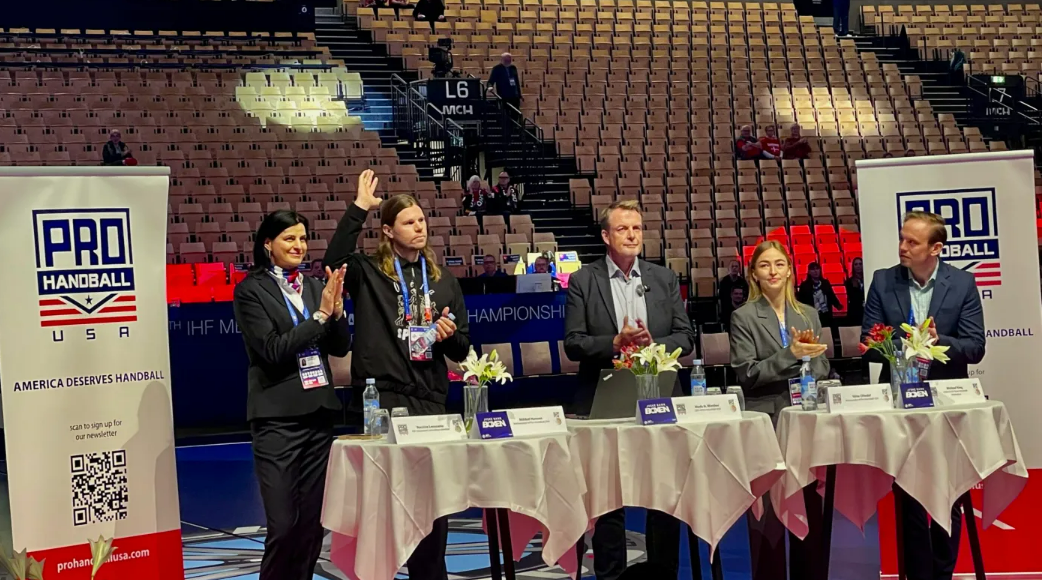
(Pro Handball USA press conference; photo from Fredericia Avisen)
Yesterday, Pro Handball USA, held a press conference and kick-off event in Herning, Denmark to introduce the new organization to the Handball world. With the theme, “America Deserves Handball” Pro Handball USA will first seek to bring pro clubs to the U.S. for matches as part of a summer tournament in 2026 and is targeting a U.S. based pro league for 2028. According to one report on the press conference, Barcelona and Paris-SG have committed to participate in the a summer 2026 tournament which will take place over 10 days in Las Vegas.
Of note, unlike previous pro handball related this effort is focused on both men’s and women’s pro handball and will also include a community based effort “The Handball Frontier.”
Attending the press conference, was the Pro Handball USA CEO, Mads Winther, USA Team Handball CEO, Mike King, IHF Executive Committee Member, Narcisa Lecusanu and two Pro Handball USA ambassadors, Mikkel Hansen and Stine Oftedal.
Here are a few articles related to the press conference:
Mikkel Hansen and the stars’ plans for handball in the USA: Link
Mikkel Hansen wants to make handball an American sport: Link
I’m not naive to think that it will happen overnight, says Mikkel Hansen: Link
This is what Mikkel is doing now: – I’m not going to the USA to live: Link