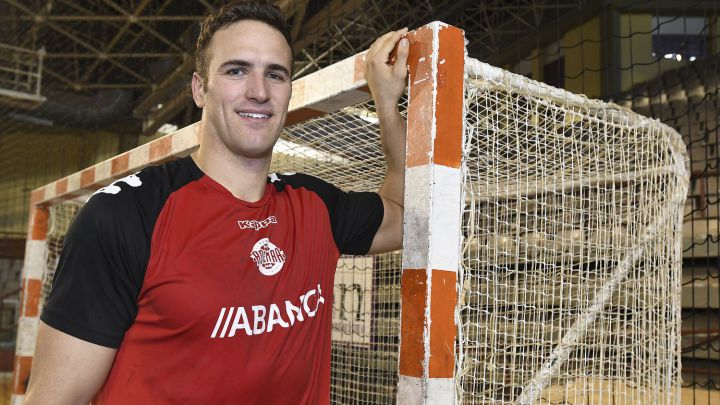
Domagoj Srsen on defense for Team USA at the 2019 PANAM Games
USA National Team athlete, Domagoj Srsen has newly signed with German club, HSG Krefeld. Krefeld plays in the 3rd Division (Central Pool), which has currently suspended operations, but later this spring there are plans to resume the competition with an abbreviated season. Srsen, who is primarily a defensive specialist, has played for several higher level clubs including Hannover in the German HBL and Zagreb in the EHF Champions League. Most recently he played with Wilhlemshaven during the 2019-20 season where he played a key role in their promotion to the 2nd division. According to sources, Srsen was not resigned due in part to an injury he sustained this past summary and budget limitations. The tentative plans for the season restart include an abbreviated competition specifically for 3rd Division clubs seeking promotion to the 2nd Division and the Srsen signing is intended to shore up their defense.
Srsen, who is 30 years old, first played for the U.S. in 2011 and has represented the U.S. at both the 2011 and 2019 PANAM Games. He was also on the 20 Man U.S. roster that would have taken part in the 2021 World Championships if the U.S. had not withdrawn from the competition due to too many positive COVID tests. The Srsen signing will mean that two Americans will be on the Krefeld roster as Paul Skorupa also plays for the Eagles.
Patrick Hueter and his brother play for Dormagen and can be seen in action Friday at 1930 CET / 1330 US ET
Would you like to know when and where handball matches can be streamed online? If yes, follow Team Handball News on social media for regular updates:TwitterFacebookInstagram
Three matches featuring American athletes can be seen online and there are several French and Spanish league matches as well.
CET is 6 hours ahead of US ET. Odds courtesy of Bet MGM.
American Athletes in Action
HBL 2 (Germany)Dormagen (-3.5) vs Eisenach (Friday, 1930 CET): Link (VPN required; More info; What I use)
Ian and Patrick Hueter play for Dormagen.
5th place Dormagen takes on 10th place Eisenach in Dormagen’s first match since December
A busy week for Drew Donlin and Leon with matches on Tuesday and Thursday. Both will be available for online viewing.
Would you like to know when and where handball matches can be streamed online? If yes, follow Team Handball News on social media for regular updates: TwitterFacebookInstagram
A real busy week for club handball fans with plenty of action to check out on ehfTV and other platforms. Highlights include the a Barca-Veszprem clash on Tuesday and the EHF CL Match of the Week between Nantes and Aalborg on Wednesday.
CET is 6 hours ahead of US ET. Handicap (point spread) odds courtesy of Bet MGM.
Leon (-1.5) vs Chekhovskie (Tuesday, 2045 CET): Video Link
Drew Donlin plays circle runner and middle defense for Leon
Leon is in 2nd place in Group A and will host 3rd place Chekhovskie
Liga ASOBAL (Spain)
Huesca vs Leon (-1.5) (Thursday, 1955 CET): Video Link
This is a key ASOBAL match for Leon as they’ve lost their first two matches in 2021 and Huesca is tied with them for 4th place in the league standings.
Team USA’s Nicole Andersen and her club, As Cannes Mandelieu Handball play on Saturday at 1800 CET
Would you like to know when and where handball matches can be streamed online? If yes, follow Team Handball News on social media for regular updates: TwitterFacebookInstagram
The World Championships are over and we didn’t get the chance to see the U.S compete. This weekend, however, you can see four Team USA athletes in action with their club teams.
CET is 6 hours ahead of US ET. Odds courtesy of Bet MGM.
American Athletes in Action
Pro Ligue (France)
Valence (-1.5) vs Angers (Friday, 2015 CET): Video Link
Abou Fofana plays left back and defense for for Angers
Valence is just 2 points ahead of Angers in the standings and this is an opportunity for Angers to move out of the relegation zone.
Liga Asobal (Spain)
Cisne vs Granollers (-4.5) (Saturday, 1655 CET): Video Link
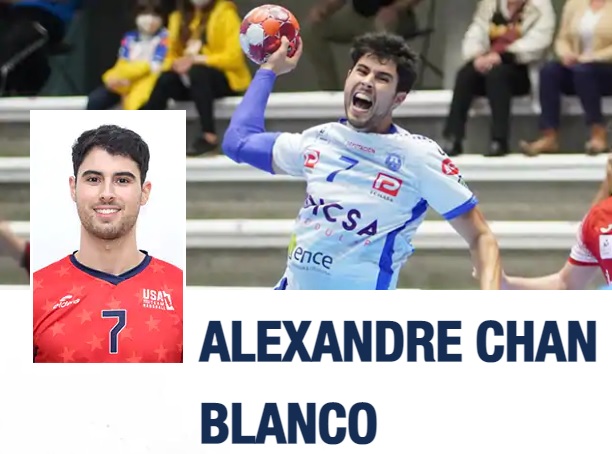
Alex Chan plays center back for Cisne and is their leading scorer
Update: Postponed due to positive COVID Test
D2F (France)
As Cannes Mandelieu vs Asul Vaulx en Velin (Saturday, 1800 CET): Video Link
The U.S. Team training in Denmark. How the U.S. might have fared at the 2021 World Championships.
Summary page of all USA news and commentary related to the 2021 IHF Men’s Handball World Championship: Link
A Missed Benchmarking Opportunity
Participation in a major handball tournament is often a point for further discussion. An opportunity to assess where a program currently stands and where it might be headed. Most definitely, the U.S. Men’s participation in a World Championships for the first time in 20 years would have been such an opportunity. Alas, due to multiple positive COVID test results such benchmarking didn’t get to take place. However, that doesn’t preclude me from providing some informed speculation as to what might have happened.
Projected Team USA Results (Assuming our Full Roster had been Available)
As someone who has seen almost every match the U.S. has played in the past two years I feel that I’ve a pretty good idea of what they were “capable” of achieving and I was really looking forward to the prospect of Team USA surprising the Handball world. I say “surprising” because the expectations of most people were pretty low based on past results that simply weren’t very relevant anymore. In particular, much was written about how Greenland had performed historically better in North American Championships, but such writeups also neglected to mention that the U.S. roster had recently added several accomplished dual citizens to its roster.
Overall, with these new roster additions, I would assess that the U.S. is roughly comparable now to a 2nd Division German Bundesliga team. A big part of this logic are two of those additions, Ian and Patrick Hueter, who both start for Dormagen, currently in 4th place in that league. If one substitutes the other positions at Dormagen with athletes like Drew Donlin (Leon) and Alex Chan (Cisne) who play in the Liga ASOBAL, Pál Merkovszki who plays in Hungary’s top division (Gyöngyösi KK) and Abou Fofana (Angers SCO) in France’s 2nd division, I essentially see another HBL 2 team, perhaps a bit further down in the standings. Further down because our wings and backups at other positions are playing for lower level clubs in Europe. Still some very capable players, but just a notch lower in talent.
And, while a middle of the pack, 2nd Division Germany team would have had little hope against teams like Norway and France, such a side would have done fine vs many of the teams in the President’s Cup. And, if the U.S. had played really well and gotten some luck, they could have even beat Austria, a side that might be comparable (with their 2 top backcourts missing) to an all star 2nd Division Bundesliga side. I’m not in any way saying such a victory would have happened, just that it wasn’t as crazy a proposition some people thought it was.
For a more detailed analysis of the U.S. 20 man roster check out this previous post: Link
Taking into account the relative strength of the U.S. roster and their would have been opponents here is my assessment of how likely each team would have won a head to head matchup
Preliminary Group E
USA (10%) vs Austria (90%)
USA (<1%) vs Norway (>99%)
USA (<1%) vs France (>99%)
President’s Group II
USA (60%) vs Morocco (40%)
USA (15%) vs Chile (85%)
USA (75%) vs S Korea (25%)
Placement Match (would have been one of the following)
For 25th: USA (10%) vs Tunisia (90%) or
For 27th: USA (60%) vs DR Congo (40%) or
For 29th: USA (40%) vs Angola (60%) or
For 31st: USA (win by forfeit) vs Cape Verde
Team USA Results (Assuming our Full Roster had NOT been Available)
It’s worth noting, that the U.S., according to press reports, briefly considered sending a significantly weaker roster to the World Championships after several players tested positive for COVID-19. This roster would have consisted of 12 players that had tested negative with the addition of 8 more athletes from the provisional roster that hadn’t been at the training camp.
I don’t know the exact composition of who would have been on this revamped roster, but U.S. Head Coach, Robert Hedin, is quoted as saying we didn’t have any defense. That could be interpreted in a number of ways, but I’ll interpret it to mean that it wasn’t clear who our goalkeeper would be and that most of our stable of 6’4″ plus defenders in the middle 4 positions would be unavailable.
While I respect the hard work and effort of all of the athletes on our 35 man provisional roster, there’s a considerable drop off in talent after the first 10 or so players. I would assess that a U.S. team missing several key players would not have won any matches and I suspect some of the losses could have been major blowouts in the 30 goal range. Again, it’s hard to say without seeing exactly who would have been available. But, keep in mind, that most, if not all of the 8 athletes that would have been added had not, due to the pandemic, even played handball for several months. Further, there probably would have been even more positive test results after the team arrived in Egypt that very likely would have resulted in a Cape Verde situation with limited athletes available and an eventual withdrawal from the tournament.
In short, it would have been a very bad look for a U.S. team returning to the world stage. I don’t know how everything was factored into the U.S. decision to withdraw, but this announcement does indicate that the U.S. would have been unable to field a competitive team prior to the first match vs Austria.
The USA Withdrawal Announcement
Benchmarking the USA Team
So, assuming that the U.S. had been able to send a full roster what would have been the overall assessment? Well, this largely becomes an assessment of how the U.S. would have performed in all of their matches. Using the expected win percentages of individual matches above here’s my qualitative assessment of how the U.S. might have fared overall:
Spectacular: Upset over Austria or Winning the President’s Cup; Further, surprisingly competitive matches against top teams like France and Norway.
Great: 3 wins (S Korea, Morocco and RD Congo) for 27th place
Average: 2 wins (S Korea and then either Morocco or Angola) for either 28th or 29th place
Disappointing: 1 win (S Korea) and 30th place
Disaster: No wins and 31st place only because Cape Verde had forfeited
There are so many variables and circumstances to consider here that it would be an increasingly speculative narrative to guess what might have happened. With that in mind, I’ll benchmark with what I think was the most likely outcome: 2 wins in the President’s Cup.
But narratively, there would have been a lot more to talk about than those 2 wins. I think the U.S. would have first performed respectively in the Preliminary Group, perhaps giving Austria a good match before a run of turnovers put the match out of reach. Against France and Norway there would never have been any doubt as to the outcome, but there would also been sequences of good play where folks watching the match would have said, “These Americans are competing. They’re making France/Norway work a little here.”
In the President’s Cup against teams with similar individual talent levels, there would have been more revelations especially with the U.S. picking up a couple of wins and showing further improvement and cohesiveness as a team.
By the end of the tournament, the consensus of most would be that this was a U.S. team that had shown they could play some real handball. Further, thanks to a relatively young roster and an Olympic Games in 2028, it was a side with strong potential for further improvement.
We’ll Never Know… but there’s a Point to this Speculation
Frustratingly, we’ll never know what would have actually happened. So, you might rightly argue what’s the point of this speculation?
Well, the point is that whether folks realize it or not some major decisions will need to be made in the not too distant future regarding the future direction of the U.S. Men’s National Team Program. These decisions will center around how to make the U.S. team more competitive and how much should be spent to make that happen.
And, what does the U.S. want to officially make happen? Well, according to the USA Team Handball Strategic Plan the U.S. wants to finish in the top 12 at the 2023 World Championships, qualify for the 2024 Olympics and finish in the top 6 at the 2028 Olympic Games: Link
Is that realistic? I’ve got my doubts: Link But, regardless if one is going to plan for the future you really, really need to benchmark where you currently stand first. How else can one even begin to project what “more” is needed if you don’t understand what you have?
It would have been far better to have the definitive benchmark of actual competition, but lacking that informed speculation is the next best thing.
So, it’s not perfect, but we’ve got an idea now of “what we have”. In part 2, I’ll address what’s needed to further improve the U.S. Men’s National Team.
You didn’t get a chance to see Alex Chan play for the U.S. at the World Championships, but you can see him in action with his club team later today.
The World Championships finished on Sunday, but there’s not much time to catch your breath as there is plenty of club action this week. Odds courtesy of Bet MGM.
American Athletes in Action
Liga Asobal
Cuenca (-5.5) vs Cisne (Tuesday, 2025 CET): Video Link
Alex Chan plays center back for Cisne and is their leading scorer
Leon vs Irun (Slight Favorite) (Wednesday, 1855 CET): Video Link
Drew Donlin plays circle runner and middle defense for Leon
Granollers (-2.5) vs Benidorm (Tuesday, 1855 CET) Video Link
Would you like to be informed as to when handball can be streamed online? If yes, follow Team Handball News on social media for updates like this as well as breaking alerts for unplanned opportunities like the free HBL matches that seem to pop up from time to time.
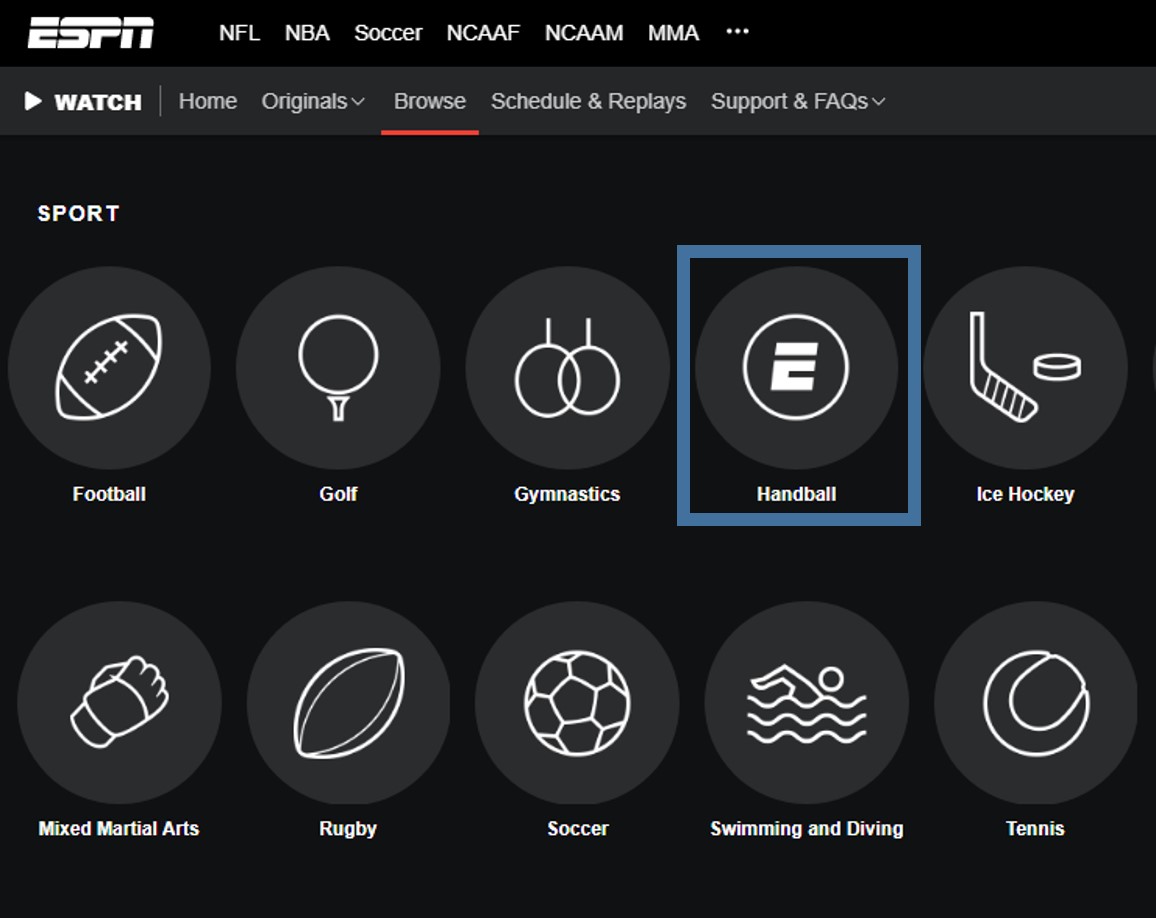
The current Handball icon at ESPN+. Can somebody out there design a better one?
As we are about halfway through the IHF Men’s Handball World Championships I thought it might be a good time to review the ESPN+ Handball web streaming product.
The Viewing Experience
Overall, the viewing experience has been pretty good, albeit with a few hiccups. For me personally, watching streamed content is pretty much like watching regular TV. Occasionally, I’ll get a little buffering or pixelation, but overall the picture quality is outstanding and better than what I get via YouTube. I’ve been watching via the ESPN+ app on Roku and it’s pretty much like watching Netflix or Amazon Prime for me.
There have been a few glitches with the audio as sometimes the English commentary track has been missing. Usually, just a few minutes at the start of the first match, but on the 19th it went missing the whole day for some reason. I tweeted to @espnfansupport, but perhaps a few more voices were needed to get their attention to fix it.
Finding the matches has also been a bit challenging at times. Most notably, upcoming handball matches don’t show up in the upcoming matches section on the app until maybe 5 minutes prior to the start of the match. This has led to my consternation and to others who would message me “where’s the match?” when there is nothing to see on the ESPN+ app related to handball.
A Disappointing Lack of Promotion (So Far)
As one who’s trumpeted ESPN’s broadcasting of handball as the biggest and most important development in the entire history of team handball in the United States let’s just say that so far the promotion of the sport has been underwhelming. (For an amusing discussion on my expectations and the resigned viewpoint from another longtime follower of the sport (Chris Cappelman) check out this Facebook discussion: Link).
I guess my expectations were directly related to the way ESPN hypes and promotes sports on their very popular social media channels. Most notably, two Sports Center Instagram posts (Link 1 and Link 2) from back in 2017 and 2018 are probably the most viral handball related posts in U.S. history. Simonet’s behind the back shot got 1.2M views and Sigurdsson’s penalty shot punch in got 2.2M views. My logic: Wow, if ESPN was hyping handball when it wasn’t even being shown on ESPN, just imagine what they will do when it’s their content. (Background stories on ESPN posts: Link 1 and Link 2).
Sigurdsson on ESPN’s Instagram Account
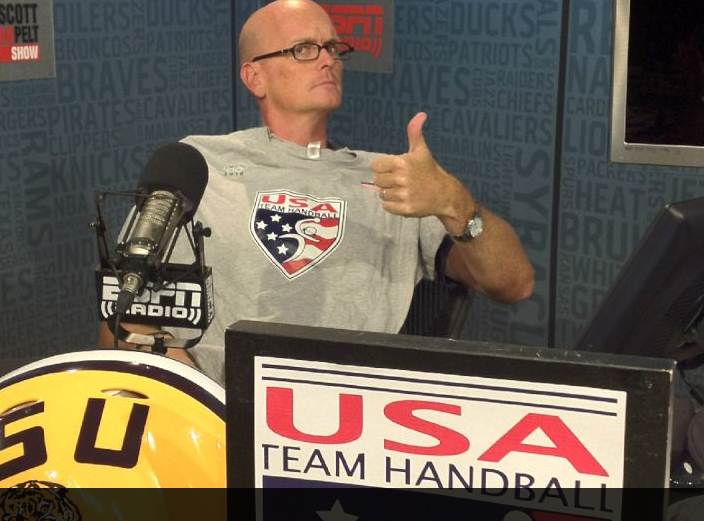
And, if one goes back further in time, who can possibly forget the attention that Scott Van Pelt and others paid the sport during the 2012 Olympics: Link
Scott Van Pelt’s “Handball Talk” was a daily feature during the 2012 Olympics
Again, I kind of figured that if ESPN talk radio got excited about handball when it was broadcast on NBC, maybe they would get really excited when it was their own product. At the very least I thought they would talk a little bit about handball while it was simultaneously being broadcast on ESPN+. Interviews with U.S. coaches or players. Maybe some discussion on Gauthier Mvumbi’s viral videos and shout out from Shaquille O’Neal? Instead, I haven’t heard a peep. Heck, at times it feels as if handball was still on beIN Sports.
We’re only half way through the Championship, though, so there’s time for things to pick up. We shouldn’t also forget that the U.S. withdrawal from the tournament was a huge setback. One, that for a short while even had me worried that ESPN wasn’t going to broadcast any matches. It also didn’t help that the NFL playoffs were in full swing. After Sunday’s conference finals there’s a two week lull until the Super Bowl. And, at the same time the World Championships really get going with the Quarterfinals, Semis and the Championships on the 31 when there is no football on TV. Yes, things could definitely pick up.
A Bright Spot: Handball on ESPN+ Long After the World Championships are Over
While I would greatly prefer for the World Championships to be on ESPN’s linear channels where it would reach virtually every home in the U.S. there are some advantages to being on the lower profile, web streaming only, ESPN+.
A Targeted Audience: The first advantage is that this smaller audience is also very, very sports oriented. Or, to put it another way, the type of sports fan who would be more inclined to watch something they maybe have never seen before or perhaps just once or twice during the Olympics several years ago. Further, they are more inclined to become a greater fan of the sport. And, if they are young enough they might even investigate finding out more about possibly playing the sport.
A Home for More Handball Content: This ties to another advantage of ESPN+. Namely, it could become a home for additional handball content. Suppose these new fans want to continue to watch handball. Many of those potential new fans probably think they will have to wait for the next Olympics or World Championships. After all, this is just some game that a P.E. teacher made up. Well, what better way could there possibly be to educate these new fans on the wonders of the EHF Champions League than to put Champions League matches on ESPN+ (ATTN ESPN: Those rights are available) Or, what about adding some U.S. content like our National Team matches or the Collegiate National Championships. Just think what a recruiting tool this could be? Why imagine some intramural all-star at Wake Forest seeing North Carolina playing Virginia in the Collegiate Handball Final Four and instantly thinking, “We could kick those guys asses.”
Forever Content: And, this leads to the final advantage of handball on ESPN+. The fact that streaming services aren’t limited by hours in a day. During the dog days of summer when there’s nothing new on TV, handball could still be on ESPN+ just waiting for someone new to discover. New fans, new player, new sponsors not just during a magical two weeks during the Olympics every four years. But, a trickle coming in at all times of the year. Here’s what that handball sub-channel could look like:
A Better Handball Icon is Needed
It took awhile, but ESPN has finally added handball to its list of sports on the ESPN+ App.
Unfortunately, it’s not the best icon or logo for handball, but just a placeholder. Maybe we can help out ESPN with a better icon. There are several examples from other sports there for comparison. But, this is actually a little bit tricky, for a couple of reasons. One, there is the other handball in the U.S. so that causes confusion. And, then a simple ball drawing could easily result in something that looks like another soccer ball. So, we need something simple that says “our handball.” If anybody out there has got some artistic or design talent… show us what you got.
Did I really think that the USA could beat Austria? Yeah, I did (with caveats)
Toma Rimac, joins the podcast and we take a deep dive into the betting odds for the upcoming Handball World Championships. This is a little bit different from your typical preview show as what might be a good bet is often different from predicting who will win. (Important Note: This podcast was recorded prior to all the COVID related developments on 12 January)
ESPN Broadcasting Handball in the U.S. Our handball world is about to change.
Yesterday, USA Team Handball announced that 31 matches of the upcoming IHF Handball World Championships will be broadcast on ESPN+, ESPN’s streaming platform. Pretty big news… Right? Actually, no, it’s not just “big” news.
In fact, It it the biggest and most important development in the entire history of team handball in the United States.
Long time readers of this website shouldn’t be surprised by my hyperbolic statement as I’ve been saying this in one way or another for years. Why friends will know that I’ve been espousing the critical need for more handball on TV since the late 1980s.
Most prominently, I’ve stated the following prediction several times: If handball were to be broadcast on a regular basis on a network like ESPN, virtually every statement discussing handball’s progress in the U.S. from that point forward would start with these words:
“Well, after handball started being shown on ESPN…”
Pick how you want to finish the sentence. Here are some possibilities:
Collegiate handball really took off with an expansion to several hundred clubs
Youth programs expanded in several cities feeding the collegiate programs
USA Team Handball had year on year membership growth of xx%; Along with accompanying increases in website visits and social media engagement
Merchandise sales of professional handball clubs in Europe gradually increased as more Americans became fans of the game
The quality of stateside play improved dramatically
The level of stateside talent making our national teams starting improving
One Marketing Objective Above All Others
As I highlighted in this commentary from last year getting more handball on TV more trumps all other marketing objectives for the sport… because it’s a true force multiplier that greatly improves the likelihood of better results in all other areas.
So after many years of frustration why are we finally celebrating such big news? As with many great successes it’s the result of a combination of things.
Better European Engagement: For starters the Europeans and the IHF have finally recognized the need for an American market and are starting to put some resources in place to make it happen. The handball world can bemoan the granting of a wild card to a USA team, but actual USA participation in the WC made it a more attractive TV product to ESPN.
Education on Finding the Right Network: Over time, through a variety of means, the key handball content owners now fully understand that not “just any ol’ network” will do for the U.S. market.
Better engagement from USA Team Handball: While I would have liked to have seen action sooner, I’ll just say I’m real pleased that it’s now taken place. Hats off to new CEO, Ryan Johnson, for helping to facilitate the finalization of this deal. In his first week on the job, no less.
Luck: Behind the scenes some connections were made that facilitated making this deal happen. And, most importantly, that good fortune was capitalized upon.
The Great Experiment Begins
So, will my prediction come true? Will every statement about handball in American now begin with a qualifier about whether is was before or after ESPN started broadcasting the sport?
Time will tell, but I’ve never ever been more optimistic about the future of the sport in this country.
Previous Articles/Commentary about Getting More Handball on TV in the U.S.
Why weren’t the U.S. National Teams at the London Olympics?:
Sep 2012: Part 5: A lack of awareness and marketing: One in a million? The 312 real fans of Team Handball in the U.S.: Link
Oct 2012: Part 6: A lack of awareness and marketing: The Catch 22 TV paradox: Link
Dec 2012: Part 7: A lack of awareness and marketing: The historic lack of European support: Link
Dec 2012: Part 8: A lack of awareness and marketing: Europe sees the light, but can’t quite figure out how to properly invade the U.S. market: Link
Dec 2015: 20 Team Handball Matches have been Broadcast the Past 2 Weeks on a U.S. TV Network: Few Know, Fewer Watch and No One Seems to Care: Link
Aug 2016: The Olympics are Over. Thanks for Watching. See you in 2020. How about Sooner?: Link
Feb 2020: ESPN Missed out on the English Premier League: Will they Miss the Boat for Handball Too?: Link
Is the U.S. winless in World Handball Championship Competition? Maybe. It depends if you want to count B World Championships.
Next week the USA Men’s National Team will take part in the IHF Men’s Handball World Championship. It’s been 20 years since the U.S. last appeared in a Sr World’s Championships and the questions that keep cropping up are:
How well did the U.S. do in previous World Championships?
What’s the U.S. record in previous World Championships?
The short answer to the first question is “not very well,” but, the long answer is a bit more complicated due to the changes in the qualification paths, the number of participants and the competition formats the IHF has implemented since the first indoor championship was held in 1938. And, the answer to the second question is open for debate depending on what you count as a World Championship. The discussion below should help explain why answering these questions aren’t as simple as you might think they would be.
Changes in Qualification Paths (A, B and C World Championships)
Notwithstanding the complications COVID has caused with qualification for the 2021 World Championships, qualification for the World Championships is now fairly straight forward. Various continental federations are awarded a number of slots and continental championships are held to determine which nations will qualify for the final tournament.
But, this was not always the case. In fact, from 1976 to 1992 the IHF organized 3 separate World Championships designated as A, B and C World Championships. As you might assume the A Championship was for the top teams and the B and C Championships featured lower level teams. And, much like a European league there was relegation and promotion between the different championships. If one looks back at the nations participating in these various tournaments it’s not entirely clear how nations qualified for the different tournaments. The C World Championships just featured European teams and the same was true with the B World Championships until 1985 when nations from other parts of the world were added.
Presumably, the idea was to give nations like the U.S. an opportunity to get some quality competition on the world stage since only one nation from Pan America qualified for the A Championships. As you might expect the competition in B tournaments was a bit easier and this is reflected with the 6-0-14 record the U.S. compiled with its 3 participations in 1985, 1987 and 1992. Certainly better than the 0-0-25 goose eggs the U.S. has for its six A World Championship appearances.
Changes in the Nations Participating
It also should be noted that the number of participating nations has grown over the years. From 1964 to 1993, A World Championships featured 16 teams. From 1993 to 2019 the field consisted of 24 teams. And, 2021 will be the first time 32 teams will participate. In general, the fewer teams that participate in a World Championships, the stronger the overall field is.
Making the 16 team tournaments even more challenging was the inclusion of just one team from Africa, Asia and the Americas. It’s no real surprise that the U.S. failed to get a win in 1964, 1970, 1974 and 1993 against the European teams playing in these tournaments. I am a little surprised, however, that the U.S. couldn’t get a win vs an Asian side during these tournaments.
When the tournament was expanded to 24 teams that also should have given the U.S. a win or two, particularly at the 1995 WC just a year prior to the 96 Olympics where the U.S. picked up 2 wins and was fairly competitive against the European teams. Not sure what happened there… Although I did find out recently that Darrick Heath did not participate due to a contractual commitment with his club that precluded his fully participating in a National Team training camp. The 2001 WC was simply an overmatched team and they were undoubtedly the weakest team in that 24 team field.
Changes in Format
The final reason the U.S. hasn’t picked off a win at a World Championship yet is that with the exception of the 1993 tournament they’ve never played in a consolation or President’s Cup round. With the President’s Cup there are multiple matches against other teams that fail to make the Main Round and only the last place team goes home without a win. I could be wrong, but I don’t think the U.S. was the very worst team at every tournament they played in. If the President’s Cup format had been in place the U.S. in some of the earlier tournaments the U.S. would have picked off a win somewhere.
Should the B World Championship Matches Count?
Well, there are a couple of ways to look at this. One way is to go with the semantics of if you’re going to call something a “World Championship” then a win there counts. The counter to that argument is the “B” classification in front of it… As in, sorry, you’re not playing with the big boys, therefore it doesn’t count.
I tend to side with the latter argument. Yes, those B World Championships weren’t as weak as the “B” designation would seem to make it, but they were still “the little kid’s table” at Thanksgiving.
That’s not to say that those wins at the B World Championships are meaningless. On the contrary, they are documented proof that U.S. teams back in the 80s and 90s had a measure of respectability. We were clearly better than 3rd tier European sides, could beat 2nd tier European teams, and on a good day give the top teams in the world a bit of a scare. If one looks at the score lines at the 1985 B World Championships the U.S. was competitive in every match. Even played the 2nd half to a draw with the eventual tournament winner, E Germany.
These results suggest that the 85 B WC was the best ever U.S. performance and that the 1995 WC was the best “A” World Championship performance.
As one looks ahead to the 2021 campaign, one can hope for a similar distinction: A measure of respectability against the really good teams and hopefully a couple of wins in the President’s Cup against similar sides trying to prove themselves. And, probably most importantly, real signs of promise as to even better performances at future World Championships leading up to the 2028 Olympics.
Every World Championship Match the U.S. Has Played in
Here’s a compilation of every World Championship the U.S. has participated in and the score from every match played.
IHF Competition Archive: Link (PDF with all competitions through 2009)
1963 Men’s Outdoor Field Handball World Championship (Switzerland)
The IHF staged one more Outdoor Field Handball World Championship in 1966 and then discontinued the tournament. The 1963 Championship was the only outdoor world championship that the U.S. particiated in.
1964 Men’s Handball World Championship (Czechoslovakia)
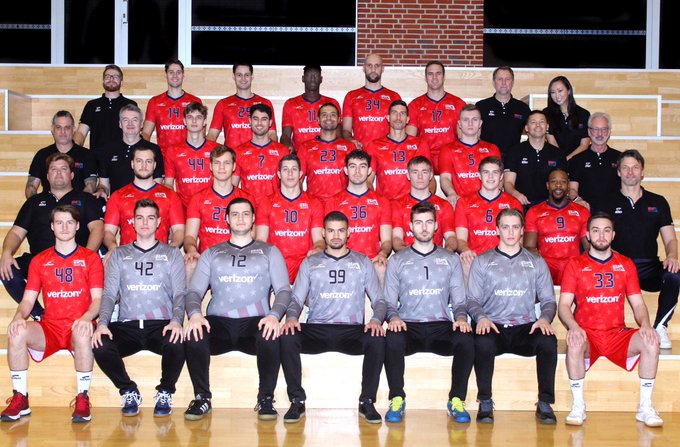
The Hueter brothers (Ian (center bottom) and (Patrick (left corner) are key members of the USA Men’s National Team.
There’s a long line of handball brothers playing for their country in international handball competition. France’s Bertrand and Guillaume Gille, Spain’s Alex and Daniel Dujshebaev, Poland’s Krzysztof and Marcin Lijewski, Argentina’s Diego, Pablo and Sebastian Simonet and Chile’s Emil, Erwin and Harald Feuchtmann to name a few. Why, even the U.S. had the Fitzgerald brothers (Joe and Tom) representing at the 1996 Olympics. Now added to this long line are Team USA’s Hueter brothers, Ian and Patrick.
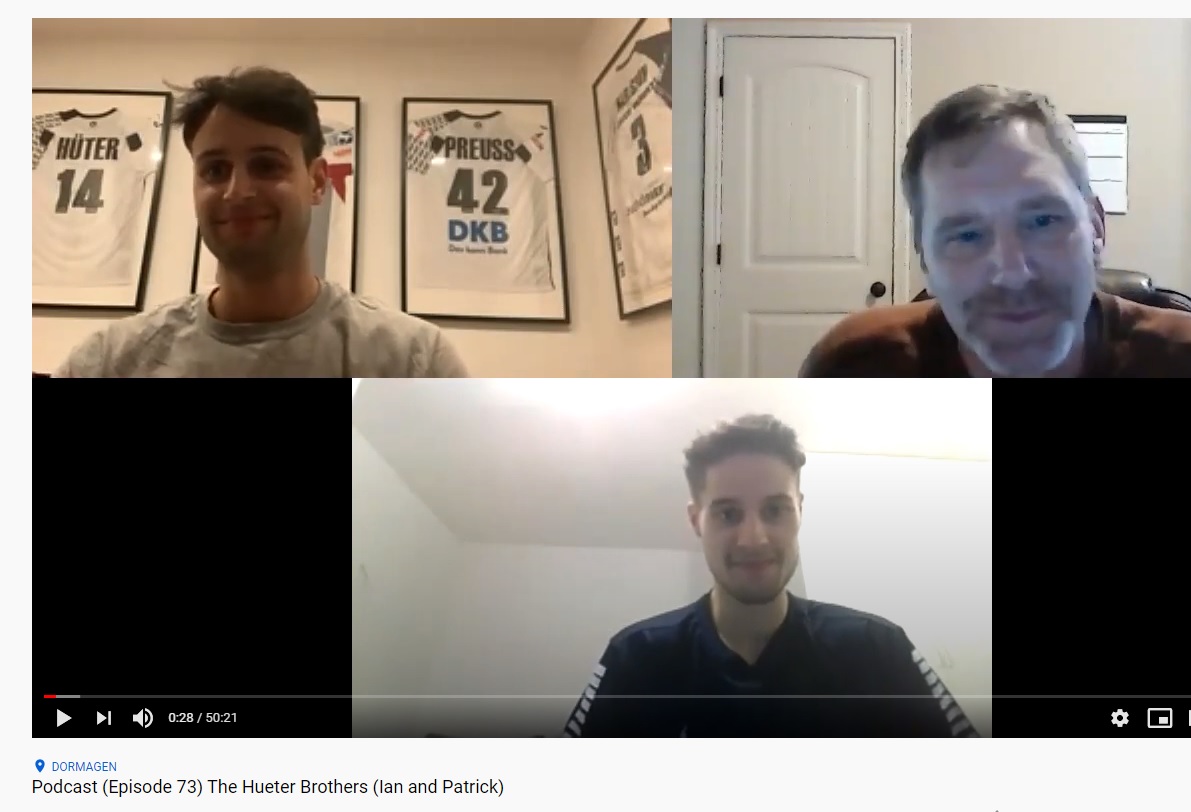
Ian and Patrick join the podcast to discuss several topics to include their handball origins, connections to the U.S. despite mostly growing up in Germany, playing for TSV Bayer Dormagen youth teams and transitioning to the pro club, playing in the super competitive HBL 2, their recent contract extensions with Dormagen, Team USA’s upcoming training camp in Denmark and, of course, the upcoming 2021 World Championships.
Final Four 3rd Place and Championship (CET is 6 hours ahead of US ET)
EHF Champions League Final Four
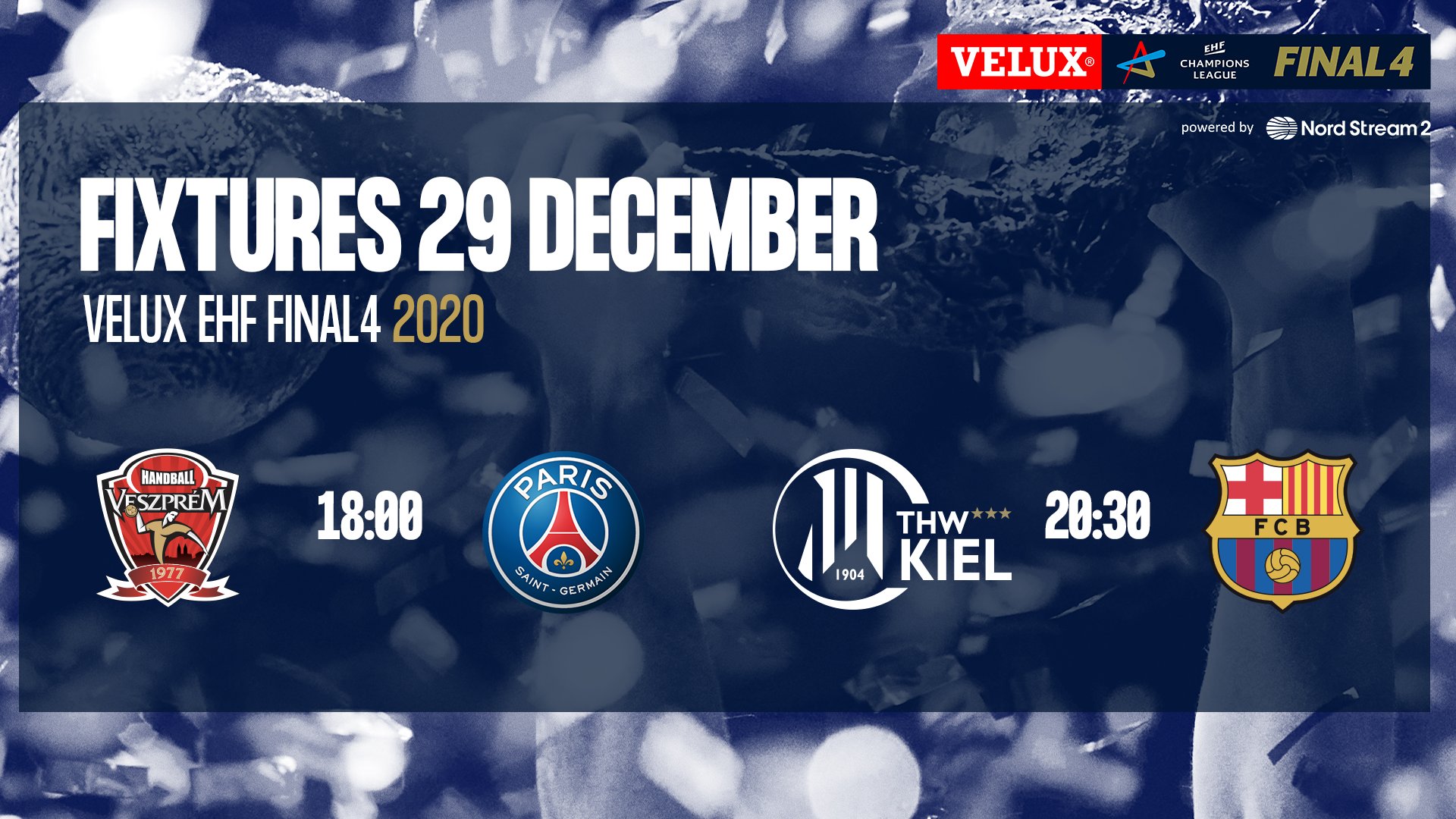
Seven months later than planned due to the coronavirus pandemic the EHF Champions League Final Four takes center stage this Monday and Tuesday. It will be a little surreal seeing the normally sold out Laxness Arena in Cologne empty, but it will still be handball well worth watching.
How to Watch: If there is no TV contract where you live the matches will be available live on ehfTV. In the U.S and Canada the only way you can watch will be on beIN Sports XTRA, which is a free streaming service: More Info List of TV contracts by nation: Link Tom ‘Brannagáin will be providing English commentary for all 4 matches.
Odds: Barcelona, which is undefeated this season in all competitions, is a big favorite: Here are the odds for each team to win the tournament:
TSV Bayer Dormagen vs Gummersbach (-2.5) (Wednesday, 1930 CET): Link (VPN required; More info; What I use)
Ian and Patrick Hueter play for Dormagen. Dormagen is on a roll and will finish 202 with a huge challenge, taking on VFL Gummersbach which has lost only one game all season
Would you like to be informed as to when handball can be streamed online? If yes, follow Team Handball News on social media for updates like this as well as breaking alerts for unplanned opportunities like the free HBL matches that seem to pop up from time to time.